Compliance reporting for IPEDS, state accountability, and other mandates is a high-stakes, data-intensive process that typically involves manual extraction from multiple SIS modules (e.g., Ellucian Banner's SGASTDN, SFRSTCR, and SFAREGS or PowerSchool's Student Core and Attendance tables), spreadsheet manipulation, and painstaking validation. AI integration targets this workflow at three key points: 1) Automated Data Assembly – where AI agents query the SIS database and connected systems via APIs to pull required student, course, and financial aid records based on the reporting logic; 2) Intelligent Validation & Error Flagging – where natural language processing (NLP) and rule-based engines compare assembled data against historical trends and compliance rulebooks to identify outliers, missing cohorts, or calculation errors before submission; and 3) Narrative Generation & Submission Support – where generative AI drafts the required textual explanations and summaries, and automation handles the secure file transfer or web portal submission.

Integration
AI Integration for SIS Compliance Reporting
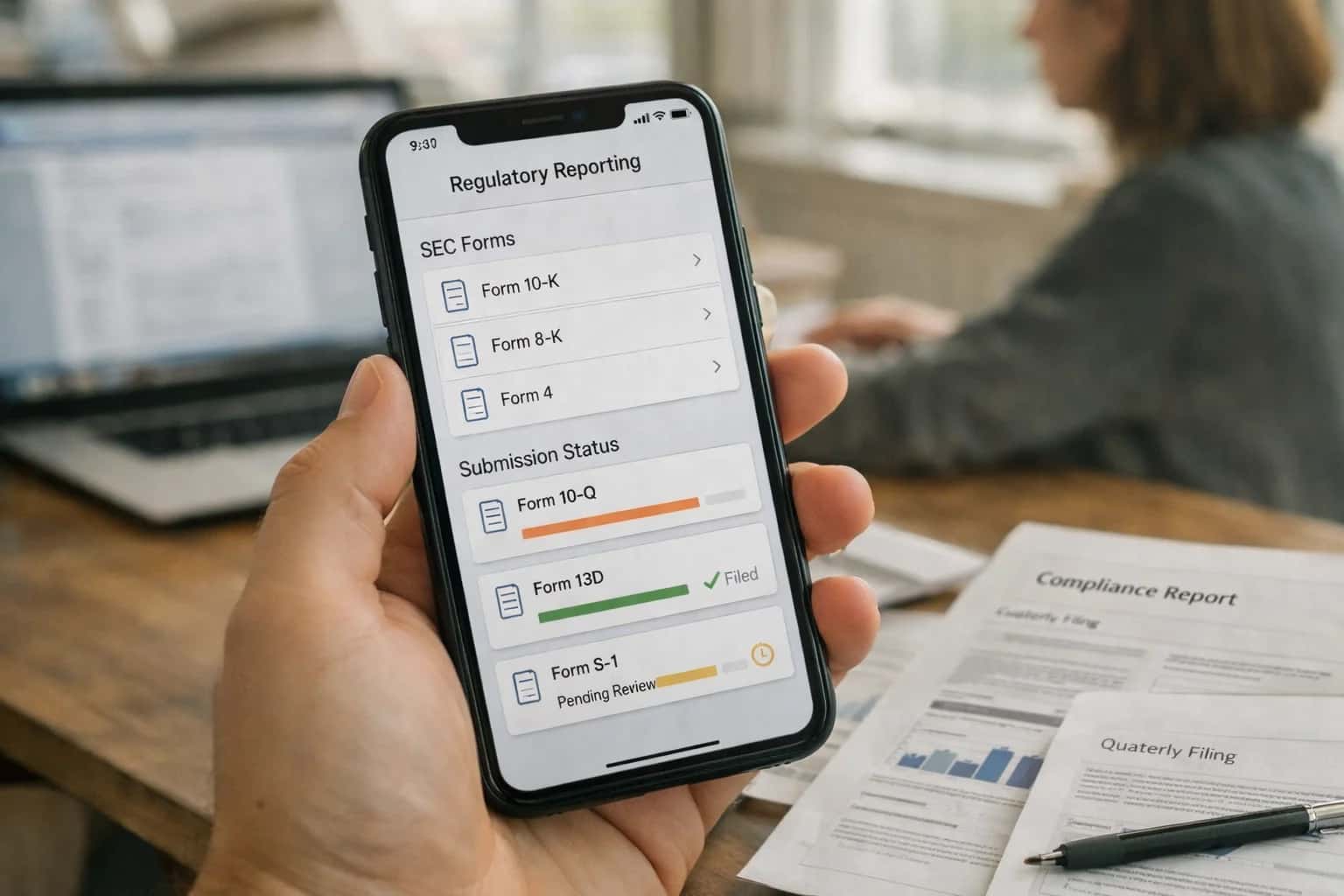
Where AI Fits into SIS Compliance Reporting
A practical blueprint for automating the assembly, validation, and submission of state and federal reports using AI integrated with your Student Information System.
A production implementation typically involves a middleware layer (like a secure RAG-powered agent platform) that sits between your SIS operational data store and the reporting authorities. This layer executes a sequence like: Trigger on reporting calendar → Execute SQL/API calls to SIS → Apply compliance logic (e.g., IPEDS cohorts) → Vectorize and validate against policy documents → Generate summary and flag discrepancies for human review → Format output and submit. The critical governance elements are an audit trail for every data point's source and transformation, RBAC to control who can approve submissions, and a human-in-the-loop checkpoint for the final sign-off. This shifts the work from weeks of manual compilation to days of review and exception handling.
Rollout should start with a single, high-volume report (e.g., a state's fall enrollment submission). Focus on integrating with the SIS's real-time reporting APIs or direct database connections (with appropriate safeguards) to ensure data freshness. The business impact is not just time saved—it's reduced audit risk through consistent, documented logic and reallocated FTE from data wrangling to strategic analysis. For teams evaluating this, the key is to partner with a provider like Inference Systems that understands both the technical SIS data model and the nuanced, ever-changing landscape of education compliance regulations.
SIS-Specific Integration Surfaces for Compliance Reporting
Student Demographics & Enrollment Modules
Compliance reporting starts with foundational student records. AI agents can be integrated to extract, validate, and transform data from core SIS tables before submission.
Key Integration Points:
- Student Demographics (SPAIDEN in Banner,
Studentstable in PowerSchool): Race/ethnicity, residency, gender for IPEDS reporting. - Term Registration (SFAREGS in Banner,
StudentTerms): Enrollment intensity (full/part-time), census date snapshots. - Academic Program (SGASTDN/SGBSTDN): CIP codes, degree levels, majors for program-level reporting.
AI Workflow Example: An automated agent runs nightly, queries the SIS API for new or changed student records, validates data against IPEDS rules (e.g., ethnicity mapping), flags discrepancies for human review, and prepares clean extracts for the reporting pipeline.
High-Value AI Use Cases for Compliance Reporting
Transform manual, error-prone compliance reporting into an automated, auditable workflow. These AI integration patterns connect directly to your SIS data model to assemble, validate, and submit state and federal reports like IPEDS, state accountability, and Title IV.
Automated IPEDS Report Assembly
AI agents query Ellucian Banner's Operational Data Store (ODS) or PowerSchool's data warehouse to extract, transform, and populate IPEDS survey components. The system validates data against prior submissions and flags anomalies for human review before secure submission, turning a multi-week manual process into a same-day workflow.
State Accountability Data Validation
For K-12 districts, AI continuously monitors PowerSchool or Skyward data (attendance, assessment scores, demographics) against state reporting rules. It generates pre-submission validation reports highlighting missing data, outliers, and potential compliance risks, allowing data managers to correct issues before the deadline.
Narrative Generation for Compliance Submissions
LLMs analyze structured SIS data and unstructured notes to auto-generate the required narrative explanations for compliance reports (e.g., for accreditation, grant continuations). The output is grounded in actual student records and includes citations to source data fields for auditability.
Real-Time Audit Trail & Change Logging
AI monitors all data elements tagged for compliance reporting within the SIS. Any change to a critical field (e.g., student residency, program enrollment) triggers an automated log entry with context, user, and reason, building a continuous audit trail for external reviews or program audits.
Cross-System Data Reconciliation for Reporting
For reports requiring data from multiple systems (SIS, HR, Finance), AI agents orchestrate APIs to extract and harmonize records. It performs entity resolution (e.g., matching student to financial aid records) and highlights discrepancies for reconciliation before final report assembly, ensuring a single source of truth.
Proactive Regulation Change Monitoring
AI scans for updates to reporting regulations (DOE, state). When a change is detected, it maps the new requirements to your SIS data model and flags impacted reports, data elements, and workflows. This allows IT and IR teams to plan schema or extraction logic updates proactively.
Example AI-Powered Compliance Workflows
These workflows illustrate how AI can automate the most time-consuming and error-prone steps in state and federal compliance reporting, such as IPEDS, state accountability, and financial aid reporting. Each example connects to specific SIS data objects and modules.
Trigger: Scheduled report cycle (e.g., IPEDS Fall Enrollment survey window opens).
Context/Data Pulled: An AI agent queries the SIS operational data store (ODS) or reporting views for the required IPEDS cohorts. It pulls data from core tables:
- Student demographics (SPAIDEN in Banner,
Studentstable in PowerSchool) - Enrollment status and level (SGBSTDN, SFAREGS in Banner)
- Instructional activity and credit hours (SSBSECT, SFRSTCR in Banner)
Model or Agent Action: The agent executes a multi-step process:
- Validation: Cross-references pulled data against IPEDS reporting rules (e.g., excludes non-degree-seeking, includes study abroad students based on specific criteria).
- Gap Detection: Uses logic to identify missing or inconsistent data (e.g., a graduate student without a CIP code) and flags them for human review.
- Narrative Generation: Drafts the required contextual statements for the survey, summarizing key changes from the prior year.
System Update or Next Step: The agent outputs:
- A clean, formatted data file (
.csv,.xml) ready for submission. - A summary dashboard of the extracted counts with visual highlights of year-over-year changes.
- A list of flagged records requiring manual intervention.
Human Review Point: A data manager in the Institutional Research office reviews the flagged items and the generated narrative, makes corrections in the SIS if needed, and approves the final submission package.
Implementation Architecture: Data Flow, APIs, and Guardrails
A secure, governed architecture for automating state and federal compliance reporting from your SIS.
A production-ready integration for SIS compliance reporting connects to core data objects like student demographics (SPAIDEN in Banner, Students in PowerSchool), enrollment records (SGBSTDN, Enrollments), course history (SHRTCKG, Transcripts), and financial aid data (RRAWRD, Awards). The architecture typically uses a scheduled ETL pipeline or real-time webhooks to pull raw data from the SIS into a secure staging area. This is where AI agents first apply validation rules—checking for missing IPEDS race/ethnicity flags, validating FTE calculations, or ensuring state-specific course code mappings—before the data is transformed into the required submission format (e.g., XML for IPEDS, CSV for state accountability).
The critical workflow is multi-stage validation with human-in-the-loop checkpoints. An AI agent assembles the initial report draft by querying the transformed data lake, but before submission, key outputs are routed for review. For example, a Headcount by CIP Code summary generated for a state report is sent via email or a task in your SIS to an institutional research officer. They can approve, request a revision via natural language, or trigger a re-run. All actions are logged to an audit trail linked to the report version, user, and source SIS transaction IDs. This governance layer is non-negotiable for audit readiness.
Rollout follows a phased approach: start with a single, high-volume report like IPEDS Fall Enrollment (EF) or a state graduation rate submission. Implement the data pipeline, validation agents, and a single approval step. Use this pilot to establish change control procedures and refine prompt chains for data interpretation. Subsequent phases can automate more complex reports like Financial Aid (FISAP) or Student Financials (Finance). The final architecture should allow your compliance team to manage reporting calendars, review queues, and exception dashboards without constant developer intervention, turning a quarterly scramble into a managed operational workflow.
For deeper patterns on building AI-ready data pipelines from SIS operational stores, see our guide on [/integrations/student-information-systems/ai-integration-for-sis-data-warehousing](SIS Data Warehousing). To understand how to orchestrate the approval and audit workflows mentioned here, review our framework for [/integrations/ai-governance-and-llmops-platforms](AI Governance and LLMOps).
Code and Payload Examples for Key Integration Points
Automating IPEDS Report Preparation
This integration point focuses on extracting and transforming student demographic, enrollment, and financial aid data from the SIS operational data store (ODS) to pre-populate IPEDS survey components. An AI agent orchestrates the retrieval, validates against IPEDS definitions, and flags anomalies for human review before submission.
Example Python Workflow:
python# Pseudocode for IPEDS Fall Enrollment assembly from inference_agent import ComplianceAgent import sis_odbc # Hypothetical SIS connector agent = ComplianceAgent(report_type="IPEDS_EF") # Query SIS ODS for core enrollment cohorts enrollment_data = sis_odbc.execute_query(""" SELECT student_id, ipeds_race_ethnicity, residency_status, enrollment_status, credit_hours_attempted FROM student_term_registration WHERE term = 'FALL2024' AND census_date_passed = 1 """) # Agent validates, maps to IPEDS categories, and generates draft report_draft, validation_issues = agent.assemble_report( source_data=enrollment_data, ipeds_mapping_file="config/ipeds_ef_mapping.json" ) # Output is a structured JSON ready for IPEDS web portal print(f"Draft ready. Issues to review: {validation_issues}")
The agent uses the SIS's internal coding (e.g., ipeds_race_ethnicity) to minimize transformation logic, focusing on outlier detection and narrative justification generation for data anomalies.
Realistic Time Savings and Operational Impact
How AI integration transforms the manual, error-prone process of assembling state and federal compliance reports (e.g., IPEDS, state accountability) from SIS data into a governed, semi-automated workflow.
| Process Step | Manual Process (Before AI) | AI-Assisted Process (After AI) | Key Notes & Governance |
|---|---|---|---|
Data Collection & Validation | 2-3 weeks of manual SQL queries, spreadsheet merges, and stakeholder follow-ups | 2-3 days of automated data pulls with AI flagging anomalies and gaps | AI identifies discrepancies against validation rules; human data stewards review flags before proceeding. |
Narrative & Commentary Drafting | 1-2 weeks for institutional research staff to write contextual summaries | Same-day generation of draft narratives from approved data, with editor review | AI drafts based on prior reports and current data trends; IR officers refine and approve final language. |
Cross-Walk & Formatting for Submission | 1 week to map internal codes to state/federal taxonomies and reformat files | Hours to validate automated mapping and generate submission-ready files | AI suggests mappings based on historical submissions; final mapping requires registrar/IR sign-off. |
Internal QA & Sign-off Cycle | Multiple review rounds over 1-2 weeks via email and tracked changes | Consolidated review in a single platform with AI highlighting changes from prior submissions | AI tracks all reviewer comments and version changes; workflow enforces sequential approvals. |
Error Resolution & Resubmission | Next-cycle correction after manual audit findings, causing compliance risk | Pre-submission simulation to catch common filing errors, enabling same-cycle fix | AI runs checks against known audit triggers; team addresses high-risk items before submission. |
Report Archiving & Documentation | Manual filing of final reports and supporting documentation in network drives | Automated archival with AI-generated metadata and audit trail for each field | Creates a searchable, compliant record for future audits and trend analysis. |
Staff Training & Process Handoff | Significant tribal knowledge; 4-6 weeks for new analyst to run process independently | Guided, documented workflow with AI copilot; new analyst operational in 1-2 weeks | Reduces key-person dependency and standardizes reporting methodology across the institution. |
Governance, Security, and Phased Rollout
A production-grade AI integration for SIS compliance reporting requires a deliberate architecture that prioritizes data integrity, audit trails, and controlled adoption.
Implementation begins by establishing a governed data pipeline from the SIS (Ellucian Banner, PowerSchool, etc.) to the AI layer. This involves creating secure, read-only API connections to source tables like student demographics, course registrations (e.g., Banner's SFAREGS), financial aid awards, and degree audit records. All data flows are logged, and personally identifiable information (PII) is tokenized or masked before processing. The AI system operates on a snapshot or delta-feed model, ensuring the source of truth remains the SIS, and all AI-generated outputs are tagged with the source data's extraction timestamp and record IDs for full traceability.
Security is enforced through role-based access control (RBAC) mapped to existing SIS user roles (e.g., Institutional Research Analyst, Registrar, Data Steward). AI agents generating report narratives or validating figures operate under service accounts with permissions scoped to the specific data domains required for a given report (e.g., IPEDS Fall Enrollment, state accountability). All AI interactions—prompts, data retrievals, and draft outputs—are written to an immutable audit log that links back to the user and the source SIS transaction, creating a defensible chain of custody for auditors.
A phased rollout mitigates risk and builds institutional trust. Phase 1 focuses on AI-assisted validation and assembly: the system cross-references extracted SIS data against reporting rulebooks, flags discrepancies (e.g., headcounts that don't reconcile, missing required fields), and drafts narrative explanations for human reviewers. Phase 2 introduces automated submission workflows for low-risk, high-volume reports, where the AI prepares the final submission package, but a human-in-the-loop from the IR office must approve and release it. Phase 3, after proven accuracy, enables predictive compliance monitoring, where the AI proactively analyzes SIS data throughout the term to forecast potential reporting issues before the submission window opens.
This governance-first approach ensures the integration enhances, rather than disrupts, the institution's compliance posture. It transforms reporting from a reactive, manual scramble into a governed, auditable operation where AI handles the heavy lifting of data wrangling and draft generation, while human experts retain final approval and strategic oversight. For a broader view of SIS integration patterns, see our guide on AI Integration for Student Information Systems.
Enabling Efficiency, Speed & Accuracy
Intelligent Analysis, Decision & Execution
We build AI systems for teams that need search across company data, workflow automation across tools, or AI features inside products and internal software.
Talk to Us
Search across company data
Give teams answers from docs, tickets, runbooks, and product data with sources and permissions.
Useful when people spend too long searching or get different answers from different systems.

Automate internal workflows
Use AI to route work, draft outputs, trigger actions, and keep approvals and logs in place.
Useful when repetitive work moves across multiple tools and teams.

Add AI to products and internal tools
Build assistants, guided actions, or decision support into the software your team or customers already use.
Useful when AI needs to be part of the product, not a separate tool.
FAQ: Technical and Commercial Questions
Practical answers for technical leaders and compliance officers planning AI-driven automation for state and federal reporting (e.g., IPEDS, state accountability) from SIS platforms like Ellucian Banner, PowerSchool, Skyward, and Blackbaud.
Secure integration typically follows a layered architecture:
- API Gateway & Authentication: Use the SIS's official APIs (e.g., Banner Web Services, PowerSchool API, Skyward SOAP/REST) with service accounts granted minimal, read-only permissions scoped to specific data objects (e.g.,
STVTERM,STVSBGIin Banner; student demographics, course enrollment, financial aid). - Data Pipeline: Implement a scheduled or event-driven extraction process. For large reports like IPEDS, a nightly batch job is common. Use a dedicated integration server, not direct model-to-SIS connections.
- Data Isolation: Extract and stage data in a secure, intermediate environment (e.g., a dedicated database schema, Azure Blob Storage). The AI models never query the live SIS database directly. This staging area is where data validation, transformation, and AI processing occur.
- Audit Trail: Log all data extraction events, including timestamps, record counts, and the service account used, for compliance audits.
Example Payload for Student Count Extraction (Banner-esque):
json{ "extraction_job": "IPEDS_Fall_Enrollment", "sis_source": "Banner ODS", "query_parameters": { "term_code": "202410", "reporting_date": "2024-10-15", "data_elements": ["student_id", "ipeds_race_ethnicity", "residency_status", "level_code"] }, "extracted_at": "2024-10-14T03:00:00Z", "record_count": 15237 }

About the author
Prasad Kumkar
CEO & MD, Inference Systems
Prasad Kumkar is the CEO & MD of Inference Systems and writes about AI systems architecture, LLM infrastructure, model serving, evaluation, and production deployment. Over 5+ years, he has worked across computer vision models, L5 autonomous vehicle systems, and LLM research, with a focus on taking complex AI ideas into real-world engineering systems.
His work and writing cover AI systems, large language models, AI agents, multimodal systems, autonomous systems, inference optimization, RAG, evaluation, and production AI engineering.
Partnered with leading AI, data, and software stack.





How We Work
Custom AI workflows for your Business
One-fit-all AI don't work for modern businesses. At Inferensys, we aim to understand your business & custom requirements; which we use to define most efficient agentic workflows, the data, and the tools for your business.
01
Review the use case
We understand the task, the users, and where AI can actually help.
Read more02
Pick the right approach
We define what needs search, automation, or product integration.
Read more03
Build the first useful version
We implement the part that proves the value first.
Read more04
Improve from there
We add the checks and visibility needed to keep it useful.
Read moreThe first call is a practical review of your use case and the right next step.
Talk to Us