
Inferensys

Integration

AI Integration for SIS Platforms

A practical, cross-platform guide for embedding AI into Ellucian Banner, PowerSchool, Skyward, and Blackbaud SIS. Learn where AI connects, which workflows deliver the highest ROI, and how to architect secure, scalable integrations for enrollment, retention, and student support.
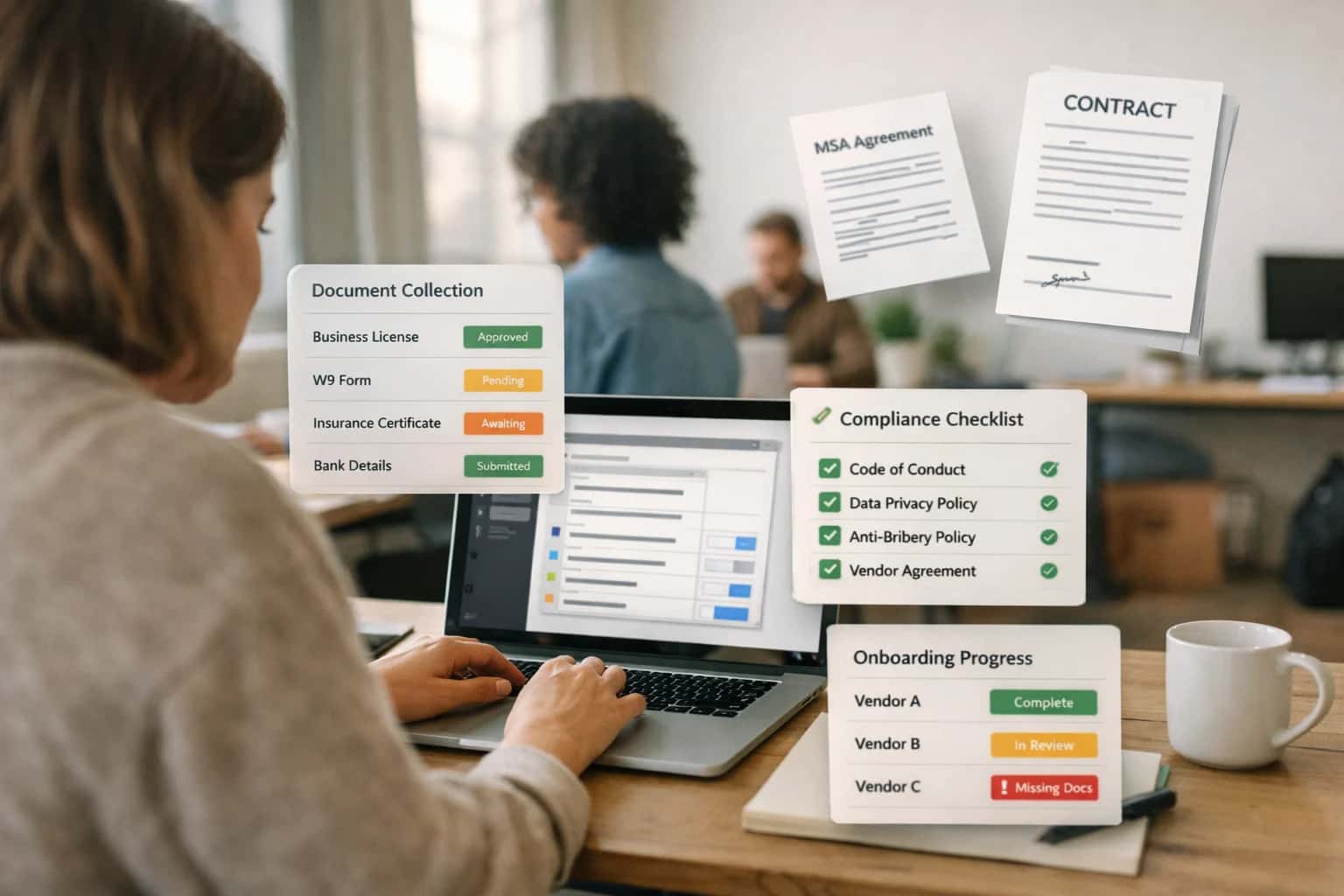
Operations team reviewing AI vendor onboarding platform on laptop, forms and contracts visible, casual office workspace.
ARCHITECTURE AND ROLLOUT

Where AI Fits into Your Student Information System

A practical guide to embedding AI agents, automation, and intelligence into the core workflows of platforms like Ellucian Banner, PowerSchool, Skyward, and Blackbaud SIS.

AI integration for an SIS is not about replacing the system of record; it's about adding an intelligent orchestration layer on top of it. This layer connects to key functional surfaces via APIs and webhooks, typically focusing on:

  • Core Student Records: Enriching and acting upon data from primary tables (e.g., Banner's SGASTDN, PowerSchool's students).
  • Workflow Engines: Triggering and routing approvals for processes like course overrides, fee waivers, or field trip permissions.
  • Communication Modules: Personalizing and automating outreach via the SIS's messaging center or integrated email/SMS gateways.
  • Self-Service Portals: Powering context-aware virtual assistants that answer student and parent questions about grades, schedules, or holds.
  • Reporting Databases: Analyzing the operational data store (ODS) or data warehouse for predictive insights and automated narrative reporting.


Implementation follows a phased, use-case-driven approach. A typical production architecture involves:

  1. Secure Data Access: Establishing a middleware service or agent with RBAC-gated API credentials to the SIS, often syncing relevant data to a vector store for RAG or a feature store for predictive models.
  2. Agent Orchestration: Deploying AI agents that monitor SIS event queues (e.g., a new application, a failing grade posted) and execute predefined workflows—like triaging a help desk ticket or drafting a personalized check-in email.
  3. Human-in-the-Loop Gates: Building approval steps and audit logs into sensitive workflows, such as AI-suggested financial aid packages or automated disciplinary note summarization, ensuring staff oversight. The goal is to move operational tasks from hours to minutes, like reducing manual application document review from days to same-day processing or enabling advisors to prepare for student meetings in 5 minutes instead of 30.

Governance and rollout are critical. Start with a pilot module—like AI-powered application triage for Admissions or an early-alert agent for Student Services—where impact is clear and data access is well-defined. Use this to establish patterns for:

  • Data Privacy: Implementing strict data masking and ensuring AI outputs never persist unauthorized PII.
  • Change Management: Training staff to use AI as a copilot, not a replacement, focusing on exception handling and model feedback loops.
  • Performance Monitoring: Tracking key metrics like ticket deflection rate, advisor time saved, or intervention speed, not just model accuracy. A successful integration makes the SIS feel more responsive and proactive, turning static records into a foundation for dynamic student support.
ARCHITECTURAL BLUEPRINTS FOR AI

Key Integration Surfaces Across Major SIS Platforms

Student Demographics & Academic History

This is the foundational data layer for any SIS AI integration. It includes master student tables (e.g., Banner's SPAIDEN, SGASTDN; PowerSchool's Students table) and related academic history (courses, grades, terms). AI integrations here focus on data enrichment, quality checks, and predictive feature generation.

Key Objects:

  • Student Demographics & Contact Info
  • Course Enrollment & Grade History
  • Academic Standing & Program/Major
  • Transcript & Transfer Credit Records

AI Use Cases:

  • Automatically cleanse and standardize name/address data.
  • Generate predictive features (e.g., GPA trend, credit completion rate) for retention models.
  • Identify data inconsistencies or missing required fields for compliance.
  • Power RAG systems for advisors querying student academic history.
PRACTICAL INTEGRATION PATTERNS

Highest-Value AI Use Cases for SIS Platforms

For CTOs and enterprise architects evaluating AI for Banner, PowerSchool, Skyward, or Blackbaud, these are the most impactful, production-ready workflows that connect directly to core SIS modules and data.

01

Automated Application & Document Intake

Use AI document intelligence (OCR, classification) to process incoming transcripts, residency proofs, and health forms. Workflow: PDFs/emails → AI extraction → validation against rules → auto-populate SIS student records (e.g., Banner's SPAIDEN) or create tasks for exceptions. Value: Eliminates manual data entry for registrars and admissions, reducing onboarding from days to hours.

Days → Hours
Processing time
02

Predictive Early Warning & Retention

Build real-time risk scores by analyzing combined SIS data streams—grades (GBRK), attendance (ATT), behavior (DISC). Workflow: Scheduled jobs query SIS APIs → AI model generates risk flags → triggers alerts in dashboards or creates cases in connected CRM (e.g., Salesforce). Value: Enables proactive intervention by counselors before grades post, moving from reactive to preventive support.

Reactive → Proactive
Intervention model
03

Intelligent Student & Parent Portal Assistant

Deploy a context-aware chatbot that queries live SIS APIs to answer FAQs. Workflow: User asks "What's my bus schedule?" → Agent calls SIS transportation module API → returns personalized info. Grounds responses in actual student schedule (SSASECT), grades, fees. Value: Cuts call center volume for routine inquiries about schedules, balances, and deadlines by 30-50%.

30-50%
Ticket reduction
04

AI-Powered Academic Advising Copilot

Integrate AI with advising modules (e.g., Banner's SGASTDN, SFAREGS) to prep for student meetings. Workflow: Agent pulls student's course history, holds, degree audit → generates meeting agenda, suggests resources, drafts follow-up emails. Value: Reduces advisor admin time by 2-3 hours per week, allowing focus on high-touch guidance.

2-3 hrs/week
Admin time saved
05

Automated Compliance & State Reporting

Use AI to assemble, validate, and submit mandatory reports (IPEDS, state accountability). Workflow: Agent extracts data from SIS ODS/operational tables → runs validation rules → flags discrepancies for human review → formats and submits. Value: Reduces manual compilation errors and audit risk, turning a multi-day quarterly process into a same-day workflow.

Quarterly → Same-day
Report cycle
06

Unified SIS-LMS Intervention Orchestration

Create a bidirectional AI layer between SIS (Banner, PowerSchool) and LMS (Canvas, Schoology). Workflow: Monitors LMS engagement data → if pattern detected (e.g., missing assignments), checks SIS for existing alerts → triggers personalized nudge via SIS parent portal or creates a task in advising CRM. Value: Closes the loop between academic performance and student support systems, enabling coordinated care.

Coordinated Care
System impact
CROSS-PLATFORM IMPLEMENTATION PATTERNS

Example AI-Powered SIS Workflows

These concrete workflow examples illustrate how AI agents and automations connect to core SIS modules, data objects, and user roles. Each pattern can be adapted for Ellucian Banner, PowerSchool, Skyward, or Blackbaud SIS using their respective APIs and data models.

Trigger: A new application document (transcript, recommendation letter, residency proof) is uploaded to the SIS via the student portal or admissions CRM integration.

Context Pulled: The AI agent retrieves the document file and the associated application record (containing applicant ID, program, and required checklist items).

Agent Action:

  1. A document intelligence model (OCR + NLP) extracts key fields: GPA, course titles, dates, issuer name, signatures.
  2. The agent validates the document type and completeness against the program's requirements.
  3. It compares extracted GPA and course data against minimum thresholds.

System Update:

  • The agent updates the application checklist in the SIS (APPLICANT_CHECKLIST table in Banner, custom object in others) with a status: Verified, Incomplete, or Flag for Review.
  • For flagged items, it creates a task in the admissions officer's queue with the specific reason (e.g., "Transcript missing final semester grades").
  • A personalized, conditional email is triggered to the applicant via the SIS communication module requesting missing items.

Human Review Point: All documents flagged as potential mismatches or poor quality scans are routed to an admissions staff dashboard for final determination.

A BLUEPRINT FOR ENTERPRISE ARCHITECTS

Architecture for a Production SIS AI Integration

A practical guide to wiring AI into your Student Information System for secure, scalable, and governed operations.

A production-ready AI integration for an SIS like Ellucian Banner, PowerSchool, Skyward, or Blackbaud is not a single API call—it's a layered system that respects the platform's data model, security model, and operational cadence. The core architecture involves three key layers: 1) The Integration & Event Layer, which connects to SIS APIs (e.g., Banner's SOAP/RESTful APIs, PowerSchool's Data Exporters, Skyward's API) and listens for webhooks or polls for changes in critical objects like SPAIDEN (Banner), Students (PowerSchool), or Attendance records. 2) The AI Orchestration Layer, where business logic determines which AI capability (RAG for knowledge retrieval, an agent for multi-step workflow, a classifier for risk scoring) is invoked based on the event and context. This layer manages prompt assembly, tool calling (e.g., to fetch a student's course history), and maintains conversation state for support agents. 3) The Action & Audit Layer, which executes approved write-backs to the SIS—such as posting a note to an advising module, updating a risk flag, or triggering a workflow—and logs every AI interaction, data access, and system action for compliance and model improvement.

Rollout and governance are what separate a pilot from a production system. Start with a read-only, human-in-the-loop phase for high-impact, low-risk use cases—like an AI agent that summarizes a student's academic history from Banner for an advisor's review before a meeting. Implement role-based access control (RBAC) at the AI layer, mirroring SIS permissions, so a teacher's AI copilot in PowerSchool only accesses data for their rostered students. For any AI-driven write action (e.g., auto-generating a progress report comment in Skyward), enforce a mandatory approval step in the workflow, logging the human reviewer. Architect your vector embeddings to be sourced from a governed data pipeline, not directly from the live SIS database, to ensure data freshness and avoid embedding sensitive, transient data. Finally, establish a feedback loop where outcomes (e.g., did the AI-suggested intervention lead to improved attendance?) are captured to retune prompts and models.

This architecture ensures AI augments the SIS without compromising its role as the system of record. It allows you to start with a focused integration—like connecting an AI document processor to Blackbaud SIS to extract data from uploaded transcripts—and scale to campus-wide agents, all while maintaining the audit trails and data governance required in educational environments. For related patterns on data extraction or specific platform APIs, see our guides on AI Integration for Ellucian Banner Student Data and AI Integration for SIS Data Warehousing.

PRACTICAL INTEGRATION PATTERNS

Code and Payload Examples for SIS API Integration

Fetching Student Context for AI Agents

Most AI workflows start by retrieving a student's core profile and academic history. This typically involves calling the SIS's student API with an identifier (student ID, email) and requesting a specific set of fields for context.

Common Use Case: An AI advising agent needs a student's current program, GPA, and holds before a meeting.

Example Payload (Generic SIS API Request):

json
{
  "operation": "getStudentProfile",
  "parameters": {
    "studentId": "S12345678",
    "includeFields": [
      "primaryProgram",
      "currentGPA",
      "activeHolds",
      "enrollmentStatus",
      "lastTermCompleted"
    ]
  }
}

Implementation Note: Cache this data in a session or vector store to avoid excessive API calls during a conversational agent workflow. Always respect field-level security and FERPA considerations.

AI INTEGRATION FOR SIS PLATFORMS

Realistic Time Savings and Operational Impact

A pragmatic look at how AI integration changes key workflows in Student Information Systems like Ellucian Banner, PowerSchool, Skyward, and Blackbaud. These estimates are based on typical implementation patterns for higher education and K-12 institutions.

Workflow / TaskBefore AI IntegrationAfter AI IntegrationImplementation Notes

Application Document Review

Manual review of transcripts, essays (15-30 mins/app)

AI-assisted extraction & scoring (2-5 mins/app)

Human reviewer makes final decision; AI flags anomalies

Student & Parent Inquiries

Staff triage and response via email/phone (Hours/day)

AI chatbot handles 40-60% of common FAQs

Chatbot escalates complex cases; integrates with SIS API for real-time data

Early Alert Generation

Manual compilation of grades/attendance (Weekly, 2-4 hrs)

Automated, real-time risk scoring & alert triggers

AI synthesizes data from multiple SIS modules; alerts routed to advisor dashboards

Course Registration Conflict Resolution

Manual review of holds, prerequisites, capacity (Hours during peak)

AI pre-checks and suggests alternatives in real-time

Reduces registrar ticket volume; students self-serve via guided workflow

Compliance Report Assembly

Manual data extraction, validation, formatting (Days per report)

AI-driven data aggregation & narrative drafting (Hours)

AI validates against reporting rules; human auditor reviews final output

IEP / 504 Plan Progress Notes

Case manager manual entry and synthesis (30-60 mins/student)

AI drafts notes from session logs & goal tracking

Case manager reviews and finalizes; ensures audit trail

Financial Aid Document Processing

Manual sorting and data entry from scanned forms (20+ mins/form)

AI classifies, extracts, and populates SIS fields (Under 5 mins)

Human-in-the-loop for exception handling; integrates with imaging system

Mass Communication Personalization

Generic blast emails or manual segmentation

AI segments audiences & personalizes content based on SIS data

Uses student/parent profile, academic history, and engagement triggers

ARCHITECTING FOR SCALE AND COMPLIANCE

Governance, Security, and Phased Rollout

A production AI integration for an SIS requires a deliberate approach to data governance, security controls, and incremental rollout to manage risk and ensure adoption.

Start with a sandbox environment and a pilot module. Target a single, high-impact workflow—like automated application document review for Ellucian Banner or personalized attendance follow-up in PowerSchool—for your initial deployment. Use the SIS's API to connect a read-only data feed to your AI layer, focusing on a specific object like SGASTDN (student records) or Attendance Events. This limits the blast radius, allows for controlled testing of data accuracy and model performance, and builds stakeholder confidence with a tangible win before scaling.

Implement a layered security and governance model. This includes:

  • API-level authentication & RBAC: Enforce the same role-based permissions (e.g., teacher, counselor, registrar) from the SIS (Skyward, Blackbaud) at the AI agent layer via OAuth or service accounts.
  • Data masking & PII handling: Use tokenization or field-level redaction for sensitive student data (SSN, health info) before processing by LLMs, especially for third-party models.
  • Audit trails & explainability: Log all AI-generated actions (e.g., a suggested intervention flag, a drafted communication) back to the SIS audit log or a dedicated audit_events table, linking them to the source student record and the prompting user. Maintain version control for prompts and data pipelines.
  • Human-in-the-loop (HITL) gates: For critical workflows like financial aid packaging or disciplinary note summarization, design approvals where a staff member must review and confirm an AI-suggested action before it's committed to the SIS database.

Adopt a phased rollout strategy across three horizons:

  1. Horizon 1 (Assist): AI provides insights and drafts (e.g., generates a summary of a student's risk factors, drafts a parent email) but requires human review and manual action within the SIS. Impact is measured in time saved per counselor or teacher.
  2. Horizon 2 (Augment): AI agents execute defined, low-risk tasks autonomously via SIS APIs, such as populating a communication_log after an absence or updating a task for an advisor. These workflows include automatic rollback procedures and alerting for exceptions.
  3. Horizon 3 (Orchestrate): AI orchestrates complex, multi-system workflows—like triggering a Canvas LMS intervention based on a Banner grade prediction, while also creating a support ticket in ServiceNow. This stage requires mature data governance and cross-functional change management.

Why Inference Systems for SIS Integrations: We architect these integrations with FERPA, state student data privacy laws, and institutional IT policies as first-order constraints. Our approach uses your existing SIS security model, never creates shadow data stores, and focuses on incremental automation that reduces operational burden without introducing unmanaged risk. We provide the integration blueprints, agent frameworks, and rollout playbooks that move you from pilot to production with control.

IMPLEMENTATION AND WORKFLOW DETAILS

Frequently Asked Questions for SIS AI Integration

Technical leaders and enterprise architects evaluating AI for Student Information Systems ask these questions about security, architecture, rollout, and impact. These answers are based on production integrations with Ellucian Banner, PowerSchool, Skyward, and Blackbaud SIS.

Security is the first layer of any SIS AI integration. We implement a zero-trust, principle-of-least-privilege architecture.

Key Implementation Patterns:

  1. Service Account Strategy: AI agents and automations run under dedicated, non-human service accounts in the SIS, with permissions scoped to specific modules (e.g., SGASTDN read-only, SFAREGS write for registration).
  2. API Gateway & Token Management: All calls to the SIS API (Banner SOA, PowerSchool API, Skyward API, Blackbaud SKY API) are routed through a secure gateway that handles OAuth2 token lifecycle, rate limiting, and audit logging.
  3. Data Masking & PII Filtering: Before data is sent to an LLM (like OpenAI or Anthropic), a pre-processing layer redacts or tokenizes high-sensitivity PII (Social Security Numbers, specific financial data) based on field-level policies defined in the SIS data dictionary.
  4. Audit Trail Integration: Every AI-generated action (e.g., "note added," "hold placed," "communication sent") writes a traceable record back to the SIS's native audit log, linking the AI service account, the source data, and the prompting context for full transparency.

Example Payload to LLM (Post-Masking):

json
{
  "student_context": {
    "id": "STU_TOKEN_ABC123",
    "academic_status": "Active",
    "major": "Biology",
    "term_gpa": 2.1,
    "credits_attempted": 45,
    "credits_earned": 36,
    "holds": ["Financial"]
  },
  "query": "Draft a supportive email checking in on academic progress."
}
Prasad Kumkar

About the author

Prasad Kumkar

CEO & MD, Inference Systems

Prasad Kumkar is the CEO & MD of Inference Systems and writes about AI systems architecture, LLM infrastructure, model serving, evaluation, and production deployment. Over 5+ years, he has worked across computer vision models, L5 autonomous vehicle systems, and LLM research, with a focus on taking complex AI ideas into real-world engineering systems.

His work and writing cover AI systems, large language models, AI agents, multimodal systems, autonomous systems, inference optimization, RAG, evaluation, and production AI engineering.


