AI integration targets the contract and agreement objects within Blackbaud SIS, primarily the Enrollment Contract, Financial Agreement, and Facility Use Form modules. The workflow begins when a new student record reaches a specific status in the admissions pipeline (e.g., 'Accepted'). An AI agent, triggered via webhook or scheduled job, initiates the contract generation process. It pulls relevant data from the Student, Family, and Program records to populate a dynamic template. For complex financial agreements involving tuition plans, scholarships, or payment schedules, the AI can calculate terms, apply institutional policies, and generate personalized clauses based on the family's financial aid package.

Integration
AI Integration for Blackbaud SIS Contract Automation
Streamline the generation, review, and tracking of enrollment contracts, financial agreements, and facility use forms within Blackbaud SIS using AI clause analysis and document automation.
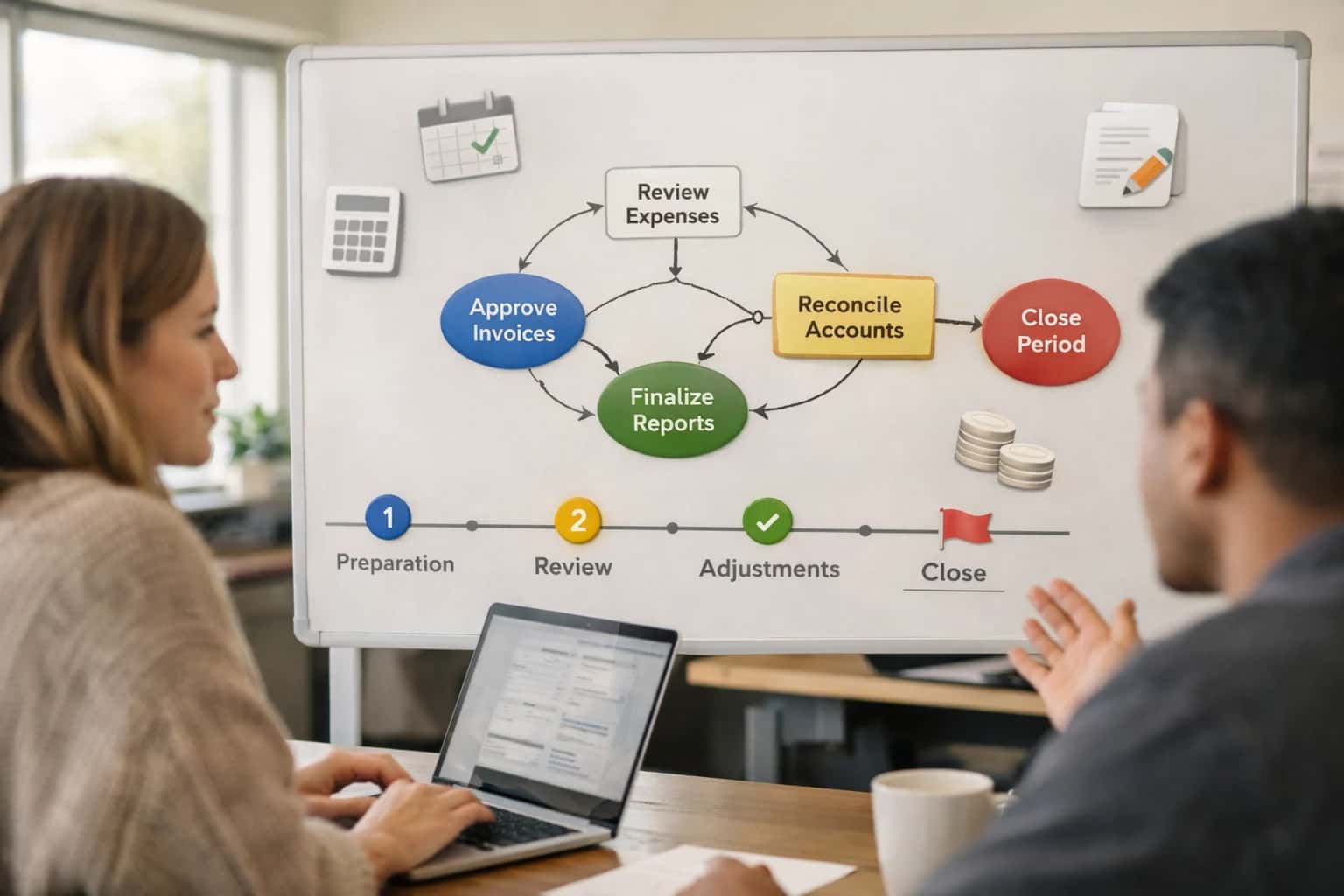
ARCHITECTURE FOR ENROLLMENT AND FINANCIAL AGREEMENTS
Where AI Fits in Blackbaud SIS Contract Workflows
A technical blueprint for automating contract generation, review, and lifecycle management within Blackbaud's Student Information System.
The core value lies in clause analysis and risk review. Before a contract is sent for signature, an AI review agent can scan the generated document against a library of approved legal language and institutional policies. It flags non-standard clauses, highlights potential ambiguities in payment terms or withdrawal policies, and suggests edits to ensure compliance. This review layer acts as a first-pass quality control for the admissions or business office, reducing manual legal review time from hours to minutes. Post-signature, AI can monitor key obligation dates (e.g., first payment, re-enrollment deadline) stored in the contract record and trigger automated communications or task assignments in the SIS workflow.
Implementation requires a secure middleware layer that connects to Blackbaud SIS's APIs (SKY API) for data retrieval and record updates. Contract documents are typically generated in a secure, temporary storage layer, processed by the AI, and then attached to the relevant student record or pushed to an integrated e-signature platform like DocuSign. Governance is critical: all AI-suggested edits should be logged in an audit trail linked to the contract record, and a human-in-the-loop approval step is recommended for final review before sending to families. This architecture ensures the school maintains control while automating the 80% of routine contract work.
CONTRACT AUTOMATION
Key Blackbaud SIS Modules and Surfaces for AI Integration
Core Contract Generation Workflows
The Enrollment and Re-enrollment modules are the primary surfaces for generating and managing student contracts. AI integration focuses on automating the creation of personalized agreements based on family data, selected programs, and tuition schedules.
Key integration points include:
- Contract Templates: AI can dynamically populate template fields (student name, grade, tuition amount, payment plan) by querying the core student and family records.
- Conditional Logic: Use AI to evaluate complex scenarios (sibling discounts, financial aid awards, multi-program enrollment) to apply correct terms and calculate final amounts.
- Document Assembly: Trigger AI agents to assemble contract packages, pulling in required ancillary forms (health records, transportation agreements) based on the student's profile and selections.
Implementation typically involves intercepting the contract generation API call, enriching the payload with AI-calculated data, and returning a complete, pre-populated document for review.
PRIVATE & INDEPENDENT SCHOOLS
High-Value AI Use Cases for Blackbaud SIS Contract Automation
Transform manual, error-prone contract processes in Blackbaud SIS into intelligent workflows. These AI-powered patterns target enrollment agreements, financial aid awards, and facility use forms to reduce administrative burden and accelerate revenue cycles.
01
Automated Enrollment Contract Generation
AI drafts personalized enrollment contracts by pulling verified data from the Core Student Record (SGASTDN) and Family Billing Profiles. It applies school-specific tuition schedules, payment plan logic, and scholarship awards, generating a ready-to-sign PDF in the Document Management module. Reduces manual drafting from hours to minutes per family.
Hours -> Minutes
Drafting time
02
Intelligent Clause Review & Redlining
For negotiated contracts (e.g., multi-child discounts, special payment terms), an AI agent compares proposed changes against standard school policy language stored in Blackbaud SIS. It highlights non-standard clauses, suggests approved alternatives, and routes exceptions to the Business Office for review within the workflow.
Batch -> Real-time
Review cycle
03
Financial Aid Award & Verification Sync
AI connects the Financial Aid Module with contract generation. It cross-references award letters, verifies supporting document uploads (tax forms, statements), and ensures the final contract accurately reflects net tuition. Automatically flags discrepancies for the Financial Aid Officer before the contract is issued.
Same day
Award-to-contract sync
04
Facility Use & Rental Agreement Processing
AI streamlines external rental contracts for gyms, fields, and auditoriums. It checks the Master Calendar for availability, pulls standard liability clauses, calculates fees based on rate cards, and generates agreements for external groups. Integrated payment links trigger upon e-signature completion.
1 sprint
Implementation timeline
05
Obligation Tracking & Renewal Forecasting
Post-signature, AI extracts key dates, payment milestones, and conditional terms from executed contracts. It creates tracked obligations in the Student Billing and Advancement modules, setting automated reminders for renewals, reviews, or follow-up actions for the Admissions and Advancement teams.
06
Parent Portal Contract Submission & Q&A
An AI-powered virtual assistant embedded in the Parent Portal guides families through the contract review process. It answers common questions about terms, deadlines, and payment options using the context of their specific draft. Submits signed contracts directly back to the Core Student Record, closing the digital loop.
80% Reduction
Inquiry calls
BLACKBAUD SIS INTEGRATION PATTERNS
Example AI-Automated Contract Workflows
These concrete workflows illustrate how AI agents can be integrated into Blackbaud SIS to automate the generation, review, and management of enrollment contracts, facility use agreements, and financial aid packages. Each pattern connects to specific Blackbaud objects, APIs, and user roles.
Trigger: An admissions officer marks an applicant's status as 'Accepted' in the Core - Admissions module.
Context Pulled: The AI agent, via the Blackbaud SKY API, retrieves:
- Student record (
Studententity) with family/household data. - Accepted application details, including grade level and entry term.
- Pre-configured contract template clauses based on the student type (e.g., day, boarding, international).
- Current tuition and fee schedule from the
Business Officesettings.
Agent Action:
- Personalization: The agent merges student/family data into the appropriate template.
- Clause Selection: Based on data points (e.g.,
boarding_flag = true), it selects the correct housing addendum. - Financial Calculation: It calculates the total due, applying any pre-loaded sibling discounts or early payment incentives.
- Document Assembly: Generates a final PDF contract using Blackbaud's document management or an integrated service like DocuSign.
System Update:
- The generated contract is attached to the student's record in the
Core - Documentsarea. - A task is created for the admissions officer to review the AI-generated draft.
- An automated email/SMS via Blackbaud
Notification Manageris sent to the family with a secure link to view the contract.
Human Review Point: The admissions officer receives a dashboard alert to review the contract before it is formally dispatched. The agent logs all generated clauses for auditability.
INTEGRATING AI INTO BLACKBAUD SIS CONTRACT WORKFLOWS
Implementation Architecture: Data Flow and System Boundaries
A production-ready architecture for embedding AI-powered clause analysis and generation directly into Blackbaud SIS's contract management workflows.
The integration connects at three primary points within Blackbaud SIS: the Constituent record (for family and student data), the Billing and Tuition Management module (for financial terms), and the Document Management system (for contract storage). An AI agent, deployed as a secure microservice, listens for events via webhooks—such as a new enrollment application being marked 'Accepted' or a billing plan being created. The agent retrieves the relevant master data (student name, grade, tuition schedule, payment terms) and the appropriate contract template from a governed library. It then uses a configured LLM to populate the template, applying conditional logic for clauses like late fees, withdrawal policies, or facility use addendums based on the student's program and family's selected options.
The populated draft is returned to Blackbaud SIS as a PDF, attached to the constituent record, and a task is created in the workflow queue for the admissions or business office to review. The AI service also provides a 'redline analysis' feature: when a family returns a signed contract with handwritten modifications, the system can compare the scanned version against the original, extract the changes using vision AI, and summarize the alterations for staff review. All AI actions are logged to a dedicated audit table within the SIS, recording the prompt used, the data inputs (hashed), and the user who triggered the action, ensuring full transparency and compliance.
Rollout follows a phased approach, starting with the simplest, highest-volume contract type (e.g., standard annual enrollment agreements) to validate data mapping and user acceptance. Governance is managed through a prompt registry and clause library maintained in a separate system, allowing legal and operations teams to approve and version control the business logic and language used by the AI before it touches a live record. This architecture keeps the core SIS system of record intact while adding intelligent automation at the edges, reducing manual drafting from hours to minutes and minimizing errors in term application.
CONTRACT AUTOMATION
Code and API Patterns for Blackbaud SIS AI Integration
Blackbaud SIS Data Objects for Contracts
Effective AI integration for contract automation begins with the core data models in Blackbaud SIS. The primary objects are:
- Student records (
StudentsAPI): Contains demographic, family, and enrollment status data. Essential for personalizing contract clauses (e.g., student name, grade level, tuition tier). - Household records (
HouseholdsAPI): Links students to guardians and determines billing contacts. AI-generated communications and payment plan logic must reference the correct household ID. - Enrollment contracts (
EnrollmentContractsor custom list): While contract storage varies, most implementations use a custom list or external document linked viaListItems. The key is establishing a reliable foreign key (e.g.,student_id,household_id) for AI to retrieve and update status. - Financial terms (
TuitionRates,Fees): Often stored in configuration tables. AI logic for generating contract amounts must query these rates based on student attributes (grade, program).
Integration Pattern: Use the SKY API's OAuth 2.0 flow. AI services should run with a service account possessing Students.Read, Households.Read, and ListItems.ReadWrite scopes. Always cache static reference data (like fee schedules) to reduce API calls.
BLACKBAUD SIS CONTRACT AUTOMATION
Realistic Time Savings and Operational Impact
How AI integration transforms manual, error-prone contract processes into streamlined, consistent workflows, freeing up staff time for higher-value student and family engagement.
| Contract Workflow Stage | Before AI Integration | After AI Integration | Key Notes |
|---|---|---|---|
Initial Contract Drafting | 1-2 hours per template | 15-30 minutes per template | AI suggests clauses based on student type, program, and historical data from SIS. |
Clause Review & Standardization | Manual cross-checking against policy docs | Automated flagging of non-standard language | AI scans for deviations from approved master agreements and school policies. |
Data Population from SIS | Manual copy/paste from multiple SIS screens | Auto-population of 80-90% of fields | AI extracts student, family, and program data from Blackbaud SIS records. |
Error & Omission Review | Visual line-by-line check | Automated validation of dates, amounts, and required fields | Reduces risk of missing signatures, incorrect tuition figures, or conflicting terms. |
Family-Specific Customization | Generic templates with handwritten notes | Personalized cover notes and term explanations | AI generates context-aware summaries for families based on their SIS communication history. |
Version Tracking & Audit Trail | Manual file naming and folder management | Automated versioning with change log | Every edit and approval is logged, linked to the SIS student record for compliance. |
Post-Signature Obligation Tracking | Spreadsheet or calendar reminders | Automated milestone alerts and renewal triggers | AI monitors key dates (payment deadlines, program start) and alerts staff via SIS workflows. |
ARCHITECTING FOR CONTROL AND SCALE
Governance, Security, and Phased Rollout
A production-ready AI integration for Blackbaud SIS contract automation requires a deliberate approach to data governance, security, and incremental rollout to ensure trust and operational stability.
Implementation begins by defining a secure data perimeter. AI agents should operate in a dedicated middleware layer, accessing Blackbaud SIS via its REST APIs using service accounts with role-based access control (RBAC) scoped strictly to the necessary objects—typically Contracts, Students, Households, and Financial Terms. All contract drafts, redlines, and AI-generated clauses are logged to an immutable audit trail linked to the original SIS record ID, creating a clear lineage for compliance reviews and version control.
A phased rollout is critical for user adoption and risk management. Start with a pilot on low-risk, high-volume form types like standard facility use agreements or extracurricular participation waivers. In this initial phase, the AI acts as a drafting assistant, generating first-pass contracts based on SIS data, with all outputs requiring mandatory human review and approval within the existing Blackbaud workflow before any commitment is posted. Subsequent phases can introduce automated clause analysis for incoming vendor agreements or exception flagging for non-standard tuition payment terms, gradually increasing automation as confidence in the system's accuracy grows.
Governance is maintained through a continuous feedback loop. Every AI-suggested edit or generated clause should be tagged and stored for periodic review by legal and operations teams. This allows for prompt refinement and model tuning based on real-world acceptance rates. Furthermore, the integration should include configurable guardrails, such as blocking the AI from suggesting edits to legally mandated boilerplate language or flagging any contract value over a predefined threshold for mandatory executive review, ensuring the system augments—rather than replaces—critical human oversight.
Enabling Efficiency, Speed & Accuracy
Intelligent Analysis, Decision & Execution
We build AI systems for teams that need search across company data, workflow automation across tools, or AI features inside products and internal software.
Talk to Us
Search across company data
Give teams answers from docs, tickets, runbooks, and product data with sources and permissions.
Useful when people spend too long searching or get different answers from different systems.
Enterprise searchRAGPermissions
Read more
Automate internal workflows
Use AI to route work, draft outputs, trigger actions, and keep approvals and logs in place.
Useful when repetitive work moves across multiple tools and teams.
AI agentsWorkflow automationGovernance
Read more
Add AI to products and internal tools
Build assistants, guided actions, or decision support into the software your team or customers already use.
Useful when AI needs to be part of the product, not a separate tool.
AI integrationDecision supportModel routing
Read moreAI INTEGRATION FOR BLACKBAUD SIS CONTRACT AUTOMATION
Frequently Asked Questions: Technical and Commercial
Practical answers to common technical and commercial questions about implementing AI for enrollment contracts, financial agreements, and facility use forms within Blackbaud SIS.
Integration typically occurs via Blackbaud SIS's APIs and webhook capabilities, focusing on specific data objects and modules.
Primary Integration Points:
- Core Records: Pulling student, family, and enrollment data from the
Students,Households, andEnrollmentsAPI endpoints to provide contract context. - Document Storage: Connecting to Blackbaud SIS's document management or file storage areas (often via the
FilesAPI) to retrieve template contracts and store finalized, AI-reviewed versions. - Workflow Triggers: Listening for webhooks or monitoring specific fields (e.g.,
Application Statuschanging to 'Accepted') to initiate the contract generation and review process. - Update Actions: Writing back key data, such as populating a custom field like
Contract Statuswith 'AI Review Pending' or 'Clause Exception Flagged', and attaching the final PDF.
The AI layer acts as a middleware service that calls these APIs, processes documents, and makes decisions before updating records or routing for human review.

About the author
Prasad Kumkar
CEO & MD, Inference Systems
Prasad Kumkar is the CEO & MD of Inference Systems and writes about AI systems architecture, LLM infrastructure, model serving, evaluation, and production deployment. Over 5+ years, he has worked across computer vision models, L5 autonomous vehicle systems, and LLM research, with a focus on taking complex AI ideas into real-world engineering systems.
His work and writing cover AI systems, large language models, AI agents, multimodal systems, autonomous systems, inference optimization, RAG, evaluation, and production AI engineering.
LinkedIn
Limited slotsGet a Free AI Consultation
Partnered with leading AI, data, and software stack.





How We Work
Custom AI workflows for your Business
One-fit-all AI don't work for modern businesses. At Inferensys, we aim to understand your business & custom requirements; which we use to define most efficient agentic workflows, the data, and the tools for your business.
01
Review the use case
We understand the task, the users, and where AI can actually help.
Read more02
Pick the right approach
We define what needs search, automation, or product integration.
Read more03
Build the first useful version
We implement the part that proves the value first.
Read more04
Improve from there
We add the checks and visibility needed to keep it useful.
Read moreThe first call is a practical review of your use case and the right next step.
Talk to Us