
Inferensys

Integration

AI Integration with Skyward Records Management

Automate student records retention, redaction, and compliance workflows in Skyward SIS using AI agents and document intelligence. Reduce manual effort for district registrars while improving accuracy and audit readiness.
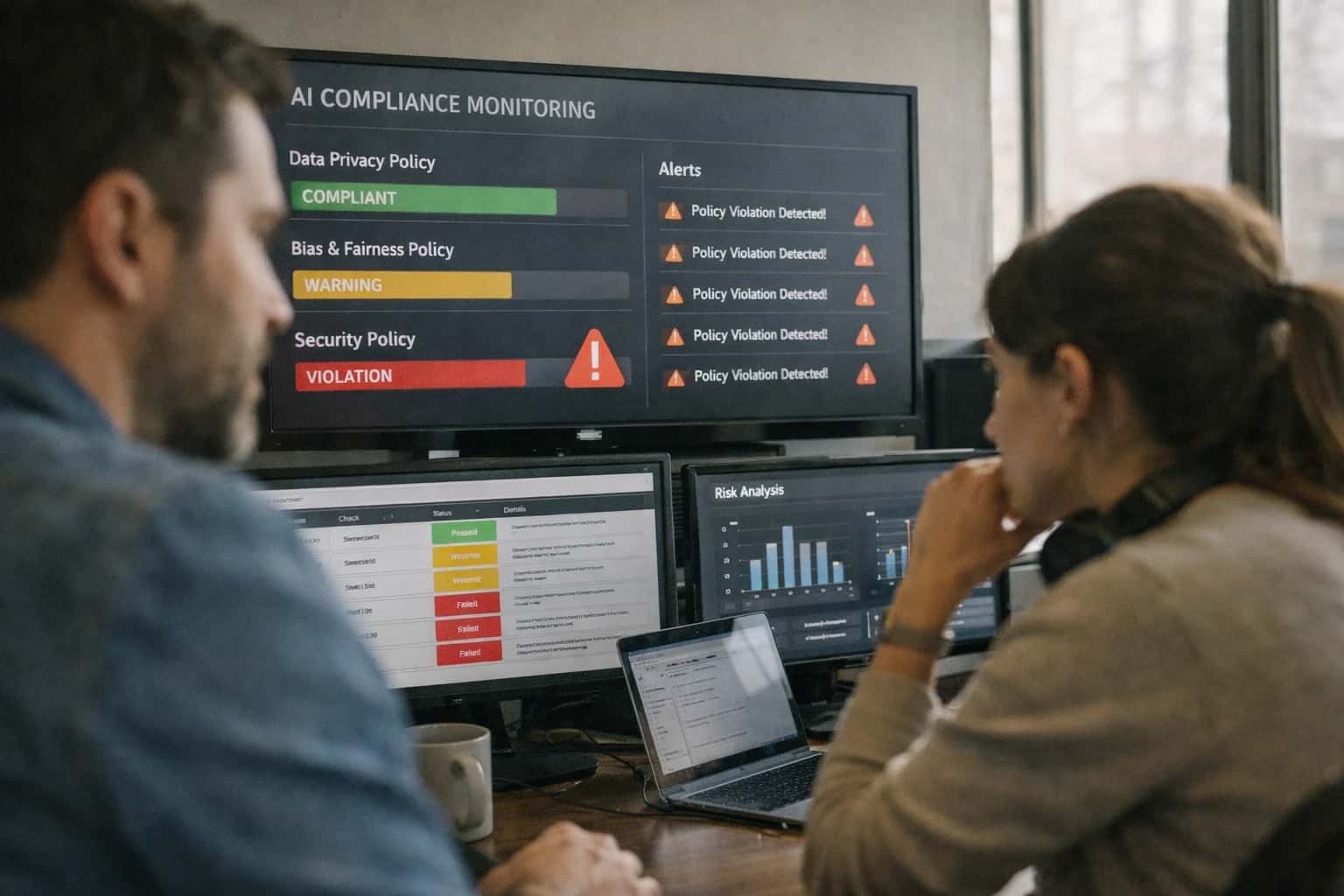
Compliance officer monitoring AI compliance agent on laptop, policy dashboards visible, modern WeWork desk setup.
ARCHITECTURE AND ROLLOUT

Where AI Fits into Skyward Records Management

A technical blueprint for integrating AI into Skyward's student records lifecycle to automate retention, redaction, and compliance workflows.

AI integration connects at three primary surfaces within Skyward's data model and automation layer:

  • Core Student Records (StudentDemographics, EnrollmentHistory): AI agents can monitor, classify, and flag records based on retention policies (e.g., FERPA, state mandates), triggering automated archival or destruction workflows via Skyward's APIs or scheduled jobs.
  • Document Management (DocumentStorage, Imaging modules): For records requiring redaction—such as expunged disciplinary notes or sensitive health information—AI document intelligence (OCR, NER) can be applied to scanned PDFs and images stored in Skyward, automatically identifying and redacting PII before re-uploading the sanitized file.
  • Compliance and Audit Trails (AuditLog, Reporting): AI models analyze audit logs for unusual access patterns or data changes, generating alerts for registrars. They also automate the assembly of compliance evidence packets for audits by extracting and summarizing relevant records and access events.


A production implementation typically involves a middleware layer (e.g., a secure cloud function or container) that subscribes to Skyward webhooks for events like StudentWithdrawal or DocumentUpload. This layer calls AI services for processing, then uses Skyward's REST API to update record statuses, post comments to the audit trail, or move files. For example:

Workflow: A student graduates. An AI agent evaluates the record's type and flags it for a 7-year retention. It schedules a destruction task in the workflow queue and logs the action. Five years later, a records request is submitted. The agent retrieves the record, applies a pre-configured redaction model for third-party disclosures, and generates a compliant copy for the requester—all within the governed Skyward environment.

Rollout should start with a pilot on a single, high-volume record type (e.g., withdrawal packets). Governance is critical: all AI actions must be logged in Skyward's native audit system, and a human-in-the-loop approval step should be required for any permanent destruction. This approach allows district registrars to shift from manual, error-prone review cycles to overseeing an AI-augmented process that ensures consistency and reduces compliance risk.

AI FOR RECORDS RETENTION & COMPLIANCE

Key Integration Points in Skyward's Architecture

Core Data Objects for AI Processing

Skyward's student record architecture centers on key objects like the Student Master Record, Enrollment History, and Document Attachments. AI integrations typically connect here to automate lifecycle management.

  • Student Master (STU_MASTER): Contains demographic, contact, and status data. AI can monitor this for changes triggering retention rules (e.g., graduation, withdrawal) and auto-apply classification tags.
  • Document Manager (STU_DOCS): Stores scanned records (transcripts, immunization forms, IEPs). AI document intelligence (OCR, classification) can process incoming files, extract key fields (dates, names, IDs), and auto-link them to the correct student folder.
  • Enrollment & Exit Records: Track entry/exit dates, withdrawal codes, and graduation status. AI agents can evaluate these dates against state retention schedules (e.g., "destroy records 7 years after graduation") and flag records for review or archival.

Integration is done via Skyward's API or direct database connectors (with appropriate safeguards) to read, tag, and update these objects in near real-time.

RECORDS MANAGEMENT AUTOMATION

High-Value AI Use Cases for Skyward Records

For district registrars and records clerks, AI integration with Skyward transforms manual, compliance-heavy student records workflows into automated, intelligent processes. These use cases target the lifecycle of permanent records, from intake to archival, reducing risk and administrative burden.

01

Automated Records Classification & Retention

Use AI to automatically classify incoming student documents (transcripts, immunization records, IEPs) against your district's retention schedule. The system tags records in Skyward with the correct retention period and disposal date, ensuring compliance without manual review.

Batch -> Real-time
Processing speed
02

Bulk Record Redaction for Privacy

Automate FERPA-compliant redaction when preparing records for third-party requests (e.g., subpoenas, transfers). An AI agent processes batches of PDF records from Skyward, identifies and redacts protected information (SSNs, addresses, disciplinary notes), and logs the action in the audit trail.

Hours -> Minutes
Redaction time
03

Intelligent Records Search & Retrieval

Deploy a RAG-powered search agent over Skyward's document repository. Staff can ask natural language questions ("Find all records for students who withdrew in 2023 with incomplete immunizations") and get precise results with cited source documents, bypassing complex report building.

1 sprint
Typical implementation
04

Graduation Audit & Record Sealing

Automate the year-end graduation audit process. An AI workflow cross-references Skyward student status with completed coursework, flags missing requirements, and upon confirmation, initiates the official record sealing and archival process, generating compliance-ready documentation.

Same day
Audit completion
05

Disposal Workflow Orchestration

Move from calendar-based to policy-aware record disposal. An AI agent periodically reviews Skyward records against retention rules, identifies eligible records, routes them for authorized approval via Skyward workflows, and upon sign-off, executes secure disposal with a full audit log.

Batch -> Automated
Workflow trigger
06

Transcript & Record Verification

Reduce manual verification load. An AI agent handles incoming verification requests from employers or other institutions. It validates requestor authority, extracts key data from the target Skyward record, and generates a standardized, digitally verifiable response, all within defined security boundaries.

SKYWARD RECORDS MANAGEMENT

Example AI-Powered Records Workflows

These concrete workflows illustrate how AI agents can automate high-volume, compliance-sensitive tasks within Skyward's Student Management and Document Center modules, reducing manual effort for registrars and district records clerks.

Trigger: A parent or external institution submits a formal records request via the Skyward Family Access portal or a paper form entered by staff.

Context/Data Pulled: The AI agent retrieves the target student's complete record set from Skyward's Student Management module, including:

  • Core demographics (SPRIDEN)
  • Enrollment history (SGBSTDN)
  • Grades and transcripts (SHRTGPA, SHRTCKG)
  • Attached documents (immunization records, IEPs, disciplinary notes) from the Document Center.

Model/Agent Action: A configured AI model with strict privacy rules reviews each document and data field. It automatically redacts or withholds information based on FERPA, state-specific regulations, and district policy (e.g., sibling information, certain disciplinary details, counselor notes).

System Update/Next Step: The agent generates a redacted PDF package, logs the action with a full audit trail in Skyward, and triggers a workflow task for the registrar to review the final package before release. The task includes a summary of redactions made for human verification.

Human Review Point: Mandatory. The registrar must approve the AI-generated package in the workflow queue before it is released to the requester or printed for mailing.

SECURE, AUDITABLE, AND GOVERNED

Implementation Architecture: Data Flow & System Design

A production-ready architecture for integrating AI into Skyward's records management workflows, ensuring compliance, data integrity, and operational control.

The integration connects to Skyward's core Student Demographics and Document Management modules via its REST API and SSO framework. An AI orchestration layer acts as a middleware, never storing PII long-term. Key data flows include:

  • Ingestion: Secure API calls fetch student record metadata (ID, record type, retention date) and document pointers from Skyward's file storage.
  • Processing: Documents (PDFs, images) are streamed to a secure, transient AI service for tasks like redaction detection, classification, and compliance flagging.
  • Action: Results (e.g., flags for manual review, suggested retention actions) are posted back to Skyward as audit log entries or used to create workflow tasks in Skyward's task management system for registrar staff.

A human-in-the-loop design is critical for governance. The AI suggests actions, but final decisions—like approving a redaction or authorizing a record purge—remain with authorized Skyward users, triggering native Skyward approval workflows. All AI interactions are logged with a correlation ID back to the original Skyward record, creating a complete audit trail. This architecture supports key use cases:

  • Automated Retention Review: AI scans records against policy schedules, flagging those eligible for archival or destruction, and creates review batches in Skyward.
  • Bulk Redaction Support: For digitizing legacy paper records, AI pre-identifies sensitive fields (SSN, health info) for redaction, reducing manual review time from hours to minutes per batch.
  • Compliance Auditing: AI continuously analyzes document uploads and record changes against FERPA and state regulations, generating exception reports directly in Skyward for the compliance officer.

Rollout follows a phased, role-based access model, starting with a pilot group of registrar office staff. Integration points are first deployed in a Skyward test environment using synthetic data. Governance is enforced via Skyward's existing Role-Based Access Control (RBAC), ensuring only users with appropriate permissions (e.g., 'Records Manager') can initiate AI workflows or approve AI-suggested actions. For a deeper look at connecting AI to district operational data, see our guide on AI Integration for SIS Data Warehousing.

SKYWARD RECORDS MANAGEMENT

Code & Payload Examples

Automating Record Intake

When a new student record (e.g., a scanned transcript, immunization form, or IEP) is uploaded to Skyward's document management system, an AI agent can be triggered via webhook to classify and extract key data. This automates the manual filing and data entry performed by district registrars.

Example Webhook Payload from Skyward:

json
{
  "event_type": "document_uploaded",
  "document_id": "SKY-DOC-78910",
  "student_number": "202412345",
  "file_url": "https://district.skyward.com/vault/transcript_scan.pdf",
  "uploaded_by": "j.smith",
  "timestamp": "2024-05-15T14:30:00Z"
}

Python Pseudocode for AI Processing:

python
# Upon receiving webhook, fetch and process document
document_text = extract_text_from_pdf(payload['file_url'])

# Classify document type using AI
classification = ai_classifier.predict({
  "text": document_text,
  "student_grade": get_student_grade(payload['student_number'])
})
# Returns: {"type": "transcript", "subtype": "external_high_school", "confidence": 0.96}

# Extract structured data (e.g., GPA, courses)
extracted_data = ai_extractor.process(document_text, classification['type'])

# Update Skyward Student Records via API
skyward_api.update_student_record(
  student_id=payload['student_number'],
  record_type=classification['type'],
  data=extracted_data,
  source_document_id=payload['document_id']
)
AI-ASSISTED RECORDS MANAGEMENT

Realistic Time Savings & Operational Impact

How AI integration reduces manual effort and improves compliance for district registrars managing student records in Skyward.

Workflow / TaskBefore AIAfter AIKey Impact & Notes

Records Request Fulfillment

Manual search, redaction, and assembly (30-60 mins per request)

AI-assisted retrieval & automated redaction (5-10 mins per request)

Reduces fulfillment time by 75-85%. Human review of redactions remains required for legal compliance.

FERPA-Compliant Redaction

Manual line-by-line review of documents for PII

AI pre-screens documents, highlights PII, suggests redactions

Cuts initial review time by 60%. Registrar approves or adjusts AI suggestions, maintaining control.

Annual Records Purge & Archival

Manual review of retention schedules and student status

AI flags records eligible for purge/archive based on policy rules

Transforms a multi-week project into a prioritized checklist. Final approval stays with records officer.

Incoming Document Classification & Routing

Clerical staff manually sort and file scanned documents

AI auto-classifies document type (transcript, IEP, health form) and routes to correct student folder

Eliminates 2-3 hours of daily sorting. Staff focus on exceptions and quality control.

Transcript & Record Verification

Manual comparison of external records against Skyward data

AI extracts key data (courses, grades, dates) and highlights discrepancies for reviewer

Reduces verification time per record by 50%. Ensures consistency and catches potential errors.

Compliance Audit Preparation

Manual compilation of sample records and audit trails

AI assembles audit packages, generates coverage reports, and identifies potential gaps

Turns days of prep into hours. Provides defensible documentation for state/federal auditors.

Parent/Student Record Inquiry Triage

Staff manually look up records to answer phone/email questions

AI-powered self-service portal answers common status questions using secure, real-time data

Deflects 40-60% of routine inquiries. Staff handle complex cases, improving service levels.

ENSURING COMPLIANCE AND CONTROLLED ADOPTION

Governance, Security & Phased Rollout

A practical framework for deploying AI in Skyward's regulated records environment with appropriate controls and a risk-aware rollout.

Implementing AI for records management in Skyward requires a governance-first approach, as you're handling sensitive PII, FERPA-protected data, and district retention policies. The architecture must enforce strict access controls, aligning AI agent permissions with existing Skyward user roles (e.g., Registrar, Counselor, District Admin). All AI interactions should be logged to Skyward's native audit trails or a dedicated compliance log, capturing the prompt, source record ID, AI-generated output, and the human reviewer who approved it. This creates a defensible chain of custody for any AI-assisted decision, such as redacting a disciplinary note or classifying a record for archiving.

A phased rollout minimizes risk and builds institutional trust. Phase 1 (Pilot): Start with a low-risk, high-volume workflow like automated document classification for incoming student records (transcripts, immunization forms). Use a human-in-the-loop design where the AI suggests a filing location (e.g., Health Records folder) and a staff member in the Registrar's office reviews and confirms. Phase 2 (Expansion): Move to semi-automated redaction for public records requests, where the AI highlights potentially sensitive phrases in a Skyward document based on trained patterns, and a records officer makes the final redaction call within the system. Phase 3 (Optimization): Implement proactive retention scheduling, where AI agents analyze record metadata and activity to flag records eligible for archival or destruction per district policy, triggering Skyward workflow approvals.

Security is non-negotiable. AI models should never retain Skyward data post-processing. We recommend a pattern where data is securely extracted via Skyward APIs for processing in a transient, isolated environment, with results written back as a note, a new document version, or a workflow status—never storing raw student data in external AI platforms. For districts using Skyward's hosted environment, this often means deploying the AI processing layer within the district's own secure cloud or data center, maintaining the existing data boundary. Regular audits should compare AI-suggested actions against manual baselines to monitor for drift and ensure consistent application of policy, turning the integration into a compliance asset rather than a liability.

AI INTEGRATION WITH SKYWARD RECORDS MANAGEMENT

Frequently Asked Questions (FAQ)

Practical questions for district registrars, IT directors, and compliance officers planning AI integration for student records retention, redaction, and lifecycle management within Skyward.

AI integration follows a zero-trust, API-first architecture designed for FERPA and state data privacy compliance.

  1. Authentication & RBAC: AI agents authenticate via Skyward's API using service accounts with scoped permissions (e.g., Records.Read, Documents.Write). Permissions mirror the principle of least privilege, ensuring the AI only accesses records necessary for a specific workflow.
  2. Data Flow: Records are never permanently copied. The AI system pulls records via API for transient processing. For redaction workflows, the system might:
    • Query the StudentDocuments table for a specific record batch.
    • Process document text/images in a secure, isolated runtime.
    • Return redaction coordinates or a processed document via API for Skyward to apply and store.
  3. Audit Trail: Every AI-initiated action (document access, redaction suggestion, retention flag) is logged in Skyward's native audit log and our system's trace, creating a dual-layer audit trail for compliance reviews.
  4. Data Residency: Processing can be configured to occur within your district's cloud or on-premises environment, ensuring records never leave your controlled infrastructure unless explicitly required for a vendor service (with appropriate BAAs).
Prasad Kumkar

About the author

Prasad Kumkar

CEO & MD, Inference Systems

Prasad Kumkar is the CEO & MD of Inference Systems and writes about AI systems architecture, LLM infrastructure, model serving, evaluation, and production deployment. Over 5+ years, he has worked across computer vision models, L5 autonomous vehicle systems, and LLM research, with a focus on taking complex AI ideas into real-world engineering systems.

His work and writing cover AI systems, large language models, AI agents, multimodal systems, autonomous systems, inference optimization, RAG, evaluation, and production AI engineering.


