AI integration for regulatory reporting targets the extract, transform, and validate stages of the reporting lifecycle. Instead of manual data pulls and spreadsheet reconciliation, AI agents connect directly to Banner's Operational Data Store (ODS), Student (SGASTDN), Financial Aid (RRAWRD), and Finance (FGB) tables via secure APIs. The primary function is to execute complex, rule-based queries (e.g., for IPEDS Fall Enrollment or Graduation Rates), then use natural language and logic models to interpret the results, flag discrepancies against prior submissions, and generate narrative explanations for data anomalies that often require institutional knowledge to resolve.

Integration
AI Integration with Ellucian Banner Regulatory Reporting
Automate complex federal and state compliance reporting (IPEDS, Gainful Employment) by extracting, transforming, and validating data from Ellucian Banner with AI-assisted workflows, reducing manual effort and audit risk.
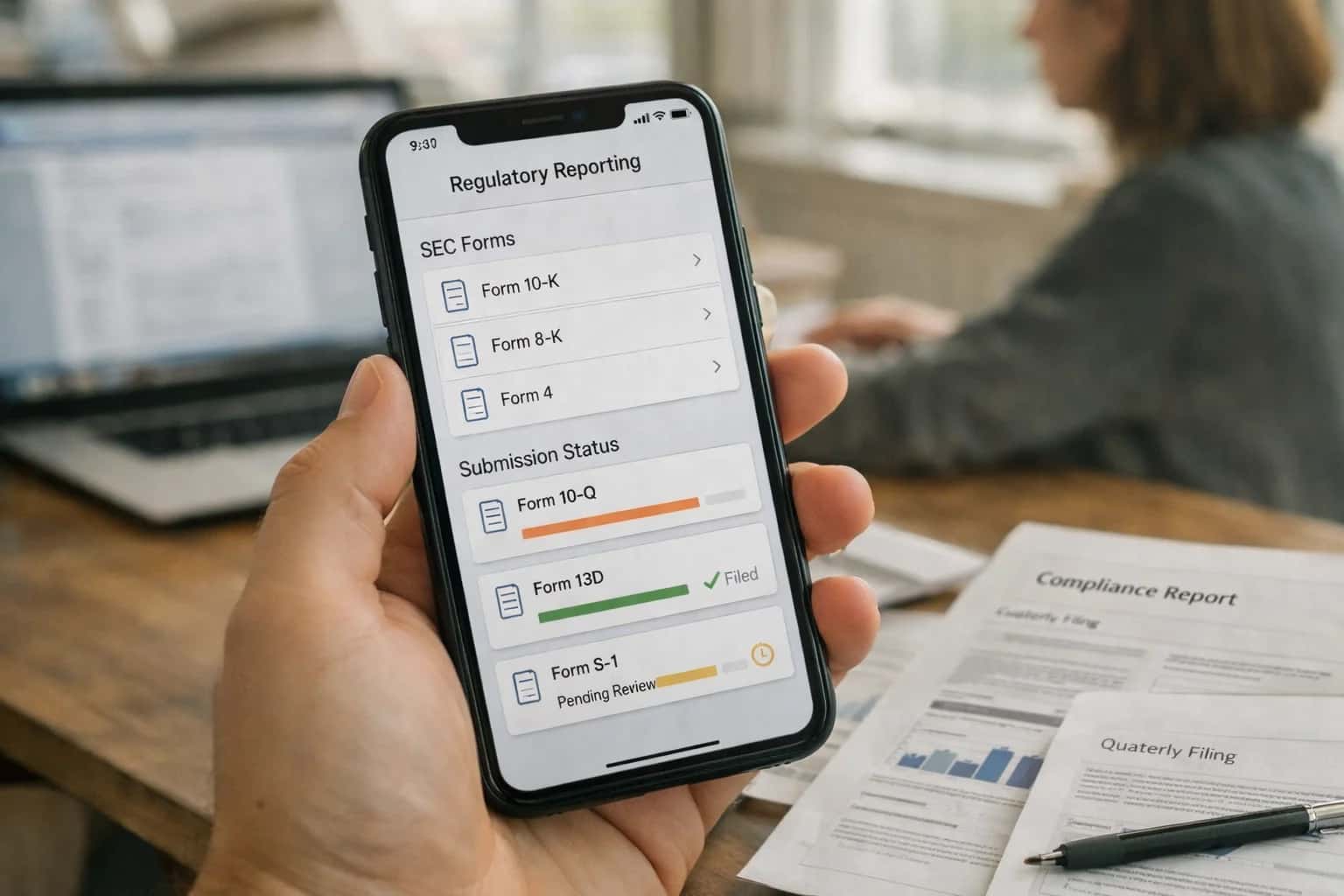
ARCHITECTURE FOR IPEDS, GAINFUL EMPLOYMENT, AND STATE MANDATES
Where AI Fits in Banner Regulatory Reporting
A technical blueprint for automating complex higher education compliance reporting by connecting AI directly to Ellucian Banner's operational data.
The implementation centers on a governed workflow: 1) Scheduled Extraction via Banner-supplied views or direct SQL (with appropriate governance), 2) AI-Assisted Validation where the system compares extracted figures to historical trends and peer benchmarks, highlighting outliers for human review, and 3) Narrative Assembly where a large language model drafts the required contextual statements and data definitions for the submission package. For reports like Gainful Employment, this includes calculating debt-to-earnings ratios from disparate Banner modules and drafting the required program-level disclosures. The impact is measured in weeks saved per reporting cycle and reduced audit risk from manual transposition errors.
Rollout requires tight coordination with the Office of Institutional Research (IR) and IT database teams. A pilot typically begins with a single, high-volume report (e.g., IPEDS Fall Enrollment). Governance is critical: all AI-generated validations and narratives require human-in-the-loop approval within a dedicated dashboard before submission, creating a clear audit trail. The system is architected to be report-agnostic, allowing the same pipeline to be adapted for state-level accountability reports or accreditation self-studies by updating the query logic and validation rules, making Banner's data a consistent, AI-ready source for all compliance obligations.
REGULATORY REPORTING AUTOMATION
Key Banner Data Surfaces for AI Integration
Core Student Demographics & Enrollment
These foundational Banner tables are the primary source for IPEDS and other federal compliance reports. AI integration focuses on extracting, validating, and transforming this data.
Key Tables & Fields for AI:
- SPAIDEN (General Person): Student ID, name, birth date, citizenship, ethnicity/race codes.
- SGASTDN (Student General): Admission term, primary major (LEVL_CODE, DEGC_CODE), residency status (RESD_CODE), full/part-time status (STYP_CODE).
- SGBSTDN (Student Status): Current academic status (STST_CODE), good standing flags.
AI Use Cases:
- Automated Validation: Cross-reference SPAIDEN ethnicity codes with self-service portal updates to flag discrepancies for human review before IPEDS submission.
- Trend Analysis: Use historical SGASTDN data to predict cohort sizes (e.g., first-time, full-time) for future reporting cycles.
- Data Cleansing: Identify and suggest corrections for inconsistent residency or level codes that could trigger audit flags.
ELLUCIAN BANNER
High-Value AI Use Cases for Regulatory Reporting
Automate the most complex, time-consuming, and error-prone aspects of higher education compliance reporting by integrating AI directly with Ellucian Banner's data model and workflows.
01
Automated IPEDS Data Assembly & Validation
Use AI agents to query Banner's operational data store (ODS) and student tables (e.g., SGASTDN, SPRIDEN) to assemble IPEDS survey components. The system validates data against IPEDS rules, flags inconsistencies for human review, and generates narrative explanations for anomalies, cutting manual compilation from weeks to days.
Weeks -> Days
Survey compilation
02
Gainful Employment Document Intelligence
Process and analyze student financial aid records (RFRBASE, RORSTAT), program completion data, and earnings disclosures. AI extracts key metrics, performs debt-to-earnings calculations, and drafts the required disclosure narratives, ensuring consistent, audit-ready reporting for each eligible program.
Batch -> Continuous
Compliance monitoring
03
State Authorization & SARA Reporting
Maintain a real-time view of state regulatory compliance by connecting AI to Banner's student geographic data and course registration tables (SFAREGS). The system tracks enrollment by state, monitors for threshold breaches, and auto-generates required notifications and reports for SARA and state agencies.
Reduce Audit Risk
Proactive tracking
04
Financial Aid Compliance (FISAP, CFR) Workflow
Orchestrate the annual FISAP and Common Financial Reporting (CFR) process. AI agents pull data from Banner Financial Aid modules (RFRBASE, ROBINST), transform it into required formats, populate templates, and route exceptions through an approval workflow in tools like ServiceNow or Jira, linked back to Banner records.
1 Sprint
Implementation timeline
05
Clery Act & Campus Safety Reporting
Integrate AI with Banner's student and course location data, and incident reporting systems. The system geocodes and categorizes reportable incidents, maintains the daily crime log, and assists in drafting the Annual Security Report by pulling structured data and generating compliant narrative sections.
Same-Day
Log updates
06
Accreditation Self-Study Data Synthesis
For programmatic and institutional accreditation, use RAG (Retrieval-Augmented Generation) across Banner data, course catalogs (SCBCRSE), and assessment repositories. AI answers data requests, generates evidence-based narratives for standards, and creates executive summaries, turning a year-long data chase into a coordinated, queryable process.
Months -> Weeks
Evidence assembly
AUTOMATING IPEDS, GAINFUL EMPLOYMENT, AND STATE MANDATES
Example AI-Assisted Reporting Workflows
These concrete workflows illustrate how AI agents and automation can connect to Ellucian Banner's data model (SPAIDEN, SGASTDN, SFRSTCR, SFAREGS) and external document stores to assemble, validate, and submit complex regulatory reports. Each flow is designed to reduce manual compilation time from days to hours while improving data accuracy and audit readiness.
Trigger: Scheduled quarterly run 30 days before IPEDS submission deadline.
Context/Data Pulled:
- Agent queries Banner Operational Data Store (ODS) for term-specific headcounts, disaggregated by SGASTDN fields:
LEVL_CODE(undergrad/graduate),STYP_CODE(full/part-time),ETHN_CODE,SEX,MAJR_CODE_1,DEGC_CODE. - Agent retrieves completion records (
SHRDGMR,SHRTCKN) for the reporting year, mapping to CIP codes. - Agent fetches prior-term data for retention rate calculations from
SFBETRMandSFRSTCR.
Model/Agent Action:
- LLM-powered validator reviews the extracted dataset against IPEDS data quality rules (e.g., ratios of FTE to headcount, expected completion counts by program size). It flags anomalies like a sudden 40% drop in a major's completions.
- Agent generates a narrative summary of key changes from prior year, highlighting trends (e.g., "Graduate part-time enrollment increased 12% year-over-year, driven by College of Business online programs").
- Agent pre-populates the IPEDS web forms (via secure API session) with the validated data.
System Update/Next Step:
- A draft report package (data file, validation log, narrative) is saved to a secure network drive and linked to a tracking record in a Banner
GENERALtable (GTVDATA). - Email notification with a summary and a link to the validation log is sent to the Institutional Research (IR) director.
Human Review Point: The IR director reviews the flagged anomalies and the narrative in the validation log. They can approve the submission, request a re-run with adjusted filters, or export the data for manual correction in the IPEDS portal before final sign-off.
REGULATORY REPORTING AUTOMATION
Implementation Architecture: Connecting AI to Banner
A technical blueprint for automating complex IPEDS and Gainful Employment reporting by integrating AI directly with Ellucian Banner's operational data.
The integration connects to Banner's core student and financial tables—like SGASTDN, SFRSTCR, SHRDGMR, and TBRACCD—via secure, read-only API calls or direct database connections to Banner's Operational Data Store (ODS). An AI orchestration layer extracts the required raw data points for a given report cycle, transforming them into the structured formats mandated by regulators. This process replaces manual SQL queries and spreadsheet manipulation with an automated pipeline that can handle complex joins, term-based filters, and institutional logic (e.g., full-time equivalency calculations, cohort definitions).
Key to the workflow is an AI validation agent that cross-references extracted figures against historical submissions and predefined business rules, flagging anomalies (e.g., a 30% swing in Pell Grant recipient counts) for human review before submission. The system logs all data lineages, transformation steps, and approval decisions within an audit trail, which is essential for compliance audits. For iterative reports like IPEDS, the AI can generate narrative summaries explaining data trends, which are then reviewed and edited by institutional research staff.
Rollout is typically phased, starting with a single high-volume report (e.g., IPEDS Fall Enrollment) to validate the data pipeline and governance model. The architecture is designed to be report-agnostic, allowing new regulatory templates (like Gainful Employment) to be added as configuration, not code. This approach reduces the reporting burden from weeks of manual compilation to days of review, while providing a consistent, auditable process for the institution's most critical compliance obligations.
AI-ASSISTED REGULATORY REPORTING
Code and Payload Examples
Extracting and Structuring IPEDS Data from Banner
Automating IPEDS reporting begins with extracting and validating data from Banner's core student and finance tables. AI agents can query Banner's Operational Data Store (ODS) or direct database views to retrieve cohort-specific records, then apply validation rules to flag inconsistencies before submission.
A typical workflow involves:
- Querying
SGASTDNandSHRDGMRfor degree completers. - Joining with
SPAIDENfor demographic data. - Validating CIP codes and residency status against IPEDS specifications.
- Generating a structured JSON payload for the reporting API or for human review.
This process reduces manual data reconciliation from weeks to days and ensures audit-ready traceability.
AI-ASSISTED REGULATORY REPORTING
Realistic Time Savings and Operational Impact
How AI integration transforms manual, high-risk reporting workflows for IPEDS, Gainful Employment, and state compliance by automating data extraction, validation, and narrative generation from Ellucian Banner.
| Workflow / Report | Before AI (Manual Process) | After AI (Assisted Process) | Implementation Notes |
|---|---|---|---|
IPEDS Fall Enrollment (EF) | 2-3 weeks of manual SQL queries, spreadsheet consolidation, and peer review | 3-5 days with automated data pulls, discrepancy flagging, and draft narrative | AI validates against prior submissions and flags outliers; human final review required |
Gainful Employment (GE) Reporting | 4-6 weeks per program for data assembly, calculation, and documentation | 1-2 weeks with automated cohort tracking, metric calculation, and disclosure drafting | AI maps Banner financial aid, academic, and employment data; generates draft disclosures for legal review |
State Authorization & SARA Reporting | Quarterly manual audits of student locations vs. authorized states | Continuous monitoring with automated alerts for out-of-compliance enrollments | AI cross-references Banner student records with authorization database; triggers workflow for review |
Financial Aid Compliance (FISAP, etc.) | Manual reconciliation between Banner FA modules and federal templates | Assisted reconciliation with AI highlighting mismatches and suggesting corrections | AI extracts and transforms data into required formats; human confirms adjustments before submission |
Data Validation & Audit Trail Creation | Post-submission manual sampling to verify report accuracy | Pre-submission automated validation checks with full audit log | AI runs consistency checks across Banner tables (SPAIDEN, SGASTDN, etc.) and logs all transformations |
Narrative & Executive Summary Drafting | Days spent writing contextual summaries for leadership and boards | Hours to generate first-draft narratives from approved data points | AI synthesizes key metrics and trends into prose; communications staff edits for tone and strategy |
Correction & Resubmission Workflow | Reactive, high-pressure manual investigation after errors are flagged | Proactive simulation and error detection before official submission | AI 'dry-runs' submissions against known validation rules; identifies potential rejections early |
CONTROLLED IMPLEMENTATION FOR REGULATED DATA
Governance, Security, and Phased Rollout
A secure, auditable approach to automating IPEDS, Gainful Employment, and other mandatory reports.
Regulatory reporting integrations require strict data governance. We architect solutions that connect to Ellucian Banner's operational data store (ODS) or specific Banner tables (e.g., SFRSTCR, SFAREGS, SGBSTDN) via read-only service accounts, ensuring source system integrity. AI agents are configured to extract and transform data within a secure processing layer, never writing back to Banner's core transactional tables. All data flows, prompts, and transformation logic are logged to an immutable audit trail, creating a clear lineage from raw Banner data to final submitted report for compliance officers and auditors.
Security is enforced through role-based access control (RBAC) at multiple levels: the service account accessing Banner, the AI processing environment, and the final report distribution workflow. Sensitive student data (PII, financial aid information) used in reports like IPEDS Finance or Student Financial Aid is masked or tokenized during processing. We implement approval gates within the workflow where a designated institutional officer (e.g., IPEDS Keyholder) must review and sign off on the AI-generated data file before submission, maintaining human oversight for critical compliance steps.
A phased rollout is essential for user adoption and risk management. We recommend starting with a single, well-defined report—such as the IPEDS Fall Enrollment (EF) component—to validate the data pipeline, transformation logic, and output accuracy against the previous year's manually produced file. Subsequent phases can automate more complex reports like Graduation Rates (GR) or Gainful Employment, each requiring its own validation cycle. This approach allows your institutional research team to build trust in the system, refine prompts and business rules, and manage change without disrupting the annual reporting calendar.
Enabling Efficiency, Speed & Accuracy
Intelligent Analysis, Decision & Execution
We build AI systems for teams that need search across company data, workflow automation across tools, or AI features inside products and internal software.
Talk to Us
Search across company data
Give teams answers from docs, tickets, runbooks, and product data with sources and permissions.
Useful when people spend too long searching or get different answers from different systems.
Enterprise searchRAGPermissions
Read more
Automate internal workflows
Use AI to route work, draft outputs, trigger actions, and keep approvals and logs in place.
Useful when repetitive work moves across multiple tools and teams.
AI agentsWorkflow automationGovernance
Read more
Add AI to products and internal tools
Build assistants, guided actions, or decision support into the software your team or customers already use.
Useful when AI needs to be part of the product, not a separate tool.
AI integrationDecision supportModel routing
Read moreAI INTEGRATION FOR REGULATORY REPORTING
FAQ: Technical and Commercial Questions
Practical questions about implementing AI to automate IPEDS, Gainful Employment, and other complex regulatory reports from Ellucian Banner data.
The integration uses a layered approach to connect to Banner's data securely, prioritizing the Operational Data Store (ODS) or direct database views.
Primary Data Sources:
- Banner ODS/EDW: The preferred source for aggregated, reporting-ready student, course, and financial aid data. We build SQL-based extraction jobs or leverage existing ODS feeds.
- Banner Base Tables: For real-time or highly specific data points not yet in the ODS, we use read-only database users with strict RBAC to query tables like
SGASTDN(student general),SFAREGS(registration), andRFRBASE(financial aid). - Banner Self-Service APIs: For certain student-facing data points or to trigger workflows, we use Banner's SOAP or REST APIs.
Extraction & Transformation Flow:
- Scheduled Ingestion: Airflow or similar orchestrators run extraction jobs during off-peak hours, pulling delta changes.
- Staging Area: Data lands in a secure cloud storage (e.g., S3, Blob Storage) or database staging schema.
- AI-Assisted Transformation: LLM agents are prompted with the specific reporting rule (e.g., IPEDS Fall Enrollment definitions) to map raw Banner fields to the required metrics, handling complex conditional logic.
- Validation Layer: The transformed data is checked against predefined rules and historical submissions to flag anomalies before final assembly.

About the author
Prasad Kumkar
CEO & MD, Inference Systems
Prasad Kumkar is the CEO & MD of Inference Systems and writes about AI systems architecture, LLM infrastructure, model serving, evaluation, and production deployment. Over 5+ years, he has worked across computer vision models, L5 autonomous vehicle systems, and LLM research, with a focus on taking complex AI ideas into real-world engineering systems.
His work and writing cover AI systems, large language models, AI agents, multimodal systems, autonomous systems, inference optimization, RAG, evaluation, and production AI engineering.
LinkedIn
Limited slotsGet a Free AI Consultation
Partnered with leading AI, data, and software stack.





How We Work
Custom AI workflows for your Business
One-fit-all AI don't work for modern businesses. At Inferensys, we aim to understand your business & custom requirements; which we use to define most efficient agentic workflows, the data, and the tools for your business.
01
Review the use case
We understand the task, the users, and where AI can actually help.
Read more02
Pick the right approach
We define what needs search, automation, or product integration.
Read more03
Build the first useful version
We implement the part that proves the value first.
Read more04
Improve from there
We add the checks and visibility needed to keep it useful.
Read moreThe first call is a practical review of your use case and the right next step.
Talk to Us