The integration connects directly to the core data objects and workflows within Intelex's Audit Management and Risk Management modules. AI acts on the Audit Entity (site, process, department) and its associated risk factors, which are typically stored across related records: historical audit findings, incident reports, corrective action statuses, compliance obligation scores, and asset inspection data. Instead of relying on a fixed, manually weighted formula, an AI model continuously analyzes this aggregated data to generate a quantitative risk score. This score dynamically updates as new incidents are logged, corrective actions close, or compliance deadlines approach, ensuring the audit plan reflects the current risk landscape.

Integration
AI Integration for Intelex Audit Risk Assessment
Use AI to automate quantitative risk scoring for audit entities in Intelex. Generate dynamic risk scores, optimize annual audit plans, and prioritize sites based on combined incident, compliance, and operational data.
ARCHITECTURE AND ROLLOUT
Where AI Fits into Intelex Audit Risk Assessment
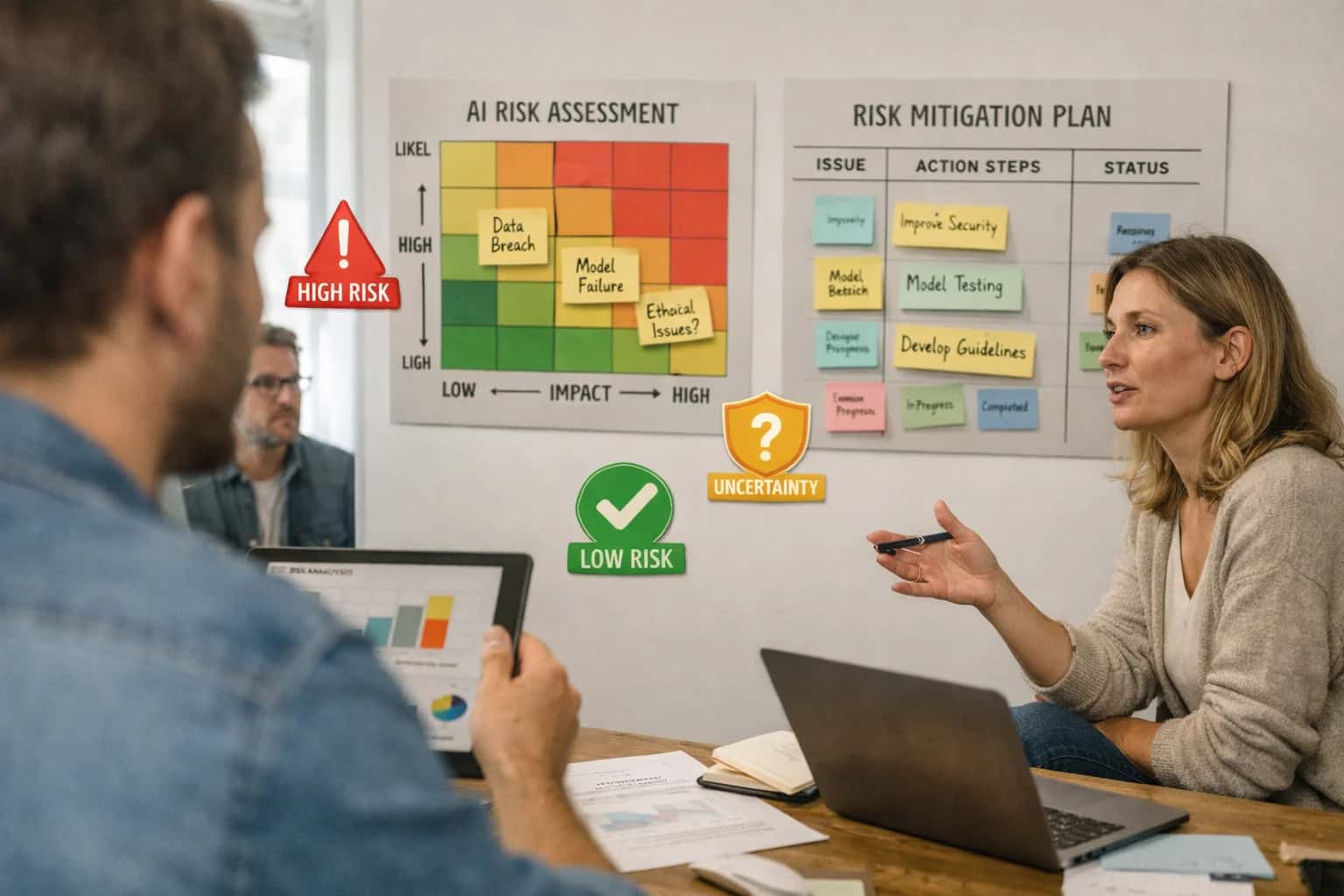
Integrating AI into Intelex's audit risk assessment transforms a static, manual scoring process into a dynamic, data-driven engine for optimizing your annual audit plan.
Implementation involves deploying a lightweight service that polls Intelex's REST API for changes to these source records. This service feeds a vector store or feature database, where a risk-scoring model—trained on your historical audit outcomes—runs on a scheduled basis. The resulting scores and rankings are written back to a custom object or field within Intelex, seamlessly integrating into the existing Audit Scheduling workflow. Auditors and EHS managers can then filter and sort the audit register by AI-prioritized risk, allocate resources to high-priority targets first, and justify the audit plan with data-driven rationale. The impact is moving from an audit schedule based on calendar rotation or intuition to one optimized for risk mitigation, potentially preventing major findings or incidents.
Rollout should be phased, starting with a pilot group of entities. Governance is critical: the AI's scoring rationale must be explainable, often through a companion report highlighting the top contributing risk factors (e.g., "Score elevated due to 3 open high-severity findings from Q4 audit and 2 recent recordable incidents"). This maintains human oversight and allows for model tuning. The final architecture should include an audit trail of score changes and the ability for users to manually override rankings with justification, ensuring the AI augments—rather than replaces—expert judgment. For a deeper look at connecting AI to broader compliance workflows, see our guide on AI Integration for Intelex Compliance Reporting.
AUDIT RISK ASSESSMENT
Intelex Modules and Surfaces for AI Integration
Core Audit Planning Surface
The Audit Management Module is the primary system of record for scheduling, executing, and tracking audits. This is the central surface where AI-driven risk scoring directly influences the annual audit plan.
Key integration points for AI include:
- Audit Schedule Object: Inject AI-generated risk scores as a custom field to prioritize and sort the audit calendar. This allows planners to filter and visualize sites by dynamic risk level.
- Audit Entity Records: Each site, process, or department subject to audit has a profile. AI can enrich these records by correlating risk factors from across the EHS platform (incidents, observations, past findings) to generate a composite risk score.
- Planning Workflows: Use AI scores to trigger automated workflows, such as assigning high-risk audits to senior auditors or requiring additional review steps for sites above a certain risk threshold.
The goal is to move audit planning from a static, calendar-based exercise to a dynamic, risk-informed program where resources are allocated to the areas of greatest potential exposure.
INTELEX AUDIT RISK ASSESSMENT
High-Value AI Use Cases for Audit Risk
Transform static audit schedules into dynamic, risk-based plans. These AI integration patterns connect to Intelex's audit management, incident, compliance, and observation modules to quantitatively score and rank audit entities, optimizing resource allocation and compliance coverage.
01
Dynamic Risk-Based Audit Scheduling
AI continuously scores sites, processes, or departments based on a weighted model of incident history, audit finding recurrence, compliance deadline proximity, and safety observation trends. Integrates with the Intelex Audit Management module to automatically generate and prioritize the annual audit plan, shifting resources to highest-risk areas.
Weeks -> Hours
Plan generation
02
Predictive Finding & Deficiency Forecasting
Analyzes historical audit data and correlated records (e.g., corrective actions, incidents) to predict the most likely types of findings for a given entity. Before an audit, the system generates a targeted checklist and highlights high-probability risk areas for the auditor, increasing inspection depth and efficiency.
Batch -> Proactive
Audit prep
03
Automated Audit Entity Risk Profiling
Replaces manual risk matrices with an AI agent that ingests data from across Intelex—incident rates, open CAPA items, training compliance percentages, permit statuses—to create a live, quantitative risk score for each auditable unit. Profiles update in real-time and feed dashboards and scheduling workflows.
Manual -> Automated
Scoring
04
Cross-Module Risk Correlation Engine
Identifies hidden risk patterns by connecting data across siloed Intelex modules. For example, correlates a spike in maintenance work orders in Asset Management with near-miss reports in Incident Management to flag a specific site for an operational safety audit, uncovering systemic issues earlier.
Silos -> Unified View
Risk insight
05
Regulatory Change Impact Scoring
When a new regulation is loaded into Intelex's compliance calendar, AI analyzes the text and maps requirements to existing controls, past findings, and entity characteristics. It then scores each site/process for potential impact, automatically recommending which audits should be scoped to include the new requirement.
Reactive -> Proactive
Compliance
06
Audit Resource Optimization & Forecasting
Uses AI to model audit duration, required auditor skill sets, and travel logistics against the dynamic risk-based schedule. Integrates with the audit plan to forecast quarterly resource needs, identify bottlenecks, and recommend optimal auditor assignments, improving utilization and ensuring high-risk audits get top talent.
1 sprint
Capacity planning
INTELEX AUDIT RISK ASSESSMENT
Example AI-Powered Audit Risk Workflows
These workflows demonstrate how AI can be integrated into Intelex's audit management module to dynamically score and rank audit entities, transforming a static annual plan into a dynamic, risk-based program. Each flow connects to specific Intelex objects and APIs.
Trigger: Monthly batch job, or triggered by a new incident, audit finding, or observation within Intelex.
Context/Data Pulled: The AI agent queries Intelex APIs for the last 12 months of data for all active sites/entities:
GET /api/v1/incidents(filtered by site, severity)GET /api/v1/audit-findings(filtered by site, status='Open', severity)GET /api/v1/observations(filtered by site, category='Hazard')GET /api/v1/corrective-actions(filtered by site, status='Overdue')GET /api/v1/sites(for static attributes like process type, employee count)
Model/Agent Action: A scoring model (e.g., a small, fine-tuned model or a rules engine augmented with an LLM for narrative) evaluates each site against a weighted set of risk factors (e.g., incident frequency * severity, open high-risk findings count, overdue CAPAs). The LLM generates a concise risk summary for each site.
System Update: The agent posts the new risk score and summary back to a custom object in Intelex, e.g., POST /api/v1/audit-risk-scores. This object is linked to the Site record.
Human Review Point: The updated Audit Plan dashboard in Intelex flags any site whose risk score increased by more than 20% for review by the Audit Manager before the next scheduling cycle.
FROM RISK REGISTERS TO OPTIMIZED AUDIT PLANS
Implementation Architecture: Data Flow and Guardrails
A production-ready AI integration for Intelex audit risk assessment connects live platform data to a governed scoring engine, automating the prioritization of audit entities.
The core architecture establishes a scheduled data pipeline that extracts key entities from Intelex—typically Audit Schedules, Sites, Processes, Incident Reports, Corrective Actions, and Risk Registers—via its REST API or a direct database connection. This data is transformed into a unified risk profile for each auditable entity. The AI model, often a custom ensemble or fine-tuned LLM, consumes this structured profile alongside contextual documents (past audit reports, policies) retrieved via RAG. It outputs a quantitative risk score and a ranking rationale, which is written back to a custom object in Intelex (e.g., AI Risk Assessment) and linked to the corresponding Audit Schedule record.
Critical guardrails are implemented at multiple layers. A pre-scoring validation step checks for data completeness and flags entities with insufficient history for reliable scoring. The model's output is compared against a configurable business rules engine; for example, a site with a recent major incident might be automatically elevated to 'High Risk' regardless of the model score. All scores and rationales are logged with full audit trails in a separate system, capturing the input data snapshot, model version, and any overrides applied by the business rules. This enables periodic human-in-the-loop reviews where EHS managers can validate or adjust rankings, creating a feedback loop to retrain and improve the model.
Rollout follows a phased approach, starting with a pilot cohort of sites or processes. During the pilot, the AI-generated audit plan runs in parallel with the existing manual process, allowing for comparison and calibration. Governance is maintained through a cross-functional steering committee (EHS, Internal Audit, IT) that reviews performance metrics like model accuracy, planner time saved, and the correlation between AI-prioritized audits and significant findings. The final integration triggers automated workflows in Intelex, such as updating the Annual Audit Plan and notifying assigned auditors, but always requires a final managerial approval step before the audit schedule is officially locked.
INTELEX AUDIT RISK ASSESSMENT
Code and Payload Examples
Parsing Audit & Operational Data
Before scoring, you must extract structured risk factors from Intelex records. This Python example uses the Intelex REST API to fetch recent incidents, audit findings, and inspection data for a given site, then uses an LLM to summarize key risk themes.
pythonimport requests import json # Fetch recent high-severity incidents for a site incidents_response = requests.get( f"{intelex_base_url}/api/v1/incidents", headers={"Authorization": f"Bearer {api_token}"}, params={ "site_id": site_id, "severity": ["High", "Critical"], "date_from": "2024-01-01", "limit": 50 } ) incidents = incidents_response.json()['data'] # Prepare a prompt for the LLM to extract risk factors risk_prompt = f""" Analyze these incident summaries and extract recurring risk factors. Focus on: process failures, equipment issues, training gaps, procedural violations. Incidents: {json.dumps([i['description'] for i in incidents[:5]], indent=2)} Return a JSON array of risk factor objects with 'factor_name' and 'evidence_count'. """ # Call LLM (e.g., via OpenAI) llm_response = openai.chat.completions.create( model="gpt-4o-mini", messages=[{"role": "user", "content": risk_prompt}], response_format={ "type": "json_object" } ) extracted_factors = json.loads(llm_response.choices[0].message.content)
This creates a dynamic set of risk factors based on actual operational data, moving beyond static checklists.
AI-PRIORITIZED AUDIT SCHEDULING
Realistic Time Savings and Operational Impact
This table shows the typical operational impact of integrating AI-driven risk scoring into Intelex's annual audit planning workflow, moving from a static, calendar-based schedule to a dynamic, risk-informed plan.
| Metric | Before AI | After AI | Notes |
|---|---|---|---|
Annual audit plan creation | 2-3 weeks of manual analysis | 1-2 days of AI-assisted prioritization | AI scores and ranks sites/processes; planner reviews and adjusts. |
Risk factor consolidation | Manual spreadsheet compilation from 5+ data sources | Automated ingestion and weighting from connected Intelex modules | Pulls from incidents, observations, compliance history, and asset criticality. |
Audit entity scoring | Qualitative high/medium/low ratings | Quantitative 1-100 risk score with explainable factors | Enables precise ranking and defensible resource allocation. |
Stakeholder alignment meetings | Multiple meetings to justify schedule | Single review meeting with data-backed proposal | AI-generated report provides audit rationale for each selected entity. |
Plan adjustment for mid-year events | Reactive, ad-hoc reshuffling | Proactive, quarterly re-scoring and alerting | AI monitors live data; flags entities whose risk profile changes significantly. |
Regulatory coverage assurance | Manual checklist review | Automated gap analysis against obligations | AI maps audit targets to specific regulatory requirements to ensure coverage. |
Audit resource forecasting | Based on previous year's effort | Modeled on risk score and historical audit duration | Improves accuracy of internal and external auditor day planning. |
CONTROLLED IMPLEMENTATION FOR AUDIT PLANNING
Governance, Security, and Phased Rollout
Deploying AI for audit risk scoring requires a controlled, phased approach that prioritizes data security, model transparency, and stakeholder alignment.
The integration architecture is designed to keep sensitive audit and operational data within your Intelex environment. The AI model operates as a headless service that connects via Intelex's REST API, pulling only the necessary risk factor data (e.g., past audit findings, incident rates, corrective action status, compliance calendar due dates) to generate scores. All data processing occurs within your designated cloud or on-premises infrastructure; no raw audit entity data is sent to external LLM APIs. Instead, we use a retrieval-augmented generation (RAG) pattern where a local vector store contains your internal policies and risk criteria, grounding the model's reasoning in your specific governance framework.
A phased rollout is critical for building trust and refining the model. We recommend a three-stage approach:
- Phase 1: Shadow Mode (4-6 weeks). The AI generates risk scores in parallel with your existing manual process. The audit team reviews both sets of scores in a controlled dashboard, providing feedback to tune the model's weighting of factors like
site criticalityorregulatory exposure. No automated scheduling decisions are made. - Phase 2: Assisted Planning (Next Quarter). The AI proposes a draft annual audit plan, which planners can adjust using an interactive interface. The system logs every manual override, creating a feedback loop to improve future recommendations.
- Phase 3: Integrated Workflow (Ongoing). The optimized risk scores automatically feed into Intelex's Audit Scheduling module, triggering workflow notifications and populating the audit calendar. Governance is maintained through a quarterly review board that evaluates score drift and approves changes to the underlying risk criteria.
Security is enforced at the API layer using Intelex's existing role-based access control (RBAC). Only users with permissions to the Audit Management and Risk Assessment modules can view or adjust AI-generated scores. Every score calculation and plan recommendation is logged in Intelex's audit trail with a traceable rationale, ensuring full transparency for internal and external auditors. This controlled, incremental path ensures the AI becomes a reliable, governable component of your EHS management system, not a black-box replacement for expert judgment.
Enabling Efficiency, Speed & Accuracy
Intelligent Analysis, Decision & Execution
We build AI systems for teams that need search across company data, workflow automation across tools, or AI features inside products and internal software.
Talk to Us
Search across company data
Give teams answers from docs, tickets, runbooks, and product data with sources and permissions.
Useful when people spend too long searching or get different answers from different systems.
Enterprise searchRAGPermissions
Read more
Automate internal workflows
Use AI to route work, draft outputs, trigger actions, and keep approvals and logs in place.
Useful when repetitive work moves across multiple tools and teams.
AI agentsWorkflow automationGovernance
Read more
Add AI to products and internal tools
Build assistants, guided actions, or decision support into the software your team or customers already use.
Useful when AI needs to be part of the product, not a separate tool.
AI integrationDecision supportModel routing
Read moreAI INTEGRATION FOR INTELEX AUDIT RISK ASSESSMENT
Frequently Asked Questions (Technical & Commercial)
Practical questions on implementing AI to dynamically score and rank audit entities (sites, processes) within Intelex, optimizing your annual audit plan based on quantitative risk.
The risk score is a weighted composite of multiple, configurable factors pulled from Intelex and integrated systems. A typical implementation involves:
-
Data Ingestion: The system periodically extracts relevant records via Intelex APIs or a scheduled data sync. Key sources include:
- Incident Module: Frequency, severity, and recurrence of past incidents linked to the entity.
- Audit History: Previous audit scores, open corrective actions, and closure rates.
- Observations & Inspections: Count and severity of recent safety/environmental observations.
- Compliance Calendar: Upcoming regulatory deadlines or permit expirations.
- Asset & Process Data: Criticality of equipment, process hazard analysis (PHA) ratings, and maintenance status.
- External Data: Weather events, community complaints, or supply chain disruptions (via integrated feeds).
-
Model Execution: A machine learning model (e.g., gradient boosting or a simpler scoring algorithm) runs against this aggregated dataset. The model applies pre-defined weights (e.g.,
incident_severity_weight: 0.3,open_capa_count_weight: 0.2) that your EHS leadership can adjust. -
Score Generation & Ranking: The model outputs a normalized risk score (e.g., 1-100) for each entity (site, department, process line). Entities are then ranked. The logic can be expressed in pseudo-code:
python# Simplified scoring logic example entity_score = ( (incident_index * W1) + (audit_deficiency_index * W2) + (observation_trend * W3) + (regulatory_urgency * W4) + (process_criticality * W5) ) -
System Update: The calculated score and rank are written back to a custom object or field within Intelex, triggering alerts or updating dashboard widgets for audit schedulers.

About the author
Prasad Kumkar
CEO & MD, Inference Systems
Prasad Kumkar is the CEO & MD of Inference Systems and writes about AI systems architecture, LLM infrastructure, model serving, evaluation, and production deployment. Over 5+ years, he has worked across computer vision models, L5 autonomous vehicle systems, and LLM research, with a focus on taking complex AI ideas into real-world engineering systems.
His work and writing cover AI systems, large language models, AI agents, multimodal systems, autonomous systems, inference optimization, RAG, evaluation, and production AI engineering.
LinkedIn
Limited slotsGet a Free AI Consultation
Partnered with leading AI, data, and software stack.





How We Work
Custom AI workflows for your Business
One-fit-all AI don't work for modern businesses. At Inferensys, we aim to understand your business & custom requirements; which we use to define most efficient agentic workflows, the data, and the tools for your business.
01
Review the use case
We understand the task, the users, and where AI can actually help.
Read more02
Pick the right approach
We define what needs search, automation, or product integration.
Read more03
Build the first useful version
We implement the part that proves the value first.
Read more04
Improve from there
We add the checks and visibility needed to keep it useful.
Read moreThe first call is a practical review of your use case and the right next step.
Talk to Us