AI connects to Intelex's core data model—pulling from Incident Management, Audit Findings, Corrective Actions, Environmental Monitoring, and Training Compliance modules—to assemble the disparate data points required for internal and external reports. Instead of analysts manually querying each module and copying data into spreadsheets, an AI agent uses Intelex's REST API or direct database connections (governed by strict RBAC) to retrieve records, calculate metrics like TRIR or permit exceedances, and validate data against source systems. The key architectural fit is at the report generation layer, where AI acts as an intelligent orchestrator that understands the schema of Intelex objects like Audit.Finding or Incident.RootCause.

Integration
AI Integration for Intelex Compliance Reporting
Automate the consolidation of data from across Intelex modules to generate draft compliance reports, reducing manual effort from days to hours and improving accuracy for EHS teams.
ARCHITECTURE & ROLLOUT
Where AI Fits into Intelex Compliance Reporting
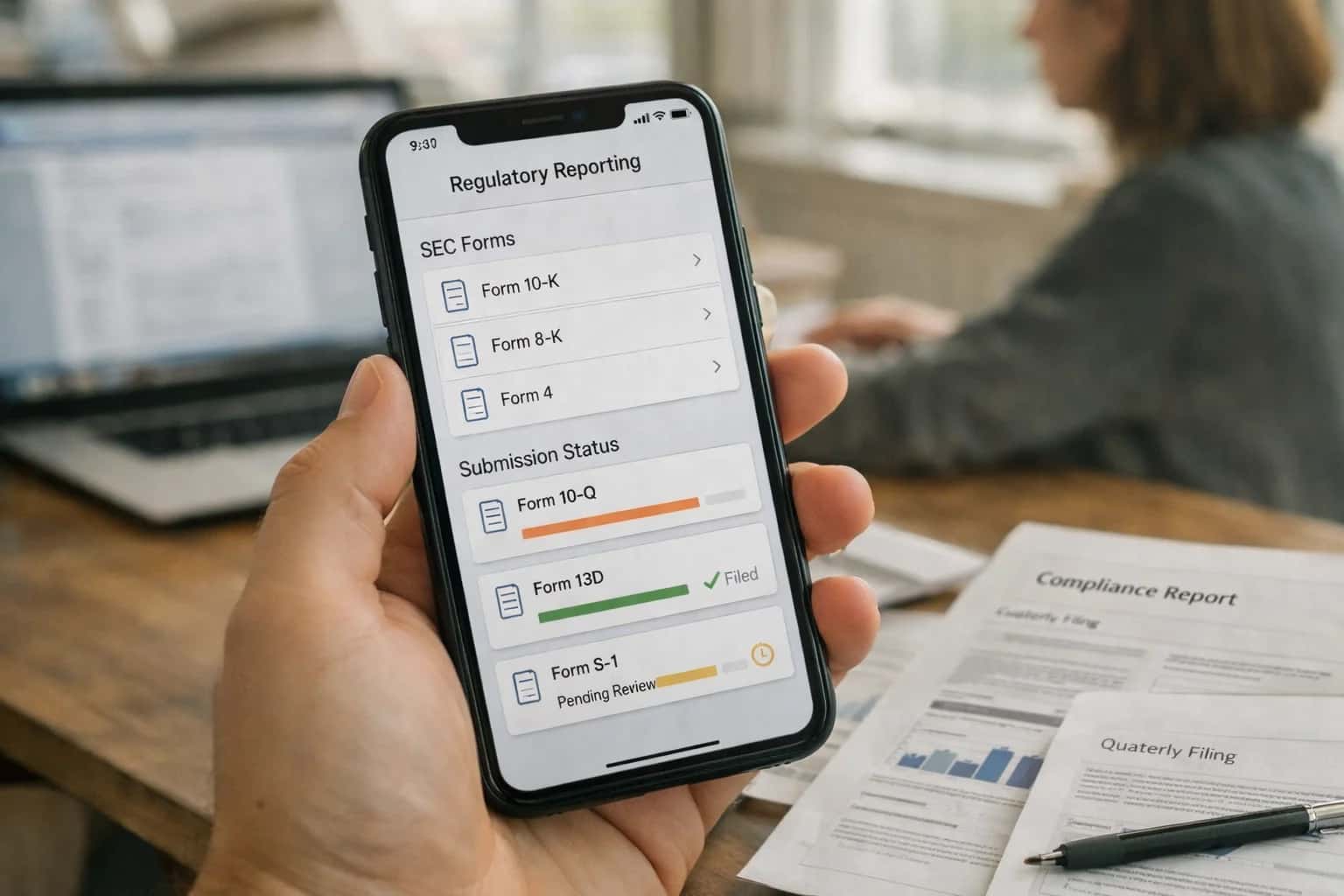
AI integration for Intelex transforms compliance reporting from a manual, multi-day consolidation effort into an automated, audit-ready workflow.
For a typical OSHA 300A or EPA Discharge Monitoring Report (DMR), the workflow is automated: the system is triggered on a schedule (e.g., end of month), the AI agent aggregates the relevant records, applies regulatory calculation logic, and drafts the initial report narrative. It can flag anomalies—like a spike in recordable injuries in a specific department or an emissions reading near a permit limit—for human review before finalization. This reduces the report compilation phase from days to hours and minimizes transcription errors. Implementation involves deploying a lightweight service (often containerized) that handles the ETL, prompt orchestration for narrative generation, and secure submission back to Intelex's Document Control module for versioning and approval workflows.
Rollout requires a phased approach: start with a single, high-volume report (e.g., a monthly safety performance dashboard for leadership) to validate data mappings and user trust. Governance is critical; all AI-generated content should be tagged with its source data and prompts, maintaining a full audit trail within Intelex. The final output isn't a black box—it's a draft that accelerates the review-and-sign-off process, allowing EHS managers to focus on analysis and action rather than data wrangling. This integration matters because it turns Intelex from a system of record into a system of intelligence, where compliance reporting becomes a byproduct of operational data, not a separate, labor-intensive project.
AI-READY COMPLIANCE REPORTING SURFACES
Key Intelex Modules and Data Surfaces for AI
Core Event Data for Regulatory Narratives
AI-driven compliance reporting begins with structured and unstructured data from Intelex's incident management and audit modules. These surfaces provide the factual basis for regulatory narratives.
Key Data Objects:
- Incident Reports: OSHA recordables, near misses, and environmental releases with fields for description, root cause, and corrective actions.
- Audit Findings: Non-conformances, observations, and evidence notes linked to specific regulatory clauses (e.g., ISO 45001, EPA regulations).
- Associated Documents: Witness statements, inspection photos, and corrective action plans attached to records.
AI Integration Points:
- Use NLP to extract and summarize key facts from free-text fields in incident descriptions and audit observations.
- Cluster similar findings across sites to identify systemic issues for executive summary sections.
- Automatically tag records with relevant regulatory citations (e.g., 29 CFR 1910.120 for hazardous waste operations) based on content analysis.
INTELEX INTEGRATION PATTERNS
High-Value AI Use Cases for Compliance Reporting
AI can dramatically reduce the manual effort of pulling data from across Intelex modules to generate mandatory reports. These patterns focus on automating data consolidation, narrative drafting, and validation workflows for internal and external compliance requirements.
01
Automated Regulatory Report Drafting
AI pulls structured data (incidents, inspections, emissions) from Intelex modules and maps it to regulatory form fields (e.g., OSHA 300A, EPA TRI). It generates a first-draft narrative for each required section, flagging data gaps for review. Workflow: Scheduled job triggers post-period close → AI agent queries Intelex APIs → populates template → routes to EHS manager for validation.
Days -> Hours
Report assembly time
02
Internal Compliance Dashboard Narratives
Instead of static charts, AI generates executive summaries for monthly/quarterly EHS dashboards. It analyzes trends in leading/lagging indicators from Intelex analytics, explains anomalies (e.g., "Q3 incident rate increase correlates with contractor hours"), and suggests focus areas. Integration: Connects to Intelex BI feeds or embedded analytics widgets.
Batch -> Real-time
Insight generation
03
Audit Evidence Package Assembly
For external audits (ISO, regulatory), AI automates the collection of proof-of-compliance records. Given an audit checklist, it retrieves relevant documents (policies, training records, inspection reports) from Intelex Document Control, generates a cross-reference matrix, and packages them for auditor review. Workflow: Triggered by audit schedule in Intelex Audit Management.
1-2 sprints
Typical prep reduction
04
Gap Analysis Against New Regulations
When a new regulation is loaded into Intelex's regulatory calendar, AI parses the text, maps requirements to existing Intelex controls, procedures, and data fields, and produces a gap report with implementation effort estimates. Integration: Works with Intelex Compliance Obligations and Document Control modules.
Weeks -> Days
Impact assessment
05
Automated Data Validation & Anomaly Detection
Before report submission, AI scans the consolidated data from multiple Intelex modules for inconsistencies (e.g., an incident marked as recordable but missing a corresponding medical case, emissions totals that don't match source sums). It flags discrepancies for correction. Pattern: Runs as a pre-submission check within reporting workflows.
Manual -> Automated
Quality check
06
Sustainability/ESG Report Section Generation
AI aggregates environmental data (energy, water, waste, GHG) from Intelex Environmental modules and social data (training hours, incident rates) from Safety modules to draft narrative sections for frameworks like GRI or SASB. It ensures data aligns with chosen disclosure standards. Workflow: Tied to the annual ESG reporting cycle within Intelex.
Same day
Draft readiness
INTELEX COMPLIANCE REPORTING
Example AI-Powered Reporting Workflows
These workflows demonstrate how AI can automate the most time-consuming aspects of compliance reporting within Intelex, pulling data from across modules, generating narrative analysis, and assembling final report drafts for review.
Trigger: Scheduled job runs on the last business day of the month.
Context/Data Pulled: The AI agent queries Intelex APIs for:
- Incident data (recordables, first aids, near misses) from the Incident Management module, filtered for the reporting period.
- Safety observation and inspection data from the Observations module.
- Training completion percentages from the Training Management module.
- Open corrective action (CAPA) status from the Action Tracking module.
Model or Agent Action: A structured LLM prompt analyzes the aggregated data to:
- Calculate key metrics (TRIR, DART, observation closure rate).
- Identify trends (e.g., "30% increase in hand-related near misses in Warehouse B").
- Draft narrative summaries for each metric, comparing to prior period and goals.
- Generate a list of top 3 recommended focus areas for the coming month.
System Update or Next Step: The agent creates a new document in the Intelex Document Control module, populating a pre-approved report template. It attaches the draft and sends a notification task to the EHS Manager for review.
Human Review Point: The EHS Manager reviews the AI-generated draft in Intelex, can edit the narrative directly, and upon approval, routes it for distribution via the platform's workflow engine.
PRODUCTION-READY INTEGRATION PATTERNS
Implementation Architecture: Connecting AI to Intelex
A practical guide to wiring generative AI into Intelex's data model and workflows for automated compliance reporting.
A production AI integration for Intelex compliance reporting connects at three key layers: the data layer, the automation layer, and the user interface layer. At the data layer, a secure integration service—often deployed as a containerized microservice—pulls structured data from Intelex objects like Incidents, Audits, Observations, and Environmental Metrics via its REST API or a direct database connection. Unstructured data, such as audit notes, investigation narratives, and attached documents (PDFs, images), is extracted and processed through an embedding pipeline to populate a vector database. This creates a unified, searchable knowledge base that spans multiple Intelex modules, which is critical for report generation.
The core reporting workflow is orchestrated by an AI agent that uses a Retrieval-Augmented Generation (RAG) pattern. When triggered—either on a schedule, by a workflow rule, or manually—the agent first queries the vector store and relevant Intelex APIs to retrieve all context related to the reporting period and scope (e.g., a specific site, regulatory program). It then constructs a detailed prompt for a large language model (LLM), grounding the request in the retrieved data, predefined report templates, and regulatory citation libraries. The LLM generates a draft narrative, which is automatically formatted, populated with sourced data points, and saved back to Intelex as a new Document record or attached to a relevant Compliance Calendar task. Key to governance is that the system logs all data sources used, the prompt sent, and the model's response for auditability.
Rollout and governance require a phased approach. Start with a single, high-volume report type—such as a monthly internal safety performance summary—and run the AI-generated drafts in parallel with manual processes for validation. Implement a human-in-the-loop approval step in Intelex's workflow engine before any AI-generated report is finalized or submitted externally. This allows for quality control and builds trust. Over time, expand to more complex reports like Tier II submissions or OSHA 300A logs. Critical success factors include establishing clear data quality checks at the source, configuring RBAC so the AI service only accesses necessary data, and setting up monitoring for the integration's latency and accuracy to catch drift.
INTELEX COMPLIANCE REPORTING
Code and Payload Examples
Querying Across Modules for Report Data
A compliance report often requires data from incidents, audits, corrective actions, and training records. This example shows a conceptual SQL query that could be executed via Intelex's API or data warehouse to pull structured data for an OSHA 300A summary or an internal management review.
sql-- Pseudocode for multi-module compliance data pull SELECT s.site_name, COUNT(DISTINCT i.incident_id) as total_recordables, COUNT(DISTINCT a.audit_id) as audits_completed, AVG(a.final_score) as avg_audit_score, COUNT(DISTINCT ca.action_id) as open_capas, SUM(CASE WHEN t.status = 'Overdue' THEN 1 ELSE 0 END) as overdue_trainings FROM intel_sites s LEFT JOIN intel_incidents i ON s.site_id = i.site_id AND i.incident_date >= '2024-01-01' AND i.osha_recordable = TRUE LEFT JOIN intel_audits a ON s.site_id = a.site_id AND a.audit_date >= '2024-01-01' LEFT JOIN intel_corrective_actions ca ON s.site_id = ca.site_id AND ca.due_date < CURRENT_DATE AND ca.status = 'Open' LEFT JOIN intel_training t ON s.site_id = t.assigned_site_id AND t.due_date < CURRENT_DATE GROUP BY s.site_name;
This consolidated dataset serves as the foundation for AI to generate narrative analysis and populate report templates.
AI-ASSISTED COMPLIANCE REPORTING
Realistic Time Savings and Operational Impact
How AI integration transforms manual data consolidation and report generation in Intelex, based on typical workflows for internal compliance dashboards and external regulatory submissions.
| Metric | Before AI | After AI | Notes |
|---|---|---|---|
Data aggregation for monthly compliance dashboard | 2-3 days manual work | Same-day automated compilation | AI pulls from Incident, Audit, Training, and Environmental modules |
Drafting narrative for quarterly management review | 4-6 hours per report | 1-2 hours review & edit | AI generates initial summary from key metrics and findings |
Preparing annual EPA Tier II / Form R submission | 1-2 weeks of validation | 2-3 days with AI-assisted validation | AI cross-references chemical inventory, usage, and thresholds |
Responding to ad-hoc regulator requests for documentation | Next-day manual search & compile | Same-hour retrieval & package | AI classifies and retrieves relevant records, policies, and certificates |
Compiling evidence for ISO 45001 surveillance audit | 3-5 days gathering evidence | 1-2 days with automated evidence mapping | AI maps audit clauses to system records and flags gaps |
Generating internal incident trend analysis report | Manual analysis, 1 week | Automated insights in 1 day | AI clusters incidents, identifies root cause patterns, and suggests focus areas |
Updating compliance calendar with new regulatory deadlines | Manual monitoring, prone to misses | Automated tracking & task creation | AI parses regulatory updates and creates calendar entries with assigned owners |
ENSURING CONTROLLED, AUDITABLE AI OPERATIONS
Governance, Security, and Phased Rollout
Implementing AI for compliance reporting requires a governance-first approach to maintain data integrity, security, and regulatory defensibility.
AI integration for Intelex compliance reporting operates within a tightly controlled data perimeter. The AI agent is granted read-only access to specific Intelex modules—such as Incidents, Audits, Actions, Chemical Inventory, and Environmental Monitoring—via secure API connections. All data retrieval is logged with a full audit trail, capturing the source record IDs, the timestamp of access, and the purpose (e.g., 'Q4 EPA report generation'). This ensures the AI's data lineage is transparent and can be reproduced for internal or external audits, maintaining the chain of custody for compliance evidence.
A phased rollout is critical for user adoption and risk management. A typical implementation follows this path:
- Phase 1: Draft Generation in a Sandbox. The AI is configured to pull from a single site or business unit's data to auto-generate report drafts (e.g., an OSHA 300A log or a waste manifest summary). Outputs are reviewed and corrected by a super-user, creating a feedback loop to refine prompts and data mappings.
- Phase 2: Human-in-the-Loop Approval Workflow. The AI is integrated into a formal report preparation workflow. It generates a draft, which is routed via Intelex's Action Tracking module to the responsible EHS analyst for review, editing, and final approval before submission. This keeps a human accountable for the final output.
- Phase 3: Predictive Insights and Proactive Alerts. Once the drafting process is stable, the AI can be extended to analyze consolidated data across periods to identify reporting anomalies, predict potential compliance gaps before the reporting deadline, and suggest corrective actions.
Security is enforced through role-based access control (RBAC) synced with Intelex. The AI only accesses data the requesting user is permissioned to see. All generated narratives and data summaries are stored as new records or document attachments within Intelex, inheriting its native security and retention policies. This architecture ensures the AI augments—rather than bypasses—the existing governance and security framework of your core EHS system, making the integration both powerful and provably compliant.
Enabling Efficiency, Speed & Accuracy
Intelligent Analysis, Decision & Execution
We build AI systems for teams that need search across company data, workflow automation across tools, or AI features inside products and internal software.
Talk to Us
Search across company data
Give teams answers from docs, tickets, runbooks, and product data with sources and permissions.
Useful when people spend too long searching or get different answers from different systems.
Enterprise searchRAGPermissions
Read more
Automate internal workflows
Use AI to route work, draft outputs, trigger actions, and keep approvals and logs in place.
Useful when repetitive work moves across multiple tools and teams.
AI agentsWorkflow automationGovernance
Read more
Add AI to products and internal tools
Build assistants, guided actions, or decision support into the software your team or customers already use.
Useful when AI needs to be part of the product, not a separate tool.
AI integrationDecision supportModel routing
Read moreIMPLEMENTATION DETAILS
Frequently Asked Questions
Common technical and operational questions about integrating generative AI into Intelex's compliance reporting workflows.
The integration uses Intelex's REST API and OData endpoints to pull structured data on a scheduled or event-driven basis. A typical data retrieval flow for a monthly compliance report includes:
- Trigger: A scheduled workflow (e.g., last Friday of the month) or a manual request from the Compliance Dashboard.
- Context Pulled: The system queries multiple Intelex modules:
- Incidents Module: For recordable injuries, near misses, and associated root causes from the specified period.
- Audits & Inspections Module: For audit findings, non-conformances, and corrective action statuses.
- Actions Module: To track the completion rates of assigned CAPA items.
- Environmental Module: For emissions data, waste tracking, and permit compliance status.
- Training Module: For completion rates of mandatory compliance training.
- Agent Action: A retrieval-augmented generation (RAG) agent structures this data, compares it against predefined reporting templates (e.g., internal management review, OSHA 300A, sustainability report sections), and calls a language model (like GPT-4 or Claude 3) with a structured prompt containing the data and template instructions.
- System Update: The generated narrative, along with key metrics, is saved as a draft document in the Intelex Document Control module, linked to the relevant reporting record. It triggers a workflow for review and approval by the EHS Manager.

About the author
Prasad Kumkar
CEO & MD, Inference Systems
Prasad Kumkar is the CEO & MD of Inference Systems and writes about AI systems architecture, LLM infrastructure, model serving, evaluation, and production deployment. Over 5+ years, he has worked across computer vision models, L5 autonomous vehicle systems, and LLM research, with a focus on taking complex AI ideas into real-world engineering systems.
His work and writing cover AI systems, large language models, AI agents, multimodal systems, autonomous systems, inference optimization, RAG, evaluation, and production AI engineering.
LinkedIn
Limited slotsGet a Free AI Consultation
Partnered with leading AI, data, and software stack.





How We Work
Custom AI workflows for your Business
One-fit-all AI don't work for modern businesses. At Inferensys, we aim to understand your business & custom requirements; which we use to define most efficient agentic workflows, the data, and the tools for your business.
01
Review the use case
We understand the task, the users, and where AI can actually help.
Read more02
Pick the right approach
We define what needs search, automation, or product integration.
Read more03
Build the first useful version
We implement the part that proves the value first.
Read more04
Improve from there
We add the checks and visibility needed to keep it useful.
Read moreThe first call is a practical review of your use case and the right next step.
Talk to Us