
Differences
Sovereign AI Infrastructure and Local Hosting
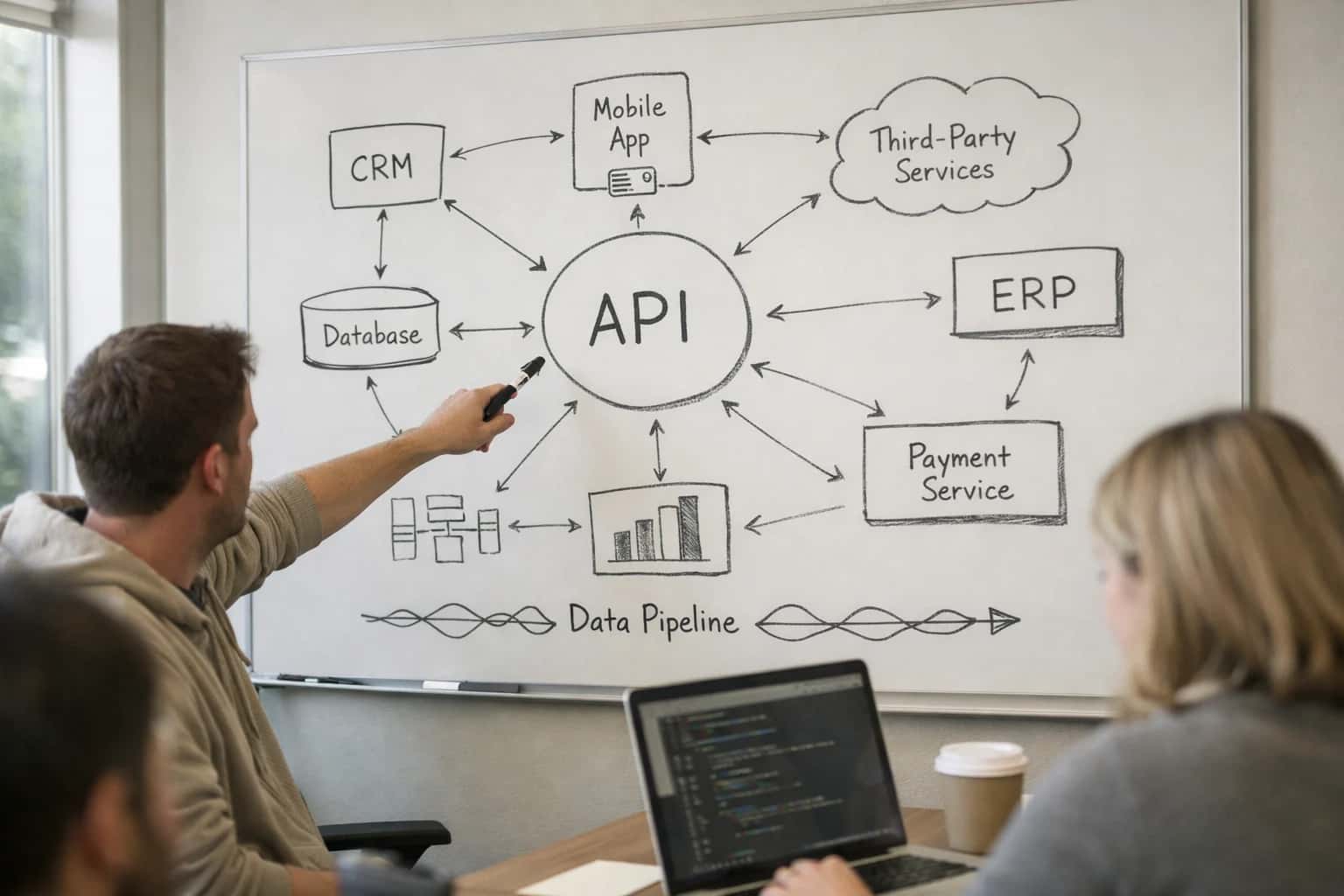
Sovereign Cloud Providers
Comparisons related to domestic hyperscaler alternatives and government-certified cloud regions. Target: CTOs and CIOs evaluating data residency and geopolitical risk.
AWS GovCloud vs Azure Government Secret
Direct comparison of the two leading US government cloud regions, focusing on FedRAMP High and DoD SRG Impact Level 6 compliance, isolated personnel requirements, and the availability of AI/ML services like SageMaker and Azure Machine Learning within air-gapped boundaries.
GAIA-X Compliant Cloud vs EUCS Certified Cloud
Deciphering the European sovereignty landscape by comparing the federated, open-standard GAIA-X framework against the EU Cybersecurity Certification Scheme (EUCS) for cloud services, analyzing which certification provides stronger legal assurance for data residency and operational sovereignty.
OVHcloud vs Scaleway
A technical and commercial comparison of Europe's two leading independent cloud providers, evaluating their sovereign IaaS and PaaS offerings, GPU instance availability for AI training, and compliance with SecNumCloud 3.2 for sensitive French public sector workloads.
VMware Sovereign Cloud vs Nutanix Government Cloud
Comparing the two dominant software-defined infrastructure stacks for building private, sovereign cloud regions, analyzing their multi-tenancy models, intrinsic security features, and ecosystem support for running containerized AI workloads on-premises.
On-Premises Sovereign Cloud vs Hosted Private Sovereign Cloud
Evaluating the operational and security trade-offs between building a fully on-premises, air-gapped sovereign cloud versus consuming a hosted private cloud from a local partner, focusing on CapEx vs. OpEx models, physical security, and control-plane sovereignty.
Domestic Hyperscaler vs Global Hyperscaler Local Zone
Analyzing the strategic decision between using a purely domestic cloud provider (e.g., NAVER Cloud) versus a local zone from a global hyperscaler (e.g., AWS Local Zone), comparing data sovereignty guarantees, API consistency, and the risk of foreign jurisdictional reach.
Data Residency by Policy vs Data Residency by Architecture
A critical comparison of enforcing data sovereignty through contractual and IAM policies versus architecting a system where data is technically incapable of leaving a jurisdiction, using techniques like confidential computing and local key management.
Sovereign AI Training Cluster vs Sovereign AI Inference Endpoint
Comparing the infrastructure requirements for training foundation models on sovereign data versus deploying them for inference, analyzing the trade-offs in GPU density, network fabric, and the use of domestic AI accelerators for each phase.
Sovereign LLM API vs Self-Hosted Open-Source Model
Weighing the convenience and managed compliance of a sovereign cloud provider's proprietary LLM API against the total control and auditability of self-hosting an open-source model like Llama 3 on sovereign infrastructure.
Build Your Own Sovereign Cloud vs Buy a Sovereign Cloud Platform
A strategic 'make vs. buy' analysis for enterprises considering a sovereign cloud, comparing the long-term control and customization of building on open-source tools against the speed-to-market and integrated support of a vendor platform like HPE GreenLake or Dell APEX.
Confidential Computing with AMD SEV-SNP vs Intel TDX
A deep technical comparison of the two leading hardware-based trusted execution environments for protecting data in use within sovereign clouds, analyzing their threat models, performance overhead, and maturity for securing AI inference workloads.
Local Key Management Service vs External HSM
Comparing the trade-offs between using a cloud-native key management service within a sovereign region versus integrating a dedicated, on-premises hardware security module for ultimate control over encryption keys and external data access.
Sovereign Identity Provider vs Global Federation
Analyzing the security and sovereignty implications of using a dedicated, local identity provider for a sovereign cloud versus federating with a global corporate identity system, focusing on the risk of cross-border data leakage through authentication tokens.
Sovereign Cloud Backup vs Cross-Border Disaster Recovery
A critical comparison of data protection strategies, weighing the higher cost and latency of replicating backups to a secondary sovereign region against the risk of violating data residency laws by using a global, cross-border disaster recovery site.
Sovereign CI/CD Runner vs Global CI/CD with Local Build Agents
Comparing a fully self-contained, sovereign CI/CD pipeline for deploying AI applications against a hybrid model using a global SaaS control plane with locally hosted build agents, analyzing the security of the software supply chain.
Sovereign FinOps Tool vs Global Cloud Cost Management
Evaluating the need for a dedicated FinOps platform to track and optimize spending across sovereign clouds versus using a global multi-cloud cost management tool, focusing on data privacy for billing information and integration with local currency and taxation.
On-Premises AI Infrastructure
Comparisons related to private cloud AI platforms, sovereign-by-design hardware stacks, and domestic AI accelerator hardware. Target: Infrastructure VPs and engineering leads deploying air-gapped systems.
NVIDIA DGX vs HPE Cray Supercomputing for On-Prem AI
A direct comparison of NVIDIA's integrated DGX platform against HPE's Cray EX supercomputing architecture for large-scale, on-premises AI training and inference. We analyze total cost of ownership, GPU density, interconnect bandwidth, and system management complexity for sovereign AI factories.
NVIDIA H100 vs AMD Instinct MI300X for On-Premises Inference
A technical benchmark comparison of the NVIDIA H100 Tensor Core GPU and the AMD Instinct MI300X accelerator for on-premises LLM inference. We evaluate tokens-per-second, memory bandwidth advantages, software ecosystem maturity (CUDA vs ROCm), and power efficiency for air-gapped deployments.
vLLM vs NVIDIA Triton Inference Server for Local Model Serving
A comparison of the open-source vLLM library against NVIDIA's Triton Inference Server for optimizing local LLM deployment. We assess throughput, latency, support for various model architectures, and ease of integration within private Kubernetes environments.
VMware Private AI Foundation vs Red Hat OpenShift AI for Air-Gapped Environments
A comparison of VMware's Private AI Foundation with Red Hat OpenShift AI for deploying and managing MLOps pipelines in fully disconnected environments. We evaluate virtualization strategies, GPU operator maturity, partner ecosystem integrations, and Day 2 operations complexity.
Kubernetes vs Nomad for On-Premises AI Workload Orchestration
A comparison of Kubernetes against HashiCorp Nomad for orchestrating mixed AI workloads (training, inference, data processing) on bare-metal on-premises infrastructure. We analyze GPU scheduling capabilities, operational simplicity, and integration with service discovery for sovereign stacks.
InfiniBand vs RoCE v2 for On-Premises AI Fabric
A comparison of InfiniBand and RDMA over Converged Ethernet (RoCE v2) as the high-performance networking fabric for on-premises GPU clusters. We evaluate tail latency, congestion control mechanisms, and scalability for distributed training of large language models.
MinIO vs Ceph for Private Cloud AI Object Storage
A comparison of MinIO and Ceph object storage for building high-throughput, S3-compatible data lakes for AI workloads in private clouds. We assess performance for small-file I/O patterns common in training datasets, erasure coding efficiency, and operational overhead.
Kubeflow vs MLflow for On-Premises MLOps
A comparison of Kubeflow and MLflow for managing the end-to-end machine learning lifecycle within a sovereign, on-premises environment. We evaluate pipeline orchestration, experiment tracking, model registry capabilities, and multi-tenancy support for data science teams.
PostgreSQL pgvector vs Qdrant for On-Premises Vector Search
A comparison of the pgvector extension for PostgreSQL against the purpose-built Qdrant vector database for on-premises semantic search. We analyze query performance at scale, filtering capabilities, and the operational simplicity of consolidating vector and relational data.
HashiCorp Vault vs Akeyless for On-Premises Secrets Management
A comparison of HashiCorp Vault and Akeyless for managing secrets, encryption keys, and access policies for AI infrastructure in air-gapped environments. We evaluate deployment complexity, dynamic secret generation for GPU clusters, and zero-trust security models.
Apache Spark vs Ray for Private AI Data Processing
A comparison of Apache Spark and Ray for large-scale data preprocessing and feature engineering in private AI pipelines. We analyze performance for structured and unstructured data, Python-native API flexibility, and GPU utilization for data transformation tasks.
Apache Kafka vs Redpanda for On-Premises AI Event Streaming
A comparison of Apache Kafka and Redpanda for building real-time data pipelines to feed on-premises AI models. We evaluate throughput, latency, operational simplicity without ZooKeeper, and compatibility with the Kafka ecosystem for sovereign streaming architectures.
Red Hat OpenStack vs Canonical OpenStack for Private AI Cloud
A comparison of Red Hat OpenStack Platform and Canonical's OpenStack distribution for building a private IaaS layer to underpin GPU-intensive AI workloads. We assess lifecycle management, Kubernetes integration, and support for high-performance networking and storage.
Intel Gaudi 3 vs NVIDIA L40S for Sovereign AI Accelerators
A comparison of the Intel Gaudi 3 AI accelerator against the NVIDIA L40S GPU for cost-effective, sovereign AI fine-tuning and inference. We analyze price-to-performance ratios, software portability from CUDA, and suitability for medium-scale enterprise deployments.
WekaFS vs DDN A3I for High-Performance AI Storage
A comparison of WekaFS and DDN's A3I storage appliances for delivering maximum I/O throughput to on-premises GPU clusters. We evaluate parallel file system performance, metadata handling for billions of files, and hybrid cloud tiering capabilities.
Air-Gapped Deployment Architectures
Comparisons related to fully disconnected AI operations, including air-gapped container orchestration, software supply chains, and monitoring. Target: Security architects and defense-sector CTOs.
Zarf vs D2iQ Kommander: Air-Gapped App Delivery
Compares Zarf's declarative, GitOps-native packaging for disconnected environments against D2iQ Kommander's federated management plane. Focuses on deployment complexity, Day 2 operations overhead, and suitability for delivering complex AI stacks into classified networks.
vLLM vs llama.cpp: Air-Gapped LLM Inference
Evaluates the throughput-optimized, GPU-centric vLLM against the CPU-friendly, quantized-first llama.cpp for serving large language models in disconnected environments. Analyzes the hardware cost, token generation speed, and model compatibility trade-offs for defense-sector deployments.
Harbor vs Docker Trusted Registry: Air-Gapped Registries
Compares the CNCF-graduated Harbor's vulnerability scanning and replication features against Docker Trusted Registry's native Docker integration for managing container images in isolated networks. Focuses on image signing, RBAC, and offline vulnerability database updates.
Velero vs Kasten K10: Air-Gapped Kubernetes Backup
Analyzes Velero's open-source, S3-compatible backup approach versus Kasten K10's application-centric, policy-driven data protection for Kubernetes in disconnected environments. Covers restore granularity, CSI snapshot support, and operational complexity.
MinIO vs Ceph: Offline S3-Compatible Object Storage
Compares MinIO's lightweight, high-performance S3 gateway against Ceph's unified block, file, and object storage for building the data lakehouse foundation in air-gapped AI clusters. Focuses on performance at scale, operational burden, and hardware efficiency.
Trivy vs Grype: Air-Gapped Vulnerability Scanning
Evaluates Aqua's Trivy against Anchore's Grype for scanning container images and filesystems for CVEs without internet access. Compares database update mechanisms, scanning speed, false-positive rates, and integration with offline CI/CD pipelines.
Keycloak vs Gluu Server: Offline Identity and Access Management
Compares two leading open-source IAM solutions for providing OAuth2, OIDC, and SAML authentication in fully disconnected Kubernetes clusters. Focuses on LDAP/AD federation, admin UI usability, and the complexity of maintaining high availability offline.
Ansible Automation Platform vs Puppet Enterprise: Disconnected Nodes
Analyzes Red Hat's agentless, push-based automation against Puppet's agent-driven, desired-state model for managing configuration drift on air-gapped Linux servers. Covers offline content delivery, execution environment management, and scalability.
Nexus Repository vs JFrog Artifactory: Disconnected Environments
Compares Sonatype Nexus and JFrog Artifactory for proxying, caching, and hosting binary artifacts (Maven, PyPI, Docker) in air-gapped software factories. Focuses on universal package support, high-availability replication, and storage optimization.
Red Hat Satellite vs SUSE Manager: Disconnected Linux Patch Management
Evaluates the lifecycle management and patch compliance capabilities of Satellite and SUSE Manager for RHEL and SLES systems in isolated networks. Compares errata synchronization, content view management, and API-driven automation.
NeuVector vs Aqua Security: Disconnected Container Security
Compares NeuVector's Layer 7 network firewall and behavioral learning against Aqua's image assurance and runtime protection for securing air-gapped Kubernetes pods. Focuses on zero-trust enforcement, drift prevention, and offline CVE feed ingestion.
Prometheus vs InfluxDB: Air-Gapped Metrics Collection
Analyzes Prometheus's pull-based, dimensional data model against InfluxDB's push-based time-series engine for monitoring AI infrastructure in disconnected environments. Covers query language differences, long-term storage, and dashboard integration with Grafana.
Elasticsearch vs Loki: Offline Log Aggregation
Compares the full-text indexing power of Elasticsearch against Grafana Loki's lightweight, label-based log aggregation for troubleshooting distributed AI applications in air-gapped clusters. Focuses on resource consumption, retention policies, and log parsing complexity.
SPIRE vs Istio Identity: Disconnected Workload Attestation
Evaluates SPIFFE/SPIRE's universal workload identity framework against Istio's built-in identity and certificate management for establishing zero-trust mTLS in offline service meshes. Compares multi-cluster trust domain management and pluggable attestor support.
Checkov vs tfsec: Offline Infrastructure-as-Code Scanning
Compares Bridgecrew's Checkov against Aqua's tfsec for static analysis of Terraform, CloudFormation, and Kubernetes manifests to enforce security policies before air-gapped deployment. Focuses on custom policy creation, compliance framework coverage, and false-positive suppression.
Active Directory vs FreeIPA: Offline Centralized Authentication
Analyzes Microsoft's enterprise directory against the open-source FreeIPA for providing Kerberos, LDAP, and DNS services in disconnected Windows and Linux environments. Covers group policy management, multi-master replication, and cross-realm trust configuration.
Confidential Computing Environments
Comparisons related to secure enclave inference, confidential AI, and hardware security modules (HSMs) for sovereign workloads. Target: Security engineers and compliance officers in regulated industries.
Intel SGX vs AMD SEV-SNP
Deep-dive comparison of the two dominant hardware-based Trusted Execution Environment (TEE) technologies for confidential computing. We analyze architectural differences in memory encryption, threat models (insider vs. admin), enclave size limits, and performance overhead for AI inference workloads to determine which is best for securing sovereign data in use.
AWS Nitro Enclaves vs Azure Confidential Computing
A head-to-head comparison of the leading hyperscaler confidential computing platforms. We evaluate the trade-offs in isolation boundaries, attestation mechanisms, ease of integration with AI services like Bedrock and Azure OpenAI, and the specific compliance certifications (NIST, GDPR) each supports for regulated sovereign deployments.
Confidential AI vs Fully Homomorphic Encryption
Comparing two fundamentally different approaches to privacy-preserving AI: hardware-enforced TEEs versus cryptographic FHE. We benchmark latency, computational overhead, and accuracy for a standard neural network inference task, providing a clear decision framework for security engineers choosing between practical performance and mathematical privacy guarantees.
Hardware Security Module vs Trusted Execution Environment
Clarifying the distinct roles of HSMs and TEEs in a sovereign AI infrastructure. This comparison contrasts their primary functions—secure key management and cryptographic operations vs. data-in-use protection—and outlines a reference architecture for combining them to achieve end-to-end workload security.
Confidential Virtual Machines vs Confidential Containers
An analysis of the deployment abstraction trade-offs for confidential AI. We compare the stronger isolation and lift-and-shift simplicity of CVMs against the faster startup times, density, and cloud-native orchestration benefits of confidential containers for microservices-based AI agents.
NVIDIA H100 Confidential Computing vs Intel TDX
A technical comparison of GPU-centric versus CPU-centric confidential computing for AI. We evaluate the H100's ability to protect model weights and data during large-scale training and inference against Intel TDX's capability to secure the broader application and data pipeline on general-purpose compute.
Fortanix vs Anjuna Security
Comparing two leading software platforms that abstract the complexity of confidential computing. We assess their SDKs, orchestration tools, and policy engines for converting standard applications into secure enclaves, focusing on multi-cloud portability and operational maturity for enterprise AI workloads.
Secure Enclave Inference vs On-Premises Air-Gapped Inference
A strategic comparison of two extreme models for protecting sensitive AI data. We weigh the cloud agility and scalability of secure enclave inference against the absolute physical isolation of an air-gapped data center, analyzing total cost of ownership, operational burden, and the specific threat models each addresses.
Confidential Computing vs Data Clean Rooms
Comparing two technologies for multi-party data collaboration. We analyze how confidential computing provides a hardware root of trust for arbitrary computation, while data clean rooms offer a managed, analytics-focused environment with built-in privacy controls, to determine the best fit for sovereign AI model training on shared data.
Private RAG with Cloud TEE vs Fully Local AI Deployment
A practical comparison for deploying a private Retrieval-Augmented Generation system. We benchmark a cloud-based architecture using confidential VMs for the LLM and vector database against a fully local, on-premises deployment, evaluating latency, retrieval quality, hardware costs, and the residual data exposure risks in each model.
Constellation (Edgeless) vs Gramine
An open-source showdown for confidential Kubernetes. We compare Constellation's holistic approach to creating a full confidential cluster against Gramine's (now Graphene) library OS method for running individual unmodified applications inside enclaves, focusing on ease of adoption, performance, and security posture for AI microservices.
Key Management Service vs External HSM
Comparing the control plane for cryptographic keys in a sovereign AI context. We analyze the trade-offs between a cloud-native KMS with integrated HSM backing and a dedicated, on-premises external HSM, focusing on key sovereignty, latency for high-frequency signing operations, and integration with TEE attestation workflows.
Sovereign Cloud HSM vs Global Hyperscaler HSM
A comparison of HSM offerings from domestic sovereign cloud providers versus global hyperscalers. We evaluate jurisdictional control, key exportability, compliance with local data protection laws, and the ability to integrate with a broader set of sovereign AI services, not just the global cloud ecosystem.
Confidential GPU Computing vs CPU-Only Secure Enclaves
A performance-critical comparison for AI workloads. We benchmark the throughput and latency of model inference inside a confidential GPU (like the H100) against a CPU-only TEE, quantifying the performance gap and identifying which AI tasks—from large model serving to lightweight feature extraction—are viable on each platform.
Sovereign Key Management vs Bring Your Own Key
Comparing two models for maintaining cryptographic control in the cloud. We analyze the operational and legal differences between using a sovereign key custodian service that guarantees domestic key storage and the standard BYOK model where keys are imported into a hyperscaler's infrastructure, focusing on true data residency enforcement.
Confidential Inference vs Differential Privacy
Comparing a hardware-based privacy technique with a statistical one for protecting AI model inputs and outputs. We explain how confidential inference shields a single query's data from the infrastructure provider, while differential privacy protects against membership inference attacks on the aggregate dataset, and outline a combined defense-in-depth strategy.
Hardware Root of Trust vs Software Root of Trust
A foundational security comparison for sovereign AI infrastructure. We detail how a hardware root of trust (like a TPM or on-die fuse) provides an immutable, tamper-resistant foundation for attestation and secure boot, contrasting it with the flexibility but higher vulnerability of a software-based root of trust.
Confidential Computing vs Zero-Knowledge Proofs
Comparing two advanced cryptographic paradigms for verifiable computation. We contrast the general-purpose, high-performance nature of TEE-based confidential computing with the mathematical, trustless verification guarantees of ZKPs, providing guidance on when to use each for proving the integrity of an AI model's execution.
Private LLM Hosting Solutions
Comparisons related to local inference optimization engines, sovereign open-source AI distributions, and on-premises model registries. Target: AI platform leads evaluating local vs. cloud model deployment.
Ollama vs vLLM: Local LLM Inference Engine Showdown
A direct technical comparison of Ollama's ease-of-use and Docker-like simplicity against vLLM's high-throughput, production-grade serving architecture. We analyze latency, throughput (tokens/sec), quantization support, and hardware compatibility for on-premises deployments.
vLLM vs TensorRT-LLM: Optimized Serving for NVIDIA GPUs
Compares the open-source vLLM framework against NVIDIA's proprietary TensorRT-LLM for maximizing GPU utilization in private data centers. Focuses on inference speed, memory efficiency, model support breadth, and the operational overhead of kernel compilation.
LM Studio vs GPT4All: Desktop-First Private LLM Clients
Evaluates two leading desktop applications for running local LLMs without cloud dependencies. Compares model discovery, local server API capabilities, GPU acceleration ease, and suitability for non-technical users requiring air-gapped chat interfaces.
llama.cpp vs Ollama: Bare-Metal vs Managed Local Inference
Contrasts the raw performance and granular control of llama.cpp with the managed, API-driven experience of Ollama. Analyzes quantization customization, CPU/GPU hybrid execution, and the trade-off between configuration complexity and operational simplicity.
Text Generation Inference (TGI) vs vLLM: Hugging Face Native vs Agnostic Serving
Compares Hugging Face's native serving solution with the model-agnostic vLLM. Evaluates watermarks, safetensors support, and Hugging Face Hub integration against vLLM's PagedAttention speed and broader model architecture support.
NVIDIA NIM vs vLLM: Enterprise Microservice vs Community Standard
Analyzes NVIDIA's enterprise-grade NIM microservices against the open-source vLLM for sovereign infrastructure. Compares API stability, security patching, enterprise support SLAs, and the total cost of ownership for air-gapped Kubernetes deployments.
PrivateGPT vs AnythingLLM: All-in-One Private Document AI
Compares two popular open-source tools for building fully private RAG applications on local documents. Evaluates ingestion pipelines, vector store integrations, and the ability to handle various file formats without sending data to external APIs.
Jan.ai vs LM Studio: Open-Source Local AI Interface Battle
A head-to-head comparison of two open-source desktop applications for running local models. Focuses on extension ecosystems, local API server performance, privacy guarantees, and customization options for developers building offline AI tools.
LangChain vs LlamaIndex: Local RAG Framework Decision
Compares the architectural philosophies of LangChain's chain-based abstraction against LlamaIndex's data-centric ingestion and retrieval. Evaluates which framework provides better control, performance, and security for building on-premises RAG pipelines.
Chroma vs Qdrant: Lightweight vs Enterprise Local Vector Storage
Evaluates Chroma's developer-friendly simplicity against Qdrant's high-performance filtering and quantization for private vector search. Compares resource consumption, scalability limits, and API maturity for air-gapped semantic retrieval.
Milvus vs Weaviate: Distributed Vector Databases for Air-Gapped Deployments
Compares two leading vector databases designed for billion-scale similarity search in fully disconnected environments. Analyzes indexing algorithms (HNSW vs IVF), resource overhead, multi-tenancy, and backup/disaster recovery capabilities.
pgvector vs Qdrant: PostgreSQL Extension vs Purpose-Built Vector DB
Analyzes the trade-offs of adding vector search to existing PostgreSQL infrastructure with pgvector versus deploying a dedicated vector database like Qdrant. Focuses on operational simplicity, query latency at scale, and metadata filtering performance.
Open WebUI vs LibreChat: Self-Hosted ChatGPT Alternatives
Compares two leading self-hosted interfaces for interacting with local and remote LLMs. Evaluates RAG integration, multi-user management, RBAC, and the ability to serve as a secure, air-gapped frontend for enterprise AI chatbots.
MLflow vs W&B Models: On-Premises Model Registry Governance
Compares MLflow's open-source model registry against Weights & Biases Models for managing LLM artifacts in private infrastructure. Evaluates lineage tracking, stage transitions, and integration with sovereign CI/CD pipelines.
Kubernetes with GPU Operator vs Rancher: AI Orchestration Control Planes
Compares the native NVIDIA GPU Operator approach on vanilla Kubernetes against Rancher's simplified multi-cluster management for private AI clouds. Focuses on GPU scheduling, monitoring integration, and operational complexity for sovereign infrastructure.
KServe vs Seldon Core: Production Model Serving on Kubernetes
Evaluates two major open-source model serving frameworks for on-premises Kubernetes. Compares serverless autoscaling, canary deployments, explainability integrations, and the operational maturity required for air-gapped inference.
MinIO vs Ceph: Private Object Storage for AI Data Lakes
Compares MinIO's high-performance, S3-compatible object storage against Ceph's unified block, file, and object storage for sovereign AI workloads. Analyzes throughput for large-scale model training data and operational overhead.
LiteLLM vs Portkey: On-Premises LLM Gateway and Routing
Compares two popular open-source LLM gateways for standardizing access to local and remote models. Evaluates cost tracking, rate limiting, load balancing, and the ability to enforce access control policies for private model endpoints.
Sovereign Data Lakehouse Architectures
Comparisons related to domestic object storage for AI, local key management systems, and sovereign data classification engines. Target: Data architects and CDOs managing sensitive national data.
MinIO vs Ceph for On-Premises AI Object Storage
A direct comparison of the two dominant open-source object storage platforms for sovereign AI data lakes. Evaluates MinIO's S3-compatible, high-performance lightweight architecture against Ceph's unified block, file, and object storage for petabyte-scale, air-gapped AI workloads.
Apache Iceberg vs Delta Lake for Sovereign Table Formats
Compares the two leading open table formats for building sovereign data lakehouses. Analyzes Iceberg's broad engine support and partition evolution against Delta Lake's deep Databricks integration and ACID transaction reliability for local, governed AI data.
Apache Spark vs Ray for On-Premises AI Data Processing
Evaluates the mature, SQL-centric Apache Spark against the Python-native, dynamic Ray framework for processing sensitive data in private clouds. Focuses on performance for unstructured data, ML pipeline integration, and resource management in sovereign environments.
Apache Kafka vs Redpanda for Sovereign Data Streaming
Compares the industry-standard Apache Kafka with the modern, drop-in replacement Redpanda for real-time data streaming in air-gapped or local deployments. Focuses on operational simplicity, latency, and storage efficiency without sacrificing Kafka protocol compatibility.
MLflow vs Kubeflow for Managing ML Models on Local Object Storage
A practical comparison of MLflow's lightweight, experiment-tracking focus against Kubeflow's comprehensive, Kubernetes-native MLOps platform. Evaluates which is better suited for managing the lifecycle of models trained on sovereign data within private infrastructure.
Qdrant vs Milvus for On-Premises Vector Databases
Compares the high-performance, Rust-based Qdrant with the feature-rich, cloud-native Milvus for vector similarity search on sensitive data. Analyzes performance, resource consumption, and ease of deployment in fully local, sovereign AI retrieval pipelines.
Elasticsearch vs OpenSearch for Full-Text Search in Private Lakes
Evaluates the original Elasticsearch against its open-source fork, OpenSearch, for indexing and searching data within sovereign data lakehouses. Focuses on licensing, community governance, and feature parity for security analytics and observability in air-gapped environments.
PostgreSQL pgvector vs pgvecto.rs for Local Vector Extensions
A technical comparison of two leading extensions for adding vector search to existing sovereign PostgreSQL databases. Analyzes pgvector's maturity and broad support against pgvecto.rs's Rust-based performance and advanced indexing for AI workloads on local data.
CockroachDB vs YugabyteDB for Resilient Domestic SQL
Compares two leading distributed SQL databases designed for data residency and resilience. Evaluates CockroachDB's serializable isolation against YugabyteDB's PostgreSQL compatibility for transactional workloads in sovereign, multi-region private cloud deployments.
Rancher vs OpenShift for Managing On-Premises Kubernetes
A strategic comparison of the lightweight, CNCF-backed Rancher against Red Hat's enterprise-grade OpenShift for orchestrating sovereign AI infrastructure. Focuses on operational overhead, multi-cluster management, and support for air-gapped application delivery.
Terraform vs Pulumi for Infrastructure as Code in Private Data Centers
Compares the declarative, HCL-based Terraform with the imperative, general-purpose language approach of Pulumi for provisioning sovereign AI infrastructure. Evaluates which IaC tool offers better control, policy enforcement, and state management for private cloud resources.
Harbor vs Zot for Private Container Registries
Evaluates the CNCF-graduated Harbor with its vulnerability scanning and policy engine against the lightweight, OCI-native Zot. Focuses on the best solution for securely storing and distributing AI/ML container images within a fully air-gapped sovereign environment.
Keycloak vs Authentik for Sovereign Identity and Access Management
Compares the established, Red Hat-backed Keycloak with the modern, flexible Authentik for managing identities in sovereign data platforms. Analyzes protocol support, customization, and deployment complexity for enforcing access control to local AI data lakes.
Grafana Loki vs OpenSearch for Log Aggregation in Private Clusters
A focused comparison of Grafana Loki's lightweight, index-free log aggregation against OpenSearch's full-text search and analytics capabilities. Evaluates which is more efficient and cost-effective for monitoring sovereign AI infrastructure and data pipelines.
SPIFFE vs Kerberos for Service Identity in Private Data Centers
Compares the modern, cloud-native SPIFFE standard with the legacy Kerberos protocol for establishing service identity in sovereign environments. Analyzes SPIFFE's dynamic, workload-level attestation against Kerberos's host-centric model for securing microservice communication in local AI platforms.
RDMA over Converged Ethernet (RoCE) vs InfiniBand for Local AI Networking
A technical comparison of the two leading high-throughput, low-latency networking technologies for sovereign AI infrastructure. Evaluates RoCE's cost-effectiveness and Ethernet compatibility against InfiniBand's superior performance for GPU-to-GPU communication in private AI clusters.
GPU-as-a-Service (Domestic vs. Global)
Comparisons related to domestic chip fabrication supply chains, local AI cost management, and sovereign cloud interconnection brokers. Target: VP Engineering and FinOps leads optimizing compute spend.
CoreWeave vs Lambda Labs: Sovereign GPU Cloud for AI Workloads
Compare CoreWeave and Lambda Labs for domestic AI training and inference. Evaluate GPU instance types (NVIDIA H100, A100), data residency guarantees, network egress costs, and compliance with regional data sovereignty laws. Target: CTOs choosing a primary GPU cloud provider for sensitive workloads.
NVIDIA DGX Cloud vs Locally Hosted GPU Clusters: Total Cost of Sovereignty
Analyze the financial and operational trade-offs between subscribing to NVIDIA DGX Cloud and building a private, on-premises GPU cluster. Compare capital expenditure, operational overhead, scalability, data gravity, and latency for air-gapped or high-compliance AI environments.
OVHcloud vs Hetzner: European GPU Cloud for Sovereign AI
Compare OVHcloud and Hetzner's GPU offerings for European data residency. Evaluate price-performance, network infrastructure, compliance with GDPR and EUCS, and the availability of high-end accelerators like NVIDIA H100 for training and inference workloads.
Vast.ai vs RunPod: Decentralized GPU Marketplaces for Regional Compute
Compare Vast.ai and RunPod for accessing low-cost, on-demand GPUs globally while enforcing regional data processing constraints. Analyze pricing models, security isolation, storage persistence, and the feasibility of using decentralized marketplaces for sovereign AI development.
Huawei Cloud Ascend vs NVIDIA CUDA Ecosystem: Domestic AI Accelerator Stacks
Compare the software maturity, performance, and tooling of Huawei's Ascend AI stack against the NVIDIA CUDA ecosystem for sovereign AI development. Evaluate model portability, inference latency, and the long-term risk of vendor lock-in for domestic chip fabrication strategies.
Intel Gaudi 3 vs AMD Instinct MI300X: Non-NVIDIA Hardware for Sovereign AI Clusters
Compare Intel Gaudi 3 and AMD Instinct MI300X accelerators as alternatives to NVIDIA for building sovereign AI infrastructure. Analyze training throughput, inference cost-efficiency, software ecosystem maturity (oneAPI vs. ROCm), and supply chain stability.
AWS Local Zones vs Domestic Sovereign Cloud Regions: Latency and Data Residency
Compare AWS Local Zones with dedicated sovereign cloud regions (e.g., AWS European Sovereign Cloud) for meeting low-latency and data residency requirements. Evaluate the trade-offs in service availability, compliance certifications, and operational complexity.
Azure Stack Hub vs Google Distributed Cloud: Air-Gapped AI Infrastructure
Compare Microsoft Azure Stack Hub and Google Distributed Cloud for deploying AI workloads in fully disconnected, air-gapped environments. Analyze management plane dependencies, supported AI services, hardware requirements, and suitability for defense and intelligence sectors.
Crusoe Cloud vs Standard Colocation: Carbon-Aware Sovereign AI Compute
Compare Crusoe Cloud's wasted-energy-powered GPU instances against traditional colocation data centers for environmentally sustainable, sovereign AI. Evaluate cost per GPU-hour, carbon footprint reduction, reliability, and scalability for large-scale training jobs.
Domestic AI Supercomputer Center vs Distributed GPU-as-a-Service: National Compute Strategy
Compare the centralized model of a national AI supercomputer center with a distributed network of domestic GPU-as-a-Service providers. Analyze resource allocation efficiency, queue times, cost to the taxpayer, and the ability to serve both academic research and commercial startups.
Sovereign Cloud Interconnection Broker vs Direct Peering Exchange: GPU Networking
Compare using a sovereign cloud interconnection broker (like Megaport) against setting up direct peering exchanges for connecting domestic GPU clouds. Evaluate network latency, data transfer costs, security, and the complexity of managing multi-cloud sovereign AI infrastructure.
Gaia-X Federation Services vs Self-Built Sovereign Intercloud: European Data Infrastructure
Compare leveraging Gaia-X federation services against building a proprietary sovereign intercloud for connecting European AI resources. Analyze interoperability standards, trust mechanisms, time-to-market, and the level of control over data sovereignty and identity management.
Domestic AI FinOps Platform vs Global Cloud Cost Management Tool: Sovereign Spend Control
Compare a domestic AI FinOps platform against a global SaaS cost management tool for tracking GPU spending across sovereign and hyperscale clouds. Evaluate data residency of billing data, integration with local tax systems, and support for domestic currency and accounting standards.
Liquid Immersion Cooling vs Traditional Air Cooling: Sovereign GPU Density and Efficiency
Compare liquid immersion cooling with traditional air cooling for maximizing GPU density in sovereign data centers. Analyze power usage effectiveness (PUE), hardware longevity, floor space requirements, and the total cost of ownership for high-performance sovereign AI clusters.
NIST-Compliant AI Infrastructure vs ISO 42001 Certified Global Cloud: Regulatory Assurance
Compare building AI infrastructure to NIST AI RMF standards against using an ISO/IEC 42001 certified global cloud provider. Evaluate the depth of security controls, auditability, and which framework provides stronger legal defensibility for US government and defense contractors.
Sovereign MLOps Platforms
Comparisons related to private model fine-tuning infrastructure, local model evaluation, and sovereign compliance automation tools. Target: MLOps engineers and AI governance leads.
MLflow vs Kubeflow: Sovereign MLOps Platform Decision
Compare MLflow's lightweight experiment tracking and model registry against Kubeflow's full Kubernetes-native pipeline orchestration for air-gapped and sovereign environments. Focus on operational overhead, security compliance, and scalability for private AI infrastructure.
BentoML vs Seldon Core: Model Serving for Regulated Industries
Evaluate BentoML's developer-friendly, high-performance serving framework against Seldon Core's enterprise-grade, explainability-focused deployment platform for sovereign MLOps. Compare latency, resource efficiency, and integration with private cloud stacks.
Weights & Biases vs Neptune.ai: Experiment Tracking in Air-Gapped Environments
Analyze Weights & Biases' collaborative MLOps platform versus Neptune.ai's metadata store for teams requiring on-premises or sovereign cloud deployments. Compare self-hosted capabilities, data residency controls, and integration with private compute.
AWS SageMaker vs Azure Machine Learning: Sovereign Cloud AI Platform Showdown
Compare the end-to-end MLOps capabilities of AWS SageMaker and Azure Machine Learning for organizations bound by data residency requirements. Focus on government-certified regions, private link support, and compliance automation features.
Databricks Mosaic AI vs AWS SageMaker: Unified Analytics for Private AI
Contrast Databricks Mosaic AI's lakehouse-centric MLOps with AWS SageMaker's broad service ecosystem for building and deploying models in sovereign environments. Evaluate data governance, cost management, and multi-cloud portability.
NVIDIA Triton Inference Server vs BentoML: High-Performance Sovereign Inference
Compare NVIDIA Triton's multi-framework, GPU-optimized inference server against BentoML's flexible, Python-native serving layer for on-premises and air-gapped deployments. Focus on throughput, latency, and hardware utilization.
Apache Airflow vs Prefect: Orchestrating Sovereign Data Pipelines
Evaluate Apache Airflow's battle-tested, community-driven workflow scheduler against Prefect's modern, dynamic orchestration engine for building resilient MLOps pipelines in private cloud environments.
DVC vs Pachyderm: Data Versioning for Reproducible Sovereign AI
Compare DVC's Git-like, lightweight data version control against Pachyderm's automated, data-driven pipeline lineage for ensuring reproducibility and auditability in regulated, sovereign MLOps workflows.
Great Expectations vs Soda Core: Data Quality for Sovereign AI Compliance
Analyze Great Expectations' declarative, documentation-first data testing against Soda Core's programmatic, pipeline-integrated data quality checks for enforcing data standards in sovereign and regulated AI systems.
Evidently AI vs NannyML: Model Monitoring in Private Deployments
Compare Evidently AI's open-source evaluation and drift detection reports against NannyML's performance estimation without ground truth for monitoring models in air-gapped or private cloud environments where direct access is limited.
Fiddler AI vs Arize AI: Explainable AI for Sovereign Governance
Evaluate Fiddler AI's model performance management and explainability platform against Arize AI's observability and troubleshooting tools for ensuring transparency and fairness in sovereign MLOps deployments.
OpenMetadata vs DataHub: Sovereign Data Discovery and Governance
Compare OpenMetadata's centralized, collaboration-focused metadata platform against DataHub's real-time, action-driven metadata graph for governing data assets within sovereign data lakehouse architectures.
Immuta vs Privacera: Data Access Control for Sovereign AI Workloads
Analyze Immuta's policy-as-code, attribute-based access control against Privacera's Apache Ranger-based data security governance for enforcing fine-grained data access in sovereign and multi-tenant MLOps platforms.
HashiCorp Vault vs AWS Secrets Manager: Secrets Management for Air-Gapped AI
Compare HashiCorp Vault's multi-cloud, self-managed secrets engine against AWS Secrets Manager's native cloud service for managing credentials, API keys, and certificates in sovereign and disconnected AI infrastructure.
Red Hat OpenShift AI vs VMware Private AI: Sovereign AI Platform Foundation
Evaluate Red Hat OpenShift AI's Kubernetes-native MLOps platform against VMware Private AI's virtualization-centric approach for deploying and managing AI workloads in on-premises and sovereign cloud environments.
Run:ai vs NVIDIA GPU Operator: GPU Orchestration for Sovereign Compute
Compare Run:ai's AI workload orchestration and fractional GPU sharing against NVIDIA's GPU Operator for automating the lifecycle of GPUs in Kubernetes, focusing on maximizing utilization in private, resource-constrained sovereign clusters.
Calico vs Cilium: Network Security for Sovereign AI Service Mesh
Analyze Calico's established, policy-rich network security against Cilium's eBPF-powered, identity-aware networking for securing east-west traffic and enforcing zero-trust in sovereign Kubernetes-based MLOps platforms.
Kyverno vs OPA Gatekeeper: Policy Enforcement for Sovereign MLOps
Compare Kyverno's Kubernetes-native, YAML-based policy management against OPA Gatekeeper's Rego-based, general-purpose policy engine for enforcing compliance, security, and operational best practices in sovereign AI deployments.
Sovereign RAG Deployment Patterns
Comparisons related to sovereign vector database deployments, private synthetic data generation, and local LLM gateway routing. Target: AI architects designing retrieval systems for sensitive data.
Weaviate vs Qdrant for Air-Gapped Vector Search
Comparing the two leading open-source vector databases for fully disconnected, sovereign environments. Focuses on deployment complexity, indexing performance (HNSW), filtering capabilities, and resource consumption in air-gapped Kubernetes clusters.
Milvus vs pgvector for On-Premises Sensitive Data
Evaluating the trade-offs between a purpose-built vector database (Milvus) and a PostgreSQL extension (pgvector) for regulated industries. Covers scalability, operational overhead, and the advantage of transactional consistency in private RAG pipelines.
Elasticsearch vs OpenSearch for Sovereign RAG Backends
Analyzing the fork in the road for hybrid search. Compares the licensing, vector search performance (HNSW), and machine learning integrations of Elasticsearch against the fully open-source, community-driven OpenSearch for air-gapped deployments.
LangChain vs LlamaIndex for Local RAG Pipeline Orchestration
Comparing the two dominant Python frameworks for building retrieval-augmented generation systems in private environments. Focuses on data ingestion connectors, agent abstractions, and ease of integrating with local models like Ollama and vLLM.
PrivateGPT vs LocalAI for Fully Local Document Q&A
A direct comparison of turnkey solutions for air-gapped document analysis. Evaluates PrivateGPT's end-to-end RAG focus against LocalAI's broader local model serving capabilities, including setup complexity and accuracy on sensitive documents.
Ollama vs vLLM for Local Model Serving in RAG
Comparing the developer-friendly simplicity of Ollama with the high-throughput, production-grade performance of vLLM. Covers quantization support, API compatibility, and latency for serving LLMs in sovereign infrastructure.
HashiCorp Vault vs CyberArk Conjur for Local AI Secret Management
Evaluating secrets management for dynamic AI workloads in air-gapped environments. Compares Vault's extensive engine ecosystem against Conjur's enterprise-grade policy management for securing API keys, model weights, and vector database credentials.
MinIO vs Ceph for On-Premises Object Storage for AI
Comparing high-performance, S3-compatible object storage for sovereign data lakes. Focuses on performance with small files (vector indexes), erasure coding efficiency, and Kubernetes-native deployment for AI workloads.
Open Policy Agent (OPA) vs Cedar for Sovereign RAG Authorization
Analyzing policy-as-code engines for fine-grained access control in RAG pipelines. Compares OPA's mature, general-purpose Rego language against Cedar's purpose-built, verifiable policy model for filtering retrieved documents by user context.
MLflow vs Kubeflow for Sovereign MLOps Pipelines
Comparing the two leading open-source MLOps platforms for managing the AI lifecycle in private data centers. Covers experiment tracking, model registry, and pipeline orchestration for fine-tuning and deploying RAG components.
K3s vs MicroK8s for Lightweight Sovereign Edge RAG
Evaluating lightweight Kubernetes distributions for deploying RAG systems at the edge or in resource-constrained air-gapped environments. Compares resource footprint, ease of air-gapped installation, and conformance for running vector databases and local LLMs.
Grafana Loki vs Elasticsearch for Private AI Log Aggregation
Comparing log aggregation backends for monitoring sovereign AI infrastructure. Focuses on Loki's cost-effective, object-storage-first approach versus Elasticsearch's powerful full-text search for debugging complex, multi-step RAG agent traces.
Guardrails AI vs NVIDIA NeMo Guardrails for Local RAG Safety
Comparing programmable guardrails for enforcing safety and topical boundaries in private LLM applications. Evaluates Guardrails AI's flexible, Pythonic approach against NeMo's conversational management and integration with local inference servers.
Boundary vs Teleport for Sovereign Session Access
Comparing modern privileged access management for securely accessing air-gapped AI infrastructure. Covers identity-based access, session recording, and just-in-time credential injection for engineers managing sensitive vector databases and GPU servers.
Ansible vs SaltStack for Sovereign Configuration Management
Evaluating agentless vs. agent-based automation for maintaining consistency across air-gapped AI clusters. Compares Ansible's simplicity and wide adoption against SaltStack's speed and event-driven capabilities for managing GPU drivers and container runtimes.
Sovereign Edge AI Platforms
Comparisons related to local-first agent runtime environments, private 5G connectivity, and domestic AI accelerator hardware. Target: IoT and field operations leads deploying AI outside the data center.
NVIDIA Jetson Orin vs Hailo-8 AI Accelerator
Detailed technical comparison of NVIDIA's Jetson Orin module against the Hailo-8 AI accelerator for edge inference. Evaluates TOPS performance, power efficiency, supported model frameworks (TensorRT vs. HailoRT), and total cost of ownership for deploying computer vision and generative AI at the edge.
ONNX Runtime vs TensorFlow Lite for Edge Model Serving
A practical guide comparing ONNX Runtime and TensorFlow Lite for serving machine learning models on resource-constrained edge devices. Focuses on cross-framework interoperability, hardware acceleration support, model optimization toolchains, and inference latency benchmarks.
OpenVINO vs TensorRT for Edge AI Optimization
Head-to-head analysis of Intel's OpenVINO toolkit and NVIDIA's TensorRT SDK for optimizing deep learning inference. Compares model quantization techniques, layer fusion capabilities, and performance on respective hardware backends (Intel CPUs/GPUs vs. NVIDIA Jetson).
Edge Impulse vs SensiML for TinyML Development
Comparison of Edge Impulse and SensiML as end-to-end platforms for developing TinyML applications on microcontrollers. Analyzes data collection pipelines, AutoML capabilities, model compression for Arm Cortex-M devices, and enterprise fleet management features.
Azure IoT Edge vs AWS IoT Greengrass for Local AI Modules
Evaluates the two dominant cloud-to-edge platforms for deploying and managing AI inference modules locally. Compares container support, offline operation capabilities, edge-to-cloud messaging protocols, and integration with respective sovereign cloud regions.
Federated Learning on Edge vs Centralized Model Training
Architectural comparison between privacy-preserving federated learning on distributed edge devices and traditional centralized model training. Analyzes data sovereignty implications, communication overhead, model accuracy trade-offs, and regulatory compliance under GDPR.
WebAssembly vs Docker for Portable Edge AI Sandboxes
Compares WebAssembly (Wasm) and Docker containers as runtime environments for deploying AI inference sandboxes on heterogeneous edge hardware. Focuses on cold-start latency, binary size, security isolation, and cross-platform portability.
FPGA vs ASIC for Custom Sovereign AI Acceleration
Strategic comparison of Field-Programmable Gate Arrays (FPGAs) and Application-Specific Integrated Circuits (ASICs) for building custom, sovereign AI accelerators. Evaluates development cost, time-to-market, power efficiency, and performance for specific inference workloads.
Model Quantization vs Model Pruning for Edge Footprint Reduction
Technical comparison of post-training quantization and model pruning as techniques to reduce the memory footprint and computational load of AI models on edge devices. Analyzes accuracy degradation, compression ratios, and hardware compatibility.
NVIDIA Triton Inference Server vs TorchServe for Edge Serving
Compares NVIDIA Triton Inference Server and TorchServe for production-grade model serving on edge servers. Evaluates support for multiple framework backends, dynamic batching, model versioning, and integration with Kubernetes-based edge clusters.
MicroK8s vs KubeEdge for Sovereign Edge Clusters
A comparison of Canonical's MicroK8s and the KubeEdge project for building lightweight, sovereign Kubernetes clusters at the edge. Analyzes resource overhead, offline autonomy, network reliability handling, and suitability for air-gapped deployments.
Local RAG vs Fully Local LLM for Sensitive Document Q&A
Architectural decision guide comparing a local Retrieval-Augmented Generation (RAG) pipeline with a cloud model against a fully local Large Language Model for querying sensitive documents. Focuses on data leakage risk, answer quality, hardware requirements, and operational cost.
Raspberry Pi 5 vs NVIDIA Jetson Nano for Prototyping Edge AI
Practical comparison of the Raspberry Pi 5 and NVIDIA Jetson Nano as low-cost platforms for prototyping edge AI applications. Evaluates CPU/GPU capabilities, AI accelerator support, community ecosystem, and power consumption for hobbyist and industrial proof-of-concepts.
WireGuard vs IPSec for Secure Edge AI Data Backhaul
Compares the WireGuard and IPSec VPN protocols for securing data transmission from sovereign edge AI sites back to central infrastructure. Analyzes throughput performance, cryptographic agility, configuration complexity, and kernel-level integration.
Local Hardware Security Module vs Software TPM for Edge AI Keys
Security-focused comparison of physical Hardware Security Modules (HSMs) and software-based Trusted Platform Modules (TPMs) for protecting AI model weights and attestation keys on edge devices. Evaluates tamper resistance, FIPS 140-2 compliance, and cost.
Edge-Native MLOps vs Centralized MLOps for Model Rollouts
Compares edge-native MLOps pipelines with centralized approaches for managing the lifecycle of AI models deployed across thousands of distributed locations. Focuses on bandwidth efficiency, canary deployments, automatic rollback, and monitoring in disconnected environments.
Data Residency Enforcement Tools
Comparisons related to sovereign identity and access management, sovereign API gateway solutions, and sovereign networking interconnect. Target: CISOs and compliance teams enforcing jurisdictional boundaries.
Open Policy Agent vs AWS Verified Permissions
Compare the open-source, general-purpose policy engine (OPA) against AWS's managed fine-grained authorization service for implementing attribute-based access control (ABAC) in sovereign applications. Focus on deployment flexibility, policy language (Rego vs. Cedar), and integration with custom AI pipelines.
HashiCorp Vault vs Akeyless Vaultless Platform
Compare the self-managed secrets management standard against a vaultless, SaaS-delivered alternative for securing API keys, certificates, and encryption keys in data residency-constrained environments. Evaluate trade-offs in infrastructure overhead, secret fragmentation, and zero-knowledge encryption models.
AWS Nitro Enclaves vs Azure Confidential Computing
Compare the isolated compute environments from the two leading hyperscalers for processing sensitive data in use. Analyze differences in hardware root of trust, attestation mechanisms, and ease of migrating AI inference workloads into enclaves without code changes.
Tailscale vs Twingate for Zero Trust Mesh
Compare two modern Zero Trust Network Access (ZTNA) solutions for creating encrypted micro-segments between distributed AI services and data stores. Focus on WireGuard-based connectivity, NAT traversal reliability, and integration with identity providers for sovereign network overlays.
AWS KMS vs Azure Key Vault
Compare the native key management services from AWS and Azure for controlling cryptographic keys used in sovereign AI data encryption. Evaluate support for external key stores (XKS), dedicated HSMs, and automated key rotation policies for compliance with local data residency laws.
Wiz vs Orca Security for Data Plane Scanning
Compare agentless cloud security posture management (CSPM) tools for discovering sensitive data exposure and misconfigurations in sovereign AI infrastructure. Analyze side-scanning technology, coverage of serverless AI functions, and data residency risk scoring capabilities.
Styra DAS vs Permit.io for Fine-Grained AuthZ
Compare the commercial control plane for Open Policy Agent against a full-stack authorization-as-a-service platform for enforcing who can access specific AI models and datasets. Focus on policy lifecycle management, real-time decision latency, and audit trail generation.
Aqua Security vs Prisma Cloud for Container Security
Compare two leading container security platforms for protecting AI workloads running in air-gapped or local Kubernetes clusters. Evaluate drift prevention, vulnerability scanning depth, and compliance enforcement against sovereign-specific benchmarks.
CyberArk Conjur vs Delinea Secret Server
Compare two enterprise privileged access management (PAM) solutions specifically for securing machine identities and secrets used by AI agents and automated MLOps pipelines. Focus on just-in-time credential delivery and native integrations with CI/CD tools.
MinIO vs Ceph Object Gateway for S3-Compatible Storage
Compare two leading software-defined object storage solutions for building on-premises, S3-compatible data lakes for AI training. Evaluate performance on NVMe drives, erasure coding efficiency, and multi-site replication for sovereign disaster recovery.
Pomerium vs Ory Oathkeeper for Identity-Aware Proxy
Compare open-source identity-aware proxies for enforcing zero-trust access to internal AI dashboards and model endpoints without a VPN. Analyze session management, policy-as-code configuration, and integration with OIDC providers for sovereign identity verification.
Rubrik vs Cohesity for Sovereign Data Protection
Compare two leading data protection platforms for backing up and securing large-scale AI training datasets and model weights in air-gapped environments. Focus on immutability guarantees, ransomware anomaly detection, and instant mass restore capabilities.
Illumio Core vs Guardicore Centra for Microsegmentation
Compare two software-based microsegmentation solutions for isolating AI workloads and preventing lateral movement within sovereign data centers. Evaluate application dependency mapping accuracy, policy enforcement granularity, and support for bare-metal AI clusters.
Doppler vs Infisical for Secrets Management
Compare two developer-friendly secrets management platforms for injecting API keys and database credentials into local AI development environments and CI/CD pipelines. Focus on CLI usability, automatic secret rotation, and preventing secret sprawl in sovereign codebases.
Venafi Control Plane vs AppViewX CERT+
Compare two machine identity management platforms for governing TLS certificates and SSH keys across sovereign AI infrastructure. Evaluate automated certificate lifecycle management, visibility into expiring internal certificates, and integration with private CAs.
Sovereign Multi-Cloud Orchestration
Comparisons related to sovereign disaster recovery, local AI service mesh, and domestic AI marketplaces. Target: Cloud platform architects managing hybrid sovereign environments.
Sovereign Kubernetes Distribution vs Public Managed Kubernetes
Compares deploying AI workloads on sovereign Kubernetes distributions (e.g., VMware Tanzu, OpenShift on-prem) against public managed services (EKS, AKS, GKE) for control plane sovereignty, air-gapped operation, and compliance with data residency mandates.
Air-Gapped GitOps vs Cloud-Connected GitOps
Evaluates the trade-offs between fully disconnected GitOps workflows using private artifact mirrors and local agents versus cloud-connected pipelines for deploying AI infrastructure, focusing on security posture, update latency, and operational complexity in sovereign environments.
Sovereign API Gateway vs Hyperscale API Gateway
Compares domestic API management solutions against AWS API Gateway or Apigee for routing AI inference traffic, emphasizing jurisdictional control over request logs, custom identity federation, and data egress prevention.
Private Cloud Interconnect vs Public Cloud Peering
Analyzes dedicated sovereign cloud interconnection brokers (e.g., Equinix Fabric, Megaport) versus direct public cloud peering for hybrid AI architectures, focusing on deterministic latency, encryption sovereignty, and cost predictability for cross-cloud AI data flows.
Domestic Object Storage vs Hyperscale Object Storage for AI Data
Compares sovereign object storage solutions (S3-compatible on-prem) against AWS S3 or Azure Blob for AI training data lakes, evaluating data gravity, egress costs, and integration with local compliance scanning tools.
Sovereign Identity Federation vs Global IdP
Compares national or private identity providers against global services like Okta or Entra ID for authenticating AI services, focusing on sovereign identity assurance, attribute-based access control for classified data, and integration with domestic PKI.
Private LLM Gateway vs Cloud LLM Proxy
Evaluates deploying a local LLM gateway (e.g., self-hosted LiteLLM, MLflow AI Gateway) against cloud-based model proxies for routing sovereign AI traffic, focusing on prompt data leakage prevention, local model fallback, and air-gapped cost tracking.
Sovereign Infrastructure as Code vs Cloud-Specific IaC
Compares sovereign-agnostic IaC tools (Terraform with private backends) against cloud-native orchestration (AWS CDK, Azure Bicep) for managing multi-cloud sovereign AI stacks, emphasizing state file residency and provider lock-in risks.
On-Premises Monitoring vs SaaS Observability for Air-Gapped AI
Analyzes self-hosted monitoring stacks (Prometheus, Grafana LGTM) against SaaS platforms (Datadog, Dynatrace) for observing GPU clusters and AI inference in disconnected environments, focusing on metric sovereignty and alerting without external dependencies.
Sovereign Multi-Cloud Orchestrator vs Single-Cloud Control Plane
Compares sovereign multi-cloud management platforms (e.g., Morpheus, Flexera) against native hyperscaler control planes for orchestrating AI workloads across domestic and global regions, focusing on unified compliance dashboards and sovereign cost aggregation.
Private Service Discovery vs Cloud Service Discovery
Evaluates local service mesh solutions (Consul, self-hosted Istio) against cloud-native discovery (AWS Cloud Map) for dynamic AI microservices in air-gapped sovereign clouds, focusing on mTLS sovereignty and operation without external DNS.
Sovereign SD-WAN vs Public Cloud Backbone
Compares sovereign-controlled software-defined wide area networks against public cloud backbone networks for connecting distributed AI edge sites to central sovereign data centers, focusing on deterministic routing and encryption key ownership.
Air-Gapped MLOps Pipeline vs SaaS MLOps Platform
Analyzes fully disconnected MLOps toolchains (self-hosted MLflow, Kubeflow) against SaaS platforms (Weights & Biases, SageMaker) for model training and deployment in classified sovereign environments, focusing on supply chain integrity and offline model registry management.
Sovereign Compliance Automation vs Global Compliance Scanner
Compares domestic compliance engines that automate local regulatory checks against global cloud security posture management (CSPM) tools, focusing on the ability to codify and enforce specific national data sovereignty laws automatically.
Domestic AI Marketplace vs Global Cloud AI Marketplace
Evaluates curated sovereign AI service catalogs against broad hyperscaler marketplaces for sourcing vetted, locally-hosted AI models and applications, focusing on vendor sovereignty, data processing guarantees, and geopolitical risk mitigation.
Partnered with leading AI, data, and software stack.





How We Work
Custom AI workflows for your Business
One-fit-all AI don't work for modern businesses. At Inferensys, we aim to understand your business & custom requirements; which we use to define most efficient agentic workflows, the data, and the tools for your business.
01
Review the use case
We understand the task, the users, and where AI can actually help.
Read more02
Pick the right approach
We define what needs search, automation, or product integration.
Read more03
Build the first useful version
We implement the part that proves the value first.
Read more04
Improve from there
We add the checks and visibility needed to keep it useful.
Read moreThe first call is a practical review of your use case and the right next step.
Talk to Us