Air-Gapped GitOps excels at eliminating external attack surfaces and ensuring data sovereignty because the entire software supply chain—from Git repositories to container images—is mirrored and served from within a physically isolated network. For example, defense-sector deployments using this model report a 100% reduction in egress-based data leakage risks, as no deployment artifact ever crosses the perimeter boundary.

Difference
Air-Gapped GitOps vs Cloud-Connected GitOps
A technical comparison of fully disconnected GitOps workflows using private artifact mirrors and local agents versus cloud-connected pipelines for deploying sovereign AI infrastructure, focusing on security posture, update latency, and operational complexity.
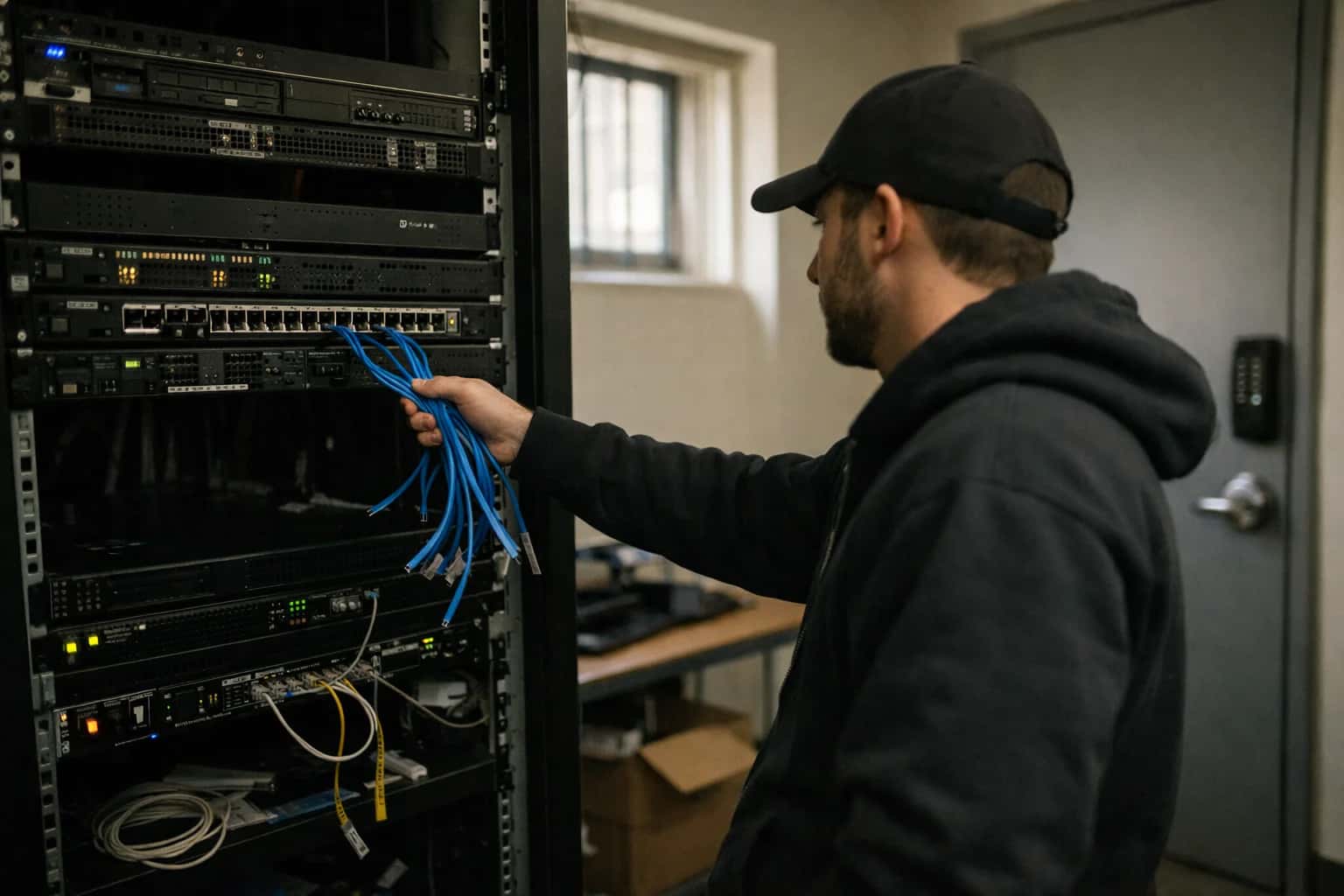
THE ANALYSIS
Introduction
A data-driven comparison of disconnected and cloud-native GitOps workflows for deploying sovereign AI infrastructure.
Cloud-Connected GitOps takes a different approach by leveraging managed control planes and global artifact registries to achieve faster deployment cycles and lower operational overhead. This results in a significant trade-off: teams can deploy updates in minutes rather than hours, but they must accept a continuous, cryptographically-secured connection to an external control plane, which introduces a potential vector for supply chain compromise.
The key trade-off: If your priority is absolute data residency and a zero-trust posture against external infrastructure, choose an air-gapped architecture. If you prioritize developer velocity and reduced operational complexity for non-classified workloads, choose a cloud-connected pipeline. The decision ultimately hinges on whether the risk of a remote exploit outweighs the cost of maintaining a local, air-gapped mirror.
HEAD-TO-HEAD COMPARISON
Feature Comparison Matrix
Direct comparison of key metrics and features for Air-Gapped GitOps versus Cloud-Connected GitOps in sovereign AI environments.
| Metric | Air-Gapped GitOps | Cloud-Connected GitOps |
|---|---|---|
External Attack Surface | Zero (Physically Isolated) | API Endpoints & Webhooks |
Update Latency (CVE Patch) | 72+ Hours (Manual Transfer) | < 1 Hour (Automated) |
Operational Complexity (FTE Overhead) | 2-3x (Sneakernet & Validation) | 1x (Standard CI/CD) |
Artifact Provenance Guarantee | ||
Dependency Supply Chain Risk | Low (Curated Internal Mirror) | High (Direct Public Registry) |
Mean Time to Recovery (MTTR) | 4-8 Hours (Physical Access) | < 30 Minutes (Remote Rollback) |
Infrastructure Cost (vs. Baseline) | 1.5-2x (Duplicated Hardware) | 1x (Shared SaaS Resources) |
Air-Gapped GitOps vs Cloud-Connected GitOps
TL;DR Summary
A high-level comparison of security posture, operational complexity, and update velocity for sovereign AI infrastructure.
01
Choose Air-Gapped GitOps for Maximum Security Posture
Zero-trust architecture: No external network dependencies eliminate the primary attack vector for supply chain poisoning. This matters for classified defense workloads and critical national infrastructure where a compromised cloud artifact could be catastrophic.
- Data Residency Guarantee: 100% of secrets, manifests, and container images remain within the sovereign perimeter.
- Trade-off: Requires a dedicated team to maintain private artifact mirrors (e.g., Harbor) and air-gapped operator lifecycles, increasing operational overhead by an estimated 30-40%.
02
Choose Cloud-Connected GitOps for Developer Velocity
Direct upstream consumption: Pipelines pull directly from public registries and cloud APIs, enabling rapid adoption of the latest AI operators (e.g., NVIDIA GPU Operator v24.9). This matters for R&D teams iterating on model architectures where time-to-market is critical.
- Reduced Maintenance Burden: Leverages managed control planes (e.g., AKS, EKS) to handle etcd backups and API server scaling.
- Trade-off: Expands the blast radius to include cloud control plane breaches and introduces egress costs for large AI model pulls.
03
Choose Air-Gapped GitOps for Regulatory Certainty
Deterministic compliance: Immutable, locally-signed software bills of materials (SBOMs) simplify audits for ITAR, EAR, and EUCS frameworks. This matters for sovereign healthcare data and financial market infrastructure where regulators demand proof of non-exfiltration.
- Offline Reconciliation: GitOps agents (e.g., Flux, ArgoCD) operate entirely on local Git repositories, ensuring drift detection functions without internet connectivity.
- Trade-off: Update latency can be 7-14 days behind public releases due to manual security vetting and air-gap transfer procedures.
04
Choose Cloud-Connected GitOps for Operational Simplicity
Unified control plane: A single pane of glass manages clusters across hybrid cloud and edge environments. This matters for global manufacturing and retail where central IT must orchestrate AI inference at hundreds of locations.
- Automated Patching: Webhooks and cloud-native secret stores (e.g., AWS Secrets Manager) automate certificate rotation and OS updates.
- Trade-off: Introduces a hard dependency on the cloud provider's IAM system, which can create complex identity federation challenges in sovereign multi-cloud setups.
CHOOSE YOUR PRIORITY
When to Choose Air-Gapped vs Cloud-Connected
Air-Gapped GitOps for Security
Strengths: The ultimate defense-in-depth posture. By physically isolating the control plane, you eliminate the risk of supply chain attacks originating from public registries (e.g., Docker Hub, GitHub). All artifacts are sourced from a private, scanned mirror, ensuring a cryptographically verified software supply chain. This is non-negotiable for defense, critical national infrastructure, and high-compliance finance.
Verdict: Choose this when the threat model includes nation-state actors or when compliance mandates (ITAR, NIST 800-53) require complete physical disconnect. The security gain is absolute, but it comes at the cost of manual update toil.
Cloud-Connected GitOps for Security
Strengths: Leverages the shared responsibility model of the cloud provider, benefiting from their massive investment in DDoS protection, identity threat detection, and automated secret scanning. Tools like GitHub Advanced Security or GitLab Ultimate can scan dependencies in real-time, often patching vulnerabilities faster than an isolated team can manually sync an air-gapped mirror.
Verdict: Ideal for organizations where agility and rapid vulnerability patching outweigh the risk of a sophisticated supply chain injection. The security posture is reactive and automated, but the attack surface includes the CI/CD pipeline's internet dependency.
Enabling Efficiency, Speed & Accuracy
Intelligent Analysis, Decision & Execution
We build AI systems for teams that need search across company data, workflow automation across tools, or AI features inside products and internal software.
Talk to Us
Search across company data
Give teams answers from docs, tickets, runbooks, and product data with sources and permissions.
Useful when people spend too long searching or get different answers from different systems.
Enterprise searchRAGPermissions
Read more
Automate internal workflows
Use AI to route work, draft outputs, trigger actions, and keep approvals and logs in place.
Useful when repetitive work moves across multiple tools and teams.
AI agentsWorkflow automationGovernance
Read more
Add AI to products and internal tools
Build assistants, guided actions, or decision support into the software your team or customers already use.
Useful when AI needs to be part of the product, not a separate tool.
AI integrationDecision supportModel routing
Read moreAIR-GAPPED VS CLOUD-CONNECTED GITOPS
Technical Deep Dive: Supply Chain and Latency
A technical comparison of software supply chain integrity, artifact propagation latency, and operational complexity when deploying AI infrastructure in disconnected sovereign environments versus cloud-native pipelines.
Yes, for initial artifact synchronization, but not for reconciliation loops. Air-gapped environments require a 'sneakernet' or cross-domain bridge to physically transfer container images and Helm charts, introducing hours or days of latency for new version propagation. However, once the local artifact mirror (e.g., Harbor, Nexus) is seeded, the local reconciliation loop is often faster than cloud-connected GitOps because the agent (Flux, Argo CD) pulls from a local registry over a low-latency LAN, avoiding internet egress bottlenecks and rate limits.
THE ANALYSIS
Verdict
A final, data-driven assessment to help CTOs choose between air-gapped and cloud-connected GitOps for sovereign AI infrastructure.
Air-Gapped GitOps excels at enforcing an uncompromising security posture because it eliminates the external attack surface entirely. By operating a fully disconnected pipeline with a private artifact mirror (e.g., Harbor) and a local agent (e.g., Flux in local mode), the system is immune to supply chain attacks originating from public registries and credential leaks from SaaS providers. For example, a defense-sector deployment can guarantee that no code or container image has left the secured perimeter, directly satisfying strict regulatory mandates like ITAR or national military standards without relying on a cloud provider's audit log.
Cloud-Connected GitOps takes a different approach by optimizing for operational velocity and reduced cognitive load. It leverages the managed control planes of platforms like GitHub Actions, Argo CD with hosted Git, and public OCI registries to automate updates and synchronize state globally. This results in a significantly lower mean time to recovery (MTTR) and eliminates the overhead of maintaining a local GitOps control plane. For instance, a multinational manufacturer can push a model update to a global fleet of edge inference servers in minutes, a process that would require a manual, site-by-site kubectl apply in an air-gapped setup.
The key trade-off: If your priority is absolute data sovereignty, defense-grade security, and immunity from upstream internet disruptions, choose an air-gapped GitOps workflow. If you prioritize developer agility, global synchronization speed, and minimizing the operational burden of maintaining a private software supply chain, choose a cloud-connected GitOps model. Consider a hybrid approach where a cloud-connected management cluster orchestrates air-gapped production clusters via a secure, one-way replication gateway for a balance of control and speed.

About the author
Prasad Kumkar
CEO & MD, Inference Systems
Prasad Kumkar is the CEO & MD of Inference Systems and writes about AI systems architecture, LLM infrastructure, model serving, evaluation, and production deployment. Over 5+ years, he has worked across computer vision models, L5 autonomous vehicle systems, and LLM research, with a focus on taking complex AI ideas into real-world engineering systems.
His work and writing cover AI systems, large language models, AI agents, multimodal systems, autonomous systems, inference optimization, RAG, evaluation, and production AI engineering.
LinkedIn
Limited slotsGet a Free AI Consultation
Partnered with leading AI, data, and software stack.





How We Work
Custom AI workflows for your Business
One-fit-all AI don't work for modern businesses. At Inferensys, we aim to understand your business & custom requirements; which we use to define most efficient agentic workflows, the data, and the tools for your business.
01
Review the use case
We understand the task, the users, and where AI can actually help.
Read more02
Pick the right approach
We define what needs search, automation, or product integration.
Read more03
Build the first useful version
We implement the part that proves the value first.
Read more04
Improve from there
We add the checks and visibility needed to keep it useful.
Read moreThe first call is a practical review of your use case and the right next step.
Talk to Us