On-premises monitoring stacks like the Grafana LGTM suite (Loki, Grafana, Tempo, Mimir) and Prometheus excel at providing complete metric sovereignty because all telemetry data—GPU utilization, inference latency, model drift metrics—never leaves the secure perimeter. For example, a defense contractor running air-gapped LLM fine-tuning can achieve sub-second query performance on local NVMe storage without any external network dependency, ensuring that sensitive operational patterns remain classified.

Difference
On-Premises Monitoring vs SaaS Observability for Air-Gapped AI
A technical comparison of self-hosted monitoring stacks (Prometheus, Grafana LGTM) against SaaS platforms (Datadog, Dynatrace) for observing GPU clusters and AI inference in disconnected environments, focusing on metric sovereignty and alerting without external dependencies.
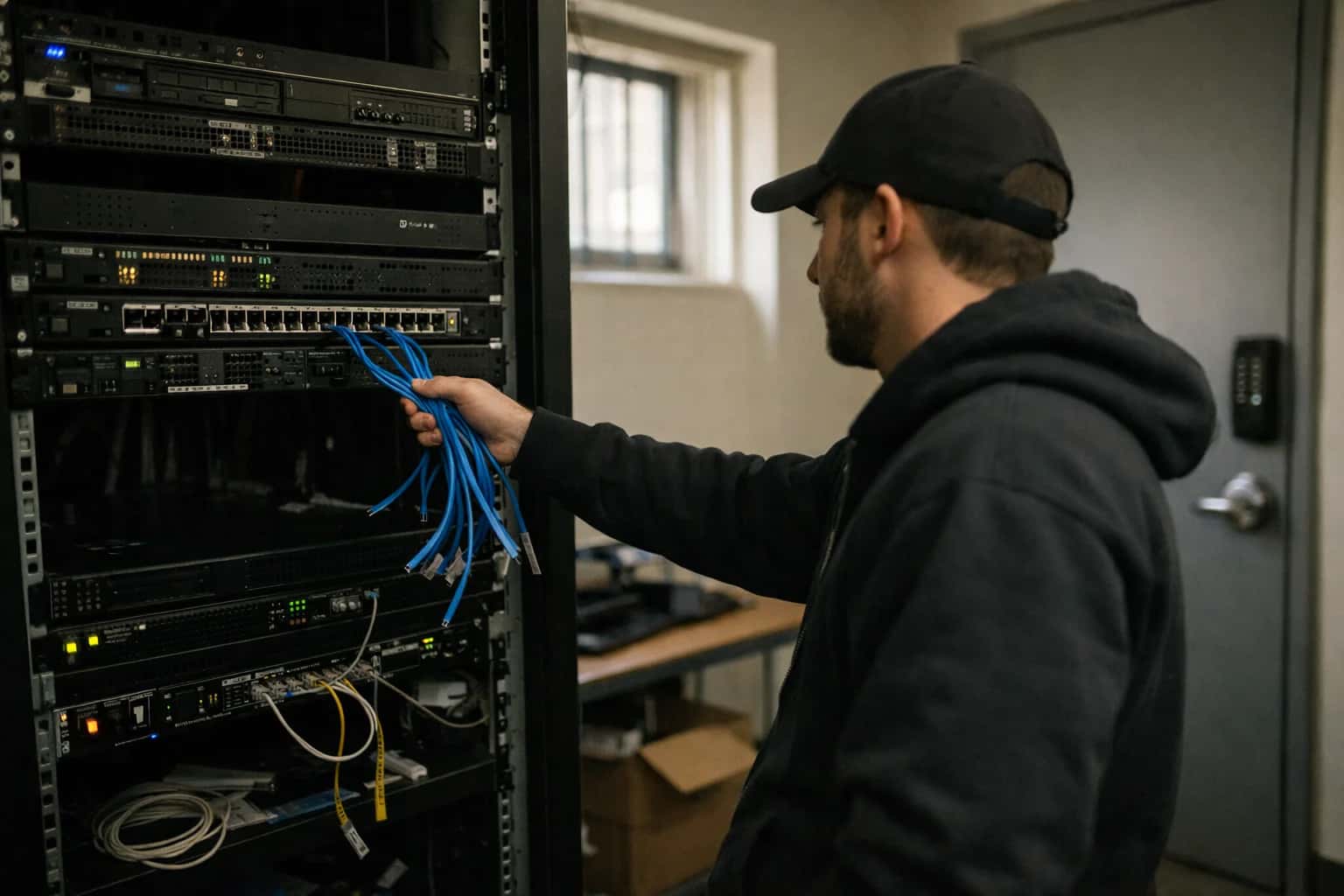
THE ANALYSIS
Introduction
A data-driven comparison of self-hosted monitoring stacks versus SaaS observability platforms for maintaining visibility and control over AI infrastructure in disconnected environments.
SaaS observability platforms such as Datadog and Dynatrace take a fundamentally different approach by leveraging cloud-scale analytics engines to provide AI-driven anomaly detection and cross-cluster correlation. This results in a significant trade-off: you gain pre-built dashboards for NVIDIA DCGM metrics and automated root cause analysis, but you introduce an external dependency that violates air-gapped security models and creates a potential exfiltration vector for operational metadata.
The key trade-off: If your priority is absolute data residency and zero external dependencies for classified AI workloads, choose a self-hosted Prometheus/Grafana stack with a private Alertmanager instance. If you prioritize operational speed, pre-integrated GPU monitoring, and are operating in a non-classified environment where a secure outbound proxy is acceptable, choose a SaaS platform with a dedicated FedRAMP-authorized tenant. Consider on-premises when your compliance framework mandates it; choose SaaS when your team lacks the headcount to maintain a 24/7 monitoring infrastructure.
HEAD-TO-HEAD COMPARISON
Feature Comparison Matrix
Direct comparison of key metrics and features for monitoring air-gapped AI infrastructure.
| Metric | On-Premises (Prometheus/Grafana LGTM) | SaaS Observability (Datadog/Dynatrace) |
|---|---|---|
Data Residency & Sovereignty | 100% Local | Cloud-Dependent |
Air-Gapped Operation | ||
External Dependency for Alerting | ||
GPU Telemetry Depth (DCGM/NVML) | Full Kernel-Level Access | Agent-Based Sampling |
Metric Storage Cost (per 100 nodes/mo) | ~$500 (Compute/Storage) | ~$2,500 (Ingest/Retention) |
Update Mechanism | Air-Gapped Private Mirror | Automatic SaaS Push |
Long-Term Metric Retention (3+ Years) | Object Storage (S3-compatible) | Premium Tier Required |
On-Premises Monitoring vs SaaS Observability
TL;DR Summary
A quick comparison of self-hosted monitoring stacks and SaaS observability platforms for observing GPU clusters and AI inference in disconnected environments.
01
Complete Metric Sovereignty
On-Premises Advantage: Self-hosted stacks like Prometheus and Grafana LGTM ensure all telemetry data—GPU utilization, inference latency, error rates—never leaves your air-gapped network. This is non-negotiable for defense, national security, and highly regulated industries where data egress is a legal violation. SaaS platforms inherently require an external connection, creating a compliance gap that no amount of encryption can fully close.
02
Zero External Dependencies for Alerting
On-Premises Advantage: In a true air-gapped environment, your alerting pipeline must function without reaching the public internet. Self-hosted Alertmanager and Grafana can route critical GPU failure or inference degradation alerts via internal SMTP, local webhooks, or connected incident management tools. SaaS observability platforms like Datadog or Dynatrace become completely blind the moment the external connection is severed, creating a dangerous single point of failure for operational awareness.
03
Operational Simplicity and AI-Driven Insights
SaaS Advantage: Platforms like Datadog and Dynatrace offer out-of-the-box dashboards, machine learning-based anomaly detection, and automated root cause analysis that would take a dedicated team months to replicate with a self-hosted stack. For organizations without a mature platform engineering team, the time-to-value is measured in hours, not quarters. This matters for commercial enterprises where speed of insight directly impacts revenue, even if it means accepting a cloud dependency.
04
Reduced Maintenance Overhead
SaaS Advantage: Managing a self-hosted observability stack at scale—patching Prometheus, scaling Grafana, managing Thanos or Mimir for long-term storage—requires significant engineering investment. SaaS platforms eliminate the burden of managing the monitoring infrastructure itself, allowing teams to focus on the AI workloads. For a lean MLOps team, the 40%+ reduction in operational toil often justifies the recurring SaaS cost, provided an air-gap is not a hard requirement.
HEAD-TO-HEAD COMPARISON
Security and Compliance Considerations
Direct comparison of security posture and compliance capabilities for monitoring air-gapped AI infrastructure.
| Metric | On-Premises Monitoring (LGTM/Prometheus) | SaaS Observability (Datadog/Dynatrace) |
|---|---|---|
Data Egress Risk | 0 GB (Zero external transmission) | High (Continuous metric/log streaming) |
Compliance with Air-Gap Mandates | ||
External Dependency for Alerting | ||
Supply Chain Integrity Verification | Full (Private artifact mirrors, SBOMs) | Limited (Vendor-managed updates) |
Encryption Key Sovereignty | Full (Local HSMs/KMS) | Vendor-Managed (Cloud KMS) |
Audit Trail Residency | Local (Object storage/S3-compatible) | Vendor Cloud (Subject to subpoena) |
NIST 800-53 / FedRAMP High Readiness | Configurable (Customer responsibility) | Inherited (Vendor attestation) |
Enabling Efficiency, Speed & Accuracy
Intelligent Analysis, Decision & Execution
We build AI systems for teams that need search across company data, workflow automation across tools, or AI features inside products and internal software.
Talk to Us
Search across company data
Give teams answers from docs, tickets, runbooks, and product data with sources and permissions.
Useful when people spend too long searching or get different answers from different systems.
Enterprise searchRAGPermissions
Read more
Automate internal workflows
Use AI to route work, draft outputs, trigger actions, and keep approvals and logs in place.
Useful when repetitive work moves across multiple tools and teams.
AI agentsWorkflow automationGovernance
Read more
Add AI to products and internal tools
Build assistants, guided actions, or decision support into the software your team or customers already use.
Useful when AI needs to be part of the product, not a separate tool.
AI integrationDecision supportModel routing
Read moreCHOOSE YOUR PRIORITY
When to Choose What
On-Premises Monitoring for Air-Gapped AI
Strengths: Complete metric sovereignty, zero external dependency, and full control over the telemetry pipeline. Self-hosted stacks like Grafana LGTM (Loki, Grafana, Tempo, Mimir) or Prometheus with Thanos ensure that GPU utilization metrics, inference latency data, and model drift logs never leave the secure perimeter. This is non-negotiable for defense-sector CTOs and critical infrastructure operators where a SaaS egress point is a vector for supply chain attacks.
Verdict: The only compliant choice for classified environments. The operational burden of managing your own observability stack is the price of absolute data residency.
SaaS Observability for Air-Gapped AI
Strengths: None in a true air-gapped scenario. If a SaaS platform like Datadog or Dynatrace cannot establish an outbound connection, it is fundamentally non-functional. Any workaround involving a proxy or a one-way diode introduces a complex, brittle architecture that violates the core principle of an air gap.
Verdict: Architecturally incompatible. Do not attempt to bridge an air gap for SaaS monitoring; it defeats the security model.
THE ANALYSIS
Verdict
A final, data-driven decision framework for choosing between on-premises monitoring and SaaS observability for air-gapped AI infrastructure.
On-premises monitoring stacks (Prometheus, Grafana LGTM) excel at absolute data sovereignty and operational independence. Because all metric, log, and trace data remains within the air-gapped perimeter, there is zero risk of telemetry exfiltration to an external vendor. This is a non-negotiable requirement for defense and critical national infrastructure. For example, a self-hosted Grafana Mimir instance can ingest 100 million active series without a single byte leaving the secure enclave, ensuring compliance with strict data residency mandates.
SaaS observability platforms (Datadog, Dynatrace) take a fundamentally different approach by prioritizing analytical depth and operational velocity. Their value lies in AI-driven anomaly detection, automated root cause analysis, and unified dashboards that correlate GPU utilization with model inference latency. This results in a significantly lower mean time to detection (MTTD). However, this power comes with a critical trade-off: it requires an outbound connection or a secure data diode, creating a complex compliance review process and a potential attack vector for metric sovereignty.
The key trade-off centers on autonomy versus insight. If your primary requirement is an air-gapped, zero-trust architecture where no external dependency is acceptable, an on-premises LGTM stack is the only viable choice. If you can technically and legally broker a secure, unidirectional data stream and prioritize advanced, AI-assisted alerting to prevent GPU cluster downtime, a SaaS platform offers a faster time-to-value. Consider on-premises monitoring when you must own the control plane; choose SaaS observability when you need to understand the GPU's behavior with minimal operational overhead.

About the author
Prasad Kumkar
CEO & MD, Inference Systems
Prasad Kumkar is the CEO & MD of Inference Systems and writes about AI systems architecture, LLM infrastructure, model serving, evaluation, and production deployment. Over 5+ years, he has worked across computer vision models, L5 autonomous vehicle systems, and LLM research, with a focus on taking complex AI ideas into real-world engineering systems.
His work and writing cover AI systems, large language models, AI agents, multimodal systems, autonomous systems, inference optimization, RAG, evaluation, and production AI engineering.
LinkedIn
Limited slotsGet a Free AI Consultation
Partnered with leading AI, data, and software stack.





How We Work
Custom AI workflows for your Business
One-fit-all AI don't work for modern businesses. At Inferensys, we aim to understand your business & custom requirements; which we use to define most efficient agentic workflows, the data, and the tools for your business.
01
Review the use case
We understand the task, the users, and where AI can actually help.
Read more02
Pick the right approach
We define what needs search, automation, or product integration.
Read more03
Build the first useful version
We implement the part that proves the value first.
Read more04
Improve from there
We add the checks and visibility needed to keep it useful.
Read moreThe first call is a practical review of your use case and the right next step.
Talk to Us