NIST-compliant AI infrastructure excels at providing granular, risk-based security controls specifically mapped to US federal requirements. Because the NIST AI Risk Management Framework (RMF) is a direct extension of the broader NIST cybersecurity framework mandated for defense contractors, it offers a clear, auditable path to compliance with Executive Order 14110 and DoD Instruction 5000.90. For example, a NIST-aligned system provides detailed AI Risk categorization (e.g., 'high-risk' for autonomous targeting systems) with corresponding control baselines, creating a defensible paper trail for a Defense Contract Management Agency (DCMA) audit.

Difference
NIST-Compliant AI Infrastructure vs ISO 42001 Certified Global Cloud: Regulatory Assurance
A technical comparison of building AI systems to NIST AI RMF standards versus using an ISO/IEC 42001 certified global cloud provider, focusing on security control depth, audit readiness, and legal defensibility for US government and defense contractors.
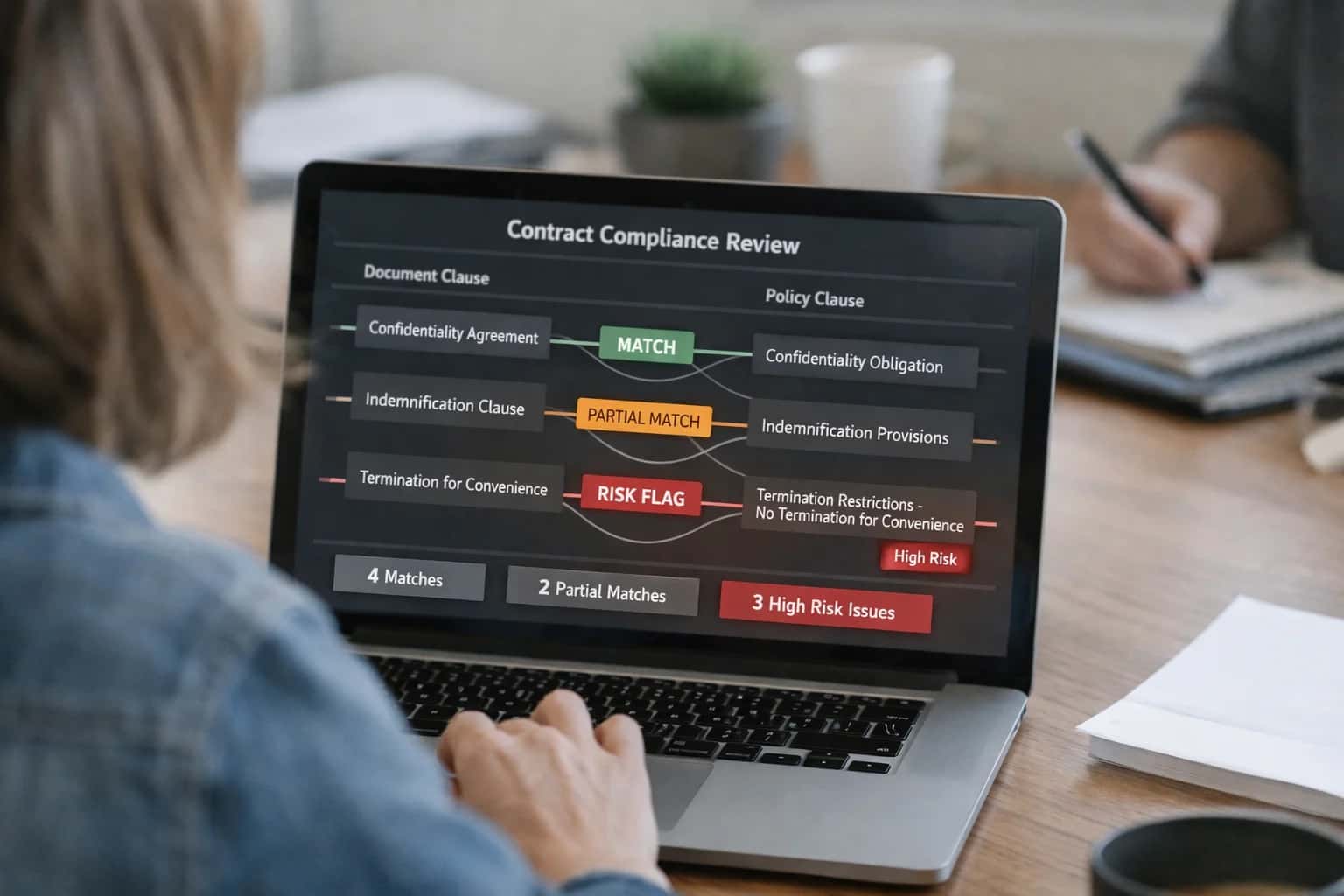
THE ANALYSIS
Introduction
A direct comparison of NIST AI RMF and ISO/IEC 42001 for building legally defensible AI infrastructure in the US defense sector.
ISO/IEC 42001 certified global cloud takes a different approach by embedding AI governance within a certifiable, process-oriented management system. This results in a globally recognized, third-party-auditable certificate that demonstrates a continuous improvement cycle for AI ethics and risk. A provider like AWS or Google Cloud with ISO 42001 certification offers a standardized, internationally accepted assurance, which is highly valuable for multinational defense collaborations or commercial-off-the-shelf (COTS) procurement where a single, portable credential simplifies vendor due diligence across borders.
The key trade-off: If your priority is direct, defensible alignment with specific US Department of Defense contractual clauses and the nuanced risk taxonomy of the US Intelligence Community, choose a NIST AI RMF-based infrastructure. If you prioritize a globally portable, third-party certified management system that proves a mature, ongoing governance process to a diverse set of international partners, choose an ISO/IEC 42001 certified cloud. For a US prime contractor, NIST compliance is often the non-negotiable floor, while ISO 42001 can serve as a valuable ceiling, demonstrating operational maturity beyond the minimum standard.
HEAD-TO-HEAD COMPARISON
Regulatory Assurance Feature Matrix
Direct comparison of key regulatory and security control metrics for US defense and government contractors.
| Metric | NIST AI RMF Infrastructure | ISO/IEC 42001 Global Cloud |
|---|---|---|
Legal Defensibility (US Gov) | High (FedRAMP/NIST SP 800-53 Aligned) | Moderate (Requires Contractual Flow-Downs) |
Audit Trail Granularity | Hardware-Level Attestation & TPM Logs | Hypervisor & Service-Level Logs |
Data Residency Enforcement | Physical (Air-Gapped/Colo) | Logical (Region Binding) |
Supply Chain Transparency | Full SBOM & Domestic Chain of Custody | Vendor-Managed SBOM |
Control Over Encryption Keys | Customer-Exclusive HSM (FIPS 140-3) | Shared HSM or Hold Your Own Key (HYOK) |
Penetration Testing Rights | Unrestricted Physical & Logical | Restricted (Cloud Provider Approval) |
CMMC 2.0 Level 3 Readiness | Architected for Compliance | Requires Significant Shared-Responsibility Overlay |
Pros & Cons at a Glance
TL;DR Summary
Key strengths and trade-offs for NIST-compliant infrastructure versus ISO 42001 certified global cloud.
01
NIST AI RMF: Legal Defensibility
Specific advantage: Maps directly to US Executive Order 14110 and OMB M-24-10 requirements. This matters for US government contractors and defense agencies who must demonstrate alignment with NIST SP 800-53 controls during FedRAMP authorization. Provides a granular, prescriptive risk taxonomy that simplifies audit preparation.
02
NIST AI RMF: Operational Overhead
Specific trade-off: Requires significant in-house expertise to interpret the framework's 72 subcategories and implement continuous monitoring. No certifying body issues a 'NIST Compliant' badge—you self-attest. This matters for smaller teams without dedicated governance staff, as the documentation burden can slow deployment velocity by 30-40%.
03
ISO 42001: Global Interoperability
Specific advantage: A certifiable management system standard recognized across 170+ countries. Third-party auditors from bodies like BSI or TÜV validate your AI management system annually. This matters for multinational enterprises needing a single, auditable framework to satisfy EU AI Act, GDPR, and APAC regulations simultaneously.
04
ISO 42001: Certification Scope Gaps
Specific trade-off: Certification covers the management system, not the technical security controls of the infrastructure itself. A cloud provider's ISO 42001 certificate does not guarantee NIST-equivalent encryption standards or air-gapped network architecture. This matters for defense contractors who may find ISO certification insufficient for CMMC 2.0 Level 3 compliance without supplementary controls.
CHOOSE YOUR PRIORITY
When to Choose Which Framework
NIST AI RMF for Defense
Strengths: Directly maps to CMMC 2.0 and NIST SP 800-171 requirements. Provides granular control over AI risk categories (bias, explainability, security) that align with DoD's ethical AI principles. Air-gapped deployment is a native design consideration, not an afterthought.
Verdict: The only viable path for ITAR/EAR-controlled workloads. NIST compliance is contractually mandated for most defense RFPs.
ISO 42001 for Defense
Weaknesses: Lacks the specific technical controls required by US defense frameworks. While ISO 42001 demonstrates a management commitment to AI governance, it does not satisfy DFARS 252.204-7012 or NIST 800-171 audit requirements.
Verdict: Insufficient on its own. May be used as a supplementary management overlay but cannot replace NIST RMF for defense contractors.
Enabling Efficiency, Speed & Accuracy
Intelligent Analysis, Decision & Execution
We build AI systems for teams that need search across company data, workflow automation across tools, or AI features inside products and internal software.
Talk to Us
Search across company data
Give teams answers from docs, tickets, runbooks, and product data with sources and permissions.
Useful when people spend too long searching or get different answers from different systems.
Enterprise searchRAGPermissions
Read more
Automate internal workflows
Use AI to route work, draft outputs, trigger actions, and keep approvals and logs in place.
Useful when repetitive work moves across multiple tools and teams.
AI agentsWorkflow automationGovernance
Read more
Add AI to products and internal tools
Build assistants, guided actions, or decision support into the software your team or customers already use.
Useful when AI needs to be part of the product, not a separate tool.
AI integrationDecision supportModel routing
Read moreREGULATORY ASSURANCE
Technical Deep Dive: Control Mapping
A direct comparison of the security control architectures, auditability, and legal defensibility offered by NIST AI RMF-aligned infrastructure versus ISO/IEC 42001 certified global cloud platforms for US government and defense contractors.
NIST AI RMF provides stronger legal defensibility for US defense contractors. NIST standards are explicitly referenced in Executive Order 14110 and OMB memoranda, making them the de facto standard for federal procurement. An ISO 42001 certification demonstrates a process-based management system, which is valuable for commercial contracts, but a NIST-mapped System Security Plan (SSP) directly aligns with CMMC 2.0 and FedRAMP authorization boundaries. For contractors handling CUI or ITAR data, the specific control mapping to NIST SP 800-53 and 800-171 offers a clear safe harbor that a generic ISO management standard does not.
THE ANALYSIS
Verdict
A direct comparison of NIST AI RMF and ISO/IEC 42001 for achieving defensible regulatory assurance in US government and defense contracting.
NIST-Compliant AI Infrastructure excels at providing a prescriptive, testable security baseline specifically mapped to US federal requirements. Because the NIST AI RMF is the direct framework referenced in Executive Order 14110 and OMB Memorandum M-24-10, infrastructure built to its controls (e.g., air-gapped management planes, FIPS 140-3 validated encryption, and continuous monitoring aligned to SP 800-53) offers the strongest legal defensibility for defense contractors. For example, an on-premises HPE or Dell sovereign cloud can demonstrate specific AT-3 (Training) and CA-7 (Continuous Monitoring) control satisfaction to a DoD auditor without translation.
ISO/IEC 42001 Certified Global Cloud takes a different approach by embedding AI governance into a broader, internationally recognized management system. This results in a holistic, process-oriented assurance model that covers not just security but also fairness, transparency, and lifecycle quality. A provider like AWS or Azure with ISO 42001 certification offers a globally consistent, continuously audited framework that simplifies multi-jurisdictional operations. The trade-off is that an ISO 42001 certificate, while demonstrating a robust management system, does not map 1:1 to the specific NIST SP 800-53 control baselines required in US federal RFPs, potentially creating an audit gap that requires manual cross-walking.
The key trade-off: If your priority is direct, low-friction compliance with US federal and DoD contracts where NIST SP 800-53 and AI RMF are the audit language, choose a NIST-compliant sovereign infrastructure. If you prioritize a holistic, internationally portable AI governance posture that satisfies EU, APAC, and commercial stakeholders under a single certificate, choose an ISO/IEC 42001 certified global cloud. For the defense industrial base, NIST alignment is not just a preference; it is the legally defensible requirement.

About the author
Prasad Kumkar
CEO & MD, Inference Systems
Prasad Kumkar is the CEO & MD of Inference Systems and writes about AI systems architecture, LLM infrastructure, model serving, evaluation, and production deployment. Over 5+ years, he has worked across computer vision models, L5 autonomous vehicle systems, and LLM research, with a focus on taking complex AI ideas into real-world engineering systems.
His work and writing cover AI systems, large language models, AI agents, multimodal systems, autonomous systems, inference optimization, RAG, evaluation, and production AI engineering.
LinkedIn
Limited slotsGet a Free AI Consultation
Partnered with leading AI, data, and software stack.





How We Work
Custom AI workflows for your Business
One-fit-all AI don't work for modern businesses. At Inferensys, we aim to understand your business & custom requirements; which we use to define most efficient agentic workflows, the data, and the tools for your business.
01
Review the use case
We understand the task, the users, and where AI can actually help.
Read more02
Pick the right approach
We define what needs search, automation, or product integration.
Read more03
Build the first useful version
We implement the part that proves the value first.
Read more04
Improve from there
We add the checks and visibility needed to keep it useful.
Read moreThe first call is a practical review of your use case and the right next step.
Talk to Us