
Comparisons
AI Governance for Public Policy and Government
AI Governance for Public Policy and Government
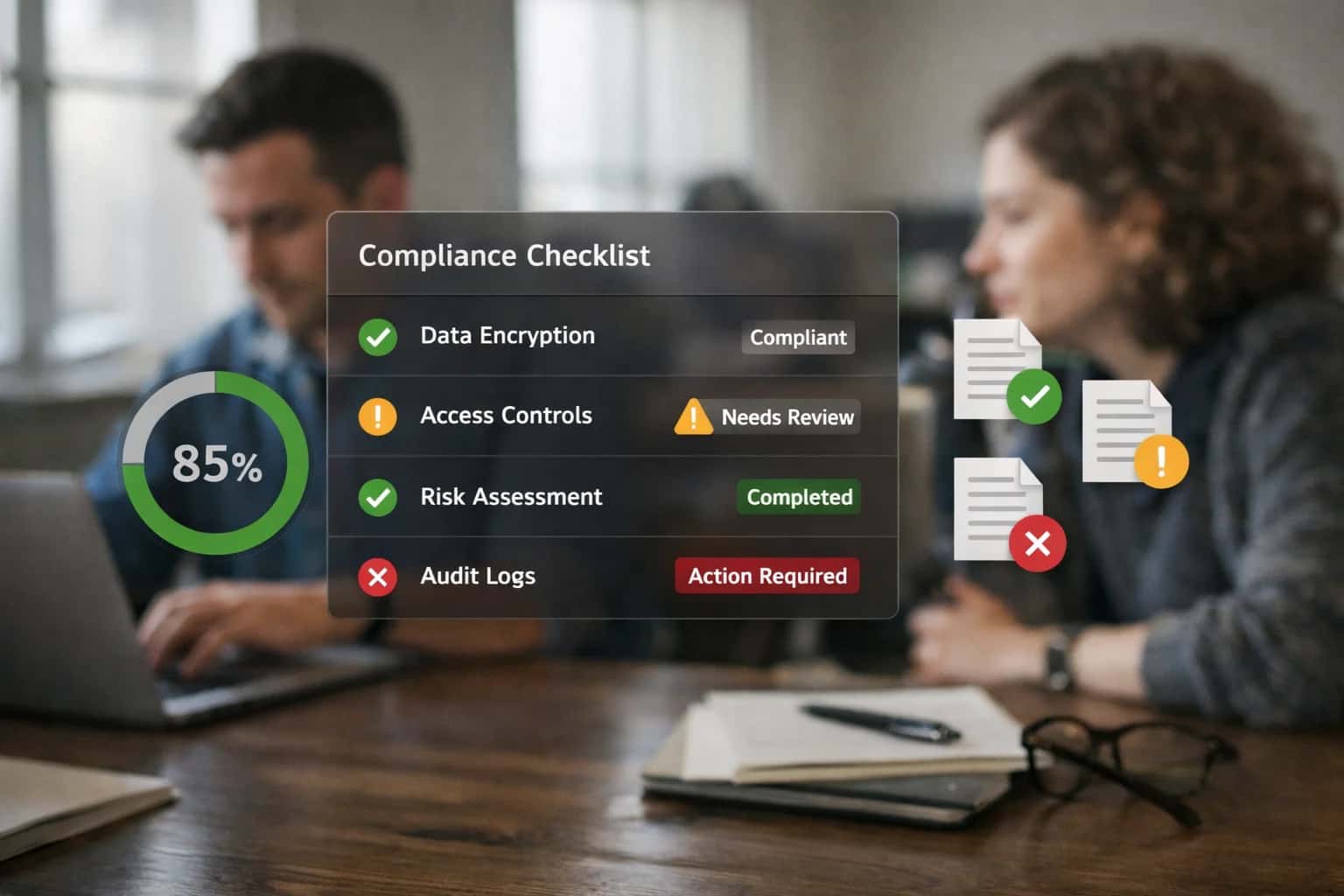
A new class of AI governance tools is emerging for government agencies. This pillar compares tools that ensure 'ethical compliance' and 'public trust' in AI usage. Comparisons center on 'transparency of automated decisions' and 'compliance with sovereign AI mandates' for public sector digital transformation.
OneTrust AI Governance vs IBM watsonx.governance
Comparison of two enterprise-scale platforms for managing AI risk, compliance, and ethics, focusing on integration with existing GRC stacks, automated policy enforcement, and audit trail generation for public sector mandates in 2026.
Microsoft Purview AI Governance vs Google Vertex AI Governance
Head-to-head evaluation of cloud-native governance tools from hyperscalers, analyzing native integration with Azure AI and Google Cloud AI services, data lineage tracking, and compliance with sovereign data residency requirements.
Credo AI vs Holistic AI
Comparison of specialized AI governance startups focusing on algorithmic risk assessment, bias detection, and explainability, evaluating their frameworks for translating ethical principles into enforceable technical controls for government AI systems.
Fiddler AI Governance vs Arize Phoenix Governance
Analysis of AI observability and monitoring platforms that provide model performance tracking, drift detection, and root-cause analysis, with a focus on their capabilities for monitoring high-stakes public sector AI deployments in 2026.
Monitaur vs Arthur AI Governance
Evaluation of governance tools specializing in audit trails and evidence collection for AI decision-making, comparing their ability to provide defensible documentation for regulatory compliance and public transparency reports.
LatticeFlow vs WhyLabs
Comparison of platforms focused on automated data and model validation, assessing their capabilities for continuous monitoring of data quality, identifying hidden biases, and ensuring model robustness in production government AI systems.
Accenture AI Governance Platform vs Deloitte AI Trust Platform
Head-to-head of consulting giants' integrated governance offerings, analyzing their methodology-driven approaches, implementation services, and managed services for end-to-end AI assurance in large public institutions.
KPMG AI Governance Tool vs PwC Responsible AI Toolkit
Comparison of audit and advisory firms' proprietary frameworks and software tools for AI risk management, focusing on their audit readiness features, control testing automation, and alignment with international AI standards like ISO 42001.
NVIDIA NIM Governance vs Intel AI Governance Toolkit
Evaluation of hardware vendors' software stacks for governing AI inference and training workloads, focusing on performance monitoring, secure model deployment, and compliance in GPU/CPU-accelerated sovereign AI infrastructure.
OpenAI Governance APIs vs Anthropic Constitutional AI Tools
Analysis of model providers' native governance features, comparing OpenAI's moderation and usage policies against Anthropic's constitutional AI and self-critique mechanisms for ensuring safe and aligned AI use in government applications.
Meta's Llama Guard vs Google's Safer AI Framework
Comparison of open-source and proprietary safety toolkits from major AI labs, evaluating their content filtering, output classification, and safety benchmarking capabilities for deploying frontier models in regulated public sector contexts.
Salesforce Einstein Governance vs ServiceNow AI Governance
Head-to-head of SaaS platform-native governance modules, assessing how CRM and workflow automation giants embed responsible AI controls, user permissioning, and activity logging within their AI-powered application suites.
Splunk AI Observability vs Dynatrace AI Governance
Comparison of extended APM and observability platforms that have added AI governance features, analyzing their real-time monitoring of AI service performance, cost, security, and compliance within complex IT environments.
Datadog AI Governance vs Elastic AI Observability
Evaluation of how major monitoring and analytics platforms handle AI/ML telemetry, comparing their dashboards for tracking model latency, token usage, error rates, and integrating these metrics with broader infrastructure logs.
MLflow Model Registry Governance vs Kubeflow Pipelines Governance
Analysis of open-source MLOps platforms' built-in governance capabilities for model lifecycle management, comparing experiment tracking, model versioning, stage transitions, and approval workflows for reproducible AI in government.
Partnered with leading AI, data, and software stack.





How We Work
Custom AI workflows for your Business
One-fit-all AI don't work for modern businesses. At Inferensys, we aim to understand your business & custom requirements; which we use to define most efficient agentic workflows, the data, and the tools for your business.
01
Review the use case
We understand the task, the users, and where AI can actually help.
Read more02
Pick the right approach
We define what needs search, automation, or product integration.
Read more03
Build the first useful version
We implement the part that proves the value first.
Read more04
Improve from there
We add the checks and visibility needed to keep it useful.
Read moreThe first call is a practical review of your use case and the right next step.
Talk to Us