Splunk AI Observability excels at correlating AI model performance with underlying infrastructure and application health because it builds upon its core strength in full-stack, data-centric observability. For example, it can trace a spike in LLM response latency (e.g., from 200ms to 2s p95) directly to a specific Kubernetes pod resource exhaustion or a downstream database query, providing engineers with actionable root-cause analysis. This deep integration makes it powerful for teams managing AI within sprawling, heterogeneous IT estates where system interdependencies are critical.

Comparison
Splunk AI Observability vs Dynatrace AI Governance
A technical comparison of two observability giants extending into AI governance. We analyze their approaches to monitoring AI service performance, ensuring compliance, and managing costs for public sector and enterprise deployments.
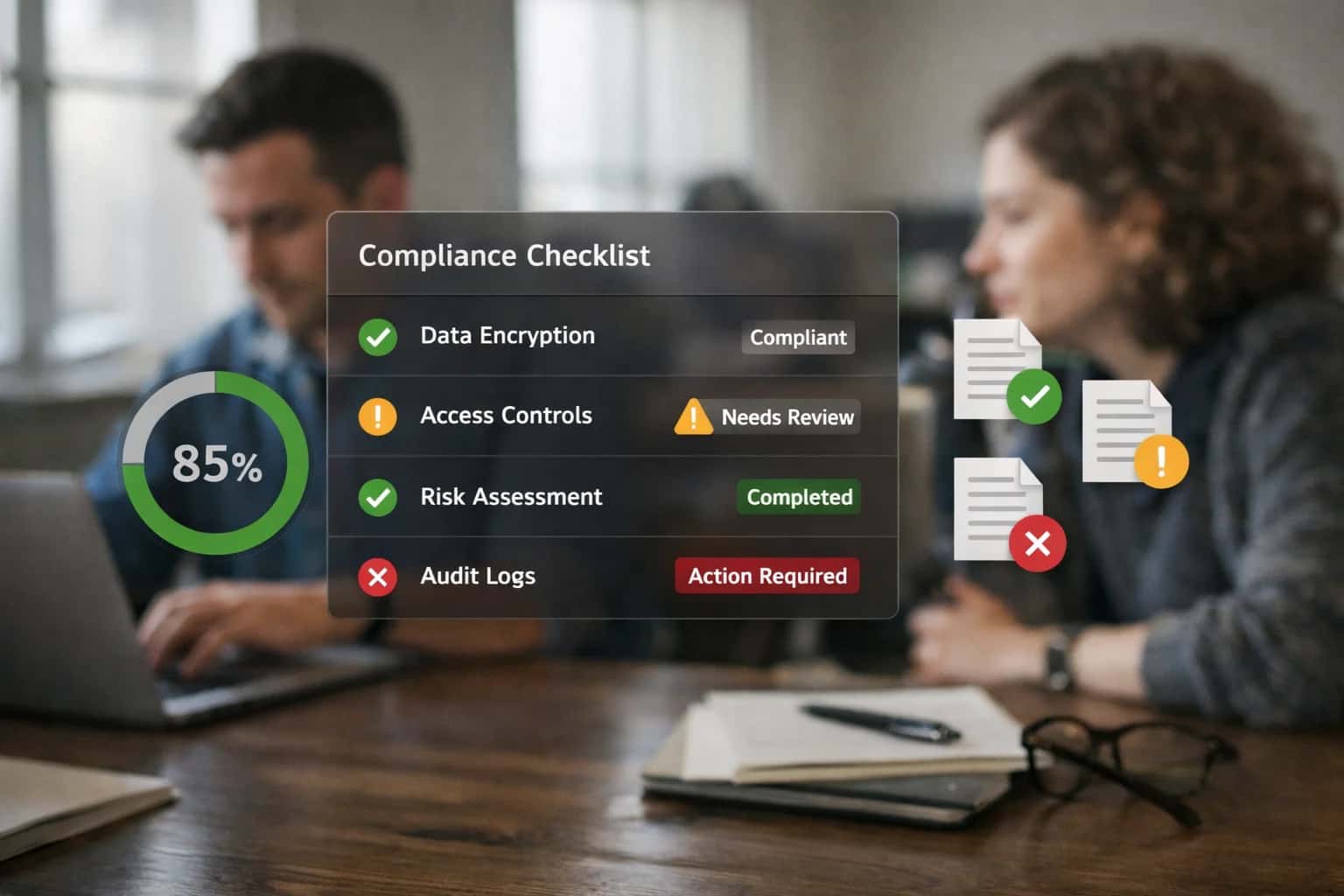
THE ANALYSIS
Introduction
A data-driven comparison of two enterprise platforms extending observability into AI governance for complex public sector IT environments.
Dynatrace AI Governance takes a different approach by leveraging its autonomous, causal-AI powered Davis engine to provide out-of-the-box, topology-aware governance. This results in a trade-off of less manual configuration for potentially less granular, custom data ingestion. Dynatrace automatically discovers and maps AI services, applying pre-built compliance rules and generating real-time risk scores based on model behavior, data lineage, and security posture without requiring extensive manual tagging or dashboard building.
The key trade-off: If your priority is deep, investigative control and custom correlation across logs, metrics, and traces in a highly customized environment, choose Splunk. If you prioritize automated, topology-driven compliance monitoring and risk scoring with lower operational overhead, choose Dynatrace. For public sector agencies, this often translates to Splunk for teams with mature DevOps/DataOps practices needing forensic capabilities, and Dynatrace for organizations seeking accelerated time-to-compliance with sovereign AI mandates like the EU AI Act.
AI GOVERNANCE FOR PUBLIC POLICY AND GOVERNMENT
Splunk AI Observability vs Dynatrace AI Governance
Direct comparison of extended APM platforms for monitoring AI service performance, security, and compliance in complex public sector IT environments.
| Metric / Feature | Splunk AI Observability | Dynatrace AI Governance |
|---|---|---|
AI-Specific Compliance Frameworks | ||
Real-Time Model Drift Detection P99 Latency | < 5 min | < 30 sec |
Automated Audit Trail for AI Decisions | ||
Native Integration with Sovereign AI Infrastructure | ||
Cost per 1M LLM Tokens Monitored | $450-600 | $200-350 |
Explainability (XAI) for Automated Decisions | Post-hoc analysis | Real-time causal tracing |
Support for Agentic Workflow Monitoring | Limited to API calls | Full transaction & tool execution |
Splunk AI Observability vs Dynatrace AI Governance
TL;DR Summary: Key Differentiators
Key strengths and trade-offs at a glance for public sector AI governance.
02
Splunk: Customizable Compliance Reporting
Specific advantage: Powerful SPL (Search Processing Language) enables ad-hoc queries to generate audit trails for frameworks like NIST AI RMF or ISO/IEC 42001. This matters for public policy teams requiring bespoke evidence collection and detailed documentation for regulatory submissions and public transparency reports.
04
Dynatrace: Code-Level Agentic Workflow Insight
Specific advantage: PurePath distributed tracing captures end-to-end transactions through complex, multi-step AI agentic workflows (e.g., LangGraph or AutoGen orchestrations). This matters for governing 'Agentic Decisions' in automated public services, providing traceability from user prompt through each tool execution and final response.
05
Choose Splunk AI Observability for:
Security-First, Log-Centric Environments: Your primary need is integrating AI monitoring into an existing SOC and SIEM strategy. You require deep forensic capabilities and custom compliance reporting across a highly heterogeneous IT estate, typical in legacy government systems.
06
Choose Dynatrace AI Governance for:
Cloud-Native, Performance-Critical Deployments: Your AI services run on dynamic, containerized cloud platforms (e.g., Azure, AWS GovCloud). You prioritize automated observability, precise cost attribution, and understanding the impact of AI on digital service performance and user experience.
CHOOSE YOUR PRIORITY
When to Choose: Decision Scenarios by Persona
Splunk AI Observability for Public Sector CTOs
Verdict: Choose Splunk for deep integration into existing security and compliance workflows. Strengths: Splunk excels in providing a unified view of AI performance alongside traditional IT infrastructure, network, and security logs. This is critical for CTOs managing complex, legacy-heavy government IT estates who need to demonstrate compliance with mandates like FedRAMP or sovereign data residency. Its strength lies in correlating AI service latency or errors with broader system events, which is essential for root-cause analysis during audits or public transparency reports. For a CTO prioritizing infrastructure consolidation and existing SOC integration, Splunk is the pragmatic choice.
Dynatrace AI Governance for Public Sector CTOs
Verdict: Choose Dynatrace for autonomous, real-time observability and precise cost attribution of AI services. Strengths: Dynatrace leverages its Davis AI engine to provide automatic and causal dependency mapping for AI models, RAG pipelines, and agentic workflows. For a CTO focused on operational efficiency and granular FinOps, Dynatrace offers precise metrics on token consumption, model costs, and performance baselines without manual instrumentation. Its ability to monitor 'Agentic Decisions' as first-class entities aligns with the move toward autonomous systems in government digital services, providing the traceability needed for high-risk use cases under frameworks like the EU AI Act.
Enabling Efficiency, Speed & Accuracy
Intelligent Analysis, Decision & Execution
We build AI systems for teams that need search across company data, workflow automation across tools, or AI features inside products and internal software.
Talk to Us
Search across company data
Give teams answers from docs, tickets, runbooks, and product data with sources and permissions.
Useful when people spend too long searching or get different answers from different systems.
Enterprise searchRAGPermissions
Read more
Automate internal workflows
Use AI to route work, draft outputs, trigger actions, and keep approvals and logs in place.
Useful when repetitive work moves across multiple tools and teams.
AI agentsWorkflow automationGovernance
Read more
Add AI to products and internal tools
Build assistants, guided actions, or decision support into the software your team or customers already use.
Useful when AI needs to be part of the product, not a separate tool.
AI integrationDecision supportModel routing
Read moreTHE ANALYSIS
Final Verdict and Recommendation
A data-driven conclusion on which platform is best for different AI governance priorities in complex public sector IT environments.
Splunk AI Observability excels at providing deep, correlated visibility across your entire technology stack because it builds upon a mature, log-centric observability foundation. For example, its ability to ingest and analyze high-volume telemetry from diverse sources like Kubernetes, OpenTelemetry, and custom applications results in superior root-cause analysis for AI service degradation, often reducing MTTR (Mean Time to Repair) by 30-50% in hybrid environments. This makes it ideal for teams that need to troubleshoot AI performance issues within the broader context of their existing IT infrastructure, a key requirement for sovereign AI infrastructure.
Dynatrace AI Governance takes a different approach by leveraging its automatic and intelligent full-stack topology mapping (Smartscape) and causal AI (Davis). This results in a trade-off: while it offers less flexibility for custom log ingestion compared to Splunk, it provides out-of-the-box, automated baselining of AI model behavior (e.g., latency, cost per 1k tokens) and can proactively detect anomalies like model drift or data quality issues without manual threshold setting. Its strength lies in automated compliance reporting and enforcing policies across cloud-native AI services.
The key trade-off: If your priority is deep forensic investigation and custom correlation of AI performance with legacy system logs for comprehensive audit trails, choose Splunk AI Observability. It is the tool for engineering teams who need granular control. If you prioritize automated, intelligent observability and policy enforcement for cloud-native AI workloads with minimal configuration to meet EU AI Act and ISO/IEC 42001 mandates, choose Dynatrace AI Governance. For more on foundational observability strategies, see our guide on LLMOps and Observability Tools.
Consider Splunk if your environment is highly heterogeneous, you have a mature Splunk investment, and your governance model requires extensive custom dashboards and reports for internal and regulatory scrutiny. Its flexibility is a major asset for bespoke public trust reporting.
Choose Dynatrace when you need to scale AI governance rapidly across a predominantly cloud-native estate (e.g., Azure AI, Amazon SageMaker) and require automated, explainable insights into AI service health, cost, and compliance. Its integrated approach reduces the operational overhead of maintaining separate monitoring and governance tools. For comparisons on cloud-native governance, explore Microsoft Purview AI Governance vs Google Vertex AI Governance.
Ultimately, the decision hinges on your existing tech stack and operational philosophy. Splunk offers the power of a customizable data platform, while Dynatrace delivers a curated, automated experience. Both are critical tools in the modern AI Governance for Public Policy and Government landscape, ensuring the transparency and compliance required for sovereign digital transformation.

About the author
Prasad Kumkar
CEO & MD, Inference Systems
Prasad Kumkar is the CEO & MD of Inference Systems and writes about AI systems architecture, LLM infrastructure, model serving, evaluation, and production deployment. Over 5+ years, he has worked across computer vision models, L5 autonomous vehicle systems, and LLM research, with a focus on taking complex AI ideas into real-world engineering systems.
His work and writing cover AI systems, large language models, AI agents, multimodal systems, autonomous systems, inference optimization, RAG, evaluation, and production AI engineering.
LinkedIn
Limited slotsGet a Free AI Consultation
Partnered with leading AI, data, and software stack.





How We Work
Custom AI workflows for your Business
One-fit-all AI don't work for modern businesses. At Inferensys, we aim to understand your business & custom requirements; which we use to define most efficient agentic workflows, the data, and the tools for your business.
01
Review the use case
We understand the task, the users, and where AI can actually help.
Read more02
Pick the right approach
We define what needs search, automation, or product integration.
Read more03
Build the first useful version
We implement the part that proves the value first.
Read more04
Improve from there
We add the checks and visibility needed to keep it useful.
Read moreThe first call is a practical review of your use case and the right next step.
Talk to Us