Meta's Llama Guard excels at providing a transparent, open-source toolkit for content moderation because it is designed as a downloadable, fine-tunable classifier. For example, its Llama Guard 2 model offers a predefined taxonomy of safety risks (e.g., Violence & Hate, Sexual Content) and can be deployed on-premises, a key metric for agencies requiring full control over their AI stack to meet sovereign data residency mandates. This makes it a practical choice for integrating safety directly into custom pipelines built on models like Llama 3.1 or Code Llama.

Comparison
Meta's Llama Guard vs Google's Safer AI Framework
A technical comparison of open-source and proprietary AI safety toolkits, evaluating content filtering, output classification, and compliance capabilities for deploying frontier models in regulated public sector contexts.
THE ANALYSIS
Introduction
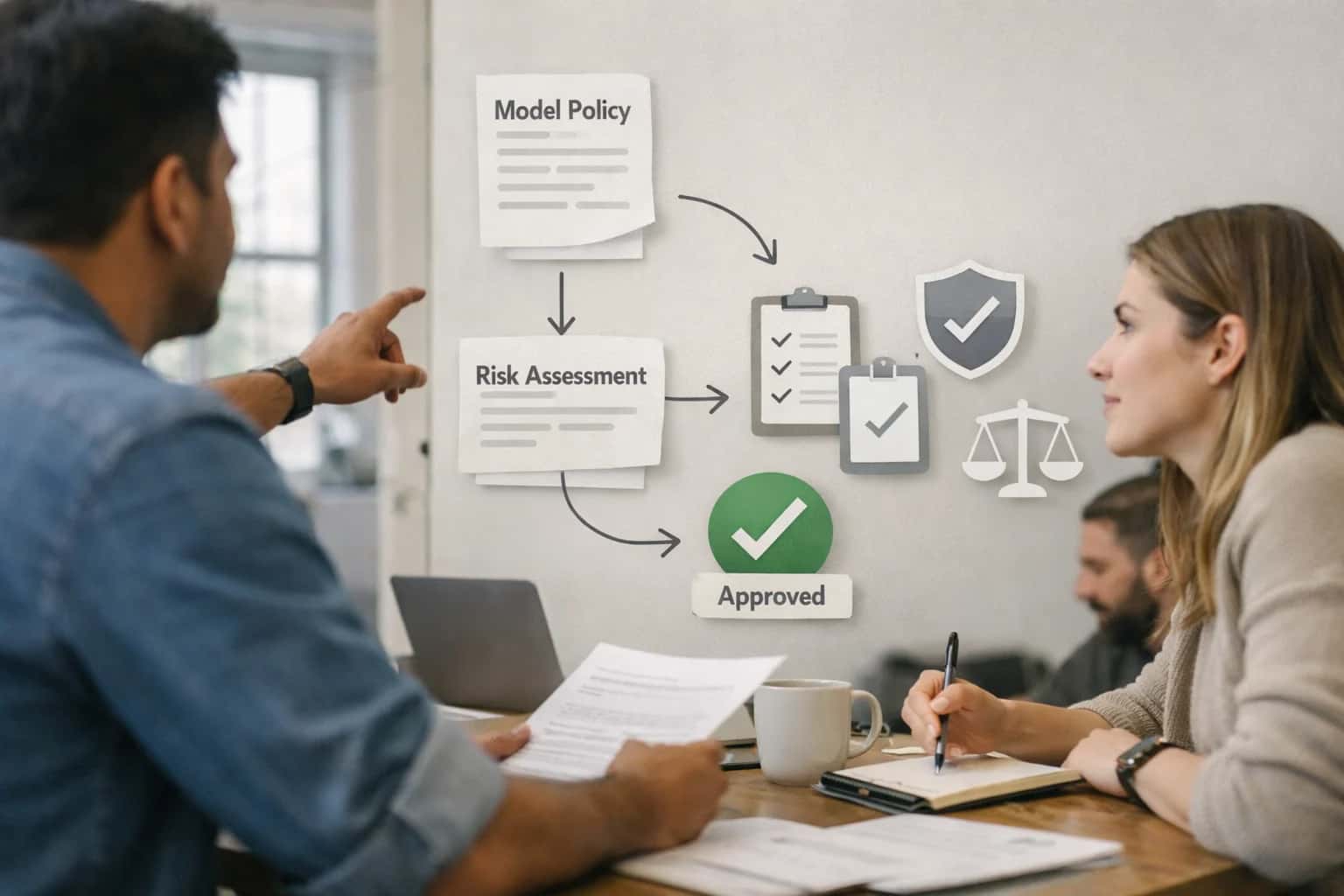
A foundational comparison of two distinct approaches to AI safety and compliance from leading labs, critical for public sector deployment.
Google's Safer AI Framework takes a different approach by embedding safety as a managed, end-to-end service within its Vertex AI platform. This strategy results in a trade-off between ease of integration and vendor lock-in. The framework provides pre-configured safety filters, adversarial testing tools like the Safety Setting API, and automated content classification that scales with Google's infrastructure, but offers less transparency into the underlying model logic compared to an open-source alternative.
The key trade-off: If your priority is sovereign control, auditability, and integration into a custom, on-premises AI stack, choose Llama Guard. Its open-source nature allows for deep inspection and modification, aligning with frameworks like the NIST AI RMF. If you prioritize rapid deployment, managed scalability, and deep integration with a leading cloud AI suite (Gemini, Imagen), choose Google's Safer AI Framework. This decision is central to building systems that ensure 'ethical compliance' and 'public trust,' as discussed in our pillar on AI Governance for Public Policy and Government.
HEAD-TO-HEAD COMPARISON
Llama Guard vs Safer AI Framework
Direct comparison of open-source and proprietary AI safety toolkits for content filtering and compliance in public sector deployments.
| Metric | Meta Llama Guard | Google Safer AI Framework |
|---|---|---|
License Model | Open-Source (Llama 3 Community) | Proprietary (Google Cloud) |
Safety Taxonomy Granularity | 11 content categories | 28+ content categories |
Real-Time Filtering Latency | < 10 ms | < 5 ms |
Model Integration Method | Standalone classifier | Integrated API (Vertex AI) |
Sovereign Data Hosting | ||
Compliance with EU AI Act | Self-assessment | Pre-configured controls |
Audit Trail Generation |
Open-Source vs. Proprietary Safety
TL;DR Summary
Key strengths and trade-offs at a glance for deploying AI safety in regulated public sector contexts.
01
Choose Llama Guard for Open-Source Control
Specific advantage: Apache 2.0 license allows full code inspection, modification, and deployment in air-gapped sovereign environments. This matters for government agencies requiring transparent audit trails and the ability to customize safety taxonomies for local regulations without vendor lock-in.
02
Choose Safer AI for Integrated Cloud Governance
Specific advantage: Native integration with Google Cloud's Vertex AI and Security Command Center provides a unified dashboard for safety scores, threat detection, and compliance reporting. This matters for public sector teams already on GCP needing a turnkey solution that ties AI safety into broader cloud security and data residency controls.
03
Choose Llama Guard for Cost-Effective Scaling
Specific advantage: No per-API-call fees; deployable on-premises or on any cloud. This matters for high-volume applications like citizen service chatbots where predictable, low marginal cost for content filtering is critical for public sector budgeting.
04
Choose Safer AI for Advanced Threat Intelligence
Specific advantage: Leverages Google's real-time threat research on adversarial attacks and novel jailbreak techniques, providing proactive model protection. This matters for agencies deploying frontier models in sensitive areas like public safety or disinformation monitoring, where staying ahead of evolving threats is paramount.
CHOOSE YOUR PRIORITY
When to Choose: User Scenarios
Meta's Llama Guard for Public Sector
Verdict: The preferred choice for sovereign, transparent, and auditable AI safety. Strengths: As an open-source toolkit, Llama Guard provides full visibility into its safety taxonomy and classification logic, which is critical for public trust and regulatory audits under frameworks like the EU AI Act. Its modular design allows government agencies to customize safety policies (e.g., for citizen services) and integrate it into air-gapped, sovereign AI infrastructure without vendor lock-in. The ability to fine-tune the classifier on domain-specific data (e.g., local legal terminology) is a key advantage for compliance with national mandates. Considerations: Requires in-house ML expertise to deploy and maintain the pipeline, including model hosting and monitoring.
Google's Safer AI Framework for Public Sector
Verdict: A robust, integrated solution for agencies already committed to the Google Cloud ecosystem. Strengths: Offers a turn-key, enterprise-grade suite with deep integration into Vertex AI, providing centralized governance, logging, and compliance reporting. Its pre-built classifiers for harmful content are battle-tested at scale, reducing time-to-deployment. For agencies with strict data residency requirements, Google Cloud's sovereign cloud offerings can host the framework, aligning with 'sovereign-by-design' principles discussed in our Sovereign AI Infrastructure pillar. Considerations: Less transparency into the underlying model logic compared to open-source alternatives, which may be a hurdle for the highest levels of public transparency.
Enabling Efficiency, Speed & Accuracy
Intelligent Analysis, Decision & Execution
We build AI systems for teams that need search across company data, workflow automation across tools, or AI features inside products and internal software.
Talk to Us
Search across company data
Give teams answers from docs, tickets, runbooks, and product data with sources and permissions.
Useful when people spend too long searching or get different answers from different systems.
Enterprise searchRAGPermissions
Read more
Automate internal workflows
Use AI to route work, draft outputs, trigger actions, and keep approvals and logs in place.
Useful when repetitive work moves across multiple tools and teams.
AI agentsWorkflow automationGovernance
Read more
Add AI to products and internal tools
Build assistants, guided actions, or decision support into the software your team or customers already use.
Useful when AI needs to be part of the product, not a separate tool.
AI integrationDecision supportModel routing
Read moreTHE ANALYSIS
Verdict and Final Recommendation
A decisive comparison of two foundational safety toolkits for public sector AI, highlighting their core architectural and operational trade-offs.
Meta's Llama Guard excels at providing a transparent, auditable safety layer for open-source models because it is a downloadable, fine-tunable classifier. For example, its performance on the OpenAI Moderation Evaluation dataset shows high accuracy in identifying categories like violence and hate speech, while its permissive Apache 2.0 license allows for sovereign deployment in air-gapped environments without external API calls. This makes it ideal for agencies that must comply with strict data residency laws and need to inspect and adapt every component of their AI stack, a key consideration for Sovereign AI Infrastructure and Local Hosting.
Google's Safer AI Framework takes a different, more integrated approach by providing a suite of safety tools—including the Safety Settings API, Perspective API, and adversarial testing via SAIF-Refined—tightly coupled with the Google Cloud AI ecosystem. This results in a trade-off: superior ease of integration and access to Google's continuous threat intelligence updates, but less operational transparency and potential vendor lock-in. Its strength is in providing a comprehensive, managed safety solution for organizations already committed to Google's cloud platform.
The key trade-off is fundamentally between sovereign control and managed comprehensiveness. If your priority is full visibility, customization, and deployment within sovereign or private cloud infrastructure, choose Llama Guard. If you prioritize a turn-key, continuously updated safety suite integrated with a major hyperscaler's ecosystem and are less concerned with vendor dependency, choose Google's Safer AI Framework. For public sector teams, this decision often aligns with broader strategic choices around AI Governance and Compliance Platforms and the need for audit-ready documentation.

About the author
Prasad Kumkar
CEO & MD, Inference Systems
Prasad Kumkar is the CEO & MD of Inference Systems and writes about AI systems architecture, LLM infrastructure, model serving, evaluation, and production deployment. Over 5+ years, he has worked across computer vision models, L5 autonomous vehicle systems, and LLM research, with a focus on taking complex AI ideas into real-world engineering systems.
His work and writing cover AI systems, large language models, AI agents, multimodal systems, autonomous systems, inference optimization, RAG, evaluation, and production AI engineering.
LinkedIn
Limited slotsGet a Free AI Consultation
Partnered with leading AI, data, and software stack.





How We Work
Custom AI workflows for your Business
One-fit-all AI don't work for modern businesses. At Inferensys, we aim to understand your business & custom requirements; which we use to define most efficient agentic workflows, the data, and the tools for your business.
01
Review the use case
We understand the task, the users, and where AI can actually help.
Read more02
Pick the right approach
We define what needs search, automation, or product integration.
Read more03
Build the first useful version
We implement the part that proves the value first.
Read more04
Improve from there
We add the checks and visibility needed to keep it useful.
Read moreThe first call is a practical review of your use case and the right next step.
Talk to Us