
Services
Smart Manufacturing and Industrial Copilot Integration
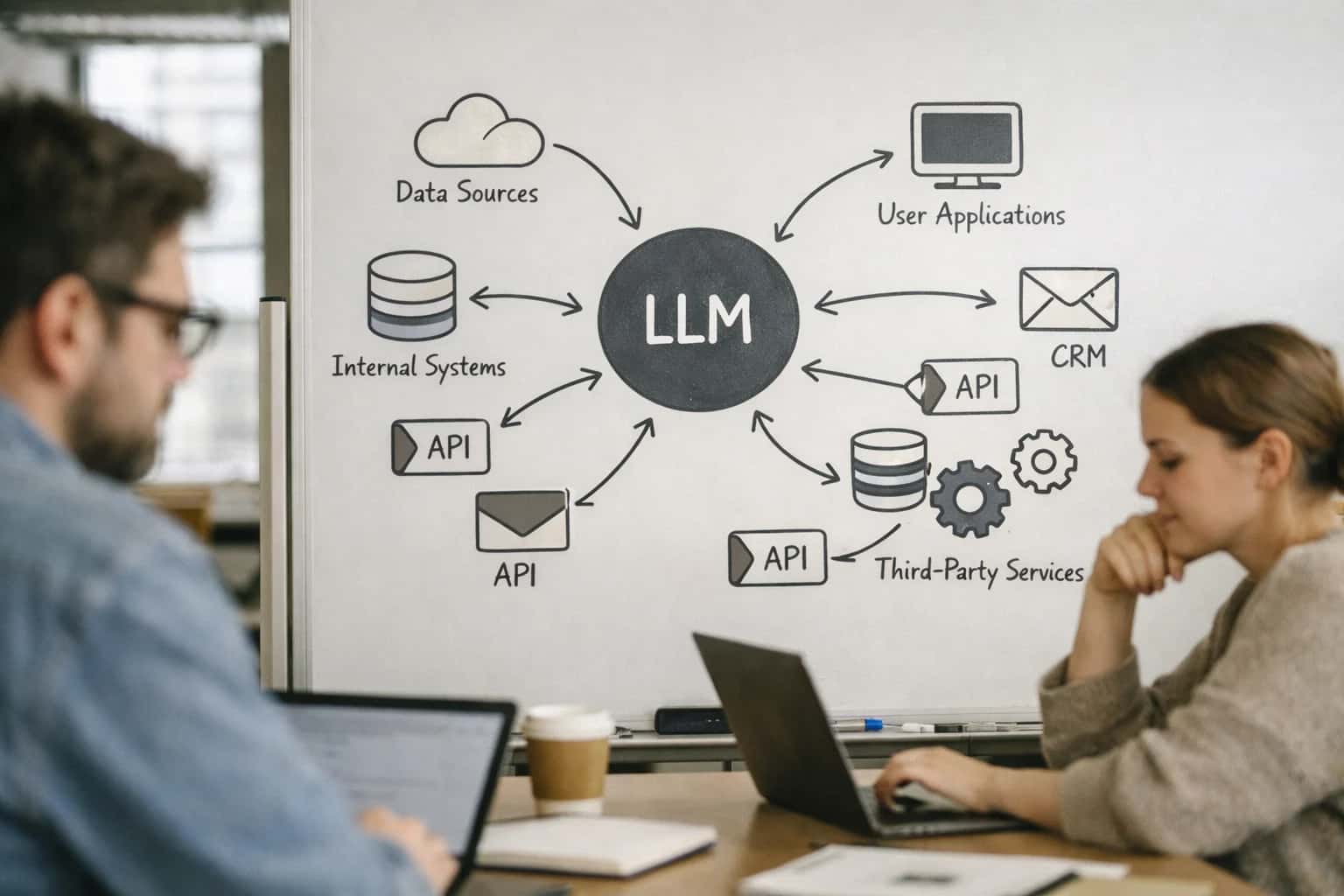
Smart Manufacturing and Industrial Copilot Integration
Implementation of AI for automated quality inspection, inventory tracking, and end-to-end supply chain visibility in Industry 4.0 architectures, with industrial AI copilots assisting human operators with machinery diagnostics. Sub-services include computer vision for manufacturing defect detection, industrial AI copilot integration, predictive machine maintenance ML, and automotive supply chain AI visibility.
Industrial AI Copilot Integration Services
Development and integration of specialized AI copilots for manufacturing environments that assist human operators with machinery diagnostics, process guidance, and real-time decision support, focusing on seamless human-machine collaboration and reducing operator cognitive load.
Multi-modal AI for Quality Inspection
Engineering of AI systems that fuse computer vision, thermal imaging, and acoustic analysis for comprehensive, automated defect detection on production lines, moving beyond simple visual checks to catch subtle, multi-sensory anomalies.
Predictive Machine Maintenance Systems
Development of ML models that analyze IoT sensor data from industrial equipment to predict failures weeks in advance, enabling condition-based maintenance that prevents unplanned downtime and extends asset lifecycles.
Autonomous Supply Chain Visibility Platforms
Building AI-powered platforms that provide real-time, end-to-end visibility into manufacturing supply chains, using agentic AI to autonomously track shipments, predict delays, and model upstream/downstream impacts.
Edge AI for Real-time Production Monitoring
Deployment of lightweight, optimized AI models directly on edge devices within factories to enable sub-second latency for monitoring production metrics, detecting anomalies, and triggering immediate corrective actions without cloud dependency.
Smart Factory Digital Twin Integration
Creation and integration of AI-driven digital twins that simulate entire production lines in real-time, enabling predictive scenario modeling, virtual commissioning, and optimization of factory operations before physical changes are made.
Industrial Reasoning Engine Development
Engineering of deterministic, rule-based AI systems that apply domain-specific logic (e.g., physics, material science) to complex manufacturing problems, such as root cause analysis for yield loss or optimal parameter tuning for machinery.
Generative AI for Process Optimization
Application of generative models to design and simulate novel manufacturing processes, material formulations, or production schedules, exploring vast optimization spaces to uncover efficiencies beyond human intuition.
AI-Enhanced Manufacturing Execution Systems
Modernization and AI integration into legacy MES platforms, adding intelligent scheduling, dynamic resource allocation, and adaptive workflow orchestration to boost Overall Equipment Effectiveness (OEE).
Industrial Multi-agent System Architecture
Design of collaborative networks of specialized AI agents that autonomously manage different facets of factory operations (e.g., scheduling, maintenance, quality) and negotiate to optimize global plant performance.
Manufacturing Data Lakehouse AI Integration
Architecting and implementing unified data platforms that consolidate structured and unstructured factory data, enabling advanced analytics, model training, and the creation of a single source of truth for plant-wide intelligence.
Industrial NLP for Operator Assistance
Development of natural language interfaces that allow factory floor personnel to query systems, report issues, and receive instructions using conversational AI, reducing training time and improving procedural adherence.
AI-Powered Asset Performance Management
Implementation of comprehensive AI systems that monitor, analyze, and optimize the health and output of critical manufacturing assets, moving from reactive maintenance to maximizing total productive output.
Manufacturing Process Mining with AI
Application of AI to analyze event logs from factory systems to automatically discover, visualize, and optimize actual production processes, identifying bottlenecks and deviations from ideal workflows.
AI for Sustainable Manufacturing
Development of AI solutions specifically targeted at reducing waste, optimizing energy consumption, and minimizing the carbon footprint of manufacturing operations, directly linking AI to ESG and sustainability goals.
Partnered with leading AI, data, and software stack.





How We Work
Custom AI workflows for your Business
One-fit-all AI don't work for modern businesses. At Inferensys, we aim to understand your business & custom requirements; which we use to define most efficient agentic workflows, the data, and the tools for your business.
01
Review the use case
We understand the task, the users, and where AI can actually help.
Read more02
Pick the right approach
We define what needs search, automation, or product integration.
Read more03
Build the first useful version
We implement the part that proves the value first.
Read more04
Improve from there
We add the checks and visibility needed to keep it useful.
Read moreThe first call is a practical review of your use case and the right next step.
Talk to Us