Legacy spreadsheet tracking and annual surveys create a reactive compliance burden, not a strategic asset. You get lagging indicators, not leading insights.

Service
AI-Powered Diversity and Inclusion Analytics
Engineering of analytics systems that measure D&I metrics across the employee lifecycle, using AI to identify bias patterns and track the efficacy of inclusion initiatives.
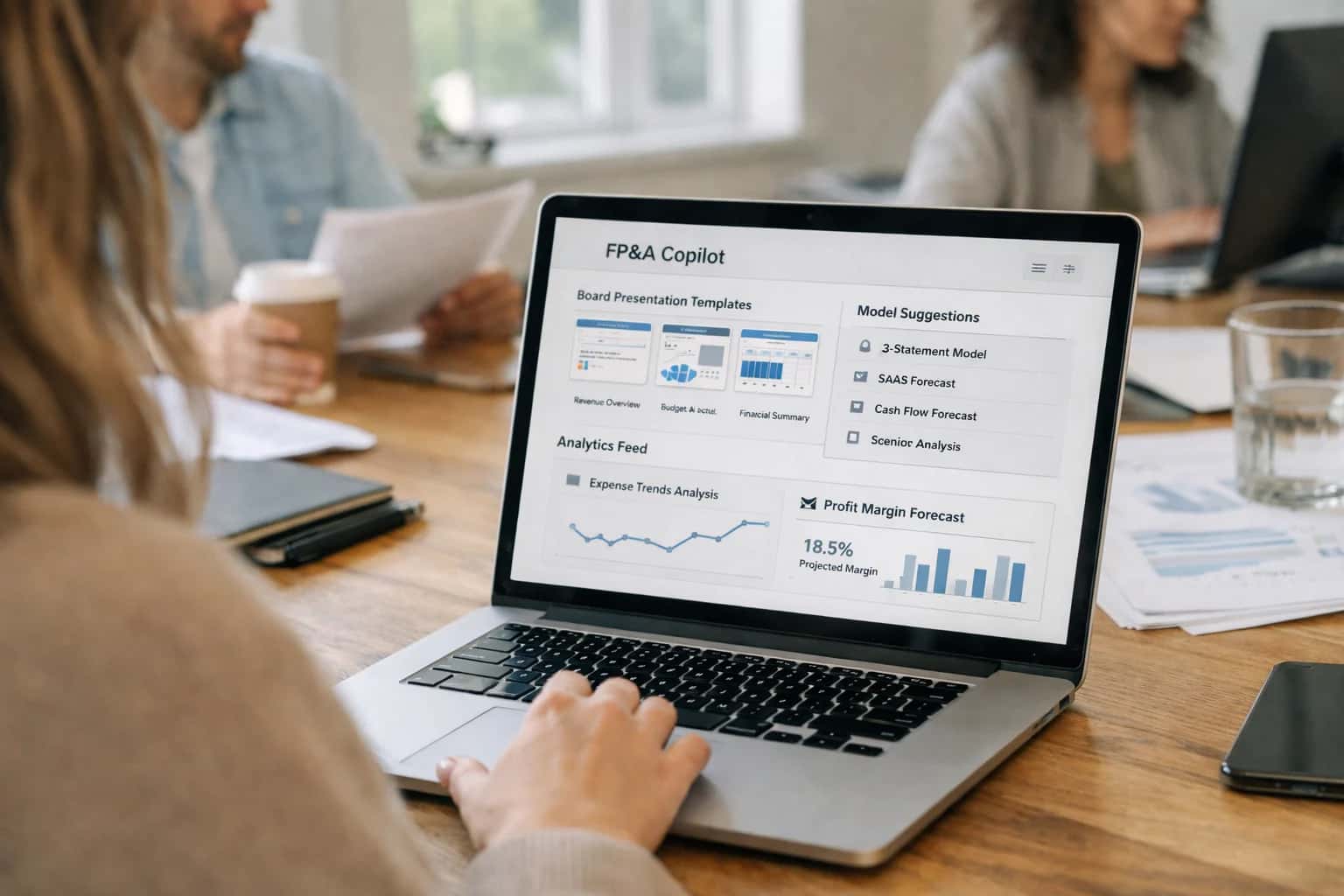
INEFFICIENT & INACCURATE
The Problem with Manual D&I Reporting
Manual D&I reporting is slow, error-prone, and fails to drive strategic action.
- Inconsistent Data Silos: Metrics are trapped across HRIS, ATS, and engagement surveys, preventing a unified view of the employee lifecycle.
- Bias Blind Spots: Human analysis misses subtle patterns in promotion, compensation, and attrition data that indicate systemic issues.
- High Operational Cost: Teams spend hundreds of hours quarterly on data aggregation and validation instead of program design.
Without AI-driven analytics, you cannot:
- Quantify the ROI of inclusion initiatives.
- Proactively identify bias in hiring or performance reviews.
- Track progress against goals with real-time, auditable metrics.
Our AI-Powered Diversity and Inclusion Analytics service engineers systems that transform raw data into actionable intelligence, moving from compliance to competitive advantage. For related strategic workforce planning, explore our Predictive Attrition Analytics Platform Development and AI-Powered Skills Gap Intelligence Engineering services.
DATA-DRIVEN IMPACT
Measurable Business Outcomes
Our AI-powered D&I analytics deliver concrete, auditable results that move beyond perception surveys to hard metrics, enabling strategic investment and demonstrable progress.
01
Bias Pattern Detection & Reduction
Identify and quantify unconscious bias in hiring, promotion, and compensation processes using statistical disparity analysis and causal inference models. Our systems pinpoint specific decision points requiring intervention, enabling targeted remediation that reduces disparate impact by measurable percentages.
40-60%
Reduction in screening bias
< 4 weeks
To initial insights
02
Inclusion Initiative ROI Tracking
Measure the causal impact of D&I programs (e.g., mentorship, ERGs) on key outcomes like retention, promotion rates, and engagement scores. Move from anecdotal feedback to A/B tested program efficacy, ensuring resources are allocated to initiatives proven to drive measurable change.
25%+
Higher program ROI identification
90%+
Accuracy in attribution modeling
03
Predictive Attrition Risk by Demographic
Forecast voluntary turnover with segment-level accuracy, identifying at-risk groups up to 12 months in advance. This enables proactive, personalized retention strategies for critical talent from underrepresented groups, directly protecting diversity investments and reducing replacement costs. Learn more about our foundational work in Predictive Attrition Analytics Platform Development.
12-month
Forecast horizon
85%+
Predictive accuracy
04
Pay Equity & Progression Analytics
Conduct continuous, granular pay equity audits across intersections of gender, ethnicity, and tenure. Model equitable career progression paths and provide data-backed recommendations for adjustments, ensuring compliance and fostering trust through transparency. This complements our broader HR Analytics and Predictive Retention Systems.
99.9%
Statistical confidence
Real-time
Compliance monitoring
05
Belonging & Psychological Safety Metrics
Quantify intangible cultural factors like psychological safety and sense of belonging through NLP analysis of internal communications, feedback, and engagement data. Establish baselines and track improvement over time, linking cultural metrics directly to team performance and innovation output.
Multi-modal
Data synthesis
Quarterly
Trend reporting
06
Pipeline Diversity & Hiring Funnel Optimization
Analyze every stage of the recruitment funnel to identify where diverse candidates drop off. Provide actionable insights to sourcing strategies, assessment design, and interviewer training, systematically increasing the flow of qualified diverse talent into final offer stages. This intelligence feeds into strategic Workforce Re-architecture AI Consulting.
30-50%
Funnel efficiency gain
Stage-specific
Intervention targeting
Transparent Roadmap
Typical Project Timeline & Deliverables
A structured, phased approach to engineering your AI-Powered Diversity and Inclusion Analytics system, ensuring measurable outcomes at each stage.
| Phase & Deliverables | Timeline | Key Outcomes |
|---|---|---|
Phase 1: Discovery & Bias Audit | 2-3 weeks | Comprehensive bias assessment report, prioritized D&I metric framework, and technical architecture proposal. |
Phase 2: Core Analytics Engine Development | 4-6 weeks | Deployed AI models for bias pattern detection, interactive dashboard MVP, and data pipeline for employee lifecycle metrics. |
Phase 3: Initiative Efficacy Tracking Module | 3-4 weeks | AI-powered A/B testing framework for D&I programs, predictive impact scoring, and ROI dashboard for leadership. |
Phase 4: Integration & Compliance Guardrails | 2-3 weeks | Secure integration with existing HRIS (e.g., Workday, SAP), automated reporting aligned with EEOC/OFCCP standards, and full system handoff. |
Total Project Duration | 11-16 weeks | A fully operational, proprietary D&I analytics platform providing actionable insights and demonstrable progress. |
Ongoing Support & Model Retraining | Optional SLA | Quarterly model updates, bias drift monitoring, and strategic consulting on new D&I initiatives. |
ENTERPRISE SOLUTIONS
Industry Applications
Our AI-powered Diversity and Inclusion Analytics systems deliver measurable, auditable outcomes across the employee lifecycle. We engineer solutions that move beyond basic reporting to identify systemic bias, track initiative efficacy, and provide actionable intelligence for strategic HR leadership.
01
Bias Detection in Hiring & Promotion
Deploy machine learning models to audit resume screening, interview scoring, and promotion pipelines for hidden bias patterns. Our systems analyze historical data to identify demographic disparities with statistical rigor, providing evidence-based insights for fairer talent processes.
Learn more about our approach to Algorithmic Fairness and Bias Mitigation.
ISO/IEC 42001
Compliance Framework
NIST AI RMF
Aligned
02
Inclusion Initiative ROI Tracking
Measure the real impact of ERG programs, mentorship schemes, and leadership training. Our analytics correlate participation in inclusion initiatives with key metrics like retention, promotion rates, and employee sentiment, quantifying ROI and guiding resource allocation for maximum effect.
Integrates with our HR Analytics and Predictive Retention Systems for a holistic view.
Actionable
ROI Dashboards
Longitudinal
Impact Analysis
03
Pay Equity & Compensation Analysis
Conduct continuous, automated pay equity audits across dimensions of gender, ethnicity, and tenure. Our AI identifies unexplained compensation gaps at scale, supports remediation planning, and provides ongoing monitoring to ensure sustained fairness, crucial for regulatory compliance and employer branding.
Built with Privacy-Preserving AI Computation techniques to protect individual data.
Automated
Audit Cycles
Anonymized
Data Processing
04
Sentiment & Psychological Safety Analytics
Apply NLP and behavioral AI to anonymized internal communications, survey data, and feedback channels to gauge psychological safety and inclusion sentiment across teams and demographics. Detect early warning signs of exclusionary environments before they impact retention.
Leverages techniques from Unstructured Dark Data Intelligence and Behavioral AI for Employee Engagement Analytics.
Real-time
Sentiment Monitoring
Team-level
Insights
05
Diversity Pipeline Forecasting
Use predictive modeling to forecast representation goals under different hiring and attrition scenarios. Simulate the long-term impact of diversity sourcing strategies and internal mobility programs, enabling data-driven goal setting and accountability for talent acquisition leadership.
Powered by the same engine as our Predictive Workforce Cost Modeling AI.
Multi-year
Scenario Modeling
What-if
Analysis Tools
06
Compliance & Reporting Automation
Automate the generation of mandatory ESG and DEI reports for regulators, investors, and internal boards. Our systems ensure data integrity, audit trails, and consistent metric calculation, reducing administrative burden while building trust through transparency.
Part of our broader Enterprise AI Governance and Compliance Frameworks service offering.
Audit-ready
Data Lineage
EU AI Act
Readiness
Enabling Efficiency, Speed & Accuracy
Intelligent Analysis, Decision & Execution
We build AI systems for teams that need search across company data, workflow automation across tools, or AI features inside products and internal software.
Talk to Us
Search across company data
Give teams answers from docs, tickets, runbooks, and product data with sources and permissions.
Useful when people spend too long searching or get different answers from different systems.
Enterprise searchRAGPermissions
Read more
Automate internal workflows
Use AI to route work, draft outputs, trigger actions, and keep approvals and logs in place.
Useful when repetitive work moves across multiple tools and teams.
AI agentsWorkflow automationGovernance
Read more
Add AI to products and internal tools
Build assistants, guided actions, or decision support into the software your team or customers already use.
Useful when AI needs to be part of the product, not a separate tool.
AI integrationDecision supportModel routing
Read moreAI-Powered Diversity and Inclusion Analytics
Frequently Asked Questions
Common questions about implementing AI-driven D&I analytics to measure inclusion, identify bias, and track initiative efficacy.
We implement a multi-layered bias mitigation strategy. All models undergo pre-deployment algorithmic fairness audits using frameworks like Aequitas and Fairlearn to check for disparate impact. We use techniques like demographic parity adjustment and adversarial debiasing during training. Furthermore, our systems are designed for continuous monitoring, flagging any emerging bias patterns in predictions for human review. This approach is foundational to our work in algorithmic fairness and bias mitigation.

About the author
Prasad Kumkar
CEO & MD, Inference Systems
Prasad Kumkar is the CEO & MD of Inference Systems and writes about AI systems architecture, LLM infrastructure, model serving, evaluation, and production deployment. Over 5+ years, he has worked across computer vision models, L5 autonomous vehicle systems, and LLM research, with a focus on taking complex AI ideas into real-world engineering systems.
His work and writing cover AI systems, large language models, AI agents, multimodal systems, autonomous systems, inference optimization, RAG, evaluation, and production AI engineering.
LinkedIn
Limited slotsGet a Free AI Consultation
Partnered with leading AI, data, and software stack.





How We Work
Custom AI workflows for your Business
One-fit-all AI don't work for modern businesses. At Inferensys, we aim to understand your business & custom requirements; which we use to define most efficient agentic workflows, the data, and the tools for your business.
01
Review the use case
We understand the task, the users, and where AI can actually help.
Read more02
Pick the right approach
We define what needs search, automation, or product integration.
Read more03
Build the first useful version
We implement the part that proves the value first.
Read more04
Improve from there
We add the checks and visibility needed to keep it useful.
Read moreThe first call is a practical review of your use case and the right next step.
Talk to Us