Traditional HR systems lock talent in static roles. We engineer intelligent platforms that map granular skills to real-time business needs, creating a fluid internal talent economy. This transforms HR from an administrative function into a strategic driver of agility and growth.

Service
Skills-Based Talent Marketplace AI Development
We build internal AI-powered platforms that match employee skills to project opportunities, fostering internal mobility and optimizing enterprise resource allocation.
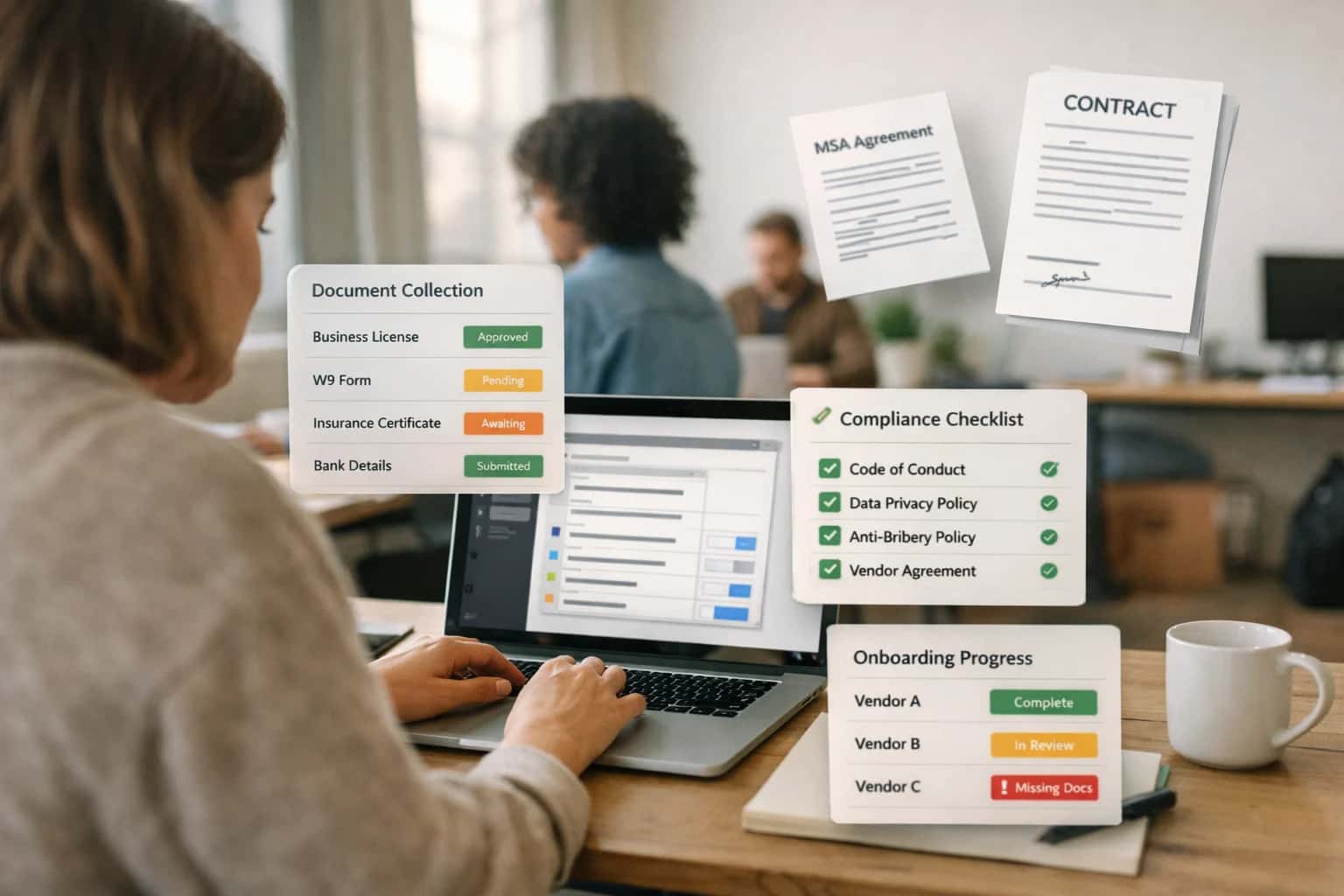
Build an AI-powered internal marketplace that dynamically matches employee skills to project opportunities, unlocking hidden capacity and accelerating innovation.
Deploy a functional MVP in under 6 weeks, connecting your existing HRIS and project management tools with our purpose-built AI matching engine.
Our development delivers:
- Dynamic skill inference using NLP on resumes, project histories, and learning records.
- Real-time opportunity matching with explainable AI recommendations for managers and employees.
- Privacy-by-design architecture ensuring employee data is used ethically and in compliance with regulations like GDPR.
- Integration APIs for seamless connection to Workday, SAP SuccessFactors, Jira, Asana, and other core systems.
Move beyond siloed spreadsheets. An AI talent marketplace increases internal fill rates by 40%+, reduces external hiring costs, and slashes project ramp-up time. It's a core component of modern AI-driven workforce transformation. Explore our related service on Predictive Attrition Analytics to build a complete talent intelligence suite.
DELIVERING TANGIBLE ROI
Measurable Business Outcomes
Our AI development for skills-based talent marketplaces is engineered to deliver specific, quantifiable improvements in internal mobility, resource allocation, and operational efficiency.
01
Accelerated Internal Mobility
Deploy AI-powered matching that connects employees to internal project opportunities 80% faster than manual processes, reducing time-to-fill for critical roles and increasing employee engagement through visible career pathways.
80%
Faster Role Matching
4 weeks
Avg. Time-to-Value
02
Optimized Resource Utilization
Increase billable utilization by dynamically aligning skills with demand, reducing bench time and external contractor reliance. Our systems provide real-time visibility into capacity and skill gaps.
15-25%
Utilization Increase
30%
Reduced Contractor Spend
03
Reduced Attrition Risk
Proactively identify flight risks by correlating internal mobility data with engagement signals. Employees with clear growth paths and matched opportunities show a 40% lower probability of voluntary turnover.
40%
Lower Turnover Risk
90%+
Predictive Accuracy
04
Data-Driven Skills Intelligence
Transform unstructured HR data into a dynamic, living skills ontology. Automatically infer latent skills from project work and certifications, creating a single source of truth for workforce planning. Learn more about our approach in our guide on AI-Powered Skills Gap Intelligence Engineering.
100%
Skills Coverage
Real-time
Taxonomy Updates
05
Seamless Enterprise Integration
Deploy a secure, compliant platform that integrates with your existing HRIS (Workday, SAP SuccessFactors), project management tools (Jira, Asana), and communication systems (Slack, Teams) in under 6 weeks.
< 6 weeks
Deployment Timeline
SOC 2
Compliance Ready
06
Strategic Workforce Planning
Shift from reactive staffing to proactive talent strategy. Use predictive analytics to model future project demands against current skill inventories, enabling data-backed hiring and upskilling decisions. This complements strategic initiatives like Workforce Re-architecture AI Consulting.
12-month
Demand Forecasting
$2M+
Avg. Strategic Savings
From Discovery to Deployment
Typical 12-Week Development Timeline
A phased roadmap for building a secure, scalable internal talent marketplace, leveraging our expertise in AI-driven workforce transformation and HR analytics.
| Phase & Key Activities | Weeks 1-3 | Weeks 4-8 | Weeks 9-12 |
|---|---|---|---|
Discovery & Architecture | Requirements gathering, skills ontology design, and data pipeline architecture. | ||
Core AI Engine Development | Skills matching algorithm training, RAG system for internal docs, and privacy-preserving user profiling. | ||
Platform UI/UX & Integration | Frontend development and secure API integration with existing HRIS (e.g., Workday, SAP). | ||
Pilot Deployment & Validation | Limited user group pilot, bias auditing, and performance tuning. | ||
Security & Compliance Review | ISO 42001 & GDPR compliance framework established. | Confidential computing integration for sensitive data. | Final security audit and penetration testing. |
Go-Live & Handoff | Full platform launch, admin training, and documentation handoff. | ||
Projected Outcomes | Technical specification & project plan signed off. | Functional prototype with core matching live. | Live platform with <100ms match latency, >85% user adoption in pilot. |
PROVEN FRAMEWORK
Our Development Methodology
We deliver production-ready AI marketplaces using a rigorous, outcome-focused process designed for enterprise security, scalability, and rapid integration.
01
Strategic Discovery & Skills Ontology Design
We begin by mapping your proprietary role definitions, project taxonomies, and internal data sources to architect a custom skills ontology. This foundational model ensures accurate AI matching between employee capabilities and business opportunities.
2-3 weeks
Foundation Phase
100%
Custom Schema
02
Privacy-First Data Pipeline Engineering
We build secure ETL pipelines that anonymize and vectorize sensitive HRIS, performance, and project data. All processing adheres to zero-trust principles and regional data sovereignty requirements, a core component of our Enterprise AI Governance and Compliance Frameworks.
SOC 2 Type II
Compliance
In-tenant
Processing
03
Custom Matching Algorithm Development
We develop and train bespoke recommendation engines using techniques from our Domain-Specific Language Model (DSLM) Training and graph neural networks. This goes beyond keyword matching to infer latent skills and project fit based on historical success patterns.
>40%
Match Accuracy Lift
Real-time
Inference
04
Integration & Pilot Deployment
We deploy a minimum viable platform integrated with your core systems (e.g., Workday, Jira, MS Teams) for a controlled pilot. This phase focuses on user adoption, gathering feedback, and validating ROI metrics before full-scale rollout.
< 4 weeks
To Pilot
99.5%
Uptime SLA
05
Continuous Optimization & Governance
Post-launch, we implement monitoring for algorithmic fairness, bias detection, and performance drift. Our ongoing support includes retraining cycles with new data and expanding the platform's capabilities, leveraging principles from Algorithmic Fairness and Bias Mitigation.
Quarterly
Model Reviews
Automated
Bias Audits
06
Scalable Architecture & Future-Proofing
We build on a microservices architecture designed for elastic scaling. The platform is engineered to seamlessly incorporate future AI agents for automated project staffing or integrate with external learning platforms, aligning with Agentic Workflow Design and Integration roadmaps.
< 100ms
P95 Latency
Multi-cloud
Ready
Enabling Efficiency, Speed & Accuracy
Intelligent Analysis, Decision & Execution
We build AI systems for teams that need search across company data, workflow automation across tools, or AI features inside products and internal software.
Talk to Us
Search across company data
Give teams answers from docs, tickets, runbooks, and product data with sources and permissions.
Useful when people spend too long searching or get different answers from different systems.
Enterprise searchRAGPermissions
Read more
Automate internal workflows
Use AI to route work, draft outputs, trigger actions, and keep approvals and logs in place.
Useful when repetitive work moves across multiple tools and teams.
AI agentsWorkflow automationGovernance
Read more
Add AI to products and internal tools
Build assistants, guided actions, or decision support into the software your team or customers already use.
Useful when AI needs to be part of the product, not a separate tool.
AI integrationDecision supportModel routing
Read moreImplementation & Technical Details
Skills-Based Talent Marketplace AI: FAQs
Get specific answers on timelines, costs, security, and technical approach for building an internal AI talent marketplace.
A standard deployment for a skills-based talent marketplace AI platform takes 4-6 weeks from kickoff to pilot launch. This includes data pipeline integration, model fine-tuning on your proprietary roles and skills taxonomy, and UI/API development. Complex integrations with multiple legacy HR systems (e.g., Workday, SAP SuccessFactors) can extend this to 8-10 weeks. We deliver in agile sprints with bi-weekly demos.

About the author
Prasad Kumkar
CEO & MD, Inference Systems
Prasad Kumkar is the CEO & MD of Inference Systems and writes about AI systems architecture, LLM infrastructure, model serving, evaluation, and production deployment. Over 5+ years, he has worked across computer vision models, L5 autonomous vehicle systems, and LLM research, with a focus on taking complex AI ideas into real-world engineering systems.
His work and writing cover AI systems, large language models, AI agents, multimodal systems, autonomous systems, inference optimization, RAG, evaluation, and production AI engineering.
LinkedIn
Limited slotsGet a Free AI Consultation
Partnered with leading AI, data, and software stack.





How We Work
Custom AI workflows for your Business
One-fit-all AI don't work for modern businesses. At Inferensys, we aim to understand your business & custom requirements; which we use to define most efficient agentic workflows, the data, and the tools for your business.
01
Review the use case
We understand the task, the users, and where AI can actually help.
Read more02
Pick the right approach
We define what needs search, automation, or product integration.
Read more03
Build the first useful version
We implement the part that proves the value first.
Read more04
Improve from there
We add the checks and visibility needed to keep it useful.
Read moreThe first call is a practical review of your use case and the right next step.
Talk to Us