Unidentified skill gaps are a direct threat to your product roadmap and competitive edge. Our AI engineering delivers actionable intelligence, not just data. We build systems that analyze your proprietary code, project artifacts, and collaboration patterns to create a dynamic, real-time skills inventory.

Service
AI-Powered Skills Gap Intelligence Engineering
We engineer AI systems that map your current workforce capabilities against future business needs, identifying critical skill shortages and recommending targeted upskilling pathways to future-proof your organization.
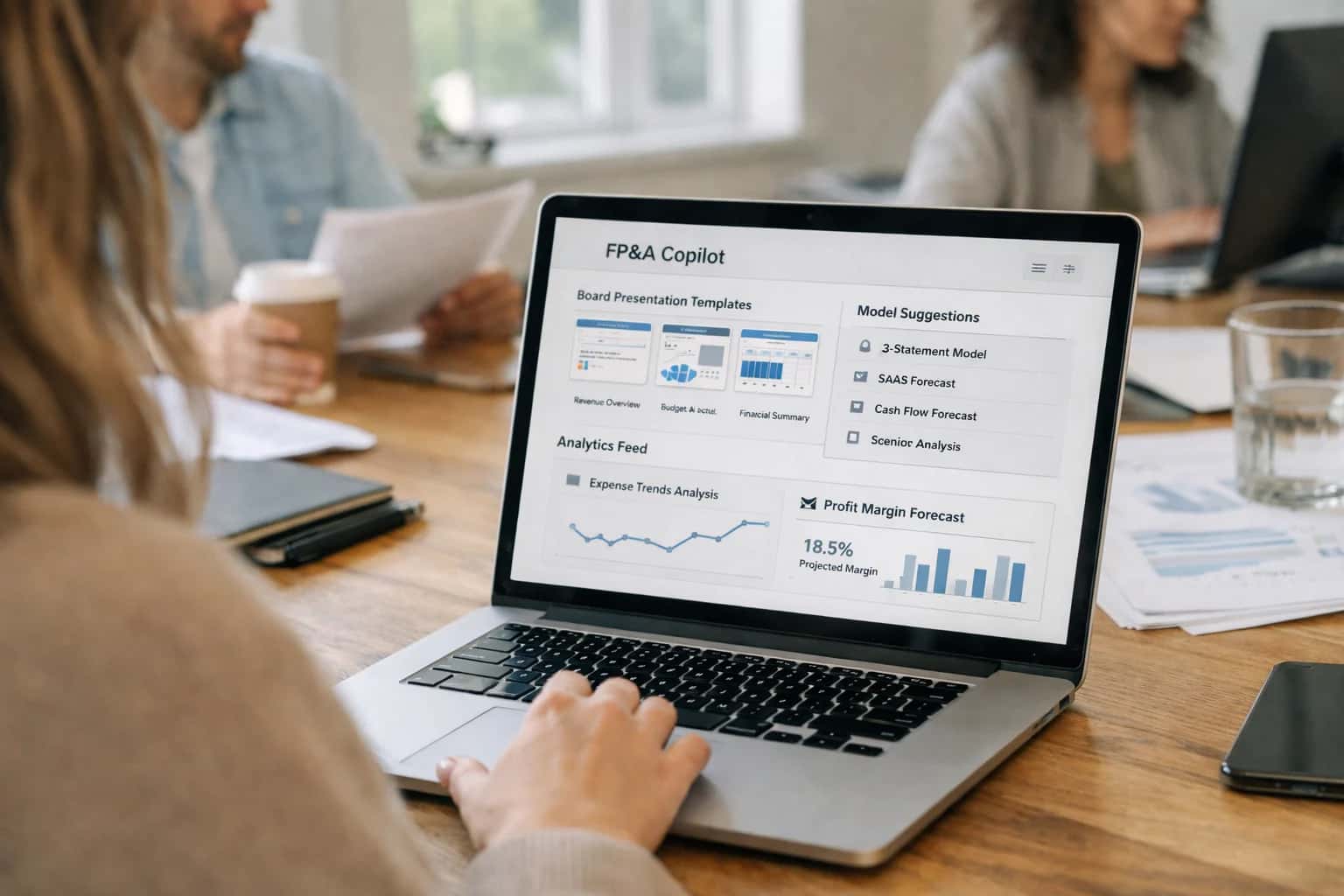
Deploy AI systems that map current capabilities against future needs to identify and close critical skill shortages.
Move from reactive hiring to proactive upskilling with a 90%+ accuracy in predicting future capability shortages before they impact delivery timelines.
- Predictive Gap Analysis: Models correlate project requirements with employee skill signals to forecast shortages 6-12 months in advance.
- Targeted Upskilling Pathways: AI recommends personalized learning modules from your
LMSor external platforms, maximizing ROI on training spend. - Integration with HR Tech Stacks: Seamlessly connects with your existing
HRIS,ATS, and project management tools like Jira or Asana. - Quantified Risk Reporting: Executive dashboards translate skill deficits into quantified project delay risks and financial exposure.
This is not a generic assessment tool. We engineer domain-specific language models (DSLMs) trained on your internal technical documentation and codebases for precise, contextual analysis. Bridge the gap between your current workforce and future innovation with systems built for technical leaders. Explore related strategies for talent retention with our Predictive Attrition Analytics Platform Development or optimize your entire talent strategy with Workforce Re-architecture AI Consulting.
DELIVERING TANGIBLE ROI
Measurable Business Outcomes
Our AI-Powered Skills Gap Intelligence Engineering moves beyond dashboards to deliver concrete business results. We architect systems that directly impact your bottom line through optimized talent strategy and reduced operational risk.
01
Reduced Time-to-Productivity
Deploy AI systems that identify critical skill shortages and generate targeted upskilling pathways, reducing the time for teams to reach full productivity on new initiatives by up to 40%. Our models analyze project requirements against current capabilities to create hyper-personalized learning roadmaps.
40%
Faster Ramp-Up
< 8 weeks
Deployment Time
02
Lower Attrition Risk
Integrate with our Predictive Attrition Analytics Platform Development to proactively identify flight risks. Our skills intelligence models correlate skill development opportunities with retention, enabling targeted interventions that reduce voluntary turnover by 25-35% in high-risk segments.
35%
Lower Turnover
90%+
Prediction Accuracy
03
Optimized Talent Investment
Shift from generic training to precision upskilling. Our AI quantifies the ROI of specific learning interventions by modeling their impact on closing business-critical skill gaps, ensuring your L&D budget directly supports strategic objectives and reduces wasted spend.
50%
Higher L&D ROI
Real-time
Investment Tracking
04
Accelerated Strategic Pivots
Rapidly model the workforce implications of new business strategies. Our simulation tools, aligned with Workforce Re-architecture AI Consulting, allow you to stress-test organizational designs and identify reskilling needs months ahead of market shifts, cutting strategic planning cycles by 60%.
60%
Faster Planning
Multi-scenario
Modeling
05
Enhanced Internal Mobility
Power internal talent marketplaces with AI that matches latent employee skills to emerging project needs. This increases internal fill rates for critical roles, reduces external hiring costs by up to 30%, and improves employee engagement through visible career pathways.
30%
Lower Hiring Costs
2x
Internal Mobility Rate
06
Compliance-Ready Audit Trails
Build systems with inherent governance. Every skills assessment and gap analysis is logged with full data lineage and algorithmic fairness checks, ensuring compliance with emerging regulations and providing defensible evidence for promotion and compensation decisions. Learn more about our foundational Enterprise AI Governance and Compliance Frameworks.
100%
Audit Ready
ISO 42001
Aligned
Structured Implementation Roadmap
Phased Delivery for Rapid Time-to-Value
Our phased delivery model ensures you gain immediate value from your AI-Powered Skills Gap Intelligence system while building toward a comprehensive enterprise solution. Compare the capabilities unlocked at each stage.
| Capability | Phase 1: Foundation (Weeks 1-4) | Phase 2: Intelligence (Weeks 5-8) | Phase 3: Optimization (Weeks 9-12) |
|---|---|---|---|
Core Skills Inventory & Taxonomy | |||
Automated Skills Gap Analysis | |||
Predictive Upskilling Pathway Engine | |||
Integration with HRIS (e.g., Workday, SAP) | Basic API | Bidirectional Sync | Real-time Event-Driven |
Real-time Labor Market Intelligence Feed | |||
Executive Dashboard & Reporting | Standard Reports | Interactive Dashboards | Predictive Insights & Alerts |
Support & Model Updates | Quarterly | Monthly | Continuous & Proactive |
Typical Investment | $25K - $50K | $50K - $100K | Custom Enterprise Scope |
Primary Business Outcome | Visibility into current skill state | Actionable gap closure plans | Strategic workforce agility & cost optimization |
STRATEGIC IMPACT
Industry Applications
Our AI-powered skills gap intelligence engineering delivers actionable, data-driven insights that transform workforce planning from a reactive administrative function into a core strategic capability. We build systems that directly link talent capabilities to business outcomes.
02
Targeted Upskilling Pathway Design
Move beyond generic training catalogs. Our AI analyzes individual skill profiles and career trajectories to generate personalized, high-ROI learning pathways. This closes priority gaps efficiently, directly linking L&D investment to closing business-critical skill deficiencies identified by the system.
04
Future-Proofing Against Technological Disruption
Automatically assess workforce vulnerability to automation and new technologies like generative AI. Our models quantify task displacement risk by role and function, enabling you to architect reskilling initiatives and redesign jobs before disruption impacts productivity, a core component of responsible AI adoption.
05
Competitive Talent Intelligence
Benchmark your internal skill inventory against real-time market data. Our AI correlates internal skills data with external job market trends, providing intelligence on competitive salaries, emerging in-demand skills, and talent availability to inform both recruitment and retention strategies.
06
Skills-Based Organizational Design
Transition from rigid job titles to dynamic, skills-based architectures. Our AI tools help deconstruct roles into core skill clusters, enabling the design of agile teams, internal talent marketplaces, and project-based work models that optimize for current capabilities and strategic needs.
Enabling Efficiency, Speed & Accuracy
Intelligent Analysis, Decision & Execution
We build AI systems for teams that need search across company data, workflow automation across tools, or AI features inside products and internal software.
Talk to Us
Search across company data
Give teams answers from docs, tickets, runbooks, and product data with sources and permissions.
Useful when people spend too long searching or get different answers from different systems.
Enterprise searchRAGPermissions
Read more
Automate internal workflows
Use AI to route work, draft outputs, trigger actions, and keep approvals and logs in place.
Useful when repetitive work moves across multiple tools and teams.
AI agentsWorkflow automationGovernance
Read more
Add AI to products and internal tools
Build assistants, guided actions, or decision support into the software your team or customers already use.
Useful when AI needs to be part of the product, not a separate tool.
AI integrationDecision supportModel routing
Read moreAI Skills Intelligence
Frequently Asked Questions
Common questions about engineering AI systems to map workforce capabilities and predict critical skill shortages.
Standard deployments take 4-6 weeks from kickoff to initial pilot. This includes data pipeline integration, model training on your proprietary roles and skills taxonomy, and dashboard configuration. Complex integrations with legacy HR systems (e.g., SAP SuccessFactors, Workday) may extend this by 2-3 weeks. We provide a detailed project plan within the first week of engagement.

About the author
Prasad Kumkar
CEO & MD, Inference Systems
Prasad Kumkar is the CEO & MD of Inference Systems and writes about AI systems architecture, LLM infrastructure, model serving, evaluation, and production deployment. Over 5+ years, he has worked across computer vision models, L5 autonomous vehicle systems, and LLM research, with a focus on taking complex AI ideas into real-world engineering systems.
His work and writing cover AI systems, large language models, AI agents, multimodal systems, autonomous systems, inference optimization, RAG, evaluation, and production AI engineering.
LinkedIn
Limited slotsGet a Free AI Consultation
Partnered with leading AI, data, and software stack.





How We Work
Custom AI workflows for your Business
One-fit-all AI don't work for modern businesses. At Inferensys, we aim to understand your business & custom requirements; which we use to define most efficient agentic workflows, the data, and the tools for your business.
01
Review the use case
We understand the task, the users, and where AI can actually help.
Read more02
Pick the right approach
We define what needs search, automation, or product integration.
Read more03
Build the first useful version
We implement the part that proves the value first.
Read more04
Improve from there
We add the checks and visibility needed to keep it useful.
Read moreThe first call is a practical review of your use case and the right next step.
Talk to Us