AI integration for pharmacy claims adjudication connects at three key points within platforms like McKesson EnterpriseRx, PioneerRx, PrimeRx, and BestRx: pre-submission screening, real-time rejection prediction, and post-adjudication workflow automation. The AI agent acts as a copilot to the platform's native adjudication engine, monitoring the claim queue via API or database listener. For each claim, it analyzes the prescription data, patient history, and payer rules—often pulled from the platform's patient_profile, rx_record, and payer_master tables—to flag high-risk submissions before they are sent to the switch. This pre-emptive check can identify missing GPI codes, invalid days' supply, or mismatched patient eligibility, allowing for correction within the same workflow.

Integration
AI Integration for Pharmacy Management Platform Claims Adjudication
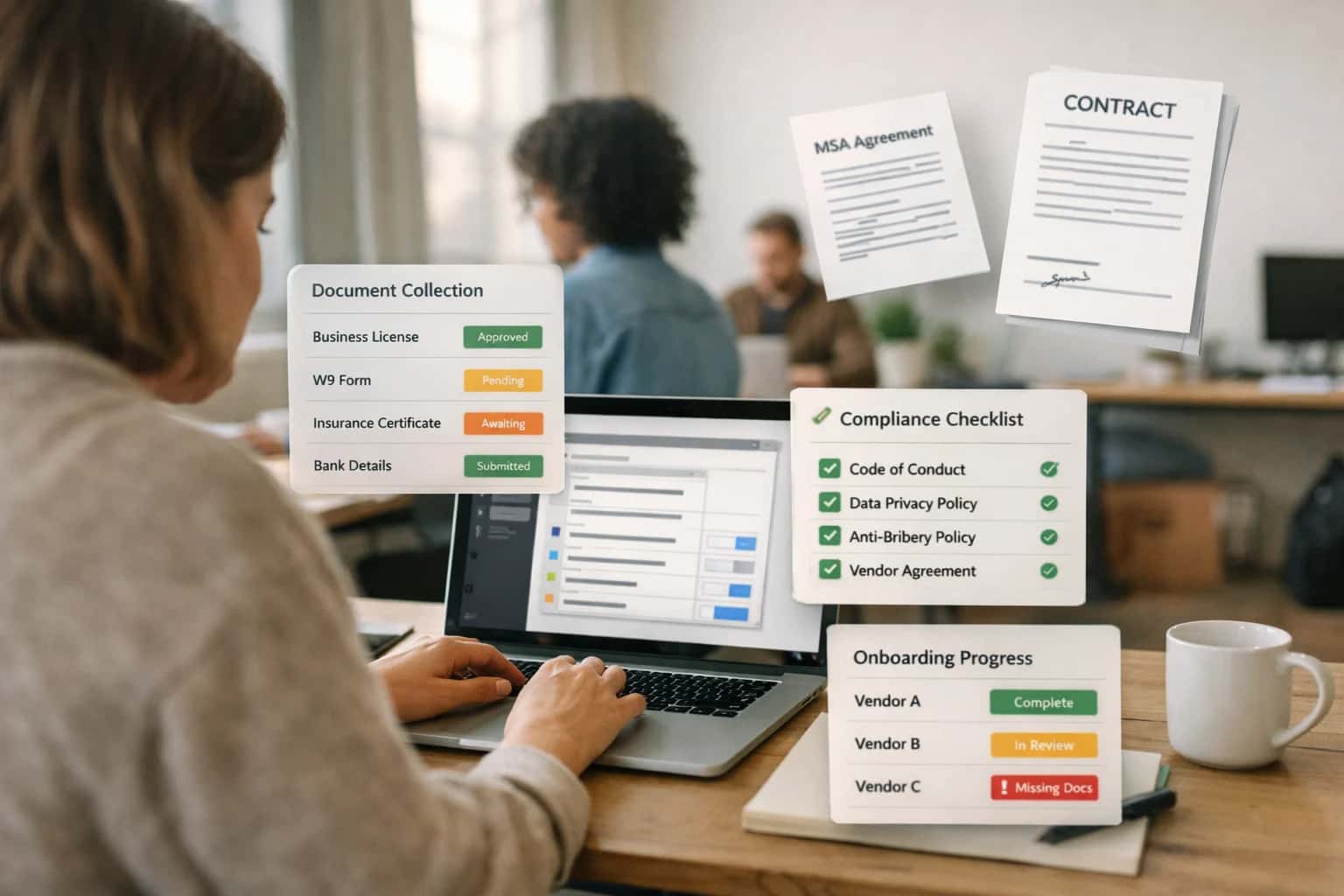
Where AI Fits into Pharmacy Claims Adjudication
Integrating AI directly into the adjudication engine to predict rejections, suggest corrective actions, and automate resubmission workflows.
When a claim is rejected, the AI's role shifts to diagnosis and remediation. Instead of a pharmacist or technician manually reviewing the vague rejection code (e.g., '75' for refill too soon), the integrated AI parses the real-time response from the platform's adjudication log. It cross-references the rejection against historical data and payer-specific policies to suggest a precise corrective action: 'Change days' supply from 90 to 30 due to plan early refill limit' or 'Submit a prior authorization for this drug on the patient's non-formulary tier.' These actionable suggestions are injected back into the platform's work queue, often as a structured note appended to the claim_transaction record, guiding the staff to a one-click resubmission.
For scalable automation, the integration can be configured to handle straightforward rejections autonomously. Using the platform's resubmission API, the AI agent can automatically correct the NDC code, update the quantity, or apply a suitable generic alternative, then re-send the claim—all while logging the action in the platform's audit trail for pharmacist review. This is governed by rule-based approvals; for example, claims under a certain dollar amount or involving specific rejection codes can be auto-fixed, while others require a pharmacist's electronic sign-off within the platform UI. The result is a closed-loop system where the pharmacy management platform remains the system of record, but AI handles the tedious, repetitive logic of claim correction, turning what was a manual, minutes-long investigation into a seconds-long automated workflow.
Integration Points Across Major Pharmacy Platforms
Real-Time API Interception
AI integration for claims adjudication begins by intercepting the transaction between the pharmacy platform and the claims processor (e.g., RelayHealth, Change Healthcare). This is done via API hooks or middleware that sits between the platform's billing module and the clearinghouse.
Key Integration Surfaces:
- Pre-Submission Hook: Trigger an AI agent before the claim is sent to analyze the NCPDP (National Council for Prescription Drug Programs) transaction for potential errors (e.g., incorrect days supply, invalid DAW codes). The agent can suggest corrections directly in the workflow.
- Real-Time Response Analysis: As the payer's adjudication response (rejection or approval) returns, an AI model immediately parses the response codes (e.g.,
75- Prior Authorization Needed,E4- Refill Too Soon). It then triggers the appropriate downstream workflow (e.g., PA initiation, patient call) without manual triage. - Platform Data Enrichment: The AI system updates the platform's internal claim status fields and notes section with a plain-language summary of the adjudication outcome and next steps, ensuring the full context is captured for the pharmacy team.
High-Value AI Use Cases for Claims Adjudication
Integrate AI directly into your pharmacy platform's adjudication engine to predict rejections, suggest corrective actions, and automate resubmission workflows—turning manual claim follow-up into a managed, intelligent process.
Real-Time Rejection Prediction
AI models analyze claim data before submission to the platform's adjudication engine, flagging high-risk claims for missing NDC codes, invalid dates of service, or mismatched patient eligibility. This allows for pre-submission correction, reducing the initial denial rate.
Automated Corrective Code Suggestion
When a claim is rejected, an AI agent integrated via platform webhooks or API instantly analyzes the EOB/rejection reason. It cross-references payer-specific rules and historical data to suggest the exact NCPDP rejection code correction or missing data element needed for resubmission.
Intelligent Resubmission Workflow Automation
AI orchestrates the entire resubmission process. It triggers from the platform's rejection queue, applies the corrective suggestion, re-submits the claim via the platform's billing module, and logs the action. For complex denials, it routes the claim to a human with full context.
Payer-Specific Denial Pattern Analysis
AI continuously analyzes rejection data from the platform's claims history to identify patterns by payer and plan. It surfaces insights like "Payer A consistently rejects compound claims without ICD-10 code Z79.4," enabling proactive workflow adjustments and staff training.
Prior Authorization Flagging & Triage
Integrated at the point of adjudication, AI monitors for soft denials or messages indicating a PA is required. It automatically flags the prescription in the platform, initiates a PA workflow by pulling relevant patient data, and updates the claim status, preventing lost revenue from abandoned scripts.
Cash Pay & Copay Optimization
For claims rejected due to high patient cost, AI agents interfacing with the platform's eligibility response can instantly check alternative funding: manufacturer copay cards, foundation assistance, or cash price comparisons. It suggests the optimal financial path and can even populate the necessary fields for resubmission.
Example AI-Powered Adjudication Workflows
These workflows illustrate how AI agents integrate directly with your pharmacy platform's adjudication engine to intercept, analyze, and act on claims in real-time. Each pattern connects via API or database hooks to the platform's claim submission, response, and status update cycles.
This workflow intercepts claims before they are sent to the payer, using AI to predict and fix common errors that cause instant rejections.
- Trigger: A prescription is adjudicated within the pharmacy platform (e.g., PrimeRx, PioneerRx), and the claim is queued for transmission to the PBM.
- Context Pulled: The AI agent, via a platform API or database listener, captures the claim payload: NDC, quantity, days supply, patient eligibility data, and prescriber DEA/NPI.
- AI Agent Action: The agent runs the claim against a model trained on historical rejection patterns. It checks for:
- Mismatched days supply vs. quantity
- Ineligible patient ID or group number
- Invalid prescriber for drug class (e.g., NP prescribing a controlled substance)
- Duplicate therapy alerts
- System Update: If a high-probability error is detected, the agent:
- Injects an alert into the pharmacist's verification queue with the specific issue and a suggested correction.
- Offers an "auto-correct" button that, with pharmacist approval, updates the claim fields directly in the platform before submission.
- Human Review Point: The pharmacist must approve any change. The AI's reasoning and the original/updated values are logged to the platform's audit trail for compliance.
Implementation Architecture & Data Flow
A production-ready architecture for embedding AI directly into pharmacy platform claims workflows to predict rejections and automate corrections.
The integration connects to the pharmacy management platform's adjudication engine—typically via its real-time claims API or by monitoring a dedicated rejection queue. As each claim is submitted, the AI agent intercepts the transaction before final submission or immediately upon a soft denial. It analyzes the claim data (NDC, quantity, days supply, patient eligibility, payer-specific rules) against historical patterns and payer behavior models to predict the likelihood and reason for rejection.
When a high-risk claim is identified, the AI suggests corrective actions directly within the pharmacist's workflow. This can include:
- Code corrections: Suggesting alternative NDC codes, adjusting days supply, or applying correct billing modifiers.
- Documentation prompts: Flagging missing prior authorization numbers or clinical notes required for the specific drug-payer combination.
- Automated resubmission: For simple corrections (e.g., typo in member ID), the agent can automatically adjust the claim payload and resubmit via the platform's API, logging the action in the audit trail. For complex issues, it creates a task in the platform's work queue with detailed guidance for the technician.
Governance is critical. The AI operates in a pharmacist-in-the-loop mode for clinical or financial overrides, requiring approval before submitting corrected high-cost claims. All AI suggestions, overrides, and final outcomes are logged against the prescription record, creating a transparent feedback loop to continuously improve prediction accuracy. Rollout typically starts with a single high-volume payer or drug class, using the platform's test mode to validate accuracy before enabling live, automated resubmission.
Code & Payload Examples
Triggering AI Before Submission
Integrate an AI agent into the platform's pre-adjudication workflow to predict and prevent rejections. The agent analyzes the claim payload against historical denial patterns before it's sent to the clearinghouse.
Example Webhook Payload to AI Service:
json{ "claim_id": "RX-2024-56789", "patient": { "dob": "1985-03-22", "bin": "610014", "pcn": "ABC1", "group": "GRP12345" }, "prescription": { "ndc": "00074035705", "days_supply": 30, "quantity": 1, "diagnosis_codes": ["E11.9"] }, "pharmacy": { "npi": "1234567890", "state": "CA" }, "platform_context": { "adjudication_engine": "McKesson EnterpriseRx", "workflow_stage": "pre-submission" } }
The AI service returns a risk score and suggested corrective actions (e.g., "suggested_action": "Add ICD-10 E11.9 as primary, ensure quantity aligns with days supply for this NDC") which can be displayed to the technician for immediate correction.
Realistic Time Savings & Operational Impact
This table illustrates the tangible workflow improvements when integrating AI agents directly into your pharmacy platform's claims adjudication engine. The focus is on reducing manual touchpoints, accelerating resubmission, and improving first-pass acceptance rates.
| Workflow Stage | Before AI Integration | After AI Integration | Implementation Notes |
|---|---|---|---|
Initial Claim Submission Review | Pharmacist/tech manually reviews for common errors before sending | AI pre-scans claim data for missing NDC, invalid days supply, or incorrect billing units | AI acts as a pre-flight check, flagging issues for correction before the claim is even submitted to the payer |
Rejection Triage & Categorization | Staff must read each rejection message (NCPDP Reject Code) and determine next steps | AI instantly categorizes rejections (e.g., 'Prior Auth Required', 'Invalid ID', 'DUR Conflict') and routes to appropriate workflow | Reduces cognitive load on staff; rejection reason is extracted and logged in the platform for reporting |
Corrective Action Suggestion | Pharmacist references manuals or calls payer to determine correct fix (e.g., which DAW code to use) | AI suggests specific corrective codes (DAW, Submission Clarification Code) or data edits based on historical resolution patterns | Suggestions are presented within the platform's adjudication screen; pharmacist retains final approval authority |
Prior Authorization Flagging & Initiation | PA requirement discovered only after claim rejection, causing a 1-2 day delay in therapy | AI predicts PA likelihood during initial billing based on drug, diagnosis, and payer rules, flagging the prescription immediately | Triggers the PA workflow in parallel with dispensing, often before the patient leaves the counter |
Claim Resubmission Execution | Manual re-entry of corrected claim data, prone to new errors | AI auto-populates the corrected claim fields with a single-click resubmission option, maintaining an audit trail | Integrated directly into the platform's billing queue; reduces keystrokes and potential for follow-up errors |
Denial Trend Analysis | Monthly manual review of rejection reports to spot payer-specific issues | AI provides weekly dashboards highlighting top denial reasons by payer, drug class, and pharmacist | Data is pulled from the platform's adjudication logs; enables proactive contract or training discussions |
Payer Communication for Complex Issues | Pharmacist spends 10-20 minutes on hold to resolve a single ambiguous rejection | AI drafts a structured inquiry or appeal note with all relevant claim data, ready for pharmacist review and sending | Agent prepares the communication, but human review and sign-off are required before sending to the payer |
Governance, Security & Phased Rollout
A secure, phased approach to integrating AI into your pharmacy platform's adjudication engine.
Integrating AI into a live claims adjudication workflow requires a zero-trust architecture from the start. All AI interactions should be treated as external API calls, with strict controls: data sent to models is de-identified or tokenized, outputs are logged to an immutable audit trail linked to the original claim ID, and any suggested code changes or resubmission actions are presented to a pharmacist or billing tech for approval before being written back to the platform (e.g., updating the RejectionCode or ClaimStatus field in McKesson EnterpriseRx, PioneerRx, or PrimeRx). This ensures the pharmacy platform remains the single source of truth, and AI acts as a governed assistant.
A typical production rollout follows three phases: 1) Shadow Mode: The AI analyzes claims in parallel with the standard adjudication engine, logging its predictions for rejection likelihood and corrective actions without affecting live data. This builds accuracy metrics and trust. 2) Assisted Mode: AI suggestions are surfaced within the platform's adjudication or billing work queue as a sidebar or alert, requiring a human to review and accept each recommendation. 3) Conditional Automation: For high-confidence, low-risk actions—like auto-applying a specific NCPDP rejection fix code—the system can be configured to execute automatically, but only within strict rule boundaries and with a full audit log. This phased approach de-risks the integration and allows staff to adapt.
Governance is critical for compliance and scale. Establish a cross-functional review board (pharmacist, billing manager, IT) to regularly audit AI performance, adjust confidence thresholds, and review edge cases. Use the platform's existing user roles (e.g., Pharmacist, BillingAdmin) to control who can override AI suggestions or modify automation rules. Finally, plan for model drift; implement monitoring to alert if prediction accuracy for common rejection codes (like 75 - Refill Too Soon) degrades, triggering a retraining cycle. This operational discipline ensures the AI integration delivers sustained value without introducing new operational risk. For related architectural patterns, see our guide on AI Integration for Pharmacy Management Platform Revenue Cycle Management.
Enabling Efficiency, Speed & Accuracy
Intelligent Analysis, Decision & Execution
We build AI systems for teams that need search across company data, workflow automation across tools, or AI features inside products and internal software.
Talk to Us
Search across company data
Give teams answers from docs, tickets, runbooks, and product data with sources and permissions.
Useful when people spend too long searching or get different answers from different systems.

Automate internal workflows
Use AI to route work, draft outputs, trigger actions, and keep approvals and logs in place.
Useful when repetitive work moves across multiple tools and teams.

Add AI to products and internal tools
Build assistants, guided actions, or decision support into the software your team or customers already use.
Useful when AI needs to be part of the product, not a separate tool.
FAQ: Technical & Commercial Questions
Practical answers for pharmacy leaders and technical teams planning AI integration into their claims adjudication engine to reduce rejections and accelerate revenue.
The AI acts as a pre-submission copilot, not a replacement for the core adjudication engine. The typical integration pattern is:
- Trigger: A prescription is processed and the platform's billing module prepares a claim (NCPDP D.0 format).
- Intercept: Before submission to the switch/clearinghouse, the claim data is sent via a secure API call or webhook to the AI service.
- Analysis: The AI model analyzes the claim against historical data, payer-specific rules, and common rejection patterns (e.g.,
BIN/PCN,Date of Birth mismatch,Refill too soon,Prior Authorization Required). - Recommendation: Within milliseconds, the service returns a prediction (e.g.,
High probability of rejection: DAW code conflict) and, if applicable, a suggested corrective action (e.g.,Suggest changing DAW from '1' to '0'). - Platform Update: This insight is injected back into the pharmacy platform's UI as an alert for the technician or, for low-risk corrections, can be applied automatically based on configured rules.
This keeps the pharmacist/technician in the loop while adding a predictive layer to the existing workflow.

About the author
Prasad Kumkar
CEO & MD, Inference Systems
Prasad Kumkar is the CEO & MD of Inference Systems and writes about AI systems architecture, LLM infrastructure, model serving, evaluation, and production deployment. Over 5+ years, he has worked across computer vision models, L5 autonomous vehicle systems, and LLM research, with a focus on taking complex AI ideas into real-world engineering systems.
His work and writing cover AI systems, large language models, AI agents, multimodal systems, autonomous systems, inference optimization, RAG, evaluation, and production AI engineering.
Partnered with leading AI, data, and software stack.





How We Work
Custom AI workflows for your Business
One-fit-all AI don't work for modern businesses. At Inferensys, we aim to understand your business & custom requirements; which we use to define most efficient agentic workflows, the data, and the tools for your business.
01
Review the use case
We understand the task, the users, and where AI can actually help.
Read more02
Pick the right approach
We define what needs search, automation, or product integration.
Read more03
Build the first useful version
We implement the part that proves the value first.
Read more04
Improve from there
We add the checks and visibility needed to keep it useful.
Read moreThe first call is a practical review of your use case and the right next step.
Talk to Us