The pharmacy revenue cycle is a dense sequence of data exchanges between your pharmacy management platform and dozens of external payers, PBMs, and clearinghouses. AI integration targets the manual, exception-heavy tasks that create cash flow friction. Key integration surfaces are the platform's billing module, claims adjudication engine, and denial/remittance reports. AI agents can be triggered via webhooks from events like a rejected claim (NCPDP Reject Code 70), a posted remittance advice (ERA 835), or a manually flagged account in the accounts receivable (A/R) aging report. The goal is to create a closed-loop system where the AI interprets the rejection, gathers necessary data from the patient profile and prescription record, executes a corrective action (like a code change or resubmission), and logs the outcome back to the platform's notes field—all without requiring a staff member to toggle between screens.

Integration
AI Integration for Pharmacy Management Platform Revenue Cycle Management
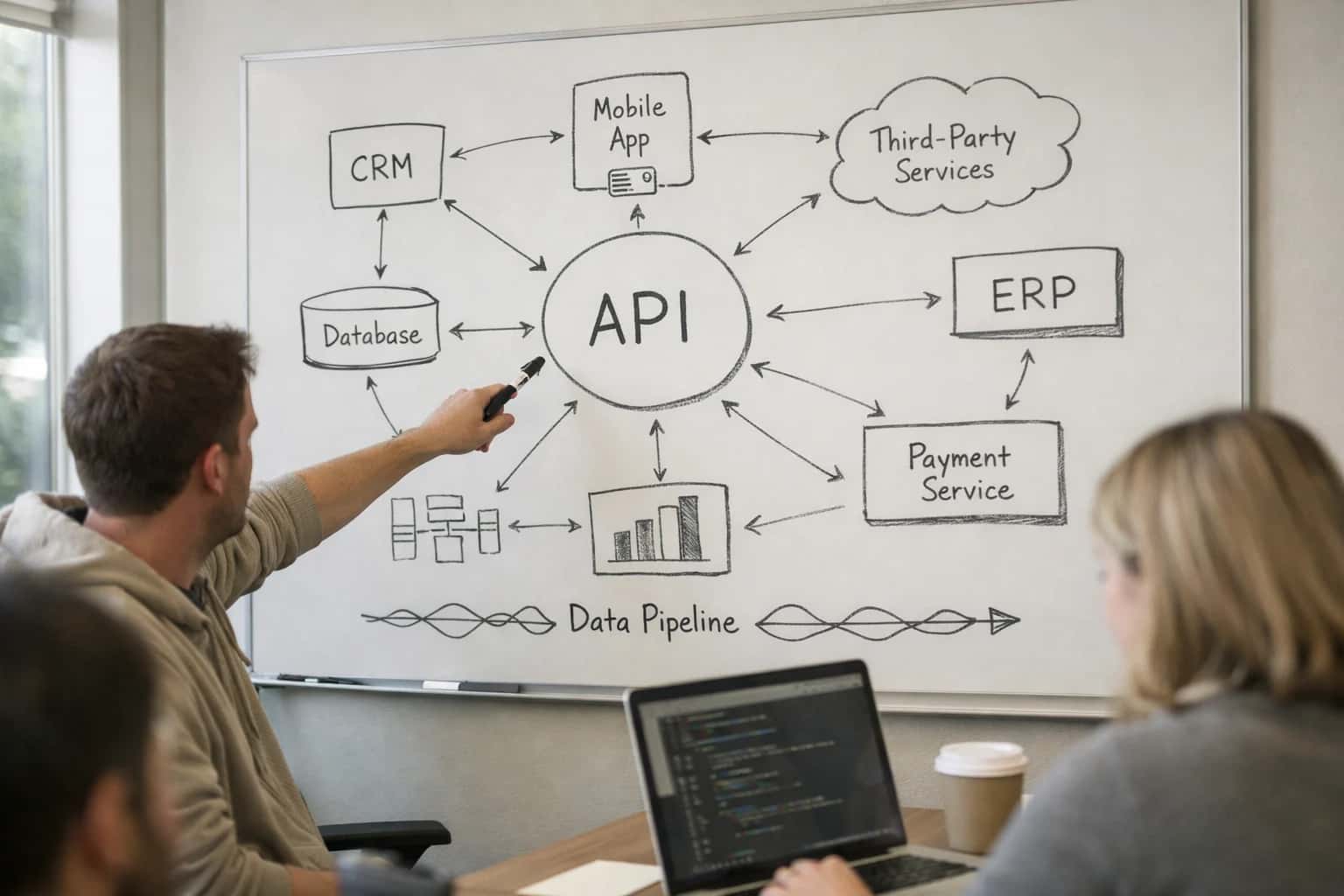
Where AI Fits into the Pharmacy Revenue Cycle
A practical blueprint for integrating AI into the billing and claims workflows of McKesson EnterpriseRx, PioneerRx, PrimeRx, and BestRx.
High-impact use cases follow the money: automated denial management where an AI classifies rejections (e.g., "prior authorization required," "refill too soon," "non-formulary") and either auto-resubmits with corrected data or routes to a pharmacist for clinical review; cash flow forecasting by analyzing the platform's adjudication history and payer mix to predict weekly reimbursement; and payer contract analysis by scraping remittance details to identify underpayments against agreed rates. Implementation typically involves a middleware layer that subscribes to platform events, maintains a vector store of payer rules and denial reason codes, and uses tool-calling agents to interface with payer portals or clearinghouse APIs. This architecture keeps the core platform stable while adding intelligent automation at the workflow edges.
Rollout should be phased, starting with a single, high-volume denial reason (e.g., "refill too soon") for a select group of payers. Governance is critical: all AI-generated actions, especially any claim edits or resubmissions, should be logged in an immutable audit trail and, for clinical or financial adjustments, require a pharmacist-in-the-loop approval via a notification in the platform's task queue. This ensures compliance while demonstrating ROI through metrics like reduction in A/R days, increase in first-pass claim acceptance rate, and hours saved from manual follow-up. The integration's value isn't in replacing the platform but in making its revenue cycle modules operate at the speed and accuracy the digital era demands.
Integration Surfaces Within Pharmacy Platform Billing Modules
Real-Time Rejection Prevention
Integrate AI directly into the platform's real-time claims adjudication engine. As a claim is processed, an AI agent analyzes the prescription, patient eligibility, and historical payer behavior to predict rejection probability before submission. For high-risk claims, the agent can inject corrective action—such as suggesting an alternate NDC, updating a diagnosis code, or flagging a missing prior authorization—directly into the workflow.
Key Integration Points:
- Intercept claims via platform event hooks or API listeners before they are sent to the clearinghouse.
- Query the platform's patient profile, drug database, and past claim history for context.
- Return structured recommendations (e.g.,
{"action": "UPDATE_DX_CODE", "suggestedCode": "J45.909"}) to the billing module's UI or batch queue. - Log predictions and outcomes back to a custom audit table for continuous model retraining.
This surface turns reactive denial management into a proactive, corrective step, reducing resubmission labor and accelerating cash flow.
High-Value AI Use Cases for Pharmacy Revenue Cycle
Integrate AI directly into your pharmacy management platform's billing and claims modules to automate high-friction revenue cycle tasks, reduce days in A/R, and improve cash flow predictability.
Automated Denial Triage & Appeal Drafting
AI agents monitor the platform's rejection reports (e.g., McKesson's Claim Rejections queue), instantly categorize denials by root cause (e.g., Prior Auth Required, Invalid NDC), and draft structured appeal letters. The agent pulls relevant patient, prescription, and prior submission data from the platform to populate the appeal, then logs the action back to the claim record. Workflow: Rejection → AI categorization → Draft generation → Pharmacist review/submission → Status update.
Predictive Cash Flow Forecasting
An AI model connects to the platform's daily adjudication feed and accounts receivable aging report. It analyzes payer mix, historical reimbursement rates, and seasonal script volume to forecast cash flow 30-90 days out. The forecast is surfaced via a custom dashboard or injected into the platform's reporting module, flagging potential shortfalls based on pending PA backlog or slow-paying plans. Integration: Scheduled data pull → Predictive modeling → Alert generation → Platform dashboard/widget.
Intelligent Payer Contract Analysis
AI parses new or amended payer contracts (PDFs) uploaded to the platform's document management area. It extracts key terms: reimbursement rates, generic dispensing requirements, timely filing limits, and clinical prior authorization criteria. The extracted data is structured and compared against current performance in the platform's Payer Performance reports, highlighting contract variances and underpayment risks for management review.
Batch → Real-Time Benefit Verification
Instead of nightly batch benefit checks, an AI agent is triggered in real-time from the platform's new prescription workflow. For high-cost or specialty drugs, the agent calls payer portals/APIs simultaneously to fetch real-time formulary status, patient responsibility, and PA requirements. Results are written back to the prescription record (Benefit Verification field) before the pharmacist begins clinical review, preventing downstream rejections. Pattern: Platform Rx event → Parallel API calls → Data enrichment → UI update.
Automated Copay Assistance Matching
For high-cost prescriptions flagged in the platform, an AI agent scans the patient's eligibility data and drug details to match against manufacturer savings program databases. It identifies qualified programs, pre-populates enrollment forms with data from the patient profile, and attaches the form to the workflow. This reduces patient abandonment and improves collection rates by resolving cost barriers before adjudication. Flow: High-cost Rx flag → Database query → Form generation → Task for technician.
Proactive Claim Scrubbing & Edits
Before submission, an AI copilot reviews claims in the platform's billing queue against a dynamic rules engine of payer-specific edits (NCPDP, state Medicaid). It checks for incorrect days supply, missing/clashing modifiers (e.g., DAW), and eligibility gaps. It suggests corrections or adds internal notes to the claim, acting as a pre-adjudication auditor. This reduces front-end rejections and clean claim rates. Integration: Pre-submission queue scan → Rule validation → Suggestion injection → Pharmacist approval.
Example AI-Driven Revenue Cycle Workflows
These workflows illustrate how AI agents connect to your pharmacy platform's billing and claims modules to automate high-friction, manual tasks. Each pattern is triggered by platform events, uses patient and payer data, and updates records to create a closed-loop system.
Trigger: A claim is rejected and logged in the platform's Rejections report or Claim Status field changes to Denied.
Workflow:
- An AI agent is triggered via a platform webhook or scheduled scan of the rejection queue.
- The agent retrieves the full claim context: patient demographics, drug NDC, diagnosis codes, and the payer's rejection reason code (e.g.,
CO-97for non-covered benefit). - Using a Retrieval-Augmented Generation (RAG) system grounded in your payer contract library and historical appeal data, the agent:
- Classifies the denial root cause (e.g., "prior authorization required," "incorrect billing code," "medical necessity not met").
- Drafts a structured appeal letter, pulling relevant clinical notes from the patient's profile and citing specific contract clauses.
- Suggests a corrective action (e.g., "Resubmit with ICD-10 code J45.909," "Attach PA #ABC123").
- The draft appeal and action recommendation are posted to a secure queue for pharmacist review and one-click submission.
- Upon approval, the agent can update the platform's internal notes field with the appeal timestamp and reference number.
Impact: Reduces the time from denial to actionable response from days to hours, increasing appeal success rates and cash flow.
Implementation Architecture: Data Flow & System Design
A production-ready architecture for integrating AI directly into your pharmacy platform's billing and claims modules to automate denial management, forecasting, and contract analysis.
The integration is anchored at the claims adjudication engine within your pharmacy management platform (e.g., McKesson EnterpriseRx's billing module, PioneerRx's claims queue). An AI agent listens for real-time events—such as a rejected claim, a paid claim, or a new prior authorization requirement—via platform webhooks or by polling a dedicated denial/rejection report table. When a denial event is captured, the agent immediately extracts the claim ID, rejection code, and patient/prescription details from the platform's data model (e.g., Claims, Patients, Prescriptions tables). This payload is enriched with historical data from the platform's data warehouse (if available) before being routed to the core AI processing layer.
The AI layer performs a multi-step analysis: First, a classification model categorizes the denial root cause (e.g., Prior Authorization Required, Invalid NDC, DUR Conflict). For PA-related denials, the agent triggers a sub-workflow that interfaces with external payer portals via secure browser automation to gather requirements and draft the submission, logging the activity back to the platform's PA_Status field. For coding or billing errors, the agent references internal payer contract rules—ingested from PDFs or spreadsheets—to suggest corrective action (e.g., Update NDC to 12345-678-90). All recommendations, along with confidence scores, are posted to a human-in-the-loop approval queue within the platform (often a custom dashboard or a dedicated worklist table) for pharmacist or billing staff review before automated resubmission.
For cash flow forecasting, a separate scheduled agent analyzes the platform's accounts receivable aging report and adjudication history. It uses time-series models to predict weekly cash inflow, flagging high-risk payers or unusual payment delays. These insights are written back to the platform as custom objects or report annotations, enabling managers to view forecasts alongside traditional platform reports. Governance is maintained through a full audit trail—every AI-suggested action, approval, and system update is logged with a user/service ID and timestamp, ensuring compliance for financial and HIPAA audits. Rollout typically begins with a single high-volume denial code (e.g., PA Required) in a pilot store, using the platform's test mode, before scaling to full automation across the denial spectrum and multi-store operations.
Code & Payload Examples for Common Integrations
Automating Denial Workflows
Integrate AI to analyze claim rejection reports from your pharmacy platform (e.g., McKesson's ClaimRejections table) and automatically draft appeal letters. The agent categorizes denials by root cause (e.g., PRIOR_AUTH, REFILL_TOO_SOON, COVERAGE_TERMINATED) and retrieves the necessary patient and prescription context to build a structured appeal.
Example JSON Payload for AI Agent:
json{ "task": "draft_payer_appeal", "denial_code": "75", "denial_reason": "Refill too soon", "patient": { "id": "PAT-78910", "last_fill_date": "2024-05-01", "days_supply": 30 }, "prescription": { "drug": "Lisinopril 10mg", "ndc": "00071015568", "prescriber_npi": "1234567890" }, "platform_context": { "source_module": "EnterpriseRx_Billing", "claim_id": "CLM-20240515-001" } }
The AI returns a draft appeal letter with clinical justification and next-step instructions, which your system posts back to the platform's notes field and task queue for pharmacist review.
Realistic Time Savings & Operational Impact
This table illustrates the tangible operational improvements when integrating AI agents into a pharmacy platform's revenue cycle, focusing on high-friction tasks within billing, denial management, and payer coordination modules.
| Revenue Cycle Task | Before AI Integration | After AI Integration | Implementation Notes |
|---|---|---|---|
Claim Denial Triage & Categorization | Manual review of rejection reports; 15-30 min daily | Automated analysis & root cause tagging; <5 min daily | AI scans platform EOB data, groups denials by payer/rule for batch action |
Prior Authorization Status Follow-Up | Staff calls payer or checks portal; 10-20 min per PA | AI agent monitors payer portals & updates platform status; <2 min oversight | Agent logs into integrated web portals, parses status, updates PA record field |
Cash Flow Forecasting & Days in A/R | Spreadsheet analysis from weekly platform exports | Daily predictive dashboard integrated with platform aging reports | AI models ingest real-time claims data, flagging payer-specific payment delays |
Payer Contract & Fee Schedule Analysis | Quarterly manual review for key payers | Continuous monitoring for reimbursement changes vs. contract terms | AI compares platform adjudicated amounts to contracted rates, alerts on discrepancies |
Batch Claim Resubmission Preparation | Manual correction, bundling, and submission; 1-2 hours per batch | AI drafts corrected claims & batches for review; 15-20 min per batch | Human pharmacist approves AI-suggested coding corrections before platform resubmission |
Benefit Verification for High-Cost Drugs | Phone call or portal search per patient; 8-12 min | Real-time API check triggered from platform workflow; <1 min | AI fetches formulary, PA rules, and copay data, populating platform patient profile |
Recoupment & Takeback Analysis | Reactive review of unexpected payer recoupments | Proactive audit of paid claims against recent payer policy updates | AI cross-references platform payment history with payer bulletins to identify at-risk claims |
Governance, Security & Phased Rollout
A production-ready AI integration for pharmacy revenue cycle management requires a deliberate approach to data security, auditability, and controlled rollout.
Data Governance & Secure Integration: AI agents must operate within a strict data governance framework. This means integrating at the API layer of your pharmacy management platform (e.g., McKesson EnterpriseRx, PioneerRx) to access only the necessary billing, claim, and patient financial records. All AI interactions are logged against the original prescription or claim ID, creating a full audit trail. Sensitive PHI and PII are never sent to external models without tokenization or strict vendor BAAs in place. The architecture enforces role-based access control (RBAC), ensuring AI insights and automated actions are only visible and actionable by authorized pharmacy staff, such as billing specialists or pharmacy managers.
Phased Implementation for Risk Mitigation: A successful rollout follows a phased, use-case-first approach to build confidence and demonstrate ROI.
- Phase 1: Augmented Intelligence (Read-Only): Deploy AI for automated denial analysis and cash flow forecasting. Agents analyze platform data to categorize denial root causes and predict weekly cash flow, presenting insights in a dashboard or within the platform's reporting module. No automated actions are taken.
- Phase 2: Assisted Workflow (Human-in-the-Loop): Introduce AI-drafted appeal letters and payer contract analysis summaries. For each high-value denial, the AI generates a first draft appeal with relevant clinical and coding references pulled from the platform, requiring pharmacist or biller review and approval before submission. This creates a controlled approval step.
- Phase 3: Conditional Automation (Guarded Execution): Automate high-confidence, repetitive tasks like status inquiries for aged claims or batch resubmission of technical denials. These workflows are triggered from platform queues but include predefined business rules and exception handling, routing any ambiguous results back to human staff.
Operationalizing & Scaling: Post-pilot, the focus shifts to operational integration and continuous improvement. AI performance is monitored against key pharmacy metrics like Days Sales Outstanding (DSO), denial overturn rate, and staff time saved per claim. Feedback loops are established where corrections made by staff in the platform (e.g., updating a corrected claim) are used to retrain and improve the AI's accuracy. The system is designed to scale from a single location to multi-store operations, aggregating denial trends and payer performance data across the enterprise to provide centralized, actionable intelligence for pharmacy network leadership.
Enabling Efficiency, Speed & Accuracy
Intelligent Analysis, Decision & Execution
We build AI systems for teams that need search across company data, workflow automation across tools, or AI features inside products and internal software.
Talk to Us
Search across company data
Give teams answers from docs, tickets, runbooks, and product data with sources and permissions.
Useful when people spend too long searching or get different answers from different systems.

Automate internal workflows
Use AI to route work, draft outputs, trigger actions, and keep approvals and logs in place.
Useful when repetitive work moves across multiple tools and teams.

Add AI to products and internal tools
Build assistants, guided actions, or decision support into the software your team or customers already use.
Useful when AI needs to be part of the product, not a separate tool.
FAQ: Technical & Commercial Questions
Practical answers for pharmacy owners, revenue cycle managers, and IT teams evaluating AI integration for denial management, cash flow, and payer contract analysis within platforms like McKesson, PioneerRx, PrimeRx, and BestRx.
AI connects to your pharmacy management platform's revenue cycle through a combination of API calls, database listeners, and scheduled batch jobs. The typical integration architecture includes:
- Data Ingestion: An AI agent is granted read-only access (via secure API or database view) to key tables such as
Claims,Payers,Rejections,Payments, andPatient_Financials. - Event Triggers: Webhooks or platform automation rules are configured to send real-time alerts for events like a claim denial, a payment posting below expected reimbursement, or a new payer contract upload.
- AI Processing: Upon trigger, the AI agent:
- Retrieves the full claim context, including NDC, diagnosis codes, and prior notes.
- Calls specialized models for tasks like denial reason classification, contract term extraction, or cash flow forecasting.
- Generates an actionable output (e.g., a corrected claim code, an appeal draft, a payment variance alert).
- System Update: The agent uses the platform's API to write back results to designated fields—like updating a
Denial_Appeal_Status, appending notes with root cause analysis, or flagging a contract for manager review.
This creates a closed-loop system where AI augments existing staff workflows without requiring them to leave the platform.

About the author
Prasad Kumkar
CEO & MD, Inference Systems
Prasad Kumkar is the CEO & MD of Inference Systems and writes about AI systems architecture, LLM infrastructure, model serving, evaluation, and production deployment. Over 5+ years, he has worked across computer vision models, L5 autonomous vehicle systems, and LLM research, with a focus on taking complex AI ideas into real-world engineering systems.
His work and writing cover AI systems, large language models, AI agents, multimodal systems, autonomous systems, inference optimization, RAG, evaluation, and production AI engineering.
Partnered with leading AI, data, and software stack.





How We Work
Custom AI workflows for your Business
One-fit-all AI don't work for modern businesses. At Inferensys, we aim to understand your business & custom requirements; which we use to define most efficient agentic workflows, the data, and the tools for your business.
01
Review the use case
We understand the task, the users, and where AI can actually help.
Read more02
Pick the right approach
We define what needs search, automation, or product integration.
Read more03
Build the first useful version
We implement the part that proves the value first.
Read more04
Improve from there
We add the checks and visibility needed to keep it useful.
Read moreThe first call is a practical review of your use case and the right next step.
Talk to Us