AI integration for drug interaction checking connects directly to the pharmacy platform's prescription verification queue or real-time data entry stream. The goal is to inject an additional, context-aware safety layer before the pharmacist's final review. This typically involves an event-driven architecture where the platform sends a payload—containing the new prescription details, patient medication history, allergies, and relevant diagnoses—to an AI service via a secure API or webhook. The AI model, often a fine-tuned LLM augmented with up-to-date drug databases and clinical guidelines, analyzes this data to flag potential drug-drug, drug-allergy, and drug-disease interactions that may be missed by the platform's standard, rules-based alerts.

Integration
AI Integration for Pharmacy Management Platform Drug Interaction Checking
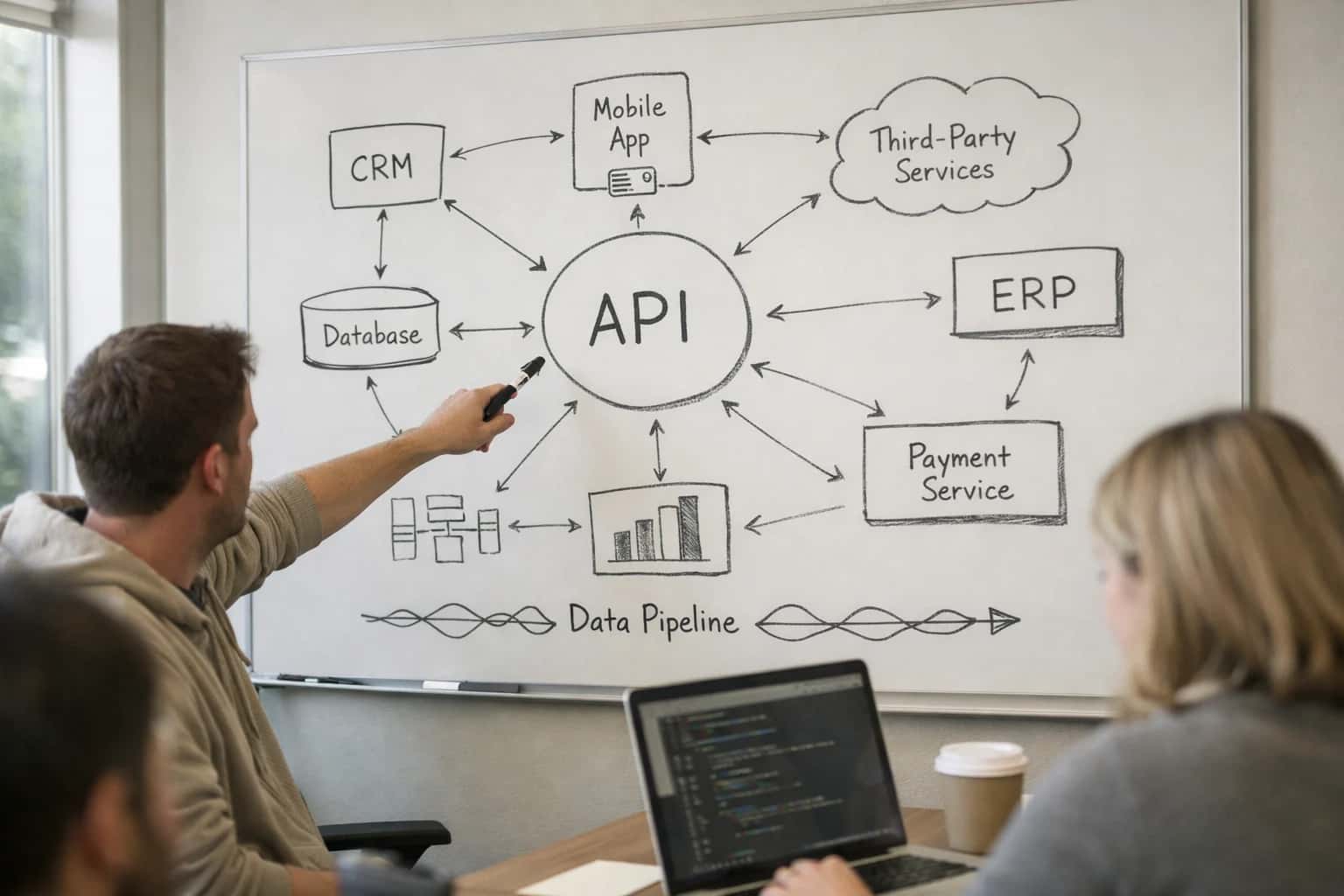
Where AI Fits into Pharmacy Platform Clinical Review
Integrating AI into the core prescription verification workflow to augment, not replace, pharmacist clinical judgment.
The AI's output is then returned as a structured alert and injected back into the pharmacist's workflow. This can appear as a highlighted panel within the verification screen (e.g., in McKesson EnterpriseRx's RxReview or PioneerRx's Verification module), a priority-flagged note in the patient profile, or an item in a dedicated AI insights queue. The key is seamless integration: the alert must provide a clear, evidence-based rationale (e.g., 'Potential moderate interaction between new prescription X and chronic medication Y; may increase risk of bleeding. Monitor for bruising.') and reference the source data, allowing the pharmacist to quickly assess and act. This augments the platform's built-in clinical modules without disrupting the existing approval workflow or audit trail.
Rollout requires a phased, governed approach. Start with a silent monitoring phase where AI alerts are logged but not displayed, allowing you to tune the model's sensitivity and specificity against historical data. Then, introduce alerts for high-severity interactions only, with clear opt-out mechanisms for pharmacists. Governance is critical: all AI-generated alerts and overrides must be logged to the platform's audit trail with a distinct source identifier, ensuring full traceability for compliance (e.g., Board of Pharmacy inspections, DUR requirements). This creates a closed-loop system where pharmacist feedback on alert usefulness continuously improves the model, turning the pharmacy platform into a smarter, learning clinical partner.
Integration Touchpoints for AI Drug Interaction Checking
The Primary Clinical Surface
AI integration for drug interaction checking is most impactful at the point of prescription entry and verification. This is where pharmacists and technicians review new scripts before final approval.
Key Integration Points:
- Real-time API Calls: Trigger an AI model call when a new prescription is saved to the patient profile but before the pharmacist's final verification. The AI payload includes the new drug, patient's medication history, allergies, and relevant conditions pulled from the platform's database.
- UI Injection: Return a structured alert (e.g., severity score, interacting drugs, mechanism, evidence summary) that is injected into the platform's verification screen as a dedicated panel or highlighted alert. This must integrate with the platform's existing alerting system to avoid alert fatigue.
- Workflow Flagging: For high-severity interactions, the AI can automatically flag the prescription for mandatory pharmacist review or place it in a dedicated "Clinical Review" queue, preventing automatic verification.
This layer transforms basic DUR (Drug Utilization Review) into a context-aware, evidence-grounded safety net.
High-Value AI Use Cases for Drug Interaction Checking
Modern AI integration transforms static, rule-based drug interaction checks into dynamic, context-aware clinical decision support. By connecting to patient history, external databases, and real-time lab data, AI can provide nuanced risk assessments and actionable recommendations directly within the pharmacy platform's verification workflow.
Polypharmacy Risk Scoring
AI analyzes the patient's full medication list (including OTCs and supplements from patient profiles) against their age, renal/hepatic function, and comorbidities to generate a personalized risk score. This moves beyond binary alerts to stratified guidance, helping pharmacists prioritize reviews for high-risk patients first.
Dynamic Severity & Action Context
Integrates with the platform's prescription entry screen to provide severity-contextualized alerts. Instead of a generic warning, the AI suggests specific actions: 'Monitor for dizziness' vs. 'Consider alternative: lisinopril' based on interaction pharmacology and patient-specific factors like dose and indication.
Longitudinal Interaction Surveillance
AI continuously monitors the platform's prescription history for newly emerging interactions as medications are added over time. Flags delayed-onset risks (e.g., serotonin syndrome) and provides a timeline view of cumulative interaction risk, aiding in comprehensive medication therapy management (MTM).
External Database & Guideline Synthesis
Agent workflows query and synthesize the latest data from Micromedex, Lexicomp, and clinical guidelines in real-time. Summarizes conflicting evidence or recent updates on novel drug interactions (e.g., new oncology agents) directly in the platform's alert panel, keeping clinical knowledge current.
Patient-Specific Mitigation Drafting
When a significant interaction is confirmed, the AI drafts a patient counseling note and monitoring plan using data from the platform's patient record. Suggests specific language for side effect education, timing adjustments, or lab monitoring requirements, ready for pharmacist review and documentation.
Prior Authorization & Alternative Flagging
For severe interactions requiring a therapy change, the AI cross-references the platform's payer formulary and benefit data to suggest clinically appropriate, covered alternatives. Can pre-populate prior authorization justification text with the interaction risk rationale, linking DUR directly to the PA workflow.
Example AI-Augmented Workflows
These workflows illustrate how AI models can be integrated into the prescription review process to augment, not replace, the pharmacist's clinical judgment. Each flow connects to the platform's data layer via API or database hooks, providing context-aware alerts within existing UI surfaces.
Trigger: A new prescription is entered or an existing prescription is modified in the platform.
Context Pulled: The AI agent, triggered via a platform webhook or API call, retrieves:
- The new drug (NDC, name, strength, SIG).
- The patient's active medication list from the platform profile.
- Patient demographics (age, weight, renal/hepatic flags if available).
- Allergy list.
- Relevant problem list or diagnosis codes (if integrated with an EHR).
AI Action: A specialized model (e.g., a fine-tuned clinical LLM grounded in Micromedex/Clinical Pharmacology) evaluates the combination for:
- Drug-Drug Interactions: Severity (major, moderate, minor) and documented evidence.
- Drug-Disease Interactions: Contraindications based on patient conditions.
- Therapeutic Duplication: With existing therapies.
- Age/Dose Appropriateness: Based on patient data.
System Update: The agent returns a structured JSON payload to the platform:
json{ "alert_id": "DDI_789", "severity": "MODERATE", "interaction": "Warfarin & Amiodarone", "description": "Amiodarone may increase the anticoagulant effect of warfarin. Monitor INR closely.", "recommended_action": "Consider warfarin dose adjustment; monitor INR within 3-5 days.", "references": ["Micromedex: Major", "Clinical Pharmacology: Moderate"] }
The platform injects this as a contextual alert directly into the prescription verification screen, alongside its built-in DUR alerts.
Human Review Point: The pharmacist reviews the AI-generated alert in-context, compares it with the platform's native checks, and makes the final verification decision. All alerts are logged to an audit trail with a pharmacist action (e.g., acknowledged, overridden_with_note).
Implementation Architecture: Data Flow & Guardrails
A production-ready AI integration for drug interaction checking augments the platform's native alerts with a deeper, patient-specific risk analysis, without disrupting pharmacist workflow.
The integration is event-driven, triggered from the pharmacy platform's prescription verification queue. When a new or modified Rx is flagged for review, the platform's API sends a secure payload containing the proposed medication (NDC/RxNorm), patient ID, and active medication list to a dedicated AI service endpoint. This service first enriches the data by retrieving the patient's full allergy list, diagnosis history, and lab values (e.g., renal function) from the platform's patient profile module, creating a consolidated context window for the AI model.
The core AI model—a fine-tuned clinical LLM—processes this context against a real-time knowledge base of drug-drug, drug-allergy, and drug-disease interactions. It generates a structured assessment: a risk severity score (e.g., contraindicated, major, moderate, minor), a plain-language rationale citing specific patient factors, and, for moderate risks, suggested monitoring parameters or alternative therapies. This output is formatted as a JSON object and returned via webhook to the platform, where it is appended as a rich-text alert within the existing verification screen's alert panel, clearly distinguished from foundational system alerts.
Critical guardrails are layered throughout this flow. A pharmacist-in-the-loop approval is required before any AI-generated alert is permanently written to the patient's clinical notes. All AI interactions are logged to a dedicated audit table linked to the prescription ID, storing the input context, model reasoning trace, and final output for compliance (e.g., Board of Pharmacy inquiries). The system includes automated model drift detection by comparing its interaction flags against a curated gold-standard dataset monthly, and a circuit breaker immediately disables AI alerts if the service is unresponsive, falling back silently to the platform's native checks to ensure no disruption to pharmacy operations.
Code & Payload Examples
Triggering AI Review from the Platform
When a new prescription is entered or verified in the pharmacy management system, an event webhook or API call is sent to the AI service. This payload must include the complete patient context for a meaningful interaction check.
Example JSON Payload:
json{ "event_type": "prescription_verification", "platform": "PioneerRx", "patient_id": "PT-78910", "current_medications": [ { "drug_name": "Warfarin", "ndc": "00074-2696-01", "dose": "5 mg", "frequency": "daily" }, { "drug_name": "Amiodarone", "ndc": "00093-7345-05", "dose": "200 mg", "frequency": "daily" } ], "new_prescription": { "drug_name": "Ciprofloxacin", "ndc": "00093-0675-50", "dose": "500 mg", "frequency": "BID", "days_supply": 10 }, "patient_data": { "age": 72, "weight_kg": 68, "renal_function": "CrCl 45 mL/min", "allergies": ["Sulfa"] } }
This structured data allows the AI model to evaluate interactions within the full therapeutic context, moving beyond simple drug-drug pairs.
Realistic Time Savings & Operational Impact
This table illustrates the tangible impact of layering advanced AI models onto your pharmacy platform's existing clinical decision support. The focus is on reducing alert fatigue, providing deeper context, and accelerating pharmacist review—not replacing clinical judgment.
| Workflow Stage | Before AI | With AI Integration | Key Impact & Notes |
|---|---|---|---|
Initial Interaction Alert | Platform's basic DUR flags 10-15+ alerts per script, many low-severity | AI pre-filters and ranks alerts, surfacing 2-4 high-priority, context-aware flags | Reduces alert fatigue by 60-80%, allowing focus on clinically significant interactions |
Pharmacist Context Gathering | Manual review of patient profile, notes, and external databases (5-8 minutes) | AI automatically summarizes relevant patient history, comorbidities, and recent lab trends (<1 minute) | Context delivered in-platform cuts pre-review research time from 'minutes to seconds' |
Severity & Action Determination | Relies on static, rule-based severity levels from the platform | AI provides dynamic risk scoring based on patient-specific factors (age, renal function, genetics) and suggests mitigation steps | Moves from generic warnings to personalized risk assessment, supporting confident decision-making |
Documentation & Resolution | Manual note entry in platform free-text fields or external systems | AI drafts a structured clinical note with rationale, which the pharmacist reviews and edits | Cuts documentation time by ~70%, ensures consistent, audit-ready records linked to the Rx |
Patient Counseling Preparation | Pharmacist mentally prepares key talking points based on the alert | AI generates a patient-friendly summary of the interaction risk and recommended monitoring/actions | Ensures consistent, comprehensive patient communication and supports MTM opportunities |
Follow-up & Monitoring Flagging | Relies on pharmacist memory or manual calendar reminders for high-risk cases | AI suggests and can auto-create follow-up tasks in the platform (e.g., 'Check BP in 2 weeks') | Proactively closes the loop on high-risk interactions, improving patient outcomes and care continuity |
Regulatory Reporting (DUR) | Manual compilation and submission of required DUR reports from platform logs | AI automates the identification and summarization of reportable clinical interventions | Turns a monthly half-day task into a reviewed, automated export, ensuring compliance with less effort |
Governance, Permissions & Phased Rollout
A controlled, risk-aware approach to deploying AI for clinical decision support within your pharmacy platform.
Integrating AI for drug interaction checking requires a pharmacist-in-the-loop governance model. The AI should act as a copilot, not an autopilot. This means the integration must be designed to inject AI-generated alerts and context into the existing prescription verification screen (e.g., McKesson's RxReview, PioneerRx's Verification Queue) as a distinct, clearly labeled recommendation. The final clinical decision and override authority must always remain with the licensed pharmacist, with all AI interactions logged to the platform's audit trail for compliance with state board and DUR requirements.
Implementation begins with a read-only phase, where the AI model analyzes a mirrored feed of prescription data (via API or database log) to generate interaction scores without displaying them in the live UI. This allows for parallel validation against the platform's built-in clinical modules and establishes a baseline for accuracy. The next phase introduces passive alerts within the UI, flagging potential high-risk interactions for pharmacist review without interrupting workflow. The final phase enables active, context-aware checking, where the AI cross-references the patient's full medication history (from the platform's patient profile) and external databases to provide nuanced, severity-ranked alerts with cited evidence.
Rollout should follow a patient-risk stratification approach. Start with low-risk categories like new chronic medication starts or elderly polypharmacy patients, where the AI provides additional screening. Permissions must be tightly scoped using the platform's existing Role-Based Access Control (RBAC). For example, only pharmacists and clinical managers might see the AI's detailed reasoning, while technicians see a simplified flag. A phased go-live, starting with a single store or pilot group, allows for monitoring alert acceptance rates and false positives before enterprise-wide deployment, ensuring the integration enhances safety without creating alert fatigue.
Enabling Efficiency, Speed & Accuracy
Intelligent Analysis, Decision & Execution
We build AI systems for teams that need search across company data, workflow automation across tools, or AI features inside products and internal software.
Talk to Us
Search across company data
Give teams answers from docs, tickets, runbooks, and product data with sources and permissions.
Useful when people spend too long searching or get different answers from different systems.

Automate internal workflows
Use AI to route work, draft outputs, trigger actions, and keep approvals and logs in place.
Useful when repetitive work moves across multiple tools and teams.

Add AI to products and internal tools
Build assistants, guided actions, or decision support into the software your team or customers already use.
Useful when AI needs to be part of the product, not a separate tool.
Frequently Asked Questions
Practical questions about integrating advanced AI models into your pharmacy platform's existing drug interaction checking workflows.
The AI integration acts as a supplemental layer, not a replacement. The typical architecture involves:
- Trigger: A prescription is entered or verified in the platform (e.g., McKesson EnterpriseRx, PioneerRx).
- Context Pull: The integration extracts key data via API or database hook: patient age, allergies, current medications (Rx and OTC from history), diagnosis codes, and lab values (if available).
- AI Action: This enriched patient context is sent to a secure AI model (like GPT-4, Claude 3, or a fine-tuned medical LLM). The model analyzes for:
- Higher-order interactions: Complex multi-drug cascades that basic rules might miss.
- Patient-contextual risks: Interactions weighted by the patient's specific age, renal/hepatic function, or genetic markers (e.g., CYP450).
- Evidence summarization: Pulls and summarizes the latest literature or tertiary source rationale.
- System Update: The AI returns a structured alert with severity, mechanism, and recommended action. This is injected back into the platform's alert queue or displayed in a custom UI panel alongside standard DUR alerts.
- Human Review Point: The pharmacist sees both standard and AI-generated alerts, making the final clinical decision. All AI suggestions are logged with the prescription for auditability.

About the author
Prasad Kumkar
CEO & MD, Inference Systems
Prasad Kumkar is the CEO & MD of Inference Systems and writes about AI systems architecture, LLM infrastructure, model serving, evaluation, and production deployment. Over 5+ years, he has worked across computer vision models, L5 autonomous vehicle systems, and LLM research, with a focus on taking complex AI ideas into real-world engineering systems.
His work and writing cover AI systems, large language models, AI agents, multimodal systems, autonomous systems, inference optimization, RAG, evaluation, and production AI engineering.
Partnered with leading AI, data, and software stack.





How We Work
Custom AI workflows for your Business
One-fit-all AI don't work for modern businesses. At Inferensys, we aim to understand your business & custom requirements; which we use to define most efficient agentic workflows, the data, and the tools for your business.
01
Review the use case
We understand the task, the users, and where AI can actually help.
Read more02
Pick the right approach
We define what needs search, automation, or product integration.
Read more03
Build the first useful version
We implement the part that proves the value first.
Read more04
Improve from there
We add the checks and visibility needed to keep it useful.
Read moreThe first call is a practical review of your use case and the right next step.
Talk to Us