AI integration targets the audit trails, prescription records, and controlled substance logs within platforms like McKesson EnterpriseRx, PioneerRx, PrimeRx, and BestRx. The goal is to create an automated layer that continuously scans platform data for compliance signals—such as early refill patterns, missing pharmacist verification signatures, or incomplete DUR (Drug Utilization Review) documentation—and compiles evidence for scheduled audits. This connects via the platform's reporting APIs or direct database access to pull real-time transaction data without disrupting daily workflow.

Integration
AI Integration for Pharmacy Management Platform Compliance Monitoring
A technical blueprint for embedding AI into McKesson EnterpriseRx, PioneerRx, PrimeRx, and BestRx to automate regulatory reporting, audit preparation, and controlled substance monitoring, reducing manual workload and audit risk.
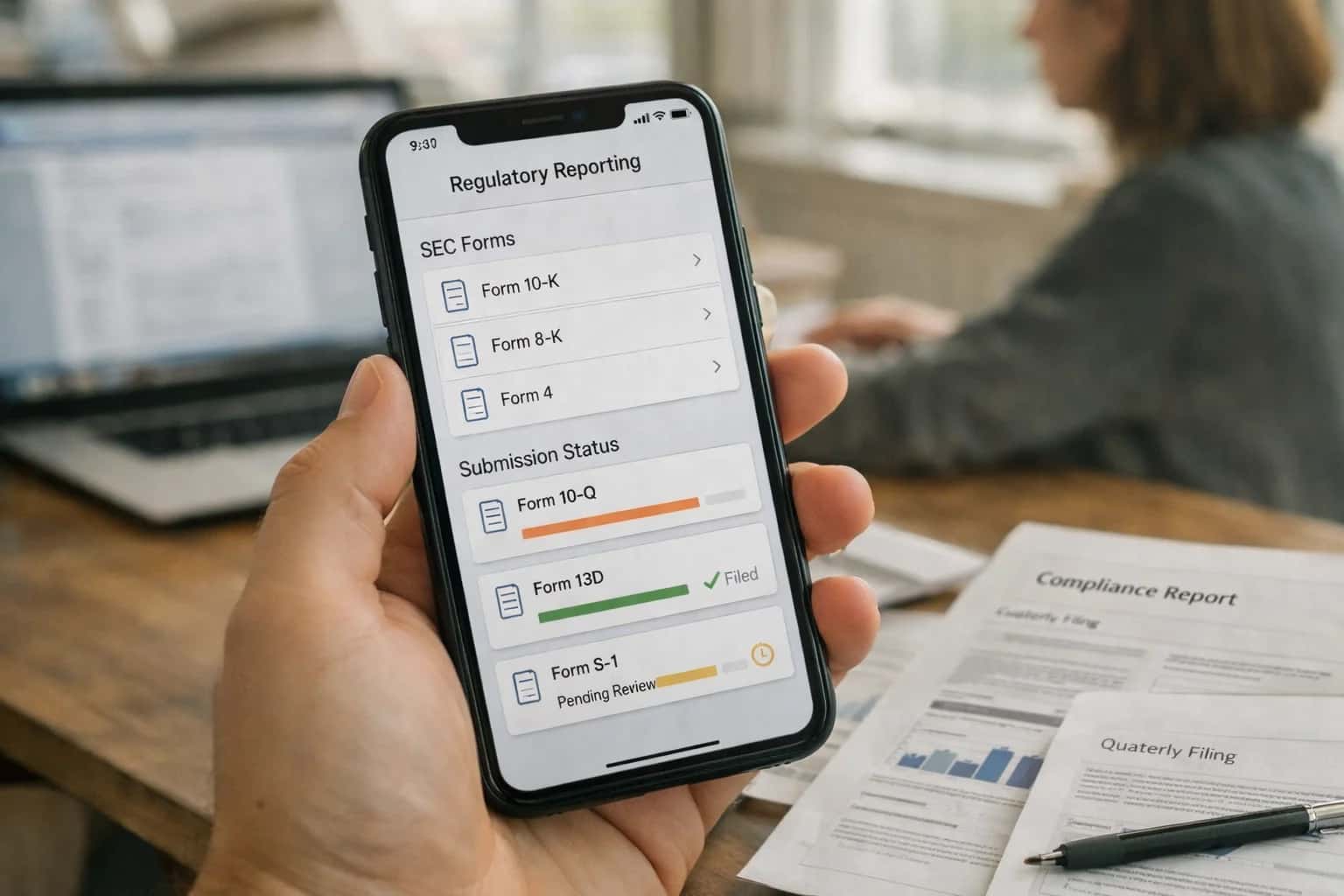
AUTOMATED AUDIT PREPARATION & REGULATORY REPORTING
Where AI Fits into Pharmacy Compliance Workflows
Integrating AI into pharmacy management platforms to automate the monitoring, documentation, and reporting required for state and federal compliance.
Implementation involves deploying AI agents that are triggered by time-based schedules (e.g., end-of-day) or specific events (e.g., a C-II prescription fill). These agents execute pre-defined checks, such as verifying that all required fields for a state board report are populated, identifying prescriptions that lack corresponding diagnosis codes for certain medications, or flagging inventory discrepancies for controlled substances. Findings are then logged into a dedicated compliance dashboard or injected back into the platform as annotated notes on the relevant patient or prescription record, creating a clear audit trail. For example, an agent could automatically generate the monthly controlled substance reconciliation report by querying the platform's dispensing and receiving logs, highlighting variances for pharmacist review.
Rollout requires a phased approach, starting with read-only data access to build trust in the AI's accuracy. Governance is critical: all AI-generated compliance flags should route through a pharmacist-in-the-loop approval workflow within the platform before any official report is filed. This ensures human oversight while drastically reducing the manual hours spent sifting through logs. The integration must also adhere to the platform's own RBAC (Role-Based Access Control) to ensure only authorized personnel can view or act on compliance insights, maintaining data security and integrity.
COMPLIANCE MONITORING
Integration Points Across Major Pharmacy Platforms
Automating DEA & State Board Reporting
AI integration for compliance monitoring focuses on the high-risk, manual workflows around controlled substances (CII-CV). The primary integration surface is the platform's audit trail or transaction log, which records every dispensing event, adjustment, and transfer.
An AI agent can be triggered on a scheduled basis (e.g., daily) to:
- Query the platform's database for all controlled substance transactions within the reporting period.
- Cross-reference against state-specific reporting thresholds and DEA Form 106 requirements.
- Identify discrepancies, such as missing prescriber DEA numbers or unusual dispensing patterns that may indicate diversion.
- Generate pre-filled audit reports and exception summaries, ready for pharmacist review and submission.
This integration directly connects to the platform's reporting modules or data export APIs, transforming a multi-hour manual reconciliation task into a minutes-long review process.
PHARMACY MANAGEMENT PLATFORMS
High-Value AI Compliance Use Cases
Integrate AI directly into your pharmacy platform's audit trails and prescription data to automate compliance reporting, reduce manual review burdens, and maintain continuous readiness for state board and DEA inspections.
01
Automated Controlled Substance Audit Logs
AI agents continuously monitor platform transaction logs for Schedule II-V prescriptions, automatically generating DEA-required audit reports. The integration flags anomalies like early refills or unusual prescriber patterns, compiling evidence packets for internal review or board submission.
Hours -> Minutes
Report generation
02
Real-Time DUR (Drug Utilization Review) Compliance
Enhance the platform's built-in DUR alerts with AI models that analyze patient history, lab data (if connected), and clinical guidelines. The integration provides deeper, context-aware flags for therapeutic duplication, age-related dosage issues, and inappropriate duration, logging all overrides with reasoned justifications for compliance audits.
03
State Board Reporting & Inspection Prep
Automate the compilation of data for mandatory state board reports (e.g., PMP integration compliance, immunization reporting, pseudoephedrine logs). AI agents query the platform database on a schedule, format the data to state specifications, and prepare summary dashboards for pre-inspection review, drastically reducing last-minute scrambling.
1 sprint
Implementation timeline
04
Intelligent Prescription Verification Audit Trail
Create a rich, searchable audit trail for every prescription verification. AI integrates with the platform's review screen, capturing the pharmacist's actions, the AI-provided clinical alerts (drug interactions, allergies), and the final decision rationale. This creates a defensible record for compliance reviews and quality assurance programs.
05
Automated 340B Program Compliance Monitoring
For eligible pharmacies, AI monitors platform data to ensure strict separation of 340B and non-340B inventory and claims. The integration audits dispensing records, purchase data, and patient eligibility, generating exception reports for potential duplicate discounts or diversion, and preparing necessary quarterly reports for HRSA.
Batch -> Continuous
Monitoring mode
06
Smart Recall & Quality Event Documentation
When a drug recall is issued, AI scans platform inventory and prescription history to identify affected lots. It automatically generates patient notification lists, documents the quarantine and return process within the platform, and creates a complete audit trail for FDA or manufacturer compliance reporting.
AUTOMATED AUDIT PREPARATION & REGULATORY REPORTING
Example AI-Powered Compliance Workflows
These workflows demonstrate how AI agents integrate directly with your pharmacy platform's data layer and audit trails to automate the most manual and error-prone compliance tasks. Each flow is triggered by platform events and updates records in real-time, creating a continuous, auditable compliance posture.
Trigger: End-of-day closing procedure in the pharmacy platform or a scheduled batch job.
Context Pulled: The AI agent queries the platform's API for:
- Today's Schedule II-V dispensed prescriptions (NDC, quantity, patient, prescriber).
- Corresponding physical inventory counts from integrated scales or manual entry logs.
- Previous day's ending inventory balance from the platform's controlled substance module.
- All related transaction records (receipts, returns, waste).
Agent Action:
- Performs a line-by-line reconciliation, flagging any discrepancies outside a configured tolerance (e.g., >1 tablet variance).
- For each discrepancy, it cross-references the patient profile, prescriber DEA, and dispensing pharmacist to check for data entry patterns.
- Generates a preliminary discrepancy report with probable causes (e.g., "likely data entry error on Rx #12345, quantity 30 entered as 3").
System Update:
- The report is posted as a note in the platform's controlled substance log for the responsible pharmacist's review.
- If the AI's confidence is high for a clear data error, it can suggest a corrective journal entry for approval.
- A summary is appended to the monthly state board report draft, automatically maintained in the platform's document management area.
Human Review Point: The pharmacist-in-charge must review and electronically sign off on the daily reconciliation report and any corrective entries within the platform UI before the workflow is considered complete.
AUDIT-READY AI FOR PHARMACY OPERATIONS
Implementation Architecture: Data Flow & Guardrails
A secure, traceable architecture for integrating AI into pharmacy platform compliance workflows.
The integration connects to your pharmacy management platform's audit trail and prescription data modules (e.g., McKesson's RxHistory, PioneerRx's Activity Log, PrimeRx's Transaction tables) via secure API calls or direct database queries on a scheduled basis. An AI agent ingests structured data—prescription details, prescriber DEA numbers, patient profiles, DUR (Drug Utilization Review) flags, and inventory adjustments for controlled substances—to identify patterns requiring regulatory reporting. This data flow is one-way and read-only for the AI system, ensuring the core platform's integrity is never compromised.
Critical guardrails are implemented at multiple layers:
- Data Filtering & PII Masking: Before processing, the system redacts full patient names and addresses, retaining only necessary identifiers like date of birth and prescription ID for traceability.
- Human-in-the-Loop Approval: All AI-generated findings—such as potential controlled substance order discrepancies or outlier prescriber activity—are routed to a designated pharmacist-in-charge dashboard within the platform (or a connected portal) for review and sign-off before any report is finalized or submitted.
- Immutable Audit Log: Every AI action, from data pull to recommendation, is logged with a timestamp, user ID (system or pharmacist), and data scope, creating a chain of custody for board inspections. This log is stored separately from the pharmacy platform's native logs for redundancy.
Rollout follows a phased, risk-based approach. We typically start with a single, high-volume compliance report—such as Schedule II order reconciliation for your state's Prescription Drug Monitoring Program (PDMP)—running in parallel with manual processes for one full reporting cycle. This validates data accuracy and pharmacist workflow before expanding to other areas like automated DUR exception reporting or monthly controlled substance inventory summaries. The architecture is designed to plug into your existing platform's reporting hooks or export modules, minimizing disruption to daily pharmacy operations.
COMPLIANCE MONITORING
Code & Payload Examples for Key Tasks
Automated Log Reconciliation
AI agents can be triggered nightly to reconcile platform dispensing logs against state-mandated controlled substance reports (like PDMP feeds). The agent extracts CII-CV prescription data, compares quantities, and flags discrepancies for pharmacist review before the monthly report deadline.
Example Payload for Log Extraction & Comparison:
json{ "trigger": "scheduled_nightly_audit", "platform": "PrimeRx", "date_range": "2024-05-01 to 2024-05-31", "drug_schedules": ["CII", "CIII", "CIV", "CV"], "actions": [ "extract_dispensing_logs", "fetch_pdmp_feed_via_api", "reconcile_quantities_by_dea_npi", "generate_discrepancy_report", "flag_for_review_in_platform_audit_module" ] }
The AI updates a custom compliance_audit object in the platform, linking each flagged record to the original Rx for traceability.
AI-ENHANCED COMPLIANCE MONITORING
Realistic Time Savings & Operational Impact
This table illustrates the operational impact of integrating AI for compliance monitoring within pharmacy management platforms like McKesson EnterpriseRx, PioneerRx, PrimeRx, and BestRx. It compares manual processes against AI-assisted workflows, focusing on time savings, risk reduction, and staff reallocation.
| Compliance Task | Manual Process | AI-Assisted Process | Impact & Notes |
|---|---|---|---|
Controlled Substance Log Reconciliation | 4-6 hours weekly per pharmacy | 30-45 minutes weekly with automated variance flagging | Reduces risk of human error; flags discrepancies for pharmacist review only. |
Drug Utilization Review (DUR) Reporting for State Boards | Next-day compilation after month-end close | Same-day automated report generation & submission | Ensures timely filing; data pulled directly from platform audit trails. |
Audit Trail Review for Suspicious Activity | Manual sampling; 2-3 hours per audit | Continuous monitoring with daily anomaly alerts | Proactive risk detection; shifts effort from hunting to investigating high-priority alerts. |
Pseudoephedrine (PSE) Log Compliance & Reporting | Manual entry and weekly form preparation | Automated log population from platform transactions; form auto-draft | Eliminates data entry errors; ensures DEA compliance with automated limit checks. |
Prescription Record Completeness Check | Spot-check during verification; inconsistent | Real-time validation of required fields on every new Rx | Prevents dispensing delays and audit findings by catching omissions upfront. |
Regulatory Update Impact Assessment | Manual review of bulletins; ad-hoc process | AI scans updates, maps to platform workflows, generates gap analysis | Transforms a reactive task into a structured, prioritized compliance plan. |
Controlled Substance Inventory Variance Analysis | Quarterly physical count reconciliation | Continuous cycle counting with AI-driven reconciliation prompts | Identifies shrinkage trends earlier; supports more frequent, less disruptive counts. |
COMPLIANCE-FIRST AI IMPLEMENTATION
Governance, Security, and Phased Rollout
Deploying AI for compliance monitoring requires a controlled, audit-ready approach that respects the regulated nature of pharmacy data and workflows.
Integrating AI for compliance monitoring connects to the pharmacy platform's audit trail tables, prescription records, and state reporting modules. The AI agent acts as a continuous, automated reviewer, scanning for patterns that indicate potential compliance gaps—such as irregular controlled substance dispensing, missed Drug Utilization Review (DUR) alerts, or incomplete documentation for state board inspections. This is implemented via secure API calls or database listeners that feed de-identified transaction data to a governed AI model, which returns risk scores and flagged records back into the platform's workflow queue for pharmacist review.
A phased rollout is critical. Phase 1 typically focuses on a single, high-risk area like Schedule II controlled substance reporting, running the AI in a parallel "shadow mode" for 30-60 days. During this period, the AI's findings are logged but do not trigger platform actions, allowing you to benchmark its accuracy against your manual processes. Phase 2 introduces AI-generated alerts into the pharmacist's daily workflow within the compliance dashboard, requiring a simple acknowledgment. Phase 3 expands to automated report drafting for state board submissions and DEA audits, where the AI compiles the necessary data from RxFillHistory and PatientProfile objects, but a licensed pharmacist must attest to the final submission.
Governance is built around role-based access control (RBAC) within the pharmacy platform. Only authorized roles (e.g., Pharmacist-in-Charge, Compliance Officer) can configure AI rules or approve automated findings. Every AI-generated flag and report is logged with a full audit trail in the platform's native system, capturing the triggering data, model version, and human reviewer. This ensures the AI is a traceable assistant, not a black-box decision-maker, maintaining clear accountability for all regulatory submissions. For a deeper look at integrating AI into audit workflows, see our guide on AI Integration for Pharmacy Management Platform Audit Support.
Enabling Efficiency, Speed & Accuracy
Intelligent Analysis, Decision & Execution
We build AI systems for teams that need search across company data, workflow automation across tools, or AI features inside products and internal software.
Talk to Us
Search across company data
Give teams answers from docs, tickets, runbooks, and product data with sources and permissions.
Useful when people spend too long searching or get different answers from different systems.
Enterprise searchRAGPermissions
Read more
Automate internal workflows
Use AI to route work, draft outputs, trigger actions, and keep approvals and logs in place.
Useful when repetitive work moves across multiple tools and teams.
AI agentsWorkflow automationGovernance
Read more
Add AI to products and internal tools
Build assistants, guided actions, or decision support into the software your team or customers already use.
Useful when AI needs to be part of the product, not a separate tool.
AI integrationDecision supportModel routing
Read moreAI FOR COMPLIANCE MONITORING
FAQ: Technical and Commercial Questions
Practical answers for pharmacy leaders and technical teams evaluating AI to automate regulatory reporting, controlled substance tracking, and state board compliance within platforms like McKesson, PioneerRx, PrimeRx, and BestRx.
The integration requires read access to specific, often siloed, data streams within your pharmacy management platform. The AI agent does not need full database access; it operates on targeted API endpoints or data exports.
Core Data Feeds:
- Prescription Transaction Logs: Every fill, partial fill, transfer, and cancellation with timestamps, NDC, quantity, and prescriber DEA.
- Controlled Substance Schedules: C-II through C-V flags from the prescription record.
- Drug Utilization Review (DUR) Alerts: Records of overrides, including the pharmacist's reason code.
- Patient Profiles: For age-based compliance (e.g., pseudoephedrine logs) and therapy duplication checks.
- Audit Trail Tables: User login/logout, record modifications, and who performed verification on a script.
Implementation Note: We typically use a dedicated service account with role-based access control (RBAC) scoped to these specific data objects. The agent polls these feeds or reacts to webhooks (e.g., onPrescriptionVerified) to maintain a real-time compliance ledger outside the live platform database for analysis.

About the author
Prasad Kumkar
CEO & MD, Inference Systems
Prasad Kumkar is the CEO & MD of Inference Systems and writes about AI systems architecture, LLM infrastructure, model serving, evaluation, and production deployment. Over 5+ years, he has worked across computer vision models, L5 autonomous vehicle systems, and LLM research, with a focus on taking complex AI ideas into real-world engineering systems.
His work and writing cover AI systems, large language models, AI agents, multimodal systems, autonomous systems, inference optimization, RAG, evaluation, and production AI engineering.
LinkedIn
Limited slotsGet a Free AI Consultation
Partnered with leading AI, data, and software stack.





How We Work
Custom AI workflows for your Business
One-fit-all AI don't work for modern businesses. At Inferensys, we aim to understand your business & custom requirements; which we use to define most efficient agentic workflows, the data, and the tools for your business.
01
Review the use case
We understand the task, the users, and where AI can actually help.
Read more02
Pick the right approach
We define what needs search, automation, or product integration.
Read more03
Build the first useful version
We implement the part that proves the value first.
Read more04
Improve from there
We add the checks and visibility needed to keep it useful.
Read moreThe first call is a practical review of your use case and the right next step.
Talk to Us