
Inferensys

Integration

AI Integration for ERP Vendor Management

A technical guide for embedding AI agents into SAP, Oracle, NetSuite, and Infor to automate vendor onboarding due diligence, continuous risk monitoring, performance scoring, and supplier communications.
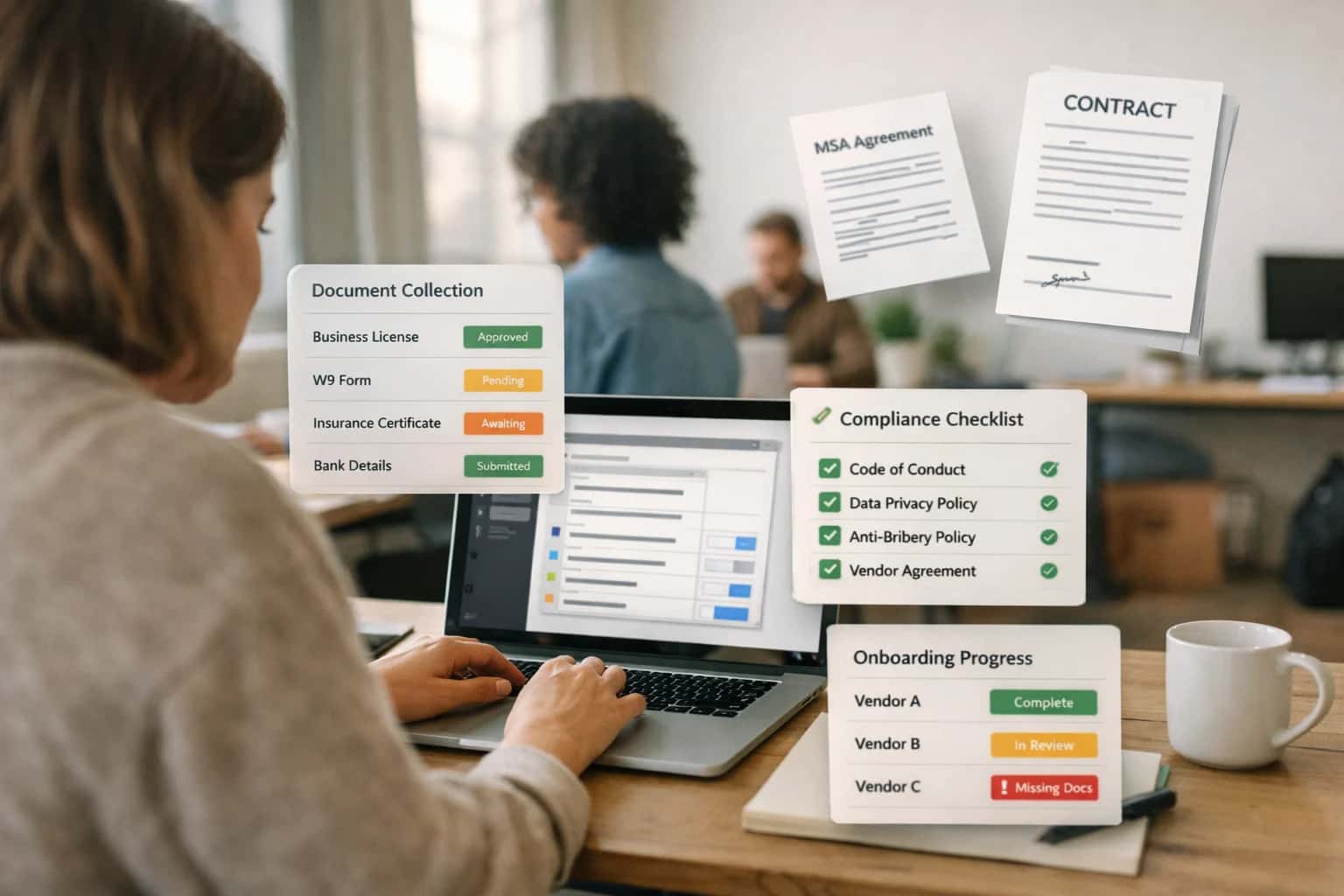
Operations team reviewing AI vendor onboarding platform on laptop, forms and contracts visible, casual office workspace.
ARCHITECTURE AND ROLLOUT

Where AI Fits into ERP Vendor Management

Integrating AI into ERP vendor management transforms a reactive, data-heavy function into a proactive, intelligence-driven operation.

AI integration connects to the core Vendor Master and Procurement modules within your ERP (e.g., SAP BP, Oracle Supplier Portal, NetSuite Vendor Records). The primary surfaces are:

  • Vendor Onboarding Workflows: AI agents ingest and validate business registrations, tax IDs, and compliance documents, cross-referencing external databases to flag risks before creation in the VENDOR table.
  • Transactional Data Streams: Real-time analysis of PURCHASE ORDERS, GOODS RECEIPTS, and INVOICES to calculate performance KPIs like on-time delivery, quality reject rates, and invoice accuracy.
  • Communication Channels: Automated, personalized outreach via email or portal notifications triggered by ERP events (e.g., contract renewals, performance reviews, compliance updates).


Implementation typically involves a middleware layer that subscribes to ERP events via REST APIs or ION/EDI messages. This layer hosts the AI logic—vendor risk scoring models, NLP for contract analysis, and communication agents—and writes intelligence back to custom fields or related records (e.g., a VENDOR_SCORE object). For example, an AI agent can:

  • Monitor news feeds and financial data, updating a risk score in the vendor master.
  • After each PURCHASE ORDER receipt, analyze inspection reports and update performance metrics.
  • Draft and send a quarterly business review summary to the vendor contact, pulling data directly from the ERP.

Rollout should be phased, starting with read-only intelligence (e.g., a dashboard of AI-calculated risk scores) before enabling automated actions (e.g., blocking POs to high-risk vendors). Governance is critical: establish clear thresholds for automated decisions and maintain a human-in-the-loop for exceptions. All AI-generated insights and actions must be logged in the ERP's audit trail, linking back to the source transaction and model version for full traceability.

AI INTEGRATION FOR ERP VENDOR MANAGEMENT

ERP Modules and APIs for AI Integration

Core Data and Workflow Surfaces

The Vendor Master is the central record for AI-driven enrichment and risk assessment. Key integration points include:

  • Vendor Master APIs: Use REST or SOAP APIs (e.g., NetSuite's SuiteTalk, SAP's OData API for Business Partner) to programmatically create, read, and update vendor records. AI can enrich these records with external data like D&B scores, financial health, and ESG ratings.
  • Onboarding Workflows: Integrate with ERP workflow engines (e.g., SAP Cloud Platform Workflow, Oracle Process Cloud) to inject AI-powered due diligence checks. For example, an AI agent can analyze uploaded certificates, W-9 forms, and contract clauses for completeness and flag potential risks before approval.
  • Custom Objects/Fields: Most ERPs allow extending the vendor object. Add fields for AI_Risk_Score, Last_External_Review_Date, or Performance_Tier to store AI-generated insights directly in the system of record.

Implementation typically involves a middleware service that listens for new vendor submissions, calls external data APIs and LLMs for analysis, and posts results back to the ERP, triggering the next workflow step.

ERP INTEGRATION PATTERNS

High-Value AI Use Cases for Vendor Management

Integrate AI directly into SAP, Oracle, NetSuite, and Infor to automate vendor lifecycle tasks, enhance risk visibility, and improve procurement outcomes. These patterns connect to vendor masters, purchase orders, invoices, and performance data via native APIs.

01

Automated Vendor Onboarding Due Diligence

AI reviews new vendor applications and supporting documents (W-9s, certificates of insurance, financial statements) submitted via portal or email. It extracts key entities, checks for completeness, flags potential risks (sanctions, adverse media), and proposes an initial risk tier for the vendor master record in the ERP. Workflow: Submission → AI Review → ERP Record Creation with Risk Score → Task for Procurement Manager.

Days -> Hours
Onboarding cycle
02

Continuous Vendor Risk Monitoring

An AI agent periodically scans integrated external data feeds (financial health, news, geopolitical) for all active vendors in the ERP. It updates a custom risk score field on the vendor record and triggers alerts in the procurement team's workflow for vendors whose risk profile changes significantly. Integration: ERP Vendor Master API + External Data Connectors → AI Scoring Engine → ERP Update.

Batch -> Real-time
Risk alerts
03

AI-Powered Vendor Performance Scoring

AI analyzes structured ERP data (on-time delivery % from PO receipts, quality rejections from inspection lots, invoice accuracy) and unstructured feedback (email from receiving, project notes) to generate a composite performance score. This score populates a vendor record field and feeds into sourcing decisions and quarterly business reviews. Data Sources: ERP Transactional Tables + Communication Logs.

Manual → Automated
Score calculation
04

Intelligent Invoice & PO Matching

Beyond basic 2/3-way matching, AI handles complex exceptions. It reads invoice line items and descriptions, matches them to PO lines even with slight variances, validates against goods receipt notes, and proposes resolutions (partial payment, price tolerance approval) for AP clerk review. Integration Point: ERP Accounts Payable module, triggered during invoice posting workflow.

80% → 95%+
Auto-match rate
05

Proactive Contract & Renewal Management

AI extracts key terms (pricing, SLA, auto-renewal clauses, termination windows) from vendor contracts linked in the ERP or DMS. It monitors these dates against the ERP's date fields, generates renewal recommendation memos with performance data, and creates tasks in the procurement team's queue 90-120 days in advance. Workflow: Contract Repository → AI Extraction → ERP Date Field Sync → Alert Generation.

Reactive → Proactive
Renewal management
06

Vendor Communication & Inquiry Automation

A chatbot or email agent integrated with the ERP vendor portal and communication logs handles common vendor inquiries (invoice status, payment timing, portal access). It authenticates the vendor, queries the ERP via API for real-time status, and drafts responses, escalating only complex cases. Surface Area: Vendor Portal, Dedicated Support Email Inbox.

50%+ Deflection
Inquiry volume
VENDOR MANAGEMENT AUTOMATION

Example AI Agent Workflows

These concrete workflows illustrate how AI agents can be embedded into your ERP's vendor management lifecycle, automating manual tasks, enhancing risk intelligence, and freeing vendor managers for strategic work.

Trigger: A new vendor record is created in the ERP with a status of 'Pending Review'.

Agent Actions:

  1. Data Pull: The agent extracts the vendor's legal name, tax ID, and website from the ERP record via its REST API (e.g., NetSuite's SuiteTalk, SAP's OData).
  2. External Enrichment: It calls approved external APIs to:
    • Check business registration and good standing with state/federal databases.
    • Screen for sanctions, PEPs, and adverse media.
    • Pull basic financial health indicators (D&B, credit bureau).
  3. Risk Scoring & Summary: The agent synthesizes findings into a risk score (Low/Medium/High) and a plain-English summary of red flags or confirmations.
  4. System Update: The agent writes the risk score, summary, and source links back to custom fields on the vendor record.
  5. Workflow Routing: Based on the score and procurement policy, the agent triggers the appropriate approval workflow in the ERP—auto-approving low-risk vendors and routing high-risk ones to the procurement manager with the summary pre-attached.

Human Review Point: A procurement manager reviews the agent's summary and supporting links for all Medium/High-risk vendors before approval.

FROM VENDOR MASTER TO RISK INTELLIGENCE

Implementation Architecture: Data Flow and Guardrails

A practical blueprint for integrating AI into ERP vendor management workflows, connecting master data, transactional feeds, and external intelligence.

The integration architecture connects three primary data flows into a central AI orchestration layer. First, vendor master data (from SAP LFA1, Oracle AP_SUPPLIERS, NetSuite Vendor records) provides the foundational entity profile. Second, transactional performance data—on-time delivery rates from purchase orders (EKKO/EKPO), invoice accuracy from accounts payable, and quality metrics from goods receipts—is streamed via ERP APIs or event hooks. Third, external risk intelligence from services like Dun & Bradstreet, Moody's, or ESG databases is ingested via scheduled pulls or webhooks. The AI layer correlates these streams to generate a dynamic vendor risk and performance score.

Implementation typically uses a microservices pattern where a central 'Vendor Intelligence' service, hosted in your cloud or on-premises, calls the LLM. This service receives events (e.g., a new vendor submission in Infor M3, a late shipment notification) and executes predefined workflows: running due diligence checks, updating risk scores, or drafting communication. For example, an AI agent can be triggered by a SuiteScript in NetSuite to analyze a new vendor's website and registration documents, summarize findings, and post a note to the vendor record—all before human review. Key outputs, like score changes or high-risk alerts, are written back to custom fields or dedicated dashboard objects within the ERP.

Rollout requires a phased, vendor-tiered approach. Start with high-value or new vendors where the business impact is clearest. Governance is critical: all AI-generated recommendations (e.g., 'Hold payment', 'Require additional insurance') should route through an approval workflow in the ERP, such as a SAP Workflow or Oracle Approval Management, with clear audit trails. Implement a human-in-the-loop review for any automated communication or classification changes. Regular model evaluations against actual vendor performance (e.g., did a 'high-risk' score correlate with a quality issue?) ensure the system remains accurate and accountable, turning vendor management from a reactive audit into a predictive, operational function.

VENDOR MANAGEMENT INTEGRATION PATTERNS

Code and Payload Examples

Automating Due Diligence

Integrate AI to evaluate new vendor submissions by calling external risk databases and analyzing uploaded documents. A typical workflow involves creating a vendor request record, triggering an AI agent to perform checks, and updating the ERP record with a risk score and recommendations.

Example Python payload to initiate a vendor risk check via an ERP's REST API, which then calls an AI service:

python
import requests

# Payload to create a vendor request in ERP (e.g., NetSuite)
vendor_request = {
    "recordType": "vendor",
    "companyName": "Acme Supplies Inc.",
    "taxId": "12-3456789",
    "country": "US",
    "documents": [
        {"url": "https://internal-docs/acme-certificate.pdf", "type": "insurance"},
        {"url": "https://internal-docs/acme-financials.xlsx", "type": "financials"}
    ]
}

# Post to ERP's vendor endpoint to create a pending record
erp_response = requests.post(
    'https://api.erp.example.com/record/vendorRequest',
    json=vendor_request,
    headers={'Authorization': 'Bearer YOUR_TOKEN'}
)
request_id = erp_response.json()['id']

# Trigger AI risk assessment service
ai_payload = {
    "erp_request_id": request_id,
    "vendor_data": vendor_request,
    "checks": ["financial_stability", "sanctions", "reputation", "contract_terms"]
}
ai_response = requests.post('https://ai-service.example.com/risk/assess', json=ai_payload)

The AI service returns a structured risk assessment, which is then written back to the vendor request record to guide the approver.

VENDOR MANAGEMENT OPERATIONS

Realistic Operational Impact and Time Savings

How AI integration transforms core vendor management workflows within your ERP, focusing on measurable efficiency gains and risk reduction.

Workflow / MetricBefore AIAfter AIImplementation Notes

New Vendor Onboarding Due Diligence

Manual web searches, document review (2-4 hours per vendor)

Automated risk report generation (10-15 minutes review)

AI cross-references sanctions, financial health, and news; human final approval required.

Vendor Performance Scoring

Quarterly manual spreadsheet analysis

Continuous scoring with monthly summary alerts

Scores auto-calculated from ERP delivery, quality, and invoice data; integrates with vendor master.

Contract Renewal & Compliance Monitoring

Calendar-driven manual review of contract files

Automated obligation tracking with 60-day renewal alerts

AI extracts key terms from linked contracts; alerts trigger in ERP workflow or vendor manager inbox.

Vendor Communication for Routine Inquiries

Manual email drafting for status updates (POs, payments)

Assisted response generation from ERP context

AI suggests responses based on open POs/invoices; sent for human review and dispatch from ERP.

Risk Monitoring & Alerting

Ad-hoc review based on news or audit findings

Weekly automated risk digest with severity scoring

AI ingests external risk feeds; flags changes to existing vendors for prioritized review.

Vendor Data Enrichment & Cleansing

Periodic manual projects to update addresses, contacts

Automated enrichment on creation and scheduled refresh

On vendor creation, AI suggests data from public sources; reduces master data errors.

RFP Document Drafting & Analysis

Manual compilation from previous RFPs and templates

First draft generation from spend category and requirements

AI drafts sections using historical data; procurement manager refines and finalizes.

Supplier Diversity & ESG Reporting

Manual survey collection and spreadsheet consolidation

Automated dashboard from declared and inferred data

AI classifies vendors and estimates missing ESG data; supports reporting for procurement and finance.

ARCHITECTING FOR CONTROL AND ADOPTION

Governance, Security, and Phased Rollout

A practical framework for deploying AI in vendor management with security, auditability, and incremental value delivery.

A production-ready integration for ERP vendor management is built on a policy-aware agent layer. This layer sits between your ERP (e.g., SAP Ariba, Oracle Procurement Cloud, NetSuite Vendor Center) and AI models, enforcing rules for data access, approval routing, and communication. Key governance surfaces include:

  • Role-Based Data Masking: Agents only receive vendor data (financials, contracts, performance scores) permissible for the requesting user's role, enforced via ERP RBAC or a middleware policy engine.
  • Audit Trail Integration: Every AI-generated risk score, communication draft, or due diligence summary is logged as a related record on the vendor master, with a traceable link to the source data and prompt used.
  • Human-in-the-Loop Gates: Critical actions—like sending a performance warning to a strategic supplier or updating a risk tier—are designed as approval workflows in the ERP, not autonomous steps.

Security is implemented at three levels: data in transit via encrypted API calls (using ERP OAuth/API keys), data at rest with PII/SPI redaction before vectorization, and model residency ensuring vendor intelligence processing occurs within your designated cloud region. For continuous monitoring agents, implement a circuit-breaker pattern to halt automated data pulls if anomaly thresholds are met, alerting the vendor management team.

We recommend a three-phase rollout to de-risk and demonstrate value:

  1. Phase 1: Assisted Intelligence – Deploy a copilot for vendor managers that summarizes supplier performance data and drafts quarterly business review documents, but requires manual review and sending. This builds trust in the output.
  2. Phase 2: Automated Monitoring – Activate background agents that continuously scan for supplier financial distress signals or ESG rating changes, creating prioritized alert tickets within the ERP for the team to investigate.
  3. Phase 3: Conditional Automation – Enable automated, policy-driven workflows for low-risk actions, such as sending onboarding checklists to new approved vendors or generating routine compliance certificates for low-spend suppliers.

Start with a pilot group of 10-20 suppliers, measure time-to-insight and issue detection rates, and refine prompts and workflows before scaling. This approach ensures the AI integration augments—rather than disrupts—established procurement governance.

IMPLEMENTATION AND WORKFLOW DETAILS

Frequently Asked Questions

Practical questions for technical leaders and vendor managers planning AI integration into their ERP's vendor management module.

This workflow uses AI to accelerate and de-risk the vendor intake process.

  1. Trigger: A new vendor request is submitted via a web form, email, or created as a draft record in the ERP (e.g., NetSuite Vendor record, SAP BP).
  2. Context Pulled: The AI agent retrieves the submitted data and calls internal and external APIs to gather due diligence information.
    • Internal: Checks for existing similar vendors (deduplication), reviews the requester's history.
    • External: Performs automated checks: business registration validation, OFAC/sanctions list screening, financial health indicators (via D&B or similar), and negative news sentiment analysis.
  3. Agent Action: An LLM synthesizes the findings into a risk summary report. It highlights potential red flags (e.g., "Vendor registered <1 year ago," "Match found on restricted parties list"), calculates a preliminary risk score, and flags required documents (W-9, insurance certificates).
  4. System Update: The agent updates the ERP vendor record with the risk score, attaches the summary report, and moves the record to a "Review - Medium Risk" queue for the vendor manager.
  5. Human Review Point: The vendor manager reviews the AI-generated summary. They can approve, request more info, or reject based on the compiled evidence. The AI logs all data sources and reasoning for auditability.
Prasad Kumkar

About the author

Prasad Kumkar

CEO & MD, Inference Systems

Prasad Kumkar is the CEO & MD of Inference Systems and writes about AI systems architecture, LLM infrastructure, model serving, evaluation, and production deployment. Over 5+ years, he has worked across computer vision models, L5 autonomous vehicle systems, and LLM research, with a focus on taking complex AI ideas into real-world engineering systems.

His work and writing cover AI systems, large language models, AI agents, multimodal systems, autonomous systems, inference optimization, RAG, evaluation, and production AI engineering.


