The Famly Family Portal is the primary digital touchpoint for parents, handling everything from daily reports and learning journals to event calendars and billing. AI integration focuses on three core surfaces: the messaging/feed module, the learning journal and observations interface, and the help/FAQ section. By connecting to Famly's Family API and Observations API, AI can personalize content, automate routine communications, and provide instant, context-aware answers to common parent questions, transforming a static portal into an interactive, intelligent engagement hub.

Integration
AI Integration for Famly Family Portals
Embed AI into Famly's family portal to personalize communications, automate Q&A, and generate content, reducing manual outreach and improving parent engagement.
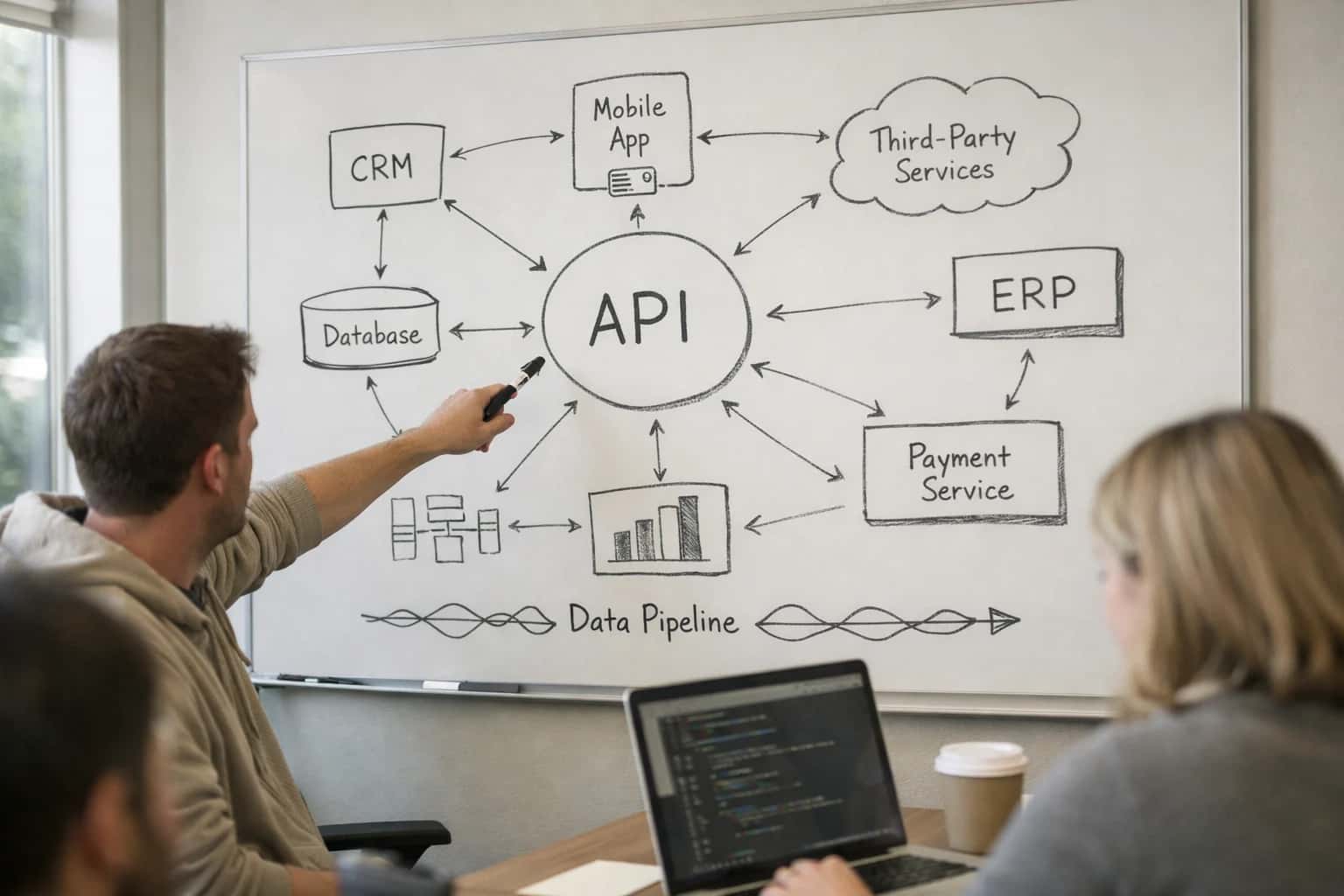
ARCHITECTURE AND ROLLOUT
Where AI Fits into the Famly Family Portal
A practical guide to embedding AI-driven personalization, communication, and support directly into the parent-facing surfaces of your Famly portal.
Implementation typically involves deploying a lightweight AI agent layer that listens for webhook events from Famly (e.g., observation.created, message.sent) and acts on them. For example, when a teacher logs a quick voice note about a child's milestone, an AI service can transcribe it, tag it to relevant developmental frameworks, and draft a polished journal entry for review. For parent Q&A, a Retrieval-Augmented Generation (RAG) system can be grounded in your center's specific policies, calendar, and the child's own schedule data fetched via the API, ensuring answers are accurate and personalized. This architecture keeps Famly as the system of record while adding intelligent automation at the edges.
Rollout should be phased, starting with non-critical, high-volume workflows like auto-generating first drafts of daily reports or powering a 24/7 FAQ chatbot. Governance is crucial: all AI-generated content for parents should pass through a human-in-the-loop review step (e.g., teacher approval for journal entries) or be clearly labeled as AI-assisted. Audit logs should track AI actions back to the triggering Famly event and user. This controlled approach builds trust, allows for prompt tuning based on real feedback, and aligns with the sensitive nature of family data, ensuring the integration enhances—rather than disrupts—your center's relationship with parents.
FAMILY ENGAGEMENT DATA & APIS
Key Famly Portal Surfaces for AI Integration
Family Profiles & Communications
The Family Profile API provides the core data model for AI personalization and communication workflows. Each profile contains structured data points: parent/guardian contact details, enrolled children, authorized pick-up persons, and communication preferences (SMS, email, in-app).
AI Integration Points:
- Personalized Messaging: Use child-specific data (allergies, developmental notes) to tailor broadcast announcements or payment reminders.
- Sentiment Analysis: Process inbound messages from the communications log to flag concerns or satisfaction trends for director review.
- Automated Workflows: Trigger AI-generated follow-ups for common queries (e.g., "What time is pickup today?") using the
GET /families/{id}/messagesandPOST /messagesendpoints, reducing manual load on staff.
This surface enables AI to act as a context-aware communication layer, ensuring every family interaction is informed by the full profile history.
FAMILY ENGAGEMENT AUTOMATION
High-Value AI Use Cases for Famly Portals
Integrate AI directly into Famly's Family Portal APIs to personalize communications, automate routine support, and transform observational data into actionable insights, freeing staff time for direct care.
01
Personalized Daily Summary Generation
AI synthesizes teacher inputs (naps, meals, activities, photos) from Famly's Observations API and Media API to generate unique, narrative-style daily reports for each child. Automatically pushes structured updates to the family portal, replacing manual note-taking with consistent, engaging communication.
Hours -> Minutes
Report creation time
02
AI-Powered Parent Q&A Agent
Deploy a secure AI agent that connects to Famly's Family and Child APIs to answer common parent portal queries in real-time. Handles questions about schedules, upcoming events, billing summaries, and policy details, reducing front-desk and teacher interruptions. Implements RAG over center handbooks for accurate, grounded responses.
24/7
Support availability
03
Developmental Milestone Tracking & Suggestions
Use NLP to analyze free-text teacher observations and voice notes via Famly's Learning Journal APIs. AI tags entries to relevant developmental frameworks (EYFS, etc.), identifies emerging milestones, and suggests follow-up activities or resources, automatically populating the child's digital portfolio in the portal.
Batch -> Real-time
Insight generation
04
Intelligent Event & Form Reminders
AI analyzes family engagement history and portal activity to send hyper-personalized, context-aware reminders for events, permission slips, and payments via Famly's Notification APIs. Dynamically adjusts timing, channel (in-app vs. email), and messaging tone based on past responsiveness to improve completion rates.
Same day
Form completion boost
05
Sentiment-Aware Family Communication
Integrate sentiment analysis on inbound parent messages and survey responses from the portal. AI flags concerns or high-priority feedback for immediate staff review and can trigger automated, empathetic acknowledgment messages, helping centers proactively manage family relationships and satisfaction.
06
Automated Observation-to-Curriculum Linkage
AI processes teacher-recorded observations to automatically suggest and draft connected lesson plan ideas within Famly's Curriculum Planning surfaces. Links child interests and developmental needs to upcoming activities, ensuring the portal reflects a responsive, individualized learning journey.
1 sprint
Planning cycle acceleration
CONCRETE FAMLY INTEGRATION PATTERNS
Example AI-Powered Portal Workflows
These workflows demonstrate how AI can be embedded into Famly's portal surfaces to automate routine tasks, personalize family engagement, and provide intelligent support. Each pattern is built using Famly's REST API, webhooks, and family engagement data.
Trigger: A teacher submits a batch of unstructured observation notes (via voice-to-text or quick-typing) at the end of a session.
Context Pulled: The AI agent retrieves:
- The child's profile (name, age group, developmental goals from Famly).
- Previous report snippets from the last week.
- The raw teacher notes for the day.
Agent Action: A structured generation model (like GPT-4) synthesizes the notes into a coherent, warm, and personalized narrative paragraph. It formats the output to match the center's preferred daily report structure (e.g., "Today, [Child] enjoyed...", "We worked on...", "Reminder for tomorrow...").
System Update: The generated report is posted via the Famly API to the child's timeline in the family portal. The system can be configured to:
- Flag reports for teacher review before posting.
- Auto-post after a set time if no edits are made.
- Include a small "AI-assisted" footnote for transparency.
Human Review Point: Optional pre-posting review by the teacher in a draft interface. The teacher can edit, approve, or reject the AI-generated summary.
FAMILY PORTAL INTEGRATION
Implementation Architecture & Data Flow
A practical architecture for embedding AI into Famly's family portal surfaces to personalize content, automate communications, and provide intelligent support.
The integration connects to Famly's Family Portal API and Webhook system, creating a middleware layer that processes real-time events and family data. Key data objects include FamilyProfile, ChildRecord, Observation, MessageThread, and PortalActivityLog. The AI layer listens for events like observation.created, message.sent, or portal.login to trigger context-aware workflows. For instance, when a teacher logs a new observation, the system can automatically generate a personalized summary for the parent portal, highlighting developmental milestones in accessible language.
Implementation typically involves a secure, containerized service that handles: 1) Data Enrichment – pulling child age, past observations, and family language preference to tailor outputs. 2) Orchestration – using a lightweight agent framework to decide whether to generate a portal post, send a follow-up message, or queue a task for staff review. 3) Grounded Generation – employing a RAG pattern against the center's policy documents and the child's historical data to ensure all AI-generated Q&A responses are accurate and specific. All outputs are written back to the portal via the Famly API, with a human-in-the-loop approval flag configurable per center.
Rollout is phased, starting with read-only data sync and sandbox API testing. Governance is critical: all AI interactions are logged with family_id, child_id, and prompt_context for audit trails. Access controls ensure AI tools only process data for families whose center has opted in. The final architecture reduces manual communication drafting by teachers, provides 24/7 FAQ support for parents via the portal, and turns observational data into proactive, personalized engagement—without replacing the core Famly platform.
FAMLY PORTAL INTEGRATION PATTERNS
Code & Payload Examples
Generating Context-Aware Portal Updates
AI can synthesize daily observations, meal logs, and nap times to create personalized daily summaries for each child's portal feed. This involves calling Famly's POST /api/v2/feed/entries endpoint with structured JSON, enriched by LLM-generated narrative.
Example Payload for a Daily Summary Post:
json{ "childId": "child_abc123", "groupId": "room_preschool_1", "type": "DAILY_REPORT", "title": "AI-Generated Daily Summary", "body": "Today, Alex had a great day exploring shapes! They enjoyed building with blocks during free play, ate all of their chicken and rice at lunch, and took a solid 2-hour nap. We worked on identifying circles and squares.", "tags": ["meal", "nap", "activity"], "mediaUrls": [], "createdBy": "system_ai_assistant" }
The body field is generated by an LLM prompt that takes structured teacher inputs (e.g., {meals: 'chicken & rice', nap_duration: 120, activities: ['block building', 'shape identification']}) and transforms them into a warm, parent-friendly narrative.
FAMILY PORTAL AI INTEGRATION
Realistic Time Savings & Operational Impact
How AI integration transforms manual, reactive parent portal tasks into proactive, personalized engagement workflows.
| Workflow | Before AI | After AI | Implementation Notes |
|---|---|---|---|
Personalized Announcement Drafting | Manual drafting for each class/group | AI-generated drafts with teacher review | Leverages Famly's group APIs and past engagement data for personalization. |
FAQ Response to Common Parent Queries | Staff manually answer repetitive questions | AI-powered Q&A bot provides instant answers | Integrated via Famly portal widget; escalates complex issues to staff. |
Daily Report Summarization & Personalization | Teachers write individual notes for each child | AI synthesizes activity logs into narrative summaries | Pulls from Famly's observation and activity APIs; teacher approves before sending. |
Event RSVP & Reminder Management | Manual tracking of responses and sending reminders | Automated RSVP tracking and context-aware reminders | Triggers based on Famly's calendar events and family RSVP status via webhooks. |
Sentiment Analysis on Portal Feedback | Quarterly manual review of parent comments | Real-time sentiment dashboards and alerting | Processes comments from Famly's feedback modules; flags concerns for director follow-up. |
Document Retrieval for Parent Requests | Staff search through folders for policies/forms | AI-powered semantic search returns relevant documents | RAG system indexes Famly's document storage; provides secure, cited answers in portal. |
Developmental Update Communications | Scheduled parent-teacher conferences only | Proactive, AI-suggested updates based on milestones | Analyzes Famly learning journal data; suggests teachers send timely progress highlights. |
FAMILY DATA PROTECTION & CONTROLLED DEPLOYMENT
Governance, Security & Phased Rollout
Implementing AI for Famly Family Portals requires a security-first approach and a structured rollout to build trust and ensure operational stability.
Governance starts with data access. AI agents and workflows must operate under strict role-based permissions, accessing only the family, child, and communication data necessary for their function via Famly's APIs. All AI-generated content should be logged with an audit trail linking it to the source data, user, and AI model version. For Q&A support, implement a Retrieval-Augmented Generation (RAG) pattern where the AI's answers are grounded in your center's official policies, handbooks, and the specific child's records, preventing hallucinations and ensuring consistent, accurate information is delivered to parents.
A phased rollout is critical for managing change. Start with a pilot group of staff and engaged families, focusing on a single high-value workflow like automated, personalized weekly activity summaries. Use this phase to validate the AI's output quality, gather feedback on tone and relevance, and refine prompts. Next, expand to AI-driven Q&A for common parent inquiries (e.g., schedule, billing dates), deploying the agent as a co-pilot for front-desk staff before enabling direct parent access. Finally, scale to broader personalization of portal content and proactive communications, using performance metrics from earlier phases to guide the expansion.
Security is non-negotiable. All data sent to external LLM APIs (like OpenAI or Anthropic) should be stripped of direct identifiers where possible, using pseudonymized child IDs. For highly sensitive communications, consider on-premise or private cloud LLM options. Implement automated checks to scan AI-generated messages for unintended PII leakage before they are sent via Famly's messaging APIs. Establish a clear human-in-the-loop review process for new or complex communication types, especially those related to developmental assessments or billing adjustments, ensuring center staff retain final approval authority.
Enabling Efficiency, Speed & Accuracy
Intelligent Analysis, Decision & Execution
We build AI systems for teams that need search across company data, workflow automation across tools, or AI features inside products and internal software.
Talk to Us
Search across company data
Give teams answers from docs, tickets, runbooks, and product data with sources and permissions.
Useful when people spend too long searching or get different answers from different systems.
Enterprise searchRAGPermissions
Read more
Automate internal workflows
Use AI to route work, draft outputs, trigger actions, and keep approvals and logs in place.
Useful when repetitive work moves across multiple tools and teams.
AI agentsWorkflow automationGovernance
Read more
Add AI to products and internal tools
Build assistants, guided actions, or decision support into the software your team or customers already use.
Useful when AI needs to be part of the product, not a separate tool.
AI integrationDecision supportModel routing
Read moreIMPLEMENTATION AND WORKFLOW DETAILS
Famly AI Integration FAQ
Practical answers for directors and technical teams planning to embed AI into Famly's family portals and engagement workflows.
We connect via Famly's official REST API and webhooks, using OAuth 2.0 for secure, scoped access. The integration architecture follows these key principles:
- API Scopes: Request only the necessary permissions (e.g.,
read:observations,write:journals,read:children). - Data Minimization: AI agents pull only the specific child, family, or observation context needed for a task, not bulk data exports.
- Secure Processing: Data is processed in a secure, VPC-isolated environment. No PII is used to train foundational models.
- Audit Trail: All AI-generated content and actions are logged back to Famly as system notes, creating a transparent audit trail for staff review.
For a detailed technical guide, see our Famly API and Webhooks Integration blueprint.

About the author
Prasad Kumkar
CEO & MD, Inference Systems
Prasad Kumkar is the CEO & MD of Inference Systems and writes about AI systems architecture, LLM infrastructure, model serving, evaluation, and production deployment. Over 5+ years, he has worked across computer vision models, L5 autonomous vehicle systems, and LLM research, with a focus on taking complex AI ideas into real-world engineering systems.
His work and writing cover AI systems, large language models, AI agents, multimodal systems, autonomous systems, inference optimization, RAG, evaluation, and production AI engineering.
LinkedIn
Limited slotsGet a Free AI Consultation
Partnered with leading AI, data, and software stack.





How We Work
Custom AI workflows for your Business
One-fit-all AI don't work for modern businesses. At Inferensys, we aim to understand your business & custom requirements; which we use to define most efficient agentic workflows, the data, and the tools for your business.
01
Review the use case
We understand the task, the users, and where AI can actually help.
Read more02
Pick the right approach
We define what needs search, automation, or product integration.
Read more03
Build the first useful version
We implement the part that proves the value first.
Read more04
Improve from there
We add the checks and visibility needed to keep it useful.
Read moreThe first call is a practical review of your use case and the right next step.
Talk to Us