AI integration for Kangarootime health and safety focuses on three primary surfaces: the Health Logs module for daily checks, the Incident Reporting system for accidents and medication, and the Compliance Dashboard for audit readiness. The goal is to connect AI to the data objects and APIs that power these workflows—like ChildProfile, HealthCheckRecord, MedicationLog, and IncidentReport—to reduce manual data entry, improve accuracy, and trigger timely follow-ups. For instance, an AI agent can listen for new HealthCheckRecord webhooks, process teacher voice notes or quick-tap inputs about a child's temperature or allergy symptoms, and automatically populate structured fields while flagging entries that require director review.

Integration
AI Integration for Kangarootime Health and Safety Checks
Automate medication logs, allergy incident reporting, temperature checks, and safety audit compliance by integrating AI with Kangarootime's health tracking modules and IoT sensor data.
ARCHITECTURE AND IMPLEMENTATION
Where AI Fits into Kangarootime's Health and Safety Workflows
A practical guide to embedding AI agents and automation into Kangarootime's health tracking, incident logging, and compliance surfaces.
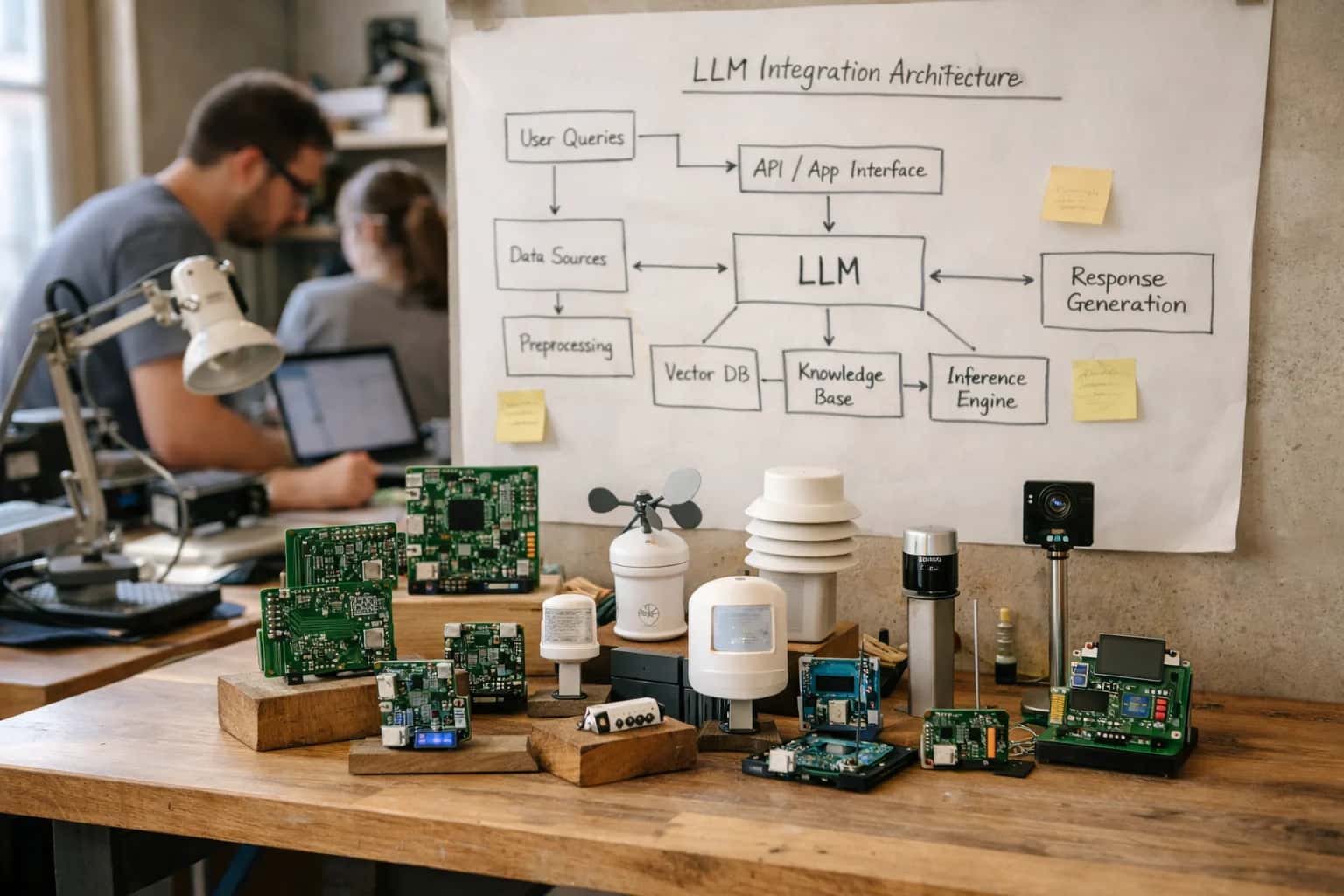
Implementation typically involves a middleware layer that sits between Kangarootime's REST API/webhooks and your chosen LLM (like OpenAI or Anthropic). This layer handles: 1) Context Retrieval—pulling a child's known allergies and recent health logs to ground the AI's analysis; 2) Structured Output Generation—ensuring the AI returns valid JSON that maps directly to Kangarootime's POST /incidents or PATCH /health-records payload schemas; and 3) Approval Workflows—routing AI-suggested logs or incident summaries to a staff member's task queue in Kangarootime for final sign-off before submission. This preserves human oversight while cutting logging time from minutes to seconds.
Rollout should start with a single, high-volume workflow like temperature check logging or allergy incident documentation to validate accuracy and staff adoption. Governance is critical: all AI-generated logs must be tagged with a source: ai_assist metadata field and include a full audit trail of the original input (e.g., teacher's voice memo) and the AI's reasoning. This ensures compliance with childcare licensing records requirements. For centers using IoT sensors (e.g., smart thermometers), AI can further automate by correlating sensor data with child check-ins to pre-fill logs, creating a closed-loop system that minimizes manual oversight for routine safety checks.
HEALTH AND SAFETY AUTOMATION
Kangarootime Modules and Surfaces for AI Integration
Health Logs & Incident Reporting
Kangarootime's Health Logs and Incident Report modules are the primary surfaces for AI-assisted safety workflows. AI can automate the structured logging of common events like medication administration, minor injuries, or allergy exposures by processing teacher voice notes or free-text entries.
Key integration points:
- Health Log API: Push AI-generated structured logs (child ID, time, medication dosage, notes) directly into a child's health record.
- Incident Report Webhooks: Trigger AI triage workflows when a new incident is created. An AI agent can analyze the description, assign severity, and route notifications to the appropriate staff or parents based on center policy.
- Attachment Processing: Use AI to extract data from uploaded photos of medication labels or injury documentation, populating log fields automatically.
This reduces manual data entry for teachers and ensures critical health information is captured consistently and acted upon promptly.
KANGAROOTIME INTEGRATION PATTERNS
High-Value AI Use Cases for Health and Safety
Integrate AI directly into Kangarootime's health tracking surfaces to automate compliance, reduce manual logging errors, and enable proactive safety interventions. These patterns connect to the Health Check, Incident Log, Medication, and Attendance modules.
01
Automated Incident Logging & Triage
Teachers describe incidents via voice or quick text notes. AI transcribes, categorizes (e.g., fall, allergy, conflict), and auto-fills Kangarootime's Incident Log with structured details—time, location, severity. Critical incidents trigger immediate alerts to directors via the platform's notification system.
Minutes -> Seconds
Logging time
02
Intelligent Medication Administration
AI cross-references the Medication Log with child profiles, checking for allergies, correct dosage, and timing. At scheduled admin times, it generates verified task prompts for staff in Kangarootime's task list. Post-administration, it can draft parent notifications summarizing dose and time.
Zero Errors
Compliance goal
03
IoT-Enhanced Temperature & Wellness Checks
Connect Bluetooth thermometers or wellness kiosks to Kangarootime's API. AI analyzes temperature readings against historical baselines and attendance data. Abnormal results automatically create a Health Check record, flag the child's profile, and suggest exclusion protocols per center policy.
Batch -> Real-time
Monitoring
04
Proactive Allergy & Dietary Alerting
AI monitors Kangarootime's Meal Tracking and Child Profile data. When a meal is logged, it scans ingredients against registered allergies and dietary restrictions. If a potential match is detected, it alerts staff via Kangarootime's in-app alerts before the meal is served and suggests alternatives.
Pre-Service
Intervention point
05
Compliance Audit & Report Automation
AI continuously reviews health and safety logs against state licensing checklists stored in Kangarootime's Document module. It auto-generates pre-audit readiness reports, highlighting missing incident reports, expired medication authorizations, or incomplete drill logs for director review.
1-2 Days
Prep time saved
06
Staff Training & Protocol Support
A RAG-powered assistant embedded in Kangarootime provides instant, context-aware answers to staff health & safety questions. It retrieves answers from the center's custom policy manuals, state regulations, and Kangarootime's own help docs, citing sources for compliance.
On-Demand
Protocol access
KANGAROOTIME HEALTH & SAFETY MODULES
Example AI Automation Workflows
These workflows demonstrate how AI can be embedded into Kangarootime's health tracking surfaces to automate logging, enhance compliance, and proactively manage risks. Each flow connects to specific Kangarootime APIs and data objects.
Trigger: A teacher completes a medication administration and records a voice note via a mobile device or integrated smart speaker.
Context Pulled: The system identifies the child via staff location/room data in Kangarootime and retrieves the child's profile, active medication authorizations, and allergy list from the ChildHealthRecords API.
AI Action: A speech-to-text model transcribes the note. An LLM agent extracts structured data:
- Medication name and dosage
- Time administered
- Staff name (from voice signature or logged-in user)
- Any observed reactions or notes It cross-references the extracted medication against the authorized list and flags any discrepancies (e.g., wrong dosage, unauthorized medication).
System Update: A draft log entry is created via the HealthLogs API endpoint. If no discrepancies are found, it can be auto-posted. If a flag exists, it's routed to the center director's dashboard for review within Kangarootime.
Human Review Point: All flagged entries require director approval before being committed to the child's permanent health log. The director can correct, approve, or reject the entry with a note.
PRODUCTION-READY HEALTH LOGGING
Implementation Architecture: Data Flow and Guardrails
A secure, event-driven architecture for automating health and safety incident logging in Kangarootime.
The integration connects to Kangarootime's Health Logs API and Child Profile objects to process safety events. A typical flow begins when a staff member initiates a log via the Kangarootime mobile app for an incident like a medication dose, allergy reaction, or elevated temperature. This event triggers a webhook to our secure middleware, which enriches the initial data by cross-referencing the child's profile for known allergies, medication schedules, and authorized pick-up contacts. The AI layer then processes the staff's free-text notes, extracting structured data (e.g., temperature: 101.2, medication: Amoxicillin, time administered: 10:15 AM) and checking for inconsistencies or required follow-up actions based on center policy.
Structured outputs are written back to Kangarootime via API, creating a complete, auditable health record. For critical incidents—like a symptom matching a severe allergy—the system can trigger automated, policy-defined actions. These include:<br>- Immediate notifications to the director and authorized contacts via Kangarootime's messaging layer.<br>- Creation of a follow-up task in the center's daily log.<br>- Flagging the child's profile for staff review at the next check-in.<br>All AI inferences are logged with confidence scores and the original staff input, creating a transparent audit trail for licensing reviews or incident investigations. This turns reactive manual logging into a proactive, assisted workflow.
Rollout is phased, starting with non-critical logging (e.g., routine temperature checks) to build trust before handling medication or allergy incidents. Governance is managed through a central prompt hub defining center-specific policies (e.g., "fever threshold is 100.4°F") and role-based access controls (RBAC) that restrict which staff roles can trigger automated alerts. This architecture ensures the AI acts as a policy-aware assistant, not an autonomous actor, keeping staff in the loop for all critical decisions while drastically reducing manual data entry and compliance risk. For related architectural patterns, see our guide on AI Integration for Childcare Compliance Automation.
KANGAROOTIME HEALTH MODULES
Code and Payload Examples
Automating Medication Administration Records
AI can process voice notes or scanned prescription labels to populate Kangarootime's medication logs via its REST API. The workflow typically involves:
- An AI service extracting medication name, dosage, time, and administering staff from an audio recording or image.
- Validating the data against the child's profile and allergy list.
- Submitting a structured payload to create a verified medication record, triggering required parent notifications.
Example API Payload:
jsonPOST /api/v1/health/medication-logs { "child_id": "CHLD_78910", "medication_name": "Children's Ibuprofen", "dosage": "5 mL", "administered_at": "2024-05-15T10:30:00Z", "administered_by_staff_id": "STAFF_456", "notes": "AI-extracted from 10:25am voice note. Verified against profile.", "parent_notified": true }
This automates a high-frequency, compliance-critical task, reducing manual data entry and potential transcription errors.
HEALTH AND SAFETY WORKFLOWS
Realistic Time Savings and Operational Impact
How AI integration transforms manual health and safety logging into assisted, proactive workflows, reducing administrative burden and improving compliance accuracy.
| Metric | Before AI | After AI | Notes |
|---|---|---|---|
Medication Log Entry | 3-5 minutes per entry | 1-2 minutes via voice/assist | AI transcribes voice notes, pre-fills time/dosage, flags interactions |
Allergy Incident Documentation | 10-15 minutes per report | 3-5 minutes for draft + review | AI suggests standard language from past incidents, auto-tags affected children |
Daily Temperature Check Logging | 30-45 minutes (center-wide) | 5-10 minutes for exception review | IoT sync auto-populates logs; AI flags outliers for nurse review |
Safety Audit Checklist Completion | 2-3 hours monthly | 30-45 minutes with guided walkthrough | AI uses tablet camera for visual verification prompts, auto-generates report |
Health Note Transcription (Voice to SOAP) | Manual typing from recordings | Real-time draft with clinician sign-off | NLP structures teacher/staff voice notes into standardized SOAP note format |
Compliance Report Generation for Licensing | Half-day manual compilation | 1-2 hours for review and submission | AI aggregates data from logs, incidents, drills; drafts report for director approval |
Emergency Contact Notification Routing | Manual call tree activation | Priority-based, multi-channel auto-dispatch | AI analyzes incident type/time to route alerts to correct contacts/staff via SMS, app |
SAFETY-FIRST AI IMPLEMENTATION
Governance, Permissions, and Phased Rollout
Implementing AI for health and safety checks requires a controlled, auditable approach that respects strict data permissions and center policies.
Governance starts with role-based access control (RBAC) mapped to Kangarootime's existing permission sets. For example, a teacher may log a temperature check via a mobile interface, but only a director or health coordinator can review and confirm an allergy incident flagged by the AI. The AI system should inherit Kangarootime's object-level permissions—access to a child's health record is gated by their classroom assignment and staff role. All AI-generated logs, suggestions, and alerts must be written back to Kangarootime's Health Logs and Incident Reports modules with a clear audit trail, tagging the AI as the source actor and the reviewing staff member as the confirming user.
A phased rollout is critical for managing risk and building trust. We recommend a three-stage approach:
- Phase 1: AI-Assisted Logging (Read-Only Analysis). The AI reviews manual entries in Kangarootime for medication times, allergy fields, and temperature readings, surfacing potential inconsistencies or missing data to staff via a separate dashboard. No automated writes occur.
- Phase 2: Co-Pilot Drafting with Human-in-the-Loop. The AI drafts structured logs from voice notes or quick-form inputs (e.g., "Timmy, 99.8F after nap, gave children's Tylenol per parent note"). A staff member reviews, edits if needed, and explicitly submits the draft to Kangarootime's API. This stage often integrates with IoT Bluetooth thermometers or time-clock systems for data ingestion.
- Phase 3: Conditional Autopilot for Routine Events. For low-risk, high-frequency events like logging a normal temperature check during morning intake, the system can auto-post to the child's health log after a confidence threshold is met, with a daily summary report for director review. Policies for escalation—like automatic alerts for fever thresholds or medication conflicts—are enabled only after validation in prior phases.
Finally, establish a continuous governance loop. Use Kangarootime's reporting tools to monitor AI-generated activity versus manual entries. Regularly audit for false positives/negatives, especially around allergy alerts or compliance documentation. This feedback refines the AI's prompts and grounding data. Because health data is highly sensitive, all processing should occur within your secure cloud environment or a HIPAA-compliant AI service, with data never retained beyond the session. This structured, incremental approach de-risks the integration while delivering tangible time savings—shifting health logging from a 5-minute manual task per child to a near-instant, consistent record.
Enabling Efficiency, Speed & Accuracy
Intelligent Analysis, Decision & Execution
We build AI systems for teams that need search across company data, workflow automation across tools, or AI features inside products and internal software.
Talk to Us
Search across company data
Give teams answers from docs, tickets, runbooks, and product data with sources and permissions.
Useful when people spend too long searching or get different answers from different systems.
Enterprise searchRAGPermissions
Read more
Automate internal workflows
Use AI to route work, draft outputs, trigger actions, and keep approvals and logs in place.
Useful when repetitive work moves across multiple tools and teams.
AI agentsWorkflow automationGovernance
Read more
Add AI to products and internal tools
Build assistants, guided actions, or decision support into the software your team or customers already use.
Useful when AI needs to be part of the product, not a separate tool.
AI integrationDecision supportModel routing
Read moreIMPLEMENTATION AND OPERATIONS
Frequently Asked Questions
Common technical and operational questions about integrating AI agents and workflows into Kangarootime's health and safety modules for automated logging, compliance, and incident management.
AI integration connects primarily via Kangarootime's REST API and configured webhooks. Key touchpoints include:
- Health Logs API: To read existing medication administrations, allergy incidents, and temperature readings, and to write new, AI-generated log entries.
- Child Profiles API: To retrieve child-specific data like allergies, authorized medications, and emergency contacts for context-aware logging.
- Staff API: To attribute actions (e.g., "logged by AI Agent") and check staff credentials for certain actions.
- Webhooks: To trigger AI workflows in real-time. For example, a webhook can fire when a staff member scans a child's barcode at check-in, prompting an AI agent to check for overdue medications or flag a fever based on a connected IoT thermometer reading.
A typical integration uses a middleware layer (like an Inference Systems agent orchestration platform) that listens to these webhooks, calls the Kangarootime API for additional context, processes the data with an LLM (e.g., for note summarization), and posts back structured updates.

About the author
Prasad Kumkar
CEO & MD, Inference Systems
Prasad Kumkar is the CEO & MD of Inference Systems and writes about AI systems architecture, LLM infrastructure, model serving, evaluation, and production deployment. Over 5+ years, he has worked across computer vision models, L5 autonomous vehicle systems, and LLM research, with a focus on taking complex AI ideas into real-world engineering systems.
His work and writing cover AI systems, large language models, AI agents, multimodal systems, autonomous systems, inference optimization, RAG, evaluation, and production AI engineering.
LinkedIn
Limited slotsGet a Free AI Consultation
Partnered with leading AI, data, and software stack.





How We Work
Custom AI workflows for your Business
One-fit-all AI don't work for modern businesses. At Inferensys, we aim to understand your business & custom requirements; which we use to define most efficient agentic workflows, the data, and the tools for your business.
01
Review the use case
We understand the task, the users, and where AI can actually help.
Read more02
Pick the right approach
We define what needs search, automation, or product integration.
Read more03
Build the first useful version
We implement the part that proves the value first.
Read more04
Improve from there
We add the checks and visibility needed to keep it useful.
Read moreThe first call is a practical review of your use case and the right next step.
Talk to Us