The financial workflow between a childcare center's management software (like Brightwheel, Procare, or Kangarootime) and its accounting system (QuickBooks Online or Desktop) is a prime candidate for AI automation. This typically involves syncing key data objects: invoices (tuition, fees, late payments), payments (cash, card, ACH, subsidies), and expenses (supplies, payroll allocations, vendor bills). Manually, this requires exporting reports, mapping GL codes, and manually entering journals—a process prone to delays and errors, especially with complex subsidy calculations or multi-child family discounts.

Integration
AI Integration for Childcare Software with QuickBooks
A cross-platform guide to automating billing sync, payment reconciliation, and expense classification between childcare management systems and QuickBooks using AI.
AUTOMATING FINANCIAL OPERATIONS
Where AI Fits in Childcare-to-Accounting Workflows
A practical guide to integrating AI between childcare management platforms and QuickBooks for automated billing, reconciliation, and financial reporting.
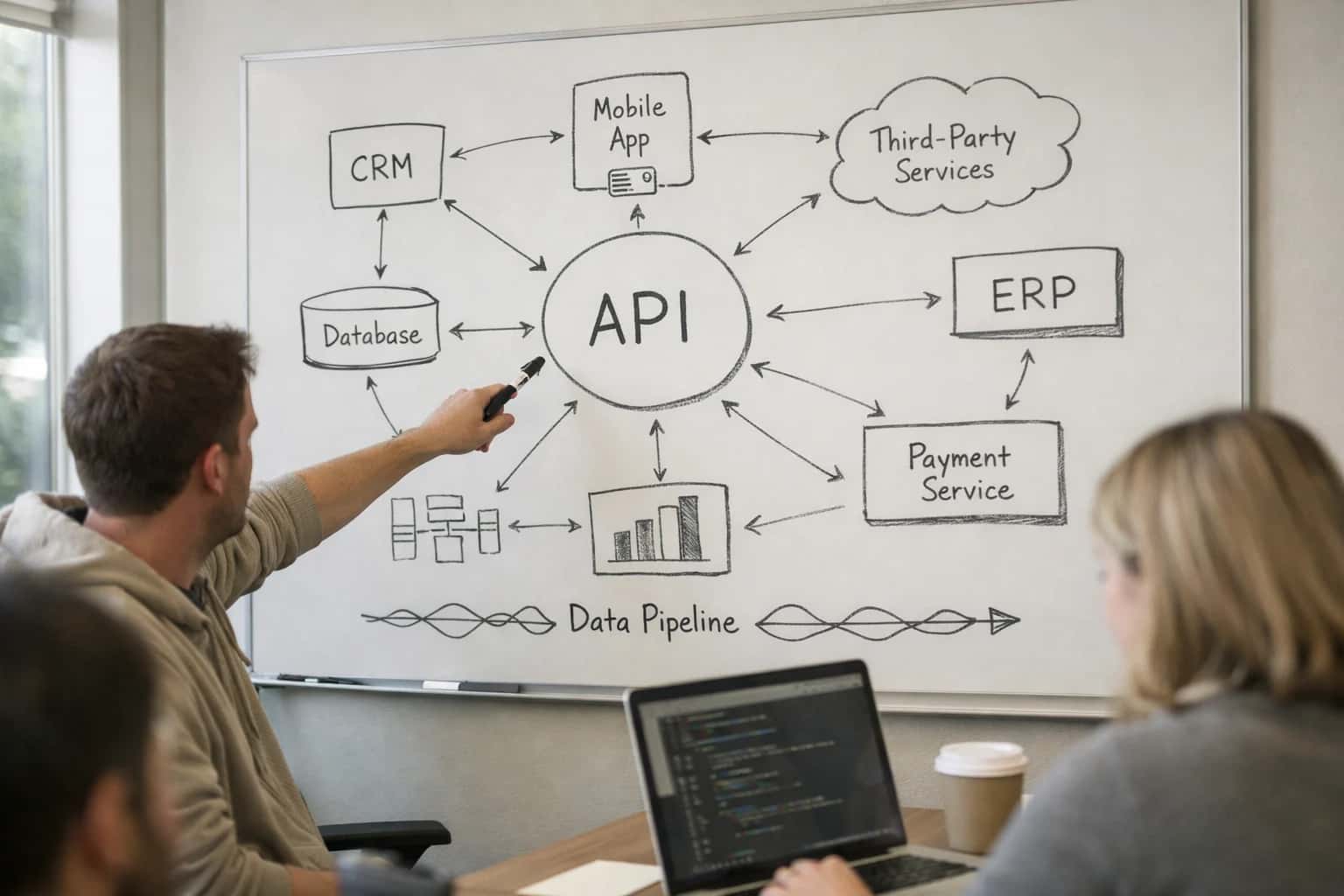
An AI integration acts as an intelligent middleware layer. It connects via the childcare platform's Billing API and Payment Webhooks and QuickBooks' Journal Entry or Bank Feed APIs. The AI's role is to: 1) Classify and validate each transaction (e.g., is this a tuition payment or a late fee?), 2) Match payments to invoices across systems, even with partial payments or family credits, 3) Detect anomalies like duplicate entries, unexpected payment amounts, or missing subsidy documentation, and 4) Automatically generate and post correctly coded journal entries to the appropriate income, receivable, or liability accounts in QuickBooks. This turns a weekly bookkeeping task into a continuous, audited sync.
Rollout focuses on a phased validation approach. Start with a read-only monitoring phase where the AI analyzes historical syncs and flags discrepancies without posting. Then, move to a human-in-the-loop approval phase, where proposed journal entries are queued in a tool like n8n or Make for a finance manager's quick review before posting. Finally, transition to fully automated posting for high-confidence transactions, with a clear audit trail and the ability to roll back entries via the integration's logs. Governance is critical: define rules for handling exceptions (e.g., failed subsidy payments) and ensure the AI's logic aligns with your chart of accounts and revenue recognition policies.
This integration matters because it shifts staff time from data entry to financial analysis. Directors gain real-time visibility into cash flow and accounts receivable aging directly within their childcare software's dashboard, powered by the synced QuickBooks data. It also ensures financial reporting accuracy for board meetings, audits, and grant compliance—common requirements for centers. For a deeper look at the technical patterns for connecting specific platforms, see our guide on [/integrations/accounting-and-finance-platforms/ai-integration-for-procare-and-quickbooks-online-ai](AI Integration for Procare and QuickBooks Online).
AI-POWERED FINANCIAL AUTOMATION
Key Integration Surfaces: Childcare Platform vs. QuickBooks
Automating Invoice Generation and Sync
This surface connects the childcare platform's billing engine to QuickBooks' Invoice and Customer objects. AI orchestrates the end-to-end workflow:
- Trigger: A child's schedule change, new enrollment, or monthly billing cycle in Procare or Brightwheel generates a raw billing event.
- AI Role: An agent reviews the event, applies complex logic (prorated amounts, sibling discounts, subsidy adjustments), and validates against center policies.
- Sync: The validated invoice data is mapped and pushed to QuickBooks Online via the QBO API (
POST /v3/company/{realmId}/invoice). - Governance: Each transaction includes a memo field referencing the source childcare platform record ID for full auditability.
This eliminates manual data entry, reduces errors in discount calculations, and ensures the general ledger reflects real-time revenue.
FINANCIAL OPERATIONS AUTOMATION
High-Value AI Use Cases for Childcare-QuickBooks Sync
Integrating AI between your childcare management platform and QuickBooks automates error-prone financial workflows, reduces manual data entry, and provides real-time visibility into center finances. These use cases focus on syncing billing, payments, and expenses with intelligent validation and exception handling.
01
Automated Invoice & Journal Entry Sync
AI monitors the childcare platform's billing engine for finalized invoices, maps line items (tuition, late fees, supply charges) to the correct QuickBooks accounts, and posts journal entries. It validates family and GL account data before sync, flagging mismatches for review.
Batch -> Real-time
Sync cadence
02
Intelligent Payment Reconciliation
AI matches incoming ACH, credit card, and check payments from your payment processor (Stripe, etc.) against open invoices in the childcare software. It automatically records deposits in QuickBooks, reconciles partial/failed payments, and updates family ledgers, reducing manual month-end work.
Hours -> Minutes
Monthly close
03
Expense Categorization & Sync
AI processes vendor bills, staff reimbursements, and supply purchases logged in the childcare platform. Using NLP, it reads receipts/descriptions, suggests appropriate QuickBooks expense accounts and classes (e.g., Class:Infant Room), and pushes categorized transactions for approval and posting.
90%+ Accuracy
Auto-categorization
04
Subsidy & Grant Revenue Tracking
For centers managing state subsidies or grants, AI tracks attendance-based claim amounts in Procare or Brightwheel, creates corresponding sales receipts or invoices in QuickBooks tagged with the funding source, and maintains an audit trail for compliance reporting.
05
Anomaly Detection in Financial Data
AI continuously compares revenue and expense flows between the two systems. It flags discrepancies like an invoice marked paid in the childcare platform with no corresponding QuickBooks deposit, or unusual expense spikes, alerting the director or accountant for investigation.
Same day
Issue detection
06
Family Financial Health Dashboard
AI aggregates data from both systems to generate a real-time dashboard for directors. It shows aging receivables, payment trend analysis by family, forecasted cash flow based on enrolled schedules, and identifies accounts needing personalized payment plan outreach.
CHILDCARE BILLING & QUICKBOOKS SYNC
Example AI-Powered Workflows
These workflows illustrate how AI can automate and augment the financial data flow between your childcare management platform (Brightwheel, Procare, Kangarootime, Famly) and QuickBooks, reducing manual entry, catching errors, and providing intelligent financial oversight.
Trigger: A batch job runs each night after the childcare platform's billing cycle closes.
Context Pulled: The AI agent queries the childcare platform's billing API for the day's finalized transactions: tuition charges, late fees, supply fees, and any ad-hoc charges. It also fetches the corresponding family and child records for context.
Agent Action: The agent performs a multi-step validation:
- Matches transactions to the correct QuickBooks
Customerrecord (using a synced mapping table). - Checks for duplicate entries already in QuickBooks.
- Uses a rules engine to flag anomalies (e.g., a fee higher than the family's usual rate, a charge applied to a child marked 'absent').
System Update: Validated transactions are formatted into a QuickBooks Online SalesReceipt or Invoice batch payload. Flagged anomalies are routed to a human review queue in a tool like Slack or a dedicated dashboard with the full context.
Next Step: The batch is posted to QuickBooks via its API. A confirmation log is written back to the childcare platform, linking the QuickBooks transaction ID to the original charge for full auditability.
SYNCHRONIZING FINANCIAL OPERATIONS
Implementation Architecture: Data Flow and Guardrails
A secure, event-driven architecture for AI-augmented sync between childcare management platforms and QuickBooks.
The integration connects at the billing event layer of your childcare software (Brightwheel, Procare, Kangarootime, Famly) and the transaction journal in QuickBooks Online or Desktop. Core data objects flow in one direction: finalized invoices, payment receipts, and reimbursable expenses move from the childcare platform to QuickBooks as sales receipts, deposits, and bills. The AI layer sits between these systems, listening for webhook events like invoice.created, payment.posted, or expense.logged. For each event, it performs validation, classification, and enrichment before constructing and posting the corresponding QuickBooks transaction via the QBO API or QBXML.
Key implementation details include:
- Validation & Deduplication: The agent checks for duplicate transaction IDs, validates family and GL account mappings, and flags anomalies like payments exceeding invoice amounts.
- Intelligent Classification: Using context from the childcare platform (e.g., program type, funding source), the AI suggests the correct QuickBooks Income Account, Class, and Customer record, learning from historical user corrections.
- Exception Handling: Transactions that fail validation or posting are routed to a human-in-the-loop queue within a tool like n8n or CrewAI, where center staff can review and resolve issues via a simple dashboard before re-submission.
- Audit Trail: Every step—from source webhook to final QB posting—is logged with timestamps, user IDs (system or human), and the AI's reasoning, creating a clear lineage for financial auditing.
Rollout should follow a phased approach: start with a read-only sync to verify mapping logic, proceed with a closed-loop test posting to a QuickBooks sandbox company, and finally go live with a subset of families or transaction types. Governance is critical; define clear RBAC rules for who can approve AI-suggested mappings and override transaction postings. This architecture reduces manual data entry from hours to minutes per billing cycle while maintaining the financial controls and auditability required for childcare center operations and compliance.
AI-AUGMENTED BILLING AND PAYMENT SYNC
Code and Payload Examples
Invoice Generation & Sync
This workflow uses the childcare platform's billing API to fetch finalized invoices, then enriches and syncs them to QuickBooks as Sales Receipts or Invoices. AI validates data, applies business logic (e.g., late fee rules), and handles exceptions before the sync.
Example Python Payload Processing:
python# Fetch finalized invoices from childcare platform (e.g., Procare/Kangarootime) childcare_invoices = childcare_api.get_invoices(status='finalized', date='2024-05-01') for inv in childcare_invoices: # AI validation & enrichment enriched_data = ai_agent.validate_and_enrich_invoice( invoice_data=inv, rules=[ "check_family_payment_terms", "apply_dynamic_late_fee_logic", "validate_subsidy_applications" ] ) # Map to QuickBooks SalesReceipt schema qb_payload = { "Line": [{ "DetailType": "SalesItemLineDetail", "Description": enriched_data['description'], "Amount": enriched_data['amount_due'], "SalesItemLineDetail": { "ItemRef": {"name": "Childcare Tuition"} } }], "CustomerRef": {"value": enriched_data['qb_customer_id']}, "TxnDate": enriched_data['due_date'] } # Post to QuickBooks API quickbooks_api.create_sales_receipt(qb_payload)
AI-POWERED BILLING SYNC
Realistic Time Savings and Operational Impact
This table illustrates the operational impact of integrating AI to automate billing, payment, and expense workflows between childcare management platforms (Brightwheel, Procare, Kangarootime, Famly) and QuickBooks Online/Desktop.
| Workflow | Before AI | After AI | Implementation Notes |
|---|---|---|---|
Invoice Generation & Distribution | Manual export, template population, batch emailing (1-2 hours per billing cycle) | Automated batch creation and personalized email dispatch (10-15 minutes) | AI validates family billing rules, applies discounts, and triggers via platform webhooks |
Payment Reconciliation | Manual match of bank deposits to family ledgers (2-3 hours weekly) | Automated match with human review of exceptions (30 minutes weekly) | AI cross-references payment gateway webhooks, QuickBooks deposits, and platform payment records |
Late Fee Assessment & Communication | Manual review of aging reports, policy lookup, individual notifications (1-2 hours monthly) | Automated policy application with personalized reminder sequences (15 minutes monthly) | AI considers payment history and family notes before triggering dunning workflow |
Expense Categorization & Sync | Manual receipt review and GL code assignment for center purchases (1 hour weekly) | AI-assisted receipt OCR and suggested categorization with approval (20 minutes weekly) | AI extracts vendor, amount, date from receipts; syncs approved entries to QuickBooks |
Subsidy & Discount Application | Manual calculation and verification against enrollment documents (45-60 minutes per child) | Automated eligibility checks and pro-rated invoice adjustments (Real-time at invoice generation) | AI parses subsidy documentation and applies complex proration rules within the childcare platform |
Financial Exception Handling | Reactive discovery during month-end close, manual investigation | Proactive alerts for mismatched amounts, duplicate payments, or missing deposits | AI monitors sync health and flags anomalies for bookkeeper review before close |
Month-End Reporting Package | Manual compilation from multiple systems, spreadsheet reconciliation (Half-day to full day) | Automated report generation with narrative summaries (1-2 hours) | AI pulls reconciled data, generates P&L summaries, and highlights variances for director review |
ARCHITECTING A CONTROLLED INTEGRATION
Governance, Security, and Phased Rollout
A secure, governed approach to connecting childcare management platforms with QuickBooks for AI-powered financial automation.
This integration operates by establishing a secure, event-driven data pipeline between your childcare platform (e.g., Brightwheel, Procare, Kangarootime) and QuickBooks Online/Desktop. Core financial objects like Invoices, Payments, Customers (families), and Expenses are synchronized via dedicated APIs. AI agents monitor this data flow to perform tasks such as automated payment reconciliation, anomaly detection in tuition calculations, and intelligent categorization of center expenses. All transactions are logged with full audit trails, linking AI actions back to source records in both systems for complete financial transparency.
Security is enforced through role-based access controls (RBAC), ensuring AI agents and sync processes operate with the principle of least privilege. API credentials are never exposed in application logic, and all data in transit is encrypted. For governance, we implement human-in-the-loop approval gates for high-value or anomalous actions—like writing off a significant balance or creating a non-standard journal entry—before changes are committed to QuickBooks. This controlled execution prevents unintended financial impacts while automating routine work.
A phased rollout is critical for adoption and risk management. We recommend starting with a read-only analysis phase, where AI reviews historical billing and payment data to identify reconciliation patterns and exception rates. Phase two introduces automated reconciliation for cleared, matching transactions, with exceptions flagged for manual review. The final phase expands to predictive tasks, such as forecasting cash flow based on enrollment trends or suggesting payment plan adjustments for at-risk accounts. This staged approach allows your finance team to build trust in the system's accuracy and provides clear checkpoints for validation before full automation.
Enabling Efficiency, Speed & Accuracy
Intelligent Analysis, Decision & Execution
We build AI systems for teams that need search across company data, workflow automation across tools, or AI features inside products and internal software.
Talk to Us
Search across company data
Give teams answers from docs, tickets, runbooks, and product data with sources and permissions.
Useful when people spend too long searching or get different answers from different systems.
Enterprise searchRAGPermissions
Read more
Automate internal workflows
Use AI to route work, draft outputs, trigger actions, and keep approvals and logs in place.
Useful when repetitive work moves across multiple tools and teams.
AI agentsWorkflow automationGovernance
Read more
Add AI to products and internal tools
Build assistants, guided actions, or decision support into the software your team or customers already use.
Useful when AI needs to be part of the product, not a separate tool.
AI integrationDecision supportModel routing
Read moreAI + QUICKBOOKS INTEGRATION
Frequently Asked Questions
Common technical and operational questions about implementing AI to automate billing, payment, and expense workflows between childcare management platforms and QuickBooks.
This workflow uses AI to transform raw childcare data into accurate, compliant QuickBooks invoices, reducing manual entry and errors.
- Trigger: A billing cycle closes in your childcare platform (e.g., Procare, Brightwheel, Kangarootime), or a family's tuition schedule dictates a new invoice.
- Context/Data Pulled: The AI agent calls the childcare platform's API to fetch the invoice line items. This includes:
- Child and family details
- Tuition rates, adjusted for schedules and absences
- Applied discounts, subsidies, or sibling rates
- Late fees (calculated by the AI based on payment history and center policy)
- Miscellaneous charges (supply fees, activity fees)
- Model/Agent Action: The AI validates the data, applies business logic (e.g., prorating, rounding rules), and structures it into the precise payload format required by the QuickBooks Online API (
Invoiceobject). It can also generate a human-readable description for each line item. - System Update: The agent posts the invoice to QuickBooks via the QBO API, mapping the childcare family to the correct QBO
Customerrecord. It then updates the childcare platform with the QuickBooks invoice ID for traceability. - Human Review Point: The system can be configured to flag invoices with unusual amounts (e.g., exceeding a threshold) or applying complex subsidy logic for a manager's approval before syncing.

About the author
Prasad Kumkar
CEO & MD, Inference Systems
Prasad Kumkar is the CEO & MD of Inference Systems and writes about AI systems architecture, LLM infrastructure, model serving, evaluation, and production deployment. Over 5+ years, he has worked across computer vision models, L5 autonomous vehicle systems, and LLM research, with a focus on taking complex AI ideas into real-world engineering systems.
His work and writing cover AI systems, large language models, AI agents, multimodal systems, autonomous systems, inference optimization, RAG, evaluation, and production AI engineering.
LinkedIn
Limited slotsGet a Free AI Consultation
Partnered with leading AI, data, and software stack.





How We Work
Custom AI workflows for your Business
One-fit-all AI don't work for modern businesses. At Inferensys, we aim to understand your business & custom requirements; which we use to define most efficient agentic workflows, the data, and the tools for your business.
01
Review the use case
We understand the task, the users, and where AI can actually help.
Read more02
Pick the right approach
We define what needs search, automation, or product integration.
Read more03
Build the first useful version
We implement the part that proves the value first.
Read more04
Improve from there
We add the checks and visibility needed to keep it useful.
Read moreThe first call is a practical review of your use case and the right next step.
Talk to Us