The synchronization from Procare's billing engine to accounting systems like QuickBooks Online, Sage Intacct, or NetSuite involves mapping complex childcare transactions—tuition, late fees, subsidies, discounts, and one-time charges—to standardized journal entries. AI fits into this workflow at three key points: pre-sync validation, dynamic mapping, and post-sync reconciliation. Instead of relying on rigid, error-prone rules, an AI layer can ingest Procare's Invoice, Payment, and Adjustment objects via its Financial API, analyze historical posting patterns, and apply context-aware logic to determine the correct GL accounts, departments, and classes before data is pushed to the accounting platform's journal entry API.

Integration
AI Integration for Procare General Ledger Sync
Automate and validate the flow of tuition, fees, and payments from Procare to your general ledger (QuickBooks, Xero, Sage) using AI for mapping, anomaly detection, and exception handling.
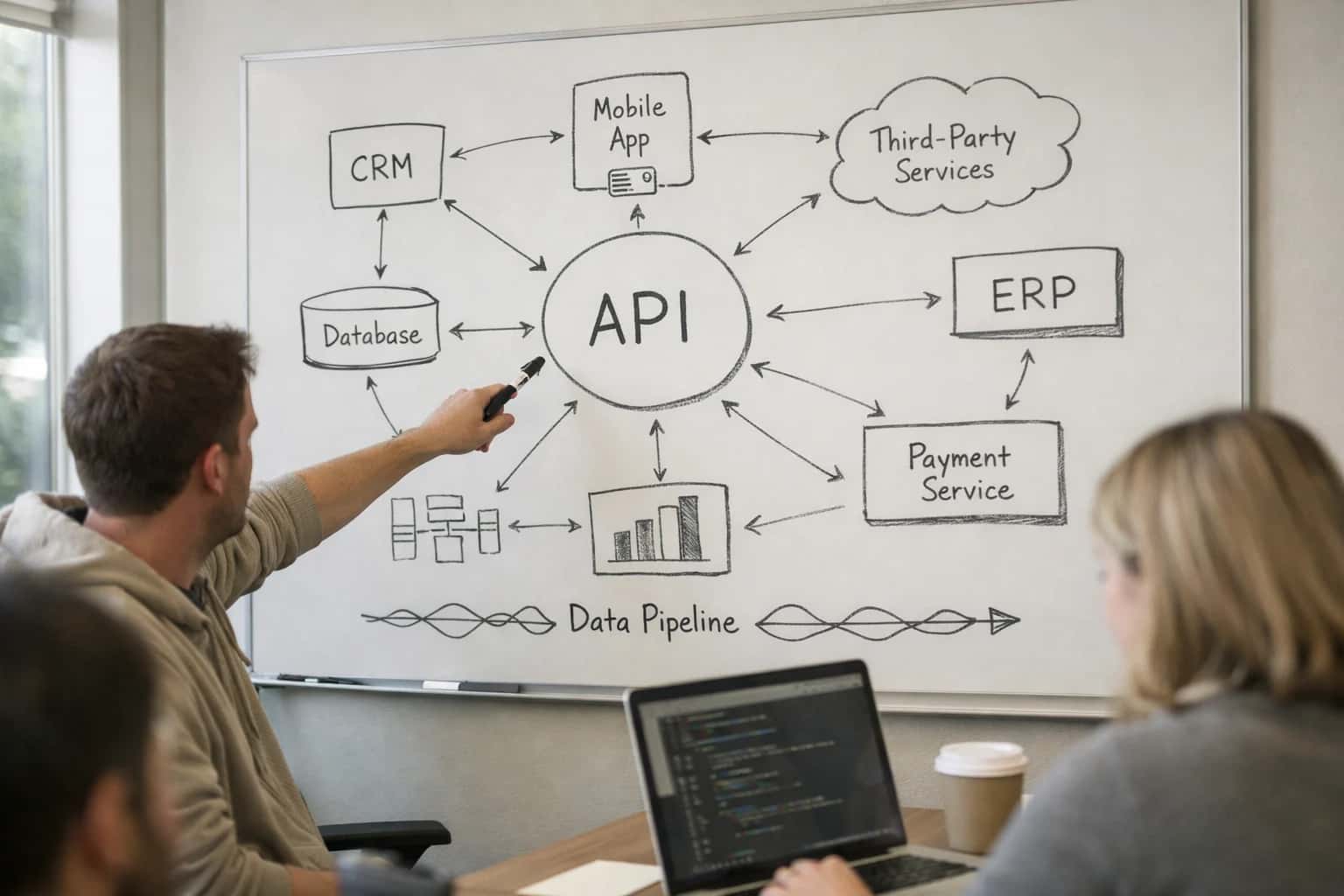
ARCHITECTURE AND ROLLOUT
Where AI Fits in Procare-to-GL Synchronization
A practical guide to embedding AI into the financial data pipeline between Procare and your general ledger, focusing on accuracy, automation, and auditability.
For a production implementation, we typically deploy an orchestration agent that monitors Procare's webhooks for finalized invoices and posted payments. This agent calls a validation service where a fine-tuned model checks for anomalies: unusual subsidy amounts, mismatched payment applications, or fee calculations that deviate from center policy. Flagged transactions are routed to a human-in-the-loop queue within a tool like Slack or Microsoft Teams for quick review by the center director or accountant, with the AI providing a suggested correction. Approved transactions are then transformed into a cleansed payload and posted. This architecture reduces manual review from hours to minutes per billing cycle and creates a clear audit trail of AI-suggested actions and human overrides.
Rollout should be phased, starting with a single location or a subset of transaction types (e.g., base tuition only). Governance is critical: establish a feedback loop where the accounting team's corrections in the GL are sent back to retrain the mapping model, continuously improving accuracy. The final value isn't just automation—it's financial confidence. Directors gain real-time insight into revenue recognition and AR status without manual spreadsheet reconciliation, enabling faster month-end closes and more accurate forecasting for the center or chain.
ARCHITECTURAL BLUEPRINT
Key Procare Data Surfaces and GL Touchpoints
Core Financial Event Source
The Procare billing engine is the primary source of truth for revenue-generating events. This includes recurring tuition, one-time fees (registration, supply, late pickup), and ad-hoc charges. For GL sync, the key data surfaces are:
- Invoice Headers & Lines: Each invoice contains line items with service dates, amounts, and GL account mapping hints (often stored as custom fields or item classes).
- Payment Applications: Records of cash, check, or ACH payments applied to specific invoices, including payment dates and methods.
- Adjustments & Credits: Manual discounts, sibling discounts, or subsidy adjustments that modify the net receivable amount.
An AI integration here focuses on anomaly detection—flagging invoices with unusual amounts, missing GL codes, or payment applications that don't match expected subsidy amounts—before data is sent to QuickBooks or Sage Intacct.
PROCARE TO QUICKBOOKS
High-Value AI Use Cases for GL Sync
Transform manual, error-prone financial data flows into automated, intelligent sync operations. These AI-augmented patterns connect Procare's billing engine to your accounting GL, ensuring accuracy, providing proactive insights, and freeing up administrative time.
01
Automated Journal Entry Creation & Mapping
AI parses Procare's daily transaction exports (tuition, fees, payments, discounts) and automatically maps them to the correct QuickBooks accounts (e.g., Accounts Receivable, Tuition Income, Late Fee Income). It handles complex splits for subsidies, discounts, and multi-child families, creating perfectly formatted journal entries ready for review.
Hours -> Minutes
Monthly close prep
02
Anomaly Detection in Daily Syncs
Continuously monitors the sync pipeline for outliers: unexpected payment reversals, tuition amounts deviating from rate schedules, or subsidy payments that don't match approved claims. Flags discrepancies for human review before they post to the GL, preventing downstream reconciliation headaches.
Proactive
Error prevention
03
Intelligent Payment Reconciliation
Matches incoming bank deposits (from Stripe, ACH, etc.) to Procare family payment records, even when batch totals don't perfectly align or memos are missing. AI suggests the most likely match based on amount, date, and family history, dramatically reducing manual lookup time for your bookkeeper.
90%+
Auto-match rate
04
Subsidy & Grant Accounting Automation
For centers managing state subsidies or grants, AI identifies qualifying transactions within Procare, applies the correct coding (e.g., by funding source, child, service type), and generates the detailed journal entries and supporting audit trails required for compliant grant reporting and reimbursement claims.
Audit-Ready
Compliance tracking
05
Cash Flow Forecasting & AR Insights
Leverages synchronized Procare billing data (aged receivables, payment plans, seasonal enrollment) to generate predictive cash flow forecasts within your accounting dashboard. Highlights at-risk accounts and suggests optimal follow-up timing, turning your GL sync into a strategic financial planning tool.
Same-day
Visibility
06
Closed-Loop Exception Handling
When the AI detects an unreconcilable item or mapping ambiguity, it doesn't just create a ticket. It initiates a structured workflow: fetching relevant Procare family context, drafting a clarification request to the center director via email, and updating the GL once resolved—all tracked within the sync platform's audit log.
1 sprint
Implementation cycle
PRODUCTION PATTERNS FOR PROCARE TO QUICKBOOKS
Example AI-Augmented Synchronization Workflows
These workflows illustrate how AI agents can automate and secure the flow of financial data from Procare's billing engine to your general ledger, focusing on accuracy, anomaly detection, and auditability. Each pattern is designed to be triggered by Procare webhooks or scheduled jobs.
Trigger: Scheduled nightly job after Procare's billing cycle runs.
Data Pulled: The agent queries Procare's Billing API for all posted invoices and payments from the last 24 hours, including line-item details for tuition, fees, and discounts, along with family and child identifiers.
AI Agent Action:
- Validates & Maps: Confirms each transaction maps correctly to a QuickBooks
CustomerandAccount(e.g., Tuition Income, Late Fee Income). - Detects Anomalies: Uses a rules engine + LLM analysis to flag outliers:
- Invoice amounts significantly above/below the family's historical average.
- Payments applied to the wrong invoice.
- Discounts exceeding policy limits.
- Generates Summary: Creates a human-readable sync summary with totals, flagged items count, and confidence score.
System Update:
- If confidence score > 95%: Transactions are posted directly to QuickBooks via its
Journal Entry API. - If confidence score is 80-95% or anomalies found: Transactions are staged in a holding ledger within the integration platform. An alert is sent to the finance manager via email/Slack with a link to review and approve the batch.
- If confidence score < 80%: The sync is halted, and a high-priority alert is sent to the system administrator.
Human Review Point: The holding ledger interface allows the manager to see the flagged transactions, the AI's reasoning, and approve, edit, or reject individual items before final posting.
AUTOMATED JOURNAL ENTRY GENERATION AND ANOMALY DETECTION
Implementation Architecture: Data Flow and Guardrails
A secure, auditable pipeline to sync Procare tuition and fee data to QuickBooks or other GL systems, enhanced with AI for classification and validation.
The integration connects to Procare's Billing API to fetch finalized invoices, payment applications, and adjustment records on a scheduled or event-driven basis. Key data objects include Family, Invoice, InvoiceLineItem, Payment, and Credit. This raw financial data is passed through a normalization layer that maps Procare-specific codes (like TUITION_FULL_DAY or SUPPLY_FEE) to standardized chart of account (COA) categories configured for your center. The AI's first role is to classify ambiguous line items and suggest the correct GL account based on historical mapping patterns and item descriptions, reducing manual coding for administrators.
Before journal entry creation, the processed data flows through a validation and anomaly detection engine. This AI layer performs checks such as: verifying invoice totals match summed line items, flagging payments applied to unexpected invoices, detecting unusual fee amounts or discounts against historical averages, and identifying families with consistently late payments for potential workflow intervention. Any flagged anomalies are routed to a human-in-the-loop review queue within the integration dashboard or sent as alerts to a designated finance Slack channel, preventing erroneous data from syncing.
Approved transactions are then formatted into the precise payload structure required by the target accounting system's API—such as QuickBooks Online's JournalEntry object—and posted. The entire flow is wrapped in robust guardrails: every API call and AI decision is logged with a full audit trail, user-level RBAC controls access to financial syncing functions, and idempotency keys prevent duplicate entries. Rollout typically follows a phased approach: starting with a read-only validation period for anomaly detection, progressing to a manual approval step for each batch of journal entries, and finally moving to fully automated sync for trusted, clean data streams.
AI-AUGMENTED GL SYNC PATTERNS
Code and Payload Examples
Procare Billing API Extraction
First, retrieve pending billing transactions from Procare's Billing or Financial API modules. The goal is to fetch unposted invoices, payments, and adjustments for a given period, then validate them against center policies and child enrollment status before sync.
pythonimport requests def fetch_procare_billing_batch(api_key, center_id, start_date, end_date): """Fetches a batch of billing transactions ready for GL sync.""" headers = {"Authorization": f"Bearer {api_key}"} params = { "centerId": center_id, "startDate": start_date, "endDate": end_date, "status": "posted", # Or 'pending' based on your workflow "include": "family,child,subsidy" } response = requests.get( "https://api.procaresoftware.com/v1/billing/transactions", headers=headers, params=params ) return response.json() # Example payload structure for a single invoice transaction invoice_example = { "transaction_id": "INV-2024-789", "family_id": "FAM-456", "child_id": "CHD-123", "invoice_date": "2024-05-15", "due_date": "2024-05-30", "items": [ {"description": "Weekly Tuition", "amount": 250.00, "gl_account": "4100-Tuition"}, {"description": "Late Pickup Fee", "amount": 25.00, "gl_account": "4200-Fees"} ], "total_amount": 275.00, "subsidy_applied": 50.00, "family_balance": 225.00 }
An AI validation layer can check for anomalies like duplicate invoices, amounts exceeding typical ranges, or mismatches against enrolled days.
AI-AUGMENTED GENERAL LEDGER SYNCHRONIZATION
Realistic Time Savings and Operational Impact
How AI integration reduces manual effort and financial risk in syncing Procare tuition and fee data to accounting systems like QuickBooks.
| Workflow / Metric | Before AI | After AI | Implementation Notes |
|---|---|---|---|
Journal Entry Creation | Manual export, review, and manual entry (30-60 min/day) | Automated, validated draft entries (5-10 min/day) | AI proposes entries; human accountant reviews and posts |
Tuition & Fee Data Validation | Spot-checking spreadsheets for anomalies | Automated anomaly detection on every sync | Flags mismatched amounts, duplicate charges, or missing subsidies |
Subsidy & Discount Application | Manual calculation and adjustment per family record | Rules-based application with exception review | AI applies center policies; human reviews complex cases |
Payment Reconciliation | Matching bank deposits to Procare invoices line-by-line | Automated matching with high-confidence pairs highlighted | Reduces reconciliation time by ~70%; staff focuses on exceptions |
Month-End Close Support | Manual ledger review for childcare revenue accounts | Automated variance report against budget/forecast | Provides narrative for significant variances (e.g., "absenteeism spike in Room 3") |
Audit Trail Generation | Manual compilation of supporting documents for entries | Auto-generated audit packet per journal entry batch | Links Procare source records, payment proofs, and approval logs |
Error Resolution | Reactive investigation after mismatch is found | Proactive alerts with suggested corrective actions | e.g., "Fee override in Procare not reflected in GL; create adjusting entry?" |
Rollout & Training | Weeks of process documentation and staff training | Pilot: 2-3 weeks with phased workflow adoption | Start with core tuition sync, then add fees, subsidies, and reporting |
ARCHITECTING A CONTROLLED FINANCIAL INTEGRATION
Governance, Security, and Phased Rollout
A production-ready AI integration for Procare-to-GL sync requires robust data governance, strict security controls, and a phased rollout to manage risk.
The integration architecture must enforce strict data lineage and auditability. Every transaction—tuition charges, fee adjustments, subsidy applications—synced from Procare's Billing, Family Accounts, and Subsidy modules to the GL (e.g., QuickBooks Online) should be tagged with a unique correlation ID. This creates an immutable audit trail, allowing finance teams to trace any GL journal entry back to the exact Procare invoice, child record, and the AI's classification logic that generated it. This is critical for month-end close, audit responses, and reconciling discrepancies between the childcare management and accounting systems.
Security is paramount when handling sensitive financial and family data. The integration should operate on a principle of least privilege, using dedicated service accounts with scoped API permissions in both Procare and the GL system. All data in transit must be encrypted, and PII should be masked or tokenized within processing logs. For anomaly detection—such as identifying outlier payments or mismatched subsidy amounts—the AI models should run in a secure, isolated environment, with results passed back to the orchestration layer without retaining raw child or family identifiers.
A phased rollout minimizes operational disruption. Start with a read-only analysis phase, where the AI processes historical Procare billing data and GL entries to build confidence in its classification accuracy and anomaly detection. Next, move to a supervised write phase for a single location or billing type, where proposed journal entries are created in a sandbox GL or held in a queue for a finance manager's approval via a simple dashboard. Finally, after validation, enable automated sync for high-confidence transactions, while maintaining a human-in-the-loop review queue for low-confidence items or exceptions flagged by the AI's own anomaly detectors. This controlled approach ensures accuracy and builds trust before full automation.
Enabling Efficiency, Speed & Accuracy
Intelligent Analysis, Decision & Execution
We build AI systems for teams that need search across company data, workflow automation across tools, or AI features inside products and internal software.
Talk to Us
Search across company data
Give teams answers from docs, tickets, runbooks, and product data with sources and permissions.
Useful when people spend too long searching or get different answers from different systems.
Enterprise searchRAGPermissions
Read more
Automate internal workflows
Use AI to route work, draft outputs, trigger actions, and keep approvals and logs in place.
Useful when repetitive work moves across multiple tools and teams.
AI agentsWorkflow automationGovernance
Read more
Add AI to products and internal tools
Build assistants, guided actions, or decision support into the software your team or customers already use.
Useful when AI needs to be part of the product, not a separate tool.
AI integrationDecision supportModel routing
Read moreAI INTEGRATION FOR PROCARE GENERAL LEDGER SYNC
FAQ: Technical and Commercial Questions
Practical answers on implementing AI to automate and enhance the synchronization of tuition, fees, and payments from Procare to accounting systems like QuickBooks Online.
The core data includes finalized invoices, applied payments, adjustments, and refunds from Procare's Billing and Payment modules. A traditional sync uses rule-based mapping, but AI enhances this by:
- Anomaly Detection: Flagging unusual transactions (e.g., a payment exceeding the invoice total, duplicate postings) before they sync.
- Intelligent Account Mapping: Using historical patterns and invoice line-item descriptions (e.g., "Infant Room Tuition," "Late Pickup Fee") to suggest the correct GL account in QuickBooks, reducing manual coding.
- Automated Reconciliation: Identifying and proposing matches for orphaned payments or uncleared deposits in the GL.
Typical AI-Augmented Flow:
- A nightly job extracts finalized Procare billing data via its
Financial API. - An AI model reviews each transaction for anomalies and suggests account codes.
- A human-in-the-loop interface (or automated rules) approves/edits the batch.
- Approved transactions are posted to QuickBooks via its
Journal Entry APIorSales Receipt APIwith an audit trail linking back to Procare record IDs.

About the author
Prasad Kumkar
CEO & MD, Inference Systems
Prasad Kumkar is the CEO & MD of Inference Systems and writes about AI systems architecture, LLM infrastructure, model serving, evaluation, and production deployment. Over 5+ years, he has worked across computer vision models, L5 autonomous vehicle systems, and LLM research, with a focus on taking complex AI ideas into real-world engineering systems.
His work and writing cover AI systems, large language models, AI agents, multimodal systems, autonomous systems, inference optimization, RAG, evaluation, and production AI engineering.
LinkedIn
Limited slotsGet a Free AI Consultation
Partnered with leading AI, data, and software stack.





How We Work
Custom AI workflows for your Business
One-fit-all AI don't work for modern businesses. At Inferensys, we aim to understand your business & custom requirements; which we use to define most efficient agentic workflows, the data, and the tools for your business.
01
Review the use case
We understand the task, the users, and where AI can actually help.
Read more02
Pick the right approach
We define what needs search, automation, or product integration.
Read more03
Build the first useful version
We implement the part that proves the value first.
Read more04
Improve from there
We add the checks and visibility needed to keep it useful.
Read moreThe first call is a practical review of your use case and the right next step.
Talk to Us