AI call analytics for RingCentral connects at three primary layers: the Call Log API for metadata (duration, participants, direction), the Recording API for audio files and transcripts, and the Real-Time Events API (webhooks) for live stream analysis. The integration ingests this data into a processing pipeline where AI models perform tasks like sentiment scoring, keyword spotting, and compliance detection. Processed insights are then written back to RingCentral as Call Notes or Custom Data Fields, or pushed to external systems like a CRM (Salesforce), a quality management platform, or a data warehouse for dashboards.

Integration
AI Call Analytics Integration for RingCentral
Connect AI models to RingCentral call logs and recordings to automate sentiment analysis, detect compliance keywords, score agent performance, and trigger coaching or compliance workflows.
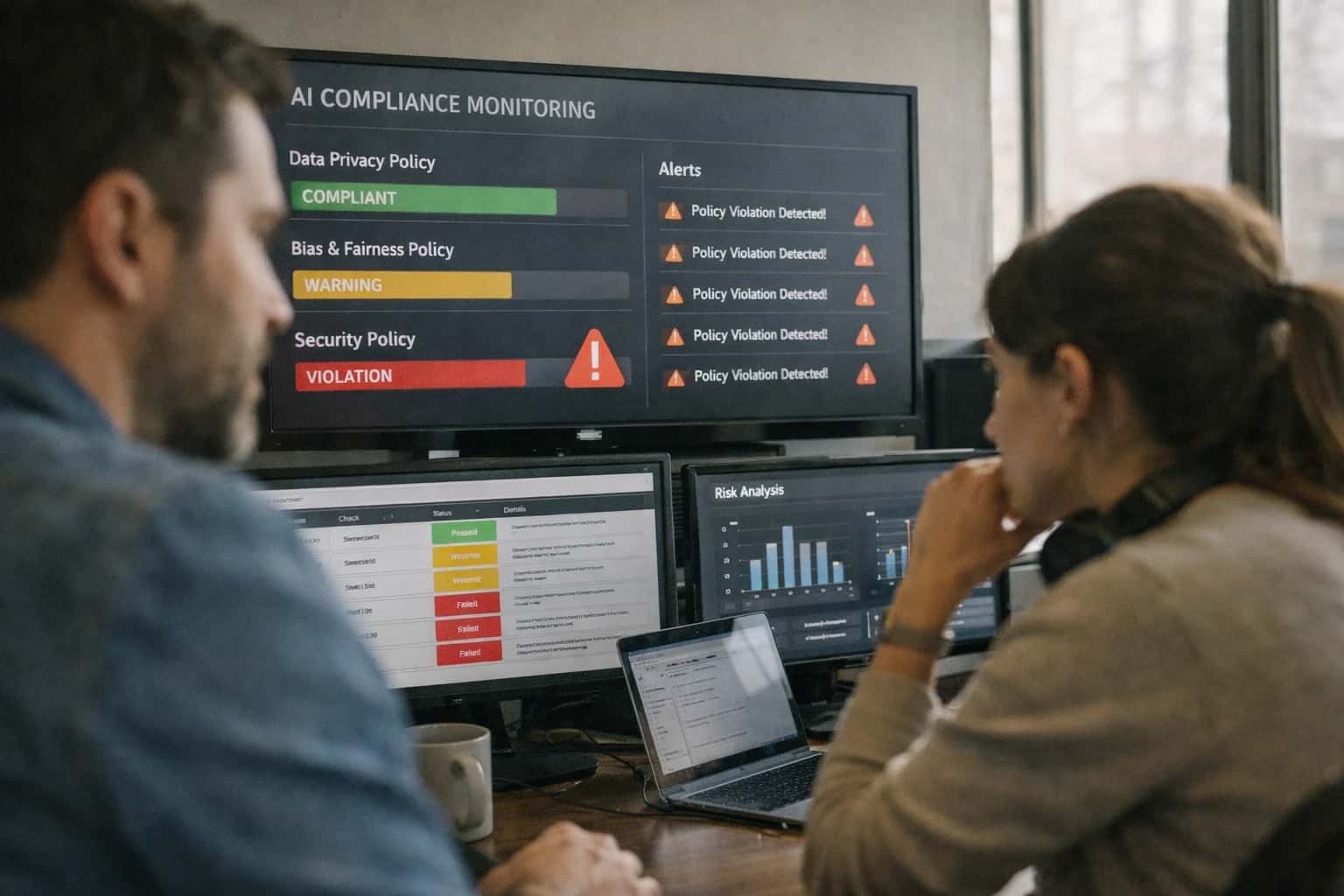
ARCHITECTURE AND DATA FLOW
Where AI Fits into RingCentral's Call Data
A practical blueprint for connecting AI analytics to RingCentral's call logs, recordings, and real-time streams.
High-value workflows are built on this architecture. For example, a post-call compliance scan can analyze a recording transcript against a policy keyword list (e.g., "guaranteed returns") and automatically flag the interaction, triggering a review workflow in a system like ServiceNow. For sales teams, real-time sentiment analysis via the Events API can alert a manager to a deteriorating customer call, prompting a whisper or barge-in. Agent performance scoring can aggregate metrics like talk-to-listen ratio and positive language from a batch of daily calls, syncing a score to the agent's profile in RingCentral's User Management module or a learning platform like Lessonly for targeted coaching.
A production rollout typically starts with a batch analysis pilot on historical recordings to calibrate models and define scoring thresholds, using RingCentral's bulk export tools. Governance is critical: ensure call recording consent is logged via the recording object's startTime and participant data. All AI-generated notes and scores should be stored with an audit trail linking back to the source call sessionId. For real-time use cases, architect for latency and failure—use a queue (e.g., Amazon SQS) to handle webhook bursts and ensure fallback to post-call processing if live analysis fails. This staged, governed approach de-risks the integration and delivers incremental value, from retrospective analytics to live agent assist.
AI CALL ANALYTICS INTEGRATION
RingCentral APIs and Surfaces for AI Integration
Core Data Sources for AI
The Call Log and Call Recording APIs are the primary surfaces for AI call analytics. The Call Log API provides metadata for every call (duration, participants, direction), while the Recording API delivers the audio files and, optionally, machine-generated transcripts.
Key Endpoints:
GET /restapi/v1.0/account/~/call-logto retrieve call history with filters.GET /restapi/v1.0/account/~/recording/{recordingId}/contentto download the audio.GET /restapi/v1.0/account/~/recording/{recordingId}/transcriptfor pre-existing transcripts.
AI Integration Pattern: A scheduled job polls the Call Log API for new completed calls, fetches the associated recording, and sends the audio/transcript to an AI pipeline for sentiment analysis, keyword detection, and performance scoring. Results are then posted back to RingCentral via webhooks or stored in a separate analytics database.
CALL ANALYTICS & WORKFLOW AUTOMATION
High-Value AI Use Cases for RingCentral
Integrate AI directly with RingCentral's call logs, recordings, and APIs to automate compliance, enhance agent performance, and trigger downstream business workflows.
01
Real-Time Compliance & Keyword Monitoring
Deploy AI models to analyze live call audio or post-call transcripts for regulated keywords (e.g., refund, guarantee, off-record). Automatically flag high-risk interactions, trigger supervisor alerts, and ensure recordings are routed to a secure archive for audit.
Batch -> Real-time
Detection speed
02
Automated Agent Performance Scoring
Connect AI to RingCentral Contact Center metrics and call recordings. Score interactions based on defined criteria (empathy, resolution speed, script adherence). Push scores and actionable insights directly to quality management dashboards or learning platforms like Seismic for targeted coaching.
Same day
Feedback cycle
03
Sentiment-Driven Workflow Triggers
Use sentiment and intent analysis on call summaries to automate post-call actions. A frustrated customer call can auto-create a high-priority ticket in Zendesk and schedule a manager callback. A positive sales call can trigger a quote generation workflow in Salesforce CPQ.
Hours -> Minutes
Process initiation
04
Conversation Intelligence for Sales & Support
Extract deal risks, competitor mentions, and objection patterns from sales and support call recordings. Enrich CRM records (Salesforce, HubSpot) with these insights and provide AI-generated coaching notes to improve talk-to-listen ratios and handle common objections.
1 sprint
Insight deployment
05
Automated Call Summarization & Logging
Leverage RingCentral's APIs to feed call audio/transcripts into an LLM pipeline. Generate structured summaries with action items, decisions, and key quotes. Auto-post these summaries to relevant channels in Microsoft Teams, update Asana tasks, or append notes to a CRM opportunity record.
Hours -> Minutes
Note creation
06
AI-Powered Virtual Receptionist & Routing
Build an AI voice agent using RingCentral's Voice API to handle after-hours calls, screen inquiries, and perform natural language routing. Authenticate callers, answer FAQs, and seamlessly transfer to the correct department or schedule a callback in Google Calendar.
24/7 Coverage
Operational scope
PRODUCTION IMPLEMENTATION PATTERNS
Example AI Analytics Workflows for RingCentral
These workflows illustrate how AI can be integrated with RingCentral's APIs to automate call analysis, trigger downstream actions, and provide actionable insights. Each pattern is built for production, considering data flow, security, and human-in-the-loop governance.
Trigger: A RingCentral call recording is marked as complete and uploaded to cloud storage.
Data Pulled:
- Call recording audio file via RingCentral Recording API.
- Associated metadata (agent ID, queue, customer number, call duration, disposition).
- Historical performance data for the agent from a coaching platform (e.g., Lessonly).
AI Action:
- Audio is transcribed using a high-accuracy ASR model.
- Transcript is analyzed by an LLM against a configured scorecard (e.g.,
compliance_checklist.yaml). - The model evaluates for:
- Use of required greetings/disclaimers.
- Empathy and active listening cues.
- Script adherence and competitor mentions.
- Customer sentiment trend (frustrated -> resolved).
- A score (0-100) and structured feedback JSON are generated.
System Update / Next Step:
- Score and key excerpts are posted to the supervisor's dashboard in the QM platform.
- If score < threshold: A task is automatically created in the supervisor's Asana or Monday.com board titled "Coaching Needed: [Agent Name] - [Call ID]". The task includes a deep link to the recording and the AI-generated feedback.
- A summary is logged to the agent's profile in the HRIS (e.g., BambooHR) for trend analysis.
Human Review Point: The supervisor must review the AI-generated feedback and the call before conducting the coaching session. The AI's score is a recommendation, not a final verdict.
HOW AI CALL ANALYTICS CONNECTS TO RINGCENTRAL
Typical Implementation Architecture
A production-ready AI call analytics integration for RingCentral typically follows a secure, event-driven architecture that processes call data, enriches it with AI, and triggers downstream workflows.
The integration is anchored on the RingCentral Data Export API and Webhook Subscriptions. Inbound and outbound call recordings, along with their associated metadata (caller ID, duration, queue, agent), are streamed to a secure processing pipeline. For real-time use cases like compliance keyword detection, the system can also subscribe to live call events via the RingCentral Call Control API, processing audio streams through a real-time transcription service before applying AI models.
The core AI processing layer typically involves several steps executed in a queue-based system (e.g., AWS SQS, Azure Service Bus):
- Audio Extraction & Transcription: Call recordings are fetched from RingCentral's storage, transcribed using a high-accuracy service (like Azure Speech-to-Text or Google Speech-to-Text), with optional custom vocabulary for industry terms.
- Multi-Model Analysis: The transcript and metadata are passed through a suite of AI models running in parallel:
- Sentiment Analysis to gauge customer frustration or satisfaction.
- Entity & Keyword Detection for compliance terms (e.g., "guaranteed returns"), product names, or competitor mentions.
- Conversation Intelligence to score agent performance against criteria like talk-to-listen ratio, script adherence, and objection handling.
- Result Aggregation & Storage: Enriched analytics (scores, detected keywords, sentiment trends) are written to a time-series database (e.g., TimescaleDB) for dashboards and to a vector database (like Pinecone or Weaviate) for semantic search over call content. The original transcript and AI outputs are stored in an object store (e.g., S3) with strict access controls for auditability.
Finally, the integration triggers automated workflows based on the analysis. This is handled by a workflow orchestrator (e.g., n8n, Apache Airflow) that listens for specific events—like a low agent score or a high-risk compliance flag. It can then:
- Create a coaching task in the QA platform (e.g., Nice) or a learning module in the LMS (e.g., Cornerstone).
- Open a corrective action ticket in ServiceNow or Jira for compliance review.
- Send a real-time alert to a supervisor via Microsoft Teams or Slack.
- Update the customer record in Salesforce or the service ticket in Zendesk with a summary of the call sentiment and key topics.
Governance is critical: all data flows respect RingCentral's data residency requirements, access is controlled via RBAC, and a full audit trail logs data access and AI model inferences for compliance reporting.
RINGCENTRAL AI INTEGRATION PATTERNS
Code and Payload Examples
Ingest and Process Call Recordings
To analyze call sentiment, compliance, and agent performance, you first need to securely fetch recordings from RingCentral. This typically involves subscribing to webhooks for call completion events, then downloading and transcribing the media. The processed transcript and metadata are then sent to your AI pipeline for analysis.
Example Webhook Payload (Call Completion Event):
json{ "event": "/restapi/v1.0/account/~/telephony/sessions", "uuid": "1234567890", "timestamp": "2024-01-15T10:30:00Z", "subscriptionId": "subscription-id-here", "body": { "sessionId": "session-123", "telephonySessionId": "telephony-session-456", "sequence": 1, "parties": [ { "accountId": "account-id", "extensionId": "agent-extension-id", "direction": "Outbound", "to": { "phoneNumber": "+15551234567" }, "result": "Completed", "recordings": [ { "id": "recording-id-789", "contentUri": "https://platform.ringcentral.com/restapi/v1.0/account/~/recording/recording-id-789/content", "type": "Automatic" } ] } ] } }
Upon receiving this payload, your integration service should authenticate and download the recording from the contentUri for transcription and subsequent AI analysis.
AI CALL ANALYTICS FOR RINGCENTRAL
Realistic Time Savings and Operational Impact
How AI integration transforms manual call review and compliance workflows into automated, insight-driven operations.
| Metric | Before AI | After AI | Notes |
|---|---|---|---|
Call Sentiment & Tone Analysis | Manual sampling by QA team | Automated scoring for 100% of calls | Enables proactive coaching on negative trends |
Compliance Keyword Detection | Periodic manual audits | Real-time alerting for high-risk phrases | Reduces regulatory exposure; alerts sent to compliance officer |
Agent Performance Scoring | Subjective, time-intensive manager reviews | Objective, multi-factor scoring (e.g., resolution, empathy) | Scorecards auto-pushed to LMS for targeted training |
Post-Call Summary Creation | Agent writes notes post-interaction (5-10 mins) | AI generates draft summary in <60 seconds | Agent reviews and edits; ensures consistency and frees up handle time |
Coaching Workflow Trigger | Manager identifies opportunity via manual report | AI flags at-risk calls and auto-creates coaching task | Task routed in RingCentral or connected HR system (e.g., Workday) |
Customer Issue Trend Analysis | Monthly manual analysis of ticket tags | Weekly automated report on emerging topics & sentiment drivers | Report delivered to product and ops teams via email or Teams |
Call Data Enrichment for CRM | Manual logging of call outcomes in Salesforce | AI extracts key entities (e.g., product mention, competitor) and auto-logs | Ensures CRM data completeness for sales and support analytics |
ARCHITECTING CONTROLLED, PRODUCTION-GRADE AI ANALYTICS
Governance, Security, and Phased Rollout
Deploying AI call analytics requires a security-first architecture and a phased rollout to manage risk and demonstrate value incrementally.
A production integration for RingCentral call analytics is built on a secure data pipeline. Call recordings and logs are streamed from RingCentral's APIs (e.g., /restapi/v1.0/account/~/recording) to a secure, isolated processing queue. Audio is transcribed using a chosen model (OpenAI Whisper, Azure Speech) within your cloud tenancy, and the resulting text is analyzed for sentiment, compliance keywords, and performance metrics. All processed data—raw audio, transcripts, and AI-generated scores—should be stored in an encrypted data lake with strict access controls (RBAC) tied to roles like "Quality Manager" or "Compliance Officer." Audit logs must track every access and analysis event for regulatory readiness.
Governance is critical for sensitive voice data. Implement a human-in-the-loop review layer before any high-stakes action is taken. For example, AI-flagged compliance alerts (e.g., potential PCI data shared) can be routed to a secure dashboard for supervisor review and approval before escalation. Similarly, agent coaching suggestions generated by AI should be presented as recommendations to team leads, not automated directives. Use RingCentral's webhooks and the Analytics API to push scores and insights back into the platform, ensuring the source of truth for call data remains synchronized and traceable.
A phased rollout mitigates risk and builds organizational trust. Phase 1 (Pilot): Connect AI to a single RingCentral department (e.g., sales development). Analyze calls for basic sentiment and keyword detection, delivering insights via a simple dashboard. Phase 2 (Scale): Expand to contact center teams, integrating scores with your quality management platform (e.g., Nice CXone) and triggering automated workflow tasks in systems like Salesforce Service Cloud for follow-up. Phase 3 (Optimize): Implement real-time analytics for live call guidance and predictive routing, using RingCentral's real-time event subscriptions. Each phase should include defined success metrics (e.g., reduction in manual scoring time, increase in first-call resolution) and a feedback loop to refine AI models and prompts.
Why partner with Inference Systems? We architect these integrations with enterprise guardrails from day one. Our approach ensures AI augments—not disrupts—your existing RingCentral workflows and security posture. We provide the implementation blueprint, from secure API connectivity and data residency compliance to the change management playbook for rolling out AI insights to your teams. Explore our broader approach to Unified Communications AI Integrations or see how we handle similar governance for AI Integration for Microsoft Teams Chat.
Enabling Efficiency, Speed & Accuracy
Intelligent Analysis, Decision & Execution
We build AI systems for teams that need search across company data, workflow automation across tools, or AI features inside products and internal software.
Talk to Us
Search across company data
Give teams answers from docs, tickets, runbooks, and product data with sources and permissions.
Useful when people spend too long searching or get different answers from different systems.
Enterprise searchRAGPermissions
Read more
Automate internal workflows
Use AI to route work, draft outputs, trigger actions, and keep approvals and logs in place.
Useful when repetitive work moves across multiple tools and teams.
AI agentsWorkflow automationGovernance
Read more
Add AI to products and internal tools
Build assistants, guided actions, or decision support into the software your team or customers already use.
Useful when AI needs to be part of the product, not a separate tool.
AI integrationDecision supportModel routing
Read moreIMPLEMENTATION AND OPERATIONS
Frequently Asked Questions
Common technical and operational questions for integrating AI analytics into RingCentral's call data ecosystem.
The integration is built on RingCentral's secure APIs and follows a zero-trust data pipeline model.
- Authentication & Scope: We use OAuth 2.0 with a dedicated service account, scoped to the minimum necessary permissions (e.g.,
ReadCallLog,ReadCallRecording). Credentials are never embedded in code and are managed via a secrets vault. - Data Flow: Call logs and metadata are pulled via the RingCentral Analytics API. For recordings, we use a secure, signed URL from the
recordingobject to stream audio directly to our processing pipeline—audio is never stored durably on intermediate systems. - Processing Environment: AI models (for transcription, sentiment, keyword detection) run in a private, VPC-isolated environment. Data in transit is encrypted with TLS 1.3.
- Output Storage: Generated insights (scores, transcripts, flags) are written back to a secure database. Optionally, summaries or alerts can be posted to RingCentral Team Messaging via webhook or written to a CRM like Salesforce using the respective APIs.
This architecture ensures PII and call data are handled under RingCentral's compliance umbrella, with no unnecessary data persistence.

About the author
Prasad Kumkar
CEO & MD, Inference Systems
Prasad Kumkar is the CEO & MD of Inference Systems and writes about AI systems architecture, LLM infrastructure, model serving, evaluation, and production deployment. Over 5+ years, he has worked across computer vision models, L5 autonomous vehicle systems, and LLM research, with a focus on taking complex AI ideas into real-world engineering systems.
His work and writing cover AI systems, large language models, AI agents, multimodal systems, autonomous systems, inference optimization, RAG, evaluation, and production AI engineering.
LinkedIn
Limited slotsGet a Free AI Consultation
Partnered with leading AI, data, and software stack.





How We Work
Custom AI workflows for your Business
One-fit-all AI don't work for modern businesses. At Inferensys, we aim to understand your business & custom requirements; which we use to define most efficient agentic workflows, the data, and the tools for your business.
01
Review the use case
We understand the task, the users, and where AI can actually help.
Read more02
Pick the right approach
We define what needs search, automation, or product integration.
Read more03
Build the first useful version
We implement the part that proves the value first.
Read more04
Improve from there
We add the checks and visibility needed to keep it useful.
Read moreThe first call is a practical review of your use case and the right next step.
Talk to Us