AI translation integrates with Cisco Webex through three primary surfaces: the Webex Meetings API for real-time audio stream access, the Webex Devices API for in-room hardware, and the Webex Webhooks for post-meeting processing. The core architectural pattern involves capturing the meeting's audio stream, routing it through a low-latency speech-to-text and translation pipeline, and injecting the output back as multilingual captions via the Webex Closed Captioning API or storing translated transcripts for asynchronous review. For global teams, this fits directly into the Webex Control Hub for centralized deployment and governance.

Integration
AI Translation Integration for Cisco Webex Meetings
Implement real-time speech-to-text translation and multilingual captioning for Cisco Webex meetings to support global team collaboration and meeting accessibility compliance.
ARCHITECTURE AND ROLLOUT
Where AI Translation Fits into Cisco Webex
A practical blueprint for integrating real-time AI translation into Cisco Webex meetings and workflows.
High-value use cases are operational and compliance-driven: enabling real-time collaboration in multi-language project syncs, providing accessibility compliance (e.g., WCAG) via live captions, and creating searchable archives of translated meeting minutes for global regulatory or audit trails. Implementation requires careful handling of audio payloads, speaker diarization to attribute translations correctly, and custom glossary injection for industry or company-specific terminology to ensure technical and commercial accuracy.
Rollout is typically phased, starting with pilot rooms or specific international teams, governed by data residency rules (processing in specific cloud regions) and role-based access controls (RBAC) for who can enable translation. A production architecture includes a queue for post-meeting transcript refinement, an audit log of all translation events, and integration points with learning management systems (like Cornerstone) for training content or HRIS platforms (like Workday) for onboarding workflows. The goal is to move from manual, post-meeting translation lag to near-instant comprehension, turning meeting data into an immediately actionable, global asset.
ARCHITECTURE PATTERNS
Webex API Surfaces for AI Translation
Real-Time Audio Stream Processing
The Webex Meetings API provides programmatic access to live meeting audio, which is the primary surface for real-time translation. This is typically implemented via a cloud-based service that joins the meeting as a bot participant using the meetingId and accessToken. The audio stream is captured, processed through a speech-to-text engine (like Azure Speech or Google Speech-to-Text), translated via an LLM or translation service, and then delivered back as captions.
Key Implementation Points:
- Use the
meetingsendpoint to create a bot participant with theaudioscope. - The bot must handle the WebRTC media stream, requiring a media server or SDK (like the Webex Browser SDK) to decode the audio.
- Translated captions are pushed back into the meeting using the
captionsAPI (POST /v1/meetings/{meetingId}/captions). - Latency is critical; architecture must minimize end-to-end delay to keep captions synchronized with speech, often targeting <5 seconds.
MULTILINGUAL COLLABORATION & COMPLIANCE
High-Value Use Cases for Webex Translation
Integrating real-time AI translation into Cisco Webex transforms global meetings from logistical challenges into seamless, inclusive, and auditable collaborations. These patterns connect to Webex APIs for audio streams, transcripts, and participant data.
01
Real-Time Multilingual Captioning
Provide live, translated captions for all participants. Integrates with the Webex Meeting API to access the audio stream, processes speech-to-text, translates via a low-latency LLM, and injects captions back into the Webex UI. Enables non-native speakers to follow technical or fast-paced discussions in real-time.
Batch -> Real-time
Caption delivery
02
Post-Meeting Translated Transcripts & Summaries
Automatically generate a fully translated meeting record. After a meeting, the integration fetches the Webex transcript, translates the entire conversation into target languages, and creates a structured summary with action items. Outputs are posted to a SharePoint library or Confluence page, tagged by project.
Hours -> Minutes
Document creation
03
Global All-Hands & Town Halls
Support live, large-scale multilingual Q&A. During a Webex Event or Webinar, the integration listens to the audio feed, translates participant questions in real-time for the host, and can translate the host's answers back for display in regional breakout channels or captions. Drives inclusive participation across global offices.
04
Compliant Meeting Archiving for Regulated Industries
Meet global regulatory requirements for multilingual communication. The integration creates a tamper-evident archive of the original audio, original transcript, and all translation versions. Metadata (speaker IDs, timestamps, language) is logged for audit trails. Critical for financial services and life sciences with cross-border teams.
Same day
Audit readiness
05
Technical Support & Engineering Scrums
Break down language barriers in deep technical work. For global engineering teams, the integration provides domain-specific translation (e.g., code terminology, product names) by using custom glossaries. Translates shared content from the Webex Whiteboard or screen-shared text, keeping distributed teams aligned on complex issues.
06
Sales & Customer Success Reviews
Ensure deal clarity and reinforce commitments across languages. During client quarterly business reviews (QBRs) on Webex, the integration provides real-time translation of key terms and action items. Post-meeting, it generates a bilingual summary of commitments and next steps, automatically attaching it to the Salesforce or HubSpot opportunity record.
IMPLEMENTATION PATTERNS
Example Translation Workflows
These workflows illustrate how AI translation integrates with Cisco Webex's APIs and event streams to automate multilingual collaboration. Each pattern is designed for production, with clear triggers, data flows, and governance points.
Trigger: A scheduled Webex meeting with the 'Enable real-time translation' feature flag is started by the host.
Context/Data Pulled:
- Meeting ID and participant list from the Webex Meetings API.
- Real-time audio stream is captured via the Webex Media API or a dedicated SIP URI connection.
- Host-configured source language (e.g., English) and target languages (e.g., Spanish, Japanese, German).
Model or Agent Action:
- Audio is streamed to a speech-to-text (STT) service with speaker diarization.
- Source language transcript is passed to a low-latency translation model (e.g., a fine-tuned Whisper variant or a cloud provider's translation API).
- Translated text for each target language is formatted into WebEx-compatible captioning payloads.
System Update or Next Step:
- Translated captions are pushed back to the Webex meeting in real-time via the
captionsAPI endpoint. - Participants select their preferred language from the Webex captioning menu.
- A final, time-synced transcript in all languages is posted to the meeting's space in Webex Messaging post-meeting.
Human Review Point: Optional. A human moderator can be looped in via a side-channel alert if the system detects low confidence scores for specific technical or proprietary terms.
HOW REAL-TIME TRANSLATION INTEGRATES WITH WEBEX
Implementation Architecture & Data Flow
A production-ready architecture for adding multilingual speech-to-text and captioning to Cisco Webex meetings.
The integration connects at the Webex API layer, specifically the Meeting Controls API and Webhooks for Events**. For real-time translation, the system subscribes to the meeting.audio.share.startedwebhook to capture the live audio stream. This stream is processed through a low-latency pipeline: audio is sent to a speech-to-text service (like Azure Speech or Google Speech-to-Text), the transcribed text is passed through a translation model (e.g., DeepL or a fine-tuned LLM), and the translated output is pushed back into the meeting via theClosed Captions API** (POST /v1/meetings/{meetingId}/caption) as a live caption track. For post-meeting translation, the system uses the `Recording API** to fetch the transcript and process it asynchronously, delivering a multilingual transcript via email or to a linked SharePoint/OneDrive folder.
Key implementation details include managing state and speaker diarization across concurrent meeting rooms. Each active translation session requires a persistent WebSocket connection to the Webex cloud for sending captions, with logic to handle participant joins/leaves and audio source switches. The backend service must maintain a translation memory cache for consistent terminology across recurring project meetings. For governance, all audio processing should be configured for in-region data residency, and captions can be toggled on/off by meeting hosts via a custom Webex App panel to maintain user control and compliance.
Rollout typically follows a pilot group, enabling the feature via a Webex site-level setting or a meeting template. Success is measured by reduced follow-up clarification emails and increased participation metrics from non-native speakers. A critical caveat is latency: real-time translation adds a 2-5 second delay, making it suitable for presentation-style meetings but less ideal for rapid-fire dialogue without careful host facilitation.
IMPLEMENTATION PATTERNS
Code & Payload Examples
Real-Time Audio Stream Processing
For real-time multilingual captioning, the integration connects to the Webex Meeting API's audio stream via a secure websocket. The architecture involves a dedicated service that:
- Subscribes to the meeting's audio stream using the
meetingIdand an OAuth token. - Chunks the PCM audio into segments (e.g., 5-second windows) for low-latency processing.
- Sends each segment to a speech-to-text service (like Azure Speech or Google Speech-to-Text) for transcription in the source language.
- Immediately passes the transcript to a translation model (e.g., DeepL, Google Translate API) configured for the target language(s).
- Pushes the translated text back to the Webex Meeting via the
captionsAPI endpoint, which displays it as live captions.
Key Consideration: Latency is critical. The entire pipeline—from audio chunk to caption display—must operate under 3-5 seconds to be useful. This often requires colocating your processing service in the same cloud region as the Webex media servers and using optimized, low-latency models.
AI-POWERED TRANSLATION FOR WEBEX MEETINGS
Realistic Time Savings & Business Impact
How adding real-time speech-to-text translation and multilingual captioning changes meeting workflows, reduces manual effort, and improves global collaboration.
| Workflow or Metric | Before AI Translation | After AI Integration | Implementation Notes |
|---|---|---|---|
Meeting preparation for global attendees | Manual pre-reading of translated documents; separate interpreter scheduling | Real-time captions enable participation in source language | Reduces pre-meeting coordination from hours to minutes |
Post-meeting note distribution | Manual transcription, translation, and distribution over 1-2 business days | Automated, translated summary available within minutes of meeting end | Enables same-day follow-up and action item assignment |
Compliance with accessibility mandates | Manual process to provide captions or transcripts upon request | Live captions available for all meetings, with on-demand transcripts | Proactive compliance reduces legal and regulatory risk |
In-meeting clarification loops | Participants ask for repeats or clarifications, slowing discussion | Participants can read captions in their preferred language in real-time | Reduces meeting friction and keeps conversations on track |
Knowledge capture from global teams | Valuable insights lost if not captured in a common language | All contributions are transcribed and translated, creating a searchable record | Builds a multilingual knowledge base from meeting content |
Onboarding for non-native speakers | Reliance on peer translation or delayed understanding | New hires can participate fully from day one with live translation support | Accelerates time-to-productivity for global teams |
Cost of external interpretation services | High cost for professional interpreters for critical meetings | AI handles routine meetings; interpreters reserved for high-stakes negotiations | Significant reduction in annual interpretation spend |
ENTERPRISE-GRADE DEPLOYMENT
Governance, Security & Phased Rollout
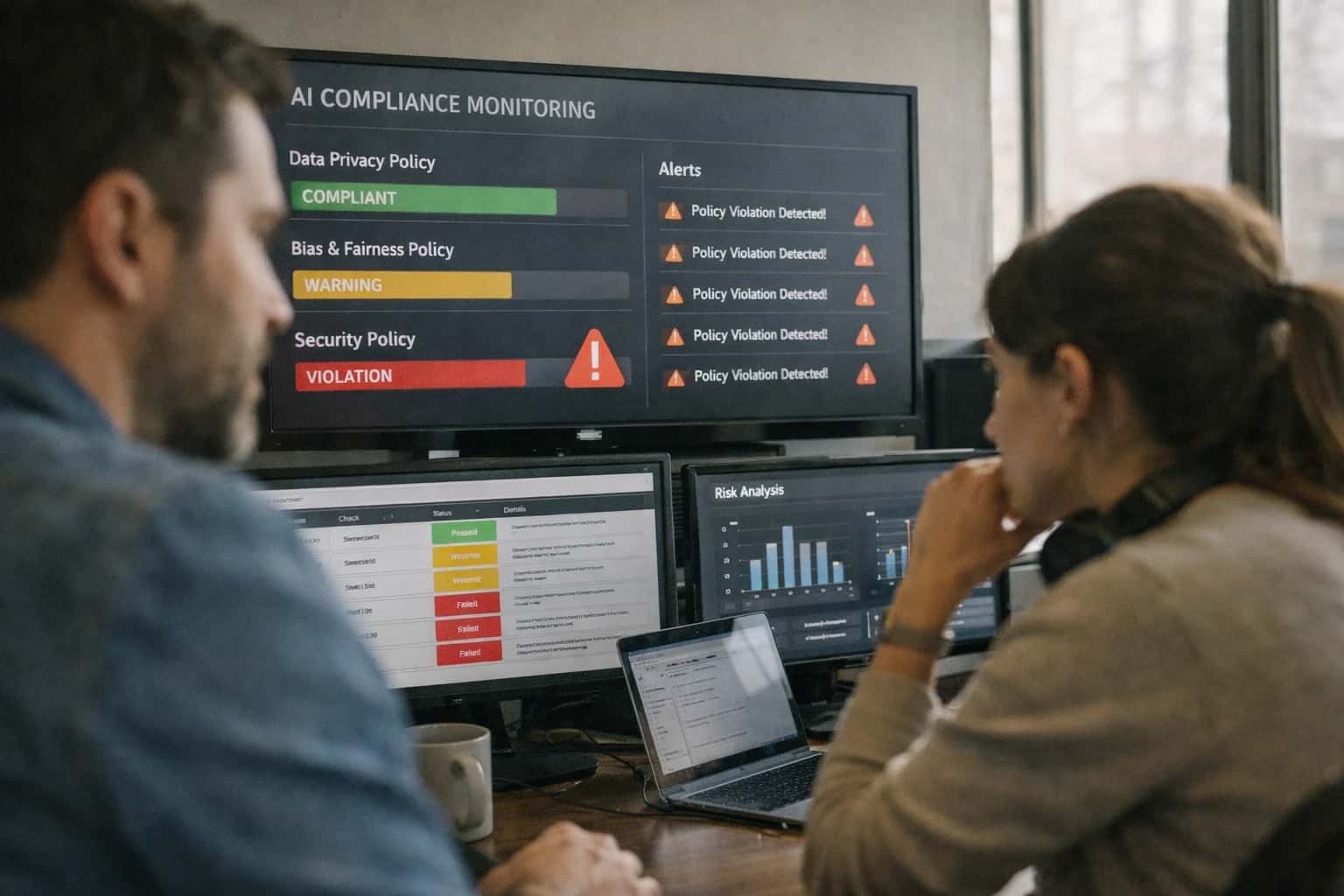
A production-ready AI translation integration for Cisco Webex must be architected for security, compliance, and controlled adoption.
Implementation begins by securing the data pipeline. We connect to the Cisco Webex API using OAuth 2.0 with scoped permissions (meeting:recordings:read, meeting:transcripts:read) and process audio streams or transcripts via a secure, VPC-hosted service. Meeting data is never persisted to long-term storage without explicit policy; real-time captions are ephemeral, and translated transcripts can be encrypted at rest in your designated SharePoint, OneDrive, or data lake. For global deployments, we ensure audio processing occurs in geographically compliant regions (e.g., EU data stays in EU Azure/GCP zones) and integrate with your existing IAM (Okta, Entra ID) for role-based access to translation logs and settings.
A phased rollout mitigates risk and validates value. Phase 1 (Pilot): Enable AI-powered live captions and post-meeting translated summaries for a single department (e.g., Global Product), using a manual opt-in via the Webex meeting controls. Phase 2 (Expansion): Automate translation for recurring cross-regional meetings (like weekly engineering syncs) and integrate translated action items into Microsoft Planner or Jira. Phase 3 (Scale): Implement org-wide policies—such as auto-translation for all meetings with participants from designated countries—and connect the output to Compliance archiving systems for regulated industries. Each phase includes monitoring for accuracy (BLEU/METEOR scores for key language pairs), latency, and user feedback via short in-app surveys.
Governance is maintained through an admin dashboard for controlling costs and access. Administrators can set budgets per department, define which Webex Meeting types (All-Hands, 1:1s, Customer Calls) trigger translation, and audit a log of all processed meetings with user, date, source/target languages, and processing duration. For sensitive discussions, we implement keyword-based suppression rules to halt translation if certain topics (e.g., M&A, PII) are detected, ensuring human review. This controlled approach allows global teams to collaborate in minutes, not days, while keeping data governance and operational oversight firmly in your hands.
Enabling Efficiency, Speed & Accuracy
Intelligent Analysis, Decision & Execution
We build AI systems for teams that need search across company data, workflow automation across tools, or AI features inside products and internal software.
Talk to Us
Search across company data
Give teams answers from docs, tickets, runbooks, and product data with sources and permissions.
Useful when people spend too long searching or get different answers from different systems.
Enterprise searchRAGPermissions
Read more
Automate internal workflows
Use AI to route work, draft outputs, trigger actions, and keep approvals and logs in place.
Useful when repetitive work moves across multiple tools and teams.
AI agentsWorkflow automationGovernance
Read more
Add AI to products and internal tools
Build assistants, guided actions, or decision support into the software your team or customers already use.
Useful when AI needs to be part of the product, not a separate tool.
AI integrationDecision supportModel routing
Read moreAI TRANSLATION INTEGRATION
Frequently Asked Questions
Common questions about implementing real-time, multilingual speech-to-text translation and captioning for Cisco Webex meetings.
The integration connects via the Cisco Webex API, specifically using the Meeting Intelligence APIs for real-time audio capture and the Webhooks API for event triggers. The typical architecture involves:
- Trigger: A Webex meeting is scheduled or started with translation features enabled via a custom parameter or user role.
- Capture: The Webex API streams meeting audio to a secure, ephemeral processing endpoint we host.
- Processing: Our AI pipeline performs:
- Speech-to-text (STT) transcription in the source language.
- Real-time translation to one or more target languages using a model fine-tuned for meeting vernacular.
- Generation of synchronized caption streams.
- Delivery: Translated captions are pushed back to the Webex meeting via the Closed Captioning API for in-meeting display and are also available for post-meeting review.
All data flows are encrypted in transit, and audio streams are not permanently stored.

About the author
Prasad Kumkar
CEO & MD, Inference Systems
Prasad Kumkar is the CEO & MD of Inference Systems and writes about AI systems architecture, LLM infrastructure, model serving, evaluation, and production deployment. Over 5+ years, he has worked across computer vision models, L5 autonomous vehicle systems, and LLM research, with a focus on taking complex AI ideas into real-world engineering systems.
His work and writing cover AI systems, large language models, AI agents, multimodal systems, autonomous systems, inference optimization, RAG, evaluation, and production AI engineering.
LinkedIn
Limited slotsGet a Free AI Consultation
Partnered with leading AI, data, and software stack.





How We Work
Custom AI workflows for your Business
One-fit-all AI don't work for modern businesses. At Inferensys, we aim to understand your business & custom requirements; which we use to define most efficient agentic workflows, the data, and the tools for your business.
01
Review the use case
We understand the task, the users, and where AI can actually help.
Read more02
Pick the right approach
We define what needs search, automation, or product integration.
Read more03
Build the first useful version
We implement the part that proves the value first.
Read more04
Improve from there
We add the checks and visibility needed to keep it useful.
Read moreThe first call is a practical review of your use case and the right next step.
Talk to Us