AI integration for PowerSchool 504 plan tracking connects at three primary surfaces: the Student Data Model, the Document Management layer, and the Workflow & Notification engine. The core integration targets the StudentFields and CustomPages storing plan details (accommodation codes, review dates, case manager assignments) and the file attachments holding evaluation reports and meeting notes. An AI agent can be configured to monitor these data objects via PowerSchool's Data Export Scheduler or real-time API webhooks, triggering automated compliance checks and support actions.

Integration
AI Integration for PowerSchool 504 Plan Tracking
Automate Section 504 plan monitoring, deadline tracking, and compliance documentation in PowerSchool using AI agents to reduce manual workload for district coordinators and ensure timely student accommodations.
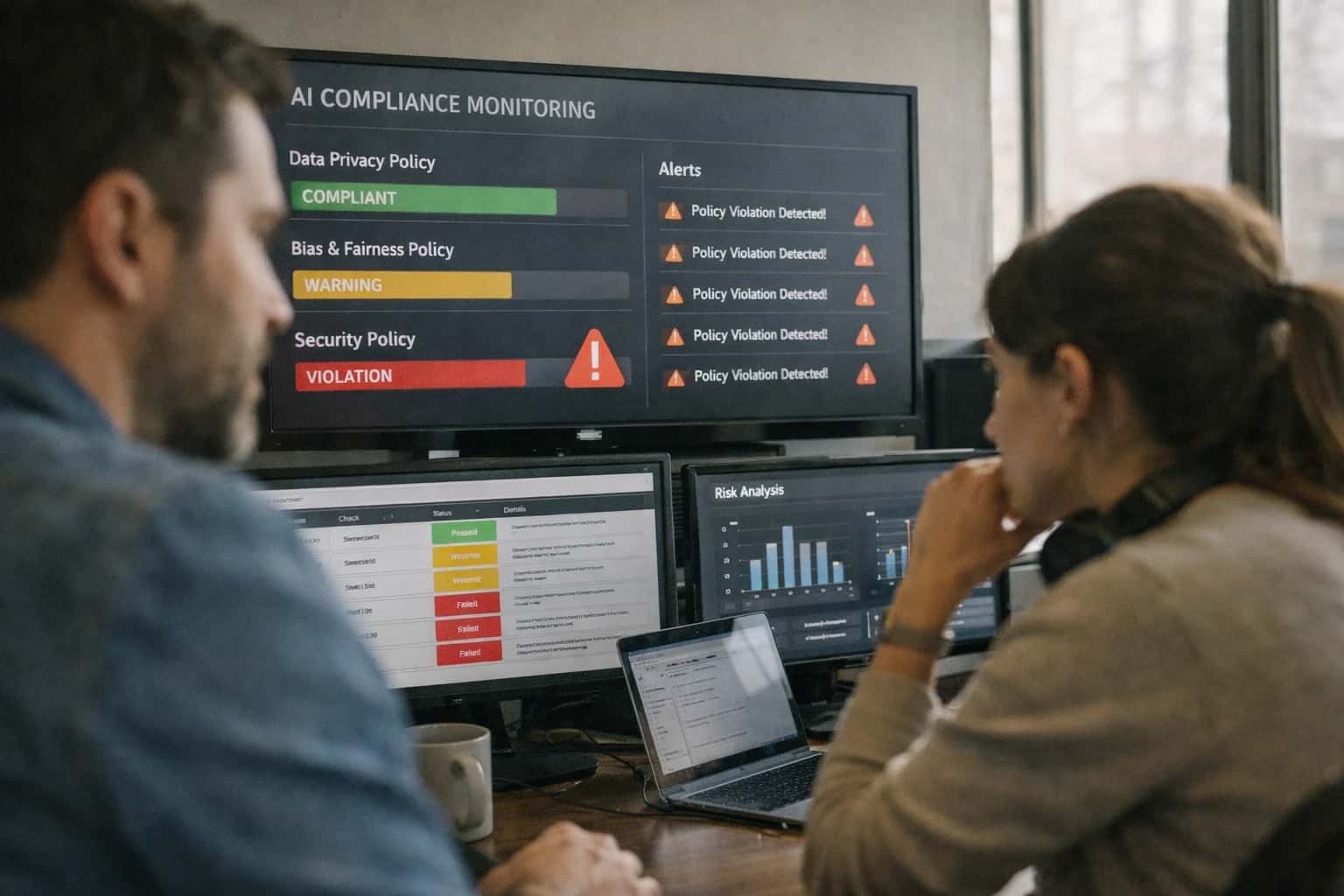
ARCHITECTURE FOR COMPLIANCE & STUDENT SUPPORT
Where AI Fits into PowerSchool 504 Plan Management
A technical blueprint for embedding AI agents and automation into PowerSchool's 504 plan workflows to reduce administrative burden and improve accommodation fidelity.
In practice, this enables several high-value workflows: an AI monitor can scan for upcoming Annual Review deadlines or triennial re-evaluations, automatically generating draft meeting agendas and compliance checklists for the case manager. For teachers, an integrated copilot can surface a student's active accommodations directly within the gradebook or attendance interface, reducing the need to cross-reference separate documents. Most critically, AI can analyze patterns in Gradebook scores and Attendance records post-accommodation to generate implementation fidelity reports, flagging where planned supports (e.g., extended time, preferential seating) may not be correlating with expected student outcomes.
Rollout requires a phased approach, starting with read-only monitoring and alerting to build trust before enabling any automated document drafting or data updates. Governance is paramount; all AI-generated drafts or recommendations should be logged in the AuditLog and require a credentialed staff member's review and approval within PowerSchool before becoming part of the official student record. This ensures the system augments—rather than replaces—the essential human judgment of 504 coordinators, while turning manual tracking from a reactive, calendar-driven task into a proactive, data-informed support system.
ARCHITECTURE BLUEPRINT
PowerSchool Modules and Data Surfaces for 504 Integration
Student Demographics and Accommodation History
The foundation for any 504 AI agent is the student's core record in PowerSchool. Key tables include:
- Students (STUDENTS): Contains student ID, name, grade level, school enrollment, and demographic data used for reporting and cohort analysis.
- StudentCoreFields (STU_CORE_FIELDS): Houses custom fields often used to flag 504 plan status, case manager assignment, and plan effective dates.
- StudentExtension (STU_EXTENSION): Stores extended student attributes. Districts frequently configure fields here for tracking accommodation categories (e.g., extended time, preferential seating, assistive technology).
AI workflows typically poll or receive webhooks from these tables to identify students with active plans, trigger review deadlines, and ensure new enrollees are assessed. The STUDENT_NUMBER serves as the primary key for joining across all related data surfaces.
POWERSCHOOL INTEGRATION
High-Value AI Use Cases for 504 Plan Management
AI can transform Section 504 plan management from a reactive, document-heavy process into a proactive, data-driven support system. These cards outline specific integration points within PowerSchool where AI agents and automation can reduce coordinator workload, improve compliance, and accelerate student support.
01
Automated Plan Review & Deadline Tracking
An AI agent monitors the 504_Plans table (or custom objects) for upcoming annual review and re-evaluation deadlines. It scans plan dates, triggers calendar holds for the coordinator, and drafts personalized email reminders to the 504 team members (teachers, counselors, parents) 30 days in advance, pulling contact info from PowerSchool. This shifts deadline management from manual tracking to automated oversight.
Batch -> Real-time
Deadline monitoring
02
Accommodation Implementation Monitoring
Integrates with PowerSchool's attendance, gradebook, and behavior tracking modules. An AI workflow analyzes recent data for students with active 504s, flagging potential accommodation gaps—like a student with 'extended time' who has multiple late/missing assignments. It generates a weekly digest for the coordinator, highlighting students needing follow-up with teachers, directly within the PowerSchool interface.
Hours -> Minutes
Weekly review
03
Intelligent Meeting Minute Generation
During 504 team meetings, an AI agent connected via a secure API can process audio transcription or coordinator notes. It structures the discussion into standard sections: Present Levels, Accommodation Updates, Team Decisions. It then drafts the official meeting minutes, pre-populating them into PowerSchool's document storage or a linked system like Google Drive, ready for coordinator review and parent signature collection.
1 sprint
Implementation timeline
04
Parent/Guardian Communication Agent
A chatbot integrated into the PowerSchool Parent Portal provides 24/7 answers to common 504 questions (e.g., 'What are my child's accommodations?', 'When is the next review?'). It queries the live 504 data via API, delivering personalized, secure responses. For complex queries, it escalates to the coordinator via a ticket in PowerSchool's internal messaging, reducing routine inbound calls.
Same day
Response to common Qs
05
Data-Driven Plan Drafting Assistance
When creating a new or revised 504 plan, the coordinator uses an AI copilot. The tool analyzes the student's historical grades, attendance codes, and discipline incidents from PowerSchool, suggesting evidence-based accommodation options (e.g., preferential seating, organizational aids). It then generates a first draft of the plan document, pulling in student demographics and pre-filled standard clauses, saving hours of manual compilation.
06
Compliance Documentation Bundle
For state or federal audits, an AI workflow automates the compilation of 504 compliance packets. It queries PowerSchool for all active/inactive plans within a date range, gathers associated meeting notes, signature pages, and correspondence logs from linked document stores, and generates a single, organized PDF report. This eliminates days of manual file gathering and reduces audit preparation risk. Learn about related SIS document management patterns.
Days -> Hours
Audit prep
IMPLEMENTATION PATTERNS
Example AI-Powered 504 Workflow Automations
These concrete workflows illustrate how AI agents can connect to PowerSchool's data model and automation layer to manage Section 504 plans, reducing manual tracking and improving compliance for district coordinators.
Trigger: Scheduled nightly job checks the Section504Plans table for plans where AnnualReviewDate is within the next 30 days and ReviewStatus is 'Pending'.
Context/Data Pulled: The agent retrieves the plan details, associated student record (name, ID, school), case manager, and parent/guardian contact information from PowerSchool via its API or direct database query.
Model/Agent Action: An LLM generates a personalized draft notification. It structures an email/message to the case manager and optionally the parent, including:
- Student name and plan identifier.
- Specific review deadline date.
- A summary of current accommodations from the plan notes.
- A prompt to schedule the meeting in the PowerSchool calendar module.
System Update/Next Step: The agent logs the notification sent in the plan's AuditLog and creates a task in the case manager's PowerSchool task list. It can also trigger a calendar invitation workflow via integration with Microsoft 365 or Google Workspace.
Human Review Point: The draft message is sent to the case manager for approval via a PowerSchool internal messaging system before being finalized and sent to parents, ensuring tone and accuracy.
504 PLAN COMPLIANCE & TRACKING
Implementation Architecture: Connecting AI to PowerSchool
A technical blueprint for integrating AI agents and automation into PowerSchool's 504 plan workflows to reduce administrative burden and improve compliance.
The integration connects to PowerSchool's core student records and custom screen data via its REST API and Data Export Scheduler. Key objects include the Students table for demographics, custom 504_Plans screens for accommodation details, and the Calendar and Attendance modules for tracking review deadlines and implementation fidelity. An AI orchestration layer acts as a middleware service, polling for updates to 504 plan statuses, newly added accommodations, or upcoming annual review dates.
For each tracked plan, an AI agent executes a multi-step workflow: 1) It retrieves the student's current accommodations and review timeline. 2) It cross-references related data points like attendance patterns, gradebook comments, and behavior incidents (via PowerSchool's UDS endpoints) to generate a compliance health score. 3) Based on configured rules, it triggers actions—such as drafting a review meeting agenda, populating a progress report template, or sending a secure notification to the case manager via PowerSchool's Communication API. All agent actions are logged back to a custom audit table within PowerSchool for a complete governance trail.
Rollout is phased, starting with read-only monitoring and alerting for a pilot group of students before enabling automated document generation. Governance is critical; a human-in-the-loop approval step is required for any AI-generated document before it is attached to the official student record. This architecture ensures the AI augments the coordinator's workflow—flagging gaps and preparing materials—while keeping the district's 504 coordinator in full control of final decisions and compliance oversight.
504 PLAN TRACKING
Code and Payload Examples for PowerSchool AI Integration
Retrieving 504 Plan Data via PowerSchool API
To build AI workflows for 504 plan tracking, you first need to securely access the relevant student records. PowerSchool's REST API provides endpoints for student data, custom pages, and related services. A typical integration fetches a list of active 504 plans, including student details, accommodation lists, and review dates.
Below is a Python example using the requests library to authenticate and retrieve 504 plan data stored in a custom PowerSchool page or via the ws/v1/student endpoint enriched with custom elements. This payload is the foundation for AI monitoring and alerting.
pythonimport requests import json # PowerSchool API configuration base_url = "https://your-district.powerschool.com" api_key = "your_api_key_here" # Authenticate and get session token auth_url = f"{base_url}/oauth/access_token" auth_payload = { "grant_type": "client_credentials", "client_id": "your_client_id", "client_secret": "your_client_secret" } auth_response = requests.post(auth_url, data=auth_payload) token = auth_response.json().get("access_token") headers = { "Authorization": f"Bearer {token}", "Content-Type": "application/json" } # Fetch students with active 504 plans (assuming a custom endpoint or filter) # This often requires a custom query to a table storing 504 plan metadata. query_url = f"{base_url}/ws/v1/student?q=student_504_plan_status&status=active&pagesize=100" response = requests.get(query_url, headers=headers) if response.status_code == 200: students_with_plans = response.json().get("students", []) print(f"Found {len(students_with_plans)} active 504 plans.") # Process each student to get full plan details for student in students_with_plans: student_id = student.get("id") # Call a custom endpoint for detailed 504 plan data plan_url = f"{base_url}/ws/schema/table/student_504_plans?student_id={student_id}" plan_response = requests.get(plan_url, headers=headers) plan_data = plan_response.json() # plan_data now contains accommodations, review date, case manager, etc. else: print(f"Error fetching data: {response.status_code}")
AI-ASSISTED 504 PLAN MANAGEMENT
Realistic Time Savings and Operational Impact
How AI integration shifts manual tracking and compliance tasks from reactive to proactive, reducing administrative burden for district coordinators and improving plan fidelity.
| Workflow | Before AI | After AI | Notes |
|---|---|---|---|
Plan Review Deadline Tracking | Manual calendar checks, email reminders | Automated monitoring & proactive alerts | AI scans PowerSchool for upcoming annual review dates 30 days out |
Accommodation Implementation Check | Spot checks, teacher surveys | Systematic verification via data correlation | AI cross-references 504 accommodations with gradebook, attendance, and assignment data for gaps |
Progress Note Drafting | Manual narrative writing from scratch | Assisted generation from data points | AI suggests draft notes based on grade trends, teacher comments, and attendance records for coordinator review |
Parent/Guardian Communication Prep | Manual compilation of student data for meetings | Automated meeting packet generation | AI assembles relevant data summaries, recent notes, and accommodation history into a pre-meeting brief |
Compliance Documentation Assembly | Manual file gathering for audits | Automated audit trail & report generation | AI maintains a timestamped log of all plan-related actions, reviews, and communications for easy export |
New Plan Intake & Data Entry | Manual form processing & field population | Assisted data extraction & population | AI reads uploaded PDF/scan of doctor's recommendations and pre-populates PowerSchool 504 plan fields |
District-Level Reporting | Manual aggregation from individual school reports | Automated dashboard & exception reporting | AI provides real-time dashboards on plan counts, review status, and accommodation types across the district |
IMPLEMENTING AI WITH CONFIDENCE
Governance, Security, and Phased Rollout
A controlled, secure approach to integrating AI into PowerSchool's 504 plan workflows, designed for district compliance officers and IT leaders.
Implementation begins by mapping the specific PowerSchool data objects and APIs involved in 504 plan management. This typically includes the StudentCore and StudentSection objects for academic data, custom fields for accommodation details, and the WebService API for secure data exchange. An AI agent is configured to operate within a tightly scoped service account, accessing only the fields necessary for monitoring plan implementation (e.g., assignment due dates, attendance flags, gradebook comments) and tracking review deadlines from custom date fields. All data flows are encrypted in transit, and prompts are engineered to avoid generating or storing Protected Health Information (PHI) or other sensitive student data outside of PowerSchool's audit trail.
A phased rollout is critical for adoption and risk management. Phase 1 focuses on read-only monitoring and alerting. The AI system analyzes PowerSchool data nightly to generate a simple dashboard for the 504 coordinator, highlighting plans with upcoming annual reviews, accommodations that show data discrepancies (like frequent absences on test days), or missing documentation. Phase 2 introduces assisted documentation, where the agent drafts compliance narratives and meeting summaries based on PowerSchool history, placing them in a draft queue within a separate system (like a document management platform) for coordinator review and final upload to PowerSchool's document storage. Phase 3, contingent on proven accuracy, enables proactive workflow triggers, such as auto-creating a task in a connected system for a teacher to confirm an accommodation's implementation.
Governance is maintained through a human-in-the-loop review for all AI-generated content before it touches a live student record. Every AI-suggested action—a deadline alert, a draft narrative, a follow-up task—is logged with a traceable audit trail linking back to the source PowerSchool data. Regular accuracy audits compare AI-generated insights against coordinator manual reviews to tune prompts and reduce false positives. This controlled approach allows districts to realize operational gains—shifting coordinator time from manual tracking to high-value student support—while maintaining strict compliance with FERPA and district data policies. For related architectural patterns, see our guide on AI Integration for Student Information Systems.
Enabling Efficiency, Speed & Accuracy
Intelligent Analysis, Decision & Execution
We build AI systems for teams that need search across company data, workflow automation across tools, or AI features inside products and internal software.
Talk to Us
Search across company data
Give teams answers from docs, tickets, runbooks, and product data with sources and permissions.
Useful when people spend too long searching or get different answers from different systems.
Enterprise searchRAGPermissions
Read more
Automate internal workflows
Use AI to route work, draft outputs, trigger actions, and keep approvals and logs in place.
Useful when repetitive work moves across multiple tools and teams.
AI agentsWorkflow automationGovernance
Read more
Add AI to products and internal tools
Build assistants, guided actions, or decision support into the software your team or customers already use.
Useful when AI needs to be part of the product, not a separate tool.
AI integrationDecision supportModel routing
Read moreIMPLEMENTATION BLUEPRINT
Frequently Asked Questions: AI for PowerSchool 504 Plans
Practical questions for district coordinators and IT leaders planning to integrate AI into PowerSchool's 504 plan workflows, focusing on compliance, automation, and staff support.
AI integrates via PowerSchool's REST API and webhooks to read and write data to specific objects and custom pages.
Key Data Objects:
- Student Demographics (
studentstable) for identification. - Custom Screens/Pages where 504 plan details (accommodations, review dates, team members) are typically stored. These are often district-configured.
- Documents/File Attachments linked to the student record.
- Calendar/Events for tracking review deadlines and meetings.
Typical Integration Pattern:
- Webhook Trigger: A new 504 plan is created or a review date is approaching.
- API Call: The AI agent fetches the student's plan details, history, and related documents.
- Agent Processing: The AI analyzes the plan, checks for completeness, or drafts communications.
- API Update: The agent may update a status field, log an action note, or post a generated document back to the student's file.
Security is managed via API keys with role-based permissions, ensuring the AI only accesses necessary student data.

About the author
Prasad Kumkar
CEO & MD, Inference Systems
Prasad Kumkar is the CEO & MD of Inference Systems and writes about AI systems architecture, LLM infrastructure, model serving, evaluation, and production deployment. Over 5+ years, he has worked across computer vision models, L5 autonomous vehicle systems, and LLM research, with a focus on taking complex AI ideas into real-world engineering systems.
His work and writing cover AI systems, large language models, AI agents, multimodal systems, autonomous systems, inference optimization, RAG, evaluation, and production AI engineering.
LinkedIn
Limited slotsGet a Free AI Consultation
Partnered with leading AI, data, and software stack.





How We Work
Custom AI workflows for your Business
One-fit-all AI don't work for modern businesses. At Inferensys, we aim to understand your business & custom requirements; which we use to define most efficient agentic workflows, the data, and the tools for your business.
01
Review the use case
We understand the task, the users, and where AI can actually help.
Read more02
Pick the right approach
We define what needs search, automation, or product integration.
Read more03
Build the first useful version
We implement the part that proves the value first.
Read more04
Improve from there
We add the checks and visibility needed to keep it useful.
Read moreThe first call is a practical review of your use case and the right next step.
Talk to Us