AI integration for Banner IEP management focuses on three primary surfaces: the student disability services module (often a custom or third-party component integrated with Banner), the advisor notes and case management system (SPACMNT, SPANOTE), and the document imaging and workflow engine (BDM). The goal is to connect AI to the data objects and approval queues that govern the IEP lifecycle—from initial student intake and documentation review to accommodation planning, semesterly monitoring, and annual review workflows. This creates a copilot for disability services coordinators, not a replacement for their expert judgment.

Integration
AI Integration with Ellucian Banner IEP Management
Automate and enhance Individualized Education Program (IEP) workflows in Ellucian Banner using AI for accommodation planning, meeting note-taking, compliance reporting, and progress monitoring for students with disabilities in higher education.
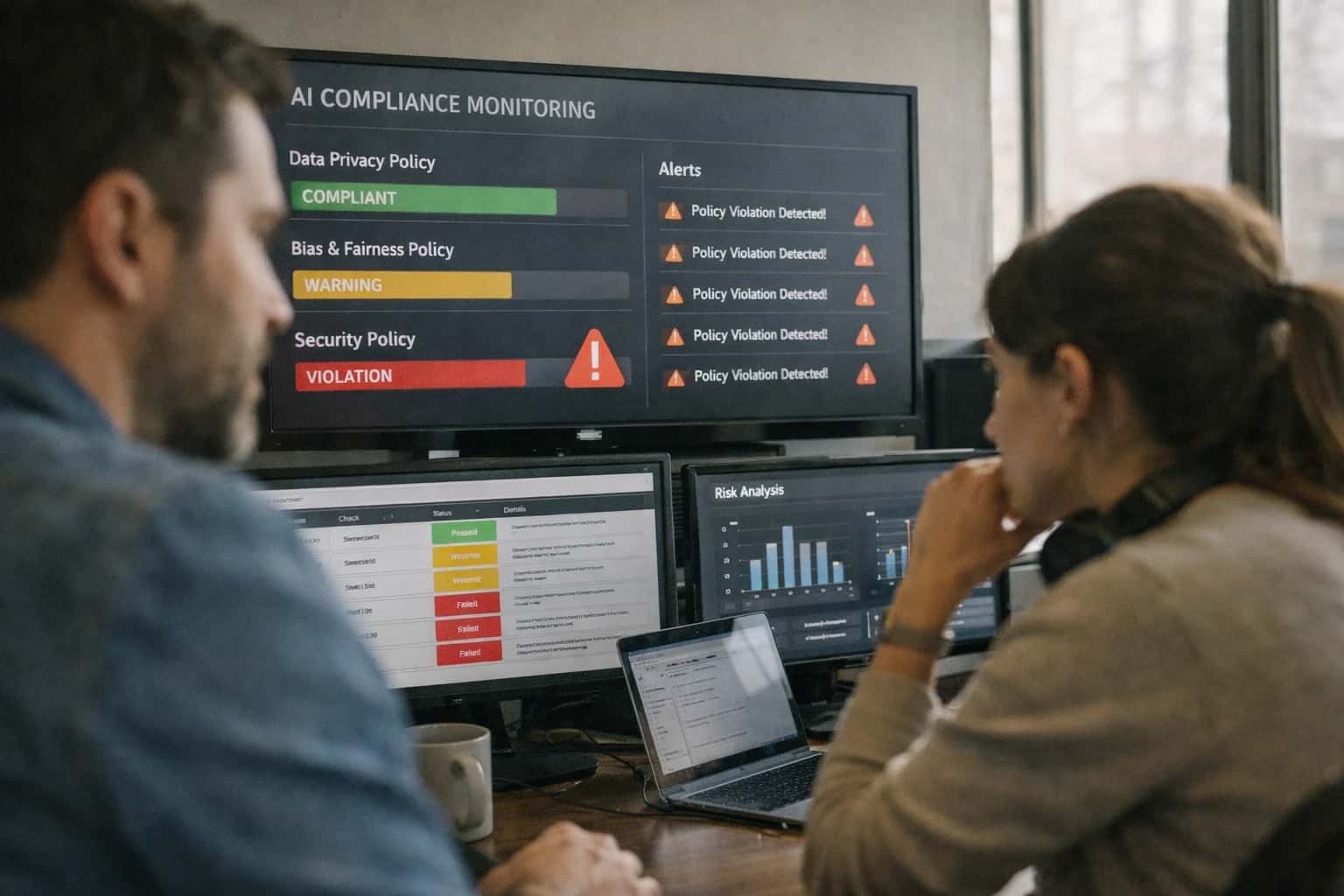
ARCHITECTURE FOR STUDENT SUCCESS
Where AI Fits into Banner IEP Management
A technical blueprint for embedding AI agents and automation into Ellucian Banner's workflows for managing Individualized Education Programs (IEPs) in higher education.
Implementation typically involves an API layer that listens for webhooks from Banner when key events occur, such as a new Disability Service Request form submission or a scheduled IEP Review Date approaching. An AI agent can then be triggered to perform tasks like: summarizing lengthy psychological evaluation documents attached in BDM, cross-referencing recommended accommodations with the student's current course schedule in SFASRPO to flag potential conflicts (e.g., a note-taking accommodation for a lab-heavy course), or drafting templated communication to faculty regarding approved accommodations. The AI operates within a governed loop, where its outputs—drafted accommodation letters, meeting summaries, or compliance checklists—are presented to the coordinator for review, edit, and final approval within the familiar Banner interface before any system-of-record update is committed.
Rollout requires careful change management, starting with low-risk, high-volume tasks like document summarization and deadline tracking. Governance is critical; all AI-generated content and recommendations must be logged in an audit trail linked to the student's record (SPACMNT), and access must respect the same FERPA-enforced role-based controls (GUROLE) as the underlying Banner system. The integration's value is measured in operational efficiency: reducing the manual hours spent compiling pre-meeting packets, decreasing data entry errors in accommodation tracking, and ensuring no student's review cycle falls through the administrative cracks.
IEP MANAGEMENT
Key Integration Surfaces in Ellucian Banner
SPACMNT – Core Accommodation Records
The SPACMNT table is the primary system of record for student accommodations within Banner. AI integration here focuses on intelligent accommodation planning and compliance tracking.
Key AI workflows include:
- Dynamic Recommendation: Analyzing a student's academic history (
SGASTDN,SHRTCKN), disability documentation, and course demands (SSBSECT) to suggest evidence-based accommodations beyond standard lists. - Usage & Efficacy Analysis: Correlating accommodation usage (from
SPACMNTlogs) with grade outcomes to identify which supports are most effective for specific courses or disability types. - Automated Renewal & Review: Triggering workflow notifications for upcoming accommodation review dates, pre-populating meeting agendas with progress data, and drafting continuation justification notes.
Integration is typically via Banner's Student API or direct, secure database connection for real-time reads and audit-safe writes.
ELLUCIAN BANNER INTEGRATION
High-Value AI Use Cases for Banner IEP
Transform the management of Individualized Education Programs (IEPs) for students with disabilities by connecting AI directly to Ellucian Banner's student data, document management, and workflow systems. These use cases target compliance, efficiency, and proactive student support.
01
Automated IEP Drafting & Compliance Pre-Check
Generate initial IEP drafts by pulling structured data from Banner (SPAIDEN, SGASTDN) and unstructured notes from previous meetings. An AI agent cross-references draft goals and accommodations against state/federal compliance rules, flagging potential issues before the meeting for the case manager to review.
Hours -> Minutes
Draft preparation
02
Progress Monitoring & Alert Automation
Continuously analyze Banner gradebook data, attendance records (SFAREGS), and assessment scores linked to IEP goals. An AI system detects students falling behind on progress metrics and automatically generates alerts for case managers, suggesting data points for the next review meeting. Integrates with Banner workflow engine to create follow-up tasks.
Batch -> Real-time
Monitoring cadence
03
Accommodation Implementation Tracking
Monitor the fulfillment of mandated accommodations (e.g., extended time, note-taking support) by connecting AI to Banner's class roster and scheduling data. The system checks for alignment between IEP directives and actual course setups, flagging discrepancies to disability services staff. Automates communication to faculty via Banner's messaging APIs when new accommodations are activated.
Reduce Manual Audits
Compliance assurance
04
Meeting Preparation & Note Summarization
An AI copilot for case managers aggregates all relevant student context before an IEP meeting: Banner academic history, recent advisor notes (SGAADVR), and related service logs. During the meeting, it transcribes and summarizes discussion points, extracting key decisions and action items to auto-populate the official IEP document in Banner's document management system (BDM).
Same day
Note finalization
05
Transition Planning & Pathway Analysis
For students approaching program completion or transfer, AI analyzes Banner degree audit data, career service interactions, and course history to suggest personalized transition goals. It drafts relevant sections of the transition IEP by evaluating successful pathways of similar past students, helping teams create data-informed post-secondary plans.
Data-Informed Goals
Planning quality
06
Parent/Guardian Communication & Consent Workflow
Automate and personalize the high-volume communication required for IEP meetings, revisions, and consent. An AI agent drafts meeting invitations, reminder notices, and consent form explanations by pulling parent/guardian contact info from Banner (SPAPERS) and student details. Manages the digital signature workflow via Banner's self-service portal, reducing paper and follow-up calls.
Reduce Manual Triage
Staff workload
CONCRETE IMPLEMENTATION PATTERNS
Example AI-Augmented IEP Workflows
These workflows illustrate how AI agents and automation can integrate directly with Ellucian Banner's data model and workflows to support the IEP process, from initial assessment to annual review and compliance reporting. Each pattern is designed to reduce administrative burden, ensure consistency, and free up case managers for high-value student interactions.
Trigger: A new psychoeducational assessment report is uploaded to the student's document record in Banner (e.g., linked to the SGRSATT or a custom document table).
Context/Data Pulled:
- The AI agent retrieves the assessment document via Banner's Document Management API.
- It extracts key scores, observations, and recommendations using OCR and NLP.
- It queries Banner for the student's demographic data (
SPAIDEN), current course schedule (SFAREGS), and prior academic performance (SHRTGPA).
Model/Agent Action:
- A structured prompt instructs an LLM to synthesize the assessment data, academic history, and standard IEP language templates.
- The agent generates a draft IEP document with populated sections:
- Present Levels of Performance (PLOP): Narrative summarizing assessment results and current academic standing.
- Measurable Annual Goals: 3-5 suggested SMART goals derived from assessment recommendations.
- Accommodations & Modifications: A checklist of standard accommodations (extended time, note-taking support) matched to identified needs.
System Update/Next Step:
- The draft IEP is saved as a new document in Banner, tagged as
DRAFT_AI_GENERATED. - A task is created in Banner's workflow or a connected case management system (or via email/Teams webhook) for the assigned case manager to review, edit, and finalize the draft.
Human Review Point: The case manager must review, validate, and personalize the entire draft before scheduling the IEP meeting. The AI's role is to eliminate blank-page syndrome and ensure baseline consistency.
IEP MANAGEMENT WORKFLOWS
Implementation Architecture: Connecting AI to Banner
A production-ready architecture for embedding AI agents into Ellucian Banner's IEP workflows to support students with disabilities.
The integration connects to Banner's core student data tables (SGASTDN, SPRIDEN) and the SGBSTDN disability services module via Banner's SOAP or RESTful APIs and a secure data extraction layer. AI agents are deployed as a middleware service that listens for workflow triggers—such as a new IEP meeting scheduled in the SGBSTDN notes field or a document uploaded to Banner Document Management (BDM). Key data objects include student accommodation history, faculty notification flags, and compliance deadline fields, which the AI uses to maintain context.
In a typical workflow, an agent acts as a copilot for the disability services coordinator. When a meeting is logged, the agent can:
- Retrieve the student's past accommodations from Banner and draft a meeting agenda.
- Analyze unstructured advisor notes to suggest new accommodations based on historical patterns.
- Generate draft compliance reports for state or federal review by structuring data from
SGBSTDNand related audit tables. - Post-meeting, the agent can automate the creation of faculty notification letters in Banner's communication module, populated with the newly approved accommodations, reducing a multi-step manual process to a single review click.
Rollout is phased, starting with read-only summarization and drafting agents that assist coordinators without making system writes. Governance is critical: all AI-generated content is tagged in Banner's audit trail (SGRBCHG), and a human-in-the-loop approval step is required before any automated notification is sent or accommodation is officially posted. The architecture uses a dedicated vector store to index historical IEP documents and accommodation outcomes, enabling RAG (Retrieval-Augmented Generation) that grounds suggestions in the institution's own past decisions and compliance history, not generic templates.
IEP WORKFLOW INTEGRATION
Code & Payload Examples
Querying Banner for IEP Context
Before an AI agent can assist with accommodation planning or note drafting, it needs the student's current IEP status, academic history, and registered accommodations. This typically involves querying multiple Banner tables via its API or direct database connection (with proper governance).
Example SQL Query (Pseudocode):
sqlSELECT s.SPRIDEN_ID AS banner_id, s.SPRIDEN_LAST_NAME, s.SPRIDEN_FIRST_NAME, d.SGBSTDN_PROGRAM, d.SGBSTDN_LEVL_CODE, iep.IEP_STATUS, iep.IEP_REVIEW_DATE, acc.ACCOMMODATION_TYPE, acc.ACCOMMODATION_DETAILS FROM SPRIDEN s JOIN SGBSTDN d ON s.SPRIDEN_PIDM = d.SGBSTDN_PIDM LEFT JOIN BAN_IEP_STUDENT iep ON s.SPRIDEN_PIDM = iep.PIDM LEFT JOIN BAN_IEP_ACCOMMODATIONS acc ON iep.IEP_ID = acc.IEP_ID WHERE s.SPRIDEN_ID = :student_id AND d.SGBSTDN_TERM_CODE_EFF = (SELECT MAX(SGBSTDN_TERM_CODE_EFF) FROM SGBSTDN WHERE SGBSTDN_PIDM = d.SGBSTDN_PIDM);
This consolidated payload provides the AI with the necessary context to generate relevant, personalized suggestions without violating FERPA by accessing unrelated records.
AI-ASSISTED IEP MANAGEMENT IN ELLUCIAN BANNER
Realistic Time Savings & Operational Impact
This table illustrates the tangible workflow improvements and time savings achievable by integrating AI agents with Ellucian Banner's IEP data and processes. These are directional estimates based on typical higher education disability services office operations.
| Process / Task | Before AI (Manual) | After AI (Assisted) | Implementation Notes |
|---|---|---|---|
IEP Meeting Preparation & Agenda Drafting | 2-4 hours per meeting for data pull, note review, and agenda creation | 30-45 minutes for review and refinement of AI-generated draft | AI synthesizes past notes, student performance from Banner (SGASTDN, SFRSTCR), and accommodation history to create a structured first draft |
Accommodation Letter Generation & Distribution | Next-day turnaround after meeting; manual template population and emailing | Same-day, automated generation and secure portal posting post-approval | AI populates approved accommodations into standardized templates and triggers distribution via Banner self-service or email, with audit trail |
Progress Note Summarization & Compliance Flagging | Weekly manual review of notes; risk of missing trends or deadlines | Daily automated summaries with highlighted risks and upcoming review dates | AI continuously analyzes advisor notes (entered via Banner forms) for sentiment, goal progress, and flags non-compliance patterns for case manager review |
Student Intake & Initial Accommodation Planning | 1-2 week process from application to preliminary plan draft | Preliminary plan draft generated within 1 business day of document submission | AI reviews intake forms, historical documents (via Banner Document Management), and self-reported needs to suggest an initial accommodation set for professional review |
Semesterly Accommodation Renewal & Course Application | Manual process for each course each term; high risk of inconsistency or omission | Bulk, rule-based application of accommodations to new course schedules | AI reads registered courses (from SFAREGS) and applies standing accommodations automatically, flagging exceptions (e.g., lab courses) for manual review |
Reporting for Institutional Research & State/Federal Compliance | Quarterly or annual manual data compilation and report writing (days of effort) | On-demand report generation with narrative summaries in hours | AI agents query Banner ODS/EDW for IEP demographics, usage stats, and outcomes, generating draft reports with charts and explanatory text for officer validation |
Student & Faculty Communication for Accommodation Logistics | Reactive, manual email responses to common logistical questions | Proactive, automated messaging and AI chatbot handling of routine inquiries | AI-powered chatbot integrated with Banner self-service answers FAQs about testing center bookings, note-taking services, and deadlines, escalating complex issues |
IMPLEMENTING AI WITH CONFIDENCE
Governance, Security & Phased Rollout
A secure, governed approach to integrating AI into sensitive IEP workflows within Ellucian Banner.
Integrating AI into the IEP process requires strict adherence to FERPA, HIPAA, and Section 504/ADA compliance. Our architecture ensures AI agents and models only access de-identified or role-scoped data via Banner's SOA or REST APIs, such as SGASTDN (student general), SHRDGMR (degree audit), and SAAADMS (admissions) for context, while keeping Protected Health Information (PHI) and detailed disability documentation within secure, access-controlled systems. All AI-generated suggestions—like accommodation recommendations or meeting note drafts—are treated as proposals requiring human review and approval within the Banner workflow before any official record (SFRSTCR, SFAREGS) is updated. Every interaction is logged to Banner's audit trails or a dedicated LLMOps platform for full traceability.
A phased rollout minimizes risk and builds institutional trust. Phase 1 focuses on assistive, non-transactional use cases: an AI copilot that helps disability services staff draft meeting summaries by analyzing past GOBTPAC (Banner third-party access) notes and pulling relevant academic history, with all outputs requiring a staff member's sign-off. Phase 2 introduces automated compliance checks, where an AI agent reviews drafted IEP documents against a policy knowledge base to flag potential compliance gaps before finalization. Phase 3, after extensive validation, enables predictive analytics, using anonymized historical data to suggest proactive accommodations for incoming students based on similar academic profiles, always presenting these as advisory insights.
Governance is maintained through a cross-functional steering committee (IT, Disability Services, Legal, Registrar) that approves each phase's scope and reviews AI performance metrics. Technical safeguards include prompt-injection detection, output filtering for bias or hallucination, and RBAC integration with Banner's security model (GURPRLE, GUBOBJS) to ensure AI tools respect existing user permissions. This controlled, incremental approach allows your institution to harness AI's efficiency for IEP management while maintaining the legal and ethical rigor required in student support services. For related architectural patterns, see our guide on AI Integration for Student Information Systems.
Enabling Efficiency, Speed & Accuracy
Intelligent Analysis, Decision & Execution
We build AI systems for teams that need search across company data, workflow automation across tools, or AI features inside products and internal software.
Talk to Us
Search across company data
Give teams answers from docs, tickets, runbooks, and product data with sources and permissions.
Useful when people spend too long searching or get different answers from different systems.
Enterprise searchRAGPermissions
Read more
Automate internal workflows
Use AI to route work, draft outputs, trigger actions, and keep approvals and logs in place.
Useful when repetitive work moves across multiple tools and teams.
AI agentsWorkflow automationGovernance
Read more
Add AI to products and internal tools
Build assistants, guided actions, or decision support into the software your team or customers already use.
Useful when AI needs to be part of the product, not a separate tool.
AI integrationDecision supportModel routing
Read moreAI INTEGRATION WITH ELLUCIAN BANNER IEP MANAGEMENT
FAQ: Technical & Implementation Questions
Answers to common technical and architectural questions for integrating AI into the IEP process within Ellucian Banner, focusing on data access, workflow automation, and compliance.
Accessing this sensitive data requires a layered approach:
- API Strategy: Use Banner's SOAP or RESTful APIs (e.g.,
General StudentAPIs) to retrieve core student records. For IEP-specific data, you'll often need to query custom Banner tables (e.g.,SGRSDPRfor student disability,SGRSPRTfor provider information) via direct database views exposed through a secure middleware layer. - Authentication & RBAC: Implement service accounts with the minimum necessary privileges using Banner's security model (e.g.,
GUAPMNU). Enforce role-based access at the application layer, ensuring AI agents only see data pertinent to their specific function (e.g., a note-generation agent only sees relevant clinical notes, not full financial aid records). - Data Masking: For development and testing, use synthetic data generation or strict field-level masking for personally identifiable information (PII) and protected health information (PHI).
- Audit Trail: All AI system data accesses must log to a secure audit table, capturing
user/service ID,timestamp,Banner PIDM,table/view accessed, andpurposeto maintain compliance with FERPA and disability privacy laws.

About the author
Prasad Kumkar
CEO & MD, Inference Systems
Prasad Kumkar is the CEO & MD of Inference Systems and writes about AI systems architecture, LLM infrastructure, model serving, evaluation, and production deployment. Over 5+ years, he has worked across computer vision models, L5 autonomous vehicle systems, and LLM research, with a focus on taking complex AI ideas into real-world engineering systems.
His work and writing cover AI systems, large language models, AI agents, multimodal systems, autonomous systems, inference optimization, RAG, evaluation, and production AI engineering.
LinkedIn
Limited slotsGet a Free AI Consultation
Partnered with leading AI, data, and software stack.





How We Work
Custom AI workflows for your Business
One-fit-all AI don't work for modern businesses. At Inferensys, we aim to understand your business & custom requirements; which we use to define most efficient agentic workflows, the data, and the tools for your business.
01
Review the use case
We understand the task, the users, and where AI can actually help.
Read more02
Pick the right approach
We define what needs search, automation, or product integration.
Read more03
Build the first useful version
We implement the part that proves the value first.
Read more04
Improve from there
We add the checks and visibility needed to keep it useful.
Read moreThe first call is a practical review of your use case and the right next step.
Talk to Us