AI integration for Skyward Accommodation Management focuses on three core functional surfaces: the Student Services module for IEP/504 plan records, the Scheduling module for classroom and testing assignments, and the Communications/Portal layer for family and staff interactions. The primary data objects are Student Accommodation Plans, Service Tracking logs, and Resource Inventories (e.g., assistive tech, specialized furniture). AI agents can monitor these records to trigger workflows—like automatically flagging a student's upcoming exam in the scheduler that requires a separate room or extended time, based on their active plan.

Integration
AI Integration with Skyward Accommodation Management
Streamline the management of testing accommodations, classroom modifications, and assistive technology assignments in Skyward using AI to match student needs with available resources, reduce manual coordination, and ensure compliance.
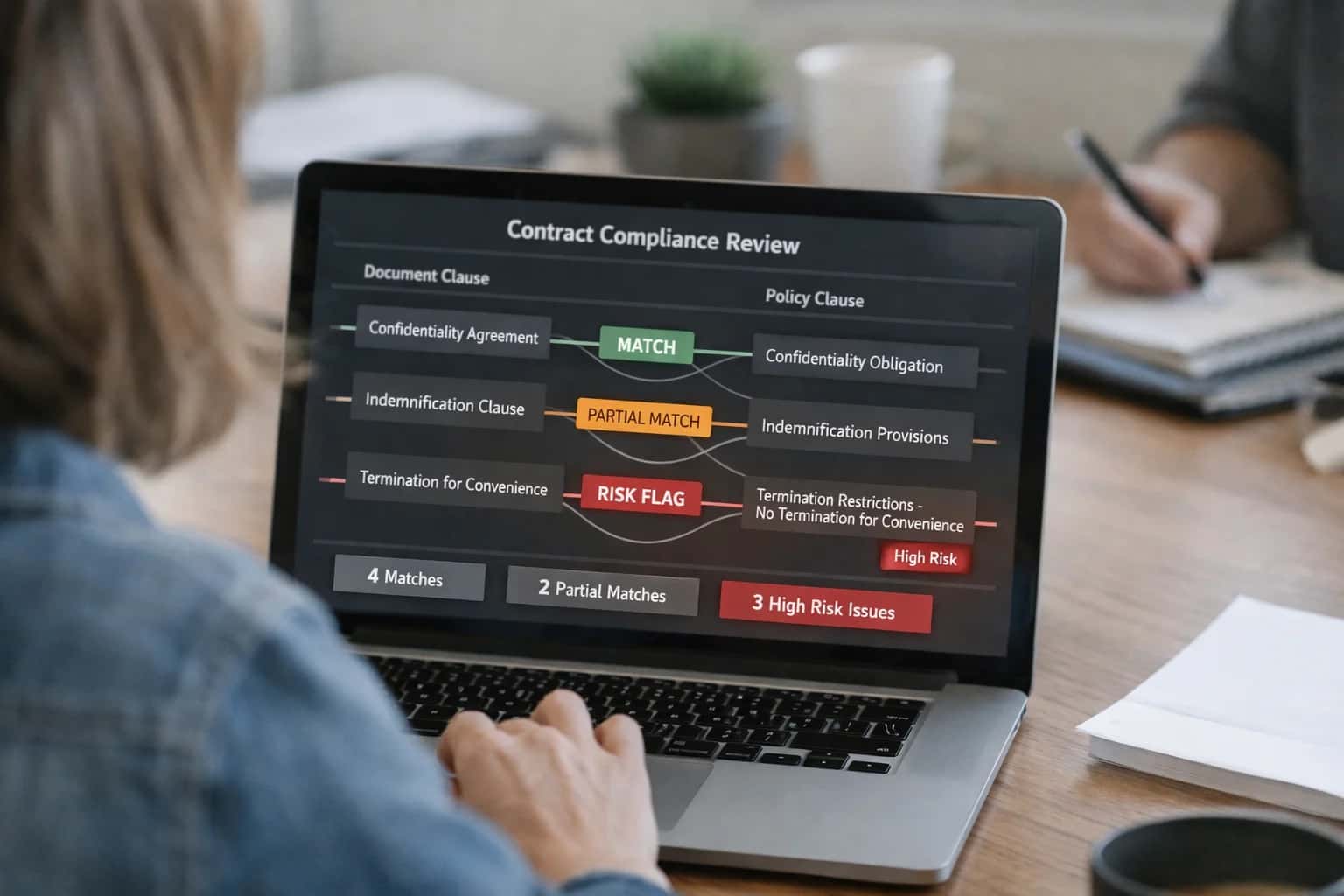
ARCHITECTURE FOR STUDENT SUCCESS
Where AI Fits into Skyward Accommodation Management
A practical blueprint for embedding AI into Skyward's accommodation workflows to match student needs with resources efficiently.
Implementation typically involves a middleware layer that subscribes to Skyward API webhooks for plan updates or schedule changes. For example, when a new accommodation is added, an AI workflow can: 1) parse the clinical or educational language of the plan to extract specific requirements, 2) query the district's resource database for availability, 3) generate a draft assignment or procurement request, and 4) route it via Skyward's task queue to the appropriate staff member (e.g., assistive technology coordinator, counselor) for approval. This reduces the manual triage and matching process from hours to minutes, ensuring compliance and timely setup.
Rollout requires a phased approach, starting with read-only analysis of historical accommodation data to train matching logic and identify bottlenecks. Governance is critical; all AI-generated recommendations should be logged in Skyward's audit trail with a clear "suggested by AI" flag, requiring a human staff member's final approval before any system-of-record update. This human-in-the-loop model maintains accountability while significantly accelerating the operational workflow. For related technical patterns, see our guide on AI Integration for Student Support and SIS Workflow Automation.
ACCOMMODATION MANAGEMENT
Key Skyward Surfaces for AI Integration
Central Hub for Standardized Testing
The Testing Accommodations module is the primary surface for managing extended time, separate settings, assistive technology, and reader/scribe assignments for state and college entrance exams. AI integration here focuses on intelligent matching and workflow automation.
Key integration points include:
- Accommodation Eligibility Lists: AI can analyze a student's IEP/504 plan history, past accommodation usage, and performance data to suggest the most appropriate testing supports, reducing manual review.
- Scheduling & Resource Allocation: An AI agent can optimize room and proctor assignments by analyzing student needs, available spaces, and staff certifications, creating conflict-free schedules.
- Documentation & Compliance: Automate the generation of justification letters and audit trails by extracting key phrases from educational plans and past successful accommodations using NLP.
Implementation typically involves API calls to retrieve student plans (StudentServices objects) and write back approved accommodations to the TestingAccommodations table, with an AI layer handling the recommendation logic.
SKYWARD INTEGRATION PATTERNS
High-Value AI Use Cases for Accommodation Management
Integrating AI with Skyward's accommodation management modules can transform manual, reactive processes into proactive, data-driven workflows. These patterns focus on automating documentation, matching resources, and ensuring compliance for testing accommodations, classroom modifications, and assistive technology.
01
Automated Accommodation Plan Drafting
Use AI to generate initial drafts of IEPs, 504 plans, and testing accommodation forms by analyzing Skyward student records, past plans, and evaluation reports. The agent pulls relevant history, suggests standard accommodations based on disability codes, and flags inconsistencies for case manager review.
Workflow: Case manager triggers draft from student profile → AI reviews academic history, behavior logs, and prior accommodations → Generates a structured document in Skyward's document management → Highlights sections requiring human judgment.
Hours -> Minutes
Draft preparation
02
Proactive Accommodation Matching & Alerting
Build an AI agent that continuously scans Skyward schedules (state testing, finals, field trips) against student accommodation plans. It identifies conflicts—like a student with extended time scheduled in a standard-duration slot—and alerts coordinators and teachers via Skyward messaging with resolution options.
Workflow: Agent monitors Skyward calendar and accommodation tables → Detects schedule-accommodation mismatch → Creates a task in Skyward's task manager for the test coordinator → Sends personalized alert to teacher with student's specific accommodations.
Batch -> Real-time
Conflict detection
03
Assistive Technology Inventory & Assignment
Integrate AI with Skyward's inventory modules to manage assistive technology (AT) assets. The system recommends specific devices or software based on a student's accommodation plan, learning goals, and past usage efficacy. It handles check-out workflows, tracks utilization, and predicts reorder needs.
Workflow: New AT need logged in Skyward → AI reviews student profile and available inventory → Recommends optimal device/software match → Automates checkout form and parent consent workflow in Skyward → Schedules follow-up for efficacy check.
Same day
Fulfillment cycle
04
Accommodation Compliance & Audit Reporting
Deploy an AI copilot for special education directors that automates compliance tracking and audit preparation. It analyzes Skyward data to verify accommodation implementation (e.g., extended time actually applied in gradebook), identifies gaps, and generates narrative-ready reports for state or federal reviews.
Workflow: Director requests compliance dashboard → AI queries Skyward accommodation plans, gradebook settings, and test logs → Flags students with plans but no recorded accommodations in past 30 days → Produces a summary report with evidence links for each student record.
1 sprint
Audit prep time
05
Teacher & Substitute Accommodation Briefing
Create an AI-powered briefing agent that automatically summarizes a student's key accommodations for any teacher or substitute assigned via Skyward. It generates a concise, role-appropriate summary (e.g., "For tests: 1.5x time, quiet setting") and delivers it via Skyward inbox or a connected communication platform at the start of each term or assignment.
Workflow: Skyward schedule change triggers agent → AI pulls accommodation essentials for newly assigned students → Distills into actionable bullet points → Pushes briefing to teacher's Skyward portal and optionally to email/SMS.
Zero-touch
Briefing delivery
06
Parent & Student Accommodation Portal Assistant
Embed a context-aware chatbot in the Skyward Family Access portal that answers questions about accommodation status, upcoming standardized test arrangements, and AT device support. The agent is grounded in the student's specific Skyward records, providing accurate, instant answers and routing complex queries to the correct case manager.
Workflow: Parent asks, "What are my child's testing accommodations for the state test next week?" → Chatbot queries Skyward accommodation plan and testing calendar → Returns specific accommodations, location, and time → Offers to schedule a meeting with coordinator if follow-up needed.
24/7
Support availability
SKYWARD INTEGRATION PATTERNS
Example AI-Powered Accommodation Workflows
These concrete workflows illustrate how AI agents and automation can be embedded into Skyward's accommodation management modules to reduce manual effort, improve compliance, and personalize student support.
Trigger: A parent or teacher submits a new accommodation request via the Skyward Family/Student Access portal or an internal staff form.
AI Agent Action:
- Document Processing: An AI agent, triggered by the form submission, retrieves any attached documents (e.g., medical diagnosis, previous IEP/504). It uses OCR and NLP to extract key entities: diagnosis codes, recommended accommodations, provider name, and dates.
- Initial Classification: The agent classifies the request type (e.g.,
Testing,Classroom,Assistive Technology) and urgency based on document content and form fields. - Data Enrichment: The agent queries Skyward's
Student DemographicsandStudent Servicesmodules to pull the student's existing accommodation history, grade level, and enrolled courses. - Workflow Routing: The agent creates a task in Skyward's
Task Manageror a record in a customAccommodation Reviewmodule, pre-populated with extracted data. It assigns the task to the appropriate staff member (e.g., Special Ed Coordinator for IEP-related, Counselor for 504) based on classification rules.
System Update: The parent/teacher receives an automated Skyward message: "Your request for [Accommodation Type] for [Student Name] has been received and is under review by [Staff Role]."
Human Review Point: The assigned staff member reviews the AI-extracted data and recommendation in the task for accuracy before proceeding to the formal evaluation meeting.
ACCOMMODATION MANAGEMENT AUTOMATION
Implementation Architecture: Connecting AI to Skyward
A production-ready blueprint for embedding AI agents and automation into Skyward's accommodation workflows to match student needs with resources.
The integration connects to Skyward's core Student Demographics, Special Programs, and Scheduling modules via its API Suite and Event-Driven Webhooks. Key data objects include StudentAccommodation records, IEP/504Plan documents, TestingSchedule events, and ResourceInventory tables for assistive technology. AI agents are triggered by events like a new accommodation approval, a scheduled exam, or a teacher request, pulling relevant student history and available resources to generate recommendations or automated actions.
A typical workflow involves an AI Matching Engine that analyzes a student's approved accommodations (e.g., extended time, text-to-speech, separate setting) against resource constraints (e.g., proctor availability, specialized software licenses, room capacity). The agent can then:
- Automate scheduling by proposing and booking slots in Skyward's calendar.
- Generate personalized communications to teachers, students, and test coordinators.
- Flag conflicts (e.g., two students needing the same assistive device simultaneously) for human review.
- Initiate procurement workflows in connected systems when inventory thresholds are low.
This is implemented as a middleware service that sits between Skyward and the AI model layer, handling authentication, data normalization, prompt construction with grounded context, and audit logging of all AI-generated recommendations.
Rollout is phased, starting with read-only reporting and recommendation dashboards for special education coordinators, allowing for validation and trust-building. Governance is critical: all AI-suggested assignments or communications require configurable approval steps within Skyward's existing role-based security model (RBAC). A human-in-the-loop review is maintained for high-stakes modifications. The system maintains a full audit trail linking AI actions back to the triggering Skyward event and the responsible staff member's override or approval, ensuring compliance with IEP and 504 plan legal requirements. For a broader view of SIS integration patterns, see our guide on AI Integration for Student Information Systems.
SKYWARD ACCOMMODATION MANAGEMENT
Code and Payload Examples
Automating Form Processing and Triage
When a new accommodation request arrives via Skyward's forms module or an integrated portal, an AI agent can process the unstructured documentation (e.g., doctor's notes, psychoeducational evaluations) to extract key details and trigger the appropriate workflow.
Example Python payload for sending extracted data to Skyward's API to create a preliminary case record:
pythonimport requests # Payload after AI processes an uploaded PDF accommodation_request = { "student_id": "STU2024001", "request_type": "testing_accommodations", "extracted_details": { "diagnosis": "ADHD", "recommended_accommodations": [ "Extended time (1.5x)", "Separate testing location" ], "provider_name": "Dr. Jane Smith", "expiration_date": "2025-06-30" }, "source_document_url": "/uploads/STU2024001_eval.pdf", "status": "needs_review", "assigned_to": "sped_department" } # Post to Skyward's custom API endpoint for accommodation cases response = requests.post( 'https://your-district.skyward.com/api/v1/accommodations/cases', json=accommodation_request, headers={'Authorization': 'Bearer YOUR_API_KEY'} )
This automates the initial data entry, reducing manual transcription and ensuring the case is routed correctly based on the extracted request type.
AI-ASSISTED ACCOMMODATION MANAGEMENT
Realistic Time Savings and Operational Impact
How AI integration transforms manual, reactive processes into proactive, data-driven workflows within Skyward's accommodation modules.
| Process / Metric | Before AI (Manual) | After AI (Assisted) | Implementation Notes |
|---|---|---|---|
Accommodation Eligibility Screening | Manual review of IEP/504 documents (30-60 min per student) | AI pre-screens & flags key requirements (5-10 min review) | AI extracts accommodations, duration, and conditions; human specialist confirms. |
Resource Matching & Assignment | Cross-referencing spreadsheets, emails, and staff availability (Hours per case) | AI suggests optimal matches based on student needs, staff skills, and inventory (Minutes) | System considers assistive tech availability, staff certifications, and scheduling conflicts. |
Parent/Teacher Communication | Drafting individual emails and letters for each accommodation plan | AI generates personalized draft communications from templates and student data | Human reviews and personalizes before sending; ensures tone and compliance. |
Progress Monitoring & Compliance | Quarterly manual checks of accommodation logs and implementation fidelity | AI analyzes gradebook, attendance, and assessment data for automatic alerts | Triggers alerts when data suggests an accommodation may need adjustment or review. |
Annual Review Preparation | Compiling data from multiple systems for IEP/504 meetings (Half-day prep) | AI auto-generates a draft review packet with trends, notes, and recommendations | Case manager reviews and finalizes packet, reducing prep time by ~70%. |
Assistive Technology Inventory Management | Manual tracking of check-out/check-in and maintenance schedules | AI predicts demand, flags maintenance needs, and optimizes allocation | Integrates with Skyward's inventory module; prevents shortages and over-purchasing. |
State & Federal Reporting | Manual aggregation of accommodation data for annual compliance reports | AI compiles and validates required data points, generating report drafts | Ensures accuracy and reduces audit risk; director reviews and submits. |
ARCHITECTING FOR COMPLIANCE AND CONFIDENCE
Governance, Security, and Phased Rollout
A production-ready AI integration for Skyward Accommodation Management must be built with strict data governance, role-based security, and a controlled rollout plan.
Governance starts with data mapping. The AI system will primarily interact with Skyward's Student Demographics, Special Programs/IEP/504 modules, and Testing/Assessment records. We architect integrations to treat Skyward as the system of record, with AI acting as a read-only or suggestion-generating layer. All AI-generated recommendations—such as matching a student's diagnosed need with an available assistive technology resource—are logged as draft proposals within a dedicated Accommodation Workflow Queue. This ensures a human-in-the-loop (HITL) approval step is mandatory before any official Skyward record (like a Service or Accommodation Assignment) is created or modified via API. Audit trails capture the user who approved the AI suggestion, the original rationale, and the timestamp.
Security is enforced through Skyward's existing Role-Based Access Control (RBAC). The AI integration respects these permissions at the API level; an agent can only access student data and propose accommodations for caseloads the authenticated user (e.g., a case manager or psychologist) already has permission to view. Sensitive health and diagnostic information from evaluation reports is processed in-memory and is never stored permanently in the AI system's vector database. We implement prompt shielding to prevent accidental data leakage and ensure all API calls to foundational models (like OpenAI or Anthropic) are configured to opt-out of model training to maintain FERPA and HIPAA compliance.
A phased rollout mitigates risk and builds trust. Phase 1 (Pilot): Deploy a read-only AI assistant to a small group of special education coordinators. It analyzes existing accommodation plans and student profiles to surface resource optimization opportunities (e.g., "3 students with similar needs could share this speech-to-text device") without making changes. Phase 2 (Assisted Workflow): Enable the AI to draft new accommodation plan language and populate checklists within the workflow queue, reducing manual documentation time by 50-70% for case managers. Phase 3 (Proactive Management): Activate automated monitoring where the AI reviews new assessment results and Skyward attendance/grade data to flag students potentially needing a referral, creating a task for the relevant team. Each phase includes user training, feedback loops, and performance evaluation against key metrics like plan creation time and compliance audit readiness.
Enabling Efficiency, Speed & Accuracy
Intelligent Analysis, Decision & Execution
We build AI systems for teams that need search across company data, workflow automation across tools, or AI features inside products and internal software.
Talk to Us
Search across company data
Give teams answers from docs, tickets, runbooks, and product data with sources and permissions.
Useful when people spend too long searching or get different answers from different systems.
Enterprise searchRAGPermissions
Read more
Automate internal workflows
Use AI to route work, draft outputs, trigger actions, and keep approvals and logs in place.
Useful when repetitive work moves across multiple tools and teams.
AI agentsWorkflow automationGovernance
Read more
Add AI to products and internal tools
Build assistants, guided actions, or decision support into the software your team or customers already use.
Useful when AI needs to be part of the product, not a separate tool.
AI integrationDecision supportModel routing
Read moreIMPLEMENTATION & WORKFLOWS
Frequently Asked Questions
Common technical and operational questions about integrating AI into Skyward's Accommodation Management workflows.
This workflow uses an AI agent to analyze a student's accommodation plan and recommend optimal resource assignments.
- Trigger: A new or updated accommodation plan (e.g., IEP, 504 Plan, medical authorization) is saved in Skyward.
- Context Pulled: The agent retrieves the plan details (e.g.,
extended_time,separate_setting,assistive_tech_type) and the student's schedule from Skyward's API. - AI Action: The agent queries a vector database containing descriptions of school resources (testing rooms, tech inventory, staff expertise) and performs a semantic match. It generates a ranked list of recommendations with reasoning.
- System Update: Recommendations are posted as a note to the student's accommodation record in Skyward via API.
- Human Review: The case manager or coordinator reviews the AI's suggestions in Skyward and approves/modifies the final assignments, which are then officially scheduled.

About the author
Prasad Kumkar
CEO & MD, Inference Systems
Prasad Kumkar is the CEO & MD of Inference Systems and writes about AI systems architecture, LLM infrastructure, model serving, evaluation, and production deployment. Over 5+ years, he has worked across computer vision models, L5 autonomous vehicle systems, and LLM research, with a focus on taking complex AI ideas into real-world engineering systems.
His work and writing cover AI systems, large language models, AI agents, multimodal systems, autonomous systems, inference optimization, RAG, evaluation, and production AI engineering.
LinkedIn
Limited slotsGet a Free AI Consultation
Partnered with leading AI, data, and software stack.





How We Work
Custom AI workflows for your Business
One-fit-all AI don't work for modern businesses. At Inferensys, we aim to understand your business & custom requirements; which we use to define most efficient agentic workflows, the data, and the tools for your business.
01
Review the use case
We understand the task, the users, and where AI can actually help.
Read more02
Pick the right approach
We define what needs search, automation, or product integration.
Read more03
Build the first useful version
We implement the part that proves the value first.
Read more04
Improve from there
We add the checks and visibility needed to keep it useful.
Read moreThe first call is a practical review of your use case and the right next step.
Talk to Us