
Inferensys

Integration

AI Integration for Procure-to-Pay Platforms in Healthcare

A technical blueprint for embedding AI agents and workflows into Coupa, SAP Ariba, Jaggaer, and Ivalua to automate healthcare-specific procurement, from medical supply ordering to GPO contract enforcement.
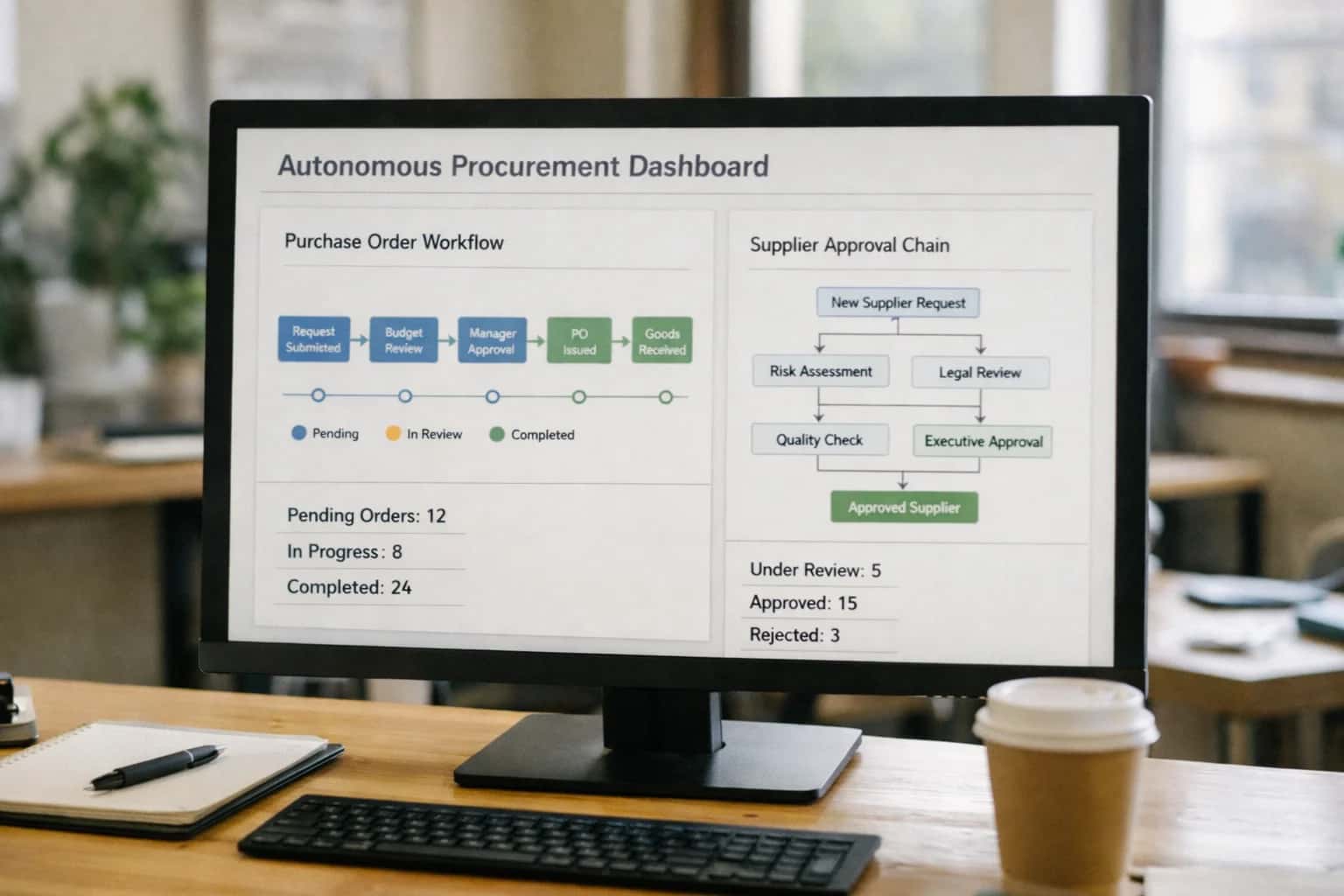
Procurement manager reviewing autonomous AI agent dashboard on laptop, purchase orders visible, office afternoon light.
ARCHITECTURE BLUEPRINT

Where AI Fits in Healthcare Procure-to-Pay

A technical blueprint for integrating AI into healthcare P2P platforms to automate supply chain, compliance, and financial workflows.

In healthcare, the Procure-to-Pay (P2P) cycle is uniquely complex, governed by Group Purchasing Organization (GPO) contracts, regulatory compliance, and the critical need for supply chain resilience. AI integration targets specific surfaces within platforms like Coupa, SAP Ariba, or Jaggaer to inject intelligence where manual processes create bottlenecks and risk. Key integration points include:

  • Contract & Catalog Management: Validating purchase requisitions against negotiated GPO pricing and formulary restrictions in real-time.
  • Invoice Processing: Extracting data from non-PO invoices for medical supplies and services, matching to patient charts or department codes.
  • Supplier Onboarding & Risk: Automating the collection and validation of supplier credentials (e.g., FDA registration, DEA licenses) and monitoring for recalls or supply disruptions.
  • Spend Classification: Mapping transactions to GL accounts, cost centers, and clinical service lines for accurate charge capture and cost accounting.


Implementation typically involves deploying AI agents as middleware that listen to platform webhooks (e.g., purchase_order.created, invoice.received) and act via REST APIs. For example, an agent can be triggered by a new requisition in Coupa for a high-cost implant. It would:

  1. Call the platform's API to fetch the item details and requester department.
  2. Cross-reference the item with the health system's preferred vendor list and GPO contract database.
  3. Check real-time inventory levels from the EHR or materials management system via an integrated API.
  4. Generate a compliance summary and, if compliant, auto-route the requisition; if not, flag it for clinical or supply chain review. This reduces procurement cycle times from days to hours and ensures contract compliance, directly impacting supply expense per adjusted patient day.

Rollout requires a phased, use-case-led approach, starting with a single high-volume category like medical-surgical supplies or pharmacy. Governance is critical: all AI-driven actions should be logged in the P2P platform's audit trail, and outputs—especially for clinical or high-value items—should be configured for human-in-the-loop review before final approval. The integration must also respect healthcare data governance frameworks, ensuring PHI is not processed unless necessary and that all data flows comply with HIPAA BAA agreements where applicable. Success is measured by touchless processing rates, reduction in contract leakage, and improved days payable outstanding (DPO) through optimized payment terms.

WHERE AI CONNECTS TO HEALTHCARE PROCUREMENT WORKFLOWS

Key Integration Surfaces in Healthcare P2P Platforms

Medical Supply Requisition & Inventory Integration

AI integrates with P2P platforms to manage the unique lifecycle of medical supplies—from sterile goods to pharmaceuticals. Key surfaces include the requisition module, where AI can validate items against approved hospital formularies and substitute based on availability or contract compliance. Integration with inventory management systems (e.g., via API or flat-file exchange) allows AI to predict reorder points, analyze usage patterns against patient census data, and automate purchase orders to prevent stockouts of critical items.

For health systems using Group Purchasing Organization (GPO) contracts, AI agents can be wired to the contract management module to ensure every requisition and PO is mapped to the correct contracted supplier and pricing tier, maximizing savings and compliance. This layer reduces manual checks for clinical staff and materials management teams.

INDUSTRY BLUEPRINT

High-Value AI Use Cases for Healthcare Procurement

Healthcare procurement teams face unique pressures: managing critical medical supplies, ensuring GPO contract compliance, and integrating with clinical inventory systems. This blueprint details where AI agents can connect to your Procure-to-Pay platform to automate high-friction workflows, reduce clinical stockouts, and enforce compliance.

01

Medical Supply Requisition & Substitution

AI agents monitor inventory levels in Cerner or Epic and automatically generate purchase requisitions in the P2P platform when par levels are low. For out-of-stock items, the agent analyzes clinical equivalence, supplier availability, and GPO contract pricing to suggest approved substitutes, routing the updated requisition for clinical validation.

Stockout -> Proactive Reorder
Risk Reduction
02

GPO & Contract Compliance Enforcement

Integrate AI to analyze every PO line item against active Group Purchasing Organization (GPO) contracts and health system-specific agreements. The agent flags non-compliant purchases, suggests contract-aligned suppliers, and can automatically amend the requisition. This ensures maximum rebate capture and avoids maverick spend for high-cost categories like implants and pharmaceuticals.

Manual Audit -> Real-time Check
Compliance Workflow
03

Medical Device & Supplier Credentialing

Automate the onboarding and ongoing validation of suppliers providing FDA-regulated devices and implants. An AI workflow integrates with vendor portals and credentialing services (like Symplr) to collect and validate licenses, certifications, and insurance documents. It updates the supplier record in the P2P platform and alerts procurement of expirations, reducing compliance risk before orders are placed.

Weeks -> Days
Onboarding Time
04

Procedure-Based Kit Sourcing & Costing

For procedural areas (OR, Cath Lab), AI analyzes historical case cart data and surgeon preference cards. It maps components to supplier catalogs within the P2P system, builds optimized kit POs, and performs a total cost analysis across different bundling options. This supports value analysis teams in standardizing supplies and negotiating better kit pricing.

Batch -> Per-Procedure
Cost Visibility
05

Healthcare Invoice & PO Matching

Go beyond standard 3-way matching. AI agents are trained on healthcare-specific documents like implant logs, pharmacy charge sheets, and consignment inventory reports. They extract line-item details, reconcile them against POs and receiving data in the P2P platform, and resolve discrepancies (e.g., missing implant serial numbers) by querying clinical systems before escalating to AP.

Hours -> Minutes
Exception Resolution
06

Regulatory & Recall Response Coordination

When a medical device recall or supplier disruption occurs, AI monitors regulatory feeds and integrates with the P2P platform's supplier and item master data. It instantly identifies affected stock-keeping units (SKUs), traces them to purchase history and locations (central storage, clinics), and triggers workflows to quarantine inventory and source alternatives, ensuring patient safety and operational continuity.

Days -> Same Day
Response Time
PROCURE-TO-PAY AUTOMATION

Healthcare-Specific AI Workflow Examples

These concrete workflows illustrate how AI agents integrate with healthcare P2P platforms like Coupa, SAP Ariba, or Ivalua to automate high-volume, compliance-critical tasks unique to medical supply chains, GPO contracts, and clinical operations.

Trigger: Clinician or materials manager creates a purchase requisition in the P2P platform for a specific medical item (e.g., a catheter, surgical glove).

Context Pulled: AI agent calls the P2P platform's API to retrieve the requisition details (item SKU, quantity, requesting department). It simultaneously queries the integrated hospital inventory management system (e.g., Oracle Health Supply Chain) for real-time stock levels and checks the item against the health system's formulary or standardized product list.

Agent Action:

  1. Stock Check & Substitution: If the primary item is out of stock or on backorder, the agent analyzes the item's clinical attributes (size, material, sterility) and cross-references the approved GPO contract catalog to find a clinically equivalent, contract-compliant substitute.
  2. Compliance Validation: It verifies the substitute is approved for the requesting department's budget and aligns with any physician preference card data.
  3. Recommendation Generation: The agent annotates the requisition in the P2P system with its findings: "Primary item #XYZ is out of stock. Recommended substitute #ABC is clinically equivalent, covered under GPO contract 12345, and saves $X per unit. Requires charge code update from 67890 to 67891."

System Update/Next Step: The annotated requisition is routed for a streamlined, single-click approval by the materials management lead instead of a full clinical review, saving 1-2 days in the procurement cycle.

Human Review Point: The materials manager reviews the AI's substitution rationale and clinical alignment before final approval. All recommendations and decisions are logged for audit trails with the original requisition.

BLUEPRINT FOR MEDICAL SUPPLY CHAIN AND GPO OPERATIONS

Implementation Architecture: Connecting AI to the Healthcare Stack

A practical architecture for integrating AI into healthcare P2P platforms to manage medical supply procurement, enforce GPO contract compliance, and synchronize with clinical inventory systems.

In healthcare, the procure-to-pay stack is a critical bridge between clinical operations and financial stewardship. A production AI integration must connect to three primary surfaces within platforms like Coupa, SAP Ariba, or Jaggaer: the supplier catalog for medical supplies and pharmaceuticals, the contract management module governing Group Purchasing Organization (GPO) agreements, and the invoice/PO workflow engine. The AI layer acts as an intelligent orchestrator, validating requisitions against formulary lists, ensuring purchases align with contracted GPO pricing and terms, and automatically coding invoices with the correct GL account and cost center for department chargebacks.

A typical implementation uses a middleware agent that sits between the P2P platform and hospital systems. This agent listens for events via the platform's webhooks (e.g., purchase_requisition.created, invoice.received) and uses LLMs to analyze unstructured data—like physician notes on a non-catalog request or scanned supplier packing slips. It then calls the P2P platform's REST APIs to update records, route for approvals, or flag exceptions. For example, an AI agent can cross-reference a request for a specific implant against the hospital's inventory management system (like Oracle Health Supply Chain or Epic Willow) to check par levels before creating a PO, preventing overstocking of high-cost items.

Rollout requires a phased, department-by-department approach, starting with low-risk, high-volume categories like medical-surgical supplies. Governance is paramount: all AI-generated actions (e.g., suggesting an alternate vendor) must be logged in the P2P platform's audit trail with a clear rationale, and sensitive PHI must be redacted before processing. The final architecture ensures AI augments—rather than bypasses—existing clinical and supply chain approval hierarchies, making the procurement process faster and more compliant without disrupting patient care workflows. For a deeper look at connecting AI to clinical inventory data, see our guide on integrating with inventory management systems.

HEALTHCARE P2P INTEGRATION PATTERNS

Code and Payload Examples

AI-Powered Requisition Validation

In healthcare, purchase requisitions for medical supplies must be validated against clinical necessity, par levels, and formulary compliance before routing for approval. An AI agent can intercept the requisition payload from the P2P platform (e.g., Coupa, SAP Ariba), cross-reference it with the hospital's inventory management system and approved vendor lists, and append a validation summary.

Example Payload Enrichment:

json
{
  "requisition_id": "REQ-2024-7890",
  "requestor_dept": "Cardiology",
  "line_items": [
    {
      "item_code": "CATH-6FR-100CM",
      "description": "Angiography Catheter",
      "quantity": 50,
      "ai_validation": {
        "formulary_status": "approved",
        "par_level_check": "below_reorder_point",
        "substitute_available": false,
        "clinical_guideline_reference": "ACC/AHA 2023",
        "recommended_approval": true
      }
    }
  ]
}

This enriched payload is sent back to the P2P platform's approval workflow API, enabling faster, compliant approvals.

HEALTHCARE PROCUREMENT OPERATIONS

Realistic Time Savings and Operational Impact

Typical process improvements for a healthcare organization integrating AI into its Procure-to-Pay platform, focusing on medical supply procurement, contract compliance, and inventory integration.

ProcessBefore AIAfter AIKey Impact

Medical Supply Requisition Review

Manual policy & formulary check (30-60 min)

AI-assisted validation & routing (5-10 min)

Reduces clinician wait time, ensures compliance with GPO contracts

Invoice Exception Triage

AP manually researches mismatches (1-2 hrs per case)

AI flags root cause & suggests resolution (15 min)

Accelerates payment to critical medical suppliers, improves cash flow

Contract Compliance for GPOs

Quarterly manual audit of pricing & terms

Continuous AI monitoring with real-time alerts

Identifies pricing drift immediately, protects negotiated savings

Spend Classification (Med-Surg vs. Capital)

Finance manually codes 40% of transactions

AI auto-classifies 85%+ with human review

Enables accurate cost center allocation & budget tracking

Supplier Onboarding & Risk Screening

2-3 week manual collection & validation

AI automates document intake & initial screening (3-5 days)

Speeds up access to new suppliers for urgent clinical needs

Inventory Reorder Point Analysis

Static min/max levels, manual stock checks

AI predicts usage based on procedure schedules

Reduces stockouts of critical supplies without overstocking

Purchase Order Acknowledgement Follow-up

Clerk manually emails suppliers for confirmations

AI agent automates reminders & logs responses

Frees up procurement staff for strategic activities

ARCHITECTING FOR A REGULATED ENVIRONMENT

Governance, Security, and Phased Rollout

Implementing AI in healthcare P2P requires a deliberate approach to data governance, security, and controlled adoption.

In healthcare, AI integrations for platforms like Coupa, SAP Ariba, or Ivalua must operate within a strict data governance framework. This means implementing role-based access controls (RBAC) that mirror clinical and financial user roles, ensuring AI agents only access the procurement data necessary for their function—such as invoice line items or contract terms—while excluding protected health information (PHI) unless explicitly authorized for specific workflows like medical supply reconciliation. All AI interactions, from invoice classification to supplier risk scoring, must generate immutable audit logs tied to the underlying P2P transaction record.

A secure implementation typically involves a dedicated integration layer that sits between the P2P platform and the LLM. This layer handles data redaction, prompt safeguarding, and API call orchestration. For instance, when processing an invoice for orthopedic implants, the system might extract item descriptions and quantities for AI-powered GL coding while masking patient identifiers before any external API call. This architecture also manages API keys, enforces rate limits, and integrates with the organization's existing IAM and SIEM platforms for centralized monitoring.

Rollout should be phased, starting with low-risk, high-volume workflows to build trust and refine models. A common first phase is AI-assisted invoice routing and coding for non-clinical supplies (e.g., office equipment, facility maintenance). Success here allows expansion to more complex areas like medical supply catalog matching and contract compliance monitoring for Group Purchasing Organization (GPO) agreements. Each phase includes a human-in-the-loop review stage, allowing procurement and AP staff to validate AI suggestions before system actions are committed, ensuring accuracy and providing continuous feedback for model improvement.

IMPLEMENTATION BLUEPRINT

FAQ: AI Integration for Healthcare P2P

Practical questions and workflow walkthroughs for integrating AI into Procure-to-Pay platforms like Coupa, SAP Ariba, and Jaggaer within healthcare organizations, focusing on medical supply chains, GPO contract compliance, and clinical inventory integration.

This workflow automates the validation of purchase requests against Group Purchasing Organization (GPO) contracts and clinical formulary guidelines.

  1. Trigger: A clinician or materials manager submits a requisition for supplies (e.g., sutures, implants, PPE) in the P2P platform.
  2. Context Pulled: The AI agent retrieves the item description, requested quantity, and requester department. It then fetches the relevant GPO contract terms, preferred supplier list, and health system's approved product formulary from the contract management module or a connected database.
  3. Agent Action: Using a configured LLM, the agent:
    • Classifies the item to the correct UNSPSC or custom medical category.
    • Matches it to the contracted supplier and SKU.
    • Validates the price against the GPO agreement.
    • Checks for any clinical restrictions or preferred alternative products.
  4. System Update: The requisition is automatically updated in the P2P system with the correct supplier, contracted price, and any substitution recommendations. Non-compliant requests are flagged and routed to a sourcing or value analysis team for review.
  5. Human Review Point: Requisitions for new, non-formulary items or those exceeding a contract's volume commitment always route for clinical and procurement approval before proceeding.
Prasad Kumkar

About the author

Prasad Kumkar

CEO & MD, Inference Systems

Prasad Kumkar is the CEO & MD of Inference Systems and writes about AI systems architecture, LLM infrastructure, model serving, evaluation, and production deployment. Over 5+ years, he has worked across computer vision models, L5 autonomous vehicle systems, and LLM research, with a focus on taking complex AI ideas into real-world engineering systems.

His work and writing cover AI systems, large language models, AI agents, multimodal systems, autonomous systems, inference optimization, RAG, evaluation, and production AI engineering.


