AI integration targets the container runtime data streams QRadar ingests: Kubernetes API server audit logs, container runtime logs (e.g., CRI-O, containerd), OpenShift cluster events, and network flow data from the container overlay network. The primary surfaces for AI are the Offense creation engine and the investigation dashboards. Instead of relying solely on rule-based correlation for threats like privilege escalation or suspicious pod creation, an AI layer analyzes the sequence, context, and frequency of these events against learned baselines of normal cluster behavior. This detects subtle, multi-stage attacks that don't trigger a single high-fidelity rule, such as a pod gradually requesting excessive capabilities or a service account performing actions outside its typical namespace.

Integration
AI Integration for IBM QRadar for Containers
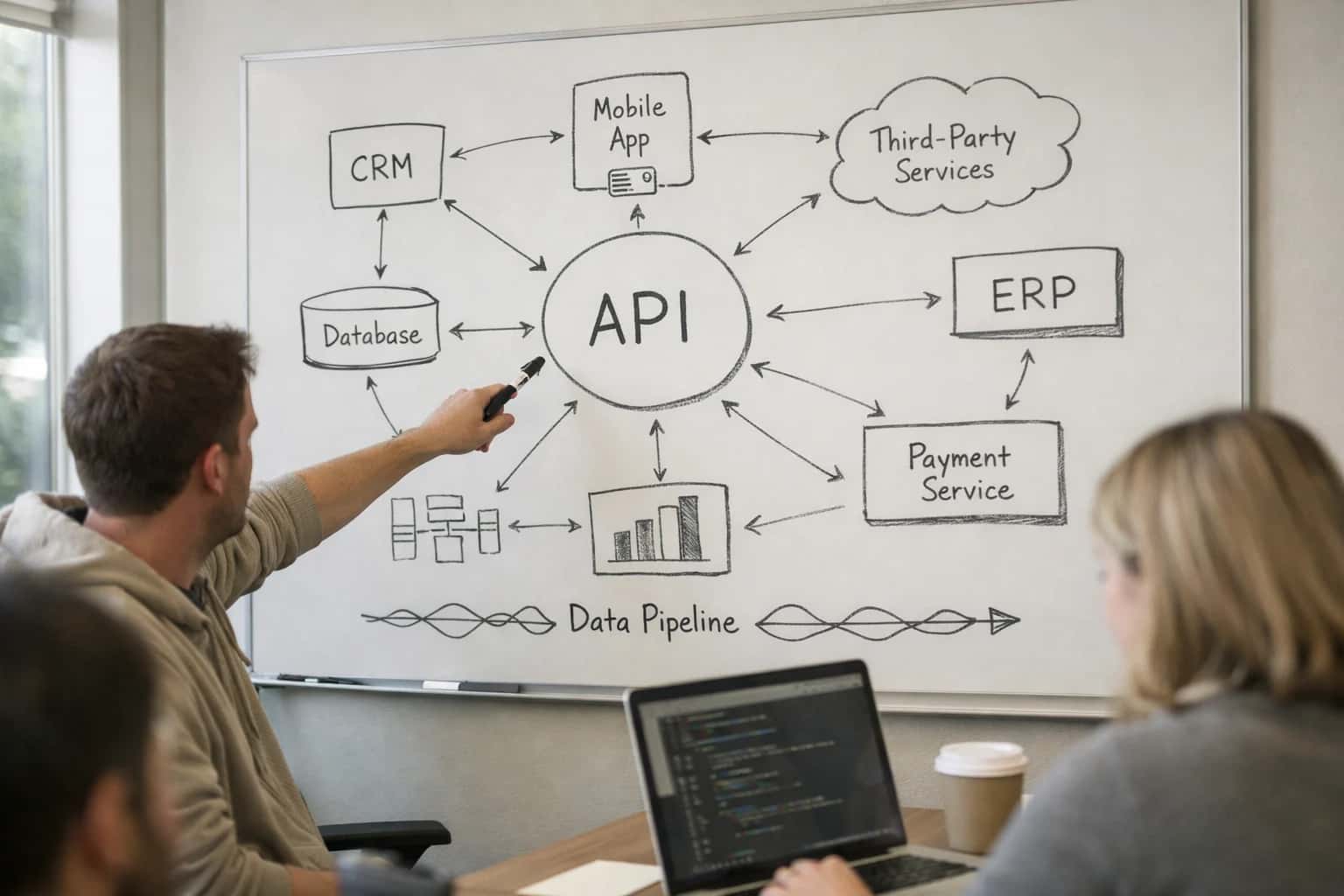
Where AI Fits in QRadar for Containers
Integrating AI with IBM QRadar for Containers moves security analysis from static correlation to behavioral intelligence across your Kubernetes and OpenShift runtime environment.
Implementation typically involves deploying a lightweight inference service—either as a sidecar container or a cluster service—that subscribes to the QRadar Event Pipeline or queries the Ariel database via API. This service applies models to container-specific entity behavior (pods, service accounts, nodes), flagging anomalies. High-confidence findings are injected back into QRadar as custom events to create enriched Offenses or annotate existing ones. For rollout, start with a detection-only mode for a subset of non-production clusters, using AI outputs to generate alerts in a dedicated QRadar dashboard. This allows the security team to validate findings against actual cluster activity before enabling automated Offense creation or integration with orchestration playbooks for response actions like pod quarantine.
Governance is critical. AI models must be trained on your specific environment's normal behavior, which requires an initial baseline period of data collection. All AI-generated annotations and Offenses should include an explanation trail (e.g., "flagged due to deviation from peer service account activity") and a confidence score. Access to modify or retrain models should be controlled via the same RBAC that governs QRadar administration. Furthermore, integration should respect the performance envelope of your QRadar deployment; consider processing AI inferences on a separate analytics node or using the inference service to pre-filter events before they hit the QRadar Event Collectors to manage EPS load. This approach ensures AI augments the SOC's capability to protect container workloads without introducing operational risk or alert fatigue.
Key Integration Surfaces in QRadar for Containers
Analyzing Container & Pod Lifecycle Data
AI models integrate with QRadar's ingestion of container runtime events from sources like the Kubernetes API server audit log and CRI-O/Docker logs. This surface focuses on detecting malicious activity within the container lifecycle, such as:
- Privileged container creation that deviates from baseline deployment patterns.
- Sensitive host path mounts or unusual
hostPID/hostNetworkusage indicative of escape attempts. - Pod/container deletion and recreation patterns that may signal an attacker covering tracks or maintaining persistence.
AI analyzes these events in the context of the cluster's namespace, service account, and image provenance to generate high-fidelity, behavior-based offenses. This moves detection beyond static policy violations to identify subtle, multi-stage attack chains.
High-Value AI Use Cases for Container Security
Integrate AI with IBM QRadar for Containers to move beyond basic log aggregation. Apply large language models and machine learning to container runtime data from OpenShift or managed Kubernetes to detect subtle threats, automate compliance checks, and accelerate investigations.
Runtime Threat Detection & Anomaly Scoring
Analyze container process trees, network connections, and system calls to establish behavioral baselines. AI models flag deviations—like a nginx pod suddenly executing curl to an external IP—and generate a risk-scored QRadar offense, prioritizing investigation of potential cryptojacking or data exfiltration.
Compliance Violation & Misconfiguration Triage
Automate checks against CIS benchmarks and internal security policies. AI reviews container spec data (privileged mode, hostPath mounts, dropped capabilities) ingested into QRadar, identifies violations, and enriches the resulting offense with the specific control failed and recommended remediation steps from the security team's playbook.
Incident Summarization & Attack Chain Reconstruction
When QRadar creates an offense from multiple container-related events, an AI agent synthesizes the raw pod logs, K8s audit events, and flow data into a concise narrative. It reconstructs the potential attack chain (e.g., Compromised Image -> Privilege Escalation -> Lateral Movement) and populates the offense description, accelerating analyst onboarding.
Intelligent Alert Grouping & Noise Reduction
Apply clustering algorithms to container security events (e.g., hundreds of identical policy violation alerts from a deployment). AI groups related alerts into a single, contextualized QRadar offense, reducing alert fatigue and allowing analysts to focus on the root cause—like a misconfigured Helm chart—rather than each individual pod instance.
Natural Language Hunting for Container Logs
Empower threat hunters to query container runtime data in plain English. An AI co-pilot integrated with the QRadar AQL interface translates questions like "Show me pods that communicated with known mining pool domains in the last 48 hours" into optimized queries, pulling from flow logs and DNS events, and returns results with explanatory context.
Automated Response for High-Confidence Threats
Orchestrate containment directly from QRadar offenses. For high-severity, AI-validated threats (e.g., a container running a known malware hash), an automated playbook can use the QRadar API to trigger actions via integrated orchestration tools—such as scaling a malicious deployment to zero in OpenShift or isolating the underlying node network segment.
Example AI-Augmented Workflows
These workflows illustrate how AI agents and models can be integrated with IBM QRadar for Containers to automate detection, investigation, and response for Kubernetes and Red Hat OpenShift environments. Each flow connects to specific QRadar surfaces like offense creation, flow data, and the investigation interface.
Trigger: QRadar creates a new offense based on a container-specific rule (e.g., Privileged Container Execution, Suspicious K8s API Call).
Context/Data Pulled:
- The AI agent receives the offense payload via webhook.
- It queries the QRadar API for related flow records from the
Container Network Activitylog source to map pod-to-pod communication. - It fetches the raw container audit log events (K8s API server, container runtime) associated with the offense timeframe.
- It retrieves asset context from an integrated CMDB or Kubernetes cluster API to get pod labels, namespaces, and owner information.
Model/Agent Action:
- A language model summarizes the multi-step attack sequence into a plain-English narrative: "Privileged pod
nginx-pod-xyzin namespaceproductionexecuted a shell, then initiated network connections to external IP185.199.108.153on port 443." - The agent cross-references the external IP and pod behavior against internal threat intelligence and the MITRE ATT&CK for Containers matrix, tagging the offense with relevant TTPs (e.g.,
T1609 - Container Administration Command).
System Update/Next Step:
- The enriched narrative, TTP tags, and asset context are posted back to the QRadar offense as notes via the REST API.
- The offense severity is automatically adjusted based on the AI-calculated risk score (considering namespace sensitivity, pod privileges, and indicator reputation).
- A high-confidence incident is automatically created in the connected SOAR platform (e.g., ServiceNow SecOps) with all context pre-populated.
Human Review Point: The final offense severity adjustment and SOAR incident creation are logged for audit. Analysts review the AI-generated narrative for accuracy before initiating containment.
Implementation Architecture: Data Flow and Model Layer
A practical architecture for integrating AI with IBM QRadar for Containers to analyze runtime telemetry and orchestration data for threat detection and compliance.
The integration connects at the QRadar Data Gateway or directly to the QRadar API to ingest normalized container security events. The primary data sources are the Red Hat OpenShift/Kubernetes audit logs, runtime security events (e.g., from Falco or the QRadar container sensor), and image vulnerability scans that QRadar for Containers already aggregates. The AI layer processes this stream to detect subtle, multi-stage attack patterns that rule-based correlation misses, such as a sequence of a sensitive config map access, a privileged pod creation, and outbound callbacks to a rare external IP.
In practice, we deploy a dedicated inference service (often containerized within the same OpenShift cluster) that subscribes to relevant QRadar offense and event streams. This service uses a combination of pre-trained behavioral models for common container TTPs and a custom fine-tuning layer that learns your cluster's normal workload patterns. For each high-fidelity anomaly detected—like a pod suddenly mounting the host filesystem or a service account performing anomalous API calls—the service enriches the finding with a plain-language explanation and a confidence score, then creates or updates a QRadar Offense via the API, prepopulating the description with the AI-generated narrative and recommended investigative steps.
Rollout is phased, starting with a read-only analysis mode where the AI service logs its findings without creating offenses, allowing SOC teams to validate detection quality. Governance is managed through the inference service's audit log, which records all model inputs, outputs, and actions taken, feeding back into QRadar for compliance. This architecture ensures the AI augments the existing QRadar workflow, providing deeper container-specific insight without replacing the platform's core correlation engine or requiring a massive data pipeline overhaul.
Code and Payload Examples
Enriching K8s Audit Logs for Runtime Threat Detection
QRadar for Containers ingests Kubernetes API server audit logs, which detail create, patch, delete, and exec operations. An AI integration can analyze these logs to detect anomalous sequences that indicate privilege escalation, lateral movement, or resource abuse.
A common pattern is to intercept these logs via the QRadar Event Collector, enrich them with AI-generated risk scores, and forward the enriched payload back into QRadar to create high-fidelity offenses.
Example Python Enrichment Function:
python# Pseudo-function to evaluate a K8s audit log event def evaluate_k8s_audit_event(event): """Takes a raw K8s audit log dict, returns enriched payload for QRadar.""" high_risk_indicators = [ 'pods/exec', # Command execution in pod 'secrets', # Access to secrets 'rolebindings' # RBAC changes ] # AI/ML model call to assess anomaly score (0-1) anomaly_score = call_behavioral_model(event) # Enrich the original QRadar payload enriched_event = { **event, "qid_anomaly_score": round(anomaly_score, 3), "qid_risk_reason": "Suspicious K8s API sequence" if anomaly_score > 0.8 else "", "qid_category_id": 5002 # Custom category for container threats } return enriched_event
This enriched event can be sent back to QRadar via the HTTP Log Source protocol, allowing SOC rules to trigger on qid_anomaly_score thresholds.
Realistic Time Savings and Operational Impact
How AI integration transforms manual, reactive container security tasks into proactive, analyst-assisted workflows within IBM QRadar for Containers.
| Metric | Before AI | After AI | Notes |
|---|---|---|---|
Runtime Threat Investigation | Hours of manual log correlation across pods, namespaces, and hosts | Minutes with AI-generated attack chain narratives and evidence summaries | AI correlates K8s audit logs, process execs, and network flows to reconstruct events |
Compliance Violation Detection | Scheduled manual reviews and script-based checks for policy drift | Continuous, automated baseline monitoring with daily exception reports | AI models normal config states for deployments, services, and network policies to flag deviations |
Alert Triage & Prioritization | Manual review of all QRadar offenses related to container assets | AI-assisted scoring and grouping of related alerts by likely campaign | Reduces noise by up to 70%, allowing focus on high-fidelity container-specific threats |
Incident Enrichment for OpenShift | Manual lookup of pod owners, image sources, and cluster context | Automated enrichment from Red Hat OpenShift API, internal registries, and CMDB | Provides SOC analysts with immediate ownership and blast radius context |
Resource Abuse & Cryptojacking Detection | Reliance on static thresholds for CPU/memory usage | Behavioral baselining per pod/namespace with anomaly detection | Identifies subtle, low-and-slow resource theft that avoids threshold triggers |
Response Playbook Execution | Manual execution of kubectl commands or runbook steps for containment | AI-recommended, analyst-approved actions with one-click execution via orchestration | Actions like pod isolation or network policy application are contextual and logged for audit |
Threat Hunting for Lateral Movement | Ad-hoc AQL query building and iterative data exploration | AI-generated hunting hypotheses based on container-specific TTPs and internal trends | Starts investigations with high-probability leads, such as suspicious service account activity across namespaces |
Governance, Security, and Phased Rollout
Integrating AI into IBM QRadar for Containers requires a deliberate approach to maintain security, ensure compliance, and deliver measurable value without disrupting critical runtime operations.
A production AI integration for QRadar for Containers must be architected with strict data governance. This means defining clear boundaries for the AI's access to container runtime data, image registries, and orchestrator APIs (e.g., Red Hat OpenShift). Sensitive data, such as environment variables containing secrets or application payloads, should be filtered or tokenized before processing by external LLMs. All AI-generated insights—such as a detected anomalous pod behavior or a compliance violation—must be written back to QRadar as new Offenses or Observations with a clear audit trail, linking the finding to the source log data and the AI model version used for analysis.
Security is paramount when introducing a new analytical layer. The integration should operate as a dedicated service account with least-privilege permissions, scoped only to the necessary Kubernetes namespaces and QRadar data sets. All calls to AI models (whether hosted or external APIs) should be proxied through a secure gateway that enforces rate limiting, logs all prompts and responses for review, and strips any sensitive metadata. For high-security environments, consider a private, fine-tuned model deployed within the same VPC or cluster as QRadar to keep all container telemetry on-premises.
A phased rollout mitigates risk and proves value. Start with a read-only analysis phase, where AI processes a historical feed of container logs and flow data to baseline behavior and surface retrospective insights—without taking any action. Next, move to a guided triage phase, where AI enriches new QRadar offenses in real-time, providing analysts with plain-language summaries of container-specific threats and recommended next steps. Finally, in a controlled automation phase, you can implement AI-triggered workflows, such as auto-generating a ServiceNow ticket for a high-confidence runtime threat or placing a suspicious pod in a network-isolated namespace for forensic analysis, but only after establishing human-in-the-loop approval gates.
Governance extends to model performance and operational hygiene. Establish a regular review cycle to evaluate the AI's detection accuracy and false-positive rate, using QRadar's own case closure data as ground truth. Implement drift detection to alert if the model's performance degrades as container workloads evolve. This controlled, iterative approach ensures the AI integration becomes a force multiplier for your container security team, reducing mean time to detect (MTTD) for runtime threats while maintaining the operational integrity of your Kubernetes and OpenShift environments.
Enabling Efficiency, Speed & Accuracy
Intelligent Analysis, Decision & Execution
We build AI systems for teams that need search across company data, workflow automation across tools, or AI features inside products and internal software.
Talk to Us
Search across company data
Give teams answers from docs, tickets, runbooks, and product data with sources and permissions.
Useful when people spend too long searching or get different answers from different systems.

Automate internal workflows
Use AI to route work, draft outputs, trigger actions, and keep approvals and logs in place.
Useful when repetitive work moves across multiple tools and teams.

Add AI to products and internal tools
Build assistants, guided actions, or decision support into the software your team or customers already use.
Useful when AI needs to be part of the product, not a separate tool.
Frequently Asked Questions
Practical answers for security teams evaluating AI-driven analysis for container and Kubernetes security within IBM QRadar.
AI integration typically connects at two primary layers:
- Log and Flow Analysis: Models ingest normalized container runtime logs (e.g., from Red Hat OpenShift, managed Kubernetes) and network flow data collected by QRadar. This includes events from the Kubernetes API server, container runtime (CRI-O, containerd), system audits, and pod-to-pod network flows.
- Offense and Case Enrichment: When QRadar generates an offense related to container activity, an AI agent is triggered via webhook or API. The agent pulls the relevant offense context, queries the QRadar Ariel database for related logs and flows, and enriches the case with analysis.
Example Payload to AI Service:
json{ "offense_id": 12345, "description": "Suspicious container process execution detected", "source_addresses": ["10.2.5.12"], "destination_addresses": [], "start_time": "2024-05-15T14:30:00Z", "categories": ["Kubernetes Container Activity"], "magnitude": 4 }
The AI service uses this to fetch relevant AQL query results and generate a narrative summary.

About the author
Prasad Kumkar
CEO & MD, Inference Systems
Prasad Kumkar is the CEO & MD of Inference Systems and writes about AI systems architecture, LLM infrastructure, model serving, evaluation, and production deployment. Over 5+ years, he has worked across computer vision models, L5 autonomous vehicle systems, and LLM research, with a focus on taking complex AI ideas into real-world engineering systems.
His work and writing cover AI systems, large language models, AI agents, multimodal systems, autonomous systems, inference optimization, RAG, evaluation, and production AI engineering.
Partnered with leading AI, data, and software stack.





How We Work
Custom AI workflows for your Business
One-fit-all AI don't work for modern businesses. At Inferensys, we aim to understand your business & custom requirements; which we use to define most efficient agentic workflows, the data, and the tools for your business.
01
Review the use case
We understand the task, the users, and where AI can actually help.
Read more02
Pick the right approach
We define what needs search, automation, or product integration.
Read more03
Build the first useful version
We implement the part that proves the value first.
Read more04
Improve from there
We add the checks and visibility needed to keep it useful.
Read moreThe first call is a practical review of your use case and the right next step.
Talk to Us