The integration surfaces at three key points within the Cortex XDR for Kubernetes workflow: pod behavioral analysis, K8s API audit log correlation, and policy recommendation. AI models consume the rich telemetry stream from the Cortex XDR agent—including process trees, network connections, and file system activity—to establish dynamic baselines for each namespace and workload. This allows the module to move beyond static signature matching to detect subtle anomalies, such as a pod suddenly executing kubectl commands or making outbound calls to unexpected external IPs, which could indicate credential theft or lateral movement attempts.

Integration
AI Integration for Palo Alto Cortex XDR for Kubernetes
Enhance Kubernetes security by integrating AI with Palo Alto Cortex XDR to analyze pod behavior, detect novel API exploits, and generate least-privilege policy recommendations, reducing manual investigation time.
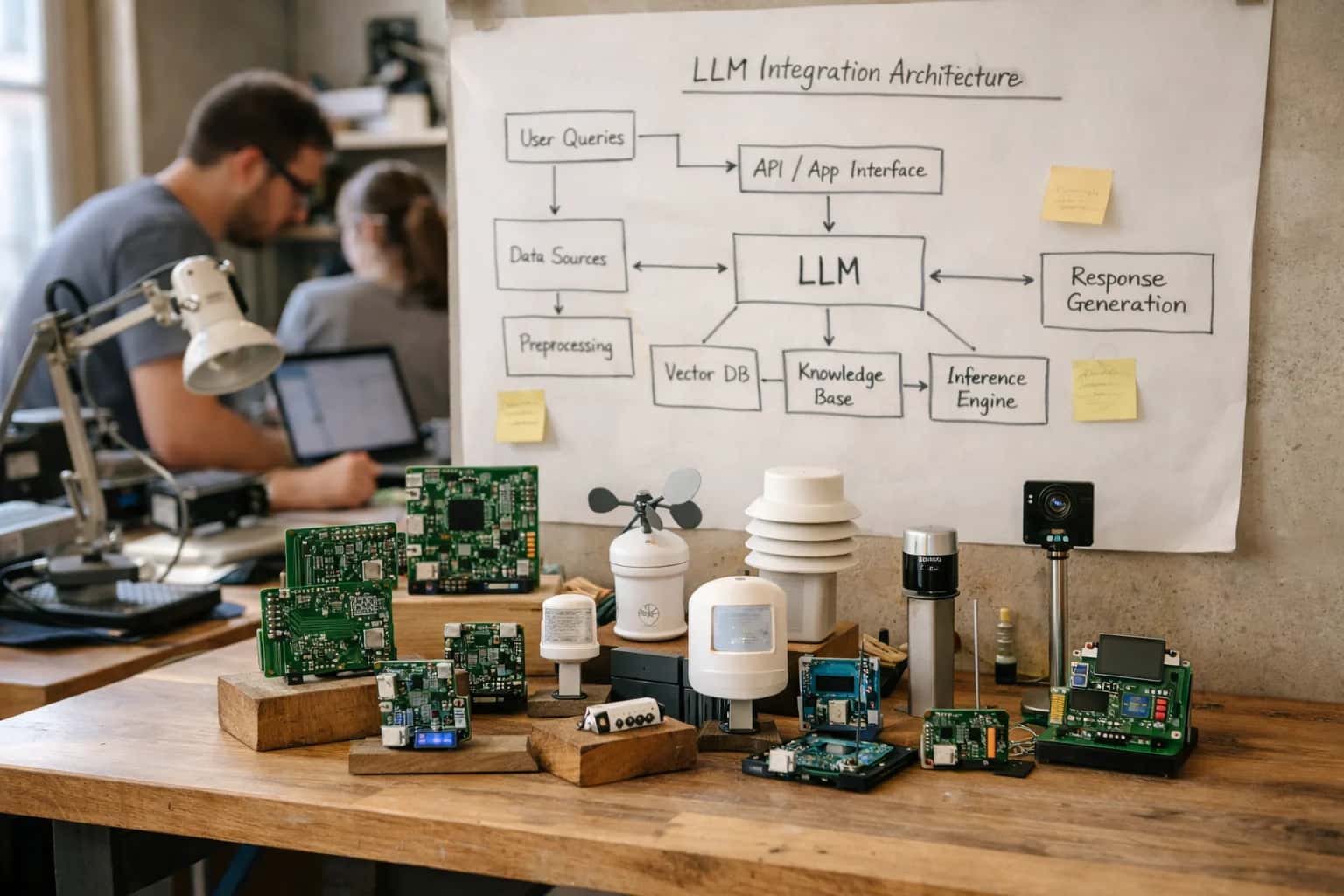
ARCHITECTURE AND IMPLEMENTATION
Where AI Fits into Cortex XDR's Kubernetes Security Module
Integrating AI with Cortex XDR's Kubernetes security module transforms raw pod telemetry into prioritized, contextual insights for faster threat containment.
Implementation typically involves deploying a lightweight inference service within the same secure environment as the Cortex Data Lake. This service subscribes to relevant XDR event streams (tagged with data_source:kubernetes) via the Cortex XDR API or a direct plugin to the Cortex Data Lake. For each pod activity cluster, the AI service enriches the event with a risk score, a plain-language explanation of the anomaly (e.g., "Pod dev/nginx-abc123 deviated from baseline by spawning a shell and downloading a binary from a newly registered domain"), and a confidence level. High-confidence, high-severity detections can be automatically promoted to Cortex XDR incidents, triggering pre-configured XSOAR playbooks for isolation or alerting.
Rollout requires careful governance, starting with a monitoring-only phase. Initially, AI-generated insights should appear as enriched fields within existing Cortex XDR alerts and investigation panels, allowing analysts to validate the model's accuracy without disrupting workflows. Key operational considerations include maintaining an audit log of all AI inferences linked to the original XDR event IDs, implementing RBAC to control who can see AI-generated notes, and establishing a feedback loop where analyst verdicts (true/false positive) are used to retrain and fine-tune models. This approach ensures the AI augments the SOC's capability, providing explainable insights that reduce mean time to detect (MTTD) for container-specific threats like zero-day exploits against the Kubernetes API server or cryptojacking hidden within legitimate worker pods.
AI-READY MODULES AND DATA STREAMS
Key Integration Surfaces in Cortex XDR for Kubernetes
The Primary Behavioral Feed
Cortex XDR ingests the Kubernetes API server audit log, which records every request to the cluster's control plane. This is the richest source for AI-driven behavioral analysis. Key fields for AI enrichment include:
requestURI&verb: The action being taken (e.g.,create,patch,delete). AI models can baseline normal administrative activity and flag anomalous sequences, like a service account patching a cluster role.user.username&user.groups: The identity context. AI can correlate this with Entra ID or Okta logs to detect compromised service accounts or privilege escalation via group membership changes.objectRef.resource&objectRef.namespace: The target of the action. This allows AI to model access patterns and detect reconnaissance, such as a pod enumerating secrets across multiple namespaces.
Integrating AI here enables detection of living-off-the-land attacks, malicious kubectl commands, and zero-day exploits against the API server itself by analyzing intent and deviation from established patterns.
PALO ALTO CORTEX XDR INTEGRATION
High-Value AI Use Cases for Kubernetes Security
Integrating AI with Palo Alto Cortex XDR's Kubernetes security module moves beyond static rules to perform deep behavioral analysis of pod activities, detect zero-day exploits, and automate policy enforcement. These use cases show where AI can connect to XDR's data model and APIs to accelerate detection, investigation, and response for containerized workloads.
01
Behavioral Pod Anomaly Detection
AI models analyze Cortex XDR's Kubernetes audit logs and process trees to establish a baseline of normal pod behavior (e.g., typical image pulls, network egress patterns, child process execution). The system flags deviations—like a frontend pod suddenly executing kubectl commands or making outbound calls to unexpected IP ranges—as high-fidelity alerts, reducing noise from benign configuration drift.
Batch -> Real-time
Detection mode
02
Zero-Day K8s API Attack Detection
Leverages AI to analyze sequences of Kubernetes API server requests captured by Cortex XDR. Instead of relying solely on known exploit signatures, the model identifies suspicious sequences that may indicate novel privilege escalation or resource hijacking attempts—such as rapid, anomalous bind or impersonate operations—and enriches the XDR incident with a probable MITRE ATT&CK technique mapping.
1 sprint
Model tuning cycle
03
AI-Powered Policy Recommendation Engine
Analyzes historical runtime data from XDR's Kubernetes Workload Protection module to recommend least-privilege Pod Security Standards (PSS) and network policies. The AI evaluates which capabilities (e.g., CAP_SYS_ADMIN) are actually used by workloads and suggests specific, scoped SecurityContext and NetworkPolicy YAML snippets for deployment, directly integrating with CI/CD or admission controllers.
Hours -> Minutes
Policy drafting
04
Attack Chain Reconstruction for K8s Incidents
When Cortex XDR generates an alert on a suspicious pod, an AI agent automatically queries related XDR data (process, network, file events) and Kubernetes Events to reconstruct the attack chain. It produces a visual timeline and narrative summary inside the XDR case—e.g., 'Initial access via vulnerable image → privilege escalation via hostPath mount → lateral movement via service account token theft'—dramatically speeding up analyst investigation.
Same day
MTTR reduction
05
Automated Malicious Image Blocklisting
Integrates AI with Cortex XDR's container runtime protection and external image registry scans. The model correlates indicators—like a pod executing from a newly pushed image with high-criticality CVEs, unusual library imports, and network callouts—to assign a malicious confidence score. High-confidence images are automatically added to a blocklist, triggering XDR to prevent future deployments via its enforcement APIs.
Real-time
Prevention
06
Dynamic Risk Scoring for K8s Namespaces
Enhances Cortex XDR's risk scoring by applying an AI model that continuously evaluates namespaces based on multiple factors: workload criticality (from CMDB), exposure (ingress services), vulnerability density, and anomalous activity levels. High-risk namespaces are automatically tagged in XDR, prioritized for analyst review, and can trigger automated response playbooks like scaling up audit logging or initiating a vulnerability scan.
KUBERNETES SECURITY
Example AI-Augmented Security Workflows
These workflows illustrate how AI agents and models can integrate with Palo Alto Cortex XDR's Kubernetes Security module to automate deep analysis, accelerate investigations, and enforce dynamic policies.
Trigger: Cortex XDR Kubernetes Security module generates a high-severity alert for suspicious kubectl or direct API server activity.
AI Agent Actions:
- Context Retrieval: The agent pulls the full audit log entry, associated pod spec, service account details, and network flow logs for the source entity.
- Behavioral Analysis: A fine-tuned model compares the activity against a baseline of normal API call sequences for the namespace and service account, flagging anomalies like rare verbs (
bind,impersonate) or access to high-value resources (e.g.,secrets,clusterroles). - Threat Intel Correlation: The agent queries internal and external threat intelligence to check if the observed command patterns or user-agent strings match known exploit kits or post-exploitation frameworks (e.g.,
Peirates,kube-hunteroutputs). - Impact Assessment: The AI evaluates the blast radius—what other pods, nodes, or data the compromised entity could now access.
System Update:
- A high-fidelity incident is automatically created in Cortex XDR with a narrative summary, a confidence score, and a mapped MITRE ATT&CK technique (e.g.,
TA0006 - Credential Access). - The agent recommends immediate containment steps via Cortex XSOAR, such as revoking the service account's token or isolating the affected node.
- Evidence is packaged for the analyst, including a timeline of related events and the raw audit log snippet.
Human Review Point: The AI-generated incident and recommended actions are presented to the SOC analyst for final approval before any automated containment is executed.
FROM TELEMETRY TO POLICY
Implementation Architecture and Data Flow
A practical architecture for integrating AI with Cortex XDR's Kubernetes module to analyze pod behavior, detect novel attacks, and generate security policy recommendations.
The integration connects to the Cortex Data Lake API and the Cortex XDR API to ingest Kubernetes audit logs, pod lifecycle events, and network flow data from the Kubernetes Security module. A dedicated processing pipeline normalizes this telemetry—focusing on Subject (user/service account), Verb (action like create, exec), Resource (pods, secrets, roles), and Response codes—and streams it to an AI inference service. This service applies behavioral analysis models to establish a baseline of normal kube-apiserver interaction patterns for each namespace and service account, flagging deviations such as a frontend pod suddenly attempting list operations on secrets in a different namespace.
For detection, the AI model correlates low-level events into potential attack chains. For example, it can identify a sequence where a pod is patched to mount a host path, followed by an exec into that pod, which is then used to run reconnaissance commands—a pattern indicative of a breakout attempt. When a high-confidence anomaly or potential zero-day exploit is detected, the system uses the Cortex XDR Investigations API to create or enrich an incident, automatically attaching the relevant pod YAML, user context, and a narrative summary of the suspicious behavior. For policy generation, the system analyzes allowed versus used permissions over time, using the Cortex XDR Public API to suggest specific, scoped Role and NetworkPolicy objects that enforce least privilege, which are presented for review in the Cortex console or exported as Kubernetes manifests.
Rollout is typically phased, starting with a monitoring-only deployment where AI-generated insights and policy suggestions are delivered as non-disruptive recommendations within the Cortex XDR case interface. This allows security teams to validate the AI's accuracy and tune models with their unique cluster behavior. Governance is maintained by ensuring all AI-driven actions—like incident creation or data queries—are logged as auditable events within Cortex Data Lake itself. The final phase enables closed-loop automation, where approved, high-confidence policy recommendations (e.g., applying a NetworkPolicy to isolate a suspicious pod) can be executed via secure webhooks to the cluster's GitOps pipeline or CI/CD system, never directly modifying production without a human or automated policy check.
AI INTEGRATION PATTERNS FOR CORTEX XDR KUBERNETES
Code and Payload Examples
Analyzing Pod Activity for Anomaly Detection
Cortex XDR's Kubernetes Security module provides detailed telemetry on pod execution, network connections, and file system activity. AI models can analyze this behavioral stream to establish baselines and flag deviations indicative of compromise, such as a frontend pod suddenly executing kubectl commands or making outbound calls to unexpected external IPs.
A common integration pattern involves querying the Cortex Data Lake API for recent pod activity, vectorizing the behavioral features (process tree, network destinations, system calls), and scoring them against a trained model. High-risk pods can be automatically tagged in Cortex XDR for immediate investigation or trigger a response playbook.
python# Example: Fetch pod activity for analysis via Cortex XDR API import requests # Query Cortex Data Lake for pod execution events in the last hour query = { "query": "dataset = xdr_data | filter event_type = 'process' and k8s.object.type = 'pod' | fields pod_name, namespace, cmdline, parent_process, _time", "start_time": "now-1h", "end_time": "now" } headers = { "Authorization": "Bearer YOUR_API_TOKEN", "Content-Type": "application/json" } response = requests.post( "https://api.us.paloaltonetworks.com/xdrapi/data/queries/run", json=query, headers=headers ) # Process results for AI model inference pod_activities = response.json().get('data', []) for activity in pod_activities: # Vectorize features (cmdline, parent_process, etc.) risk_score = ai_model.predict(vectorize(activity)) if risk_score > THRESHOLD: tag_pod_incident(activity['pod_name'], activity['namespace'], risk_score)
AI-ENHANCED KUBERNETES SECURITY OPERATIONS
Realistic Time Savings and Operational Impact
This table illustrates the operational impact of integrating AI with Palo Alto Cortex XDR's Kubernetes Security module, focusing on measurable improvements in detection, investigation, and policy management workflows for containerized environments.
| Metric | Before AI | After AI | Notes |
|---|---|---|---|
Zero-day K8s API exploit detection | Relies on static signatures and manual hunting | Behavioral anomaly detection flags novel attack patterns | AI models baseline normal API call sequences and pod interactions |
Pod behavioral anomaly investigation | Manual correlation of process trees, network flows, and audit logs | Automated attack chain reconstruction with root cause highlighted | AI synthesizes disparate telemetry into a single narrative, reducing analyst cognitive load |
Least-privilege policy recommendation | Manual review of pod specs, service accounts, and network policies | AI-generated policy drafts based on observed runtime behavior | Recommendations are based on actual used permissions, not requested ones, for tighter security |
Alert triage for container runtime alerts | Manual review of each alert to assess severity and context | AI-powered prioritization based on exploit likelihood and cluster criticality | Reduces noise by correlating runtime alerts with vulnerability and threat intel data |
Incident summarization for K8s security events | Analyst manually writes summary after investigation | AI auto-generates initial summary with key IOCs, impacted namespaces, and TTPs | Provides consistent, auditable documentation and faster stakeholder briefings |
Malicious image deployment detection | Periodic scanning of registries and manual runtime inspection | Real-time analysis of image behavior post-deployment against known malicious patterns | Catches threats that evade static scanning, like living-off-the-land binaries in containers |
Compliance audit for K8s security controls | Manual checklist review and evidence gathering | AI-assisted mapping of runtime behavior to compliance frameworks (e.g., NSA/CISA, PCI DSS) | Continuously monitors for control drift and generates evidence reports |
ARCHITECTING CONTROLLED AI FOR KUBERNETES SECURITY
Governance, Security, and Phased Rollout
Integrating AI with Palo Alto Cortex XDR for Kubernetes requires a deliberate approach to ensure security, maintain control, and deliver measurable value.
A production AI integration for Cortex XDR's Kubernetes security module operates as a governed co-pilot, not an autonomous agent. It should be designed to augment the analyst's workflow, not replace it. The core architecture typically involves a secure API gateway that brokers calls between Cortex XDR's APIs—such as the Incidents API, XQL Query Engine, and Kubernetes Security Module data—and the AI model endpoint. All AI-generated outputs, such as behavioral anomaly explanations, policy recommendations, or exploit likelihood scores, should be written back to Cortex XDR as case comments, investigation notes, or custom fields, creating a full audit trail within the platform's native investigation workflow. This ensures all AI activity is logged, attributable, and reviewable.
Security is paramount. The integration must enforce strict data minimization; only the necessary metadata (e.g., pod names, namespaces, API call sequences, risk scores) should be sent for analysis, never raw logs or sensitive payloads by default. All communication should be encrypted in transit, and the AI service must operate under the organization's existing Identity and Access Management (IAM) and Role-Based Access Control (RBAC) frameworks. For instance, an AI-generated recommendation to apply a least-privilege NetworkPolicy should trigger an approval workflow in Cortex XSOAR or a ticketing system like ServiceNow, not be applied directly. This maintains the security team's authority and operational control.
A successful rollout follows a phased, value-driven approach. Phase 1 (Pilot) focuses on a single, high-value use case, such as using AI to summarize and explain complex behavioral alerts from the Kubernetes module, reducing triage time from hours to minutes for a dedicated pod security team. Phase 2 (Expansion) integrates AI into the threat hunting workflow, where it suggests XQL queries to hunt for zero-day exploit patterns against the kube-apiserver based on emerging MITRE ATT&CK techniques for containers. Phase 3 (Automation) introduces guarded automation, where AI can draft Jira tickets or ServiceNow incidents with pre-populated context for high-confidence policy violations, but always requires a human analyst's final approval. Each phase includes defined success metrics (e.g., reduction in mean time to triage, increase in policy compliance coverage) and continuous feedback loops to refine prompts and model performance.
Governance is continuous. Establish a cross-functional AI Security Working Group with members from SOC, Cloud/Platform Engineering, and Compliance to review AI outputs, assess false positive/negative rates, and update operational playbooks. Regularly audit the integration's performance and data handling against internal policies. By anchoring the AI's role to enrichment and acceleration within the existing Cortex XDR and XSOAR workflows, security teams gain a powerful force multiplier while maintaining the oversight required for critical infrastructure like Kubernetes. For related architectural patterns, see our guides on AI Governance for Security Platforms and Integrating AI with Cortex XSOAR.
Enabling Efficiency, Speed & Accuracy
Intelligent Analysis, Decision & Execution
We build AI systems for teams that need search across company data, workflow automation across tools, or AI features inside products and internal software.
Talk to Us
Search across company data
Give teams answers from docs, tickets, runbooks, and product data with sources and permissions.
Useful when people spend too long searching or get different answers from different systems.
Enterprise searchRAGPermissions
Read more
Automate internal workflows
Use AI to route work, draft outputs, trigger actions, and keep approvals and logs in place.
Useful when repetitive work moves across multiple tools and teams.
AI agentsWorkflow automationGovernance
Read more
Add AI to products and internal tools
Build assistants, guided actions, or decision support into the software your team or customers already use.
Useful when AI needs to be part of the product, not a separate tool.
AI integrationDecision supportModel routing
Read moreAI INTEGRATION FOR KUBERNETES SECURITY
Frequently Asked Questions
Practical questions for security teams evaluating AI integration with Palo Alto Cortex XDR for Kubernetes to enhance detection, investigation, and policy management.
AI integration connects primarily through the Cortex Data Lake API and the Cortex XDR API to access Kubernetes-specific telemetry. Key data objects include:
- Pod Activity Logs: Process executions, network connections, and file system events within pods.
- Kubernetes Audit Logs: API server requests (e.g.,
create pod,patch deployment) with user, resource, and response status. - Container Image Metadata: Hashes, layers, and vulnerabilities from integrated registries.
- Runtime Security Events: From the Cortex XDR agent on worker nodes (e.g., suspicious
kubectlexecutions, privilege escalations).
An AI agent or model consumes this stream, often via a dedicated service that polls or receives webhooks, to perform behavioral analysis and generate enriched findings or recommended actions that are posted back as XDR Incidents or Case Comments.

About the author
Prasad Kumkar
CEO & MD, Inference Systems
Prasad Kumkar is the CEO & MD of Inference Systems and writes about AI systems architecture, LLM infrastructure, model serving, evaluation, and production deployment. Over 5+ years, he has worked across computer vision models, L5 autonomous vehicle systems, and LLM research, with a focus on taking complex AI ideas into real-world engineering systems.
His work and writing cover AI systems, large language models, AI agents, multimodal systems, autonomous systems, inference optimization, RAG, evaluation, and production AI engineering.
LinkedIn
Limited slotsGet a Free AI Consultation
Partnered with leading AI, data, and software stack.





How We Work
Custom AI workflows for your Business
One-fit-all AI don't work for modern businesses. At Inferensys, we aim to understand your business & custom requirements; which we use to define most efficient agentic workflows, the data, and the tools for your business.
01
Review the use case
We understand the task, the users, and where AI can actually help.
Read more02
Pick the right approach
We define what needs search, automation, or product integration.
Read more03
Build the first useful version
We implement the part that proves the value first.
Read more04
Improve from there
We add the checks and visibility needed to keep it useful.
Read moreThe first call is a practical review of your use case and the right next step.
Talk to Us