Shopify POS is more than a transaction terminal; it's the central nervous system for physical retail data. AI integration connects at three primary layers: 1) The Transaction API, where AI can analyze cart contents in real-time for personalized upsells or automated discount application. 2) The Customer API, enabling AI to unify in-store purchase history with online behavior to power clienteling tools and loyalty personalization directly on the associate's device. 3) The Inventory API, where AI models consume real-time stock levels and sales velocity to automate purchase order generation, predict reorder points for specific locations, and sync availability across channels.

Integration
AI Integration for Shopify POS
A technical blueprint for connecting AI agents and workflows to Shopify POS's APIs and ecosystem to automate in-store operations, enhance customer service, and unify commerce data.
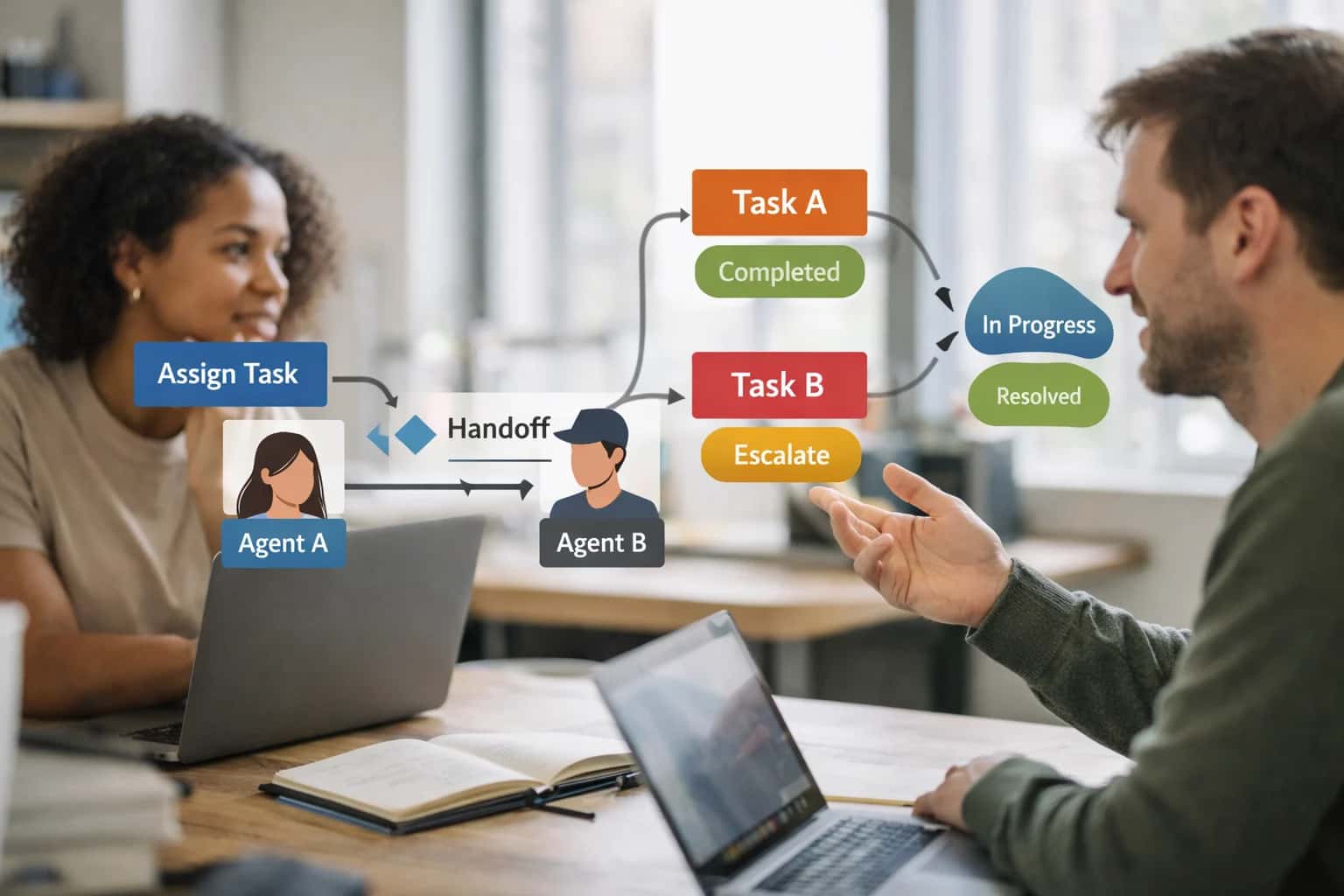
ARCHITECTURAL BLUEPRINT
Where AI Fits in the Shopify POS Ecosystem
A technical guide to embedding AI into Shopify POS's APIs, data flows, and user workflows for unified commerce operations.
High-impact workflows begin by instrumenting key events. For example, an AI agent can listen for orders/create webhooks to trigger post-purchase SMS sequences with personalized product recommendations. Or, it can process daily inventory_levels data to flag at-risk SKUs and suggest markdown strategies. For store associates, a RAG-powered copilot embedded in the POS interface can instantly surface product details, inventory across other stores, or return policy answers by querying the Shopify product catalog and knowledge base, turning the register into an intelligent sales station.
A production rollout requires a middleware layer—often a cloud function or containerized service—that sits between Shopify's APIs and your AI models. This layer handles authentication, webhook validation, rate limiting, and formats data (like customer, product, and order objects) for vector embedding and retrieval. Governance is critical: all AI-generated actions (like a suggested discount or a drafted purchase order) should route through an approval queue or require a human-in-the-loop confirmation within the POS interface before execution, with a full audit trail logged back to the order or customer record. Start by piloting a single, high-ROI use case like automated receipt summarization or intelligent exchange processing before scaling to more complex orchestration.
For related architectural patterns, see our guides on Omnichannel POS Integration and POS Inventory Automation.
ARCHITECTURAL BLUEPRINT
Key Integration Surfaces in Shopify POS
Real-Time Transaction Intelligence
The Order, Transaction, and Checkout APIs are the core surfaces for AI that acts during or immediately after a sale. This is where you embed logic to influence the transaction itself.
Primary Use Cases:
- Dynamic Discounting: Analyze cart contents, customer history, and inventory levels in real-time to suggest or apply personalized discounts via the
DiscountCodeAPI. - Fraud Scoring: Call an AI model as a
PaymentGatewaywebhook to score transaction risk based on device, location, basket anomalies, and historical patterns before authorization. - Intelligent Upsells: Use the
CartandProductAPIs to recommend complementary items or warranties based on semantic product relationships and purchase intent.
Implementation Pattern: AI services typically listen to orders/create webhooks, process the payload, and respond via API to modify the order or trigger alerts before fulfillment.
ARCHITECTURAL BLUEPRINT
High-Value AI Use Cases for Shopify POS
Practical integration patterns for embedding AI into Shopify POS workflows, from the checkout counter to the back office. These cards detail where to connect, what to automate, and the operational impact for omnichannel retailers.
01
Intelligent Checkout & Upsell Agent
Embed an AI agent in the Shopify POS interface to analyze the current cart and customer purchase history in real-time. It suggests relevant add-ons, warranties, or loyalty sign-ups before the transaction completes, acting as a digital associate. Integrates via Shopify's Cart and Checkout APIs.
2-5%
Avg. order value lift
02
Automated Inventory Reconciliation
Connect AI to daily Shopify POS sales data and manual stock counts. The system identifies discrepancies, predicts causes (e.g., mis-scans, theft patterns, receiving errors), and generates adjusted inventory reports. Automates reconciliation tickets in systems like Shopify Admin or a connected WMS.
Hours -> Minutes
Reconciliation time
03
Real-Time Fraud & Policy Guardrail
Deploy a lightweight model at the transaction API layer to score risk for high-value returns, gift card purchases, or discount overrides. Flags suspicious patterns (e.g., rapid serial returns) for manager review before approval, reducing loss without slowing down associates.
Same-day
Policy violation detection
04
Unified Clienteling & CRM Sync
Use AI to unify in-store POS transactions with online Shopify order history and customer notes. At checkout, the POS interface surfaces a consolidated customer profile with lifetime value, product preferences, and service notes, enabling personalized in-store service. Syncs enriched profiles to a CRM like Salesforce.
360° View
Customer profile
05
Smart Labor Scheduling & Forecasting
Ingest Shopify POS sales forecasts, historical traffic data from footfall counters, and staff performance metrics. AI generates optimized weekly schedules that align labor hours with predicted demand, manage break compliance, and account for employee preferences, publishing directly to staff apps.
5-15%
Labor cost optimization
06
Automated Receipt Data Extraction
For B2B customers or complex returns, use AI to parse unstructured data from paper or digital receipts. Extracts line items, discounts, and tender types to auto-populate return forms, expense reports, or warranty registrations within the POS, eliminating manual data entry.
Batch -> Real-time
Data processing
SHOPIFY POS INTEGRATION PATTERNS
Example AI-Powered Workflows
These concrete workflows illustrate how AI connects to Shopify POS's APIs, webhooks, and data model to automate operations, enhance customer interactions, and drive unified commerce intelligence.
Trigger: A transaction is completed at the POS.
Context/Data Pulled: The system consumes the Order object via the Shopify Admin API or a orders/create webhook, including line items, customer ID (if available), store location, and tender type.
Model or Agent Action: An AI agent analyzes the basket in real-time:
- Classifies the purchase occasion (e.g., gift, replenishment, new discovery).
- Generates a personalized, brand-appropriate thank-you message.
- Identifies 1-2 complementary products based on the items purchased and the store's current inventory.
System Update or Next Step: The agent calls the Shopify API to:
- Append the personalized message to the digital receipt email.
- Add the complementary product recommendations as a "You Might Also Like" section in the receipt.
- Optionally, create a draft
Orderin the admin for a suggested "post-purchase bundle" for associate follow-up.
Human Review Point: For high-value transactions (>$500), the generated message and recommendations are flagged for a manager's quick approval via a Slack alert before the receipt is sent.
BUILDING A UNIFIED COMMERCE INTELLIGENCE LAYER
Architecture for a Production Integration
A practical blueprint for connecting AI to Shopify POS's APIs, data streams, and user workflows to create a responsive, intelligent storefront.
A production-ready integration for Shopify POS is built on three core data streams: the REST Admin API for product, customer, and order master data; the GraphQL Admin API for real-time subscriptions to events like order/create or inventory_level/update; and the Shopify Functions runtime for embedding logic directly into the checkout and post-purchase flow. The AI layer typically sits as a middleware service, consuming these streams to power specific workflows. For instance, an in-store product discovery agent would listen for the draft_order/create webhook, retrieve the customer's past purchase history and current cart contents via API, and use a RAG system over your product catalog to generate personalized upsell suggestions—delivered back to the associate's POS interface via a custom app or directly into the order note field for manual application.
Governance and rollout are critical. Start with a single high-impact workflow, such as automated return reason classification. Here, the integration listens for refund/create events, uses an LLM to analyze the return note and item details, classifies the reason (e.g., 'defective', 'size', 'changed mind'), and writes the structured result to a custom metafield on the Order or Refund object. This creates an auditable trail and feeds downstream analytics. For security, all AI service calls should be routed through your middleware with strict API call limits and role-based access control (RBAC) enforced, ensuring store staff or custom app tokens cannot directly call AI models. A phased rollout might begin in a single pilot location, with a human-in-the-loop approval step for all AI-generated actions (like discount applications) logged to a Shopify order timeline for review.
The value is operational consistency. Instead of a store manager manually reviewing daily sales reports, an AI agent can analyze Shopify POS session data, combine it with local foot traffic metrics, and automatically generate and send a daily performance digest via Shopify Email to district managers, flagging anomalies like a sudden drop in average transaction value for a specific location. This turns the POS from a transaction recorder into a proactive business intelligence node. For a deeper dive on connecting AI to inventory workflows, see our guide on POS Inventory Automation, or explore foundational patterns for Omnichannel POS Integration.
SHOPIFY POS INTEGRATION PATTERNS
Code & Payload Examples
Real-time Transaction Intelligence
Integrate AI directly into the checkout flow by subscribing to Shopify's orders/create webhook. This allows for immediate post-purchase actions like generating personalized thank-you notes, validating complex discount rules, or triggering inventory reorder predictions.
A typical webhook handler enriches the order payload with AI-generated content before syncing to a CRM or marketing platform.
python# Example: Webhook handler for post-purchase AI action from shopify_api import WebhookHandler from inference_client import generate_followup def handle_order_create(webhook_payload): order = webhook_payload['order'] customer = order['customer'] # Use AI to generate a personalized post-purchase message prompt = f"Customer {customer.get('first_name')} just purchased {len(order['line_items'])} items. Generate a warm, brand-appropriate thank you note." ai_note = generate_followup(prompt) # Attach note to order metadata or send to Klaviyo/Braze update_order_metafield(order['id'], 'ai_thank_you_note', ai_note) return {"status": "processed", "note_added": True}
This pattern moves follow-up from a batch job to a real-time, personalized workflow.
SHOPIFY POS INTEGRATION
Realistic Operational Impact & Time Savings
How AI integration transforms key retail workflows by automating manual tasks and providing intelligent assistance, measured in time saved and operational lift.
| Workflow | Before AI | After AI | Implementation Notes |
|---|---|---|---|
Customer Product Discovery | Associate manually searches catalog or relies on memory | AI-powered in-store search kiosk or associate tablet provides instant, personalized recommendations | Integrates with Shopify POS product API and customer purchase history; pilot in 2-3 weeks |
Post-Purchase Follow-up & Review Generation | Manual email campaigns or no structured follow-up | Automated, personalized thank-you/SMS with review prompt triggered by POS sale | Uses Shopify POS webhooks and customer contact data; human review of AI drafts for first month |
Inventory Replenishment for Top SKUs | Weekly manual review of stock levels and gut-feel reordering | AI predicts reorder points and drafts purchase orders for manager approval | Connects to Shopify inventory API; starts with 20% of catalog, expands based on accuracy |
Loyalty Tier Management & Reward Issuance | Manual review of spend to upgrade tiers or issue birthday rewards | AI segments customers and automatically issues rewards/upgrades via Shopify POS loyalty apps | Leverages existing app ecosystem; requires mapping loyalty rules to AI logic |
Cross-Channel Return Reason Analysis | Manager reviews individual return notes in POS to spot trends | AI summarizes return reasons weekly, highlighting emerging product or policy issues | Processes return transaction notes from Shopify POS; outputs to a simple dashboard |
Staff Scheduling Optimization | Manager creates schedule based on last week's sales and availability | AI generates draft schedule using sales forecasts, traffic data, and labor targets | Integrates with Shopify POS sales data and scheduling apps; manager adjusts final draft |
High-Risk Transaction Flagging | Reactive review after a chargeback or manual spot-checks | AI scores transactions in real-time for fraud risk, flagging <1% for immediate associate review | Analyzes transaction velocity, basket size, and customer history via POS API; low false-positive rate critical |
ARCHITECTING FOR PRODUCTION
Governance, Security, and Phased Rollout
A practical blueprint for deploying AI in Shopify POS with controlled risk and measurable impact.
A production-grade AI integration for Shopify POS must respect the platform's data model and security boundaries. This means architecting around key objects like Orders, Customers, Products, and InventoryItems, and using Shopify's Admin API and GraphQL with scoped access tokens. AI agents should be deployed as middleware services that listen to Shopify webhooks (e.g., orders/create, customers/update) or poll the API, never storing raw POS data beyond transient processing caches. All AI-generated outputs—like product recommendations or support responses—should be logged with the source order_id or customer_id for full auditability within your system.
Start with a pilot focused on a single, high-value workflow, such as automated post-purchase engagement. Implement an AI agent that triggers on the orders/paid webhook, analyzes the cart contents against the customer's purchase history, and drafts a personalized thank-you email with relevant care tips or cross-sell suggestions. This workflow has clear ROI, minimal risk, and operates outside the critical payment path. Use a human-in-the-loop approval step initially, where store managers review and send emails, to build trust in the AI's output before moving to fully automated sends for high-confidence scenarios.
Governance is critical for scaling. Establish a review board for new AI use cases that evaluates data privacy (PII handling), potential hallucination risks, and required fallback procedures. For instance, an in-store product discovery agent assisting associates must have a clear "escalate to manager" path. Roll out subsequent phases—like real-time inventory intelligence or automated return reason classification—store-by-store or role-by-role, measuring key metrics like average transaction value, support ticket volume, or inventory turnover against control groups. This phased, metrics-driven approach ensures the integration delivers tangible value while maintaining the operational integrity of your retail business.
Enabling Efficiency, Speed & Accuracy
Intelligent Analysis, Decision & Execution
We build AI systems for teams that need search across company data, workflow automation across tools, or AI features inside products and internal software.
Talk to Us
Search across company data
Give teams answers from docs, tickets, runbooks, and product data with sources and permissions.
Useful when people spend too long searching or get different answers from different systems.
Enterprise searchRAGPermissions
Read more
Automate internal workflows
Use AI to route work, draft outputs, trigger actions, and keep approvals and logs in place.
Useful when repetitive work moves across multiple tools and teams.
AI agentsWorkflow automationGovernance
Read more
Add AI to products and internal tools
Build assistants, guided actions, or decision support into the software your team or customers already use.
Useful when AI needs to be part of the product, not a separate tool.
AI integrationDecision supportModel routing
Read moreIMPLEMENTATION AND WORKFLOW DETAILS
Frequently Asked Questions
Practical questions for technical leaders planning to add AI into Shopify POS's ecosystem, covering integration patterns, data flows, and operational governance.
AI integrations typically connect via Shopify's Admin API and GraphQL Storefront API. The primary pattern is an event-driven architecture:
- Trigger: A webhook from Shopify POS fires for events like
orders/create,fulfillments/update, orinventory_levels/update. - Context Pull: Your integration service receives the webhook payload and fetches additional context using the Order, Product, or Customer APIs (e.g., full order details, customer purchase history).
- Agent Action: The enriched data is sent to an LLM or AI agent with a specific instruction set (prompt).
- System Update: The AI's output (e.g., a classification, summary, or recommendation) triggers an update back to Shopify via API or creates a task in a connected system like a helpdesk or warehouse management platform.
Example Payload for an Order Create Webhook:
json{ "id": 123456789, "admin_graphql_api_id": "gid://shopify/Order/123456789", "contact_email": "[email protected]", "total_price": "250.00", "line_items": [ ... ] }

About the author
Prasad Kumkar
CEO & MD, Inference Systems
Prasad Kumkar is the CEO & MD of Inference Systems and writes about AI systems architecture, LLM infrastructure, model serving, evaluation, and production deployment. Over 5+ years, he has worked across computer vision models, L5 autonomous vehicle systems, and LLM research, with a focus on taking complex AI ideas into real-world engineering systems.
His work and writing cover AI systems, large language models, AI agents, multimodal systems, autonomous systems, inference optimization, RAG, evaluation, and production AI engineering.
LinkedIn
Limited slotsGet a Free AI Consultation
Partnered with leading AI, data, and software stack.





How We Work
Custom AI workflows for your Business
One-fit-all AI don't work for modern businesses. At Inferensys, we aim to understand your business & custom requirements; which we use to define most efficient agentic workflows, the data, and the tools for your business.
01
Review the use case
We understand the task, the users, and where AI can actually help.
Read more02
Pick the right approach
We define what needs search, automation, or product integration.
Read more03
Build the first useful version
We implement the part that proves the value first.
Read more04
Improve from there
We add the checks and visibility needed to keep it useful.
Read moreThe first call is a practical review of your use case and the right next step.
Talk to Us