AI integration for Lightspeed Retail connects at three primary layers: the Lightspeed Retail API, the webhook event stream, and the embedded UI surfaces within the back-office dashboard. The API provides programmatic access to core objects like Product, Variant, Sale, Customer, Supplier, and PurchaseOrder. This is the primary conduit for reading real-time inventory levels, sales history, and customer profiles, and for writing back AI-generated actions like new purchase orders or updated product descriptions. The webhook system (sale.created, inventory.updated) allows your AI agents to react to business events in near real-time, triggering workflows like automated low-stock alerts or personalized post-purchase emails.

Integration
AI Integration for Lightspeed Retail
A technical blueprint for integrating AI into Lightspeed Retail's APIs and workflows, focusing on inventory intelligence, automated purchase orders, and real-time sales analytics for multi-location retailers.
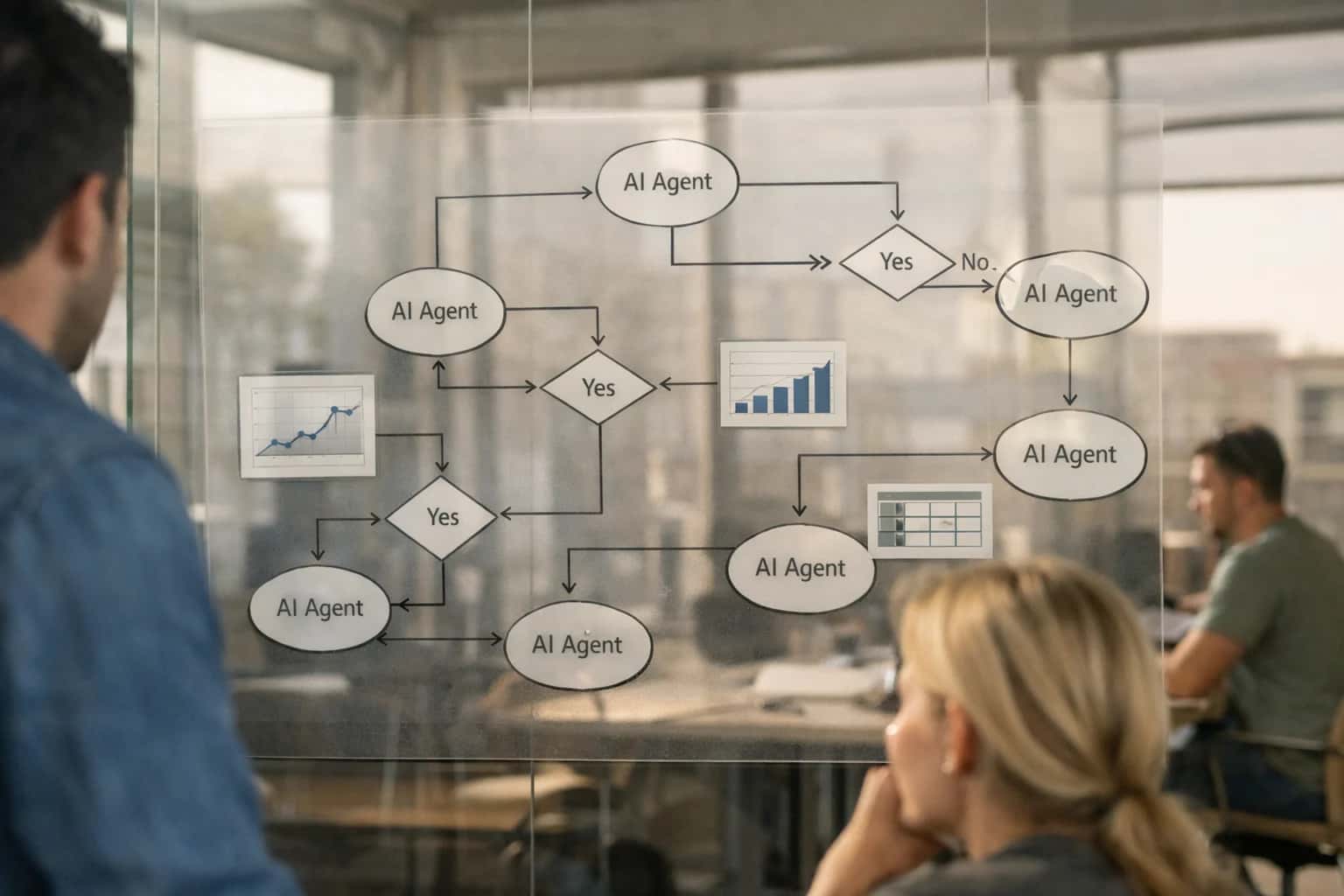
ARCHITECTURE AND DATA FLOW
Where AI Connects to Lightspeed Retail
A technical blueprint for integrating AI into Lightspeed Retail's APIs and workflows, focusing on inventory intelligence, automated purchase orders, and real-time sales analytics for multi-location retailers.
Implementation centers on high-value, automatable workflows. For inventory intelligence, an AI agent consumes daily sales velocity, seasonal trends, and supplier lead times from the API to predict reorder points and automatically generate draft PurchaseOrder records in Lightspeed for manager approval. For sales analytics, models process transaction data across locations to surface anomalies, identify top-performing associates, or recommend dynamic bundle discounts. For customer operations, AI can unify transaction history with external CRM data to enrich Customer records and power next-best-offer logic for loyalty campaigns, all executed via API calls.
A production rollout typically uses a middleware layer (like an n8n or CrewAI orchestration platform) to manage API calls, handle rate limits, and maintain an audit log. This layer hosts the business logic, calls LLMs or custom models, and integrates with other systems like your ERP or warehouse management platform. Governance is critical: all AI-generated actions (like creating a PO) should flow through an approval queue or be tagged for easy review in the Lightspeed UI. Start with a single high-impact workflow—such as automated purchase order drafting for a specific supplier category—in a sandbox location, measure the reduction in manual review time, and then scale across your chain.
ARCHITECTURAL BLUEPRINT
Key Integration Surfaces in Lightspeed Retail
Automating Stock Intelligence and Replenishment
Integrate AI directly with Lightspeed's Item and Supplier APIs to transform inventory management. Key surfaces include the Item object for SKU-level data (stock levels, cost, sales velocity) and the PurchaseOrder endpoint for automated creation.
High-Value Workflows:
- Predictive Reordering: AI models analyze historical sales, seasonality, and lead times to generate draft purchase orders with recommended quantities.
- Exception Triage: Automatically flag discrepancies between physical counts (via Count APIs) and system counts for review.
- Vendor Communication: Draft PO emails to suppliers by extracting contact info from the
Supplierrecord and order details.
Implementation Pattern: A scheduled service polls the Item API, runs forecasting logic, and posts new PurchaseOrder drafts via REST. Webhooks on Sale events can trigger real-time stock alerts.
AUTOMATION FOR MULTI-LOCATION RETAILERS
High-Value AI Use Cases for Lightspeed
Integrate AI directly into Lightspeed Retail's APIs to automate inventory decisions, accelerate purchase orders, and generate real-time insights from transaction data. These patterns are designed for technical teams building production-ready workflows.
01
Automated Purchase Order Generation
AI analyzes Lightspeed's inventory levels, sales velocity, and supplier lead times to draft and submit purchase orders via the Vendor API. It flags exceptions for human review, turning a weekly manual process into a daily automated workflow.
Weekly -> Daily
Order cadence
02
Real-Time Inventory Intelligence
Connect AI to the Inventory API and Sales Data API to predict stockouts, identify dead stock, and recommend inter-store transfers. Models run on historical data and real-time webhooks, providing alerts directly to store managers.
Reactive -> Proactive
Stock management
03
Automated Customer Profile Enrichment
Use AI to unify and enrich Customer records from fragmented POS transactions. Append predicted lifetime value, product affinities, and churn risk scores to customer profiles via the Customer API, enabling hyper-personalized loyalty campaigns.
Static -> Dynamic
Customer data
04
Intelligent Labor Scheduling
AI consumes sales forecasts (from your own models or Lightspeed data) and historical traffic patterns to generate optimized, compliant schedules. Outputs integrate with scheduling modules or push via API, reducing manager admin time.
Hours -> Minutes
Schedule creation
05
Anomaly Detection for Multi-Store Ops
Monitor transaction streams across all locations using the Reporting API. AI models establish baselines for sales, discounts, and returns, flagging unusual activity (e.g., potential fraud or register errors) for immediate operations review.
Batch -> Real-time
Alerting
06
Automated Receipt & Transaction Summarization
Process digital receipt data with AI to extract insights for B2B customers (expense categories) or consumers (personalized follow-ups). Triggers automated emails or updates Customer Notes via API, turning receipts into engagement tools.
Data -> Action
Receipt utility
LIGHTSPEED RETAIL INTEGRATION PATTERNS
Example AI-Powered Workflows
These concrete workflows illustrate how AI agents connect to Lightspeed Retail's APIs and data model to automate high-impact retail operations. Each pattern includes the trigger, data context, AI action, and system update.
Trigger: A nightly batch job runs against Lightspeed Retail's Inventory API.
Context/Data Pulled:
- Current stock levels and reorder points for all SKUs across specified locations.
- Recent sales velocity (last 7, 30 days) per SKU.
- Supplier lead times and minimum order quantities from a connected vendor database.
- Open purchase orders to avoid duplication.
Model or Agent Action: An AI agent analyzes the data to:
- Predict demand for the next 14 days using historical patterns and seasonality.
- Identify SKUs where
(current stock - predicted demand) < reorder point. - Calculate optimal order quantity, balancing lead time, MOQs, and storage constraints.
- Draft a purchase order summary with justification for each line item.
System Update or Next Step:
- The agent creates a draft purchase order in Lightspeed Retail via the
PurchaseOrderAPI endpoint. - A summary is posted to a designated Slack/Teams channel for a manager's quick review.
- Upon approval (via a simple button in the chat), the PO is finalized and emailed to the supplier. The agent logs the action in an audit trail.
A PRODUCTION BLUEPRINT FOR MULTI-LOCATION RETAILERS
Implementation Architecture & Data Flow
A practical, API-first architecture for embedding AI directly into Lightspeed Retail's core workflows.
The integration connects to Lightspeed Retail's REST API and webhooks at three key layers: Inventory & Catalog, Sales & Customers, and Reporting & Analytics. A central AI orchestration service acts as middleware, subscribing to events like Sale.Completed, Inventory.Updated, or PurchaseOrder.Created. This service processes the payloads—such as SKU-level sales data, customer purchase history, or current stock levels—and routes them to purpose-built AI agents or models. For example, a completed sale webhook triggers an agent that analyzes the basket, updates customer lifetime value models, and can queue a personalized post-purchase email via an integrated ESP.
Data flows are designed for real-time operations and batch intelligence. High-frequency actions, like generating a dynamic discount at checkout, require sub-second calls from the POS to a low-latency recommendation service. For deeper analysis, such as weekly purchase order generation, the system aggregates data from all locations into a centralized vector store or data lake. Here, retrieval-augmented generation (RAG) pipelines can query historical trends, vendor lead times, and seasonal patterns to produce actionable insights. Key implementation details include:
- Authentication & Security: Using OAuth 2.0 for API access with scoped permissions, ensuring AI services only touch necessary data objects like
Item,Sale,Customer, andAccount. - Idempotency & Queues: Implementing message queues (e.g., RabbitMQ, AWS SQS) to handle webhook bursts from hundreds of registers, with idempotent processing to prevent duplicate AI actions on retried events.
- Embedded Context: Surfaces AI insights back into Lightspeed via custom fields (e.g.,
Item.reorder_point_ai), emailed reports to managers, or through a separate dashboard that pulls data via the API for a unified view.
Rollout follows a phased, location-by-location approach, starting with a pilot store to validate data quality and impact. Governance is critical: all AI-generated actions, like a suggested purchase order, should route through an approval workflow in a tool like Asana or Jira before being posted back to Lightspeed via the API. This creates an audit trail and allows for human-in-the-loop review. Performance is monitored through the AI service's own logs and by tracking key outcome metrics in Lightspeed's reports, such as reduction in stockouts, improvement in gross margin, or time saved on inventory counts. For a foundational understanding of cross-platform patterns, see our guide on AI Integration for Retail Point of Sale Platforms.
LIGHTSPEED RETAIL API PATTERNS
Code & Payload Examples
Real-Time Stock & Reorder Automation
Use Lightspeed's Item and InventoryCount APIs to feed current stock levels, sales velocity, and seasonality into an AI model. The model predicts reorder points and generates draft purchase orders.
Example Python call to fetch low-stock items and generate a PO suggestion:
pythonimport requests def fetch_low_stock_items(account_id, access_token): url = f"https://api.lightspeedapp.com/API/V3/Account/{account_id}/Item.json" headers = {"Authorization": f"Bearer {access_token}"} params = { "load_relations": "["ItemShops", "Manufacturer"]", "ItemShops.qoh": "lt:5" # Quantity on hand less than 5 } response = requests.get(url, headers=headers, params=params) return response.json() # Pass the item list to an AI service for reorder analysis low_stock_items = fetch_low_stock_items("YOUR_ACCOUNT_ID", "YOUR_TOKEN") ai_payload = { "items": low_stock_items["Item"], "sales_history": "last_90_days", "lead_time_days": 14 } # ai_service.predict_reorder_quantities(ai_payload)
The AI returns a structured list of suggested order quantities, preferred vendors, and estimated costs, ready for approval and conversion into a Lightspeed Purchase Order via the PurchaseOrder endpoint.
TARGETING MULTI-LOCATION RETAILERS
Realistic Operational Impact & Time Savings
This table shows how AI integration with Lightspeed Retail's APIs transforms manual, reactive retail operations into automated, data-driven workflows. The focus is on measurable efficiency gains for inventory, purchasing, and store-level decision-making.
| Workflow | Before AI | After AI | Implementation Notes |
|---|---|---|---|
Purchase Order Generation | Manual review of stock levels and sales trends; 2-4 hours per week per store | Automated PO drafts based on AI forecasts; 15-minute weekly review | AI suggests POs via API; buyer approves in Lightspeed. Pilot in 2-4 weeks. |
Excess & Slow-Moving Stock Identification | Monthly spreadsheet analysis; prone to oversight across locations | Real-time dashboard with AI-driven alerts and markdown suggestions | Connects to Lightspeed inventory and sales APIs. Flags SKUs automatically. |
Multi-Store Inventory Rebalancing | Reactive calls between stores; manual transfer creation | AI recommends optimal transfers between locations to meet demand | Uses Lightspeed's multi-location APIs. Reduces stockouts and overstock. |
Vendor Performance Analysis | Quarterly review of spreadsheets for on-time delivery and quality | Continuous scoring and automated alerts on vendor deviations | Ingests PO and receiving data. Provides actionable insights for negotiations. |
Daily Sales & Labor Reconciliation | Manager manually compares sales to labor hours; 30+ minutes daily | Automated report highlights anomalies and suggests schedule adjustments | AI analyzes Lightspeed sales data and time-clock feeds. Focuses review. |
Product Return Reason Analysis | Manual categorization in spreadsheet; insights lag by weeks | AI categorizes and trends return reasons from notes at scale | Processes Lightspeed return transaction data. Identifies quality or policy issues. |
Seasonal Demand Forecasting | Based on last year's sales plus intuition; often inaccurate | AI models factor in trends, promotions, and external events | Builds on Lightspeed's historical data. Forecasts at SKU/store level for planning. |
ARCHITECTING FOR PRODUCTION
Governance, Security & Phased Rollout
A secure, controlled implementation of AI for Lightspeed Retail requires deliberate planning around data access, user permissions, and incremental deployment.
Production AI integrations for Lightspeed Retail must respect the platform's data model and API rate limits. We architect solutions that interact with key objects—Product, Variant, Sale, Customer, PurchaseOrder, and InventoryCount—via Lightspeed's REST API and webhooks. A typical implementation uses a middleware layer to manage authentication (OAuth 2.0), queue API calls to prevent throttling, and log all AI-generated actions (like creating a draft purchase order) back to an audit trail for review. This ensures the AI operates as a controlled agent within your existing RBAC framework, not as a superuser.
Security is paramount when AI accesses transactional data. We implement strict data governance patterns: sensitive fields like customer PII are masked or excluded from AI context unless explicitly required for a workflow (e.g., personalized messaging). AI prompts and model outputs are never used for training external models. For multi-location retailers, the integration enforces location-based data segregation, so a store manager's AI copilot only sees inventory and sales data for their assigned locations, aligning with Lightspeed's own accountId and locationId permissions.
A phased rollout mitigates risk and builds confidence. Phase 1 (Pilot): Deploy a single AI workflow, like automated purchase order drafting for a specific vendor category, in 1-2 test locations. AI suggestions are presented as drafts requiring manager approval within the Lightspeed UI or a connected dashboard. Phase 2 (Expansion): Roll out the proven workflow to additional locations and introduce a second use case, such as real-time "low stock" alerts with reorder suggestions. Phase 3 (Scale & Optimize): Enable more autonomous workflows, like automated inventory transfer requests between stores, based on the validated accuracy of the AI's predictions. This crawl-walk-run approach allows operations teams to adapt processes and ensures the AI augments—rather than disrupts—daily retail operations.
Enabling Efficiency, Speed & Accuracy
Intelligent Analysis, Decision & Execution
We build AI systems for teams that need search across company data, workflow automation across tools, or AI features inside products and internal software.
Talk to Us
Search across company data
Give teams answers from docs, tickets, runbooks, and product data with sources and permissions.
Useful when people spend too long searching or get different answers from different systems.
Enterprise searchRAGPermissions
Read more
Automate internal workflows
Use AI to route work, draft outputs, trigger actions, and keep approvals and logs in place.
Useful when repetitive work moves across multiple tools and teams.
AI agentsWorkflow automationGovernance
Read more
Add AI to products and internal tools
Build assistants, guided actions, or decision support into the software your team or customers already use.
Useful when AI needs to be part of the product, not a separate tool.
AI integrationDecision supportModel routing
Read moreIMPLEMENTATION AND OPERATIONS
Frequently Asked Questions
Common technical and strategic questions for teams planning an AI integration with Lightspeed Retail.
A production integration requires a secure, governed connection. Here's a typical pattern:
- Authentication: Use OAuth 2.0 with a dedicated service account in Lightspeed, scoped to specific endpoints (e.g.,
inventory:read,purchaseorders:write). Store tokens securely in a vault like HashiCorp Vault or AWS Secrets Manager. - API Gateway: Route all calls through an internal API gateway (e.g., Kong, Apigee) to enforce rate limiting, logging, and request transformation.
- Agent Context: The AI agent (e.g., built with CrewAI or AutoGen) receives a structured prompt with its role and available tools. It calls a secure tool function, which executes the API request.
- Example Payload for an Inventory Check:
json{ "agent_instruction": "Check stock for SKU LSP-4456 at the downtown store.", "tool_call": { "name": "get_inventory_level", "parameters": { "sku": "LSP-4456", "location_id": "store_12345" } } }
The tool function then makes the authenticated GET request to https://api.lightspeedapp.com/API/Account/{accountID}/Inventory/{itemID}/ and returns the parsed stock level to the agent for decision-making.

About the author
Prasad Kumkar
CEO & MD, Inference Systems
Prasad Kumkar is the CEO & MD of Inference Systems and writes about AI systems architecture, LLM infrastructure, model serving, evaluation, and production deployment. Over 5+ years, he has worked across computer vision models, L5 autonomous vehicle systems, and LLM research, with a focus on taking complex AI ideas into real-world engineering systems.
His work and writing cover AI systems, large language models, AI agents, multimodal systems, autonomous systems, inference optimization, RAG, evaluation, and production AI engineering.
LinkedIn
Limited slotsGet a Free AI Consultation
Partnered with leading AI, data, and software stack.





How We Work
Custom AI workflows for your Business
One-fit-all AI don't work for modern businesses. At Inferensys, we aim to understand your business & custom requirements; which we use to define most efficient agentic workflows, the data, and the tools for your business.
01
Review the use case
We understand the task, the users, and where AI can actually help.
Read more02
Pick the right approach
We define what needs search, automation, or product integration.
Read more03
Build the first useful version
We implement the part that proves the value first.
Read more04
Improve from there
We add the checks and visibility needed to keep it useful.
Read moreThe first call is a practical review of your use case and the right next step.
Talk to Us