An effective omnichannel AI integration connects to three core surfaces: the POS transaction API for real-time sales and returns, the inventory management module for stock level synchronization, and the customer profile object for unified identity. AI agents monitor these data streams to execute workflows like automatically reserving online inventory for in-store pickup, triggering low-stock alerts across all channels, and merging guest checkout profiles into a single customer record. The goal is to make every system—Lightspeed Retail, Shopify POS, Square Retail, Clover—behave as a single, intelligent commerce platform.

Integration
AI Integration for Omnichannel POS Integration
A technical guide for engineering teams on using AI to automate inventory sync, customer unification, and fulfillment workflows between physical POS and eCommerce platforms for a unified retail experience.
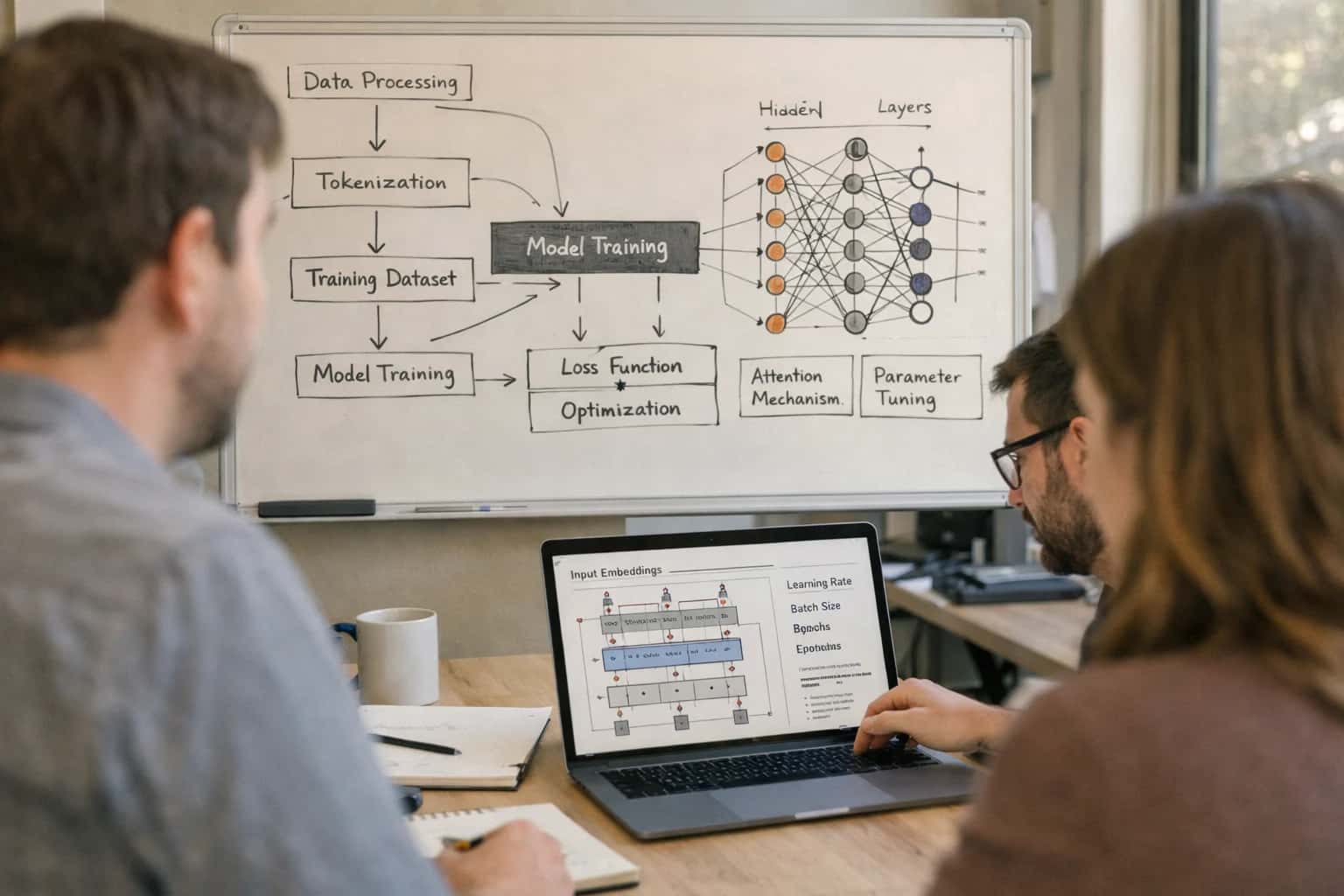
ARCHITECTING THE UNIFIED COMMERCE BRAIN
Where AI Fits in Omnichannel POS Integration
AI acts as the central intelligence layer that synchronizes data and automates decisions between your physical POS and digital storefronts.
Implementation typically involves a middleware layer that ingests webhooks from each platform, normalizes the data, and passes it to an AI orchestration engine. For example, when a sale.completed event fires from the POS, the AI can: 1) update the centralized inventory count, 2) check if the item is a best-seller on the eCommerce site and adjust digital merchandising rules, and 3) evaluate the customer's omnichannel purchase history to queue a personalized email offer. This happens in seconds, turning disparate system updates into a coordinated business action.
Rollout requires a phased approach. Start by using AI to sync basic inventory levels—this delivers immediate value by reducing oversells. Next, layer on customer data unification, which powers loyalty programs that work identically online and in-store. Finally, implement predictive workflows, like AI-generated purchase orders that consider both brick-and-mortar sales velocity and website demand forecasts. Governance is critical: establish clear rules for how AI can modify core records like product availability and always maintain an audit log of automated decisions for compliance and customer service review. For a deeper dive on foundational patterns, see our guide on AI Integration for Retail Point of Sale Platforms.
ARCHITECTURAL BLUEPOINTS FOR AI
Key Integration Surfaces Across Major POS Platforms
Real-Time Decisioning at the Register
The transaction API layer is the primary surface for AI that acts during the checkout moment. This includes endpoints for creating, updating, and finalizing sales, as well as applying discounts and processing payments.
AI Integration Patterns:
- Dynamic Pricing & Discounts: Call a pricing engine before finalizing a sale to apply context-aware discounts (e.g., for slow-moving inventory, loyalty tier, or basket size).
- Real-Time Fraud Scoring: Stream transaction payloads (items, amounts, payment method) to an AI model as a webhook to score risk before authorization.
- Next-Best-Offer Engine: After scanning core items, use the current cart composition to call a recommendation service and suggest complementary add-ons via the POS UI.
Implementation Note: These integrations require low-latency, synchronous API calls or webhook responses to avoid checkout delays. Logic should fail gracefully to default POS behavior.
UNIFIED RETAIL OPERATIONS
High-Value AI Use Cases for Omnichannel Sync
Integrating AI into your omnichannel POS and eCommerce data flow automates the complex synchronization tasks that slow down operations and create customer experience gaps. Below are the most impactful patterns we implement for retailers.
01
Intelligent Inventory Rebalancing
AI continuously analyzes real-time sales velocity from POS and web channels against store-level stock counts. It automatically generates transfer orders between locations or suggests fulfill-from-store for online orders, balancing inventory to maximize sell-through and minimize markdowns.
Batch -> Real-time
Replenishment logic
02
Unified Customer Profile Orchestration
An AI agent acts as a matching and merging engine, resolving identities across POS transactions, eCommerce logins, and loyalty program IDs. It builds a single view used to trigger personalized offers at checkout and sync preferences (like size or brand) across all channels instantly.
Same day
Profile unification
03
Automated Order Routing & Exception Handling
For buy-online-pickup-in-store (BOPIS) or ship-from-store, AI evaluates real-time store capacity, staff schedules, and local inventory to route orders optimally. It handles exceptions—like out-of-stocks—by finding the next best fulfillment location and automatically updating the customer via SMS.
Hours -> Minutes
Fulfillment decision
04
Dynamic Pricing Synchronization
Connect AI-powered pricing engines to both your POS and eCommerce platform APIs. AI ensures price changes (for promotions, clearance, or competitor responses) are applied instantly and consistently across all channels, preventing channel conflict and cart abandonment due to price discrepancies.
Real-time
Price sync
05
Centralized Returns & Exchanges Logic
AI governs the returns process by accessing the unified transaction history. It validates eligibility, determines whether an item should be returned to a DC or restocked in-store, updates inventory globally, and can suggest an exchange based on the customer's omnichannel purchase history, all initiated at any return point.
1 sprint
Implementation cycle
06
Omnichannel Campaign Performance Attribution
AI links online marketing touchpoints to in-store POS transactions by analyzing offer codes, scanned QR codes, and location data. This provides true cross-channel ROI reporting and allows for automated budget reallocation between digital and in-store promotion spend based on real performance.
Batch -> Real-time
Attribution model
ARCHITECTURE PATTERNS
Example AI-Powered Omnichannel Workflows
These workflows illustrate how AI agents and automations connect your physical POS (Lightspeed, Shopify POS, Square, Clover) to your eCommerce backend, creating a unified data layer and intelligent operations.
Trigger: A sale is recorded at a physical store register (POS) or an item sells out online (eCommerce platform).
Context/Data Pulled:
- Real-time inventory levels from the POS location and the central warehouse (via APIs).
- Historical sales velocity for the SKU across channels.
- Current supplier lead times and minimum order quantities.
- Pending online orders for in-store pickup.
Model or Agent Action: An AI agent evaluates if the sale triggers a reorder or a stock transfer. It considers:
- Demand Forecasting: Predicts short-term demand for that SKU at that location.
- Allocation Logic: Decides whether to fulfill from warehouse stock or initiate a transfer from a nearby store with surplus.
- Purchase Order Drafting: If a vendor reorder is needed, it drafts a PO with suggested quantities.
System Update or Next Step:
- The agent updates inventory counts across all channels in near real-time.
- If a transfer is optimal, it creates a transfer order in the WMS or POS system.
- If a PO is drafted, it routes the PO to a manager for approval via email or a dashboard.
Human Review Point: Purchase orders over a predefined dollar amount or for new suppliers are flagged for manager approval before submission.
UNIFYING PHYSICAL AND DIGITAL COMMERCE
Implementation Architecture: Data Flow & System Design
A technical blueprint for orchestrating AI across POS and eCommerce systems to create a single source of truth for inventory, customers, and fulfillment.
A production-ready omnichannel AI integration is built on a central orchestration layer that sits between your Lightspeed Retail, Shopify POS, or Square Retail systems and your eCommerce platform (e.g., Shopify, BigCommerce). This layer uses AI agents to continuously synchronize core data entities: Product SKUs and variants, Inventory levels across locations, Customer profiles and purchase history, and Order objects for fulfillment logic. The architecture typically involves listening to webhooks from the POS for sales and returns, and from the eCommerce platform for new online orders, then using an AI workflow to resolve conflicts (e.g., a last unit sold in-store while online cart is open) and update all systems in near-real-time via their REST APIs.
High-value workflows powered by this design include unified inventory availability, where an AI agent calculates and displays accurate stock counts across all channels, and intelligent order routing, where the system uses store proximity, labor capacity, and inventory placement to decide whether a new online order should be fulfilled from a warehouse or prepared for in-store pickup. Another critical pattern is customer identity resolution, where an AI model matches in-store transactions (using email, phone, or loyalty ID) with online profiles to build a complete 360-degree view, enabling personalized promotions that work seamlessly both online and at the register.
Rollout requires a phased approach: start by establishing the bi-directional inventory sync as a foundational data pipeline, then layer on customer unification, and finally implement fulfillment logic. Governance is essential; all AI-driven decisions (like overriding an inventory count or merging customer records) should be logged to an audit trail and, for high-stakes actions, routed through a human-in-the-loop approval queue in a platform like ServiceNow or Jira. This ensures the system enhances operational agility without introducing risk. For a deeper dive on foundational POS integration patterns, see our guide on AI Integration for Retail Point of Sale Platforms.
OMNICHANNEL POS INTEGRATION
Code Examples: Webhook Handlers & API Orchestration
Real-Time Inventory Reconciliation
When an item sells in-store (POS) or online (eCommerce), a webhook fires to your orchestration layer. This handler deduplicates events, resolves SKU mappings, and calls an AI service to predict the optimal sync action (e.g., reserve, transfer, reorder).
python# Flask example for handling a sale event from Shopify POS from flask import Flask, request, jsonify import requests app = Flask(__name__) @app.route('/webhook/pos-sale', methods=['POST']) def handle_pos_sale(): payload = request.json # Extract core data location_id = payload.get('location_id') sku = payload.get('sku') qty_sold = payload.get('quantity') channel = payload.get('source', 'pos') # Call AI service for sync logic ai_payload = { "sku": sku, "qty_change": -qty_sold, "channel": channel, "location": location_id, "timestamp": payload.get('created_at') } ai_response = requests.post( 'https://ai-orchestrator/inventory/sync-decision', json=ai_payload, headers={'Authorization': f'Bearer {API_KEY}'} ).json() # Execute the AI-prescribed action action = ai_response.get('action') # e.g., "transfer_from_warehouse_B" if action: # Call respective platform APIs (e.g., Lightspeed, Shopify Admin) execute_inventory_update(sku, action, location_id) return jsonify({"status": "processed", "action_taken": action}), 200
This pattern prevents overselling by making sync decisions based on real-time demand, lead times, and store-level priorities.
OMNICHANNEL SYNCHRONIZATION
Realistic Time Savings & Operational Impact
This table illustrates the tangible operational improvements when AI orchestrates data and workflows between physical POS and eCommerce platforms, moving from manual, error-prone processes to automated, intelligent synchronization.
| Workflow | Before AI | After AI | Key Impact |
|---|---|---|---|
Inventory Level Synchronization | Manual spreadsheet updates, daily batch syncs | Real-time, event-driven updates across all channels | Eliminates overselling, reduces stockouts, syncs in minutes vs. hours |
Customer Profile Unification | Disparate records in POS and online; manual merging | Automated entity resolution and enrichment on transaction | Enables single customer view for next-visit personalization |
Order Routing & Fulfillment Logic | Staff manually check systems to route BOPIS/SFS orders | AI evaluates real-time inventory, location, and labor to auto-route | Reduces fulfillment time from 15+ minutes to under 2 minutes per order |
Promotion & Pricing Consistency | Promo codes and sale prices manually configured per channel | Centralized AI engine applies rules and monitors for discrepancies | Ensures compliance, prevents revenue leakage from pricing errors |
Returns & Exchanges Processing | Staff must access multiple systems to validate and process | AI validates eligibility, updates all channel inventories, initiates refund | Cuts processing time by 60%, automatically corrects inventory counts |
Demand Forecasting for Replenishment | Historical sales review by category, often channel-specific | AI models fuse POS and web demand signals for channel-aware forecasts | Improves forecast accuracy, optimizes buy quantities across channels |
Product Information Management | Manual entry and updates to keep descriptions/images consistent | AI-assisted syndication and validation of product attributes | Accelerates new product launches, ensures brand consistency |
ARCHITECTING FOR SCALE AND CONTROL
Governance, Security, and Phased Rollout
A production-ready AI integration for omnichannel POS must be built with data governance, secure tool calling, and a phased rollout that proves value without disrupting core operations.
Governance starts with data mapping. Your AI agents need secure, policy-aware access to key objects across systems: Product and InventoryItem records from your POS (e.g., Lightspeed Retail), Customer and Order entities from your eCommerce platform (e.g., Shopify), and fulfillment logic from your OMS or WMS. Implement a central API gateway or middleware layer—using tools like Kong or MuleSoft—to broker these calls. This layer enforces RBAC, logs all AI-initiated actions (e.g., inventory adjustments, customer profile updates) to an immutable audit trail, and applies rate limiting to prevent cascading failures.
For security, treat AI tool calls as a new class of system integration. Use service accounts with least-privilege access, scoped specifically to the APIs needed for synchronization workflows (e.g., POST /inventory-levels/update, GET /orders). Never expose raw database credentials. For sensitive operations like overriding a manual stock count or merging customer profiles, design approval steps where the AI suggests an action and a human confirms via a Slack alert or a queue in your retail ops dashboard before the POS is updated.
A phased rollout de-risks implementation. Start with a read-only phase: deploy agents that analyze synchronization gaps (e.g., identifying SKUs with mismatched inventory counts between POS and web) and generate daily reports for your ops team. Next, move to assisted writes: automate low-risk tasks like syncing basic product attribute changes (e.g., price updates) with a human-in-the-loop review for the first 30 days. Finally, enable fully automated workflows for high-confidence, high-volume tasks like real-time inventory deduction across channels, beginning with a single product category or pilot store location. Measure success through operational metrics: reduction in manual reconciliation hours, decrease in oversell incidents, and improvement in order fulfillment speed.
Enabling Efficiency, Speed & Accuracy
Intelligent Analysis, Decision & Execution
We build AI systems for teams that need search across company data, workflow automation across tools, or AI features inside products and internal software.
Talk to Us
Search across company data
Give teams answers from docs, tickets, runbooks, and product data with sources and permissions.
Useful when people spend too long searching or get different answers from different systems.
Enterprise searchRAGPermissions
Read more
Automate internal workflows
Use AI to route work, draft outputs, trigger actions, and keep approvals and logs in place.
Useful when repetitive work moves across multiple tools and teams.
AI agentsWorkflow automationGovernance
Read more
Add AI to products and internal tools
Build assistants, guided actions, or decision support into the software your team or customers already use.
Useful when AI needs to be part of the product, not a separate tool.
AI integrationDecision supportModel routing
Read moreOMNICHANNEL POS INTEGRATION
Frequently Asked Questions (FAQ)
Common technical and strategic questions about implementing AI to synchronize inventory, customer data, and fulfillment between physical POS and eCommerce systems.
AI agents monitor inventory change events from both systems via webhooks or API polling. A typical workflow:
- Trigger: A sale is recorded in the physical store POS (e.g., Lightspeed) or an online order is placed (e.g., Shopify).
- Context Pulled: The agent fetches the current available-to-sell (ATS) counts from both platforms and checks for existing pending sync jobs.
- AI Action: A model evaluates the event against business rules (e.g., reserve thresholds for online, safety stock for stores) and predicts the optimal allocation. It resolves conflicts—like a simultaneous online and in-store sale for the last unit—by applying configured priority logic.
- System Update: The agent calls the
PATCH /inventoryAPI of the target system to decrement stock and, if configured, updates a central vector database with the transaction context for future demand forecasting. - Human Review: Major stock discrepancies or predictions that fall outside confidence thresholds are flagged in a dashboard for manager approval before syncing.

About the author
Prasad Kumkar
CEO & MD, Inference Systems
Prasad Kumkar is the CEO & MD of Inference Systems and writes about AI systems architecture, LLM infrastructure, model serving, evaluation, and production deployment. Over 5+ years, he has worked across computer vision models, L5 autonomous vehicle systems, and LLM research, with a focus on taking complex AI ideas into real-world engineering systems.
His work and writing cover AI systems, large language models, AI agents, multimodal systems, autonomous systems, inference optimization, RAG, evaluation, and production AI engineering.
LinkedIn
Limited slotsGet a Free AI Consultation
Partnered with leading AI, data, and software stack.





How We Work
Custom AI workflows for your Business
One-fit-all AI don't work for modern businesses. At Inferensys, we aim to understand your business & custom requirements; which we use to define most efficient agentic workflows, the data, and the tools for your business.
01
Review the use case
We understand the task, the users, and where AI can actually help.
Read more02
Pick the right approach
We define what needs search, automation, or product integration.
Read more03
Build the first useful version
We implement the part that proves the value first.
Read more04
Improve from there
We add the checks and visibility needed to keep it useful.
Read moreThe first call is a practical review of your use case and the right next step.
Talk to Us