AI integration for AppFolio Vendor Management connects at three primary surfaces: the Vendor Portal, the Purchase Order and Invoice workflows, and the Certificate of Insurance (COI) tracking module. The goal is to inject intelligence into the vendor lifecycle—from onboarding and bid requests to performance scoring and compliance monitoring—without disrupting the core financial and operational data flow. This is typically achieved via AppFolio's RESTful APIs and webhooks, allowing an external AI layer to read vendor records, work order history, and invoice data, then write back scores, automated communications, or flagged exceptions.

Integration
AI Integration for AppFolio Vendor Management
Connect AI to AppFolio's vendor network to automate bid requests, evaluate performance, and manage compliance, reducing procurement cycle times and improving vendor quality.
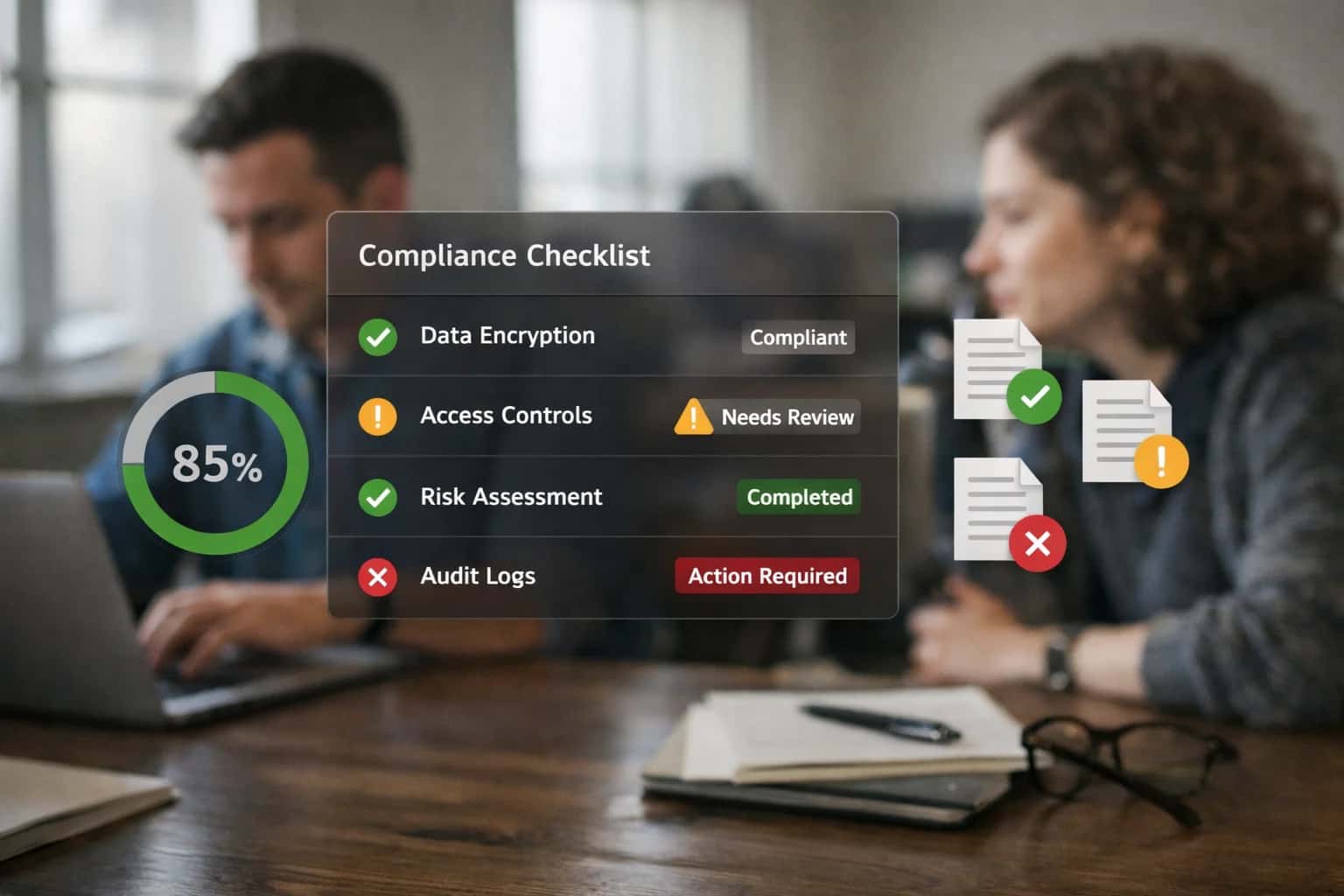
ARCHITECTURE AND ROLLOUT
Where AI Fits into AppFolio Vendor Management
A practical blueprint for integrating AI into AppFolio's vendor network to automate procurement, evaluate performance, and manage compliance.
Implementation focuses on specific, high-impact workflows:
- Automated Bid Solicitation: An AI agent analyzes a new work order's scope, location, and required certifications to query the vendor database, identify qualified candidates, and automatically dispatch bid requests via email or the vendor portal, logging all interactions back to the work order.
- Vendor Performance Scoring: By ingesting historical data on response times, work order completion notes, invoice accuracy, and resident feedback, an AI model generates continuous performance scores. These scores can trigger automated actions, like prioritizing top vendors for new jobs or flagging underperformers for review.
- COI Compliance Monitoring: An AI document processing pipeline automatically extracts key dates, coverage limits, and named insured details from uploaded vendor insurance certificates. It compares them against property-level requirements, flags upcoming expirations or deficiencies, and can even initiate automated renewal requests.
Rollout should be phased, starting with a single property or vendor type to validate the AI's classification accuracy and integration stability. Governance is critical: all AI-generated scores or automated actions (like sending a bid) should be logged in AppFolio with a clear audit trail, and a human-in-the-loop approval step is recommended for high-value or high-risk decisions initially. This approach ensures the integration augments—rather than replaces—the property manager's oversight, building trust and demonstrating clear operational value before scaling.
VENDOR MANAGEMENT MODULES
Key AppFolio Surfaces for AI Integration
Core Vendor Data Hub
The Vendor Directory is the system of record for all contractor and supplier relationships. Each vendor profile contains structured fields for contact details, service categories, insurance certificates, and performance history.
AI integration surfaces here include:
- Profile Enrichment: Automatically pull business details, licenses, and reviews from external sources to populate or update profiles.
- Compliance Monitoring: Use AI to parse uploaded Certificate of Insurance (COI) documents, extract expiration dates and coverage limits, and flag non-compliant vendors.
- Performance Scoring: Analyze historical work order completion times, cost variance, and resident feedback to generate a dynamic AI-powered performance score for each vendor, visible within their profile.
This data layer enables intelligent vendor selection and proactive risk management.
APPFOLIO INTEGRATION PATTERNS
High-Value AI Use Cases for Vendor Management
Integrate AI directly into AppFolio's vendor network to automate procurement workflows, evaluate performance, and manage compliance, turning vendor management from a reactive cost center into a proactive strategic function.
01
Automated Bid Request & Analysis
Trigger AI agents via AppFolio's API to draft and send RFQs to pre-qualified vendors based on work order details. The agent ingests returned proposals, extracts key terms (price, timeline, scope), and generates a comparative summary for the property manager, pushing the recommended selection back into AppFolio.
Days -> Hours
Procurement cycle
02
Vendor Performance Scoring
Build an AI scoring engine that continuously analyzes AppFolio work order data—response time, completion quality, cost variance, and resident feedback—to generate dynamic performance scores. These scores can automatically populate custom vendor fields and influence future dispatch priority and contract renewals.
Batch -> Real-time
Performance insight
03
Certificate of Insurance (COI) Compliance
Deploy AI document intelligence to automatically review uploaded vendor COIs in AppFolio's document storage. The system validates policy dates, coverage limits, and additional insured status against property requirements, flags expirations or deficiencies, and creates follow-up tasks for the vendor manager.
100% Coverage Check
Compliance audit
04
Intelligent Work Order Dispatch
Enhance AppFolio's maintenance module with an AI routing layer. For new high-priority tickets, the system analyzes work type, location, required skills, and historical vendor performance to recommend and automatically dispatch the optimal contractor via AppFolio's vendor communication tools.
Hours -> Minutes
Vendor assignment
05
Spend Analysis & Forecasting
Connect an AI analytics pipeline to AppFolio's vendor payment and work order history. The model categorizes spend, identifies cost-saving opportunities (e.g., bulk discounts, underperforming vendors), and forecasts future quarterly vendor budgets by trade, integrating predictions back into AppFolio's reporting modules.
1 sprint
Implementation timeline
06
Vendor Onboarding & Profile Enrichment
Automate the initial vendor setup workflow. An AI agent uses the vendor's business name and EIN from an intake form to pull and validate data from external sources, pre-filling AppFolio vendor profile fields (licenses, insurance history, service areas) and kicking off the compliance document collection process.
Manual -> Automated
Data entry
IMPLEMENTATION PATTERNS
Example AI-Augmented Vendor Workflows
These workflows show how to connect AI agents and automations to AppFolio's vendor management APIs, focusing on performance evaluation, bid automation, and compliance monitoring.
Trigger: A property manager creates a new Project record in AppFolio for a capital improvement (e.g., roof replacement) and marks it as Ready for Bids.
AI Agent Action:
- The AI agent, via a webhook or scheduled job, pulls the project details (scope, location, budget, timeline) from the AppFolio API.
- It queries the internal vendor database (synced from AppFolio's
Vendorobjects) to find vendors:- Tagged with relevant
Tradecategories (e.g.,Roofing). - With a
Performance Scoreabove a configured threshold. - Geographically proximate to the property.
- Tagged with relevant
- The agent uses an LLM to generate a personalized bid request email, incorporating key project specifics.
- It sends the requests via email or a vendor portal integration, logging each outreach as a
Noteon the vendor record.
System Update: The agent creates a Bid sub-record under the Project in AppFolio for each vendor solicited, with a status of Requested and a due date. It also creates a follow-up task for the property manager to review incoming bids by the deadline.
VENDOR PERFORMANCE, BID AUTOMATION, AND COMPLIANCE
Implementation Architecture: Connecting AI to AppFolio Vendor Management
A technical blueprint for integrating AI agents and workflows directly into AppFolio's vendor network to automate procurement, evaluate performance, and manage compliance.
The integration connects to AppFolio's Vendor Management API and Work Order API to create a closed-loop system. AI agents are triggered by events like a new work order creation, a vendor invoice submission, or a certificate of insurance (COI) expiration date. The core architecture involves an external middleware service (hosted on your infrastructure) that subscribes to AppFolio webhooks, processes data with LLMs and custom logic, and calls back to AppFolio APIs to update records, create tasks, or send communications. Key data objects include Vendor records (with performance history and insurance details), WorkOrder tickets (with category, description, and cost), and VendorInvoice documents.
For vendor performance scoring, the AI system ingests historical work order completion times, cost variances, resident feedback from related tickets, and vendor response metrics. It applies a weighted scoring model to generate a performance tier (A, B, C), which is written to a custom field on the Vendor record. This enables automatic bid list generation: when a new maintenance request is classified (e.g., 'HVAC repair'), the integration queries for top-tier vendors matching the service category and automatically sends a bid request via AppFolio's communication tools. For COI compliance, an AI monitor scans Vendor records for expiration dates, uses document intelligence to validate active certificates on file, and automatically creates high-priority tasks for property managers when a lapse is detected or predicted.
Rollout is typically phased, starting with a single property portfolio to validate the AI's classification and scoring logic against manager intuition. Governance is critical: all AI-generated scores and automated bid requests should be logged with an audit trail, and a human-in-the-loop approval step is recommended for the first 90 days before moving to fully automated dispatch for low-risk, high-frequency work orders. The system's impact is operational—reducing the time property managers spend on vendor procurement from hours to minutes, shifting compliance monitoring from a monthly manual check to a real-time alert, and creating a data-driven foundation for vendor negotiation and contract renewal decisions.
APPFOLIO VENDOR MANAGEMENT
Code & Payload Examples
Automate Vendor Evaluation
An AI agent can periodically analyze closed work orders to generate performance scores. This script fetches recent work orders for a specific vendor, uses an LLM to evaluate key metrics, and posts the updated score back to AppFolio's vendor record via the vendors/{id} endpoint.
pythonimport requests import json from openai import OpenAI # Fetch recent closed work orders for vendor 789 appfolio_headers = {'Authorization': 'Bearer YOUR_APPFOLIO_TOKEN'} vendor_id = 789 work_orders_url = f'https://api.appfolio.com/v1/work_orders?vendor_id={vendor_id}&status=closed' work_orders = requests.get(work_orders_url, headers=appfolio_headers).json() # Prepare context for LLM evaluation context = [] for wo in work_orders['work_orders'][:10]: # Last 10 orders context.append({ 'response_time': wo.get('response_time_hours'), 'cost': wo.get('total_cost'), 'tenant_rating': wo.get('tenant_satisfaction_score'), 'completion_date': wo.get('completed_at') }) # Call LLM for scoring aiclient = OpenAI(api_key='YOUR_OPENAI_KEY') response = aiclient.chat.completions.create( model="gpt-4o-mini", messages=[ {"role": "system", "content": "Analyze vendor performance data. Return a JSON with 'score' (1-5), 'summary', and 'primary_metric'."}, {"role": "user", "content": json.dumps(context)} ] ) score_data = json.loads(response.choices[0].message.content) # Update vendor record in AppFolio update_url = f'https://api.appfolio.com/v1/vendors/{vendor_id}' payload = { 'vendor': { 'custom_fields': { 'ai_performance_score': score_data['score'], 'ai_performance_summary': score_data['summary'] } } } requests.put(update_url, json=payload, headers=appfolio_headers)
AI FOR VENDOR MANAGEMENT
Realistic Time Savings and Operational Impact
How AI integration transforms manual vendor oversight into a proactive, data-driven function within AppFolio.
| Workflow | Before AI | After AI | Key Impact |
|---|---|---|---|
Vendor Performance Scoring | Quarterly manual review of 5-10 data points per vendor | Continuous scoring based on 50+ signals (response time, cost variance, tenant feedback) | Shifts from reactive audits to proactive vendor management |
Bid Request & RFQ Distribution | Manual email outreach to 5-10 vendors per project | AI matches project scope to vendor skills/ratings; auto-distributes RFQs | Reduces sourcing time from 2-3 days to same-day |
Certificate of Insurance (COI) Compliance | Monthly manual audit of vendor folders for expired documents | AI monitors COI expiry dates; auto-flags non-compliant vendors 30 days out | Eliminates compliance gaps and manual tracking spreadsheets |
Work Order Assignment | Manual match based on manager memory or vendor proximity | AI recommends top 3 vendors based on skills, availability, and past performance | Optimizes first-time fix rate and reduces vendor churn |
Vendor Invoice Review & Coding | Manual line-by-line review against work order scope | AI cross-checks invoice amounts, line items, and work order details | Cuts invoice processing time by 60%; flags discrepancies for human review |
New Vendor Onboarding & Vetting | Manual collection of references, licenses, and insurance docs | AI-assisted intake form analyzes submissions; auto-checks business registrations | Accelerates onboarding from 2 weeks to 3-5 business days |
Spend Analysis & Category Reporting | Monthly export to Excel; manual pivot tables and charts | AI auto-categorizes spend; generates monthly variance and trend reports | Provides real-time visibility into vendor spend without manual effort |
ARCHITECTING FOR PRODUCTION
Governance, Security, and Phased Rollout
A practical framework for deploying AI in AppFolio Vendor Management with controlled risk and measurable impact.
A production-grade integration for AppFolio Vendor Management must respect the platform's data model and security posture. This means authenticating via AppFolio's OAuth 2.0 API, scoping access to specific vendor, work order, and certificate of insurance (COI) objects, and ensuring all AI-generated actions—like bid requests or compliance flags—are written back as auditable records. Your AI layer should act as a middleware service, subscribing to webhooks for new vendor submissions or expiring COIs, processing data externally, and then using AppFolio's REST API to create tasks, update vendor profiles, or post messages to the communication log. This keeps the core system of record intact while adding intelligence at the workflow edges.
Rollout should follow a phased, value-first approach. Phase 1 often targets automated COI compliance monitoring: an AI agent reviews uploaded vendor insurance documents, extracts key dates and coverage limits, compares them against property requirements, and flags discrepancies for manager review—reducing manual checks from hours to minutes. Phase 2 introduces vendor performance scoring, analyzing historical work order completion times, cost variance, and resident feedback to generate a vendor reliability score within AppFolio. Phase 3 automates bid request generation for capital projects, where the AI drafts RFPs based on work scope and pushes them to pre-qualified vendors via the platform's bid management module.
Governance is critical. Establish a human-in-the-loop (HITL) approval step for any AI-recommended vendor blacklisting or large bid awards. Use AppFolio's custom fields and notes to log the AI's reasoning (e.g., "AI_Score: 82/100 - Delayed response on 3 emergency work orders"). Implement regular audits where managers review a sample of AI-processed vendors to check for drift or bias. For security, ensure your AI service is hosted in a compliant cloud, never stores raw AppFolio data longer than needed for processing, and enforces role-based access so only authorized property managers can trigger vendor analysis workflows. Start with a pilot portfolio, measure time saved on vendor onboarding and compliance tasks, and then scale based on proven ROI.
Enabling Efficiency, Speed & Accuracy
Intelligent Analysis, Decision & Execution
We build AI systems for teams that need search across company data, workflow automation across tools, or AI features inside products and internal software.
Talk to Us
Search across company data
Give teams answers from docs, tickets, runbooks, and product data with sources and permissions.
Useful when people spend too long searching or get different answers from different systems.
Enterprise searchRAGPermissions
Read more
Automate internal workflows
Use AI to route work, draft outputs, trigger actions, and keep approvals and logs in place.
Useful when repetitive work moves across multiple tools and teams.
AI agentsWorkflow automationGovernance
Read more
Add AI to products and internal tools
Build assistants, guided actions, or decision support into the software your team or customers already use.
Useful when AI needs to be part of the product, not a separate tool.
AI integrationDecision supportModel routing
Read moreIMPLEMENTATION DETAILS
Frequently Asked Questions
Common technical and operational questions about integrating AI into AppFolio's vendor management workflows.
We use AppFolio's official REST API with OAuth 2.0 authentication. The integration runs in a secure, isolated environment (like a VPC or private cloud) and only accesses the specific endpoints needed:
- Vendor Records:
/vendors,/vendor_contacts - Work Orders:
/work_orders - Documents:
/documents(for COI storage) - Messages:
/messages(for bid communications)
The AI agent acts as a middleware layer: it pulls relevant vendor context from AppFolio, processes it using the AI model, and then pushes structured updates (like a vendor performance score or a flagged expired COI) back into designated custom fields or creates follow-up tasks. All data in transit is encrypted, and we never store raw AppFolio data in external vector databases without explicit client consent and data masking.

About the author
Prasad Kumkar
CEO & MD, Inference Systems
Prasad Kumkar is the CEO & MD of Inference Systems and writes about AI systems architecture, LLM infrastructure, model serving, evaluation, and production deployment. Over 5+ years, he has worked across computer vision models, L5 autonomous vehicle systems, and LLM research, with a focus on taking complex AI ideas into real-world engineering systems.
His work and writing cover AI systems, large language models, AI agents, multimodal systems, autonomous systems, inference optimization, RAG, evaluation, and production AI engineering.
LinkedIn
Limited slotsGet a Free AI Consultation
Partnered with leading AI, data, and software stack.





How We Work
Custom AI workflows for your Business
One-fit-all AI don't work for modern businesses. At Inferensys, we aim to understand your business & custom requirements; which we use to define most efficient agentic workflows, the data, and the tools for your business.
01
Review the use case
We understand the task, the users, and where AI can actually help.
Read more02
Pick the right approach
We define what needs search, automation, or product integration.
Read more03
Build the first useful version
We implement the part that proves the value first.
Read more04
Improve from there
We add the checks and visibility needed to keep it useful.
Read moreThe first call is a practical review of your use case and the right next step.
Talk to Us