The integration architecture centers on an AI workflow agent that listens for new-hire events from your HRIS (like Workday, UKG, or BambooHR) via webhook or API. When a hire event is received, the agent ingests the structured payload—containing fields like start_date, department, job_title, and location—and uses this context to execute a series of API calls to your MDM platform (e.g., Jamf Pro, Microsoft Intune, or VMware Workspace ONE). Key MDM tasks it can orchestrate include: - Dynamic Device Group Assignment: Placing the user's future device into pre-staged enrollment groups based on role and location. - Policy and Profile Configuration: Pushing the appropriate configuration profiles (Wi-Fi, VPN, security baselines) and compliance policies. - Application Catalog Preparation: Assigning mandatory and role-specific applications from the MDM app catalog. - Automated Naming and Asset Tagging: Generating a standardized device name and updating asset records in the MDM inventory.

Integration
AI Integration with HR Systems for Onboarding
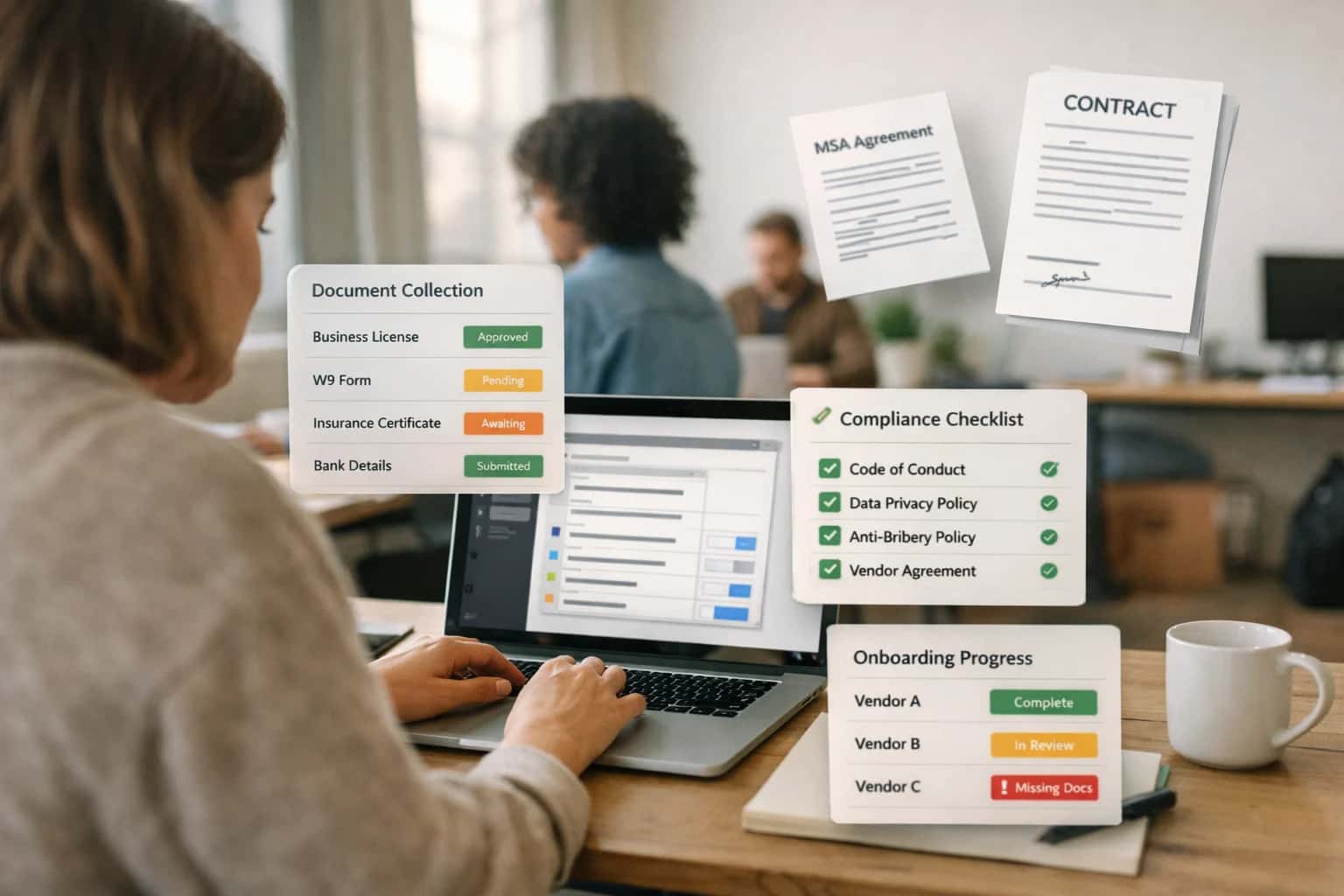
Where AI Fits: Bridging HR Events to MDM Execution
An AI orchestration layer connects HRIS onboarding triggers to MDM provisioning tasks, automating device readiness for new hires.
For a production rollout, this AI agent should be deployed as a secure, containerized service with its own service account for MDM API access. It must include idempotent logic to handle duplicate events and a human-in-the-loop approval step for exceptions (e.g., unusual department codes). The workflow should log every action to an audit trail, correlating the HR event ID with the MDM API transaction IDs for full traceability. Impact is measured in operational time saved: reducing the manual, error-prone process of configuring MDM for each new hire from hours to minutes, and ensuring devices are imaged, encrypted, and policy-compliant before the employee's first day.
Governance is critical. The AI's decision logic for profile assignment should be version-controlled and tested in a sandbox MDM environment. Access to the orchestration layer should follow RBAC principles, and the system should be designed to gracefully degrade—defaulting to a standard 'safe' configuration if the AI cannot confidently map the HR data. This pattern not only accelerates onboarding but also enforces consistent security postures from day zero, a key compliance requirement for regulated industries.
Integration Touchpoints: HRIS Triggers and MDM Actions
Core HRIS Events for MDM Orchestration
The integration begins by listening for specific new-hire events from your HRIS (e.g., Workday, UKG, BambooHR). AI agents monitor webhooks or API endpoints for key status changes that signal the start of a provisioning workflow.
Primary Triggers:
hire_dateconfirmed andemployee_statuschanges to 'Active'.job_profileassignment (e.g., 'Sales Rep', 'Field Engineer'), which dictates device type and software needs.onboarding_taskcompletion (e.g., 'I-9 Verified', 'Background Check Cleared'), creating gated workflows.work_locationanddepartmentassignment, influencing network and security policy groups in the MDM.
The AI evaluates these events to determine the appropriate device provisioning path, checking for conflicts or missing data before initiating downstream MDM actions.
High-Value Use Cases for AI-Driven Onboarding
Integrating AI with your HRIS (Workday, UKG, BambooHR) and MDM platform (Jamf, Intune, Workspace ONE) automates device provisioning from the moment a hire is approved. These patterns ensure new employees have a secure, configured, and ready-to-work device on day one, eliminating manual IT tickets and configuration drift.
Automated Device Provisioning Trigger
An AI agent monitors the HRIS for New Hire or Job Change events. Upon detection, it validates the user's role, department, and location against predefined rules, then triggers the appropriate MDM enrollment workflow via API. This can include zero-touch enrollment for Apple Business Manager or Autopilot provisioning for Windows.
Intelligent Profile & App Assignment
Instead of static group-based assignments, AI analyzes the new hire's attributes (role, cost center, manager) and historical data to dynamically assign MDM configuration profiles, security policies, and application bundles. This ensures a personalized setup that adheres to least-privilege access and software licensing constraints.
Predictive Device Procurement & Staging
AI forecasts device needs by analyzing hiring pipelines, role trends, and current inventory from the MDM. It can auto-generate purchase requests for IT procurement and, upon receipt, pre-stage devices in the MDM with the correct serial numbers tagged to upcoming hires, creating a ready pool of hardware.
Self-Service Onboarding Portal & Copilot
An AI-powered portal provides the new hire with a single pane of glass. It pulls status from the MDM (e.g., Device Shipped, Enrolled, Apps Installed) and the HRIS. A copilot answers setup questions, provides personalized guidance, and can trigger MDM actions like remote app installs based on user requests.
Compliance & Security Baseline Enforcement
Upon enrollment, AI immediately validates the device against security baselines (encryption status, OS version, security software). Any deviations trigger automated MDM remediation scripts (e.g., enabling FileVault, installing patches) before granting full network or resource access, ensuring a secure starting point.
Orchestrated Offboarding & Asset Reclamation
Triggered by an HRIS termination event, AI orchestrates a full offboarding workflow. It initiates a remote wipe via MDM, revokes access in connected systems (Okta, Entra ID), updates the asset record, and can trigger a shipping label for device return—all while maintaining an audit trail for compliance.
Example AI-Orchestrated Onboarding Workflows
These workflows detail how AI agents can automate the provisioning and configuration of managed devices by reacting to new hire events from your HRIS. Each flow ensures devices are enrolled, secured, and personalized before the employee's first day, eliminating manual IT tickets and configuration errors.
Trigger: A New Hire - Start Date Confirmed event webhook from Workday.
Context Gathered: The AI agent consumes the new hire payload, extracting:
- Employee ID, name, email, department, manager.
- Job title and location (to determine standard software stack).
- Start date (to schedule tasks).
Agent Actions:
- Device Assignment: Checks the MDM (e.g., Jamf Pro) pre-stage enrollment list for an available, unassigned device serial number matching the department's hardware standard (e.g., MacBook Pro 16").
- Dynamic Profile Assembly: Uses the employee's department and location to assemble a configuration profile payload. This includes:
- Wi-Fi networks (office location-specific).
- Department-specific security certificates.
- Printer queues.
- VPN configuration.
- Application Bundle Selection: Queries a rules database to select the required application bundle (e.g., Engineering: VS Code, Docker; Marketing: Adobe Creative Cloud, Figma).
- Automated Enrollment Binding: Uses the MDM API to bind the selected device serial number to the employee's identity in the pre-stage enrollment record.
System Update: The agent updates the IT asset management system (or a shared spreadsheet) with the assignment: Device S/N: X, Assigned to: [Employee ID], Status: Provisioning. It then sends a scheduled task to the MDM to begin the zero-touch enrollment and application installs 3 days before the start date.
Human Review Point: None for standard roles. The workflow is fully automated, with failures (e.g., no available devices) routed to an IT procurement queue in the ITSM platform.
Implementation Architecture: Data Flow, APIs, and Guardrails
A secure, automated pipeline that connects HRIS new-hire events to MDM provisioning tasks, ensuring devices are configured and ready before an employee's first day.
The integration is triggered by a new hire POST event webhook from the HRIS (e.g., Workday, BambooHR, UKG). This payload contains essential provisioning data: user's full name, email, employee ID, department, start date, and role-based device entitlement (e.g., 'Sales - MacBook Pro', 'Field - Rugged Tablet'). An API gateway receives this event, validates the schema, and places it on a secure message queue (e.g., Amazon SQS, Azure Service Bus) for asynchronous, fault-tolerant processing.
A core orchestration agent consumes the event from the queue. Its first action is to call the MDM platform's API—Jamf Pro's /api/v1/computer-prestages, Microsoft Intune's Graph /deviceManagement/autopilotEvents, or VMware Workspace ONE UEM's /API/mdm/devices—to initiate a zero-touch enrollment package. The agent uses the HR data to dynamically populate pre-stage fields: auto-generating a device name convention (NYC-{{dept}}-{{lastName}}), assigning to the correct user group, and attaching baseline security and application configuration profiles. For physical device handling, the agent can simultaneously trigger a workflow in a logistics system (like ServiceNow) to pull a pre-imaged device from inventory or generate a shipping label.
Critical guardrails are implemented at each stage. Before any MDM action, a policy engine checks for conflicts or missing data, potentially placing the workflow in a human review queue. All API calls are logged with full context to an immutable audit trail, linking the HR event ID to the MDM device ID for compliance. The orchestration agent monitors the MDM for successful enrollment completion, and a final status update—along with the device's serial number and assigned user—is posted back to a dedicated field in the HRIS employee record, closing the loop. This architecture ensures a fully documented, recoverable, and scalable onboarding workflow that eliminates manual handoffs between HR and IT.
Code and Payload Examples
Ingesting the New Hire Event
When a new hire is created in Workday, BambooHR, or UKG, a webhook payload is sent to your orchestration layer. This Python FastAPI handler validates the event, extracts key employee data, and enqueues a device provisioning task.
pythonfrom fastapi import FastAPI, HTTPException, BackgroundTasks from pydantic import BaseModel import httpx app = FastAPI() class NewHireEvent(BaseModel): employee_id: str first_name: str last_name: str email: str start_date: str department: str role: str manager_email: str @app.post("/webhook/hris/new-hire") async def handle_new_hire(event: NewHireEvent, background_tasks: BackgroundTasks): """Validate HRIS webhook and trigger device provisioning.""" # 1. Enrich with role-based device template device_profile = await determine_device_profile(event.role, event.department) # 2. Queue the provisioning task background_tasks.add_task( initiate_mdm_provisioning, employee_data=event.dict(), device_profile=device_profile ) return {"status": "queued", "employee_id": event.employee_id} async def determine_device_profile(role: str, department: str) -> dict: """AI/Logic to select device type and apps based on role.""" # Example logic: Sales gets iPhone + MacBook, Engineering gets MacBook Pro profiles = { "sales": {"platform": "apple", "type": "iphone+macbook", "priority": "standard"}, "engineering": {"platform": "apple", "type": "macbook_pro", "priority": "high"}, "executive": {"platform": "apple", "type": "iphone+ipad+macbook", "priority": "critical"} } # Default fallback return profiles.get(role.lower(), {"platform": "apple", "type": "macbook", "priority": "standard"})
Realistic Time Savings and Operational Impact
This table illustrates the operational impact of integrating an AI agent between your HRIS (e.g., Workday) and your MDM platform (e.g., Jamf, Intune) to automate new hire device provisioning.
| Workflow Stage | Manual Process (Before AI) | AI-Integrated Process (After AI) | Key Notes & Governance |
|---|---|---|---|
New Hire Event Detection | HR admin manually exports/emails list daily | AI agent monitors HRIS webhook for | Event triggers workflow; human review of trigger logic during pilot |
Device Type & Configuration Assignment | IT reviews job title/department to assign standard manually | AI maps hire data to pre-defined device matrix; suggests config | Matrix defined by IT; AI suggestion requires IT approval for first 30 days |
Procurement & Inventory Check | IT checks spreadsheet or CMDB for available stock | AI queries ITAM/asset system API; reserves device if available | AI creates ticket if stock is low; procurement remains a manual process |
MDM Pre-Staging & Enrollment | IT manually creates device record in MDM and pre-stages | AI calls MDM API to pre-stage device with correct profiles/apps | Profiles and apps are pre-approved templates; zero-touch enrollment enabled |
Shipping & Logistics Coordination | IT emails shipping details to warehouse or vendor | AI generates shipping label and sends pick instruction to warehouse system | Integration with shipping platform (e.g., ShipStation); label requires final human verification |
Day-1 Setup & User Communication | IT sends separate welcome email with generic setup steps | AI triggers personalized welcome email with specific device details and setup link | Email template and timing controlled by HR/IT; user self-service reduces help desk tickets |
Exception Handling & Support | User submits ticket; IT troubleshoots missing device/config | AI monitors enrollment status; auto-creates ticket with context if device not enrolled in 24h | AI enriches ticket with HR and MDM data; routing to correct support tier |
Governance, Security, and Phased Rollout
A secure, phased implementation is critical for an AI-orchestrated workflow that bridges sensitive HR data with device provisioning actions.
The integration's security model is built on a zero-trust, API-first architecture. The AI orchestration layer acts as a secure broker, never storing PII from the HRIS (like Workday or BambooHR). It consumes new-hire webhook events, extracts only the necessary context (user ID, start date, department, role), and uses this to construct a secure API call to the MDM platform (e.g., Jamf Pro, Microsoft Intune). All communication is encrypted in transit, and the AI agent's permissions in both systems are scoped to the minimum required—typically read access to HRIS employee objects and specific write scopes in the MDM API for device enrollment and profile assignment. An immutable audit log records every event: the HR trigger, the AI's decision logic, the exact API call made to the MDM, and the resulting device task ID.
Rollout follows a phased, risk-managed approach. Phase 1 (Pilot) connects the AI to a single HRIS test environment and a sandbox MDM instance, automating provisioning for a controlled group (e.g., IT department new hires). This validates the data mapping, error handling, and generates baseline metrics. Phase 2 (Departmental) expands to a single business unit in production, introducing human-in-the-loop approvals where the AI proposes a device bundle (e.g., "MacBook Pro + iPhone + specific security profiles") for manager confirmation via a Slack or Teams workflow before the MDM task is created. Phase 3 (Enterprise) enables full automation for predefined, low-risk role templates, while complex or high-cost requests still route for approval.
Governance is enforced through continuous monitoring and policy-as-code. The AI's decision framework (which role gets which device profile) is managed as version-controlled configuration, not hard-coded prompts. Drift detection monitors for discrepancies between HRIS job codes and MDM group mappings. Before any remote action (like a wipe or lock triggered by a termination event), the AI requires a secondary confirmation from the HRIS system's termination_verified flag. This layered approach ensures compliance, provides clear rollback paths, and builds organizational trust in the automated workflow, turning day-one readiness from an IT scramble into a predictable, auditable operation.
Enabling Efficiency, Speed & Accuracy
Intelligent Analysis, Decision & Execution
We build AI systems for teams that need search across company data, workflow automation across tools, or AI features inside products and internal software.
Talk to Us
Search across company data
Give teams answers from docs, tickets, runbooks, and product data with sources and permissions.
Useful when people spend too long searching or get different answers from different systems.

Automate internal workflows
Use AI to route work, draft outputs, trigger actions, and keep approvals and logs in place.
Useful when repetitive work moves across multiple tools and teams.

Add AI to products and internal tools
Build assistants, guided actions, or decision support into the software your team or customers already use.
Useful when AI needs to be part of the product, not a separate tool.
Frequently Asked Questions (FAQ)
Common technical and operational questions about orchestrating Mobile Device Management (MDM) provisioning through AI agents triggered by HRIS onboarding events.
The workflow is initiated via a secure webhook from your HRIS (e.g., Workday, BambooHR) to our integration platform.
- Trigger: The HRIS sends a JSON payload upon a
HireorJob Offer Acceptedevent. The payload must include key fields:json{ "employee_id": "E12345", "first_name": "Alex", "last_name": "Chen", "email": "[email protected]", "start_date": "2024-06-01", "department": "Engineering", "location": "HQ", "job_title": "Software Engineer", "manager_email": "[email protected]" } - Orchestration: An AI agent validates the payload, enriches it with any missing context (e.g., mapping
departmentto a pre-defined device profile), and initiates the downstream MDM workflow. A human review checkpoint can be configured for specific roles or exceptions before proceeding.

About the author
Prasad Kumkar
CEO & MD, Inference Systems
Prasad Kumkar is the CEO & MD of Inference Systems and writes about AI systems architecture, LLM infrastructure, model serving, evaluation, and production deployment. Over 5+ years, he has worked across computer vision models, L5 autonomous vehicle systems, and LLM research, with a focus on taking complex AI ideas into real-world engineering systems.
His work and writing cover AI systems, large language models, AI agents, multimodal systems, autonomous systems, inference optimization, RAG, evaluation, and production AI engineering.
Partnered with leading AI, data, and software stack.





How We Work
Custom AI workflows for your Business
One-fit-all AI don't work for modern businesses. At Inferensys, we aim to understand your business & custom requirements; which we use to define most efficient agentic workflows, the data, and the tools for your business.
01
Review the use case
We understand the task, the users, and where AI can actually help.
Read more02
Pick the right approach
We define what needs search, automation, or product integration.
Read more03
Build the first useful version
We implement the part that proves the value first.
Read more04
Improve from there
We add the checks and visibility needed to keep it useful.
Read moreThe first call is a practical review of your use case and the right next step.
Talk to Us