Instead of pushing a new configuration profile or compliance policy to your entire fleet and hoping for the best, use an AI layer to simulate the change first. This system ingests the proposed policy payload—whether for Jamf Pro, Microsoft Intune, or Workspace ONE—and analyzes it against a representative sample of your device inventory. It predicts outcomes like: Will this Wi-Fi payload conflict with an existing VPN profile? Will this restriction break a critical line-of-business app for the sales team? By running simulations against a test device group, you can catch logical conflicts, performance regressions, and user experience issues before they cause help desk spikes.

Integration
AI Integration for Automated Policy Testing and Validation
Use AI to simulate the impact of new MDM policies on test device groups before broad rollout. Predict conflicts, user impact, and compliance gaps to improve change management for Jamf, Intune, Workspace ONE, and Meraki.
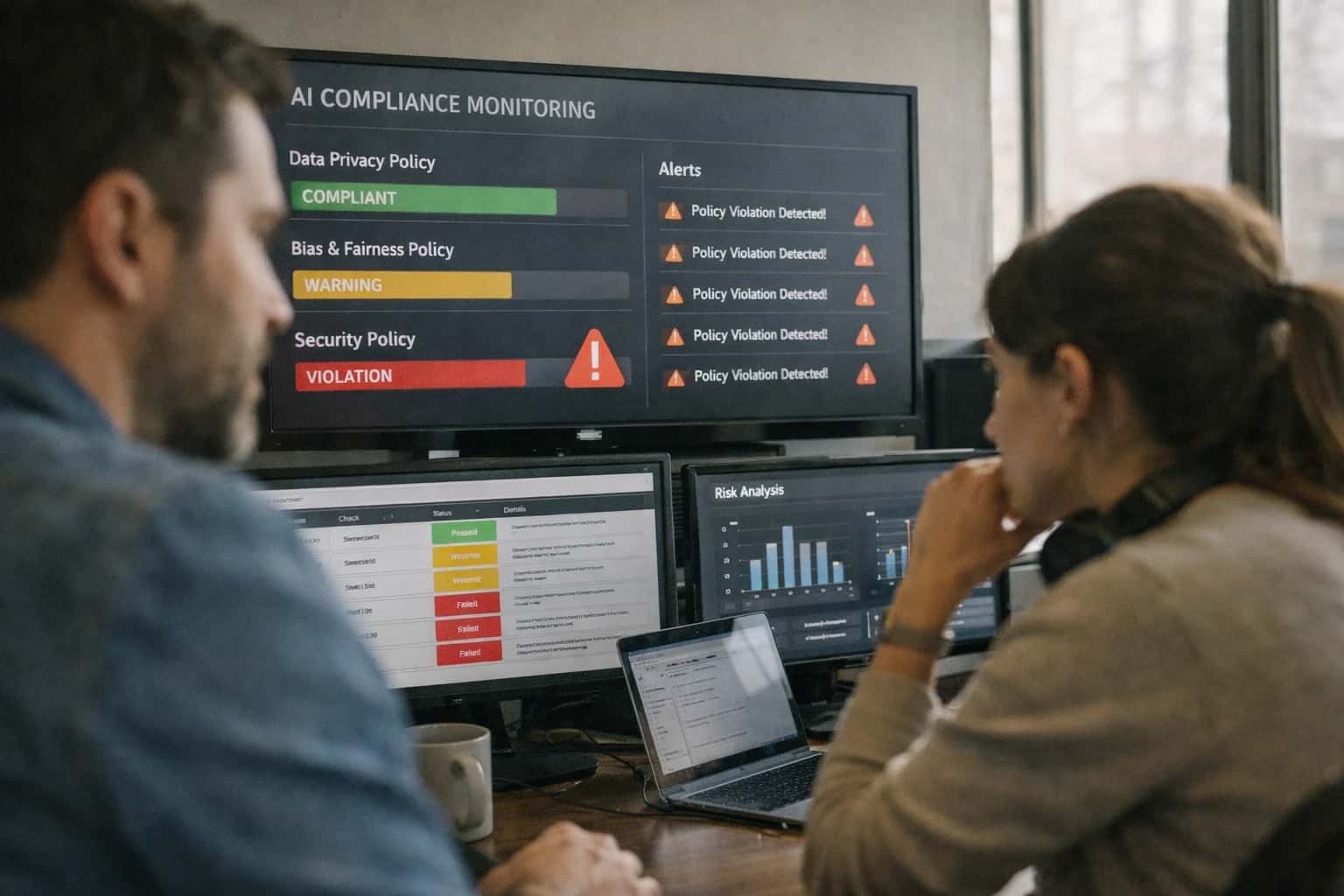
AI INTEGRATION FOR AUTOMATED POLICY TESTING AND VALIDATION
Stop Guessing Policy Impact: Simulate Before You Deploy
Deploy AI agents to simulate and predict the impact of new MDM policies on a test device group before broad rollout, preventing conflicts and user disruption.
The implementation connects to your MDM platform's API (like Microsoft Graph for Intune or Jamf Pro's Classic API) to pull real device attributes, installed applications, and existing policy assignments for the test group. An AI model trained on historical deployment data and common conflict patterns evaluates the proposed change. It outputs a risk score and a detailed report highlighting potential issues, such as battery drain from a new background service, authentication loops from conflicting conditional access rules, or application incompatibility on specific OS versions. This allows your change advisory board to approve deployments with data, not guesswork.
Rollout is managed through a phased automation workflow. After a successful simulation, the AI system can orchestrate the actual deployment via the MDM API, starting with a canary group of low-risk devices. It continues to monitor those devices for anomalies in telemetry data (crashes, performance counters, user complaints logged to your ITSM) and can automatically trigger a rollback script if a predefined threshold of issues is detected. This creates a closed-loop, policy-driven change management process that reduces rollout time from weeks to days while cutting incident tickets related to bad configurations by an estimated 40-60%.
AUTOMATED POLICY TESTING AND VALIDATION
Where AI Connects: MDM Policy Surfaces and APIs
Policy Impact Simulation Data
AI models for policy testing require a rich, real-time feed of device state. This is sourced directly from MDM platform inventory APIs, which expose structured data on:
- Hardware profiles: Model, OS version, storage, battery health, and installed applications.
- Current configuration: Active profiles, security settings (encryption, passcode status), and compliance states.
- Performance telemetry: Crash logs, network connectivity history, and application usage patterns.
By consuming this data via RESTful endpoints (e.g., Jamf Pro's /api/v1/computers-inventory, Intune's deviceManagement/managedDevices Graph resource), an AI system builds a digital twin of your test device group. It uses this baseline to simulate how a new policy payload—like a stricter encryption requirement or a new Wi-Fi configuration—would alter device behavior, performance, and user experience before a single change is pushed.
MDM INTEGRATION PATTERNS
High-Value Use Cases for AI Policy Testing
Before rolling out a new configuration profile or compliance policy to thousands of devices, use AI to simulate its impact. These patterns show how to connect AI models to your MDM's APIs to predict conflicts, user disruption, and rollout risks, turning policy management from a reactive to a predictive discipline.
01
Predictive Policy Conflict Detection
AI analyzes the proposed new MDM policy (e.g., a Jamf configuration profile or Intune device restriction) against existing policies on a test group. It flags potential conflicts—like overlapping VPN settings or contradictory security payloads—before they cause connectivity or compliance issues in production.
Batch -> Pre-flight
Testing mode
02
User Impact Simulation
Model simulates how a new policy (like stricter screen lock or app blacklist) will affect different user personas (executives, field staff, kiosks). It estimates disruption scores based on historical telemetry from the MDM, such as app usage frequency and location patterns, to guide change communications.
1 sprint
Lead time saved
03
Automated Test Device Group Selection
Instead of manually picking test devices, an AI agent queries the MDM inventory (via Jamf API, Microsoft Graph for Intune) to select an optimal, representative test cohort. It balances factors like OS versions, hardware models, and user roles to maximize test coverage with minimal device count.
Hours -> Minutes
Cohort assembly
04
Rollback Readiness Scoring
Before policy deployment, AI evaluates the complexity and risk of a potential rollback. It analyzes the MDM's change history and the policy's dependencies to generate a rollback score and pre-stage the necessary scripts or profiles (e.g., a clean Jamf PreStage enrollment) for rapid reversal if needed.
05
Compliance Drift Forecasting
AI projects how a new policy will interact with existing compliance frameworks (HIPAA, PCI-DSS) governed by the MDM. It forecasts potential drift by comparing the intended state against baseline reports, highlighting controls that might be weakened or require additional compensating configurations.
Same day
Risk visibility
06
Phased Rollout Orchestration
An AI orchestrator uses real-time feedback from the MDM's test group—device health signals, error logs, user support tickets—to dynamically adjust the phased rollout schedule. It can pause deployment, adjust cohort size, or trigger automated remediations based on success criteria.
Batch -> Real-time
Deployment control
PREDICTIVE TESTING BEFORE PRODUCTION ROLLOUT
Example AI-Powered Policy Validation Workflows
Before pushing a new security profile, Wi-Fi configuration, or app restriction to thousands of devices, use these AI-driven workflows to simulate impact, predict conflicts, and validate safety on a test group. This reduces help desk spikes and failed deployments.
Trigger: An IT admin drafts a new, more restrictive Wi-Fi profile (e.g., WPA3-Enterprise) and a matching Always-On VPN profile in the MDM console.
AI Agent Action:
- The agent pulls the proposed configuration payloads from the MDM staging area via API.
- It cross-references the payloads against a historical database of past deployment logs and device inventory for the target test group (e.g., "Finance Dept MacBooks").
- Using a fine-tuned model, it predicts potential conflicts:
- OS Version Incompatibility: Flags if any test devices are running macOS versions with known bugs for the specified EAP type.
- Existing Profile Conflict: Identifies devices with existing, manually configured network settings that may override or clash with the MDM profile.
- Certificate Readiness: Checks if the required SCEP or PKCS certificate payloads are already successfully deployed to the test devices.
System Update: The agent generates a validation report in the admin console with a Confidence Score and a list of specific devices predicted to fail, along with the root cause (e.g., "3 devices need OS update to 14.2"). The admin can delay the rollout or create a pre-requisite remediation script.
Human Review Point: The admin reviews the high-risk devices flagged by the AI before approving the policy for deployment to the test group.
PREDICTIVE POLICY VALIDATION WORKFLOW
Implementation Architecture: Data Flow and AI Layer
A production-ready architecture for simulating and validating MDM policy changes before they impact live devices.
The integration connects to your MDM platform's API (e.g., Jamf Pro, Microsoft Intune, or Workspace ONE) to pull proposed policy configurations, device inventory data, and historical compliance logs. This data feeds into an AI orchestration layer that creates a virtual test group—a digital twin of your target device fleet—using attributes like OS version, installed apps, and existing profiles. The AI model simulates the policy deployment, predicting outcomes such as application conflicts, performance degradation, or compliance rule violations by analyzing patterns from past deployment logs and a knowledge base of common MDM policy interactions.
Key implementation components include:
- Policy Ingestion Service: Listens for new or updated policy objects in the MDM via webhook or scheduled sync.
- Simulation Engine: Executes in a sandboxed environment, applying policy logic to the virtual test group without touching live devices.
- Conflict Detection AI: Uses a fine-tuned model to flag high-risk interactions, such as a new Wi-Fi payload conflicting with a VPN profile or a restrictive app control breaking a line-of-business tool.
- Impact Scoring & Reporting: Generates a risk score and a detailed report sent to the IT admin console, highlighting predicted user impact, estimated support ticket volume, and recommended remediation steps before rollout.
Rollout is managed through a phased approval workflow integrated with your existing ITSM or change management system (e.g., ServiceNow). The AI layer can be configured to automatically approve low-risk policies, flag medium-risk changes for manager review, and block high-risk deployments, creating an audit trail for compliance. Governance is enforced through RBAC controls on the AI platform, ensuring only authorized admins can override warnings, and all simulation results and overrides are logged for post-implementation review.
AI FOR MDM POLICY VALIDATION
Code and Payload Examples
Simulate Policy Deployment on Test Group
This Python script uses the Jamf Pro API to deploy a new policy to a test device group, then retrieves compliance and inventory data to predict user impact before a full rollout. It's a core pattern for safe change management.
pythonimport requests import json # Jamf Pro API credentials and base URL jamf_url = "https://yourcompany.jamfcloud.com" api_user = "api_user" api_pass = "api_password" # Define the new policy payload for macOS restrictions new_policy = { "general": { "name": "AI-Test: Enhanced Security Restrictions", "enabled": True, "trigger": "EVENT", "trigger_checkin": True, "target_drive": "/", "offline": False }, "scope": { "all_computers": False, "computer_groups": [ {"name": "AI-Policy-Test-Group"} ] }, "package_configuration": { "packages": [] }, "scripts": [ { "id": 1, "priority": "AFTER" } ], "self_service": { "use_for_self_service": False } } # 1. Create the policy in Jamf headers = {"Accept": "application/json", "Content-Type": "application/json"} resp = requests.post(f"{jamf_url}/api/v1/policies", auth=(api_user, api_pass), headers=headers, data=json.dumps(new_policy)) policy_id = resp.json().get('id') # 2. Fetch device inventory from the test group group_resp = requests.get(f"{jamf_url}/api/v1/computer-groups/name/AI-Policy-Test-Group", auth=(api_user, api_pass), headers=headers) device_ids = [comp['id'] for comp in group_resp.json().get('computers', [])] # 3. Analyze existing configurations for conflict prediction # (This is where an AI model would ingest device attributes) print(f"Policy {policy_id} created. Will impact {len(device_ids)} test devices.") print("AI analysis would check for existing restrictions, disk space, and OS version compatibility.")
AI-POLICY VALIDATION
Realistic Impact: Time Saved and Risk Reduced
How AI-driven simulation and prediction reduces manual effort and deployment risk when testing new MDM policies on pilot device groups before enterprise-wide rollout.
| Workflow Stage | Manual Process | AI-Assisted Process | Operational Impact |
|---|---|---|---|
Policy Conflict Analysis | Manual review of 5+ policy documents; 2-4 hours per change | AI cross-references all active policies; generates conflict report in minutes | Prevents rollout-blocking conflicts that cause user downtime |
Test Group Impact Prediction | Deploy to pilot group, wait for user tickets; next-day feedback loop | AI simulates policy application on historical device data; predicts user impact in <1 hour | Identifies high-risk configurations (e.g., breaking legacy apps) before any device touches |
Rollout Phasing & Sequencing | Static schedule based on broad device categories; manual adjustments | AI recommends phased rollout sequence based on device readiness & usage patterns | Reduces support surge by 40-60% by targeting most compatible groups first |
Change Documentation & Communication | Manual drafting of change notices and KB articles; 3-5 hours per policy | AI auto-generates draft user communications and admin KB from policy intent | Ensures consistent, timely messaging; cuts prep time by 70% |
Post-Implementation Validation | Manual spot-checks of 5-10% of devices; sampling risk of missed outliers | AI continuously monitors compliance dashboards; flags anomalies across 100% of estate | Provides real-time assurance; detects drift or failures within same business day |
Audit Trail Generation for Compliance | Manual collation of change logs, approvals, and test results for auditors | AI synthesizes all policy change artifacts into a narrative audit trail | Cuts audit prep from days to hours; provides defensible evidence of due diligence |
ARCHITECTING CONTROLLED DEPLOYMENT
Governance, Security, and Phased Rollout
A practical framework for governing AI-driven policy testing, securing sensitive device data, and managing risk through phased rollout.
Implementing AI for policy testing requires a secure, governed architecture that respects the sensitivity of MDM data. A typical production pattern involves a dedicated AI service layer that interacts with your MDM platform (like Jamf Pro, Microsoft Intune, or VMware Workspace ONE) via secure, scoped API service accounts. This layer should never store raw device data; instead, it uses the MDM as the system of record, pulling anonymized or pseudonymized test group data—such as device model, OS version, installed apps, and existing configuration profiles—on-demand for simulation. All API calls must be logged, and the AI's policy conflict predictions should be written back to a secure audit log within your MDM or a separate governance platform before any live changes are made.
A phased rollout is critical for managing risk and building organizational trust. Start with a read-only analysis phase, where the AI system evaluates historical policy deployments to identify past conflicts and build a baseline accuracy score. Next, move to a shadow mode for a pilot device group: the AI runs simulations on proposed policy changes and generates recommendations, but all deployments remain manual, allowing admins to compare AI predictions against real-world outcomes. The final controlled automation phase introduces gated workflows, where the AI can automatically deploy a policy to a test group, but any rollout to production devices requires approval via an integrated ticketing system like ServiceNow or a manual sign-off in the MDM console. This ensures human oversight for high-risk changes.
Key governance controls include establishing a change advisory board (CAB) for AI-recommended policies affecting security or compliance, implementing RBAC so only authorized engineers can approve AI-initiated workflows, and maintaining a rollback protocol that uses MDM APIs to instantly revert any policy causing widespread issues. Furthermore, integrate the AI's activity with your existing SIEM for anomaly detection—unusual patterns of policy simulation or deployment attempts should trigger alerts. By treating the AI integration as a controlled change management system itself, you mitigate the risk of unintended consequences while accelerating the validation cycle from weeks to hours.
Enabling Efficiency, Speed & Accuracy
Intelligent Analysis, Decision & Execution
We build AI systems for teams that need search across company data, workflow automation across tools, or AI features inside products and internal software.
Talk to Us
Search across company data
Give teams answers from docs, tickets, runbooks, and product data with sources and permissions.
Useful when people spend too long searching or get different answers from different systems.
Enterprise searchRAGPermissions
Read more
Automate internal workflows
Use AI to route work, draft outputs, trigger actions, and keep approvals and logs in place.
Useful when repetitive work moves across multiple tools and teams.
AI agentsWorkflow automationGovernance
Read more
Add AI to products and internal tools
Build assistants, guided actions, or decision support into the software your team or customers already use.
Useful when AI needs to be part of the product, not a separate tool.
AI integrationDecision supportModel routing
Read moreAI FOR MDM POLICY VALIDATION
Frequently Asked Questions
Practical questions about implementing AI to test and validate Mobile Device Management (MDM) policies before they impact your entire fleet.
The AI system acts as a predictive layer between your MDM console (like Jamf Pro or Microsoft Intune) and your production devices.
- Trigger & Data Pull: When a new or updated policy is staged in a "test" group in your MDM, the integration triggers. The AI agent pulls the policy configuration (e.g., a Jamf configuration profile or an Intune device restriction) and the current state of all devices in the test group via the MDM's API.
- Context Enrichment: The agent enriches this data with historical logs from your MDM, SIEM, or help desk related to similar policy deployments (e.g., past conflicts, support tickets).
- Model Simulation: Using a combination of rule-based logic and a fine-tuned LLM, the system simulates the policy's application. It checks for:
- Direct Conflicts: Does this new Wi-Fi payload conflict with an existing VPN payload?
- Cumulative Impact: Will applying this battery management profile, on top of existing security profiles, cause performance degradation on older device models?
- User Workflow Disruption: Based on app usage data, will restricting a certain system setting break a critical line-of-business application?
- Report Generation: The system generates a validation report with a risk score, listing predicted conflicts, affected device models, and potential user impact. This is sent to the admin for review before the policy is moved to production.

About the author
Prasad Kumkar
CEO & MD, Inference Systems
Prasad Kumkar is the CEO & MD of Inference Systems and writes about AI systems architecture, LLM infrastructure, model serving, evaluation, and production deployment. Over 5+ years, he has worked across computer vision models, L5 autonomous vehicle systems, and LLM research, with a focus on taking complex AI ideas into real-world engineering systems.
His work and writing cover AI systems, large language models, AI agents, multimodal systems, autonomous systems, inference optimization, RAG, evaluation, and production AI engineering.
LinkedIn
Limited slotsGet a Free AI Consultation
Partnered with leading AI, data, and software stack.





How We Work
Custom AI workflows for your Business
One-fit-all AI don't work for modern businesses. At Inferensys, we aim to understand your business & custom requirements; which we use to define most efficient agentic workflows, the data, and the tools for your business.
01
Review the use case
We understand the task, the users, and where AI can actually help.
Read more02
Pick the right approach
We define what needs search, automation, or product integration.
Read more03
Build the first useful version
We implement the part that proves the value first.
Read more04
Improve from there
We add the checks and visibility needed to keep it useful.
Read moreThe first call is a practical review of your use case and the right next step.
Talk to Us