AI integration in this context focuses on three primary surfaces within Opcenter's data model: the Device History Record (DHR), Unique Device Identification (UDI) records, and Sterilization Lot traceability objects. The goal is to inject AI agents into the review and compliance workflows that typically bottleneck production release. For example, an AI model can be triggered via Opcenter's API or event framework upon DHR completion to perform an automated, rule-based review of hundreds of data points—checking for completeness of operator signatures, verifying environmental monitoring logs against specifications, and flagging any parameter deviations from the master batch record for human review. This moves final QA from a multi-hour manual checklist to a minutes-long assisted review.

Integration
AI Integration with Siemens Opcenter for Medical Devices
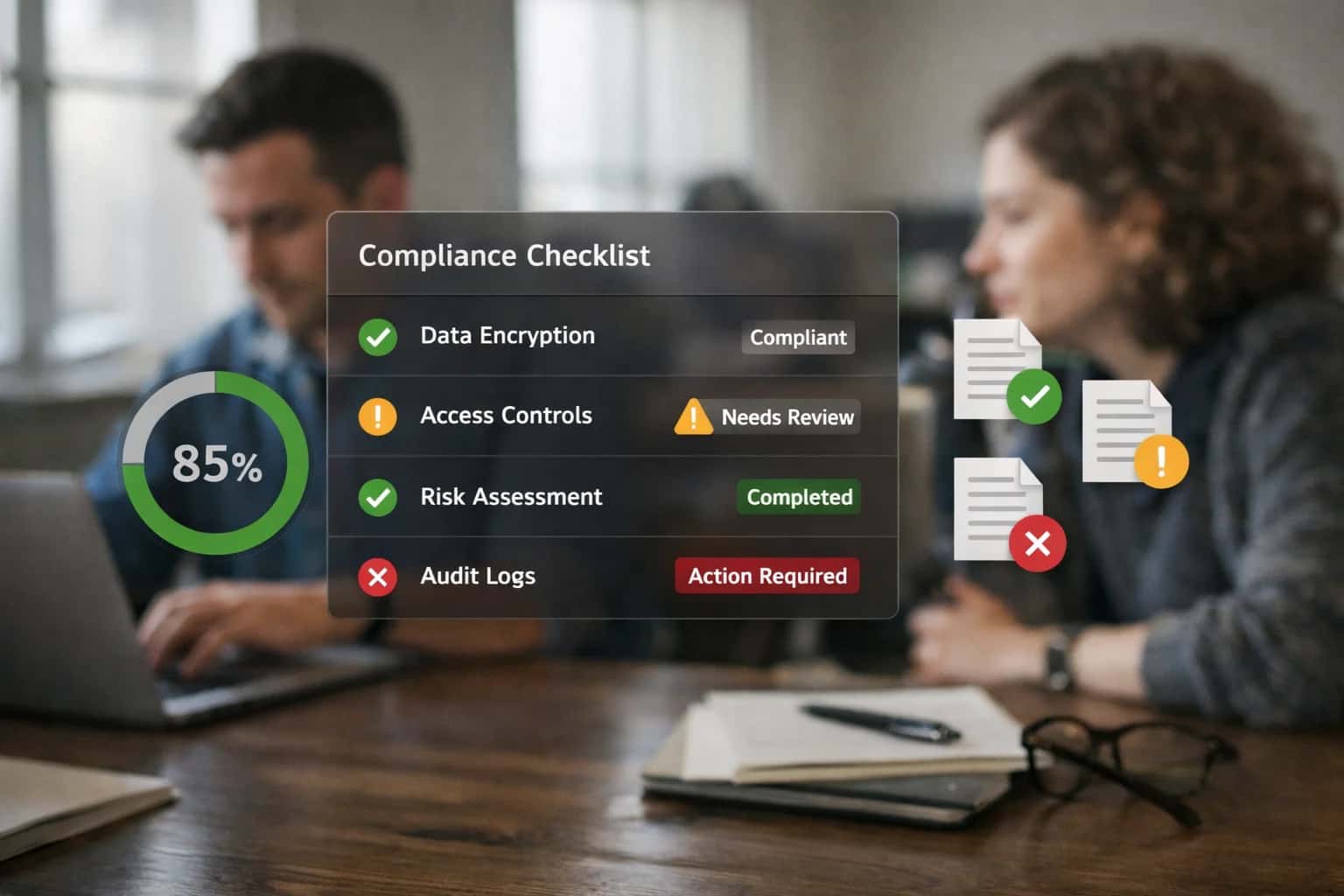
Where AI Fits into Medical Device Manufacturing with Opcenter
Integrating AI into Siemens Opcenter for medical devices requires a precise architectural approach that respects the strict regulatory environment while unlocking automation in critical workflows.
Implementation follows a decoupled, audit-friendly pattern. AI inference services run in a secure, governed environment, querying Opcenter's OData APIs or a mirrored operational data store for the necessary records. All AI-generated findings, suggestions, and compliance checks are written back to dedicated custom objects within Opcenter, creating a full audit trail that links the original DHR to the AI review action, its confidence score, and the subsequent human auditor's decision. This architecture ensures the system-of-record remains Opcenter, while AI acts as a governed copilot, not a black-box replacement. Key workflows include:
- Automated DHR Review: Pre-screening records for 21 CFR Part 820 compliance before QA release.
- UDI Compliance Validation: Cross-referencing packaged UDI data against product master and labeling specifications.
- Sterilization Lot Genealogy: Using AI to trace and validate the chain of custody for ethylene oxide or radiation lots, correlating cycle parameters with biological indicator results.
Rollout and governance are paramount. A phased implementation starts with a single product line or sterilization process, using AI in a "human-in-the-loop" mode where all outputs are verified. Model performance is continuously evaluated against a ground truth of auditor decisions, with drift detection alerting if the AI's flagging behavior changes. Access to AI-triggered actions is controlled via Opcenter's existing role-based access control (RBAC), ensuring only authorized quality engineers can approve AI-suggested releases. This controlled approach mitigates regulatory risk while delivering tangible velocity: reducing DHR review cycles from days to hours and providing near-instant traceability for potential field actions or audits.
Key Opcenter Modules and Data Surfaces for AI Integration
Production Orders & Device History Records (DHR)
The Opcenter Execution module manages the core production order lifecycle. For medical devices, each order generates a complete Device History Record (DHR). AI integration surfaces here to automate DHR review, checking for completeness, sequence integrity, and compliance with 21 CFR Part 820. Agents can be triggered upon order completion to:
- Parse electronic batch records for missing operator signatures, test results, or material lot entries.
- Cross-reference production data against the master production and process control (MPC) records.
- Flag anomalies like out-of-spec in-process measurements or deviations from validated procedures before final release. This transforms a manual, post-production QA review into a real-time, automated compliance check, reducing lot hold times and audit risk.
High-Value AI Use Cases for Medical Device Opcenter
For medical device manufacturers using Siemens Opcenter, AI integration directly addresses the stringent compliance, traceability, and quality demands of FDA 21 CFR Part 820 and EU MDR. These use cases inject intelligence into core Device History Record (DHR) workflows, sterilization lot management, and UDI compliance, turning manual review tasks into automated, governed processes.
Automated DHR Review & Release
AI agents review completed Device History Records in Opcenter for completeness and compliance before final release. The system cross-references the DHR against the Device Master Record (DMR), flags missing signatures, out-of-spec readings, or incomplete test results, and generates a summary for the QA reviewer. This shifts review from a manual page-by-page check to an exception-based approval workflow.
Sterilization Lot Traceability & Anomaly Detection
Integrate AI to monitor and analyze data linked to sterilization lots (e.g., ethylene oxide cycle parameters, BI results, aeration times). The model establishes normal parameter ranges and flags lots where sensor data drifts or BI indicators are anomalous, triggering a hold and review within Opcenter's nonconformance module. This provides proactive risk management for a critical release gate.
UDI Compliance & Label Verification
Leverage computer vision AI models, integrated via Opcenter's execution layer, to verify printed UDI codes on labels and packaging against the work order and product database. The system checks for correct GTIN/DI, lot number, serial number, and expiration date formatting, automatically failing the unit and logging the discrepancy. This prevents costly mislabeling events and automates a manual visual inspection step.
Nonconformance Root Cause Suggestion
When a nonconformance (NC) is logged in Opcenter Quality, an AI model analyzes the NC details (defect type, station, operator, component lot) against historical NCs, process parameter data from the execution layer, and supplier data. It suggests the most probable root cause codes and links to similar past CAPAs, accelerating the investigation and containment process for quality engineers.
Dynamic Work Instruction Personalization
For complex assembly or testing stations, AI tailors the digital work instructions served from Opcenter Execution to the operator's certification level and the specific device variant. By analyzing the operator's historical error rates and the current order's critical characteristics, the system can emphasize certain steps, display additional visual aids, or require confirmations for high-risk tasks, reducing human error.
Audit Trail Anomaly & Trend Monitoring
A governance-focused AI model continuously monitors the electronic audit trails within Opcenter for unusual patterns—such as frequent data changes just before release, access from unusual locations, or atypical approval sequences. It generates alerts for potential data integrity issues, providing proactive support for internal audits and regulatory inspections, and feeds into a broader quality management system.
Example AI-Augmented Workflows in Opcenter
For medical device manufacturers, Siemens Opcenter is the system of record for production and quality data. These workflows illustrate how AI agents can be embedded into Opcenter's data flows to automate compliance-heavy tasks, accelerate DHR review, and enhance traceability without disrupting validated processes.
Trigger: A production order for a finished medical device reaches Status = Completed in Opcenter Execution.
Context Pulled: The AI agent queries Opcenter's OData APIs to retrieve the complete DHR data package for the specific lot, including:
- All executed electronic batch records (EBRs) and operator sign-offs.
- Associated in-process inspection results from Opcenter Quality.
- Calibration records for all used equipment.
- Environmental monitoring data (e.g., cleanroom temperature/humidity logs).
- Material consumption and component serial numbers from genealogy.
Agent Action: A configured LLM agent with a Retrieval-Augmented Generation (RAG) system reviews the DHR against a knowledge base of SOPs, product specifications, and 21 CFR Part 820 requirements. It performs:
- Completeness Check: Flags any missing signatures, test results, or data fields.
- Anomaly Detection: Identifies parameter deviations (e.g., a sterilization hold time at the edge of tolerance) and correlates them with related inspection data.
- Narrative Summary: Generates a concise, audit-ready summary of the lot's production, highlighting any non-routine events.
System Update: The agent posts its findings back to Opcenter as a DHR_AI_Review record, linked to the production order. Based on a configurable ruleset:
- If no exceptions are found, it can automatically update the lot
Quality StatustoReady for QA Releaseand notify the QA reviewer via Opcenter's workflow engine. - If exceptions are flagged, it creates a
Review Taskin Opcenter for the QA specialist, attaching the AI-generated summary and highlighted discrepancies.
Human Review Point: The final release authorization remains a human decision. The QA specialist reviews the AI summary and flagged items within the Opcenter UI before applying the electronic release signature.
Implementation Architecture: Data Flow, APIs, and Guardrails
A secure, auditable architecture for integrating AI into Siemens Opcenter to automate DHR review and compliance workflows without disrupting validated processes.
The integration connects to Opcenter's core modules—Execution, Quality, and Intelligence—via its OData REST APIs and Event Framework. AI models are deployed as containerized microservices, interacting with Opcenter data through a dedicated middleware layer. This layer handles authentication, data transformation, and secure logging. Key data objects include Device History Records (DHRs), sterilization lot records, inspection results, and nonconformance reports. The AI service ingests structured data (e.g., process parameters, operator signatures) and unstructured data (e.g., scanned documents, notes) from these records to perform its analysis.
A typical automated DHR review workflow is triggered upon Production Order Complete. The middleware fetches the complete DHR bundle via the Opcenter API. The AI service performs a multi-step review: 1) Completeness Check against the master recipe, 2) UDI Compliance Validation (format, syntax), 3) Sterilization Lot Traceability verification against the bill of materials and supplier certificates, and 4) Anomaly Detection in critical process parameters. Findings are written back to Opcenter as a structured AI Review Log attached to the DHR, with flagged issues automatically creating draft Nonconformance records for quality engineer review. All inferences include confidence scores and source data references.
Governance and rollout are critical for medical device GxP environments. The architecture includes a human-in-the-loop approval step before any AI-generated NC is finalized. All data movements and AI inferences are written to an immutable audit trail, satisfying 21 CFR Part 11 requirements. The AI models are versioned and their performance is continuously monitored against a golden set of historical DHRs for drift detection. Initial rollout follows a phased, product-line-specific approach, running the AI in "shadow mode" to log recommendations without taking action, building confidence and refining prompts before enabling automated workflows.
Code and Payload Examples for Opcenter AI Integration
Automated Device History Record Review
AI agents can be integrated into Opcenter's Electronic Batch Record (EBR) module to perform automated, rule-based reviews of completed Device History Records (DHRs) before final release. This reduces manual QA review time from hours to minutes and ensures 100% record coverage.
Typical Integration Pattern:
- A production order reaches a "DHR Complete" status in Opcenter Execution.
- A webhook triggers an AI workflow, passing the DHR ID and relevant metadata.
- The agent retrieves the structured DHR data (materials, parameters, test results) and unstructured documents (operator notes, scan logs) via Opcenter's REST APIs.
- Using a combination of rule engines and LLMs, the agent checks for completeness, verifies critical parameter signatures against the Device Master Record (DMR), and flags any anomalies or missing data.
- Results are posted back to Opcenter as a review log, and the record is routed for human review only if exceptions are found.
Key Impact: Accelerates lot release, ensures compliance with 21 CFR Part 820, and creates a searchable audit trail of AI-assisted reviews.
Realistic Time Savings and Operational Impact
How AI integration accelerates core quality and compliance workflows in Siemens Opcenter for medical device manufacturing, focusing on DHR review, UDI compliance, and lot traceability.
| Workflow / Metric | Before AI Integration | After AI Integration | Implementation Notes |
|---|---|---|---|
Device History Record (DHR) Review | Manual, line-by-line verification by QA (2-4 hours per batch) | AI-assisted anomaly flagging and summarization (20-30 minutes per batch) | AI pre-fills review checklist; human QA focuses on flagged exceptions and final sign-off. |
UDI Compliance Check | Manual cross-reference of printed UDI against ERP and label files | Automated scan validation and database reconciliation (real-time) | Integrates with vision systems and Opcenter's serialization module; flags mismatches for immediate correction. |
Sterilization Lot Traceability | Manual reconciliation of sterilization certificates with production lots (next-day process) | Automated document ingestion and lot association (same-day, within hours) | AI extracts key data (lot #, cycle params) from PDF certificates and links to Opcenter batch records. |
Nonconformance (NCR) Triage & Coding | Manual classification based on operator description (delayed, inconsistent) | AI suggests defect codes and likely root causes from historical data (assisted routing) | Uses NLP on NCR text and images; improves consistency and speeds up containment actions. |
Audit Trail Anomaly Detection | Periodic manual sampling for suspicious user activity (reactive) | Continuous monitoring with AI-generated alerts for unusual patterns (proactive) | Analyzes Opcenter audit logs for patterns like after-hours data changes or sequence breaks. |
Batch Release Documentation | Manual compilation of DHR, test results, and CofA for QA review | AI auto-assembles release packet and highlights missing or expired documents | Pulls data from Opcenter modules and connected systems; reduces pre-audit preparation time. |
Corrective and Preventive Action (CAPA) Drafting | Manual write-up based on investigator notes (1-2 days initial draft) | AI generates initial draft with context from linked NCRs and past CAPAs (hours) | Ensures all required fields are populated from Opcenter data; investigator reviews and finalizes. |
Governance, Auditability, and Phased Rollout
Integrating AI into Siemens Opcenter for medical device manufacturing requires a controlled architecture that prioritizes data integrity, audit trails, and risk-managed deployment.
In a regulated environment, every AI inference must be traceable back to the source data and user action. Your integration architecture should treat AI as a governed service layer that logs key events: the specific Device History Record (DHR) or batch record reviewed, the prompt or query submitted, the model version used, the raw output generated, and any human review or override. These logs must be written to Opcenter's audit trail or a linked, immutable system, creating a defensible chain of custody for regulatory audits (e.g., FDA 21 CFR Part 11).
Start with a phased, human-in-the-loop rollout to validate AI accuracy and build organizational trust. Phase 1 could deploy AI as an assistive reviewer, flagging potential discrepancies in sterilization lot documentation or UDI compliance for a quality engineer's final approval. Phase 2 might enable automated pass/fail checks on low-risk, high-volume data fields within the DHR, like date stamp validations. Phase 3 could graduate to fully automated review workflows for specific, well-understood record types, with periodic sampling for continuous model validation.
Governance extends to the AI models themselves. Implement a model registry and version control process, treating model updates like a change to a validated system. Before promoting a new model version into production Opcenter workflows, conduct a documented impact assessment and re-validate performance on a holdout dataset. This controlled approach ensures AI enhances your quality system without introducing unmanaged risk, turning Opcenter into an intelligent, compliant engine for medical device production.
Enabling Efficiency, Speed & Accuracy
Intelligent Analysis, Decision & Execution
We build AI systems for teams that need search across company data, workflow automation across tools, or AI features inside products and internal software.
Talk to Us
Search across company data
Give teams answers from docs, tickets, runbooks, and product data with sources and permissions.
Useful when people spend too long searching or get different answers from different systems.

Automate internal workflows
Use AI to route work, draft outputs, trigger actions, and keep approvals and logs in place.
Useful when repetitive work moves across multiple tools and teams.

Add AI to products and internal tools
Build assistants, guided actions, or decision support into the software your team or customers already use.
Useful when AI needs to be part of the product, not a separate tool.
FAQ: AI Integration with Siemens Opcenter for Medical Devices
Practical answers for integrating AI into Siemens Opcenter to meet the stringent quality, traceability, and compliance demands of medical device manufacturing.
This workflow uses an AI agent to validate DHR completeness and flag potential compliance issues before final release.
- Trigger: A production order reaches a
COMPLETEDstatus in Opcenter Execution. - Context Pulled: The agent retrieves the DHR bundle via Opcenter's APIs, including:
- Electronic batch records
- Operator sign-offs and electronic signatures
- In-process inspection results
- Equipment and calibration logs
- Material lot numbers and expiry dates
- AI Agent Action: A multi-step LLM agent with a retrieval-augmented generation (RAG) system checks for:
- Completeness: Verifies all required steps and signatures are present.
- Consistency: Cross-references data (e.g., does the material lot used match the BOM and is it within expiry?).
- Anomaly Detection: Flags any parameter readings that deviate from validated ranges, even if within spec, for engineering review.
- System Update: The agent posts a structured review summary to a custom object in Opcenter, with a status of
PASS,REVIEW REQUIRED, orHOLD. ForREVIEW REQUIRED, it creates a task for the Quality Engineer in Opcenter's workflow engine, linking directly to the flagged records. - Human Review Point: All
HOLDstatuses and a configured percentage ofPASSrecords are routed for human quality assurance (QA) audit, creating a governed feedback loop to improve the AI model.

About the author
Prasad Kumkar
CEO & MD, Inference Systems
Prasad Kumkar is the CEO & MD of Inference Systems and writes about AI systems architecture, LLM infrastructure, model serving, evaluation, and production deployment. Over 5+ years, he has worked across computer vision models, L5 autonomous vehicle systems, and LLM research, with a focus on taking complex AI ideas into real-world engineering systems.
His work and writing cover AI systems, large language models, AI agents, multimodal systems, autonomous systems, inference optimization, RAG, evaluation, and production AI engineering.
Partnered with leading AI, data, and software stack.





How We Work
Custom AI workflows for your Business
One-fit-all AI don't work for modern businesses. At Inferensys, we aim to understand your business & custom requirements; which we use to define most efficient agentic workflows, the data, and the tools for your business.
01
Review the use case
We understand the task, the users, and where AI can actually help.
Read more02
Pick the right approach
We define what needs search, automation, or product integration.
Read more03
Build the first useful version
We implement the part that proves the value first.
Read more04
Improve from there
We add the checks and visibility needed to keep it useful.
Read moreThe first call is a practical review of your use case and the right next step.
Talk to Us