AI integration for Plex compliance reporting connects to three primary surfaces: the Quality Management System (QMS) modules for Non-Conformance Reports (NCRs) and Corrective and Preventive Actions (CAPAs), the Audit Management workflows for internal and external assessments, and the Document Control system housing procedures, specifications, and batch records. The integration acts as a co-pilot, extracting structured data from Plex objects like InspectionResults, AuditFindings, and SupplierReceipts, then using LLMs to draft narrative sections for regulatory submissions (e.g., FDA 483 responses, ISO audit reports), validate entries against rule libraries, and flag inconsistencies for human review before final approval.

Integration
AI Integration for Plex Compliance Reporting
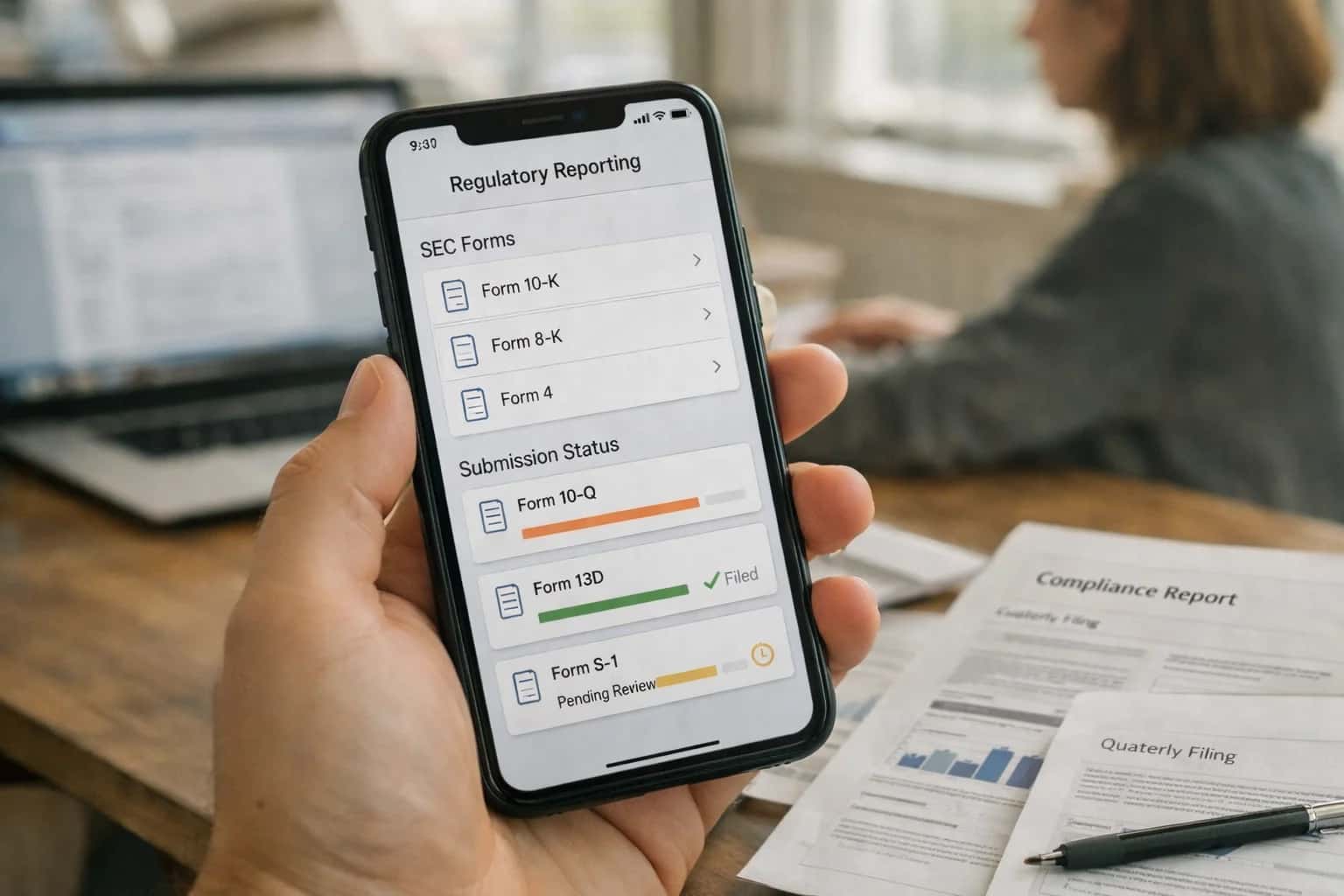
Automate the generation of regulatory and customer compliance reports in Plex Manufacturing Cloud using AI to extract data, validate against rules, and draft narrative sections, turning days of manual work into hours.
ARCHITECTURE AND ROLLOUT
Where AI Fits into Plex Compliance Workflows
A practical blueprint for embedding AI into Plex's compliance and audit reporting modules to automate data extraction, narrative drafting, and validation.
Implementation typically involves a middleware agent that subscribes to Plex webhooks or polls its REST API for new or updated compliance records. For a batch record review workflow, the agent retrieves the ProductionOrder, associated MaterialLots, and EquipmentHistory. It then uses a retrieval-augmented generation (RAG) pipeline against a vectorized knowledge base of SOPs and regulatory guidelines (21 CFR Part 211, ISO 9001:2015) to generate a compliance summary, highlighting any deviations from standard parameters or missing signatures. This draft is appended as a note to the Plex record, triggering an approval workflow for the Quality Manager. The system maintains a full audit trail of AI-generated content, model versions used, and human overrides within Plex's native history tables.
Rollout should be phased, starting with a single, high-volume report type—such as automated Certificate of Analysis (CoA) generation from finished goods test data—to demonstrate value and refine prompts. Governance is critical: establish a clear review-and-edit protocol where AI output is always a draft for a qualified reviewer, and implement regular model evaluations against a gold-set of historical, approved reports to monitor for drift or hallucination. This approach reduces manual data consolidation from hours to minutes, improves report consistency, and creates a searchable archive of AI-assisted rationale for future audits, without altering core Plex validation or approval logic.
COMPLIANCE REPORTING
Plex Modules and Data Surfaces for AI Integration
Core Data Surfaces for Audit Triggers
The Quality Management module is the primary source for compliance events. AI models can be triggered by the creation of Nonconformance Reports (NCRs), Audit Findings, or failed Inspection Lots. Key data objects include:
- NCR Records: Contain defect codes, quantities, affected operations, and containment actions.
- Inspection Results: Dimensional data, pass/fail outcomes, and measurement details from the shop floor.
- Corrective and Preventive Action (CAPA): Linked records detailing root cause and long-term fixes.
AI integration here focuses on automated classification of nonconformances against regulatory frameworks (e.g., ISO 9001:2015 clauses, FDA 21 CFR Part 820), suggesting related historical CAPAs, and drafting initial containment narratives for the quality engineer to review and approve within Plex.
AUTOMATED REPORTING & AUDIT READINESS
High-Value AI Use Cases for Plex Compliance
Transform manual, error-prone compliance workflows in Plex by integrating AI to extract, validate, and narrate data for regulatory audits like ISO 9001, IATF 16949, and FDA 21 CFR Part 11. These patterns connect to Plex's quality, production, and supplier modules to automate evidence gathering and report drafting.
01
Automated Audit Evidence Package Assembly
AI agents query Plex's Production, Quality, and Maintenance modules to assemble a complete evidence package for a specific audit scope (e.g., management review, corrective action). The system extracts records, validates dates and approvals against the audit checklist, and generates a navigable index, reducing manual collection from days to hours.
Days -> Hours
Evidence assembly
02
Narrative Report Drafting from Quality Data
For recurring reports like Management Review or Monthly Quality KPIs, AI analyzes data from Plex's SPC charts, Nonconformance (NCR) logs, and Corrective Action (CAR) modules. It drafts narrative summaries highlighting trends, root cause clusters, and effectiveness of actions, providing a first draft for quality managers to review and finalize.
Hours -> Minutes
First draft generation
03
Real-Time Deviation & Change Control Monitoring
Monitor Plex's Deviation and Change Control workflows in real-time. An AI agent flags deviations that lack proper justification or changes where impact assessments are incomplete against regulatory rules (e.g., FDA change control). It alerts quality engineers and suggests required documentation, preventing audit findings.
Batch -> Real-time
Compliance monitoring
04
Supplier Quality Data Consolidation for Compliance
Automate the consolidation and analysis of supplier quality data from Plex's Supplier Quality modules (Incoming Inspection, SCARs). AI aggregates performance scores, on-time delivery, and defect rates, then drafts the supplier performance review section of compliance reports, ensuring objective, data-driven evaluations.
05
Electronic Batch Record (EBR) Review & Anomaly Detection
For regulated batches, AI reviews completed Electronic Batch Records in Plex against the master recipe and SOPs. It flags missing operator signatures, parameter excursions, or material lot discrepancies. The system generates an exception summary for QA release, accelerating review and ensuring data integrity for audits.
Same day
Batch record review
06
Automated Training Record Compliance Checking
Connect AI to Plex's Training and Certification modules to automatically verify operator qualifications against work center requirements. For each audit period, the system identifies gaps, expired certifications, and missing training for revised SOPs, generating a readiness report and triggering workflows in Plex to resolve issues.
PLEX COMPLIANCE REPORTING
Example AI-Augmented Compliance Workflows
These workflows illustrate how AI agents can be integrated into Plex's compliance modules to automate data extraction, narrative drafting, and validation, turning manual, audit-heavy processes into streamlined, auditable automations.
Trigger: Scheduled job (nightly/weekly) or manual initiation before an audit.
Context/Data Pulled:
- Query Plex audit trail tables (
AuditLog,UserActivity) for a defined date range. - Pull related user records and object metadata (e.g.,
PartMaster,Routing,BillOfMaterial) for context.
Model or Agent Action:
- Anomaly Detection: An AI model scans audit entries for patterns inconsistent with normal operations (e.g., mass deletions after hours, sequential approvals by the same user, changes to critical quality specs).
- Narrative Summarization: An LLM-based agent generates a plain-English summary of significant events: "Between 02/15 and 02/20, User JSmith modified tolerance fields on 15 active part records. 12 of these changes were approved by User ABrown within 2 minutes of submission."
- Risk Flagging: The agent tags entries that may indicate insufficient segregation of duties or lack of proper change control.
System Update or Next Step:
- A summary report (PDF/HTML) is generated and attached to a new record in Plex's
DocumentControlmodule. - High-risk anomalies automatically create a task in the
NonConformanceorCorrectiveActionmodule for investigation.
Human Review Point: The compliance manager reviews the AI-generated summary and risk flags in Plex before the audit, focusing investigation on the highlighted items.
AUTOMATED COMPLIANCE REPORT GENERATION
Implementation Architecture: Data Flow and System Boundaries
A secure, auditable architecture for generating regulatory and customer compliance reports in Plex using AI.
The integration is anchored on Plex's core data objects for compliance: Quality Records, Non-Conformance Reports (NCRs), Audit Findings, and Device History Records (DHRs). An orchestration agent, triggered by a completed workflow or a scheduled job, extracts the relevant raw data via Plex's REST API. This payload includes structured fields (dates, part numbers, operator IDs) and unstructured text from notes, inspection comments, and corrective action descriptions. The agent packages this data, along with the target report template (e.g., ISO 9001 audit summary, FDA 483 response), and sends it to a secure inference queue.
In the processing layer, a Retrieval-Augmented Generation (RAG) pipeline first validates the extracted data against a vector store of regulatory rules, customer specifications, and past approved reports to ensure factual grounding. A large language model then drafts narrative sections—such as executive summaries, deviation justifications, and corrective action plans—which are inserted into the pre-defined template. The system logs every data fetch, inference call, and draft revision with a full audit trail, linking back to the source Plex transaction IDs for complete traceability. The draft report is then routed via Plex's workflow engine for human review and electronic signature, maintaining the existing approval chain.
Rollout follows a phased approach, starting with a single report type (e.g., Monthly Quality Management Review) in a pilot plant. Governance is managed through a prompt registry and a validation layer where quality engineers can flag and correct AI-generated content, creating a feedback loop that continuously improves the model's accuracy and compliance with internal narrative standards. The architecture ensures Plex remains the single source of truth, with AI acting as a co-pilot for documentation, not a replacement for validated processes or human accountability.
PLEX COMPLIANCE REPORTING
Code and Payload Examples for Key Integration Points
Automating Initial NCR Classification
When a nonconformance is logged in Plex, an AI agent can be triggered via webhook to analyze the description, defect code, and attached images. The agent classifies the NCR for priority, suggests a likely root cause from historical data, and drafts the initial containment plan. This payload is then posted back to Plex via its REST API to pre-populate the NCR record, accelerating the quality team's review.
Example Webhook Payload from Plex to AI Service:
json{ "event": "ncr_created", "ncr_id": "NCR-2024-0456", "part_number": "VALVE-ASSY-100", "defect_code": "SCRATCH", "description": "Deep scratch observed on finished surface near port A during final visual inspection.", "work_center": "FINISHING-03", "operator_id": "OP-221", "image_urls": ["https://plex-files/scratch_0456.jpg"] }
AI Service Response Payload to Plex:
json{ "ncr_id": "NCR-2024-0456", "predicted_severity": "MAJOR", "suggested_root_cause": "Fixture misalignment or handling damage during transfer.", "containment_actions": [ "Quarantine all parts from work order WO-78910.", "Inspect last 10 units from FINISHING-03." ], "related_historical_ncrs": ["NCR-2024-0123", "NCR-2023-9876"] }
AI-ENHANCED COMPLIANCE REPORTING
Realistic Time Savings and Operational Impact
How AI integration transforms manual, error-prone compliance reporting in Plex into an automated, validated workflow, reducing audit preparation time and improving accuracy.
| Workflow Stage | Before AI | After AI | Key Impact |
|---|---|---|---|
Data Collection & Consolidation | Manual export from multiple Plex modules (Quality, Production, Inventory) | Automated extraction via API, with validation against source systems | Hours -> Minutes; eliminates copy-paste errors |
Rule Validation & Gap Analysis | Spreadsheet cross-referencing against ISO/FDA checklists | AI-driven validation engine flags non-conformances and missing evidence | Next-day review -> Real-time alerts during data pull |
Narrative Section Drafting | Manual writing of executive summaries and corrective action descriptions | LLM generates first drafts based on structured data and past report templates | Days of writing -> Hours of review & editing |
Evidence Attachment & Linking | Manual file naming and folder organization for audit trails | AI auto-tags and links relevant documents (NCRs, calibration certs, SOPs) to report sections | Prone to missing links -> Automated traceability |
Internal Review & Sign-off | Sequential email chains with version control issues | AI summarizes changes, highlights key risks, and routes via Plex workflow with audit trail | Week-long cycles -> 2-3 day streamlined process |
Final Audit Package Generation | Manual compilation of PDFs, spreadsheets, and cover sheets | AI assembles a unified, paginated audit package with table of contents | Last-minute scramble -> One-click generation |
Post-Audit Corrective Action Tracking | Manual entry of findings into Plex CAPA module | AI parses auditor findings, suggests linked CAPAs, and auto-creates tracking tasks | Reactive data entry -> Proactive workflow initiation |
CONTROLLED IMPLEMENTATION FOR REGULATED ENVIRONMENTS
Governance, Security, and Phased Rollout
Integrating AI into Plex for compliance reporting requires a controlled architecture that prioritizes auditability, data integrity, and phased user adoption.
A production implementation should treat the AI as a governed service layer that interacts with Plex's compliance data objects—such as Audit, NonConformance, CorrectiveAction, and SupplierQuality records—via secure APIs or direct database connections. All AI-generated content, including draft narrative sections for ISO or FDA reports, must be written to an immutable audit log alongside the source data IDs, model version, and prompt used. This creates a verifiable lineage from raw shop floor data in Plex to the final compliance document, which is critical for regulatory inspections and internal quality reviews.
Security is enforced through a zero-trust integration pattern: AI service calls are authenticated via Plex's API framework or a dedicated service account with role-based access control (RBAC) scoped strictly to the necessary modules. Sensitive data, such as batch records or personnel information, can be masked or pseudonymized before being sent for inference. The system should be designed to operate within your existing network perimeter, avoiding unnecessary data egress, and all AI outputs should be flagged for human-in-the-loop review before being committed to a final report or triggering an automated workflow in Plex.
A successful rollout follows a phased, risk-based approach:
- Phase 1 (Pilot): Target a single, well-defined report type (e.g., a monthly internal quality summary) with a closed user group. Use AI to automate data extraction from Plex and draft the 'Observations' section, with full manual review.
- Phase 2 (Expansion): Integrate AI into the validation step, where it cross-references extracted data against a rules engine (e.g., checking if all required corrective actions for a nonconformance are closed before an audit). Expand to 2-3 additional report types.
- Phase 3 (Scale): Enable AI-driven anomaly detection on incoming compliance data, proactively flagging potential issues in Plex for review. Implement automated workflow triggers, such as creating a
CorrectiveActionrecord in Plex when the AI detects a recurring deviation pattern in inspection data. This incremental path allows your team to build confidence, refine prompts and guardrails, and demonstrate tangible time savings—reducing manual report compilation from days to hours—before scaling across the compliance organization.
Enabling Efficiency, Speed & Accuracy
Intelligent Analysis, Decision & Execution
We build AI systems for teams that need search across company data, workflow automation across tools, or AI features inside products and internal software.
Talk to Us
Search across company data
Give teams answers from docs, tickets, runbooks, and product data with sources and permissions.
Useful when people spend too long searching or get different answers from different systems.
Enterprise searchRAGPermissions
Read more
Automate internal workflows
Use AI to route work, draft outputs, trigger actions, and keep approvals and logs in place.
Useful when repetitive work moves across multiple tools and teams.
AI agentsWorkflow automationGovernance
Read more
Add AI to products and internal tools
Build assistants, guided actions, or decision support into the software your team or customers already use.
Useful when AI needs to be part of the product, not a separate tool.
AI integrationDecision supportModel routing
Read moreIMPLEMENTATION AND GOVERNANCE
Frequently Asked Questions (FAQ)
Common technical and operational questions about integrating AI into Plex Manufacturing Cloud to automate compliance report generation for audits like ISO 9001, IATF 16949, or FDA 21 CFR Part 11.
The integration connects via Plex's REST API and direct database access (where permitted) to extract structured and unstructured data needed for audits. Key data sources include:
- Structured Records: Non-Conformance Reports (NCRs), Corrective and Preventive Actions (CAPAs), audit findings, calibration logs, and supplier receiving inspections from Plex tables.
- Unstructured Documents: Attached PDFs, scanned inspection sheets, operator notes, and manual log entries stored in Plex's document management system.
- Transactional History: User action audit trails, electronic signatures, and change histories for data integrity verification.
The AI agent uses this combined data to populate report templates, validate against rule sets, and draft narrative explanations, writing updates back to designated Plex objects or external document repositories.

About the author
Prasad Kumkar
CEO & MD, Inference Systems
Prasad Kumkar is the CEO & MD of Inference Systems and writes about AI systems architecture, LLM infrastructure, model serving, evaluation, and production deployment. Over 5+ years, he has worked across computer vision models, L5 autonomous vehicle systems, and LLM research, with a focus on taking complex AI ideas into real-world engineering systems.
His work and writing cover AI systems, large language models, AI agents, multimodal systems, autonomous systems, inference optimization, RAG, evaluation, and production AI engineering.
LinkedIn
Limited slotsGet a Free AI Consultation
Partnered with leading AI, data, and software stack.





How We Work
Custom AI workflows for your Business
One-fit-all AI don't work for modern businesses. At Inferensys, we aim to understand your business & custom requirements; which we use to define most efficient agentic workflows, the data, and the tools for your business.
01
Review the use case
We understand the task, the users, and where AI can actually help.
Read more02
Pick the right approach
We define what needs search, automation, or product integration.
Read more03
Build the first useful version
We implement the part that proves the value first.
Read more04
Improve from there
We add the checks and visibility needed to keep it useful.
Read moreThe first call is a practical review of your use case and the right next step.
Talk to Us