AI integration for Zuper contract management focuses on three core surfaces: the Service Agreement object for master data, the Recurring Work Order engine for execution, and the Customer Portal for engagement. The goal is to inject intelligence at each lifecycle stage—proposal, onboarding, delivery, renewal—by connecting Zuper's native APIs to AI agents and RAG systems. For example, an AI agent can listen for new Opportunity records in Zuper's CRM module, access a library of approved clause templates and historical pricing data, and automatically generate a first-draft service agreement populated with correct terms, pricing tiers, and SLA targets, ready for human review in minutes instead of hours.

Integration
AI Integration for Zuper Contract Management
A technical blueprint for embedding AI into Zuper's contract lifecycle to automate proposal drafting, SLA compliance tracking, renewal workflows, and performance reporting for field service businesses.
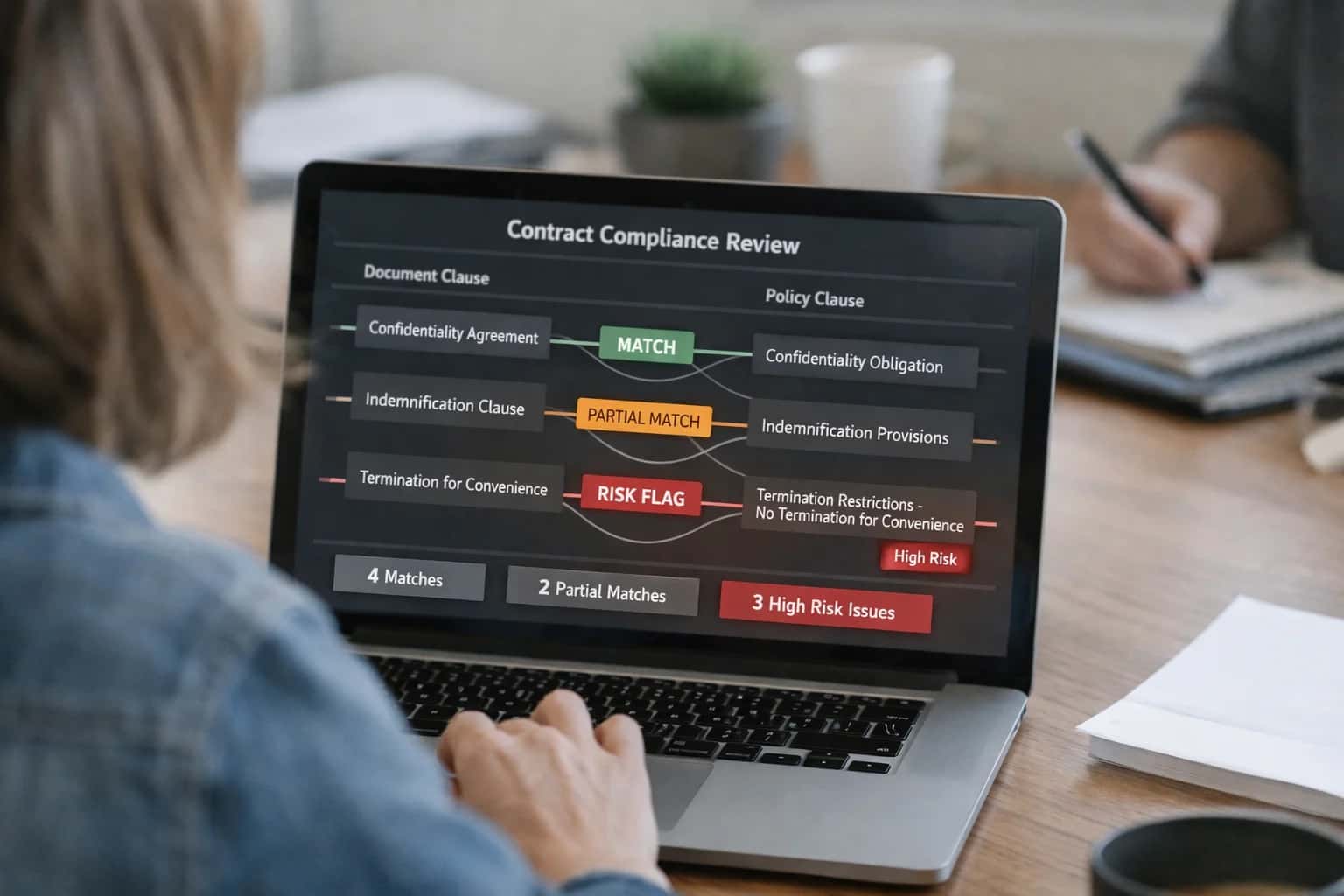
ARCHITECTURE AND ROLLOUT
Where AI Fits into Zuper's Contract Lifecycle
A practical blueprint for embedding AI into Zuper's service agreements, from automated proposal generation to intelligent performance tracking.
During the active contract phase, AI monitors the Work Order Completion and Parts Consumption data streams against the agreed SLA metrics (e.g., response time, resolution time). Anomaly detection models can flag contracts trending toward breach, triggering automated dispatcher alerts or even drafting proactive customer communications from the account manager. For renewal, an AI workflow can analyze the contract's profitability, customer satisfaction scores from integrated surveys, and equipment service history to generate a personalized renewal proposal with recommended adjustments, upsell opportunities, and a risk assessment, directly within Zuper's Proposals module.
Rollout should start with a single, high-value contract type (e.g., preventive maintenance agreements) and a phased approach: first automating proposal generation, then layering on performance monitoring, and finally enabling predictive renewals. Governance is critical; all AI-generated clauses or customer communications should route through Zuper's existing Approval Workflows and maintain a full audit trail. By treating AI as a co-pilot within Zuper's existing contract objects and business rules, service organizations can scale their managed service offerings without replacing their core operational system. For a deeper technical dive on integrating AI agents with Zuper's API framework, see our guide on AI Integration for Zuper.
CONTRACT LIFECYCLE MANAGEMENT
Key Zuper Surfaces for AI Integration
Automating the First Mile of the Contract
AI integration targets Zuper's Estimate and Quote modules to transform initial customer interactions. By connecting to Zuper's customer and asset history APIs, an AI agent can draft personalized service agreements and quotes in minutes.
Key Integration Points:
- Estimate Templates & Line Items: Use AI to analyze the job description, property details, and historical data to select the correct service plan template and populate labor, parts, and materials.
- Customer 360 Data: Enrich quotes with data from the customer's asset registry and past service history to recommend relevant preventive maintenance add-ons or warranty extensions.
Example Workflow: A customer submits a request via the portal for an annual HVAC maintenance contract. An AI workflow triggers, fetches the equipment model and last service date, checks inventory for filter part numbers, and generates a compliant, itemized proposal ready for electronic signature.
This reduces manual back-and-forth and accelerates the sales cycle from days to hours.
CONTRACT LIFECYCLE MANAGEMENT
High-Value AI Use Cases for Zuper Contracts
Integrate AI directly into Zuper's contract management workflows to automate proposal drafting, enforce SLAs, track obligations, and generate performance insights—turning static agreements into intelligent, proactive assets.
01
Intelligent Proposal & Quote Generation
Automate the creation of service contract proposals within Zuper by using AI to analyze customer history, asset data, and standard service packages. The system drafts personalized terms, pricing, and SLA clauses, reducing manual drafting from hours to minutes and improving quote accuracy.
Hours -> Minutes
Drafting time
02
Automated SLA Monitoring & Breach Alerts
Connect AI to Zuper's work order and technician location data to monitor contract SLAs in real-time. The system predicts potential breaches based on job progress and traffic, automatically alerting dispatchers and triggering customer communications to manage expectations and avoid penalties.
Real-time
Compliance tracking
03
Obligation Tracking & Renewal Forecasting
Use AI to parse executed contracts stored in Zuper, extracting key obligations, renewal dates, and pricing terms. The system creates a searchable obligation register, forecasts upcoming renewals, and flags at-risk contracts for account managers, ensuring no revenue opportunity is missed.
Proactive
Renewal pipeline
04
AI-Powered Contract Performance Reporting
Move beyond static reports. An AI agent analyzes Zuper job data against contract metrics (like response time, first-time fix rate, cost per visit) to generate narrative performance summaries. It highlights trends, identifies cost overruns, and suggests optimization areas for service managers.
Actionable Insights
Report value
05
Automated Change Order & Amendment Workflows
Streamline contract modifications. When a technician identifies out-of-scope work, AI assists in drafting a change order directly within the Zuper mobile app, suggesting fair pricing based on historical data. The amendment is routed electronically for customer approval, accelerating revenue recognition.
Same-day
Approval cycle
06
Contract Data Enrichment for Sales
Enhance Zuper's CRM view by using AI to analyze contract profitability, customer satisfaction scores, and service history. This enriched profile helps sales teams identify upsell opportunities for expanded coverage or new assets, creating a data-driven bridge between service delivery and sales.
Data-Driven
Upsell targeting
ZUPER CONTRACT LIFECYCLE
Example AI-Powered Contract Workflows
These workflows illustrate how AI agents can automate and enhance key stages of contract management within Zuper, from initial proposal to renewal. Each flow is triggered by Zuper events, uses AI to process contract data, and updates Zuper records to create a closed-loop system.
Trigger: A sales rep selects a 'Create Proposal' action within a Zuper Opportunity record for a commercial customer.
AI Agent Actions:
- Context Retrieval: The agent pulls the customer's Zuper account history (past service calls, asset list, average ticket size) and the opportunity details (requested services, location).
- Clause Assembly & Personalization: Using a RAG system over your approved clause library and past successful agreements, the AI drafts a personalized service agreement. It selects appropriate SLA tiers, pricing models (e.g., time & materials vs. fixed-fee), and preventive maintenance schedules based on the customer's risk profile and asset criticality.
- Commercial Analysis: The agent reviews the draft against Zuper's historical cost data for similar jobs and suggests a profitability range, flagging any potentially unprofitable terms.
System Update: A complete, formatted proposal document is attached to the Zuper Opportunity. The Zuper record is updated with the proposed SLA terms, pricing summary, and a link to the AI-generated analysis for review.
Human Review Point: The sales manager and legal/ops must approve the AI-generated proposal before it is sent to the customer via the Zuper portal.
PRODUCTION-READY INTEGRATION PATTERNS
Implementation Architecture: Data Flow & Guardrails
A secure, governed architecture for connecting AI to Zuper's contract objects and workflows.
A production-ready integration for Zuper contract management is built on a secure middleware layer that sits between Zuper's APIs and your chosen AI models (e.g., OpenAI, Anthropic, open-source). This layer handles authentication, manages API rate limits, and orchestrates the flow of contract data. Key data objects flow bidirectionally: Service Agreements, Contract Line Items, SLA Metrics, and Customer records are retrieved from Zuper for analysis, while AI-generated outputs—like draft proposals, obligation summaries, or renewal recommendations—are written back as notes, custom field updates, or new document attachments. The middleware uses webhooks to listen for Zuper events, such as contract.created or sla.breached, triggering AI workflows without manual intervention.
Critical guardrails are implemented at multiple points. Input sanitization strips PII from contract text before sending to external LLMs, using entity recognition to redact customer names and addresses. A prompt management system ensures all AI interactions use version-controlled, company-specific templates for tasks like clause generation or performance reporting. Output validation checks AI suggestions against a rules engine (e.g., minimum pricing, approved clause libraries) before any data is committed back to Zuper. All AI interactions are logged with full context—including the original prompt, model used, and resulting output—to a dedicated audit trail for compliance reviews and model performance tracking. This traceability is essential for regulated service contracts.
Rollout follows a phased approach, starting with assistive use cases that don't auto-commit changes. For example, an AI agent might analyze a Service Agreement draft and suggest missing SLA terms in a sidebar, requiring a manager's approval to apply. This builds trust before moving to automated workflows, like auto-generating quarterly performance reports against KPIs stored in Zuper's custom fields. Governance is maintained through a human-in-the-loop layer for high-value actions (e.g., contract renewals over $50k) and regular reviews of the AI's audit logs. This architecture ensures the integration augments your team's expertise while maintaining control over your contractual data and processes. For related patterns on governing AI outputs, see our guide on AI Governance for Field Service.
ZUPER CONTRACT LIFECYCLE INTEGRATION PATTERNS
Code & Payload Examples
Intelligent Quote & Proposal Drafting
Trigger AI-powered proposal generation when a new opportunity is created in Zuper or a contract renewal window opens. The workflow ingests customer history, asset data, and standard service packages to draft a personalized, compliant proposal.
Example Payload to AI Service:
json{ "trigger": "contract_renewal", "customer_id": "CUST-78910", "assets": [ { "id": "AST-456", "type": "HVAC Unit", "install_date": "2022-03-15", "last_service": "2024-01-20" } ], "service_history_summary": { "total_visits_last_year": 3, "average_repair_cost": 285.50, "preventive_maintenance_compliance": 100 }, "template_id": "zuper_premium_care_plan_2024" }
The AI service returns structured data (title, scope, pricing tiers, SLA terms) which is used to populate a Zuper Estimate or Proposal record via the POST /estimates API, ready for sales review.
AI-POWERED CONTRACT LIFECYCLE MANAGEMENT
Realistic Time Savings & Business Impact
This table illustrates the operational impact of integrating AI into Zuper's contract management workflows, focusing on time savings, accuracy improvements, and strategic enablement.
| Metric | Before AI | After AI | Notes |
|---|---|---|---|
Proposal & Quote Generation | Hours of manual drafting from templates | Minutes with AI-assisted drafting and data pull | AI pulls customer history, asset data, and standard clauses; human final review required. |
Contract Review & Redlining | Manual clause-by-clause comparison against playbook | AI highlights deviations and suggests standard language | Focuses legal/ops time on high-risk exceptions, not formatting. |
Obligation & SLA Tracking | Manual spreadsheet updates from completed work orders | Automated extraction and scoring from work order notes & invoices | AI flags at-risk metrics (e.g., response time) for proactive management. |
Renewal Identification & Outreach | Calendar reminders and manual profitability analysis | AI scores renewal priority and auto-generates first draft communications | Prioritizes high-value, at-risk contracts 60-90 days in advance. |
Performance Reporting | Days spent consolidating data from multiple systems | AI auto-generates executive summaries with trend analysis | Dynamic reports link contract terms to field performance KPIs. |
Change Order Management | Email chains and manual document versioning | AI-assisted impact analysis and automated version tracking | Calculates price, timeline, and SLA impacts based on historical data. |
Contract Data Query | Manual search through PDF repositories | Natural language search across all contract terms and attachments | Enables instant answers on payment terms, warranties, or insurance requirements. |
ARCHITECTING CONTROLLED AI OPERATIONS FOR ZUPER
Governance, Security & Phased Rollout
A practical blueprint for implementing AI in Zuper Contract Management with secure data handling, clear governance, and a phased rollout to manage risk and maximize ROI.
Integrating AI into Zuper's contract lifecycle requires a security-first architecture that respects data boundaries. Your implementation should treat Zuper's Service Agreements, Contract Templates, and SLA Metrics as the primary data sources, accessed via Zuper's REST APIs. AI agents and RAG systems must operate within a secure middleware layer, ensuring customer PII, pricing terms, and legal clauses are never exposed to public LLM endpoints without proper anonymization or redaction. All AI-generated outputs—like draft proposals or performance summaries—should be written back to Zuper as Draft records, triggering the platform's native approval workflows and maintaining a full audit trail within the system.
A successful rollout follows a phased, value-driven approach. Start with a pilot focused on intelligent proposal generation, using AI to auto-populate contract templates in Zuper based on historical job data and customer tier. This delivers immediate time savings for sales and account managers. Phase two introduces automated SLA performance reporting, where an AI agent periodically analyzes completed work orders against contract terms, flagging at-risk metrics for review. The final phase enables predictive renewal workflows, where AI scores contract health and generates personalized renewal proposals with upsell recommendations, directly within Zuper's CRM module.
Governance is critical for trust and compliance. Establish a human-in-the-loop review for all AI-generated contract clauses and financial terms before they are sent to customers. Implement role-based access controls (RBAC) so that AI suggestions and insights are only visible to authorized roles like Contract Managers or Service Directors. Use the integration's activity logs to trace which AI model generated which output, enabling continuous evaluation and prompt tuning. This controlled approach ensures AI augments your team's expertise in Zuper without introducing legal or operational risk, turning contract management from a reactive administrative task into a strategic, proactive revenue function.
Enabling Efficiency, Speed & Accuracy
Intelligent Analysis, Decision & Execution
We build AI systems for teams that need search across company data, workflow automation across tools, or AI features inside products and internal software.
Talk to Us
Search across company data
Give teams answers from docs, tickets, runbooks, and product data with sources and permissions.
Useful when people spend too long searching or get different answers from different systems.
Enterprise searchRAGPermissions
Read more
Automate internal workflows
Use AI to route work, draft outputs, trigger actions, and keep approvals and logs in place.
Useful when repetitive work moves across multiple tools and teams.
AI agentsWorkflow automationGovernance
Read more
Add AI to products and internal tools
Build assistants, guided actions, or decision support into the software your team or customers already use.
Useful when AI needs to be part of the product, not a separate tool.
AI integrationDecision supportModel routing
Read moreIMPLEMENTATION BLUEPRINT
Frequently Asked Questions
Practical questions and workflow details for integrating AI into Zuper's contract management lifecycle, from proposal generation to performance tracking.
This workflow automates the creation of a first-draft service agreement, pulling from historical data and approved templates.
- Trigger: A sales rep or account manager creates a new 'Opportunity' record in Zuper for a potential managed service contract.
- Context Pulled: An AI agent retrieves the customer's asset history, past work order value, and any existing contract terms. It also fetches the company's standard service agreement template and approved pricing matrices.
- Model Action: Using a structured LLM prompt, the AI drafts a customized proposal. It populates:
- Scope of Work: Based on the asset types and historical failure modes.
- Service Level Agreements (SLAs): Suggested response and resolution times, inferred from technician performance data for similar assets.
- Pricing & Terms: Applies the correct pricing tier, suggests a term length, and includes relevant clauses (e.g., parts coverage, exclusions).
- System Update: The draft proposal is saved as a PDF and attached to the Opportunity record in Zuper, with a status of 'AI Draft - Ready for Review'.
- Human Review Point: The sales manager receives a notification to review, edit, and approve the AI-generated proposal before it is sent to the customer via Zuper's portal.

About the author
Prasad Kumkar
CEO & MD, Inference Systems
Prasad Kumkar is the CEO & MD of Inference Systems and writes about AI systems architecture, LLM infrastructure, model serving, evaluation, and production deployment. Over 5+ years, he has worked across computer vision models, L5 autonomous vehicle systems, and LLM research, with a focus on taking complex AI ideas into real-world engineering systems.
His work and writing cover AI systems, large language models, AI agents, multimodal systems, autonomous systems, inference optimization, RAG, evaluation, and production AI engineering.
LinkedIn
Limited slotsGet a Free AI Consultation
Partnered with leading AI, data, and software stack.





How We Work
Custom AI workflows for your Business
One-fit-all AI don't work for modern businesses. At Inferensys, we aim to understand your business & custom requirements; which we use to define most efficient agentic workflows, the data, and the tools for your business.
01
Review the use case
We understand the task, the users, and where AI can actually help.
Read more02
Pick the right approach
We define what needs search, automation, or product integration.
Read more03
Build the first useful version
We implement the part that proves the value first.
Read more04
Improve from there
We add the checks and visibility needed to keep it useful.
Read moreThe first call is a practical review of your use case and the right next step.
Talk to Us