AI integration targets the core Salesforce objects that govern service agreements: the Service Contract, Contract Line Item, and Entitlement records. The goal is to inject intelligence into the lifecycle—using AI to analyze historical work order data linked to a contract, monitor real-time service consumption against SLA terms, and automatically flag contracts nearing renewal or at risk of non-compliance. This moves contract management from a reactive, administrative task to a proactive, revenue-protecting operation.

Integration
AI Integration for Salesforce Field Service Contract Management
A technical blueprint for embedding AI into Salesforce CPQ and Service Contracts to automate field service agreement management, renewal workflows, and SLA compliance monitoring.
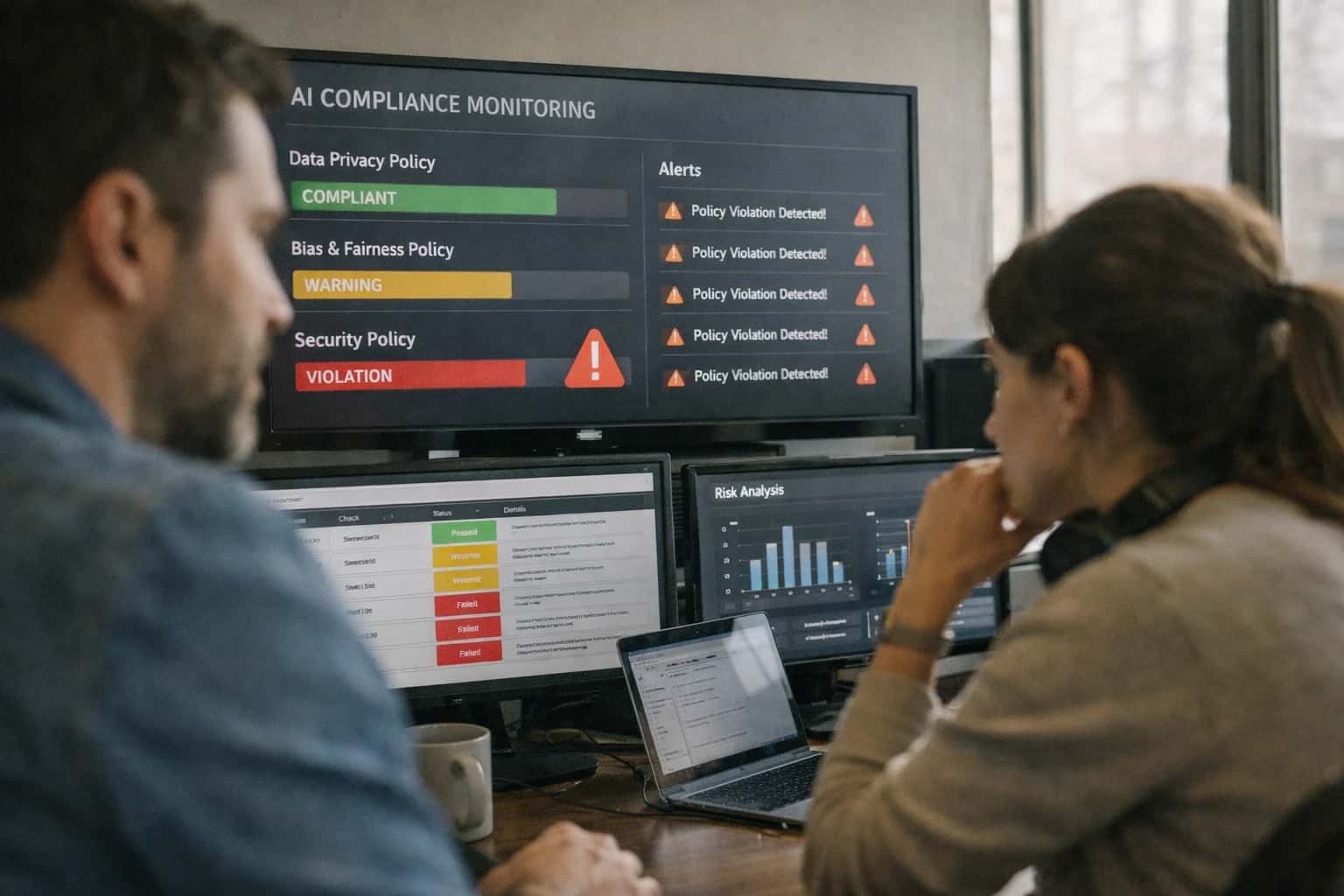
ARCHITECTING INTELLIGENT SERVICE AGREEMENTS
Where AI Fits in Salesforce Field Service Contract Management
Integrating AI with Salesforce CPQ and Service Contracts automates the management of complex field service agreements, from renewal identification to SLA compliance.
Implementation typically involves an AI agent orchestration layer that sits between Salesforce and your field service data. This layer can:
- Monitor & Analyze: Continuously read from the
WorkOrderandServiceAppointmentobjects to calculate metrics like Mean Time to Repair (MTTR) or First-Time Fix Rate against contract SLAs. - Trigger & Draft: Use triggers on contract
EndDateor consumption thresholds to automatically generate renewal quotes in Salesforce CPQ, pulling in historical performance data to justify pricing. - Govern & Route: Apply rules to new contract proposals, using AI to review clauses for risk or standard terms, then route the redlined document through configured approval processes in Salesforce.
For rollout, start with a pilot on a subset of high-value or high-volume contracts. Use a sandbox to train AI models on historical contract performance data before going live. Governance is critical: ensure all AI-generated actions (like sending a renewal quote) require a human-in-the-loop approval step initially, and maintain a clear audit trail in Salesforce by logging AI actions as Tasks or Feed Items on the contract record. This controlled approach allows service managers to verify AI accuracy and build trust before scaling automation across the entire contract portfolio.
SALESFORCE FIELD SERVICE CONTRACT MANAGEMENT
Key Salesforce Objects and Surfaces for AI Integration
Core Agreement Objects for AI
The ServiceContract and ContractLineItem objects are the system of record for all field service agreements. AI integration here focuses on automating the contract lifecycle.
Key AI Use Cases:
- Renewal Automation: Analyze contract end dates, usage metrics, and service history to auto-generate personalized renewal quotes in Salesforce CPQ.
- Compliance Monitoring: Use AI to continuously parse work orders and invoices against the
ContractLineItemto detect SLA breaches or out-of-scope work. - Term Extraction: Apply NLP to contract PDFs stored in
ContentDocumentto auto-populate key fields like duration, pricing tiers, and response time obligations into the standard object model.
Integrating AI at this layer ensures all automated workflows—from quote to cash—are grounded in the correct, governed commercial terms.
SALESFORCE CPQ & SERVICE CONTRACTS
High-Value AI Use Cases for Service Contracts
Integrating AI with Salesforce's Service Contracts and CPQ modules automates the most manual, error-prone, and revenue-critical aspects of managing complex field service agreements. Focus on these workflows to enforce compliance, accelerate renewals, and improve contract profitability.
01
Automated Contract Renewal Analysis & Drafting
AI analyzes historical service data, SLA performance, and profitability of expiring contracts to generate personalized renewal proposals. It drafts the initial Salesforce CPQ quote, suggests pricing adjustments based on cost inflation and value delivered, and pre-populates the renewal workflow for account managers.
Days -> Hours
Renewal cycle
02
Intelligent SLA Monitoring & Breach Prediction
Continuously monitors work order completion times, parts usage, and customer sentiment against Service Contract SLA terms. AI flags potential breaches before they occur, triggers proactive dispatcher alerts in the Service Console, and suggests corrective actions like prioritizing a job or dispatching a higher-skilled technician.
Reactive -> Proactive
Compliance mode
03
Dynamic Pricing & Scope Recommendation
For contract amendments or new agreements, AI reviews similar asset types, regional labor rates, and historical parts failure rates. It recommends optimal CPQ bundle configurations and pricing tiers, ensuring quotes are competitive, profitable, and aligned with real-world service delivery patterns.
Manual -> Guided
Quote accuracy
04
Obligation Tracking & Automated Reporting
Extracts key obligations (e.g., quarterly inspections, annual audits) from contract PDFs stored in Salesforce Files. AI creates tracked tasks in the Service Contract object, generates scheduled reports for customers, and auto-populates report templates with data from completed work orders, reducing manual admin work.
Batch -> Real-time
Obligation status
05
Contract Performance & Profitability Dashboard
Uses natural language queries ("show me contracts underperforming on margin") to generate dynamic insights. AI correlates contract revenue from Salesforce Billing with actual costs from field service work orders, highlighting underperforming agreements and identifying upsell opportunities like expanded coverage.
Static -> Interactive
Financial insight
06
AI-Powered Contract Intake & Cloning
Accelerates the creation of new service contracts from won opportunities. AI parses customer requirements and asset lists, clones a best-fit template from the Contract Line Item library, and pre-configures entitlements and approval routes, ensuring consistency and reducing setup time for sales ops.
1 sprint
Setup time saved
SALESFORCE CPQ & SERVICE CONTRACTS
Example AI-Powered Contract Workflows
These workflows illustrate how AI agents can be integrated into Salesforce's CPQ and Service Contracts data model to automate complex field service agreement management, reduce manual oversight, and ensure compliance.
Trigger: A Service Contract's EndDate is within the renewal window (e.g., 90 days).
Context Pulled: The AI agent retrieves the full contract record, related Work Orders, Asset history, SLA performance metrics, and any Case records linked to the account.
Agent Action:
- Analyzes historical performance against key SLA terms (e.g., response time, first-time fix rate).
- Generates a renewal proposal draft in the
Quoteobject, using a structured prompt that incorporates:- Performance highlights and risks.
- Recommended pricing adjustments based on CPI or material cost changes.
- Suggested new terms or exclusions based on asset age or failure patterns.
- Flags the contract for manual review if it detects:
- Chronic SLA misses.
- Unprofitable service history.
- High-risk asset types.
System Update: A new Quote is created and linked to the Opportunity. An internal Chatter post or Slack alert is sent to the Account Manager with the AI's summary and risk score.
Human Review Point: The Account Manager reviews the AI-generated draft, makes adjustments in Salesforce CPQ, and initiates the approval workflow.
CONNECTING AI TO CPQ, SERVICE CONTRACTS, AND FIELD SERVICE OBJECTS
Implementation Architecture: Data Flow and System Design
A practical blueprint for integrating AI agents with Salesforce's core modules to automate contract management, renewal workflows, and SLA compliance for field service.
The integration architecture connects AI agents to three primary Salesforce data surfaces: Service Contract and Contract Line Item objects for terms and entitlements, Quote and Order objects from Salesforce CPQ for pricing and approvals, and Work Order and Service Appointment objects from Field Service Lightning for execution. Agents are triggered via platform events, such as a contract nearing its renewal date, a change to a covered asset, or a missed SLA on a work order. Using the Salesforce REST and Bulk APIs, the AI system performs a contextual retrieval from these records, enriched with related customer history, asset details, and product knowledge, to inform its reasoning and actions.
A typical high-value workflow is automated renewal generation. An agent monitors the EndDate on Service Contracts. For contracts within a 90-day window, it queries CPQ for the original quote, analyzes work order history for usage patterns, and drafts a renewal proposal with updated pricing and terms. This draft is posted as a new Quote in Salesforce, triggering the existing CPQ approval workflow. For SLA compliance, another agent listens for SLAViolation platform events on Service Appointments. It retrieves the governing Contract Line Item, assesses the breach impact, and can automatically generate a customer credit memo or schedule a follow-up visit, logging all actions in the Case object for audit.
Rollout focuses on a phased, contract-type approach, starting with standardized, high-volume agreements (e.g., annual maintenance plans). Governance is enforced through a human-in-the-loop approval step for all AI-generated quotes and credits before system posting, and all agent decisions are written to a custom AI_Audit_Log__c object. The system design ensures agents operate with the same field-level security and sharing rules as the integrating user, maintaining Salesforce's native data governance. For teams managing complex, bespoke contracts, the AI serves as a copilot, suggesting clauses and flagging non-standard terms rather than fully automating, reducing risk during initial implementation.
SALESFORCE FIELD SERVICE & CPQ INTEGRATION PATTERNS
Code and Payload Examples
Automating Renewal Workflows with Apex Triggers
A common integration point is to use an Apex trigger on the ServiceContract object to identify agreements nearing expiration and invoke an AI agent to draft a renewal proposal. The trigger calls an external AI service via a secure API, passing key contract details for analysis.
Example Apex Trigger Snippet:
apextrigger ServiceContractRenewalTrigger on ServiceContract (after update) { for (ServiceContract sc : Trigger.new) { if (sc.EndDate != null && sc.EndDate.addDays(-60) <= Date.today() && sc.Status == 'Active') { // Prepare payload for AI service Map<String, Object> payload = new Map<String, Object>(); payload.put('contractId', sc.Id); payload.put('accountName', sc.Account.Name); payload.put('totalContractValue', sc.Total_Contract_Value__c); payload.put('renewalProbability', AI_RenewalPredictor.predict(sc.Id)); // Queue async call to AI orchestration service System.enqueueJob(new QueueableRenewalAgentCall(payload)); } } }
The AI service returns a structured renewal recommendation, which can auto-populate a Quote in Salesforce CPQ.
SALESFORCE FIELD SERVICE CONTRACT MANAGEMENT
Realistic Time Savings and Business Impact
How AI integration with Salesforce CPQ and Service Contracts transforms manual, reactive processes into proactive, automated workflows for field service agreements.
| Metric | Before AI | After AI | Notes |
|---|---|---|---|
Contract Renewal Identification | Manual report review, 2-4 hours weekly | Automated alerts for at-risk contracts, 15 minutes weekly | AI scans Service Contract objects for end dates and usage thresholds |
Renewal Quote Generation | Manual rebuild from templates, 1-2 hours per quote | Assisted drafting from historical data, 20-30 minutes per quote | AI suggests line items from past work orders; human finalizes in Salesforce CPQ |
SLA Compliance Monitoring | Reactive customer complaints | Proactive dashboard of SLA breaches & near-misses | AI correlates Work Order completion times with Contract SLA terms |
Price Book & Discount Updates | Quarterly manual review | Monthly AI-driven recommendations for high-volume parts/labor | Analyzes consumption data against market rates; requires CPQ admin approval |
Contract Performance Reporting | Manual data pull and spreadsheet analysis, 1 day monthly | Automated executive summary with key trends, 1 hour monthly | AI aggregates data from Service Contracts, Assets, and Customer Satisfaction scores |
Amendment & Change Order Processing | Email chains and manual document creation | Structured intake form with AI-assisted clause selection | Redlines against master agreement templates in Salesforce; legal review required |
Upsell/Cross-sell Opportunity Identification | Ad-hoc suggestions from account managers | AI-scored list of customers with high-propensity service needs | Analyzes asset age, service history, and product consumption; creates Sales Cloud leads |
ARCHITECTING FOR ENTERPRISE CONTROL
Governance, Security, and Phased Rollout
A secure, governed rollout of AI for contract management protects revenue and ensures compliance.
Integrating AI with Salesforce CPQ and Service Contracts requires a security-first architecture. AI agents should operate within a zero-trust model, accessing Salesforce data via named credentials with field-level security (FLS) and object-level permissions strictly enforced. All AI-generated outputs—like renewal proposals or SLA compliance summaries—must be written to a custom AI_Generation_Audit__c object, creating an immutable audit trail linked to the parent Contract, Quote, and User records. For sensitive operations like pricing adjustments or auto-renewal triggers, implement a dual-control system where AI suggestions require human approval via Salesforce Approval Processes or a dedicated Lightning component before any system-of-record updates are committed.
A phased rollout minimizes risk and maximizes adoption. Start with a read-only pilot focused on contract intelligence: deploy an AI agent that analyzes active Service Contracts to surface renewal risks, identify non-standard terms, and summarize performance against SLAs, presenting insights in a Salesforce dashboard. Phase two introduces assisted drafting: enable AI to generate first drafts of renewal quotes within Salesforce CPQ, pre-populating line items based on historical consumption data, with a mandatory review step by the contract manager. The final phase activates closed-loop automation for low-risk, high-volume contracts, where AI can automatically generate and route renewal quotes upon detecting contract expiration, while escalating complex, high-value agreements to human specialists.
Governance is continuous. Establish a cross-functional AI Steering Committee with members from Legal, Finance, Sales Operations, and IT to review the AI's performance quarterly, using metrics from Salesforce reports on quote accuracy, renewal cycle time, and user override rates. Implement a feedback loop where contract managers can flag incorrect AI suggestions directly within the Salesforce UI, feeding that data back into the model's fine-tuning pipeline. This ensures the integration remains a compliant, value-driving copilot for your revenue operations team, not an uncontrolled automation.
Enabling Efficiency, Speed & Accuracy
Intelligent Analysis, Decision & Execution
We build AI systems for teams that need search across company data, workflow automation across tools, or AI features inside products and internal software.
Talk to Us
Search across company data
Give teams answers from docs, tickets, runbooks, and product data with sources and permissions.
Useful when people spend too long searching or get different answers from different systems.
Enterprise searchRAGPermissions
Read more
Automate internal workflows
Use AI to route work, draft outputs, trigger actions, and keep approvals and logs in place.
Useful when repetitive work moves across multiple tools and teams.
AI agentsWorkflow automationGovernance
Read more
Add AI to products and internal tools
Build assistants, guided actions, or decision support into the software your team or customers already use.
Useful when AI needs to be part of the product, not a separate tool.
AI integrationDecision supportModel routing
Read moreAI INTEGRATION FOR SALESFORCE FIELD SERVICE CONTRACT MANAGEMENT
Frequently Asked Questions for Technical Buyers
Architecting AI for Salesforce CPQ and Service Contracts involves specific technical considerations. Below are answers to common questions from enterprise architects and service operations leaders.
The primary pattern is to use Salesforce's secure external services via Named Credentials and Apex callouts, ensuring data never leaves your controlled environment in a raw, ungoverned way.
- Data Selection & Masking: Build a dedicated Apex service that queries the necessary
ServiceContract,ContractLineItem,Entitlement, and relatedWorkOrderrecords. Use field-level security (FLS) and object permissions to enforce data access. For PII or sensitive commercial terms, implement logic to hash, mask, or exclude fields before payload assembly. - Secure Outbound Call: Use a Named Credential configured for OAuth 2.0 (client credentials flow) or certificate-based authentication to your AI service endpoint (e.g., Inference Systems' managed endpoint). This manages secrets outside of code.
- Payload Example:
json
{ "context": "contract_analysis", "contractId": "a1B3x000000CdeEF", "data": { "contractNumber": "SC-2024-045", "status": "Activated", "accountName": "Acme Manufacturing", "lineItems": [ { "productName": "Preventive Maintenance - HVAC", "quantity": 4, "uom": "Visit", "entitlementProcess": "PM_Standard" } ], "relatedWorkOrdersLast12M": 12, "firstTimeFixRate": 0.92 } } - Audit Trail: Log the callout (contract ID, timestamp, user context, purpose) in a custom
AI_Interaction__cobject or via Platform Events for compliance.

About the author
Prasad Kumkar
CEO & MD, Inference Systems
Prasad Kumkar is the CEO & MD of Inference Systems and writes about AI systems architecture, LLM infrastructure, model serving, evaluation, and production deployment. Over 5+ years, he has worked across computer vision models, L5 autonomous vehicle systems, and LLM research, with a focus on taking complex AI ideas into real-world engineering systems.
His work and writing cover AI systems, large language models, AI agents, multimodal systems, autonomous systems, inference optimization, RAG, evaluation, and production AI engineering.
LinkedIn
Limited slotsGet a Free AI Consultation
Partnered with leading AI, data, and software stack.





How We Work
Custom AI workflows for your Business
One-fit-all AI don't work for modern businesses. At Inferensys, we aim to understand your business & custom requirements; which we use to define most efficient agentic workflows, the data, and the tools for your business.
01
Review the use case
We understand the task, the users, and where AI can actually help.
Read more02
Pick the right approach
We define what needs search, automation, or product integration.
Read more03
Build the first useful version
We implement the part that proves the value first.
Read more04
Improve from there
We add the checks and visibility needed to keep it useful.
Read moreThe first call is a practical review of your use case and the right next step.
Talk to Us