AI integration for healthcare events connects to specific surfaces within platforms like Cvent or Bizzabo, primarily through their APIs and webhook ecosystems. The key functional areas are the registration module (for credential validation and CEU tracking), the agenda/session builder (for scientific content curation and conflict checking), and the attendee management console (for compliant communications and support). AI agents act on this data to automate high-touch, manual processes while maintaining a strict audit trail for HIPAA and Sunshine Act compliance.

Integration
AI Integration for Event Management in Healthcare
A technical blueprint for embedding AI into platforms like Cvent and Bizzabo to automate credential verification, CEU tracking, scientific session curation, and HIPAA-aware attendee support for medical conferences.
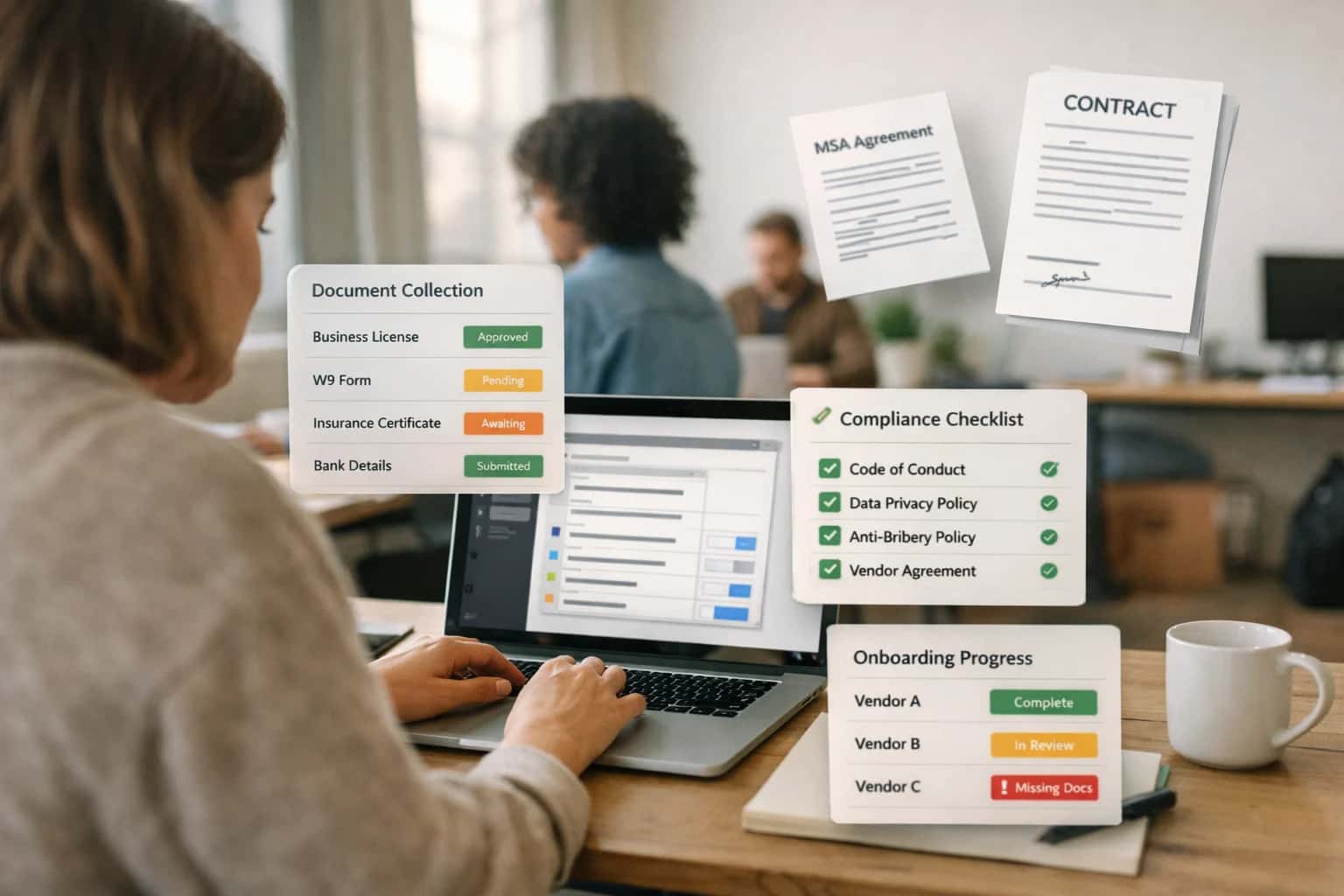
COMPLIANCE-AWARE AUTOMATION
Where AI Fits in Healthcare Event Management
A practical guide to integrating AI into Cvent or Bizzabo for medical conferences, focusing on compliant workflows, credential tracking, and scientific session support.
Implementation focuses on orchestrating secure, policy-aware workflows. For example, an AI agent can be triggered by a new registration webhook to: 1) validate the attendee's professional license against a sanctioned database, 2) check for potential conflicts of interest based on disclosed relationships, and 3) automatically apply the correct registration tier and CEU track. Another agent can monitor session submissions, using RAG over past conference content and FDA guidelines to flag potential compliance issues in presentation titles or abstracts for human review.
Rollout requires a phased, governance-first approach. Start with non-clinical, operational use cases like automating dietary restriction collection or generating plain-language summaries of logistical emails. Then, layer in credential validation and basic CEU tracking, ensuring all AI actions are logged to the attendee record for audit purposes. The final phase involves session curation support and post-event analytics, where AI synthesizes feedback and engagement data to recommend topics for future accredited programs. This crawl-walk-run method builds trust and demonstrates value within the rigid compliance framework of healthcare event management.
AI IMPLEMENTATION PATTERNS
Integration Surfaces: Cvent vs. Bizzabo for Healthcare
HIPAA-Compliant Registration & Credentialing
For medical conferences, the attendee lifecycle is governed by compliance and credential tracking. In Cvent, AI can integrate with the Registration Manager and custom fields to automate CEU/CME validation, license verification, and session eligibility checks. Use webhooks on registration submission to trigger an AI agent that calls credentialing databases and updates the attendee record.
In Bizzabo, leverage the Attendee API and profile attributes to build a real-time credential copilot. An AI agent can scan profiles against a pre-approved list (e.g., specialty, board certification) and flag mismatches for manual review before badge printing. Both platforms require AI outputs to be logged in an audit trail for compliance reporting.
Key Surfaces:
- Cvent: Registration Manager API, Custom Question/Field objects, Email Campaign triggers.
- Bizzabo: Attendee API, Profile Attributes, Check-in/QR code system.
HIPAA-COMPLIANT WORKFLOWS
High-Value AI Use Cases for Medical Conferences
Integrating AI into Cvent or Bizzabo for medical conferences requires specialized handling of PHI, credential verification, and scientific content. These use cases focus on automating high-friction workflows while maintaining compliance and audit trails.
01
Automated CEU/CME Tracking & Verification
AI agents monitor session check-ins via the event app (e.g., Whova or Bizzabo) and cross-reference attendee credentials with accredited session lists. Automatically generates and submits completion records to accrediting bodies, reducing manual data entry and audit risk.
Batch -> Real-time
Credential processing
02
HIPAA-Safe Attendee Support Chatbot
Deploy a secure AI chatbot within the event app for FAQs about logistics, session locations, and dining—without exposing PHI. The agent is configured to never solicit or store health information, routing clinical or personal queries to a human agent with proper safeguards.
Hours -> Minutes
Response time for common queries
03
Scientific Abstract Triage & Session Curation
Integrate AI with Cvent's abstract submission module to perform initial screening. LLMs score submissions based on relevance to conference tracks, flag potential conflicts of interest, and suggest optimal session groupings for review committees, accelerating the curation workflow.
1 sprint
Time saved in planning phase
04
Compliant Lead Capture for Exhibitors
Enhance badge scanning or digital business card exchanges with real-time, policy-aware filtering. AI agents scrub any inadvertent PHI from scan data before syncing to exhibitor CRMs (via Cvent's exhibitor portal API) and log all data transformations for compliance reporting.
Same day
Lead delivery with compliance checks
05
Post-Event Insight Synthesis from Scientific Sessions
Connect AI transcription services to recorded session streams (via Zoom integration). LLMs generate non-clinical summaries, extract key themes and emerging trends, and produce structured reports for conference archives and planning committees—all while maintaining speaker attribution.
Hours -> Minutes
Report generation
06
Dynamic Housing & Logistics Coordination
AI agents interfacing with Cvent's housing and registration APIs manage room block utilization, predict attrition based on historical no-show data, and automate communication with hotels for adjustments. For large medical associations, this optimizes cost and attendee experience.
Batch -> Real-time
Logistics adjustments
HEALTHCARE EVENT OPERATIONS
Example AI-Powered Workflows
These workflows demonstrate how AI agents can be integrated into Cvent or Bizzabo to automate compliance-sensitive tasks, reduce administrative burden, and enhance the scientific attendee experience for medical conferences, CME courses, and symposiums.
Trigger: A healthcare professional submits a registration form via the Cvent registration module.
Context/Data Pulled: The AI agent, via a secure API call, retrieves the submitted registration payload (name, email, NPI number, license state, specialty). It also queries internal master data sources to validate against known provider directories.
Model/Agent Action:
- Credential Validation: The agent calls a tool to verify the NPI number and license status via a trusted external API (e.g., CMS NPI Registry).
- Specialty Matching: It cross-references the stated specialty and institution against the conference's target audience and CME accreditation rules.
- Compliance Check: It reviews the attendee's consent selections for data usage, ensuring alignment with HIPAA's Minimum Necessary Standard for event communications.
System Update/Next Step:
- If validation passes, the agent updates the Cvent registrant record with a
credential_status = verifiedcustom field and triggers the automated confirmation email with personalized pre-conference materials. - If issues are found (e.g., invalid NPI), the agent creates a task in the event team's project management tool (e.g., Asana) with a flagged priority and all relevant data, pausing the automated workflow for human review.
Human Review Point: Mandatory for any validation failure, mismatch in specialty vs. conference topic, or if the attendee opts out of standard data processing clauses.
HIPAA-COMPLIANT AI WORKFLOWS
Implementation Architecture & Data Flow
A secure, event-driven architecture for integrating AI into Cvent or Bizzabo to manage medical conference operations.
The integration connects to the event platform's core APIs—Cvent's SOAP/REST APIs or Bizzabo's GraphQL endpoints—to access key objects: Attendee records, Session catalogs, Registration forms, and Exhibitor lists. AI agents are deployed as containerized services in your VPC, interacting with these APIs via secure service accounts. For credential tracking, an agent listens for registration webhooks, extracts attendee-provided license numbers and institutional affiliations, and calls a credential verification service (maintained by your organization) before updating a custom CredentialStatus field in the attendee profile. All PHI-containing payloads are encrypted in transit and at rest, with audit logs capturing every AI-initiated data access.
For CEU management, a scheduled workflow runs post-session: it fetches check-in data from the event platform's attendance module, matches it against accredited session IDs, and uses an LLM to draft a compliance-compliant certificate summary. This summary is pushed back to the attendee's digital badge in Cvent/Bizzabo and to a CEU tracking database. For scientific session curation, a separate agent analyzes submitted abstract data (title, keywords, author institutions) against historical attendee interest signals to recommend agenda slots and audience segments, outputting a structured JSON payload for the event manager's review in the platform's session builder UI.
Rollout follows a phased, zero-PHI pilot: start with non-clinical workflows like speaker communication automation and meal preference collection. Governance is enforced through a dedicated AI Operations (AIOps) panel that monitors agent activity, flags data access anomalies, and manages prompt versions. All AI-generated content for attendees—such as session recommendations or FAQs—includes a clear disclosure and is configured for mandatory human review before publication via the platform's content approval workflows.
HEALTHCARE EVENT INTEGRATION PATTERNS
Code & Payload Examples
HIPAA-Compliant Attendee Verification
For medical conferences, validating attendee credentials (licenses, certifications) and tracking Continuing Education Units (CEUs) is a manual bottleneck. An AI agent can automate this by calling external verification APIs, parsing uploaded documents, and updating the attendee record in Cvent or Bizzabo.
Typical Workflow:
- Attendee uploads credential PDF during registration.
- Webhook triggers AI agent with attendee ID and document URL.
- Agent uses a secure, HIPAA-compliant document intelligence service (e.g., Azure Form Recognizer) to extract license number, state, and expiration.
- Agent calls a secondary validation API (e.g., state medical board) for status.
- Results are written back to a custom object in the event platform, and the attendee's badge status is updated.
python# Pseudo-code for credential validation webhook handler async def handle_credential_webhook(payload): attendee_id = payload['attendeeId'] doc_url = payload['documentUrl'] # Extract data from document (HIPAA-compliant endpoint) extracted_data = await form_recognizer.analyze_document(doc_url) license_num = extracted_data.get('licenseNumber') # Validate with external board API validation_result = await medical_board_api.verify(license_num) # Build payload for Cvent API to update custom field update_payload = { "attendeeId": attendee_id, "customFields": { "credentialStatus": validation_result.get('status'), "credentialVerifiedAt": datetime.utcnow().isoformat(), "ceuEligible": validation_result.get('active') } } await cvent_api.update_attendee(update_payload)
AI FOR MEDICAL CONFERENCE OPERATIONS
Realistic Time Savings & Operational Impact
A realistic comparison of manual vs. AI-assisted workflows for managing healthcare events on platforms like Cvent or Bizzabo, focusing on compliance, credentialing, and scientific content.
| Workflow | Before AI | After AI | Key Considerations |
|---|---|---|---|
Speaker & Abstract Submission Review | Manual committee review over 2-3 weeks | AI-assisted triage & scoring in 2-3 days | AI flags conflicts & relevance; final approval stays with committee |
Continuing Education (CEU) Tracking & Reporting | Post-event manual data entry & form reconciliation | Automated tracking via session check-in APIs | Requires integration with credentialing bodies' systems for direct submission |
HIPAA-Compliant Attendee Support | Email/phone support with manual verification | AI chatbot with policy-aware, verified responses | All AI interactions must be logged, auditable, and exclude PHI from training data |
Scientific Session Scheduling & Conflict Avoidance | Manual schedule balancing over days | AI optimization for attendee tracks & room capacity in hours | AI suggests schedule; human planner makes final adjustments for VIP speakers |
Exhibitor & Sponsor Lead Qualification | Post-event manual lead list distribution | Real-time AI scoring & routing to CRM during event | Integration with /integrations/customer-relationship-management-platforms/salesforce or Veeva CRM for life sciences |
Post-Event Credit & Certificate Fulfillment | Batch processing taking 4-6 weeks | Automated fulfillment triggered by attendance data | Must handle exceptions and appeals via a human-in-the-loop workflow |
Compliance Logging for Pharma-Sponsored Sessions | Manual collection of signage, disclosures, and attendee logs | Automated digital audit trail from registration to post-event | Critical for Sunshine Act reporting; AI ensures data completeness for [/integrations/electronic-health-record-platforms](regulatory submissions) |
HIPAA-COMPLIANT AI FOR MEDICAL CONFERENCES
Governance, Compliance & Phased Rollout
A structured approach to deploying AI in healthcare event platforms that prioritizes data security, regulatory adherence, and controlled value delivery.
Integrating AI into Cvent or Bizzabo for medical conferences requires a security-first architecture. This means implementing AI agents that operate within a HIPAA-compliant environment, where all Protected Health Information (PHI) and attendee data—including registration details, session attendance, and credential records—are processed through encrypted pipelines. The integration must enforce strict role-based access control (RBAC) native to the event platform, ensuring AI tools only access data surfaces (e.g., attendee objects, session rosters, CEU tracking modules) permitted for the automated role. All AI-generated outputs, such as personalized agenda suggestions or post-session summaries, should be logged in an immutable audit trail linked to the source attendee record and the prompting user action.
A phased rollout is critical for managing risk and proving value. We recommend starting with a pilot cohort (e.g., a single track or sponsor type) and non-clinical, high-volume workflows:
- Phase 1: Operational Support – Deploy an AI agent to handle routine attendee inquiries via the event app's messaging layer, using a knowledge base of public conference information (agenda, venue maps, logistics). This avoids initial PHI exposure.
- Phase 2: Workflow Augmentation – Integrate AI into the credential verification and CEU tracking workflow. The agent can cross-reference attendee check-in data (from session scans) with accreditation bodies' rules, flagging discrepancies for human review before certificates are issued via the platform's email automation.
- Phase 3: Scientific Curation & Personalization – With governance controls validated, introduce AI-driven session recommendations. This uses anonymized, aggregated attendee profile data (specialty, stated interests) and real-time engagement signals to suggest relevant sessions, improving the educational experience without exposing individual PHI.
Governance is maintained through a human-in-the-loop (HITL) design for all critical outputs. For example, AI-drafted communications to attendees regarding credential issues or AI-summarized key takeaways from a scientific session are queued for a conference manager's approval within the Cvent or Bizzabo console before being sent. This combines AI efficiency with human oversight, ensuring accuracy and compliance. Furthermore, all AI models and prompts are version-controlled and evaluated for bias or drift, particularly for workflows involving attendee segmentation or content curation, to uphold the scientific integrity of the medical conference. This structured, incremental approach de-risks the integration, builds organizational trust, and demonstrates clear ROI at each step, from reduced support ticket volume to improved attendee satisfaction and streamlined accreditation workflows.
Enabling Efficiency, Speed & Accuracy
Intelligent Analysis, Decision & Execution
We build AI systems for teams that need search across company data, workflow automation across tools, or AI features inside products and internal software.
Talk to Us
Search across company data
Give teams answers from docs, tickets, runbooks, and product data with sources and permissions.
Useful when people spend too long searching or get different answers from different systems.
Enterprise searchRAGPermissions
Read more
Automate internal workflows
Use AI to route work, draft outputs, trigger actions, and keep approvals and logs in place.
Useful when repetitive work moves across multiple tools and teams.
AI agentsWorkflow automationGovernance
Read more
Add AI to products and internal tools
Build assistants, guided actions, or decision support into the software your team or customers already use.
Useful when AI needs to be part of the product, not a separate tool.
AI integrationDecision supportModel routing
Read moreIMPLEMENTATION AND COMPLIANCE
Frequently Asked Questions
Key technical and operational questions for integrating AI into healthcare event platforms like Cvent or Bizzabo, focusing on HIPAA-aligned workflows, credential management, and scientific content operations.
HIPAA compliance for AI integrations requires a layered approach focused on data handling, access controls, and vendor governance.
Key Implementation Steps:
- Data Minimization & De-identification: Configure the AI agent to only pull necessary fields (e.g., session attendance status, credential type) and avoid accessing full Protected Health Information (PHI) like detailed medical histories. Use de-identified attendee IDs for internal processing.
- Secure API Connections & BAA: Ensure all connections between your event platform (Cvent/Bizzabo) and the AI inference layer use encrypted APIs (TLS 1.2+). Execute a Business Associate Agreement (BAA) with your AI model provider (e.g., Azure OpenAI, Google Vertex AI) that explicitly covers your use case.
- Prompt & Log Governance: Implement a middleware layer that scrubs prompts and responses of any accidental PHI before logging for model improvement. All logs should be stored in your controlled, encrypted environment.
- Role-Based Access Control (RBAC): Integrate the AI agent's permissions with your event platform's RBAC. For example, an agent generating CEU reports should only have the same data access level as a human credentialing manager.
Architecture Pattern: Attendee Record (Cvent) → De-identification Service (Your Middleware) → BAA-Covered LLM API → Response → Re-identification (if needed) → Update in Cvent.

About the author
Prasad Kumkar
CEO & MD, Inference Systems
Prasad Kumkar is the CEO & MD of Inference Systems and writes about AI systems architecture, LLM infrastructure, model serving, evaluation, and production deployment. Over 5+ years, he has worked across computer vision models, L5 autonomous vehicle systems, and LLM research, with a focus on taking complex AI ideas into real-world engineering systems.
His work and writing cover AI systems, large language models, AI agents, multimodal systems, autonomous systems, inference optimization, RAG, evaluation, and production AI engineering.
LinkedIn
Limited slotsGet a Free AI Consultation
Partnered with leading AI, data, and software stack.





How We Work
Custom AI workflows for your Business
One-fit-all AI don't work for modern businesses. At Inferensys, we aim to understand your business & custom requirements; which we use to define most efficient agentic workflows, the data, and the tools for your business.
01
Review the use case
We understand the task, the users, and where AI can actually help.
Read more02
Pick the right approach
We define what needs search, automation, or product integration.
Read more03
Build the first useful version
We implement the part that proves the value first.
Read more04
Improve from there
We add the checks and visibility needed to keep it useful.
Read moreThe first call is a practical review of your use case and the right next step.
Talk to Us