In financial services, AI integration surfaces at three critical layers of the event stack: attendee engagement, compliance orchestration, and post-event intelligence. For platforms like Cvent or Bizzabo, this means connecting AI to specific modules: the registration engine for credentialed attendee validation, session management for regulated content dissemination (e.g., earnings material), and the lead capture system for FINRA-compliant follow-up workflows. AI agents act as a middleware layer, calling platform APIs to execute tasks while adhering to pre-defined governance rules—such as logging all AI-generated communications for audit trails and ensuring no unapproved financial projections are disseminated.

Integration
AI Integration for Event Management in Finance
A technical blueprint for embedding AI into Cvent, Bizzabo, Whova, and Eventbrite to automate investor day coordination, ensure compliance logging, manage regulated content dissemination, and elevate high-net-worth attendee experiences.
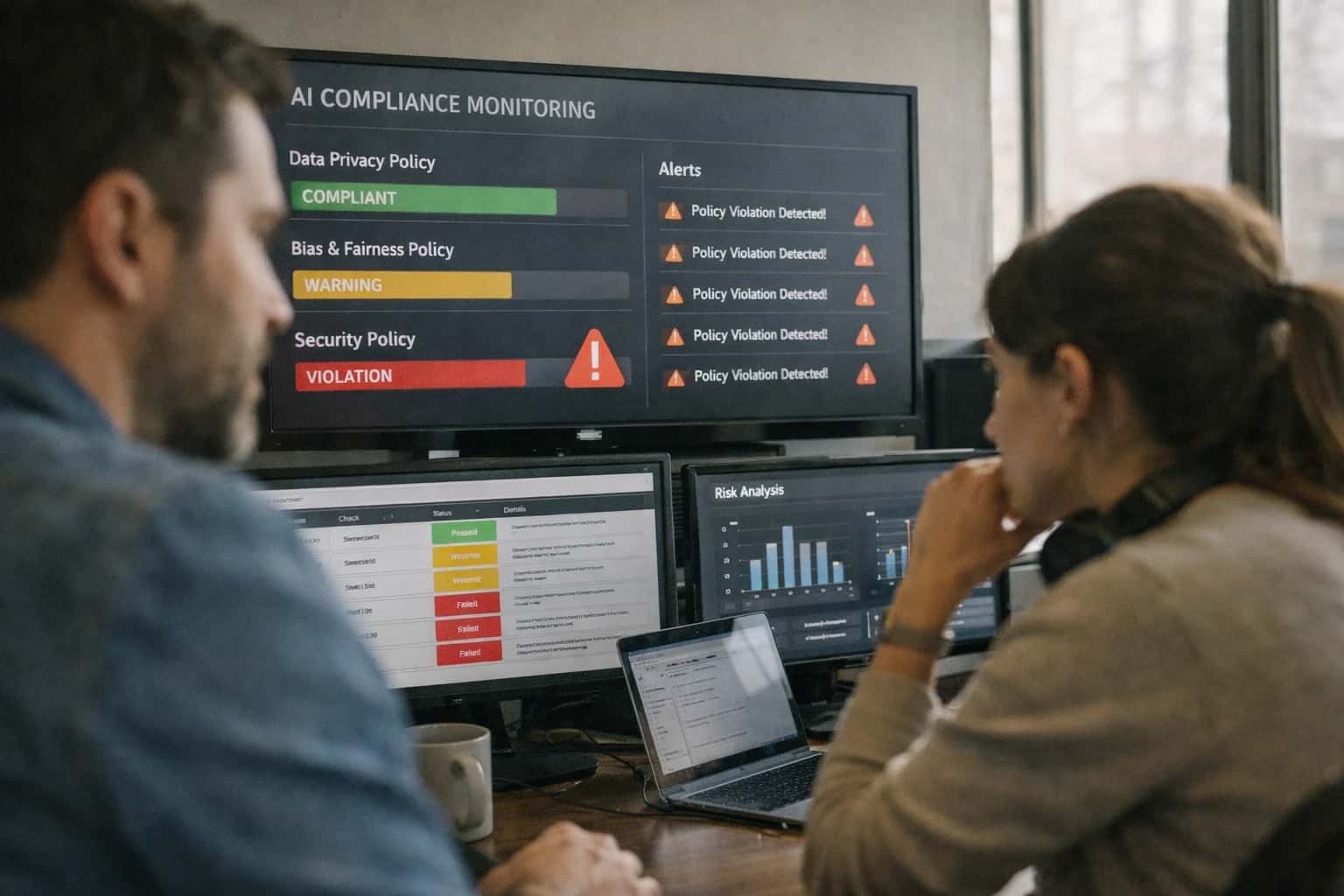
ARCHITECTURE FOR REGULATED ENGAGEMENTS
Where AI Fits in Financial Services Event Management
A technical blueprint for integrating AI into investor days, roadshows, and compliance-heavy financial events, connecting platforms like Cvent and Bizzabo to regulated workflows.
A practical implementation wires an AI orchestration platform (like n8n or a custom agent framework) between the event platform and core financial systems. For an investor roadshow, an AI workflow might: 1) ingest attendee questions from a Whova Q&A module, 2) use a RAG system grounded in pre-approved SEC filings and scripted talking points to generate responses, 3) route draft responses through a human-in-the-loop approval queue in ServiceNow, and 4) post the approved answer back to the event app—all while logging the full interaction chain to a system like Workiva for compliance. The impact shifts analyst and IR team effort from manual triage to review and exception handling, accelerating response times while maintaining strict control.
Rollout requires a phased, use-case-led approach, starting with low-risk, high-volume workflows like automated attendee FAQ routing for logistical questions, then progressing to regulated content support. Governance is non-negotiable; AI agents must operate within a policy-aware sandbox, with access controls managed via your IAM platform (Okta, Entra ID) and all outputs subject to the same pre-approval and record-keeping mandates as human communications. This architecture allows financial institutions to leverage AI for scale and personalization at events without introducing regulatory or reputational risk, turning event platforms into intelligent, compliant engagement hubs. For deeper patterns on secure agent access, see our guide on Secure AI Access for Event Platforms with IAM.
FINANCIAL SERVICES EVENTS
AI Integration Points Across Leading Event Platforms
AI-Driven Attendee Support for Financial Events
For investor days, capital markets conferences, and high-net-worth gatherings, AI integration focuses on elevating the attendee experience while maintaining strict confidentiality. Key surfaces include:
- Registration & Onboarding APIs: Integrate with Cvent or Bizzabo registration to deploy conversational AI for complex attendee queries (e.g., "What are the compliance requirements for my registration category?").
- Event App Modules (Whova): Embed AI-powered Q&A agents within the event app to provide instant, accurate answers on agenda changes, venue logistics, and session details, reducing front-desk load.
- Secure Networking: Use AI to analyze attendee profiles (with explicit consent) to suggest 1:1 meetings between investors and portfolio companies, facilitating connections while respecting privacy boundaries.
Implementation involves deploying a secure chatbot layer that calls the platform's REST API for real-time data (session times, speaker bios) and uses a private LLM instance to ensure sensitive attendee data is not leaked to public models.
FINANCIAL SERVICES & REGULATED EVENTS
High-Value AI Use Cases for Financial Events
For investor days, roadshows, and financial conferences, AI integration into platforms like Cvent and Bizzabo must address compliance, precision, and high-touch attendee experiences. This blueprint details where AI agents connect to automate regulated workflows and enhance stakeholder engagement.
01
Regulatory Disclosure & Compliance Logging
AI agents monitor all event communications—agenda updates, speaker remarks, Q&A transcripts—against pre-defined compliance rules. Automatically flags potential Reg FD issues or material non-public information, logging audit trails directly to the event record in the platform for legal review.
Batch -> Real-time
Compliance monitoring
02
Investor Q&A Triage & Routing
During earnings calls or investor days, an AI agent listens to live Q&A, categorizes questions by topic (e.g., 'guidance', 'capex', 'M&A'), and routes high-priority or recurring themes in real-time to the IR team via Slack or Teams. Integrates with the event platform's webinar module (e.g., Zoom via Cvent) for seamless workflow.
Same day
Insight synthesis
03
High-Net-Worth Attendee Experience Personalization
Leverages CRM integration (e.g., Salesforce) to personalize the event app experience for VIP attendees. AI suggests 1:1 meetings, curates session recommendations based on portfolio holdings, and powers a concierge chatbot within Whova or Bizzabo to handle logistics, dietary requests, and private scheduling.
Hours -> Minutes
Concierge response
04
Post-Event Sentiment & Market Impact Analysis
Post-event, AI analyzes transcript sentiment, attendee engagement data from the platform, and correlates it with trading volume or analyst note themes. Generates a compliance-ready report on perceived messaging effectiveness and potential market impact, syncing key findings to the CRM opportunity record.
05
Automated Materials Dissemination & Access Control
Manages the secure distribution of regulated materials (decks, data rooms). AI agents verify attendee credentials against a pre-approved list, automate secure link generation via the event platform, and revoke access post-event. Logs all downloads for compliance reporting.
1 sprint
Implementation timeline
06
Vendor & Venue Contract Intelligence
Integrates AI with the event platform's vendor module (e.g., Cvent Supplier Network) to review venue, AV, and F&B contracts. Extracts key clauses, payment terms, and liability limits, comparing them against master service agreements. Flags discrepancies and populates obligation tracking workflows.
IMPLEMENTATION PATTERNS
Example AI-Powered Workflows for Financial Events
For financial services events—investor days, roadshows, compliance briefings, and high-net-worth conferences—AI integration must balance automation with strict governance. These workflows demonstrate how to augment platforms like Cvent and Bizzabo with intelligent agents while maintaining audit trails, data security, and regulatory compliance.
Trigger: A compliance officer publishes a new research report or material disclosure document to the event's secure portal in Cvent.
AI Agent Action:
- An agent, triggered via a Cvent webhook, uses the platform's API to retrieve the document metadata and a secure download link.
- It processes the document with a vision-capable LLM to extract key topics, disclaimers, and required acknowledgments.
- The agent generates a plain-language summary and a list of mandatory compliance points.
System Update:
- The agent posts the summary and a custom prompt to the event's Whova or Bizzabo attendee app feed.
- It updates a tracking object in the event platform, marking which attendees (by role, e.g., "Investor," "Analyst") must acknowledge receipt.
Human Review Point: A dashboard for the compliance team shows real-time acknowledgment rates. The agent can be configured to escalate non-compliance via email or Microsoft Teams after a grace period, but the initial list of recipients and the summary content requires a one-click approval from the compliance officer before dissemination.
FINANCIAL SERVICES CONTROLS
Implementation Architecture: Data Flow, APIs, and Guardrails
A secure, auditable architecture for integrating AI into financial event workflows, from investor days to compliance-tracked seminars.
The integration connects to the event platform's core APIs—typically Cvent's REST API or Bizzabo's Developer API—to access and act upon key objects: Events, Registrations, Attendees, Sessions, and Custom Questions. For financial use cases, custom fields for attendee_tier, accreditation_status, or compliance_acknowledgement are critical. AI agents are deployed as middleware services that subscribe to platform webhooks (e.g., registration.created, session.updated) and execute workflows like automated compliance logging, personalized agenda enforcement for accredited sessions, or real-time sentiment analysis on Q&A feeds.
Data flow is governed by a strict zero-trust model. PII and sensitive financial data are pseudonymized before processing. AI operations—such as generating investor briefing summaries or drafting regulated communications—are performed in a private cloud environment, with all LLM calls logged to an immutable audit trail. Key implementation patterns include:
- Compliance-Aware Chatbots: Attendee support agents for platforms like Whova are grounded in pre-approved regulatory FAQs and configured to escalate any unverifiable query to a human compliance officer.
- Document Intelligence Workflows: Scanned badges or signed forms from the event check-in process are routed via queue to an AI service for extraction, with outputs (e.g.,
license_number,signature_date) written back to the attendee record and a separate compliance system like Workiva. - Real-Time Content Guardrails: For live streaming within the event app, AI monitors session transcripts against pre-defined compliance lexicons, flagging potential off-script remarks for review by the legal team.
Rollout follows a phased, role-based access model. A pilot begins with read-only AI analysis of past event data to establish baselines for engagement and compliance gaps. Phase two introduces assistive writing for non-sensitive communications (e.g., logistics emails). The final phase enables controlled automation for high-value, high-risk workflows like accredited session access or post-event regulatory filing drafts, each requiring a human-in-the-loop approval step within the platform's native workflow engine. All AI-generated content is watermarked, and data retention policies are enforced to align with financial regulations (e.g., FINRA, MiFID II).
FINANCIAL SERVICES EVENT WORKFLOWS
Code and Payload Examples
Automated Investor Q&A & Material Dissemination
For regulated investor days, AI agents can manage secure Q&A workflows and distribute pre-approved materials. A common pattern is to ingest the event agenda and presentation decks from Cvent or Bizzabo, then use an AI agent to answer investor questions against a grounded knowledge base of public filings and approved talking points.
Key integration surfaces include the event's session management API to post Q&A threads and the document library to control access to materials. The agent validates questions against a compliance rule set before generating or retrieving an answer.
python# Example: Post a vetted Q&A response to an event session feed import requests # 1. Agent processes question from webhook def handle_investor_question(question_text, attendee_id, session_id): # Grounded retrieval from approved docs context = retrieve_approved_context(question_text) # Generate compliant answer answer = generate_compliant_answer(question_text, context) # Log interaction for compliance log_qa_interaction(attendee_id, question_text, answer) # Post to event platform's session feed payload = { "sessionId": session_id, "attendeeId": attendee_id, "content": answer, "visibility": "attendees" } response = requests.post( f"{EVENT_API_BASE}/sessions/feed", json=payload, headers={"Authorization": f"Bearer {API_KEY}"} ) return response.json()
This ensures all communication is logged, traceable, and uses only pre-vetted information.
FINANCIAL SERVICES EVENTS
Realistic Time Savings and Operational Impact
How AI integration for platforms like Cvent and Bizzabo changes operational cadence and team capacity for investor days, roadshows, and regulated financial conferences.
| Workflow | Before AI | After AI | Notes |
|---|---|---|---|
Investor Q&A Triage | Manual review of all submitted questions | AI-assisted categorization and prioritization | Compliance team reviews high-risk flagged items only |
Agenda Personalization for HNW Attendees | Generic agenda sent to all | AI-driven session recommendations based on portfolio | Personalized 1:1 itineraries generated in minutes |
Post-Event Compliance Logging | Manual extraction of materials from recordings | Automated transcription and key disclosure extraction | Audit-ready logs generated same-day vs. next-week |
Regulatory Content Dissemination | Email blasts with static attachments | AI-powered FAQ bots for on-demand material access | Reduces follow-up inquiries by ~60% |
Lead Capture and Scoring | Manual entry and basic firmographic scoring | Real-time enrichment with market data and engagement scoring | Sales team receives prioritized hot leads within 1 hour |
Vendor Contract Review | Legal team reviews all boilerplate clauses | AI pre-screens for non-standard terms and compliance flags | Focus legal effort on 20% of contracts needing deep review |
Event Budget Reconciliation | Manual line-item matching post-event | AI matches invoices to POs and flags anomalies | Finance close accelerated by 3-5 business days |
ARCHITECTING FOR COMPLIANCE AND CONTROL
Governance, Security, and Phased Rollout
A secure, phased implementation strategy is critical for AI integration in regulated financial services events.
Financial event data—attendee PII, investor meeting notes, compliance logs, and material non-public information—requires a zero-trust integration architecture. This means AI agents operate with scoped API permissions, accessing only the necessary objects in platforms like Cvent or Bizzabo (e.g., session rosters, registration fields). All data flows are encrypted in transit, and prompts are configured to avoid generating or storing sensitive financial data. Agent actions, such as sending a personalized follow-up to a high-net-worth attendee, are logged to an immutable audit trail linked to the event record for FINRA or SEC review.
A phased rollout minimizes risk and builds organizational trust. Phase 1 typically automates low-risk, high-volume tasks like generating compliant email summaries for investor day sessions or triaging routine attendee FAQs via a secure chatbot. Phase 2 introduces more complex workflows, such as AI-assisted compliance logging for regulated breakout discussions or real-time sentiment analysis on Q&A sessions to gauge investor sentiment. Each phase includes a human-in-the-loop approval step (e.g., a compliance officer reviews all AI-generated content before dissemination) and is measured against clear KPIs like reduction in manual logging hours or attendee support resolution time.
Governance is embedded into the workflow. AI outputs, like a draft agenda for a regulated roadshow, are tagged with their generative source and version. Access to AI features within the event platform is controlled via existing RBAC groups (e.g., only approved event managers can trigger agenda generation). A regular review cycle evaluates AI performance for drift or bias, especially in workflows like networking recommendations or lead scoring, ensuring they align with firm policies. This controlled approach allows financial institutions to capture efficiency gains—turning post-event report compilation from days into hours—while maintaining strict oversight over communications and data.
Enabling Efficiency, Speed & Accuracy
Intelligent Analysis, Decision & Execution
We build AI systems for teams that need search across company data, workflow automation across tools, or AI features inside products and internal software.
Talk to Us
Search across company data
Give teams answers from docs, tickets, runbooks, and product data with sources and permissions.
Useful when people spend too long searching or get different answers from different systems.
Enterprise searchRAGPermissions
Read more
Automate internal workflows
Use AI to route work, draft outputs, trigger actions, and keep approvals and logs in place.
Useful when repetitive work moves across multiple tools and teams.
AI agentsWorkflow automationGovernance
Read more
Add AI to products and internal tools
Build assistants, guided actions, or decision support into the software your team or customers already use.
Useful when AI needs to be part of the product, not a separate tool.
AI integrationDecision supportModel routing
Read moreIMPLEMENTATION BLUEPRINT
Frequently Asked Questions
Practical questions and workflow walkthroughs for integrating AI into financial services event management platforms like Cvent and Bizzabo, with a focus on compliance, security, and high-touch attendee experiences.
This workflow ensures all AI-generated content and attendee interactions are logged for regulatory review (e.g., FINRA, SEC).
- Trigger: An AI agent generates a response to an attendee question in the event app's chat or a session Q&A.
- Context Pulled: The agent retrieves the attendee's registration tier (e.g., accredited investor, analyst), the session context, and any pre-approved talking points from a connected compliance database.
- Agent Action: The LLM crafts a response, grounding it in the pre-approved materials. The system automatically appends a standard disclaimer if required.
- System Update & Logging: Before the response is sent, the full interaction—including the original question, the context used, the generated response, and a timestamp—is written as an immutable record to a secure log (e.g., in an S3 bucket with object lock) and indexed in a system like OpenSearch. A reference ID is also written back to the attendee's profile in the event platform (Cvent/Bizzabo).
- Human Review Point: A daily digest of all AI interactions is sent to the compliance team's dashboard for spot-checking and audit readiness.

About the author
Prasad Kumkar
CEO & MD, Inference Systems
Prasad Kumkar is the CEO & MD of Inference Systems and writes about AI systems architecture, LLM infrastructure, model serving, evaluation, and production deployment. Over 5+ years, he has worked across computer vision models, L5 autonomous vehicle systems, and LLM research, with a focus on taking complex AI ideas into real-world engineering systems.
His work and writing cover AI systems, large language models, AI agents, multimodal systems, autonomous systems, inference optimization, RAG, evaluation, and production AI engineering.
LinkedIn
Limited slotsGet a Free AI Consultation
Partnered with leading AI, data, and software stack.





How We Work
Custom AI workflows for your Business
One-fit-all AI don't work for modern businesses. At Inferensys, we aim to understand your business & custom requirements; which we use to define most efficient agentic workflows, the data, and the tools for your business.
01
Review the use case
We understand the task, the users, and where AI can actually help.
Read more02
Pick the right approach
We define what needs search, automation, or product integration.
Read more03
Build the first useful version
We implement the part that proves the value first.
Read more04
Improve from there
We add the checks and visibility needed to keep it useful.
Read moreThe first call is a practical review of your use case and the right next step.
Talk to Us