For tech conference organizers, AI integration surfaces across three core platform layers: the attendee-facing app, the organizer admin console, and the backend API/data layer. In the app, AI agents handle real-time technical Q&A—answering questions about API documentation, SDK compatibility, or hackathon rules—by grounding responses in uploaded session slides, GitHub repos, and FAQs. This reduces strain on speaker office hours and developer advocates. Within the admin console, AI assists in agenda generation by analyzing CFP submissions and speaker profiles to recommend balanced tracks (e.g., frontend, infrastructure, AI/ML) and flag scheduling conflicts. For hackathons, AI can automate team formation based on skill tags from registration data and monitor submission channels (like Devpost) for preliminary compliance checks.

Integration
AI Integration for Event Management in Technology
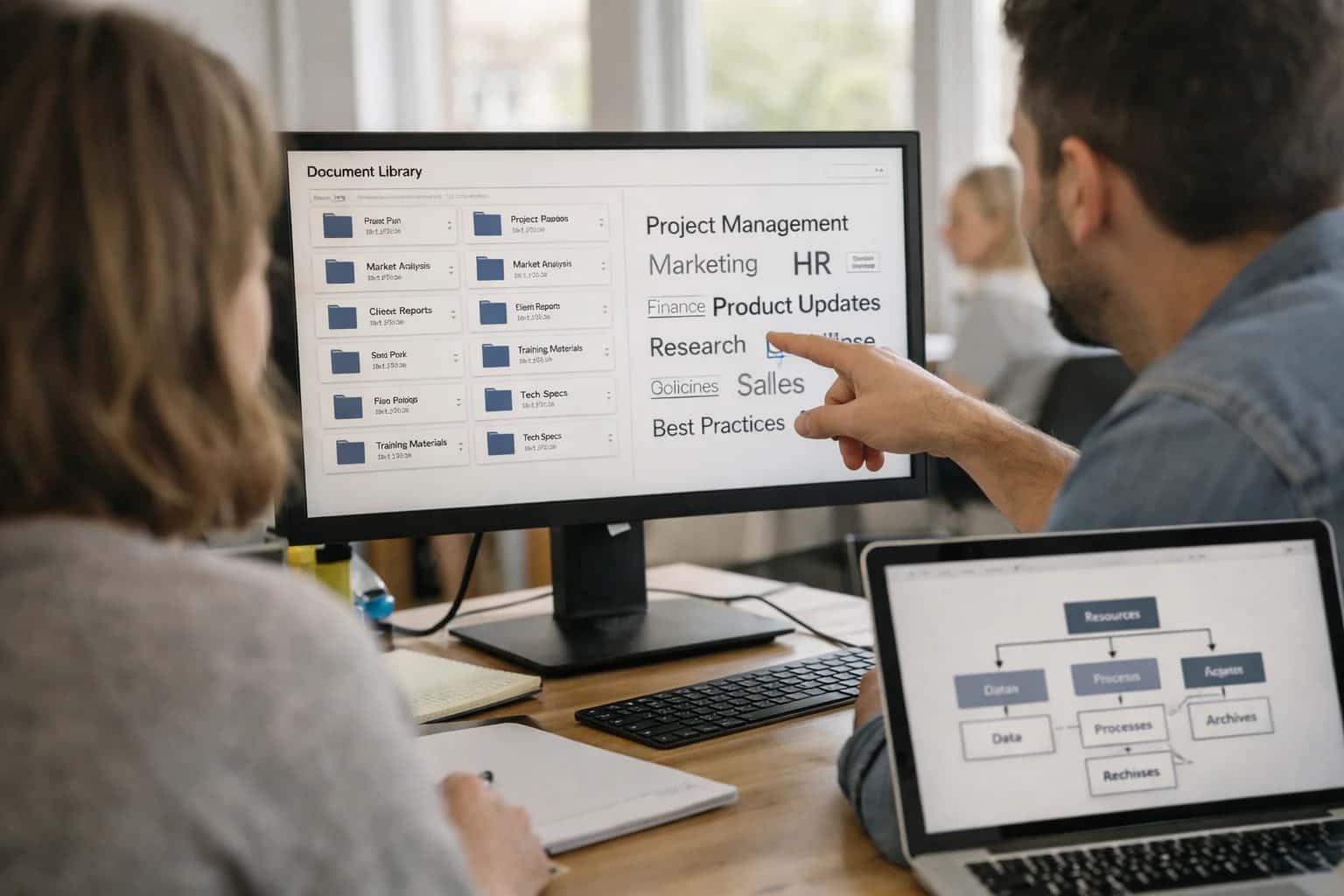
Where AI Fits in Technology Event Management
A technical blueprint for integrating AI into platforms like Whova and Bizzabo to automate developer support, hackathon logistics, and technical content workflows.
Implementation typically involves a middleware service that sits between the event platform (via its REST API or webhooks) and LLM providers. Key integration points include:
- Attendee Support: Ingesting Whova's attendee chat or Bizzabo's Q&A module streams, routing technical queries to a RAG pipeline over conference content, and posting answers back via the platform's API.
- Hackathon Coordination: Using Whova's custom survey data or Bizzabo's profile fields to form teams, then pushing team assignments and milestone reminders via automated session alerts or direct messages.
- Content Operations: Triggering AI summarization of session recordings (linked via Zoom integration) and publishing recaps to the event app's newsfeed, tagged with relevant technical topics for asynchronous attendees.
Rollout should be phased, starting with a single-track pilot (e.g., an AI/ML summit within a larger conference) to validate accuracy and user adoption. Governance is critical: all AI-generated technical answers should include a disclaimer and a clear path to human expert escalation. Implement audit logging for all AI interactions, tying them to attendee records for feedback loops. Since developer audiences are savvy, transparency about the AI's knowledge cutoff and sources builds trust. The final architecture must ensure low-latency responses during peak usage (e.g., keynote Q&A) by implementing queuing and caching layers, as platform APIs often have rate limits.
Key Integration Surfaces for Whova, Bizzabo, and Cvent
Attendee Experience & Support
AI integration surfaces here focus on direct attendee interaction and support automation. Key modules include:
- In-App Chat & Q&A: Embed AI-powered chatbots within Whova's community board or Bizzabo's event app to answer FAQs about logistics, agenda, and networking. Use Cvent's API to trigger post-registration support flows.
- Personalized Recommendations: Connect to attendee profile and session tracking APIs to build a real-time recommendation engine for sessions, speakers, and networking connections.
- Real-Time Translation & Summaries: Integrate with live session streaming or chat feeds via platform webhooks to provide real-time transcription, translation for international attendees, and instant session recaps.
Implementation involves setting up an AI agent layer that listens to platform events (e.g., a new chat message in Whova), processes the request using an LLM with event-specific context, and posts responses back via the platform's REST API.
High-Value AI Use Cases for Tech Conferences
For tech conference organizers, AI integration transforms platforms from static tools into intelligent partners. This guide outlines practical, high-impact workflows to automate developer support, hackathon logistics, and real-time technical Q&A.
Developer Attendee Support Agent
Deploy an AI chatbot within the event app (e.g., Whova) to answer technical FAQs about APIs, SDKs, and hackathon rules. The agent uses RAG over conference documentation and speaker materials, reducing organizer support volume and providing instant, accurate answers.
Hackathon Team Formation & Coordination
Integrate AI with the event platform's registration API to analyze attendee skills and project interests. Automate team matching, create Slack channels via webhook, and push personalized schedules to each participant's agenda in Bizzabo or Whova.
Real-Time Technical Q&A for Sessions
Connect live transcription services (e.g., Otter.ai) to session pages in Cvent or Whova. Use an LLM to synthesize questions from the chat, identify duplicates, and surface the top queries to speakers, making large-scale Q&A manageable.
API Documentation & Code Sample Retrieval
Build a semantic search layer over sponsor and speaker-provided technical docs (GitHub repos, API specs). Attendees can query via natural language in the event app, with the AI retrieving relevant code snippets and documentation links.
Post-Event Lead Scoring & Routing
Enhance lead capture from badge scans or app interactions. An AI agent scores leads based on session attendance, demo visits, and survey responses, then enriches and routes high-potential contacts directly to the sales team's CRM via integrations like /integrations/customer-relationship-management-platforms/cvent-integration-with-salesforce-crm.
Automated Session Summary & Shareables
Post-session, automatically generate a summary blog post, key takeaways list, and social media snippets from the transcript. Push this content to the event platform's session page and to a marketing automation system for attendee nurture, connecting workflows like /integrations/marketing-automation-platforms/eventbrite-integration-with-marketing-automation.
Example AI Workflows for Developer Events
For organizers using platforms like Whova or Bizzabo, AI can automate high-friction workflows specific to technical audiences. These patterns connect to event APIs, session data, and attendee profiles to reduce manual work and improve the developer experience.
Trigger: An attendee posts a question in the event app's session chat or dedicated Q&A module.
Context Pulled: The agent retrieves:
- The question text and session ID from the Whova/Bizzabo API.
- The session's speaker bios, presentation abstract, and any uploaded slides/PDFs.
- Publicly shared API documentation or GitHub repo links from the speaker's profile.
Agent Action: A RAG-enabled LLM grounds its response in the provided session context and documentation. It answers technical questions about code snippets, frameworks, or concepts discussed.
System Update: The formatted answer is posted as a reply in the event app, attributed as "Event Assistant."
Human Review Point: Questions flagged as off-topic, requiring speaker opinion, or containing sensitive code are routed to a human moderator dashboard for review before posting.
Implementation Architecture: Data Flow and System Design
A practical blueprint for integrating AI into platforms like Whova and Bizzabo to automate developer support, hackathon logistics, and technical Q&A.
The core integration pattern connects the event platform's API layer—Whova's Developer API or Bizzabo's GraphQL endpoints—to an orchestration service that manages AI agents, vector stores, and workflow logic. Key data objects include attendee profiles (with tags like 'developer', 'hackathon participant'), session metadata (agenda, speakers, API docs URLs), exhibitor data, and real-time chat/Q&A feeds from the event app. This data is used to build a RAG (Retrieval-Augmented Generation) system that grounds AI responses in the event's specific content, such as workshop instructions, sponsor APIs, and venue maps.
For a developer-focused event, high-value workflows include: 1) A Technical Support Agent that answers questions by querying a vector index of uploaded API documentation, code samples, and FAQ pages, then posts answers directly to the event app's Q&A module. 2) A Hackathon Coordinator Agent that monitors submissions via integrated platforms like Devpost, sends reminders via the event app's messaging system, and answers team logistics questions. 3) A Session Summarization Pipeline that ingests live transcripts from technical talks, generates key takeaways and code snippets, and pushes summaries to a dedicated 'Recaps' channel within the app. Implementation requires setting up secure webhooks from the event platform to trigger these agents based on attendee actions or scheduled cron jobs.
Rollout should be phased, starting with a single-track hackathon or a dedicated 'AI Help Desk' session channel to monitor performance and gather feedback. Governance is critical: all AI-generated content should be watermarked (e.g., 'AI Assistant'), and a human-in-the-loop review step should be configured for sensitive operations like sending direct attendee messages. Use the event platform's existing role-based access controls (RBAC) to restrict which agents can access attendee PII or modify session data. Log all AI interactions to the event platform's audit trail or a separate system for compliance and continuous improvement of response accuracy.
Code and Payload Examples
Real-Time Technical Q&A Workflow
Integrate an AI agent into the event app's help center or community forum to answer developer questions about APIs, hackathons, and sessions. The agent retrieves context from the event's knowledge base (agenda, docs, FAQs) and session transcripts before responding.
Typical Integration Flow:
- User query captured via Whova's custom module or Bizzabo's chat widget.
- Query + user profile (track, role) sent to your AI service endpoint.
- Agent performs a RAG lookup against indexed conference materials.
- Response posted back to the app interface or sent via push notification.
python# Example: Webhook handler for attendee questions from Bizzabo from flask import Flask, request import openai app = Flask(__name__) @app.route('/webhook/bizzabo/attendee-question', methods=['POST']) def handle_question(): data = request.json attendee_id = data['attendee']['id'] session_id = data.get('sessionId') # If question is session-specific question = data['message'] # Retrieve relevant context from vector store (e.g., Pinecone) context = retrieve_event_context(question, session_id) # Generate grounded response response = openai.chat.completions.create( model="gpt-4", messages=[ {"role": "system", "content": "You are a tech conference support assistant. Use the provided context."}, {"role": "user", "content": f"Context: {context}\n\nQuestion: {question}"} ] ) # Post response back to Bizzabo's Activity API post_to_bizzabo_feed(attendee_id, response.choices[0].message.content) return {"status": "processed"}
Realistic Time Savings and Operational Impact
How AI integration into platforms like Whova and Bizzabo transforms workflows for developer conferences, hackathons, and technical summits.
| Workflow / Task | Before AI | After AI | Key Notes |
|---|---|---|---|
Developer Attendee Q&A | Manual monitoring of Slack/forums; responses in 2-4 hours | AI-powered agent provides instant, accurate answers 24/7 | Agent uses RAG on API docs & event content; escalates complex issues to human staff |
Hackathon Team Formation & Coordination | Manual matchmaking via spreadsheets; 1-2 days of organizer effort | AI suggests teams based on skills & project interests in minutes | Integrates with Whova networking features; reduces admin overhead by ~70% |
Technical Session Summarization | Post-event manual review and note-taking; summaries available next week | AI generates key takeaways & code snippets live, published post-session | Uses real-time transcription; ensures developers don't miss critical content |
API Documentation & Resource Access | Attendees search static PDFs or external sites; high support ticket volume | Conversational AI retrieves precise docs, examples, and links from knowledge base | Dramatically reduces repetitive 'where do I find...' questions to staff |
Speaker & Sponsor Liaison | Email chains for scheduling, AV needs, and material collection | AI agent handles routine logistics queries and collects materials via chat | Frees organizer time for high-touch relationships; all data logged to platform |
Post-Event Feedback Synthesis | Manual reading of 1000+ survey responses; thematic analysis takes 5-7 days | AI analyzes open-ended responses in hours, identifying top themes & sentiment drivers | Enables same-week reporting to sponsors and planning for next event |
Real-Time Issue Triage (Wi-Fi, AV, Access) | Attendees find staff or call help desk; resolution depends on staff location | AI chatbot triages and routes issues with location context to correct team | Reduces mean time to resolution; integrates with Bizzabo's operational alerts |
Governance, Security, and Phased Rollout
A pragmatic approach to deploying AI in event platforms, designed for the scale and technical complexity of developer conferences and hackathons.
For tech events, AI governance starts with data segmentation and access control. AI agents should operate within a clearly defined scope, such as accessing only public session data, anonymized attendee profiles for networking, or API documentation repositories—never raw registration payment details or sensitive sponsor contracts. Integrate with the platform's native RBAC (e.g., Whova's organizer roles, Bizzabo's workspace permissions) to enforce this. All AI-generated outputs, like session summaries or code suggestions, should be logged with an audit trail linking to the source data and prompt used, essential for post-event review and debugging attendee queries.
A phased rollout mitigates risk and builds confidence. Phase 1 (Pre-Event): Deploy a read-only AI agent for internal organizer use, connected to the event platform's API to answer questions about the agenda, speaker bios, or venue logistics. Phase 2 (Event Week): Launch a controlled attendee-facing agent, initially scoped to a single high-traffic workflow, such as a hackathon coordination bot in Whova that helps teams form, find APIs, or submit projects, with a clear human-in-the-loop escalation path to event staff. Phase 3 (Post-Event): Expand to automated analysis, using AI to synthesize feedback from session chats, surveys, and GitHub commit activity linked to the event, generating insights for the debrief.
Security is non-negotiable. Ensure all API calls between your AI layer and platforms like Bizzabo or Whova use OAuth 2.0 and are encrypted in transit. For integrations that handle code or developer data, implement a content moderation layer to filter outputs. Finally, establish a rollback protocol—if the AI misinterprets a critical API documentation query during a live hackathon, organizers must be able to disable the feature instantly via a dashboard while reverting to a static FAQ, ensuring the attendee experience remains seamless.
Enabling Efficiency, Speed & Accuracy
Intelligent Analysis, Decision & Execution
We build AI systems for teams that need search across company data, workflow automation across tools, or AI features inside products and internal software.
Talk to Us
Search across company data
Give teams answers from docs, tickets, runbooks, and product data with sources and permissions.
Useful when people spend too long searching or get different answers from different systems.

Automate internal workflows
Use AI to route work, draft outputs, trigger actions, and keep approvals and logs in place.
Useful when repetitive work moves across multiple tools and teams.

Add AI to products and internal tools
Build assistants, guided actions, or decision support into the software your team or customers already use.
Useful when AI needs to be part of the product, not a separate tool.
Frequently Asked Questions
Common questions from technology conference organizers evaluating AI integration for platforms like Whova and Bizzabo.
Secure integration requires a layered approach:
- Service Account & Scoped API Keys: Create a dedicated service account within your event platform (e.g., Whova's Developer Portal, Bizzabo's API settings) with the minimum necessary permissions (e.g.,
attendee:read,agenda:read,messages:write). - Credential Management: Store API keys and secrets in a secure vault (e.g., AWS Secrets Manager, Azure Key Vault), never in code. Your AI agent runtime retrieves them at execution.
- Network Security: Deploy the AI agent within your own VPC or private cloud. Use IP allowlisting on the event platform's API to only accept requests from your agent's static IPs.
- Data Flow Example:
json
// Agent retrieves session context for a Q&A GET /api/v1/events/{event_id}/sessions/{session_id} Authorization: Bearer {API_KEY} // Agent posts an answer to an attendee POST /api/v1/messages { "recipient_attendee_id": "abc123", "message": "The workshop is in Room 301. Here's a link to the API docs mentioned...", "context": "session_qna_agent" } - Audit Trail: Ensure all agent-initiated API calls are logged with a unique correlation ID for traceability.

About the author
Prasad Kumkar
CEO & MD, Inference Systems
Prasad Kumkar is the CEO & MD of Inference Systems and writes about AI systems architecture, LLM infrastructure, model serving, evaluation, and production deployment. Over 5+ years, he has worked across computer vision models, L5 autonomous vehicle systems, and LLM research, with a focus on taking complex AI ideas into real-world engineering systems.
His work and writing cover AI systems, large language models, AI agents, multimodal systems, autonomous systems, inference optimization, RAG, evaluation, and production AI engineering.
Partnered with leading AI, data, and software stack.





How We Work
Custom AI workflows for your Business
One-fit-all AI don't work for modern businesses. At Inferensys, we aim to understand your business & custom requirements; which we use to define most efficient agentic workflows, the data, and the tools for your business.
01
Review the use case
We understand the task, the users, and where AI can actually help.
Read more02
Pick the right approach
We define what needs search, automation, or product integration.
Read more03
Build the first useful version
We implement the part that proves the value first.
Read more04
Improve from there
We add the checks and visibility needed to keep it useful.
Read moreThe first call is a practical review of your use case and the right next step.
Talk to Us