AI connects directly to the event budget module and general ledger codes within your Event Management Platform (EMP). It ingests real-time data from vendor invoices (Purchase Orders), attendee registration revenue (Ticket Sales), and actualized expenses (Expense Reports). By mapping these to your chart of accounts—categories like Venue & Catering, AV & Production, Marketing & Promotion, and Speaker Fees—the AI builds a live financial model. This model continuously compares Budget vs. Actuals (BvA) and uses historical patterns from past events to forecast final costs weeks before the event closes.

Integration
Event Budget Forecasting and Optimization
Integrate AI with Cvent, Bizzabo, Whova, and Eventbrite to predict costs, optimize spend across categories, and generate real-time budget vs. actual reports, reducing manual reconciliation from days to hours.
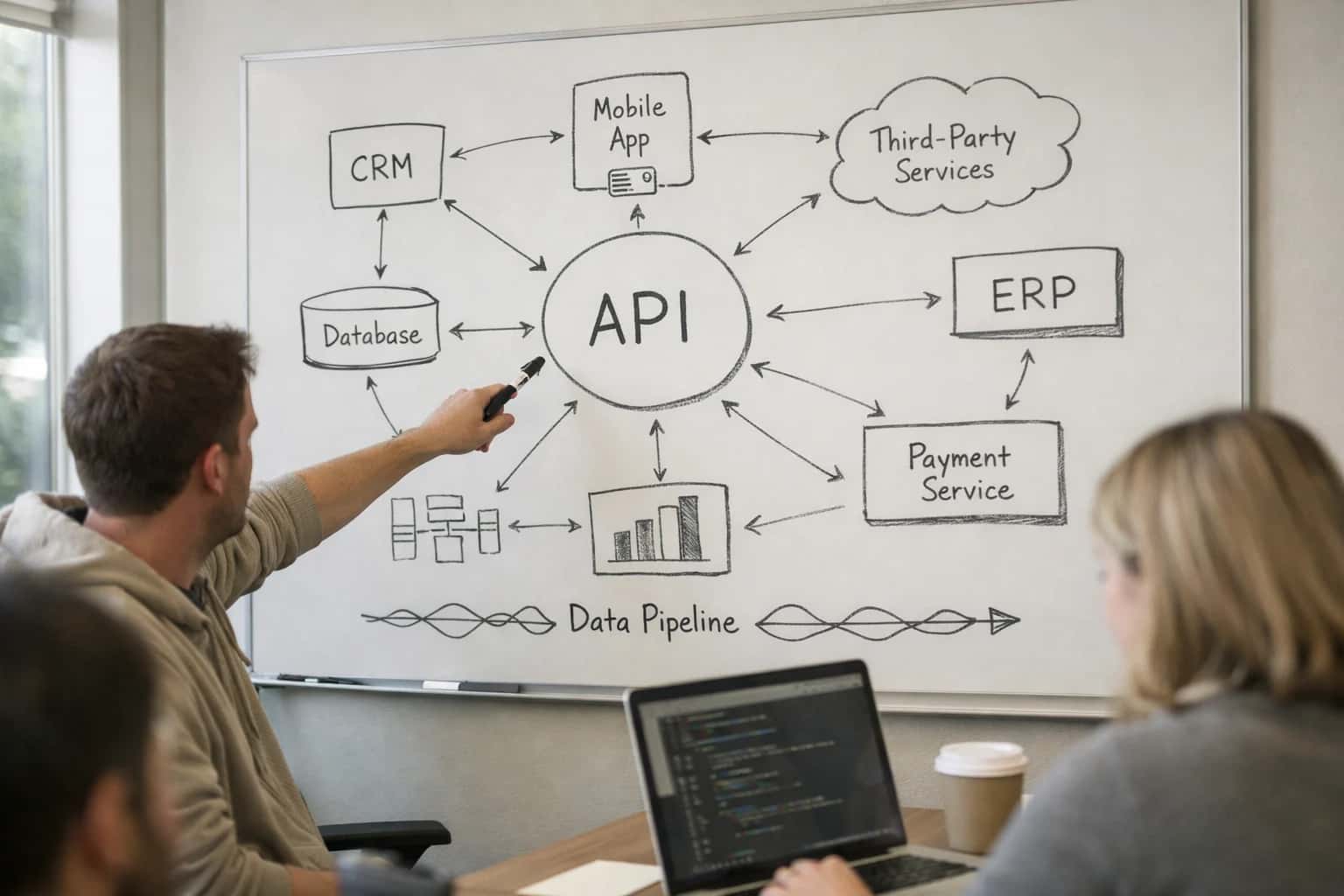
ARCHITECTURE FOR REAL-TIME FORECASTING AND SPEND CONTROL
Where AI Fits into Event Financial Operations
Integrating AI with platforms like Cvent and Bizzabo transforms static budget spreadsheets into dynamic, predictive financial control centers.
The implementation typically involves an AI agent that polls the EMP's financial APIs (e.g., Cvent's Budget API) on a scheduled basis or reacts to webhooks for new transactions. This agent passes structured data to a forecasting model, which can predict overruns, suggest reallocation between underspent categories, and flag anomalies like duplicate vendor charges. For example, if catering costs are tracking 20% above forecast due to a last-minute attendee surge, the AI can immediately recommend reducing a corresponding buffer in the decor budget and trigger an approval workflow in the EMP for the budget manager.
Rollout focuses on phased governance: start with read-only analysis and alerting to build trust in the predictions, then progress to semi-automated workflows where the AI drafts adjustment recommendations for human approval. All recommendations and overrides are logged in the EMP's audit trail for compliance. This approach prevents "black box" spending decisions and ensures finance teams retain oversight while gaining the speed and predictive insight needed to manage complex, multi-vendor event portfolios.
AI INTEGRATION SURFACES
Budget Data Touchpoints in Event Platforms
Core Budget Objects and APIs
The primary integration surface is the platform's native budget module, which manages master budgets, line items, and general ledger (GL) code mapping. AI connects here to predict costs and optimize allocations.
Key Data Objects:
- Master Budget: The top-level container for an event, with status (draft, approved, locked).
- Budget Line Items: Individual cost or revenue entries, each tied to a category (e.g., Venue, F&B, AV, Marketing).
- GL Codes: The internal accounting codes each line item maps to for financial reporting.
Integration Pattern: An AI agent polls or receives webhooks for new or updated budget lines. It uses historical event data (category, attendee count, location, date) to predict final costs, flagging items likely to exceed estimates. It can also suggest optimal GL code mappings based on item descriptions, reducing manual classification work for finance teams.
Example API Call (Pseudocode):
python# Fetch budget lines for AI analysis event_id = "EVT-2025-CONF" budget_lines = cvent_api.get(f"/events/{event_id}/budget/lines") # AI service predicts final cost for each line for line in budget_lines: prediction = ai_service.predict_cost( category=line['category'], estimated_amount=line['amount'], historical_data=similar_events ) # Post prediction back as a custom field cvent_api.patch(f"/budget/lines/{line['id']}", { "custom_fields": {"ai_predicted_final": prediction} })
FORECASTING AND OPTIMIZATION
High-Value AI Use Cases for Event Budgets
Integrate AI directly with your event management platform's financial data to move from reactive budget tracking to predictive cost control and optimized spend allocation.
01
Predictive Cost Forecasting
Analyze historical event data (venue, F&B, AV, marketing) from platforms like Cvent to build AI models that forecast line-item costs for new events. Flag budget overruns before contracts are signed.
Batch -> Proactive
Forecasting mode
02
Dynamic Vendor Negotiation Support
AI agents analyze vendor quotes against historical spend and market benchmarks. Integrate with the platform's vendor management module to provide real-time negotiation guidance and savings opportunities.
1-3%
Typical savings identified
03
Real-Time Budget vs. Actuals Dashboard
Connect AI to live feeds of P-card transactions, invoices, and platform registrations. Automatically categorize spend, match to budget lines, and surface variances with root-cause analysis for event managers.
Same day
Variance visibility
04
Attendee-Driven Spend Optimization
Use AI to correlate registration data (tier, dietary needs, session selection) with cost drivers. Dynamically adjust F&B orders, print materials, and swag quantities to reduce waste without impacting experience.
5-15%
Waste reduction
05
Automated Budget Reconciliation & Reporting
At event close, AI agents compile final costs from multiple systems (ERP, platform, vendors), reconcile against the master budget, and generate audit-ready financial reports and ROI summaries.
Hours -> Minutes
Close process
06
Scenario Modeling for Budget Planning
Integrate AI with the platform's budgeting module to run 'what-if' scenarios. Model the financial impact of adding a keynote, changing cities, or increasing attendee caps to guide strategic decisions.
1 sprint
Planning cycle acceleration
EVENT BUDGET FORECASTING AND OPTIMIZATION
Example AI Automation Workflows
These workflows demonstrate how AI can be integrated with platforms like Cvent to automate financial planning, predict costs, and optimize spend. Each flow connects to the event platform's data model—budget categories, vendor contracts, historical spend, and registration data—to deliver actionable intelligence and automated actions.
Trigger: An event manager creates a new event shell in Cvent and selects a template (e.g., 'Annual Sales Kickoff').
Context/Data Pulled:
- Historical budget data from similar past events (event type, size, location).
- Current vendor rate cards and contracts stored in Cvent's vendor module.
- Real-time market data for destination costs (e.g., hotel rates, AV labor) via integrated data feeds.
Model or Agent Action: A forecasting model analyzes the historical patterns and current rates to generate a detailed, line-item budget proposal. It flags items with high forecast variance (e.g., F&B) and provides a confidence interval for each major category.
System Update or Next Step: The AI agent creates a draft budget within the Cvent Budget module, populating all line items with predicted amounts, notes on assumptions, and suggested contingency percentages. It sends a notification to the event manager for review and adjustment.
Human Review Point: The manager reviews the AI-generated budget, adjusts line items based on specific known factors, and approves it to become the official working budget.
AI-ENHANCED FINANCIAL WORKFLOWS
Typical Implementation Architecture
A production-ready architecture for embedding predictive AI into your event platform's financial data layer.
The core integration connects to your event platform's budget module (e.g., Cvent's Budget Management) and financial transaction APIs. An AI service layer ingests historical event data—including line-item costs for venues, catering, AV, marketing, and speaker fees—along with real-time actuals from invoices and purchase orders. This data is structured into a time-series format and fed into a forecasting model that predicts final costs per category and total event spend, flagging categories at risk of overrun.
The system operates on a publish-subscribe model. When a new budget is created or a significant actual spend is logged in the platform, an event webhook triggers the AI forecasting service. Predictions and optimization suggestions (e.g., "Consider shifting 15% of floral budget to digital signage based on attendee engagement scores") are written back to a dedicated AI_Recommendations custom object within the event platform. Key financial users receive alerts via the platform's native notification system or a connected channel like Microsoft Teams, with a secure link to review the AI's rationale and proposed adjustments.
Governance is built into the workflow. All AI-generated recommendations require manual review and approval within the event platform before any automated adjustment can be made to a live budget. An audit trail logs the original prediction, the user who approved/rejected it, and the resulting action. For rollout, we recommend a phased approach: start with post-event analysis and forecasting for completed events to build trust in the model's accuracy, then progress to mid-event monitoring for active events, and finally implement pre-event predictive budgeting for the planning stage.
EVENT BUDGET FORECASTING AND OPTIMIZATION
Code and Payload Examples
Predicting Spend for Venue, F&B, and AV
Use historical event data from Cvent's budget module to train a lightweight forecasting model. The AI analyzes past spend per category, attendee count, and event type to predict future line-item costs. The integration typically polls the Cvent API for budget records, enriches them with external data (e.g., local vendor inflation rates), and posts updated forecasts back to custom fields.
python# Example: Call Cvent API to fetch past budget data for model training import requests headers = { 'Authorization': 'Bearer YOUR_CVENT_TOKEN', 'Accept': 'application/json' } # Fetch last 20 events' budget details response = requests.get( 'https://api.cvent.com/ea/events?budgetDetails=true&limit=20', headers=headers ) budget_data = response.json() # Enrich and send to forecasting service forecast_payload = { "historical_events": budget_data['events'], "target_event": { "type": "conference", "attendee_count": 500, "city": "Chicago" } } # AI service returns predicted costs per category
The output updates Cvent's budget worksheet, giving planners a data-driven starting point for negotiations.
EVENT BUDGET FORECASTING AND OPTIMIZATION
Realistic Time Savings and Business Impact
How AI integration for platforms like Cvent transforms manual, reactive budget management into a proactive, data-driven process. This table shows the operational shift across key financial workflows.
| Financial Workflow | Before AI Integration | After AI Integration | Implementation Notes |
|---|---|---|---|
Initial Budget Drafting | Manual spreadsheet build, 2-3 days | AI-generated draft from historical data, 2-4 hours | Leverages past event GL codes and vendor spend; human review required |
Vendor Cost Forecasting | Manual quotes and historical guesswork | AI predicts costs using market & historical data | Integrates with vendor management modules for real-time quote comparison |
Real-time Budget vs. Actuals | Weekly manual reconciliation | Daily automated alerts on significant variances | Connects to Cvent budget module and ERP/accounting platform feeds |
Spend Optimization Recommendations | Post-event analysis only | Proactive alerts on overspend categories during planning | AI analyzes category trends (e.g., F&B, AV) against attendance forecasts |
Attrition and Cancellation Forecasting | Reactive penalty management | Predictive risk scoring for hotel room blocks and venues | Uses registration pace and historical data to guide contract negotiations |
Post-Event Financial Reporting | Manual data consolidation, 1-2 weeks | Automated report generation with narrative insights, 1-2 days | AI synthesizes data from Cvent, payment processors, and invoices |
Scenario Planning for Future Events | Limited, time-intensive manual modeling | Rapid "what-if" analysis for attendance, venue, and pricing changes | AI runs simulations based on defined financial parameters and constraints |
ARCHITECTING CONTROLLED, ITERATIVE DEPLOYMENT
Governance, Security, and Phased Rollout
A production AI integration for event budget forecasting requires a deliberate approach to data security, financial governance, and incremental value delivery.
Implementation begins by establishing a secure data pipeline from the event platform (e.g., Cvent's Budget Module, Eventbrite's Organizer Reports) to a dedicated AI environment. This typically involves using platform APIs or secure file exports to pull historical budget data, actuals, vendor contracts, and attendee counts. All data flows are encrypted in transit, and Personally Identifiable Information (PII) is stripped or tokenized before processing. AI agents are granted scoped API permissions—often using OAuth 2.0 with role-based access control (RBAC)—to read financial data but never to initiate payments or modify core financial records without human approval.
A phased rollout mitigates risk and builds stakeholder confidence. Phase 1 focuses on descriptive analytics: an AI agent ingests past event data to generate a baseline "budget health" dashboard, highlighting categories with the highest variance (e.g., F&B, AV). Phase 2 introduces predictive forecasting: the model, trained on your historical data, generates cost estimates for new events based on parameters like attendee count, venue type, and duration, presenting confidence intervals for each line item. Phase 3 enables optimization: the system suggests reallocations (e.g., shifting spend from printed materials to digital swag) and flags potential overruns in real-time as actuals are logged, triggering alerts in the event platform or via Slack/Teams.
Governance is enforced through a human-in-the-loop layer. All AI-generated forecasts and optimization suggestions are presented as recommendations within the event platform's interface or a companion dashboard. Key thresholds (e.g., any suggestion impacting a budget line by >10%) can be configured to require manual approval from the event or finance manager. Every recommendation, user action, and override is logged to an immutable audit trail, providing clear lineage for financial review and model performance evaluation. This controlled approach ensures the AI augments—rather than replaces—financial oversight, allowing teams to move from reactive budget tracking to proactive, data-driven event planning. For related architectural patterns, see our guide on Event Data Integration with Business Intelligence.
Enabling Efficiency, Speed & Accuracy
Intelligent Analysis, Decision & Execution
We build AI systems for teams that need search across company data, workflow automation across tools, or AI features inside products and internal software.
Talk to Us
Search across company data
Give teams answers from docs, tickets, runbooks, and product data with sources and permissions.
Useful when people spend too long searching or get different answers from different systems.
Enterprise searchRAGPermissions
Read more
Automate internal workflows
Use AI to route work, draft outputs, trigger actions, and keep approvals and logs in place.
Useful when repetitive work moves across multiple tools and teams.
AI agentsWorkflow automationGovernance
Read more
Add AI to products and internal tools
Build assistants, guided actions, or decision support into the software your team or customers already use.
Useful when AI needs to be part of the product, not a separate tool.
AI integrationDecision supportModel routing
Read moreEVENT BUDGET FORECASTING AND OPTIMIZATION
Frequently Asked Questions
Practical questions for teams integrating AI with Cvent, Bizzabo, or Eventbrite to automate budget forecasting, optimize spend, and generate financial insights.
Integration typically uses the platform's API to pull historical and real-time budget data into a secure data pipeline. Here’s the common architecture:
- API Authentication: Use OAuth or API keys (like Cvent's
access_token) to establish a secure connection to the event platform. - Data Extraction: Pull key financial objects:
- Cvent:
Budgetrecords,ActualCostline items,Eventdetails. - Bizzabo:
FinancialsAPI endpoints for budget vs. actuals. - Eventbrite:
OrderandCostdata via the Orders API.
- Cvent:
- Context Enrichment: Merge this with external data (e.g., vendor contracts from a P2P system, historical attendance figures) to provide a complete picture.
- AI Processing: Send structured data to an LLM or forecasting model via a secure endpoint. The AI analyzes trends, seasonality, and category correlations.
- Write-Back: Post forecasts, alerts, or optimization suggestions back to the platform as notes, updated budget line items, or via a custom dashboard webhook.
Security Note: All financial data in transit should be encrypted, and AI model access should be scoped using the platform's RBAC to respect user permissions.

About the author
Prasad Kumkar
CEO & MD, Inference Systems
Prasad Kumkar is the CEO & MD of Inference Systems and writes about AI systems architecture, LLM infrastructure, model serving, evaluation, and production deployment. Over 5+ years, he has worked across computer vision models, L5 autonomous vehicle systems, and LLM research, with a focus on taking complex AI ideas into real-world engineering systems.
His work and writing cover AI systems, large language models, AI agents, multimodal systems, autonomous systems, inference optimization, RAG, evaluation, and production AI engineering.
LinkedIn
Limited slotsGet a Free AI Consultation
Partnered with leading AI, data, and software stack.





How We Work
Custom AI workflows for your Business
One-fit-all AI don't work for modern businesses. At Inferensys, we aim to understand your business & custom requirements; which we use to define most efficient agentic workflows, the data, and the tools for your business.
01
Review the use case
We understand the task, the users, and where AI can actually help.
Read more02
Pick the right approach
We define what needs search, automation, or product integration.
Read more03
Build the first useful version
We implement the part that proves the value first.
Read more04
Improve from there
We add the checks and visibility needed to keep it useful.
Read moreThe first call is a practical review of your use case and the right next step.
Talk to Us