AI integration connects directly to the Audit Management and Findings modules within VelocityEHS. The primary surfaces are the audit report object, finding records, and the associated evidence documents (photos, interview notes, procedure PDFs). An AI agent acts on this data post-audit completion, before final report approval. It ingests the structured data (finding category, severity, assigned corrective action) and the unstructured narrative fields to perform synthesis, trend analysis, and narrative generation. This process is typically triggered via a webhook from VelocityEHS when an audit status changes to 'Under Review,' placing a job in a secure queue for the AI system to process.

Integration
AI Integration with VelocityEHS Audit Reporting
Automate the synthesis of audit data into executive-ready reports using AI. Reduce manual compilation from hours to minutes, highlight key findings and trends, and generate actionable recommendations directly within VelocityEHS workflows.
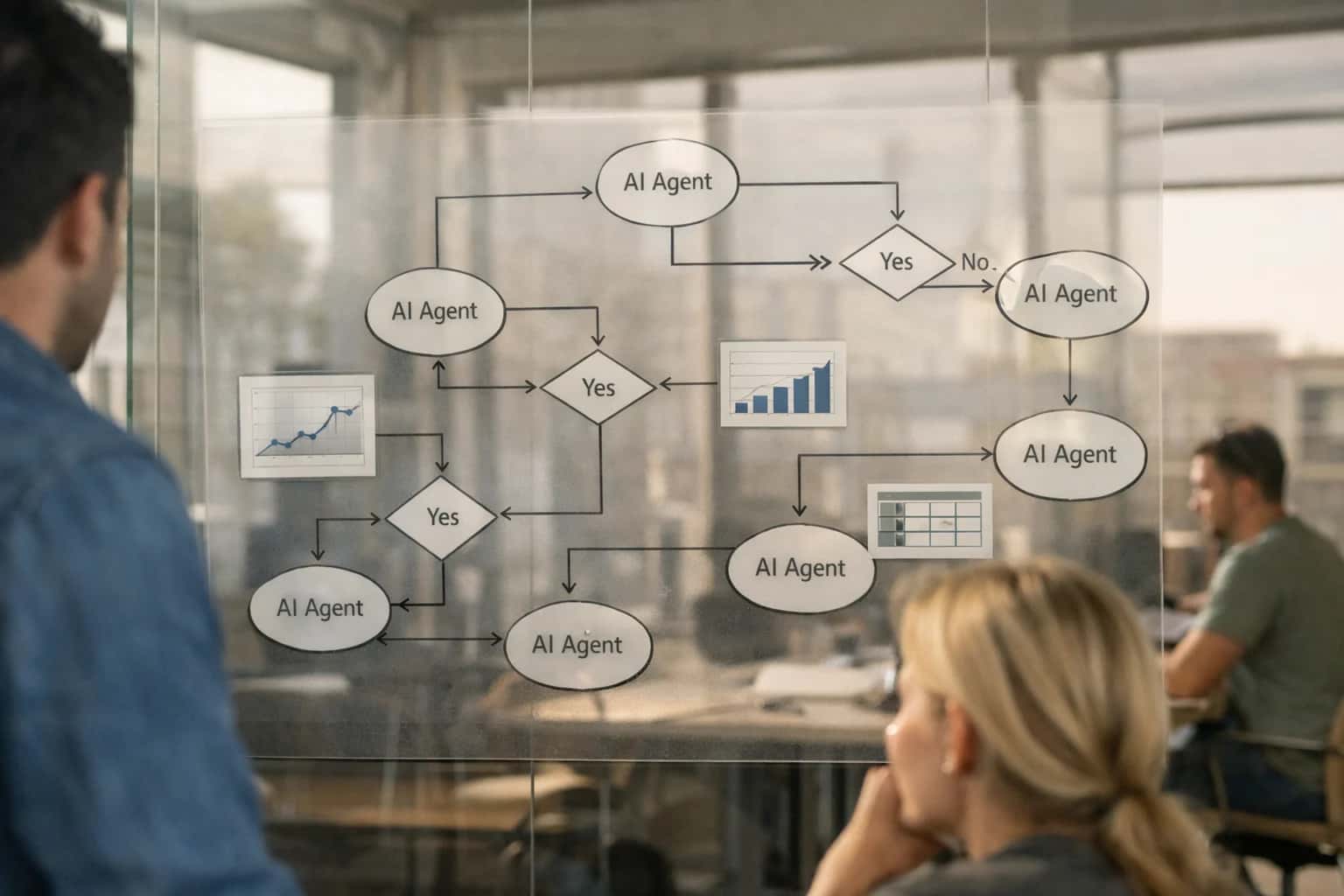
ARCHITECTURE AND IMPACT
Where AI Fits in VelocityEHS Audit Reporting
Integrating AI into VelocityEHS audit reporting transforms raw findings into actionable executive intelligence, automating the most time-consuming steps in the compliance lifecycle.
The high-value workflow is the automated generation of the executive summary and management review sections. Instead of a manual compilation, the AI analyzes all findings to:
- Cluster similar deficiencies across multiple audits or sites to identify systemic issues.
- Extract and rank key risks based on severity, recurrence likelihood, and regulatory exposure.
- Draft recommended action priorities, linking them to existing corrective actions in VelocityEHS.
- Generate a narrative explanation of trends, such as 'Lockout/Tagout procedure deviations have increased 30% across the Western region in Q3, primarily during contractor-led activities.' This turns a data dump into a decision-ready briefing in hours instead of days, allowing EHS leaders to focus on intervention rather than report writing.
Governance is critical. A production implementation includes a human-in-the-loop review step before the AI-generated content is written back to VelocityEHS. The draft summary appears in a side-panel or separate interface for the Audit Manager to review, edit, and approve. All AI interactions are logged in a separate audit trail, capturing the source data, prompts used, and outputs for compliance and model improvement. This ensures the final report remains the responsibility of the qualified professional while eliminating 70-80% of the manual drafting effort. The integration also respects VelocityEHS's existing role-based access controls (RBAC), so AI-generated insights are only visible to users with permissions to view the underlying audit data.
AUDIT REPORTING BLUEPOINT
VelocityEHS Modules and Data Surfaces for AI Integration
Core Audit Objects and Workflows
The Audit Management module is the primary surface for AI-driven reporting. Key objects include:
- Audit Schedules & Plans: AI can analyze risk scores, compliance history, and resource availability to suggest optimal audit frequency and scope.
- Audit Checklists & Questions: AI can generate or refine checklist items based on regulatory text, past findings, and site-specific hazards.
- Audit Findings & Observations: This is the richest data source. Each finding record contains fields for description, category, severity, evidence references, and recommended actions. AI can synthesize hundreds of these discrete findings into coherent executive narratives.
Integration typically occurs via the VelocityEHS REST API to pull audit data in near real-time or batch for processing, and to push back AI-generated summaries and action plans.
AUTOMATED INSIGHT GENERATION
High-Value AI Use Cases for VelocityEHS Audit Reporting
Transform raw audit data into executive-ready intelligence. These AI integration patterns automate the synthesis of findings, trend analysis, and action planning directly within the VelocityEHS audit workflow, moving teams from data collection to strategic insight.
01
Automated Executive Summary Drafting
AI analyzes all audit findings, corrective actions, and historical data to generate a first-draft executive summary. It highlights critical non-conformances, trends versus prior periods, and overall program health, saving audit managers hours of manual compilation.
Hours -> Minutes
Report drafting time
02
Finding Categorization & Systemic Issue Detection
NLP classifies free-text audit observations into standardized categories (e.g., PPE, LOTO, Documentation). AI then clusters related findings across sites to identify recurring, systemic problems that require program-level corrective actions, not just site-specific fixes.
Batch -> Real-time
Issue detection
03
Regulatory Citation & Gap Analysis
For each finding, AI cross-references the description against a knowledge base of OSHA, EPA, or internal standards. It suggests probable regulatory citations and maps gaps to specific control requirements, accelerating the compliance officer's review and ensuring findings are defensibly linked to regulations.
1 sprint
Typical implementation
04
Predictive Risk Scoring for Audit Entities
Leverages historical audit scores, incident rates, and corrective action closure rates to generate a dynamic risk score for each site or process. This AI-driven scoring informs the annual audit plan, prioritizing high-risk areas for more frequent or in-depth reviews directly within VelocityEHS scheduling modules.
Same day
Plan optimization
05
Corrective Action Recommendation Engine
Based on the nature, severity, and root cause of a finding, AI suggests proven corrective actions from a library of past successful interventions. It can auto-populate action plans with assigned owners and deadlines, reducing the time from finding to actionable plan within the VelocityEHS action tracking system.
Hours -> Minutes
Plan generation
06
Automated Data Visualization & Narrative
AI selects the most relevant KPIs from the audit dataset and generates explanatory charts (e.g., finding by category trend, closure rate over time). It then writes a concise narrative to accompany each visualization, creating presentation-ready slides and dashboard commentary for leadership reviews without manual analysis.
Batch -> Real-time
Insight generation
FROM DATA TO INSIGHTS
Example AI-Powered Audit Reporting Workflows
These concrete workflows illustrate how AI agents can be integrated into VelocityEHS to automate the synthesis of raw audit data into structured, executive-ready reports, reducing manual compilation time from days to hours.
Trigger: An audit is marked 'Complete' in the VelocityEHS Audit Management module.
Context Pulled: The AI agent retrieves the audit record, including:
- All audit findings (categorized by severity, department, regulation)
- Historical findings from the same site/process for the last 12 months
- Associated corrective actions from past audits
- Site-specific performance metrics (e.g., TRIR, compliance score)
Agent Action: A configured LLM (e.g., GPT-4, Claude 3) analyzes the data to:
- Identify the top 3-5 systemic or high-risk issues.
- Compare current performance against past audits to highlight trends (improving, deteriorating, static).
- Draft a concise, narrative executive summary (3-4 paragraphs) suitable for leadership review.
System Update: The generated summary is saved as a rich-text field attached to the audit record. A task is created for the EHS Manager to review and approve the AI-generated content.
Human Review Point: The EHS Manager receives a notification. They can edit the summary directly in VelocityEHS before finalizing the audit report package.
CONNECTING AI TO VELOCITYEHS AUDIT MODULES
Implementation Architecture: Data Flow and Integration Points
A production-ready AI integration for VelocityEHS audit reporting connects to specific data objects and APIs to synthesize findings into executive-ready narratives.
The integration architecture connects to three primary VelocityEHS surfaces: the Audit Management module's findings database, the Action Tracking system for corrective actions, and the Compliance Calendar for regulatory context. Data flows via VelocityEHS's REST API, where audit records—including finding descriptions, classifications, evidence attachments, and assigned corrective actions—are ingested into a secure processing queue. For each audit, the AI agent retrieves the structured data payload and uses Retrieval-Augmented Generation (RAG) against a vectorized knowledge base of past audits, regulatory texts, and internal policies to provide grounded analysis.
Key integration points include the AuditFinding and CorrectiveAction objects. The AI workflow is triggered upon audit closure, either via a webhook or a scheduled batch job. It processes the findings to: 1) Categorize systemic issues by clustering similar findings across locations or time periods, 2) Generate trend summaries comparing results to prior audit cycles, and 3) Draft recommended action priorities by analyzing the risk rating and due dates of linked corrective actions. The output is a structured JSON document containing the executive summary, key themes, and a compliance gap analysis, which is posted back to the audit record as a rich-text attachment and can automatically trigger notifications to EHS leaders via VelocityEHS's internal alerting system.
Governance is managed through a dedicated AI Actions queue within VelocityEHS, where all AI-generated content is logged for review and approval before finalization. This ensures a human-in-the-loop for quality control and accountability. The integration is deployed as a containerized service outside the VelocityEHS environment, communicating over secure, authenticated API channels. This pattern keeps the core platform stable while enabling rapid iteration on the AI models and prompts, and allows for easy extension to other modules like Incident Management or Compliance Analysis. For related architectural patterns, see our guides on AI Integration for Cority Incident Management and AI Integration with VelocityEHS Compliance Analysis.
VELOCITYEHS AUDIT REPORTING INTEGRATION
Code and Payload Examples for Common Operations
Synthesizing Raw Findings into Executive Summaries
This operation uses an LLM to analyze a batch of raw audit findings (often free-text notes, checklist results, and evidence references) and generate a structured, narrative summary. The AI identifies common themes, highlights critical non-conformances, and groups findings by risk area (e.g., 'Lockout/Tagout Procedures', 'Chemical Storage').
Typical Payload to AI Service:
json{ "audit_id": "AUD-2024-001", "site": "Springfield Plant", "findings": [ { "category": "PPE", "description": "Multiple observations of operators in grinding area not wearing required safety glasses.", "severity": "High", "evidence_ref": "photo_001.jpg" }, { "category": "Documentation", "description": "Monthly fire extinguisher inspection log for Building B is incomplete for Q3.", "severity": "Medium", "evidence_ref": "log_audit.pdf" } ], "instruction": "Generate an executive summary paragraph highlighting key risks and overall audit status." }
The AI returns a concise paragraph suitable for leadership reports, automatically tagging high-priority items.
AI-POWERED AUDIT REPORTING
Realistic Time Savings and Operational Impact
How AI integration transforms the VelocityEHS audit reporting workflow from manual data consolidation to executive-ready insight generation.
| Metric | Before AI | After AI | Notes |
|---|---|---|---|
Report Drafting Time | 2-3 days per audit | 2-4 hours per audit | AI synthesizes findings, trends, and narratives from raw audit data. |
Finding Categorization & Prioritization | Manual review and tagging | Automated classification and risk scoring | Consistent application of business rules and regulatory frameworks. |
Trend Analysis Across Audits | Quarterly manual spreadsheet analysis | Real-time cross-audit correlation | Identifies systemic issues as soon as new audit data is entered. |
Executive Summary Generation | Manual extraction of key points | Automated generation with recommended actions | Focuses leadership attention on critical compliance gaps and trends. |
Data Validation & Gap Identification | Sample-based manual checks | Continuous, full-population analysis | Flags incomplete findings or missing evidence before report finalization. |
Action Plan Drafting | Manual creation post-review | AI-suggested corrective tasks and owners | Tasks are pre-populated based on finding type and historical effectiveness. |
Regulatory Reference Linking | Manual lookup in external databases | Automated citation of relevant regulations | Hyperlinks findings directly to OSHA, EPA, or internal policy text. |
IMPLEMENTATION BLUEPRINT
Governance, Security, and Phased Rollout
A secure, governed approach to deploying AI for VelocityEHS audit reporting.
Integrating generative AI into VelocityEHS audit workflows requires a security-first architecture that respects data sovereignty and role-based access. We recommend a pattern where the AI service acts as a secure intermediary: audit data (findings, observations, corrective actions) is retrieved via VelocityEHS APIs, processed in a private, compliant AI environment, and the synthesized narrative is written back as a draft report or executive summary within the platform. All data exchanges are encrypted, and prompts are engineered to avoid including sensitive Personally Identifiable Information (PII) or confidential business data in calls to foundational models. Audit trails within VelocityEHS should log the AI-assisted report generation as a discrete activity, preserving a clear lineage from raw data to final output for compliance purposes.
A phased rollout mitigates risk and builds user confidence. Start with a pilot program targeting a single, low-risk audit type (e.g., routine internal safety inspections). In this phase, the AI generates draft summaries that are reviewed and edited by a senior EHS auditor before finalization. This creates a feedback loop to refine prompts and workflows. Phase two expands to assisted reporting for all internal audits, where the AI becomes the primary drafting tool for auditors, significantly reducing time spent on manual compilation. The final phase introduces predictive and prescriptive insights, where the AI system analyzes trends across closed audit findings to highlight systemic risks and recommend proactive actions, integrating these insights directly into the VelocityEHS risk register or action tracking module.
Governance is maintained through a cross-functional steering committee (EHS, IT, Legal, Audit) that oversees prompt libraries, model selection, and output validation rules. We implement a human-in-the-loop checkpoint for all final reports before submission or distribution, ensuring professional judgment and accountability. Regular audits of the AI system's outputs for accuracy, bias, and compliance with internal reporting standards are essential. This structured approach ensures the AI integration enhances VelocityEHS's core value—reliable, actionable audit intelligence—without introducing unmanaged risk or undermining data integrity.
Enabling Efficiency, Speed & Accuracy
Intelligent Analysis, Decision & Execution
We build AI systems for teams that need search across company data, workflow automation across tools, or AI features inside products and internal software.
Talk to Us
Search across company data
Give teams answers from docs, tickets, runbooks, and product data with sources and permissions.
Useful when people spend too long searching or get different answers from different systems.
Enterprise searchRAGPermissions
Read more
Automate internal workflows
Use AI to route work, draft outputs, trigger actions, and keep approvals and logs in place.
Useful when repetitive work moves across multiple tools and teams.
AI agentsWorkflow automationGovernance
Read more
Add AI to products and internal tools
Build assistants, guided actions, or decision support into the software your team or customers already use.
Useful when AI needs to be part of the product, not a separate tool.
AI integrationDecision supportModel routing
Read moreAI INTEGRATION WITH VELOCITYEHS AUDIT REPORTING
Frequently Asked Questions (Technical & Commercial)
Common questions from EHS leaders and technical teams planning AI-driven audit report automation within the VelocityEHS platform.
The automated workflow connects the VelocityEHS Audit module to an AI orchestration layer, typically triggered upon audit completion.
- Trigger: An audit is marked as
Ready for RevieworClosedin VelocityEHS. - Context Pull: A secure integration (via REST API or webhook) extracts the audit record, including:
- Audit scope, location, and date
- All findings with categories, descriptions, and evidence references
- Previous corrective actions for the site/process
- Relevant compliance obligations linked to the audit
- AI Action: A specialized LLM prompt synthesizes this data into a structured executive summary, highlighting:
- Key trends (e.g.,
30% of findings relate to Lockout/Tagout procedures) - High-risk non-conformances requiring immediate action
- Comparison to prior audit performance for the site
- Recommended focus areas for the next audit cycle
- Key trends (e.g.,
- System Update: The generated draft report is posted back to VelocityEHS as a document linked to the audit record, or appended to the audit's
Notesfield. - Human Review: The audit lead or EHS manager reviews, edits if necessary, and approves the AI-generated draft before final distribution, maintaining accountability.

About the author
Prasad Kumkar
CEO & MD, Inference Systems
Prasad Kumkar is the CEO & MD of Inference Systems and writes about AI systems architecture, LLM infrastructure, model serving, evaluation, and production deployment. Over 5+ years, he has worked across computer vision models, L5 autonomous vehicle systems, and LLM research, with a focus on taking complex AI ideas into real-world engineering systems.
His work and writing cover AI systems, large language models, AI agents, multimodal systems, autonomous systems, inference optimization, RAG, evaluation, and production AI engineering.
LinkedIn
Limited slotsGet a Free AI Consultation
Partnered with leading AI, data, and software stack.





How We Work
Custom AI workflows for your Business
One-fit-all AI don't work for modern businesses. At Inferensys, we aim to understand your business & custom requirements; which we use to define most efficient agentic workflows, the data, and the tools for your business.
01
Review the use case
We understand the task, the users, and where AI can actually help.
Read more02
Pick the right approach
We define what needs search, automation, or product integration.
Read more03
Build the first useful version
We implement the part that proves the value first.
Read more04
Improve from there
We add the checks and visibility needed to keep it useful.
Read moreThe first call is a practical review of your use case and the right next step.
Talk to Us